Categories
Herbalism in Fiction Recipes Tea

Courage Tea

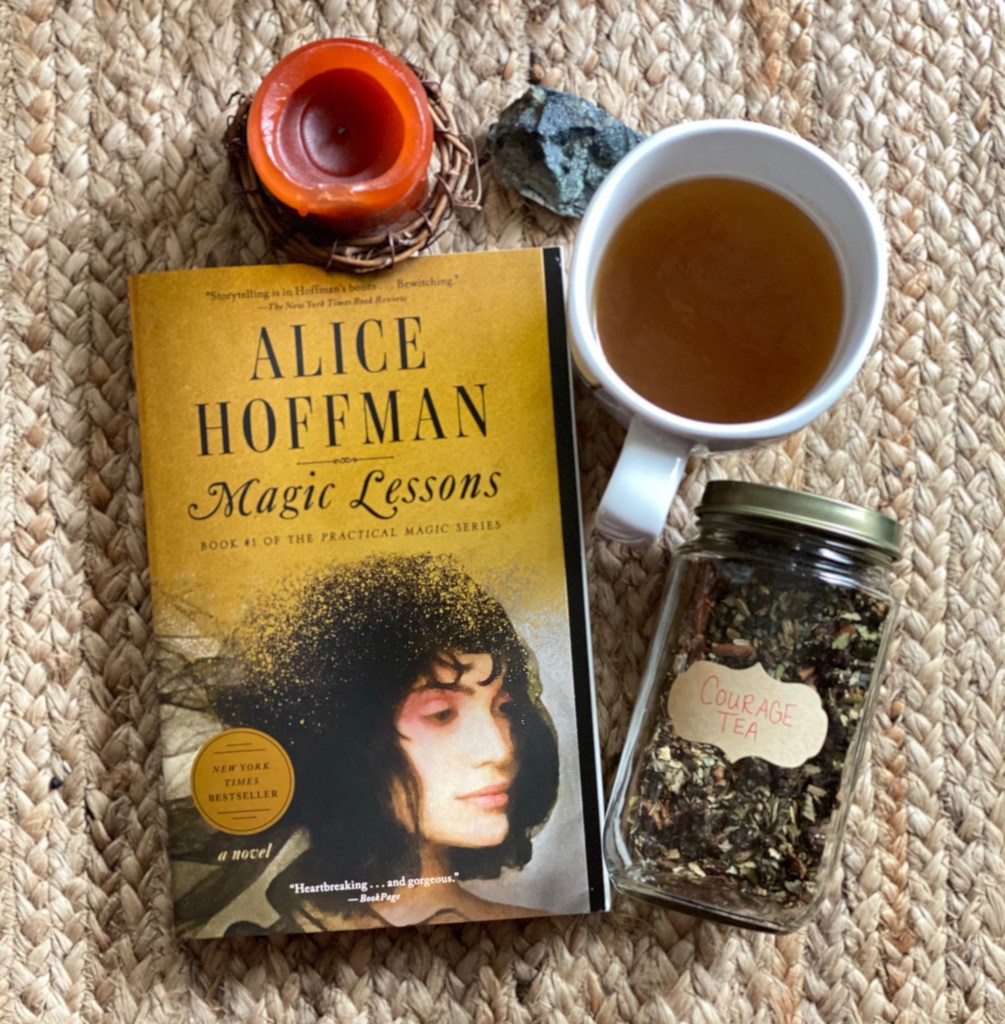
I just finished reading the third and fourth books in the Practical Magic series by Alice Hoffman, Magic Lessons and The Book of Magic. I do not exaggerate when I say these books have been life altering for me. They capture so much, I can’t even put a fraction of it into words. All I can say is, go read these magical books!

Now, a thread that runs through all the stories is courage: courage to love, courage to get hurt, courage to take leaps and trust others and trust yourself. This is illustrated throughout the books by the frequent mention of Courage Tea. It’s an old family recipe that dates back to the Owens women who started it all, Hannah and Maria. The recipe has been passed down through the centuries to bolster the Owenses in the face of all the trials and demands of life, as well as those in need they minister to.

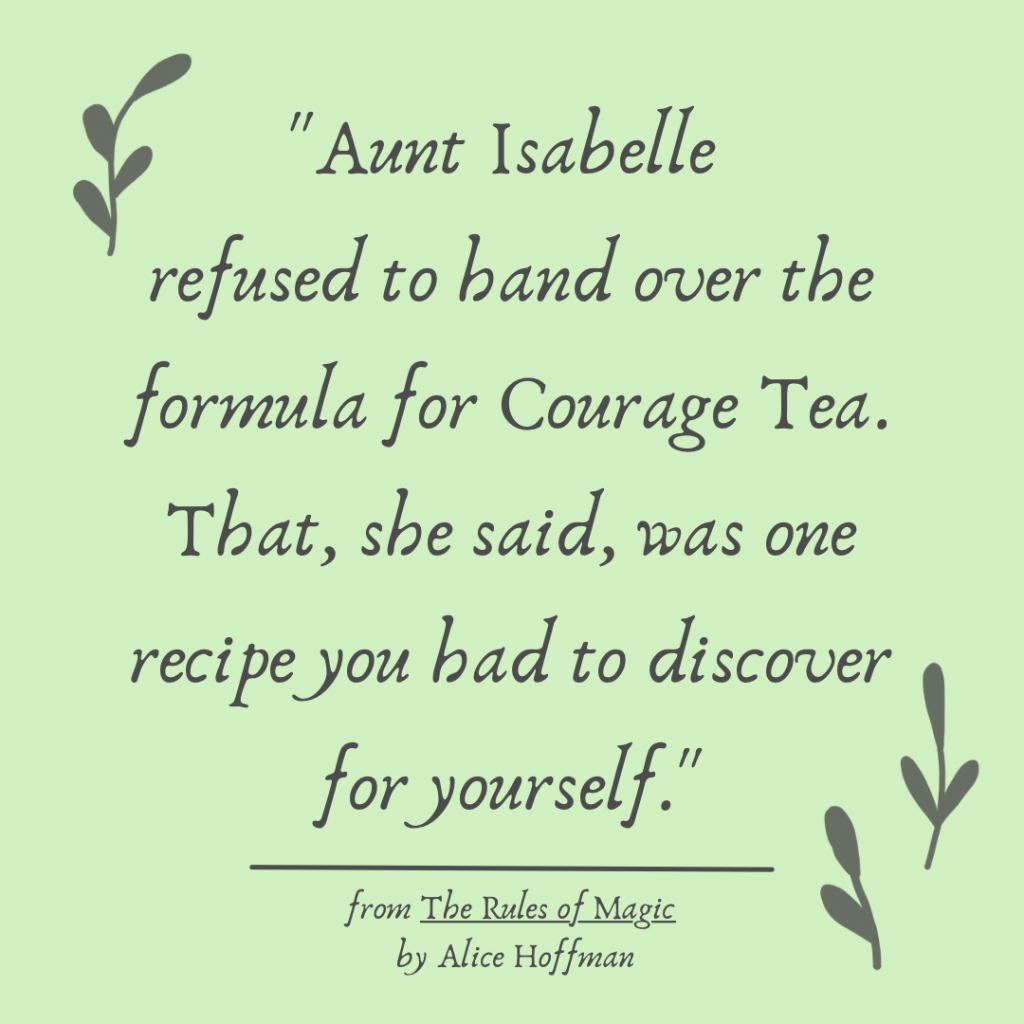
Hints of the recipe are dropped throughout the series, but the whole recipe is never explicitly stated. As explained in The Rules of Magic:

Aunt Isabelle refused to hand over the formula for Courage Tea. That, she said, was one recipe you had to discover for yourself.”
Piecing together the hints and clues of the Courage Tea recipe from the books is actually a pretty fun scavenger hunt. I’ve spent a good deal of time on this exercise, and have filled in the blanks with my own additions as Aunt Isabelle instructed. I encourage you to do the same and come up with your own version if you read the books! But until then, here is my interpretation:
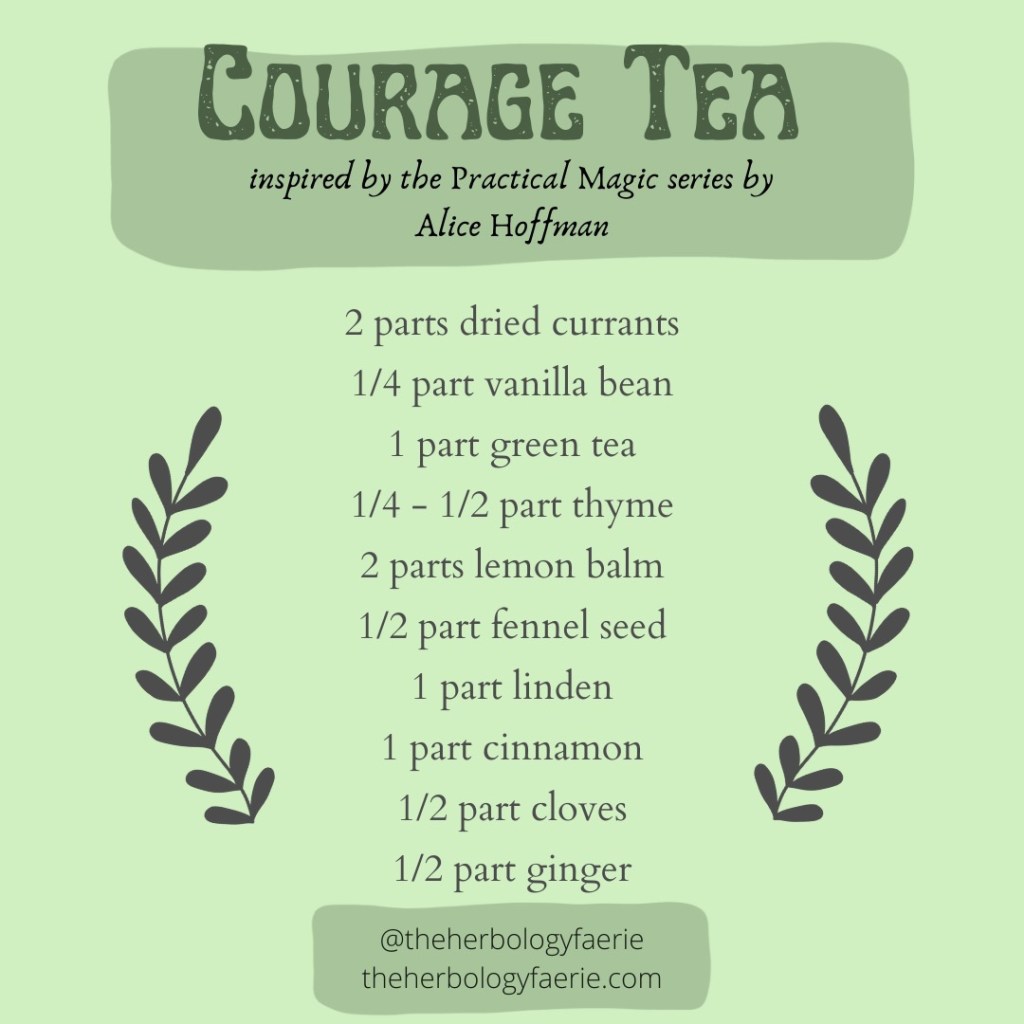
Courage Tea

Instructions:

To make a single cup of tea, add 1 tablespoon to a tea strainer, eco-friendly tea bag, or French press. Pour about 1 1⁄2 cups hot water over the tea and steep for 4 to 5 minutes. Add sugar or honey to taste, if desired.


(A few notes on ingredients: I found dried currants at the grocery store but they’re also sold online in some places. I use powdered vanilla bean in tea recipes because it is more affordable than whole vanilla beans while still imparting natural vanilla flavor; you can also add a dash of vanilla extract instead. You may want to adjust the thyme to taste based on how savory you like your tea to taste, as it can be quite strong. And, if you’d prefer a decaf version, you can leave out the green tea or replace it with rooibos.)
What would you put in your version of Courage Tea?


For educational purposes only. Not intended for medical advice. Always consult your physician.

*This post contains affiliate links, which means if you choose to buy something from a link that I share, I will make a small percentage of the sale *at no extra cost to you*.

Categories
Herbalism in Fiction

Herbalism in Fiction: Practical Magic

If you read my previous Herbalism in Fiction post, you know I have very specific taste in favorite books, namely varying types of fiction featuring herbalism and absorbing, immersive imagery and description. The next book I’m going to touch on is a new favorite of mine, but by no means new: Practical Magic by Alice Hoffman.

To preface: I’ve heard excellent things about the film; though I haven’t seen it yet, and am very excited to, I’ve heard the overall tone of the film and book diverge a bit. I have a feeling it’s one of those cases where they are separate pieces of fiction that stand up in their own ways.

The book is a complex and magical tapestry woven with strands of sisterhood, womanhood, family ties and legacies, love and loss, the magical and the mundane, uniqueness and self-acceptance. The story begins with two little orphaned sisters, Sally and Gillian Owens, who go to live with their elderly witch aunts in the family’s curious, mysterious old home in Massachusetts. As the girls grow up and go their separate ways, forging paths for themselves in life, they find themselves ultimately needing that family magic in their lives despite their efforts to grow away from it.

Practical Magic is a mixture of literary fiction and magical realism, with heartwarming notes, dark and spooky threads, cozy and immersive imagery, painful beauty, and just the right bits of levity thrown in the mix. It is really a unique work of literature that will really pull at your heartstrings and ignite your imagination if you’ll let it!

As far as this book’s herbalism connection, it is an inextricable part of the dense palette of the story. Lush, vivid descriptions of the aunts’ herb garden, frequent recurrences of lavender and rosemary, mention of concoctions and poisons, and THAT lilac bush (when you read it, you’ll know!) put this book squarely on my list. And the aunts’ house with its dark corners, chandeliers, big window seat, mysterious portrait, and self-dusting woodwork (yes, please!) add just the hygge element I’m always searching for in books, too.

I am so glad I finally read this book! Not only does it tick all my boxes, but the story itself is both deep and thought-provoking while also lovely and sweet, ultimately. And there are a few other books about the renowned Owens women in publication or to come, which promises more books for this list!

Categories
Herbalism in Fiction

Herbalism in Fiction: A Discovery of Witches

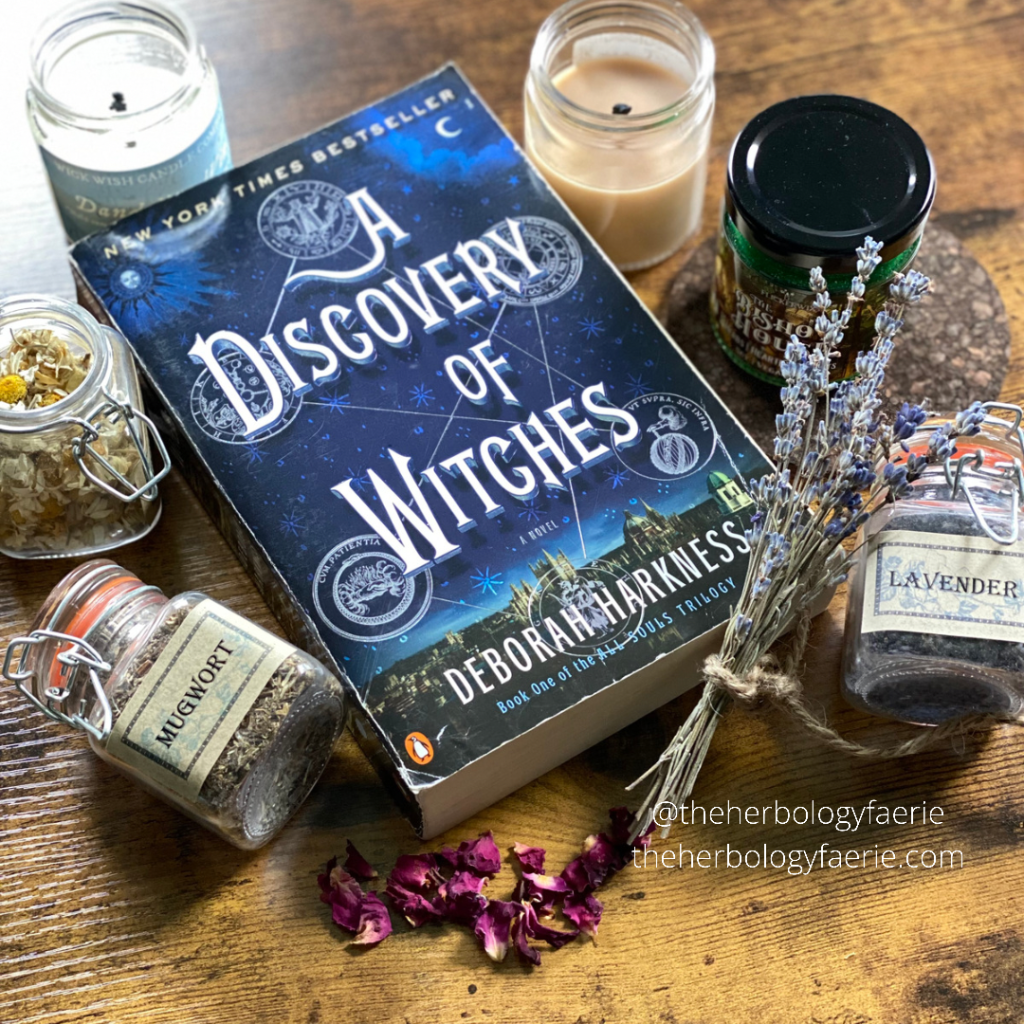
I have the most oddly specific favorite sub-genre of books: fiction (be it fantasy, mystery, historical, or otherwise) that includes heavy doses of herbalism and lush, immersive description. So, in case there are others who adore this type of novel, I am going to begin sharing my favorite books that meet those criteria here on the blog. The first book I’m featuring is A Discovery of Witches by Deborah Harkness (and the whole All Souls series).

The series follows Diana Bishop, a historian and witch who gets caught up in dangers and deceptions after discovering a lost magical book in the Bodleian Library. Having once shunned her powers, Diana must finally come to terms with them to find out what the book means and what it has to do with her. The story also centers around the two other types of creatures, vampires and daemons, and the dynamics and traditions between these three groups of otherworldly beings. Add in romance, ghosts, time travel, real historical figures, science, mysteries, intrigue, dark secrets, and also lovable characters and inviting settings, and you’ve got this thoroughly gripping series in as good a nutshell as I can manage to stuff it into. These books contain magical multitudes.

But I’m specifically here to heap praise on this series for its hygge herbology connections. There is so much to love in these books in that regard! I adore the very lovingly-detailed descriptions of the teas Diana loves and how she takes them, the scenes involving the harvesting and blending of a particular type of herbal tisane at a castle in France (I can’t elaborate because, spoilers), and the unique descriptions of each character’s particular botanical scent. There are viscerally-appealing, incredibly immersive descriptions of locations like dark, antiquarian libraries and cozy Oxford haunts that really stick with you. And don’t even get me started on the depth of detail in the installment that primarily takes place in Elizabethan England.

But far and away, my favorite parts of these books take place in Diana’s witch aunts’ colonial family home in upstate New York. You can hear every creak of the floorboards, smell the mixed scents of wood smoke and coffee and herbs, and feel the weighty presence of the family ghosts in every word. The aunts’ witch’s garden brims with herbs, and there just aren’t enough scenes spent in Sarah’s dark still room with dried aromatic plants and her old coffee-maker-turned-cauldron. The sense of safety and family Diana feels here, even if she tries to deny it at times, is utterly palpable to the reader.

So, all that wordiness to say, if you like this stuff, then read these books! They are my literal favorite books of all time and I will not disclose how many times I have read them. Until you get on the train and come back to tell me how right I was!