Categories
Recipes Tea wheel of the year

Beltane Flower Moon Tea

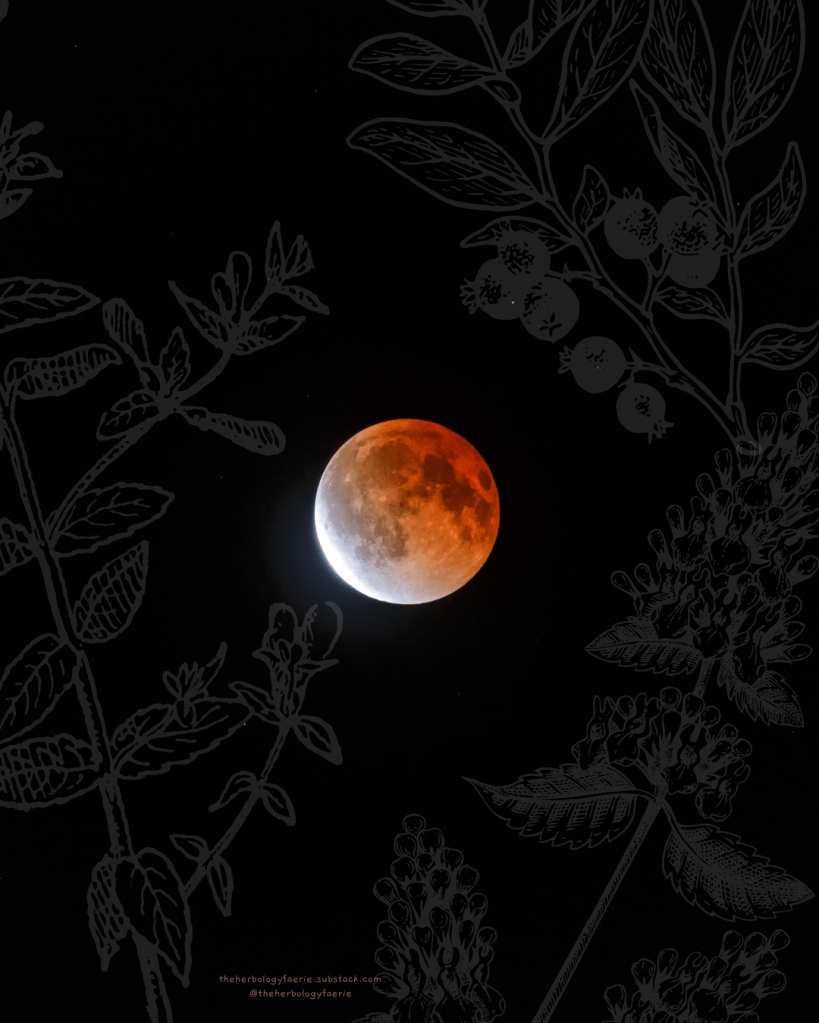
The May full moon is the Flower Moon, a time to celebrate the abundance that is now in full bloom. Joyful, playful, and colorful! It is a moon associated with romance, pleasure, and fun.

The Flower Moon resides in the house of Scorpio this year, which brings an intense energy. The desire to see deeper in a time of more lighthearted fun opens the way for soul-searching and truth-seeking. Add to this the presiding sun sign of Taurus, which imbues a need for comfort and attunement to the senses, and you have a recipe for experiencing blissful enlightenment. 

Beltane aligns with the Flower Moon this year! Beltane, or May Day, is the cross-quarter sabbat on the Wheel of the Year when we celebrate the midpoint of spring. It brings a thinning of the veil between our world and the Faerie realm, enchantment, and wonder. 

As the opposite sabbat on the wheel across from Samhain, both have related attributes but from a different angle. We think about protection from the otherworldly (the faerie realm, though, vs the spirit realm) and ancestral connection at Beltane as we do at Samhain. But Beltane is unique in its ties to the approach of summer, fertility, sacred fires, and joyful celebration. 

How can we embody the Flower Moon and Beltane in a cozy, low-key but meaningful modern celebration to mark the occasion?

If you have the accessibility to do so, perhaps gather a bouquet or some potted flowers and light a fire (bonfire, fire pit, candle/s) outdoors at sunset, with a gathering of loved ones if possible, and enjoy animated conversation together. Make wishes on slips of paper or flower petals and offer them to the flames. Sip a special tea for the occasion, of course! (All this can be done solo if needed, and indoors if needed, too. Tailor the simple, cozy ritual to meet you where you are!)

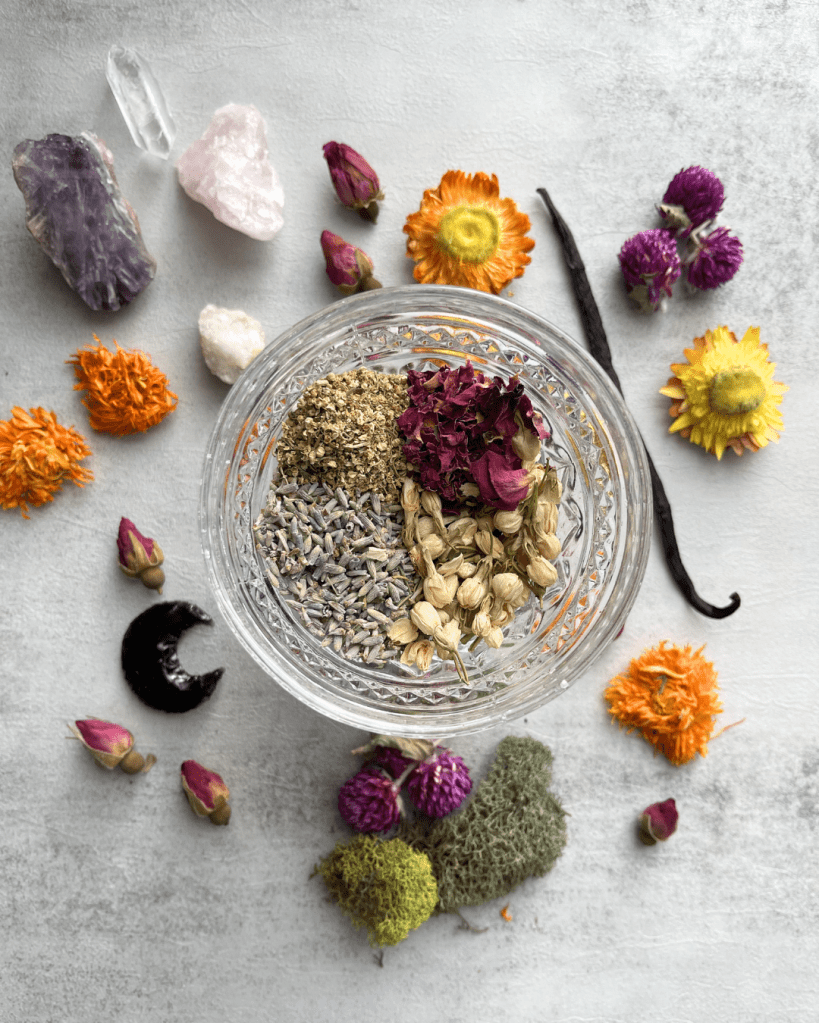
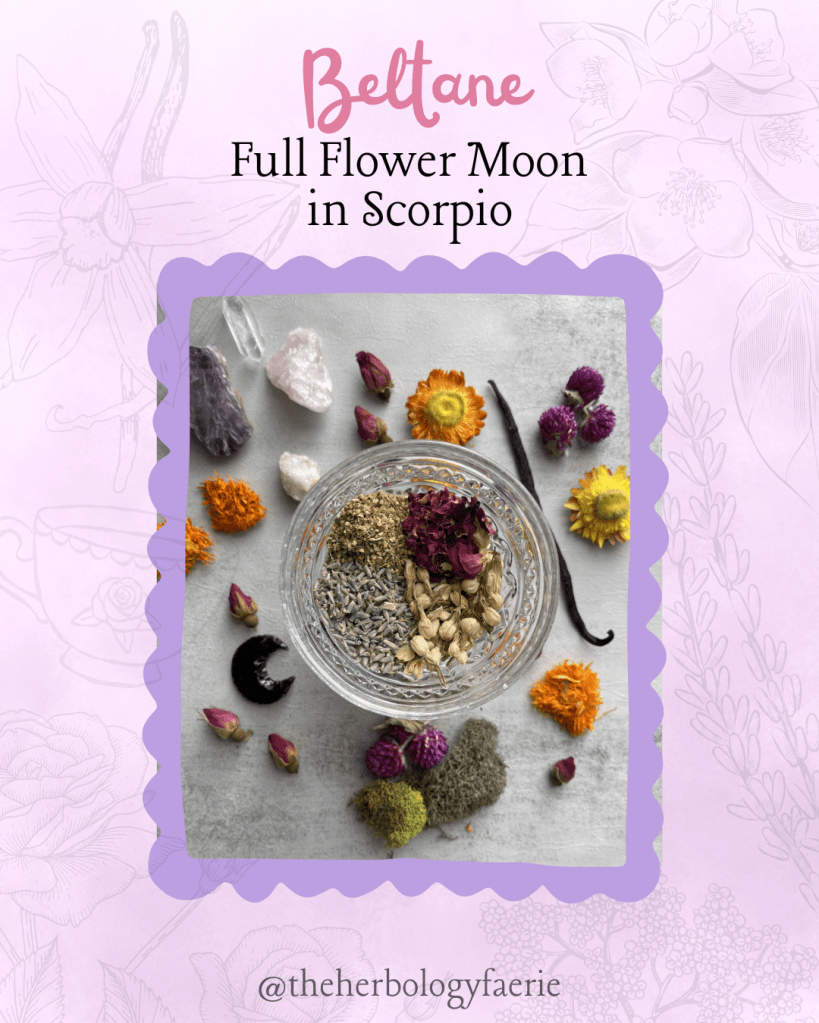
The tea blend for the Beltane Flower Moon relies on the ease and abundance of flowers in season, perfect for capturing the essence of this moon and the sabbat. The flowers not only represent sweetness and fertility, but also divination and deep-rooted feelings. If you have access to the listed flowers in fresh form, by all means use them! And if you don’t have access to any of the flowers in the recipe, you can substitute with (food safe) fresh florals that are local to you if you’d like, or dried flowers, which of course are always a lovely option for herbal teas. 


Beltane Flower Moon in Scorpio Tea

Ingredients:

1 tsp fresh or dried elderflower

1 tsp fresh lilac, violet, or fresh/dried jasmine

1 tsp rose petals

¼ tsp powdered vanilla bean, or ¼ vanilla bean per cup of tea

½ tsp lavender

Lemon slices, if desired

Honey, if desired

Instructions:

To make a single cup of tea, add 1 tablespoon to a tea strainer, eco-friendly tea bag, or French press. Pour 1 to 1 ½ cups hot water over the tea and steep for 3-5 minutes. Add honey to taste, if desired.

To cold-brew this tea blend, add the ingredients to a glass jar or French press, steep overnight in the refrigerator, strain, and serve.

To make a larger amount for your Beltane gathering, treat the proportions as “parts” and scale up, such as 1 tsp = ½ cup or 1 cup – choosing your scale depending on the number of people you are serving. You can also do this to mix up a large jar of the tea blend, especially if you’re using dried flowers, to enjoy throughout the Beltane season! 


Categories
Recipes Tea

Dandelion Boost Tea

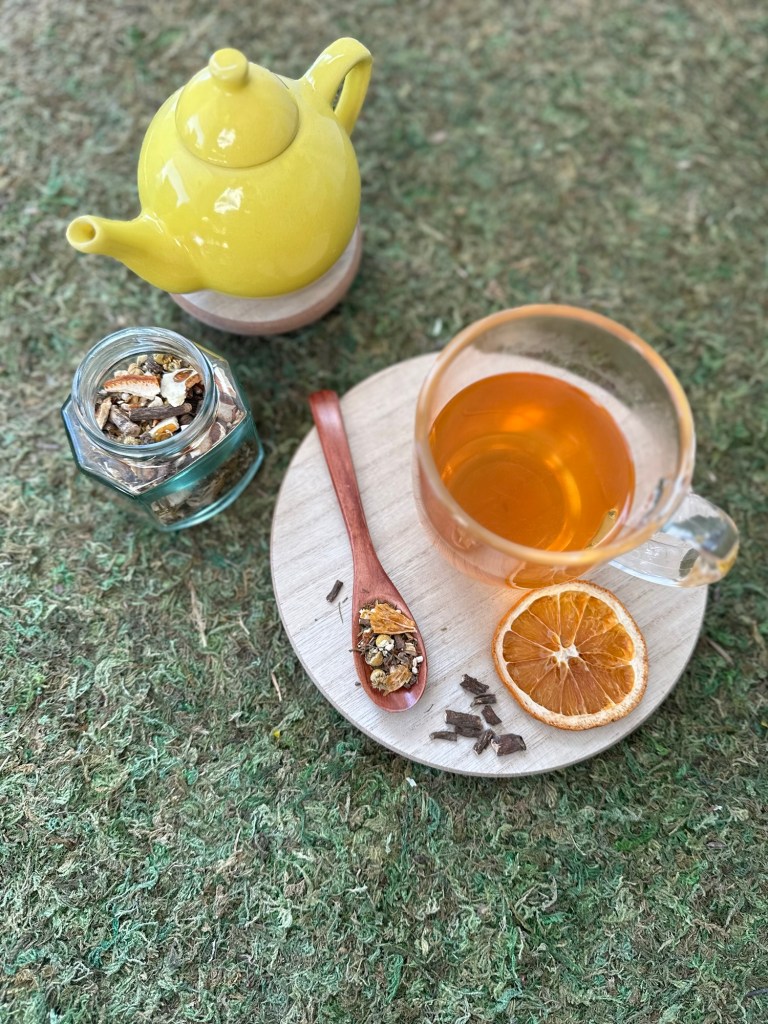
Dandelion root is a botanical friend that somehow manages to ground and uplift at the same time. Perhaps it is the fact that helping to replenish and nourish the body through its herbal actions allows for a lighter, energized constitution. How can a plant that has such sunny, nectar-filled blossoms not have the very best of roots?

A tea blend anchored by dandelion root can offer the best sort of boost to the body and spirit. While dandelion provides a steady base of stabilization with its nutritive and detoxifying qualities, it can serve as a recipe component that lays the groundwork for adaptogens and nervines to do their work optimally.

Layer on top botanical ingredients that work in conjunction with that solid foundation. Ashwagandha lends additional balancing and nourishment through its adaptogenic properties, while chamomile eases and soothes. Orange refreshes and uplifts, and offers a healthy dose of vitamin C. So does your choice of either green tea or green rooibos, which you can select based on your relationship with caffeine.

Sip this tea hot or cold! It could serve as a wonderful springtime morning beverage, or a late afternoon pick-me-up. Bring some in a thermos to sip as you take a spring hike and enjoy the dandelions!

Materials

1 tsp dandelion root, dried

1 tsp chamomile

1 orange slice, dried or fresh (break into pieces if dried)

½ tsp ashwagandha

½ tsp cinnamon pieces

½ tsp green tea or green rooibos

Method

To make a single cup of tea, add 1 tablespoon to a tea strainer, eco-friendly tea bag, or French press. Pour 1 to 11/2 cups hot water over the tea and steep for about 5 minutes. Add sweetener of choice to taste, if desired.

Notes

• To cold-brew this tea, add the ingredients (1 tablespoon of tea blend per 8 ounces of water) to a glass jar or French press, steep overnight in the refrigerator, strain, and serve.

———

I first shared this recipe in the Botanical Anthology’s All About Dandelion booklet! (I’m in there but I do not get any kind of affiliate kickbacks if you grab yourself a copy, full disclosure. I’m just sharing the plant love!)

Categories
Folklore Recipes Tea

JULY: THUNDER MOON IN CAPRICORN 7/10/25

July’s Thunder Moon captures the essence of summer’s balmy, heady heat. Afternoon storms during this time help balance out the strength of the sun but also pack a punch with their turbulent energy. The sun in Cancer contributes a further watery element of heightened emotion and intuition; lightning can strike in so many ways. 

Add to it the presiding Capricorn sign of the full moon this cycle, and you introduce an element of stabilization and determination. This synergy can be a powerful tool, offering a ripe energy for soul searching, brave and honest internal reflection and truth seeking. 

Nettle lends strength to this endeavor and rose softens the heart to create openness. Cinnamon provides luck, and birch offers protection. 

Thunder Moon in Capricorn Tea Materials

1 tbsp nettle

1 tbsp rose

½ tsp cinnamon bark

¼ tsp birch bark

Method

To make a single cup of tea, add 1 tablespoon to a tea strainer, eco-friendly tea bag, or French press. Pour 1 to 1 1⁄2 cups hot water over the tea and steep for about 5 minutes. Add sweetener of choice to taste, if desired.

Notes

To cold-brew, add the ingredients (1 tablespoon of tea blend per 8 ounces of water) to a glass jar or French press, steep overnight in the refrigerator (or under the moon), strain, and serve.

This excerpt is from my Zodiac Full Moon Teas recipe in the summer 2025 edition of Botanical Anthology

Categories
Botanical Anthology Recipes Tea

Jemima Puddleduck Tea

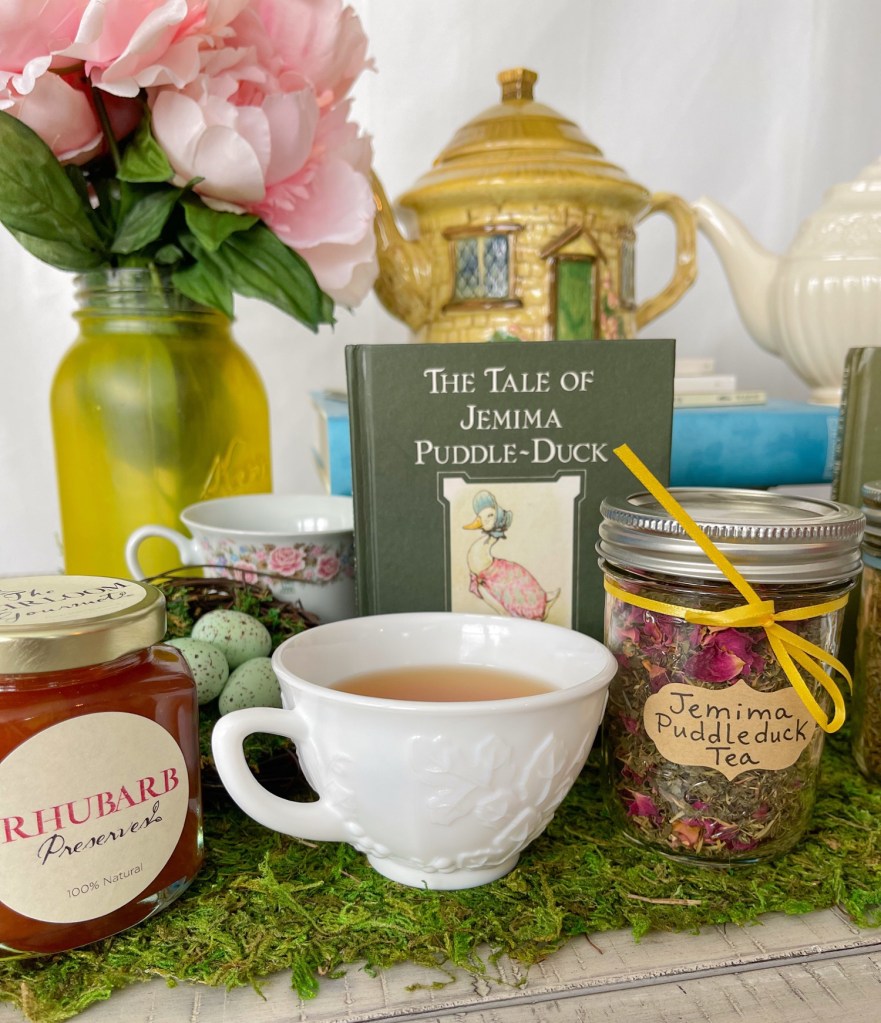
My love for Beatrix Potter knows no bounds. I wish so very much that I could sit down to tea with her and learn about her fascinating life! She was far more than just an author and artist: a studied naturalist, a conservationist, an entrepreneur, a generous benefactor to many causes, and an accomplished farmer and gardener.

One of my favorite tales by Beatrix Potter is that of Jemima Puddleduck. Poor Jemima—she just wants to be left alone to sit on her own nest of eggs. The farmer’s wife and children always seem to find her hiding spots, such as the rhubarb bush, and retrieve her eggs for the hen to warm instead. So, Jemima searches out a secluded spot in the woods to hide her nest, only to be offered a shed by an overly-polite foxy gentleman. More unforeseen events befall Jemima, but in the end she avoids catastrophe and hatches four ducklings on her own.

I created an herbal tea blend inspired by Jemima’s story, which includes the mint and thyme the fox requested for their dinner party, roses seen in an illustration of the garden, and rhubarb from the bush she attempted to hide her eggs in. (This tart tea is made with botanicals appropriate for a Beatrix Potter-themed baby shower, children’s birthday party, or Easter brunch!)


Materials

2 parts mint

½ part thyme

1 ½ parts rose petals

Rhubarb preserves or simple syrup

Method

To make a single cup of tea, add 1 tablespoon to a tea strainer, eco-friendly tea bag, or French press. Pour 1 to 1 ½ cups hot water over the tea and steep for 3-4 minutes. Sweeten to taste with a bit of fruit preserves or simple syrup, if desired. (Strawberry can easily be substituted for rhubarb!)

———

This recipe was originally published in the spring 2023 issue of Botanical Anthology


For educational purposes only. Not intended for medical advice. Always consult your physician.

*This post contains affiliate links, which means if you choose to buy something from a link that I share, I will make a small percentage of the sale *at no extra cost to you*.

Categories
Herbs and Herbalism Recipes Tea

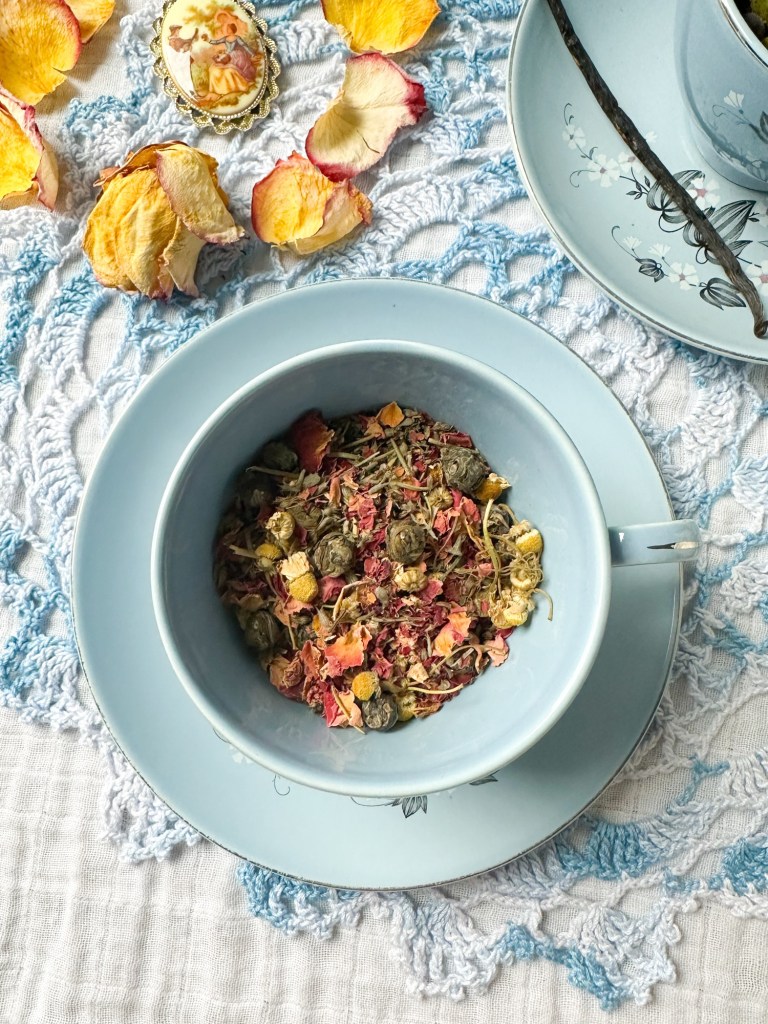
Springtime Jasmine Pearls Tea Blend

One of my most favorite forms of tea is jasmine pearls! Green tea leaves scented with delicate, luscious jasmine are rolled into little “pearls,” of which you can use 3 or 4 to a cuppa. Not only do I adore the mild floral flavor and relaxing sensation of enjoying this fancy-feeling form of tea, but it is also so lovely acting as the base of springtime tea blends!

Jasmine pearl tea tastes as delightful cold brewed or iced as it does hot. The pearls are convenient for preparing in a pitcher or mason jar, as they are quite easy to avoid when sipping (or you can scoop them out with a spoon). As for a traditional hot brew, green tea needs slightly special treatment! It needs a lighter steep so as not to turn too bitter. However, I’ve found jasmine pearls to be a little more forgiving than other types of loose leaf green tea in this regard. 

It is true that green tea contains caffeine like its other Camellia sinensis counterparts, but less so, which lends well to the calming attributes it is found to possess. The tea plant in general is thought to aid in steadying and balancing the constitution, green tea especially. Jasmine’s presence adds further peace, calming, and uplifting.

This particular jasmine pearl tea blend includes catnip, chamomile, rose, and rosemary. The combination of light, flowery tea with nervine herbs that bolster the mind and soothe the spirit is the ultimate springtime self-care sigh of contentment!

Here is the full recipe!

For one cup of tea:

3 jasmine pearls 

½ tsp catnip

½ tsp chamomile

½ tsp rose petals

¼ tsp rosemary 

As this contains green tea, be sure to use a slightly lower water temperature (don’t quite bring the water to boiling) and a shorter brew time, about 3-4 minutes.


For educational purposes only. Not intended for medical advice. Always consult your physician.

*This post contains affiliate links, which means if you choose to buy something from a link that I share, I will make a small percentage of the sale *at no extra cost to you*.

Categories
Tea wheel of the year

Brigid Tea for Imbolc

Blessed Imbolc! This sabbat marks the halfway point between the winter solstice and spring equinox, so it is also called midwinter. And it is Candlemas, when candles were brought to be blessed for the year. 

It’s also a time that is traditionally dedicated to St. Brigid and/or the goddess Brigid. This Celtic goddess is a fire deity who embodies the light and warmth of spring. She is sometimes represented as a triple-goddess or as presiding over three flames: the flame of inspiration and creativity, the flame of the hearth, and the flame of the forge and smithing. Brigid is also associated with healing, wisdom, poetry, livestock, and protection.

As Celtic legend tells, the Cailleach–the crone goddess of winter–and Brigid split the year between them. When the Cailleach’s fire goes out, she cedes rule to Brigid, who presides over her half of the year until Samhain when her counterpart returns.

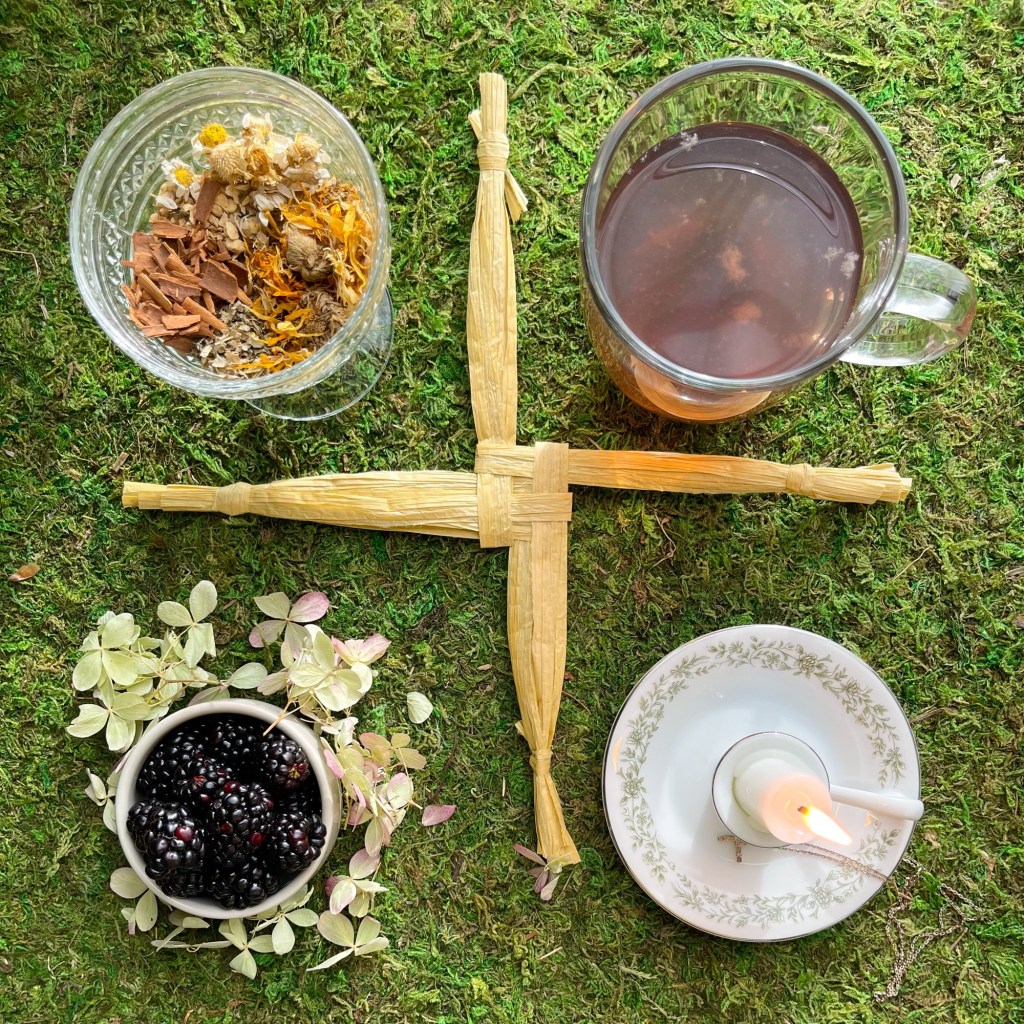
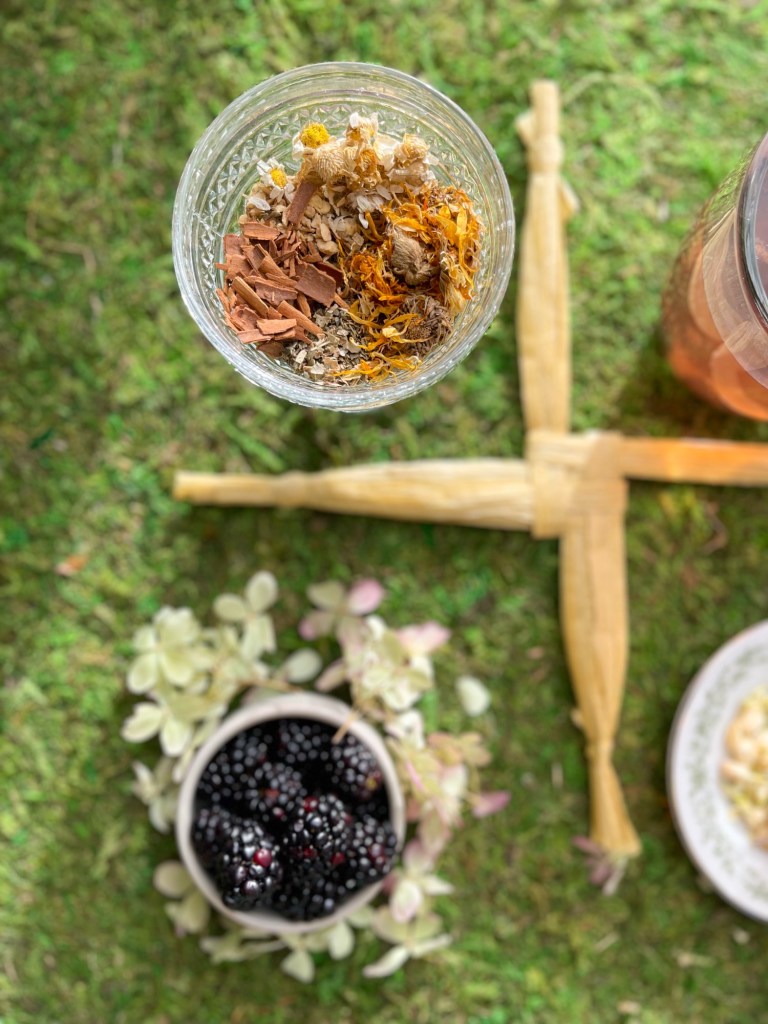
This tea to welcome Brigid’s return contains blackberry leaf and fruit along with chamomile, which are all sacred to the goddess, in combination with calendula, ginger, and cinnamon to represent her three flames.

Brigid’s Tea

1 part blackberry leaf

2 parts dried or fresh blackberries 

1 part chamomile 

1 part calendula

½ part ginger

½ part cinnamon

Directions

If using fresh blackberries, muddle 2-3 in the bottom of a cup (you’ll strain the tea after brewing); if using dried berries, simply add them to the tea herbs. Add 1 tablespoon to a tea strainer, eco-friendly tea bag, or French press. Pour 1 to 1 ½ cups hot water over the tea and steep for 5 minutes. Strain out the muddled blackberries now if using this method. Add honey or other sweetener, if desired.


For educational purposes only. Not intended for medical advice. Always consult your physician.

*This post contains affiliate links, which means if you choose to buy something from a link that I share, I will make a small percentage of the sale *at no extra cost to you*.

Categories
Recipes Tea wheel of the year

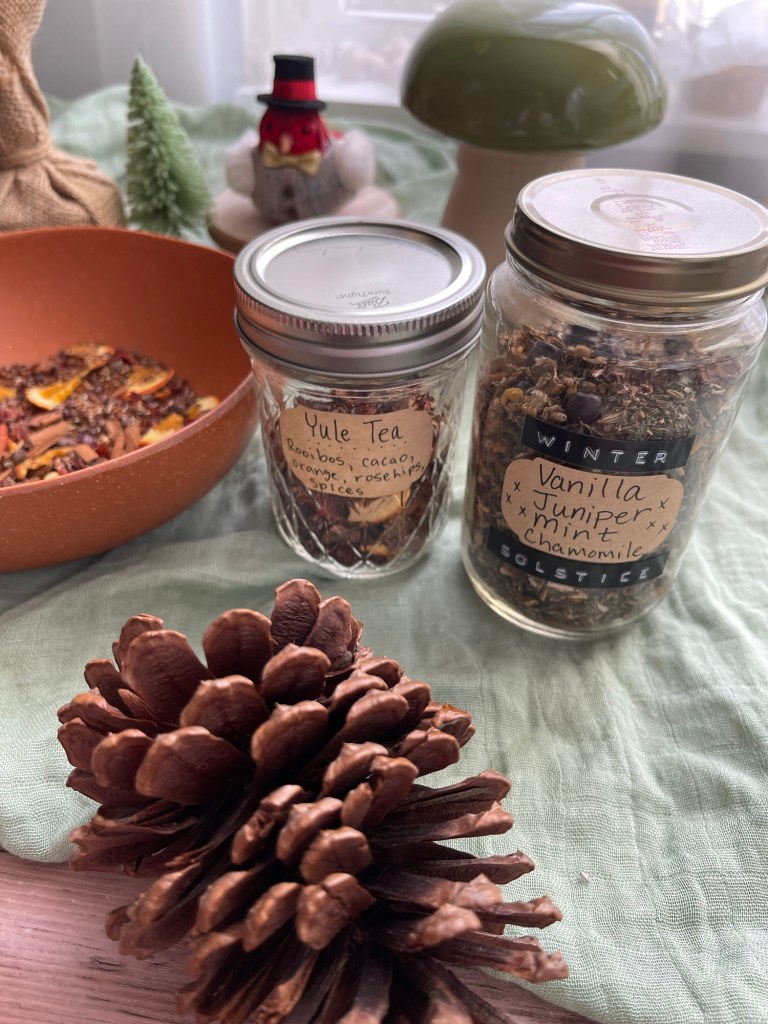
Yule + Winter Solstice Tea Blends

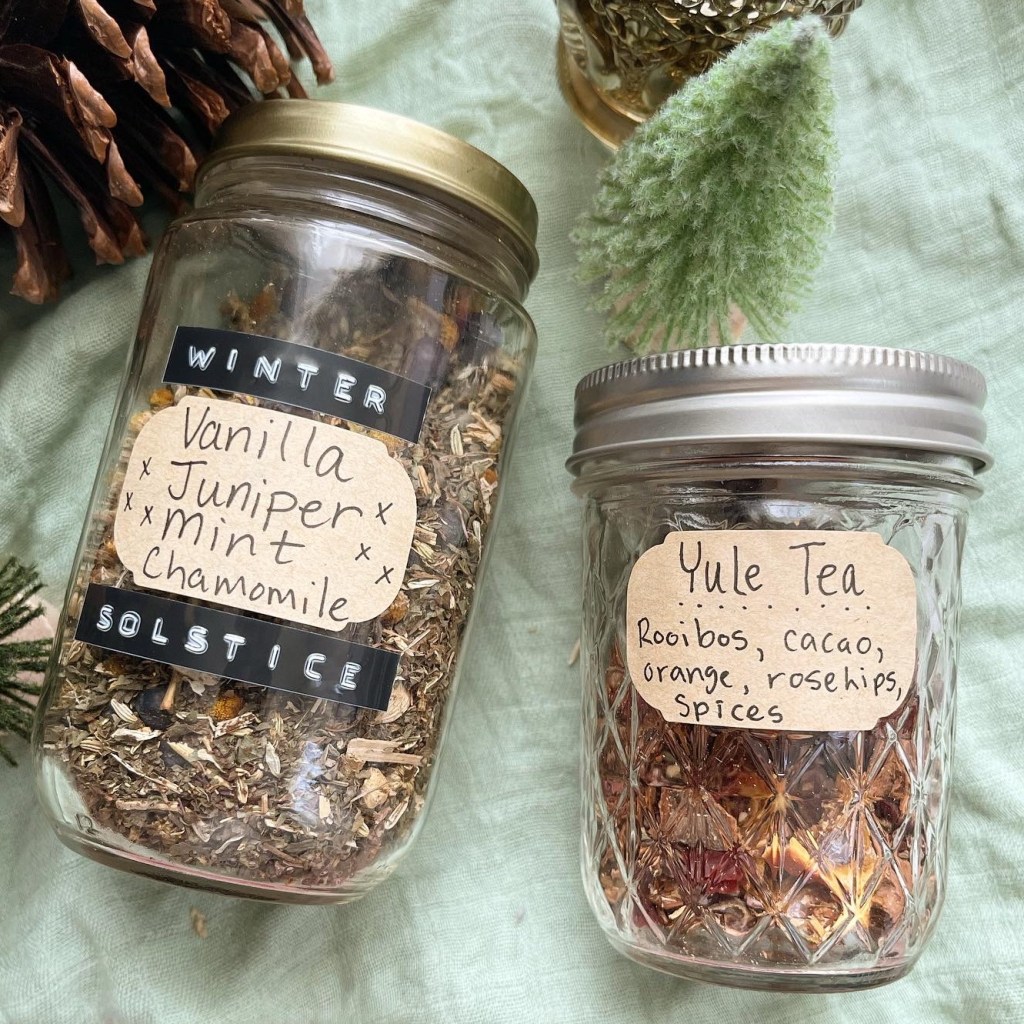
Today I’m sharing two herbal tea blends to enjoy for Yule // the Winter Solstice!

The Yule Tea blend is a sweet and festive spiced sip, full of immune-boosting ingredients that taste lovely. The combo of orange and spices is traditional for the season, in part because of those properties and in part because of associations with protection, divination, prosperity, and luck derived from them.

Yule:
1 tsp rooibos
1 tsp cacao nibs
½ tsp orange peel
½ tsp cinnamon pieces
½ tsp rose hips
¼ tsp allspice berries
¼ tsp star anise
¼ tsp nutmeg

The Winter Solstice Tea tastes decadent like a holiday cake, but without the heartburn or feeling of overindulgence! With soothing herbs that promote digestion, relieve pain, and aid in circulation, it’s like a sweet, warm hug. And chamomile represents the sun that returns brighter each day after the solstice; juniper is a powerful talisman of winter protection, cleansing, and luck; and the other botanicals have ties to healing, love, and luck, too.

Winter Solstice:
1 tsp chamomile
1 tsp mint
½ tsp meadowsweet
½ tsp cinnamon pieces
¼ tsp ginger
¼ tsp vanilla bean powder or ¼ a vanilla bean
4-5 juniper berries
2-3 cardamom pods

To brew—

To make a single cup of tea, add 1 tablespoon to a tea strainer, eco- friendly tea bag, or French press. Pour 1 to 1 ½ cups hot water over the tea and steep for 3-5 minutes. Add honey or maple syrup to taste, if desired.


For educational purposes only. Not intended for medical advice. Always consult your physician.

*This post contains affiliate links, which means if you choose to buy something from a link that I share, I will make a small percentage of the sale *at no extra cost to you*.

Categories
plant wonder collective Recipes Tea

Headache Helper Tea

I recently had a friend dealing with recurring tension headaches ask what herbs might be helpful in a tea to offer him some relief. (He is also being treated by his doctor, but needed some additional gentle diy to help relax his frazzled nerves and throbbing head & get him some sleep!) 

Oatstraw immediately came to mind. They’re a wonderfully gentle soother for frayed nerves, burnout, overwhelm, stress, tension—all things that lack of sleep and depletion from migraines and tension headaches can cause. 

In addition to the oatstraw, I added damiana (a headache-easing favorite of mine), calming linden, sleepy passionflower, and cooling peppermint to the batch of tea I made for my friend. He reported back that the tea was very helpful and he got a decent night’s sleep after drinking his first cup!

To make a big batch to keep on hand, choose a larger unit of measure such as a quarter cup or half cup for your parts. For a single mug of tea, choose a small unit of measure – I’d suggest half teaspoons (it will still make a very strong cuppa, or two cups). 

Here is the recipe:


Ingredients

4 parts oatstraw

4 parts damiana

3 parts linden

2 parts passionflower

2 parts peppermint 

Directions

To make a single cup of tea, add 1-2 tablespoons to a tea strainer, eco-friendly tea bag, or French press. Pour 1 to 1 1⁄2 cups hot water over the tea and steep for 4-5 minutes. Add honey or other sweetener, if desired. 


What are your favorite herbal tea ingredients to help combat headaches?


For educational purposes only. Not intended for medical advice. Always consult your physician.

*This post contains affiliate links, which means if you choose to buy something from a link that I share, I will make a small percentage of the sale *at no extra cost to you*.

Categories
Recipes Tea

October: Falling Leaves Moon in Aries + Tea Recipe

Though the Falling Leaves Moon or Hunter’s Moon fell on October 17th this year and has technically passed, the full moon’s energy can still be tapped into. Read on to learn more about this month’s full moon and a corresponding tea recipe!


The Ojibwe named the full moon during what we call October the Falling Leaves Moon. We await the “peak” of the vibrant colors knowing the shedding of these leaves marks winter’s approach. As this full moon nears, we may feel Aries’ pull to dive into autumn with an energy as vibrant as the leaves. But the sun sign Libra may temper this drive with a need for balance to conserve our energies for the coming cold.

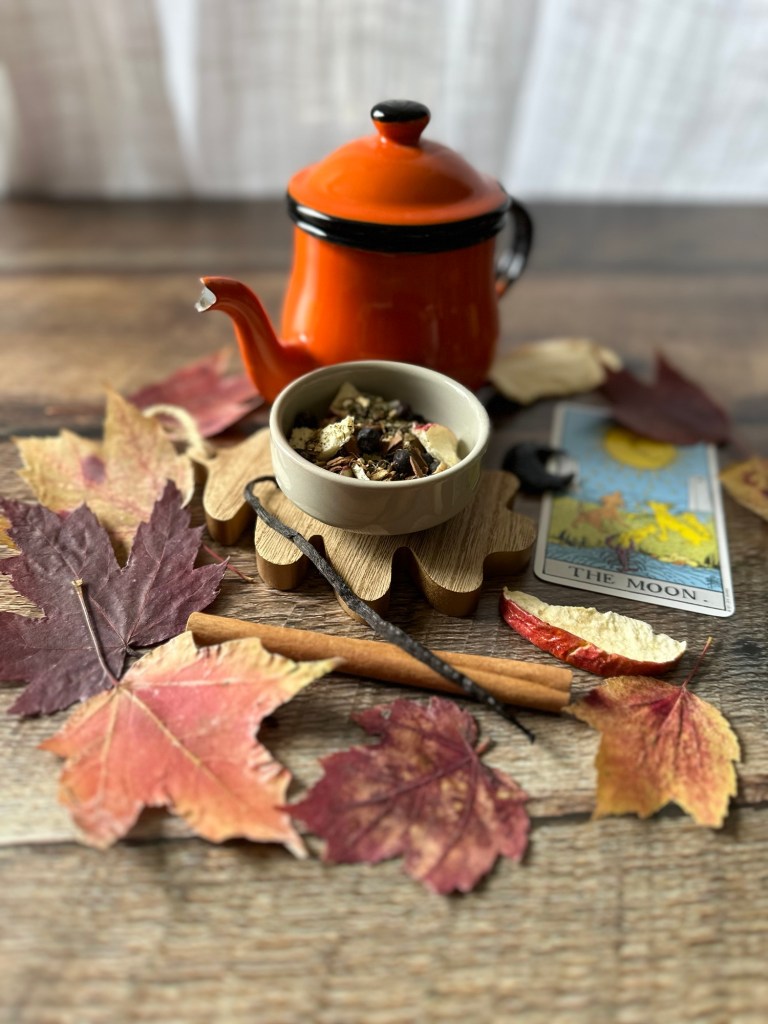
Brew this tea to mark the Falling Leaves Moon which includes gifts given from trees for both their symbolic and astro-herbalism connections. Hawthorn bolsters the heart, while juniper, cinnamon, and ginger support the Aries fire. Apple and vanilla round things out with sweetness to cool that fire off a bit and bring things back to balance.

Falling Leaves Moon in Aries Tea Materials-

1 tbsp apple pieces, dried 

1 tsp hawthorn leaf

1 tsp juniper berries

½ tsp cinnamon stick pieces

¼ tsp ginger root, dried 

¼ tsp vanilla bean powder or ¼ vanilla bean pod

Method-

To make a single cup of tea, add 1 tablespoon to a tea strainer, eco-friendly tea bag, or French press. Pour 1 to 1 ½ cups hot water over the tea and steep for about 5 minutes. Strain, and serve. Add sweetener of choice to taste, if desired.

If you’d like recipes to mark each month’s full moon, check out the current and upcoming issues of Botanical Anthology where I share these recipes!


For educational purposes only. Not intended for medical advice. Always consult your physician.

*This post contains affiliate links, which means if you choose to buy something from a link that I share, I will make a small percentage of the sale *at no extra cost to you*.

Categories
Hygge Recipes Tea

Happy Hobbit Weekend & Tea!

The Hobbit and The Lord of the Rings books by J.R.R. Tolkien have been my very favorite books since I first read them as a teenager, and I have always felt a very strong connection to hobbits: simple folk who prefer the comforts of home, well-stocked larders and bookshelves, and the joy of silly fun with family and friends, yet who can be prevailed upon to draw deeply from a well of courage and wit to save the world on occasion. If any fictional folk represents me, it’s the hobbit-folk. 

So the publication anniversary of The Hobbit (my birthday, 9/21) and the birthday of both Bilbo and Frodo Baggins (9/22) alongside the beginning of fall are all something I like to mark wrapped up into one special span of a couple days. I might read bits of The Hobbit to my own halflings, or we might watch the 1970s Rankin Bass animated film of The Hobbit (wonderfully nostalgic and kid friendly).

We may enjoy a hobbit-y teatime, too, with fresh baked goods and hobbit-inspired tea from the recipe I created. It combines smoky lapsang souchong tea for that famous pipe-leaf all hobbits love, hops to represent the tankards of ale they heartily imbibe, reishi mushrooms foraged right from the woods surrounding the shire, and other flavorful herbs and spices.


Ingredients:

1 part loose leaf lapsang souchong (or other black tea)

1 part mint

1⁄2 part reishi, broken into small pieces (substitute with licorice root if you are unable to find reishi)

1⁄2 part hops

1⁄4 part fennel

1⁄4 part nutmeg

1⁄4 part powdered vanilla bean or 1 vanilla bean per 4 cups of tea, split

Directions:

To make a single cup of tea, add 1 tablespoon to a tea strainer, eco- friendly tea bag, or French press. Pour 1 to 1 1⁄2 cups hot water over the tea and steep for 5 minutes. Add honey or other sweetener, if desired.


For educational purposes only. Not intended for medical advice. Always consult your physician.

*This post contains affiliate links, which means if you choose to buy something from a link that I share, I will make a small percentage of the sale *at no extra cost to you*.