Categories
Herbs and Herbalism

Tinctures for Home Herbalists

If you’re more of a hobby herbalist like me, or if you’re new to herbalism, tinctures may feel a little daunting. Herbal teas seem less intense, due to their simpler water-based preparation and short wait time. It feels like you can’t mess a tea up! But tinctures are a bit more intimidating to beginners, or at least they have been to me. So today, I’m sharing what I’ve learned about tinctures including different types, methods, and uses.

Let’s start with demystifying the various types of tinctures with a little list—

Tincture: An herbal preparation made by macerating (soaking) herbs in menstruum (alcohol, usually vodka) for a period of weeks. The alcohol extracts helpful components from the herbs and creates a highly concentrated liquid that is typically ingested by the dropper full, alone or mixed with other liquids.

Bitters: You may hear this term specifically in regard to cocktails, culinary uses, or digestive aids. Well, guess what…bitters are the same thing as a tincture! It’s just a bit of a more specific term regarding use—the bitter component is the star and can be used to impart flavor and/or stimulate the liver and digestion.

Elixir: A tincture made with a sweetening agent, usually honey. Elixirs have a shorter shelf-life than tinctures without sugar.

Glycerite: A tincture made with vegetable glycerine instead of alcohol. Often used by kids and those who obstain from alcohol completely (though the alcohol in a tincture dose is minimal). Glycerine typically works better with fresh plant material than dried.

I started out by making elixirs, because honey seemed like a no-brainer to make tinctures more palatable. I also began with multi-herb combos and even different types of alcohol. I don’t recommend any of the above for beginners! My elixirs didn’t always keep fresh for long, sometimes tasting “off” far too soon after straining and bottling. Definitely consider an online class, YouTube video, herbalist’s Patreon, or recipe book’s guidance when making your first tinctures, and keep it simple: one herb and vodka.

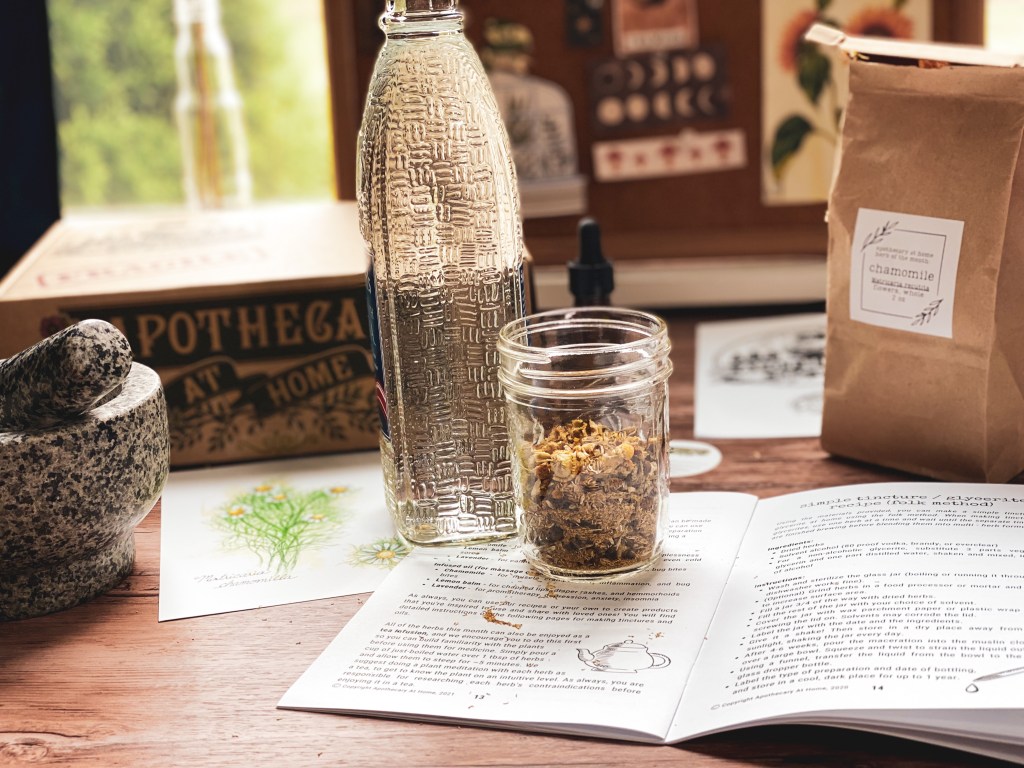
Making a chamomile tincture with guidance from Apothecary At Home

I am not going to go into super depth about the process of making tinctures because I am not an expert herbalist by any means. As I mentioned, I recommend seeking expert guidance for tincture-making, which is what I always do. But here is a brief outline of the process:

Generally, you want to fill a small, sterilized glass jar 3/4 full with dried herb, fill with enough vodka to cover the herb completely, and cap tightly with waxed paper under the lid. Label it with the date made and the date it should be ready, as well as the contents. Keep in a cool dark place, and shake daily. After around 6 weeks, strain and bottle in small, dark glass bottles or jars.

Some great starter herbs for tinctures that are useful in both medicinal and culinary respects include lavender, lemon balm, dandelion root, tulsi, rose hip, hawthorn berry, or juniper berry. These all have various health-supportive uses, like vitamin and mineral supplementation, immune system boosting, and even anxiety, inflammation, and heart support. Plus they taste great!

Tinctures are super convenient once bottled! You can take doses straight if you prefer—a few drops to one dropper full, either straight on or held under the tongue for several seconds. You can also add the same amount to plain water, fizzy water, tea, or even cocktails. A refreshing combo I really love in the summer is lemon lime soda, frozen fruit, and a dropper of fresh lemon balm tincture (which I didn’t make; I bought it from Raven Energy Herbal Apothecary on Instagram).

So, do tinctures seem any less daunting to you now? Or are you already a tincture expert? I’d love to chat about this useful herbal potion in the comments!

Categories
Apothecary At Home Herbs and Herbalism

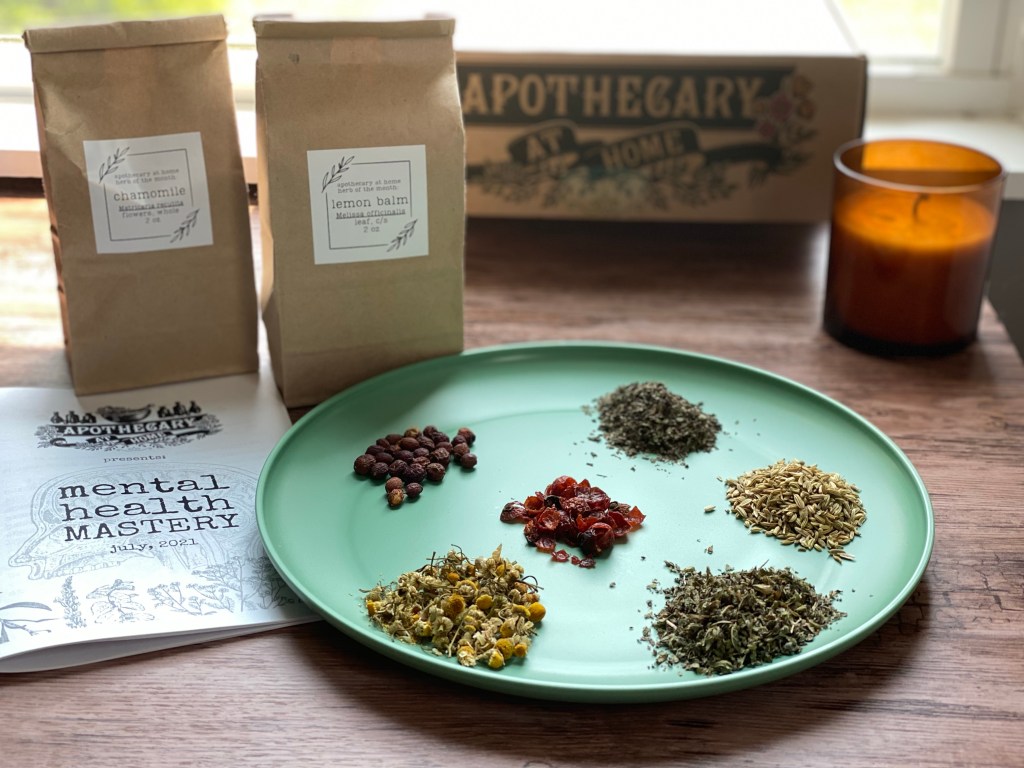
Apothecary At Home: Mental Health Mastery Study Box

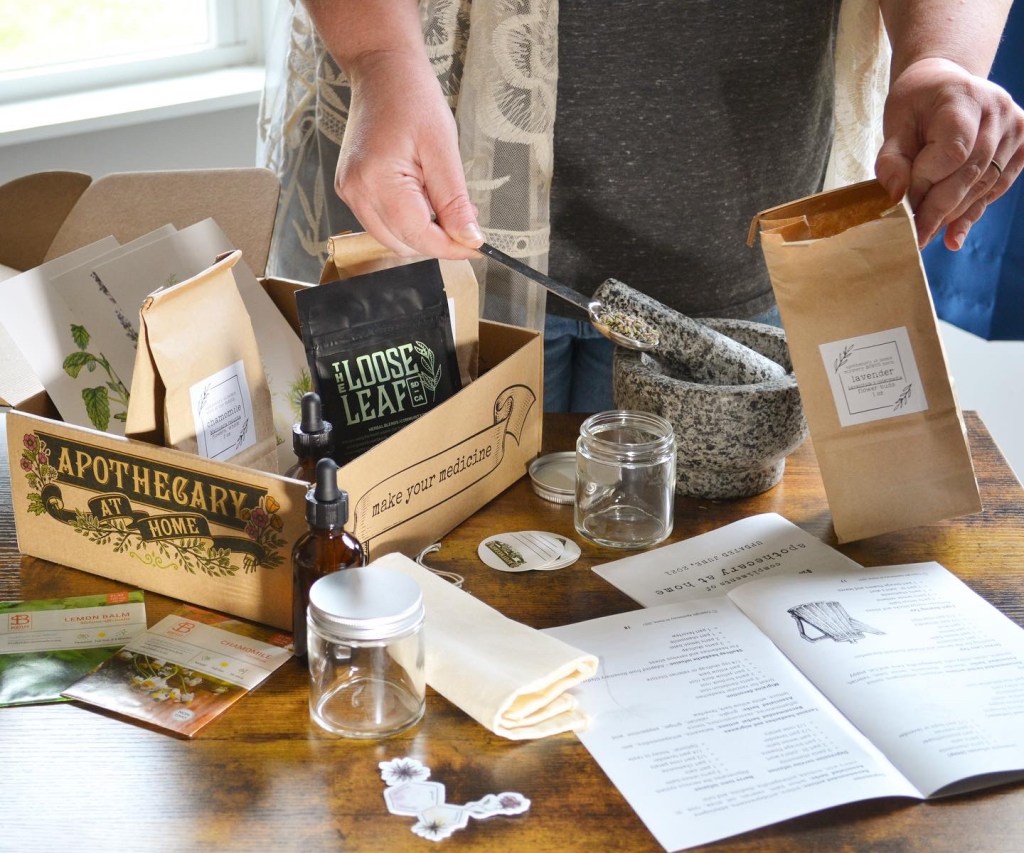
I am so excited to share with you a new way to study herbalism that I’ve discovered! I am partnering with Apothecary At Home, a monthly subscription service sending monthly herbalism study boxes based around health-supportive themes.

Each box contains generous quantities of dried herbs (two features herbs plus one mystery herb); supplies like bottles, labels, and muslin straining bags; a highly detailed, deeply researched study guide with monographs, recipes, instructions, book recommendations, and more; original plant monograph artwork; and fun extras like tea blends, stickers, and more. You are encouraged to work at your own pace and comfort level with the supplied materials to gain a hands-on relationship with herbalism.

I adore the practical, experience-centered approach to this study box. There is no better way to learn herbalism than hands-on with the herbs themselves, and Apothecary At Home brings herbalism class straight to your mailbox so you can do just that. They also offer additional support including an exclusive Facebook community for students and optional monthly Zoom classes centered around each theme! If connecting with other herbalism students at all levels is of interest for you, AAH even creates opportunities for that. And beyond the obvious benefits of teaching you how to create your own herbal medicine, there is something so therapeutic, grounding, connecting, and creatively fulfilling about working with this box.

I feel like a sweet granny witch in her cottage mixing potions when I work with this box!

The theme for July’s box is Mental Health Mastery, a topic that is universally useful! With relaxing nervine herbs like chamomile, lemon balm, and lavender, you have nearly everything you need to create your own teas, tinctures, bath soaks, aromatherapy aids, and other preparations to relieve stress, ease anxiety and depression, help you sleep, soothe digestion, and more.

I have already begun creating remedies from this box and I am really enjoying the experience. I’m loving the tea recipes—I have mixed up a jar of Stress Less tea and last night I slept like a baby after drinking a strong cup of it! I plan to begin work on a couple of soothing tinctures next using the study guide. As someone who is already somewhat versed on these herbalism topics, I can say I’ve already learned new information and perspectives from my studies with this box!

I can’t recommend Apothecary At Home enough! I highly recommend checking out their lovely Instagram account to connect with them and see if it would be a good fit for you. They have a new additional tier of educational box in the works, too, so stay tuned to their social media for info on that. And watch this space for more peeks at their recipes and boxes!