Categories
Herbs and Herbalism

Herb Profile: Rosemary

It’s been awhile, Herbology Faeries! Life has been chaos for me lately, with my wildlings’ school year beginning and all the changes involved with that. But, I am taking a moment to slow down and share with you about a recent favorite herbal ally: rosemary.

Many people think of rosemary as a primarily culinary herb, but it’s so much more than that! There are good reasons the Owens women in the Practical Magic books and movie say to “plant rosemary by your garden gate.”

Rosemary is a pungent, warming, drying, and aromatic herb. According to the plant monograph in Learning Herbs’s Herb Mentor database, rosemary boasts “carminative, circulatory stimulant, hepatic, antimicrobial, stimulating/relaxing nervine, [and] antioxidant” properties. Its uses include “mental stimulation, digestion, colds/flu, fungal infections, hair wash, food preservation, [and] skin protection.” It can be used in many applications, like teas, tinctures, skin and hair products, and food. Traditional wisdom attributes remembrance and protection to rosemary, as well.

Basically, use rosemary as much as you can. It is an herb you can’t go wrong with, because it adds so many benefits to your life and tastes amazing! Lately I have been taking a brain-boosting tincture that includes herbs good for memory and mental acuity like rosemary (of course), gotu kola, ginkgo, and sage. While the intended use of the tincture is for brain health, I notice a very marked calming effect when I take this tincture! Rosemary has always been a culinary favorite of mind, but I’ve also realized that I need to explore more therapeutic and broader uses for the herb because it’s just one that really jives well with me.

And now it’s recipe time! Rosemary pairs amazingly well with grapefruit, so this is a fun fizzy drink (alcoholic or not, it’s equally amazing either way)!

Rosemary Grapefruit Fizz

•Rosemary tincture or bitters (store-bought or homemade; see my post on tincture-making!)

•Grapefruit soda OR grapefruit juice & soda water & simple syrup

•Optional: gin or whiskey
(You could also sub rosemary simple syrup for the tincture / bitters if you’re going the juice and soda water route!)

Are you a fan of rosemary? Which ways do you like to work with this herb?

Categories
wheel of the year

Celebrate Lughnasadh!

In the northern hemisphere, the wheel of the year has turned to Lughnasadh! This August 1st sabbat marks the midpoint between Litha (summer solstice) and Mabon (autumn equinox). Even though Lughnasadh sits squarely within summer, it is the first harvest festival of the year and the kickoff to the harvest season. Lughnasadh is associated with abundance, as well as the sun, the colors yellow and gold, wheat, sunflowers, corn, berries, peppers, tomatoes, squash, beer, and bread.

Since my little wildlings’ schools start right around Lughnasadh, it’s a busy-but-happy time for us. Just like with Litha, I have some low-energy plans to help mark this sabbat in cozy, grounding ways.

Harvest Treat: Herbed Beer Bread

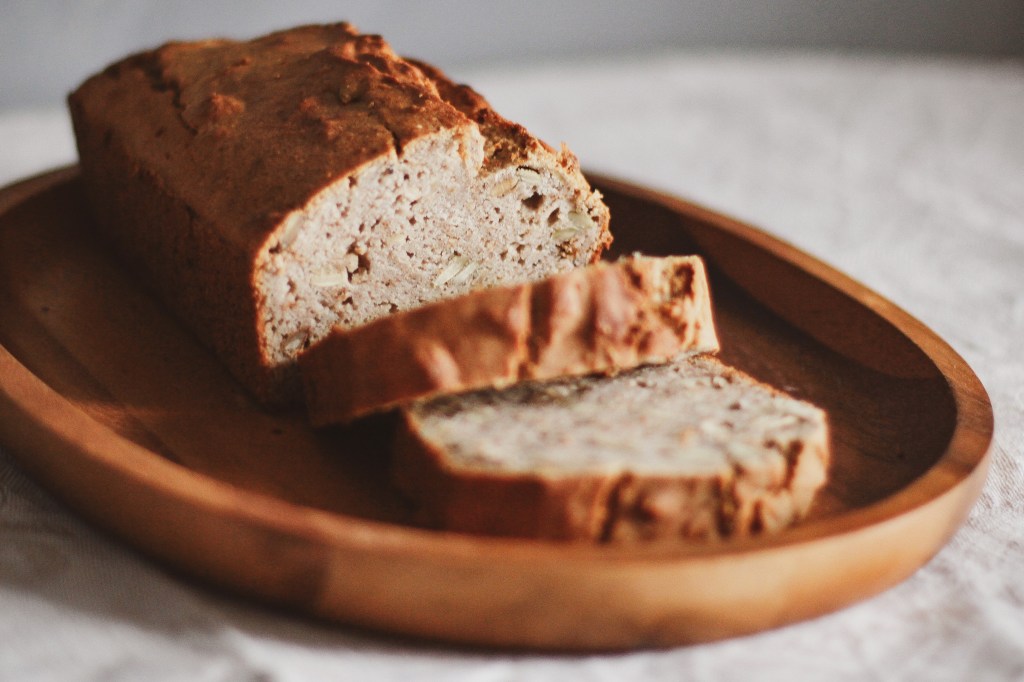
Bread-baking and enjoying is an essential part of Lughnasadh / Lammas (the other name for the day, which means “bread mass”). My favorite type of bread to bake, which is also thematically on-point for this sabbat, is beer bread. It is SUPER quick and easy, yet delicious, hearty, and rustic. It takes very few ingredients and the beer does most of the work for you—no yeast, proofing, or kneading required!

I’ve put together a Lughnasadh bread recipe Pinterest board that you can peruse and come up with a recipe that speaks to you! My plan is to start with a beer bread base using lemon beer, with some seasonally-specific additions, like possibly orange, pumpkin seeds, cardamom, cinnamon, and / or calendula. (Depending on how ambitious I feel this weekend!) These flavors are bright and sweet, with the citrus and spices sort of bridging the gap between summer and autumn.

Check this link for the Pinterest board!

Harvest Sip: Lughnasadh Sun Tea

If you have fresh herbs growing in your garden or window sill, now is the perfect time to harvest some and make a sun tea. But if you don’t have fresh herbs on hand, or you’re just wanting to try a new recipe, here is the potion I’m brewing for Lughnasadh:

3 parts green rooibos (or green tea)

2 parts tulsi

2 parts lemon balm (fresh or dried)

1.5 parts cinnamon chips

1 part dried orange peel OR some fresh orange slices

Dried or fresh pears, peaches, and/or lemon

Harvest Fun: Sunflower Picking and Harvest Decorating

Mr. Herbology Faerie likes to tease me by fake-complaining when I decorate the house for fall before September 1st. Which I usually ignore! This year will be no exception, though I do plan to hold off on pumpkins and leaves until September. Instead, I’ll focus on sunflowers, wheat, gourds, and yellow in honor of Lughnasadh. Decorating for the sabbats can be a cozy and therapeutic way to ground yourself in the season!

A fun family activity I’m hoping we squeeze in on Lughnasadh weekend is sunflower picking at a local flower farm. We went last year a little too late in the season to get any sunflowers; this year the plan is to head there in time for a sunflower bouquet for Lughnasadh.

Those are some of my low-key plans for celebrating Lughnasadh and the start of the harvest season! How are you planning to celebrate?

Categories
Herbs and Herbalism

Tinctures for Home Herbalists

If you’re more of a hobby herbalist like me, or if you’re new to herbalism, tinctures may feel a little daunting. Herbal teas seem less intense, due to their simpler water-based preparation and short wait time. It feels like you can’t mess a tea up! But tinctures are a bit more intimidating to beginners, or at least they have been to me. So today, I’m sharing what I’ve learned about tinctures including different types, methods, and uses.

Let’s start with demystifying the various types of tinctures with a little list—

Tincture: An herbal preparation made by macerating (soaking) herbs in menstruum (alcohol, usually vodka) for a period of weeks. The alcohol extracts helpful components from the herbs and creates a highly concentrated liquid that is typically ingested by the dropper full, alone or mixed with other liquids.

Bitters: You may hear this term specifically in regard to cocktails, culinary uses, or digestive aids. Well, guess what…bitters are the same thing as a tincture! It’s just a bit of a more specific term regarding use—the bitter component is the star and can be used to impart flavor and/or stimulate the liver and digestion.

Elixir: A tincture made with a sweetening agent, usually honey. Elixirs have a shorter shelf-life than tinctures without sugar.

Glycerite: A tincture made with vegetable glycerine instead of alcohol. Often used by kids and those who obstain from alcohol completely (though the alcohol in a tincture dose is minimal). Glycerine typically works better with fresh plant material than dried.

I started out by making elixirs, because honey seemed like a no-brainer to make tinctures more palatable. I also began with multi-herb combos and even different types of alcohol. I don’t recommend any of the above for beginners! My elixirs didn’t always keep fresh for long, sometimes tasting “off” far too soon after straining and bottling. Definitely consider an online class, YouTube video, herbalist’s Patreon, or recipe book’s guidance when making your first tinctures, and keep it simple: one herb and vodka.

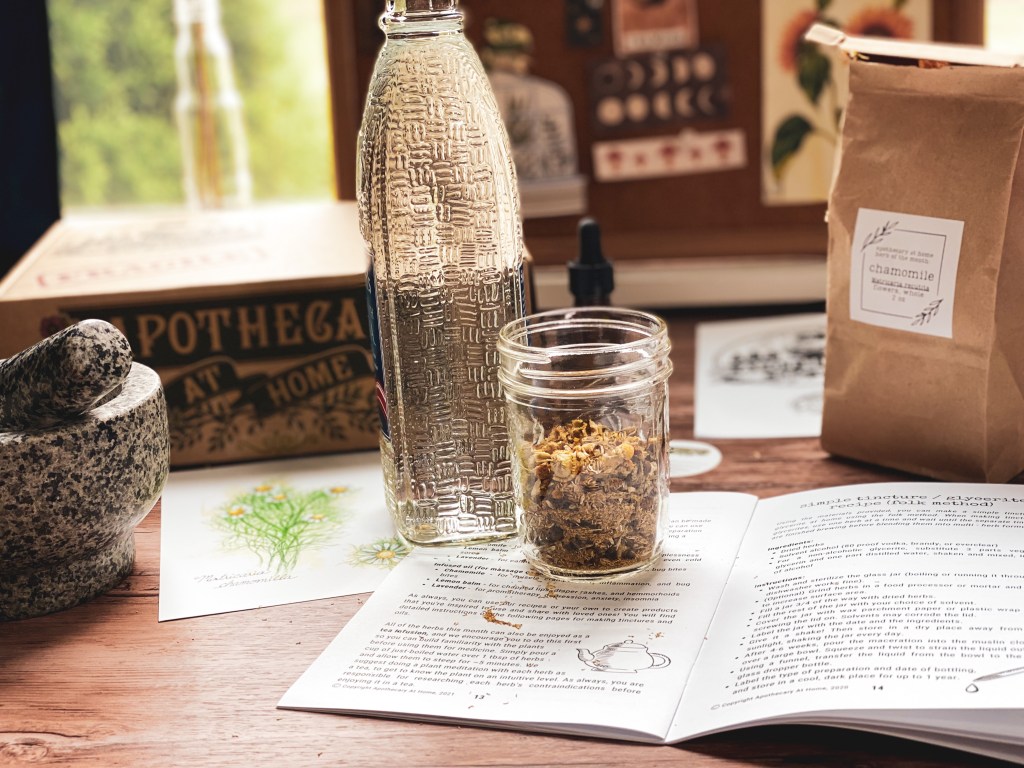
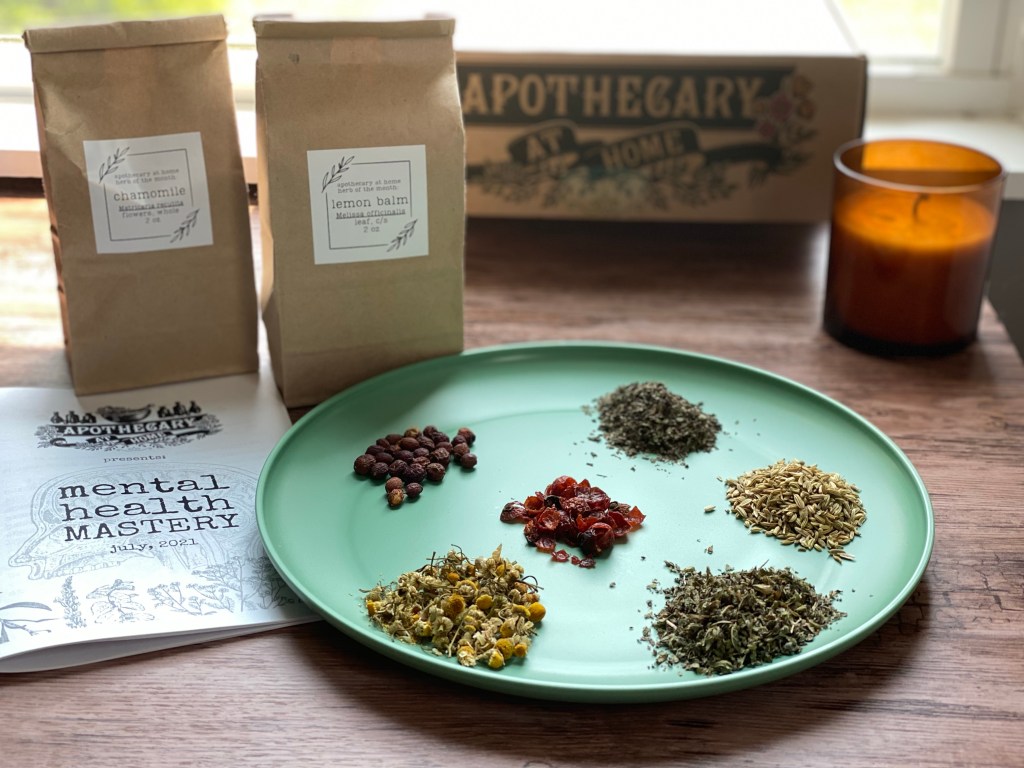
Making a chamomile tincture with guidance from Apothecary At Home

I am not going to go into super depth about the process of making tinctures because I am not an expert herbalist by any means. As I mentioned, I recommend seeking expert guidance for tincture-making, which is what I always do. But here is a brief outline of the process:

Generally, you want to fill a small, sterilized glass jar 3/4 full with dried herb, fill with enough vodka to cover the herb completely, and cap tightly with waxed paper under the lid. Label it with the date made and the date it should be ready, as well as the contents. Keep in a cool dark place, and shake daily. After around 6 weeks, strain and bottle in small, dark glass bottles or jars.

Some great starter herbs for tinctures that are useful in both medicinal and culinary respects include lavender, lemon balm, dandelion root, tulsi, rose hip, hawthorn berry, or juniper berry. These all have various health-supportive uses, like vitamin and mineral supplementation, immune system boosting, and even anxiety, inflammation, and heart support. Plus they taste great!

Tinctures are super convenient once bottled! You can take doses straight if you prefer—a few drops to one dropper full, either straight on or held under the tongue for several seconds. You can also add the same amount to plain water, fizzy water, tea, or even cocktails. A refreshing combo I really love in the summer is lemon lime soda, frozen fruit, and a dropper of fresh lemon balm tincture (which I didn’t make; I bought it from Raven Energy Herbal Apothecary on Instagram).

So, do tinctures seem any less daunting to you now? Or are you already a tincture expert? I’d love to chat about this useful herbal potion in the comments!

Categories
Apothecary At Home Herbs and Herbalism

Apothecary At Home: Mental Health Mastery Study Box

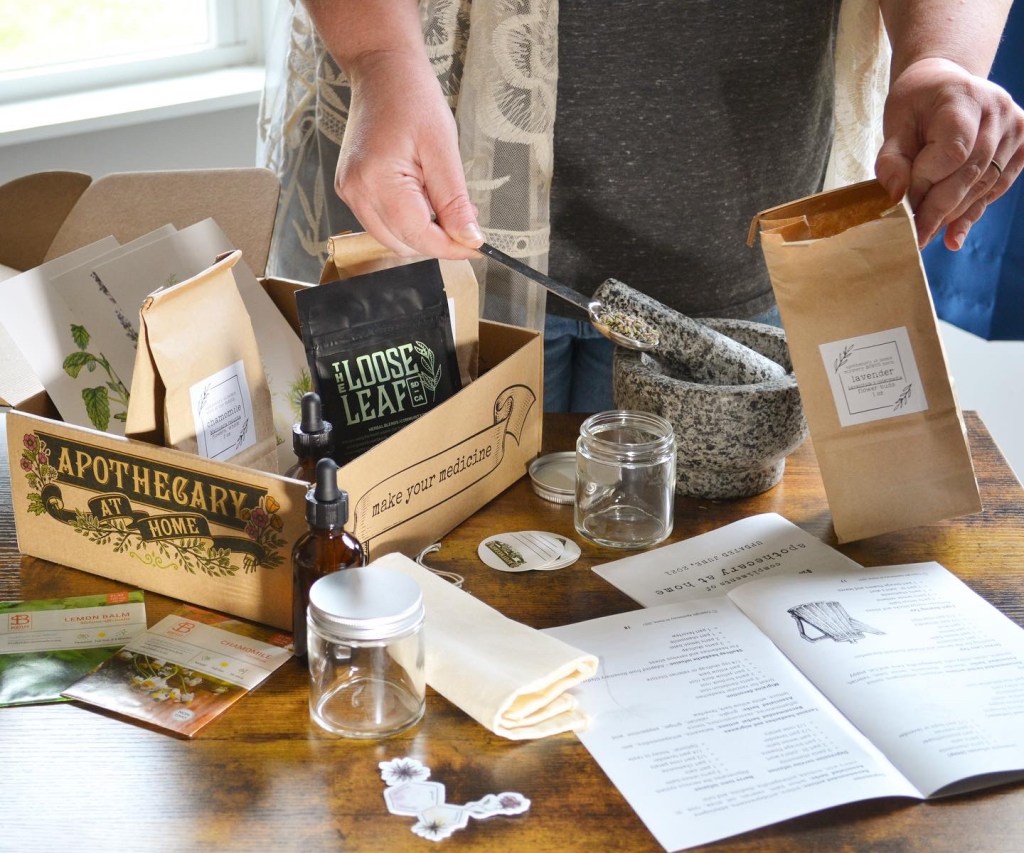
I am so excited to share with you a new way to study herbalism that I’ve discovered! I am partnering with Apothecary At Home, a monthly subscription service sending monthly herbalism study boxes based around health-supportive themes.

Each box contains generous quantities of dried herbs (two features herbs plus one mystery herb); supplies like bottles, labels, and muslin straining bags; a highly detailed, deeply researched study guide with monographs, recipes, instructions, book recommendations, and more; original plant monograph artwork; and fun extras like tea blends, stickers, and more. You are encouraged to work at your own pace and comfort level with the supplied materials to gain a hands-on relationship with herbalism.

I adore the practical, experience-centered approach to this study box. There is no better way to learn herbalism than hands-on with the herbs themselves, and Apothecary At Home brings herbalism class straight to your mailbox so you can do just that. They also offer additional support including an exclusive Facebook community for students and optional monthly Zoom classes centered around each theme! If connecting with other herbalism students at all levels is of interest for you, AAH even creates opportunities for that. And beyond the obvious benefits of teaching you how to create your own herbal medicine, there is something so therapeutic, grounding, connecting, and creatively fulfilling about working with this box.

I feel like a sweet granny witch in her cottage mixing potions when I work with this box!

The theme for July’s box is Mental Health Mastery, a topic that is universally useful! With relaxing nervine herbs like chamomile, lemon balm, and lavender, you have nearly everything you need to create your own teas, tinctures, bath soaks, aromatherapy aids, and other preparations to relieve stress, ease anxiety and depression, help you sleep, soothe digestion, and more.

I have already begun creating remedies from this box and I am really enjoying the experience. I’m loving the tea recipes—I have mixed up a jar of Stress Less tea and last night I slept like a baby after drinking a strong cup of it! I plan to begin work on a couple of soothing tinctures next using the study guide. As someone who is already somewhat versed on these herbalism topics, I can say I’ve already learned new information and perspectives from my studies with this box!

I can’t recommend Apothecary At Home enough! I highly recommend checking out their lovely Instagram account to connect with them and see if it would be a good fit for you. They have a new additional tier of educational box in the works, too, so stay tuned to their social media for info on that. And watch this space for more peeks at their recipes and boxes!

Categories
wheel of the year

Celebrate Litha!

If you’re in the northern hemisphere like me, then the summer solstice, or Litha, is approaching! To me, there is nothing more hygge than aligning yourself with the seasons, the natural world around you, and traditions associated with each spoke on the wheel of the year.

To that end, this week I have a few super simple, low-energy activities planned to do with my kids. I am all for low-cost, low-prep ways to ground yourself in the season and reap what it has to offer. But I never seem to have time or energy to put a ton of effort into anything elaborate. That’s not really necessary, though! Do things up as big or as small as you like, but in my opinion, simplicity never goes amiss.

Summer Treats: Fruit Salad, Herbed Lemon Bars, Popsicles

The summer solstice revolves around the idea of transformation. The fruits of the season are ripe for the picking! So I’ve been making super simple fruit salads with local fruits, fresh herbs, raw honey, and squeezed citrus. This is an excellent way to experience the transformation of spring blossoms into summer bounty.

Watermelon, strawberry, peach, basil, lime, and honey fruit salad

Later this week, the kids and I plan to also incorporate some of those fresh fruits and herbs in simple homemade ice pops! We are going to add vanilla yogurt (you can use dairy or plant-based) to make it a creamy, satisfying treat.

Finally, lemon bars are a summer favorite of mine. Add summer rosemary or lavender, and you’ve got a festive, cottagecore-worthy baked treat! While you can find some excellent recipes on Pinterest, I am probably just going to make a boxed mix and add my own herbs in. (No shame in the boxed mix game!)

Summer Sips: Cooling Iced Sun Teas

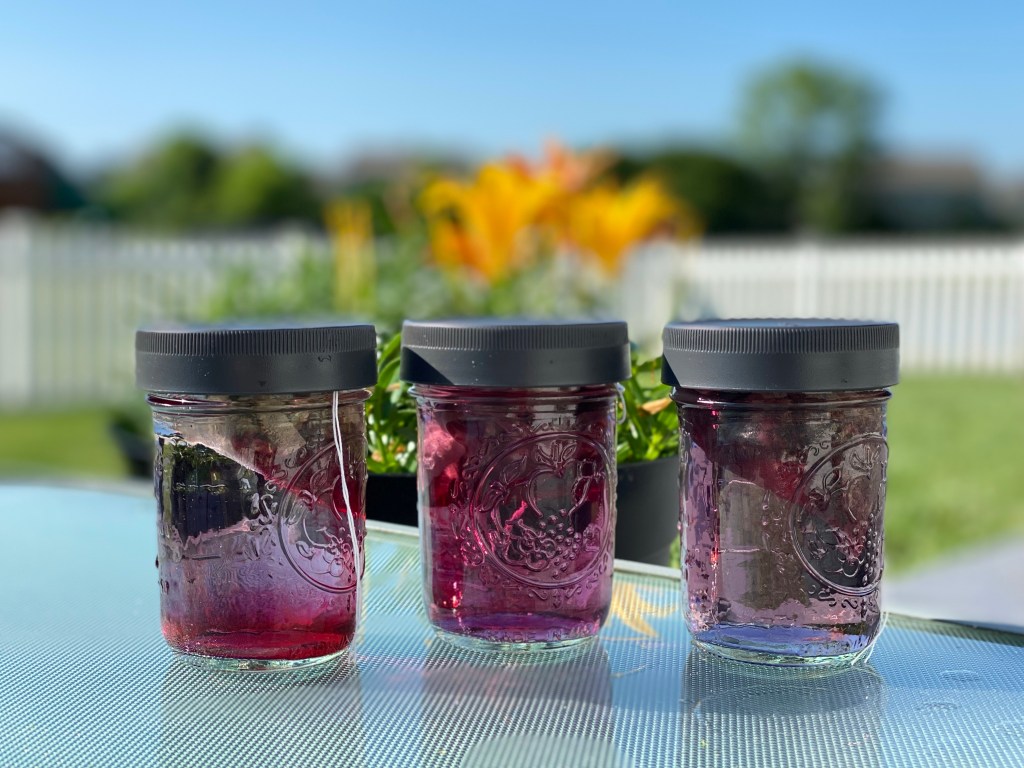
You can’t beat the power of the sun to brew tea. It’s so simple, and you feel like you’re sipping on summer sunshine when you drink your brews! Just add about a tablespoon of herbs per cup of water in a tea strainer or eco-friendly paper teabag, place in a glass jar, fill with cold water and put the lid on tightly, and leave in full sun for 2-4 hours. I sometimes stir in a bit of sweetener (honey works great or your own choice of sweetener), place in the fridge for several hours, and then sip straight from the jar with a reusable straw.

I have been mixing up hibiscus-based teas for the kids and I lately. Hibiscus is a delightfully tart, cooling botanical that is perfect for hot summer weather. It tastes a lot like cranberry juice as an iced tea, so it’s great for kids! Hibiscus is also known to be beneficial for your heart, circulation, and blood pressure.

Little jars of hibiscus sun tea for the kids!

Here are my two favorite hibiscus blends:

Hibiscus, mint, lemon balm, chamomile, blueberries

Hibiscus, lemongrass, orange peel, rooibos, mint, calendula, gotu kola

Summer Moments: Fires and Flowers

Recently we took the kids for their first trip to a “beach,” at one of the largest lakes in our state. We had a blast swimming and playing in the sand! If you are lucky enough to live near a lake or ocean, it’s obviously a fun way to experience some nature in the summer sun.

Most of my plans for marking the solstice are much lower key, however. Taking evening walks when the heat of the day has just passed, burning citronella candles on the back porch (we don’t even have a fire pit, let alone a place for a bonfire!), and maybe making a craft from spent flower petals are all possibilities on the list.

So, those are some of my simple plans for celebrating Litha / the summer solstice this week! How are you planning to celebrate?

Categories
Herbalism in Fiction

Herbalism in Fiction: Practical Magic

If you read my previous Herbalism in Fiction post, you know I have very specific taste in favorite books, namely varying types of fiction featuring herbalism and absorbing, immersive imagery and description. The next book I’m going to touch on is a new favorite of mine, but by no means new: Practical Magic by Alice Hoffman.

To preface: I’ve heard excellent things about the film; though I haven’t seen it yet, and am very excited to, I’ve heard the overall tone of the film and book diverge a bit. I have a feeling it’s one of those cases where they are separate pieces of fiction that stand up in their own ways.

The book is a complex and magical tapestry woven with strands of sisterhood, womanhood, family ties and legacies, love and loss, the magical and the mundane, uniqueness and self-acceptance. The story begins with two little orphaned sisters, Sally and Gillian Owens, who go to live with their elderly witch aunts in the family’s curious, mysterious old home in Massachusetts. As the girls grow up and go their separate ways, forging paths for themselves in life, they find themselves ultimately needing that family magic in their lives despite their efforts to grow away from it.

Practical Magic is a mixture of literary fiction and magical realism, with heartwarming notes, dark and spooky threads, cozy and immersive imagery, painful beauty, and just the right bits of levity thrown in the mix. It is really a unique work of literature that will really pull at your heartstrings and ignite your imagination if you’ll let it!

As far as this book’s herbalism connection, it is an inextricable part of the dense palette of the story. Lush, vivid descriptions of the aunts’ herb garden, frequent recurrences of lavender and rosemary, mention of concoctions and poisons, and THAT lilac bush (when you read it, you’ll know!) put this book squarely on my list. And the aunts’ house with its dark corners, chandeliers, big window seat, mysterious portrait, and self-dusting woodwork (yes, please!) add just the hygge element I’m always searching for in books, too.

I am so glad I finally read this book! Not only does it tick all my boxes, but the story itself is both deep and thought-provoking while also lovely and sweet, ultimately. And there are a few other books about the renowned Owens women in publication or to come, which promises more books for this list!

Categories
Herbs and Herbalism

Herb Profile: Rose

It’s June, herbology faeries! If you’re in the northern hemisphere like me, it’s the month of warming temperatures, lengthening days, bugs and blooms, and the summer solstice. Here’s hoping for lots of energizing sunshine to brighten the days!

I have decided to try something here on the blog and concentrate my focus on one or two plants per month. (It will probably depend on the month and my mood!) So, to start off June, let’s talk about a quintessential June plant—roses!

There are many types of roses, but in culinary and body care contexts it’s best to stick with strongly scented varieties. Use wild roses if you can! (And stay away from pesticide-treated and florist-bought roses.) You can use the petals, buds, leaves, and hips (fruit) of roses.

Roses are an age-old herbal ally, and are best known to represent love. Health-wise, they are great for your heart, pain, PMS, inflammation, blood pressure, stress, anxiety, and insomnia, so that’s not hard to understand! They are great tasting and mood-elevating, too. And rose hips are incredibly rich in vitamin C and are often used as in immune system booster. Roses are considered sour, drying, and cooling, with astringent, analgesic, anti-inflammatory, antioxidant, and nervine properties.

And now, for the fun part: a few of my favorite ways to use rose!

Rose, lavender, and chamomile tea (alone or with other additions such as green rooibos, mugwort, green tea, lemon balm, and/or dried or fresh berries)

Rose and cardamom (with or without additions like mint, nettle, cinnamon, citrus, and/or fennel) tea

Rose, mint, and cacao nib tea

Rose-infused honey

Rosewater-infused desserts (cakes, scones, cookies, fruit salads)

Dried rose petals in skincare products and loose leaf incense


Which ways do you love to incorporate rose into your botanical creations?

Sources:

“Rose Monograph.” LearningHerbs, December 28, 2016. https://herbmentor.learningherbs.com/herb/rose/#botanically-speaking/.

de la Forêt, Rosemary. Alchemy of Herbs. New York: Hay House, Inc., 2017.

Categories
Herbalism in Fiction

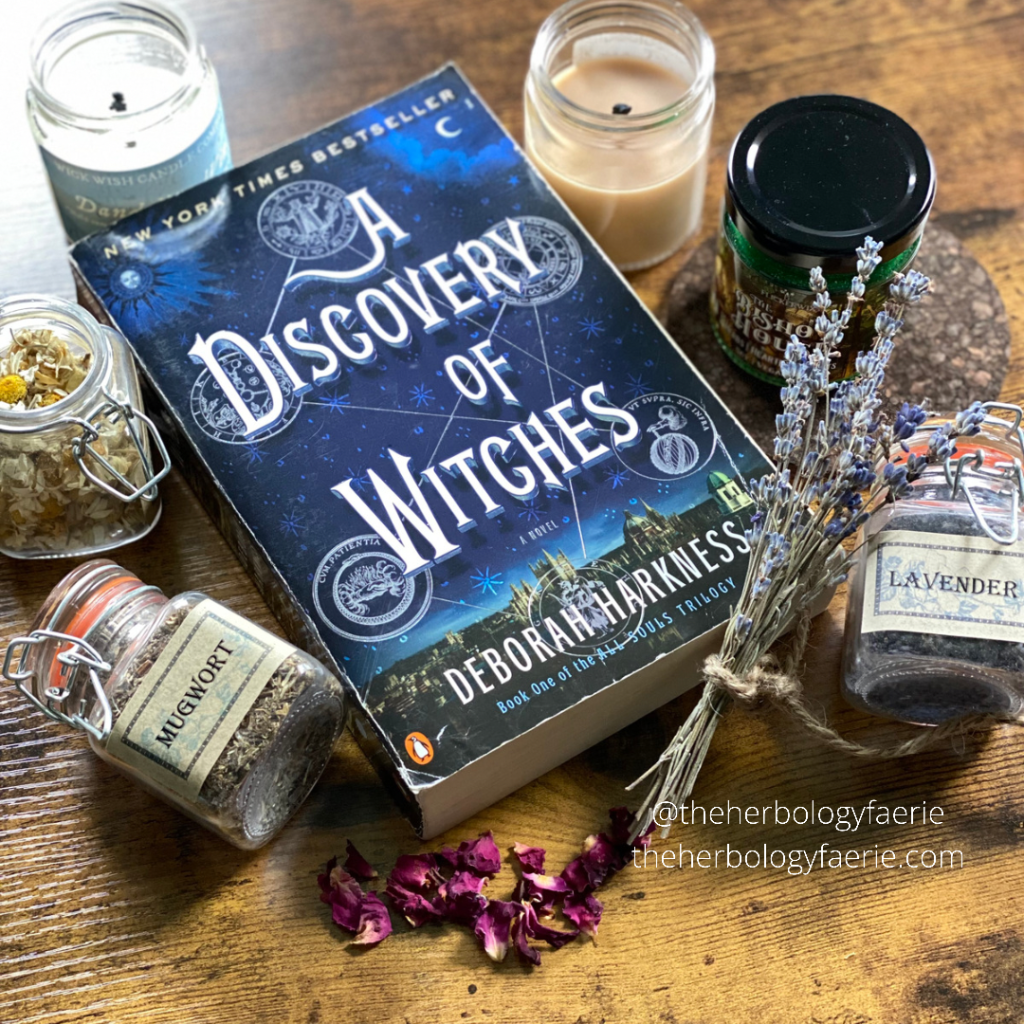
Herbalism in Fiction: A Discovery of Witches

I have the most oddly specific favorite sub-genre of books: fiction (be it fantasy, mystery, historical, or otherwise) that includes heavy doses of herbalism and lush, immersive description. So, in case there are others who adore this type of novel, I am going to begin sharing my favorite books that meet those criteria here on the blog. The first book I’m featuring is A Discovery of Witches by Deborah Harkness (and the whole All Souls series).

The series follows Diana Bishop, a historian and witch who gets caught up in dangers and deceptions after discovering a lost magical book in the Bodleian Library. Having once shunned her powers, Diana must finally come to terms with them to find out what the book means and what it has to do with her. The story also centers around the two other types of creatures, vampires and daemons, and the dynamics and traditions between these three groups of otherworldly beings. Add in romance, ghosts, time travel, real historical figures, science, mysteries, intrigue, dark secrets, and also lovable characters and inviting settings, and you’ve got this thoroughly gripping series in as good a nutshell as I can manage to stuff it into. These books contain magical multitudes.

But I’m specifically here to heap praise on this series for its hygge herbology connections. There is so much to love in these books in that regard! I adore the very lovingly-detailed descriptions of the teas Diana loves and how she takes them, the scenes involving the harvesting and blending of a particular type of herbal tisane at a castle in France (I can’t elaborate because, spoilers), and the unique descriptions of each character’s particular botanical scent. There are viscerally-appealing, incredibly immersive descriptions of locations like dark, antiquarian libraries and cozy Oxford haunts that really stick with you. And don’t even get me started on the depth of detail in the installment that primarily takes place in Elizabethan England.

But far and away, my favorite parts of these books take place in Diana’s witch aunts’ colonial family home in upstate New York. You can hear every creak of the floorboards, smell the mixed scents of wood smoke and coffee and herbs, and feel the weighty presence of the family ghosts in every word. The aunts’ witch’s garden brims with herbs, and there just aren’t enough scenes spent in Sarah’s dark still room with dried aromatic plants and her old coffee-maker-turned-cauldron. The sense of safety and family Diana feels here, even if she tries to deny it at times, is utterly palpable to the reader.

So, all that wordiness to say, if you like this stuff, then read these books! They are my literal favorite books of all time and I will not disclose how many times I have read them. Until you get on the train and come back to tell me how right I was!

Categories
Herbs and Herbalism

Herb Profile: Rooibos

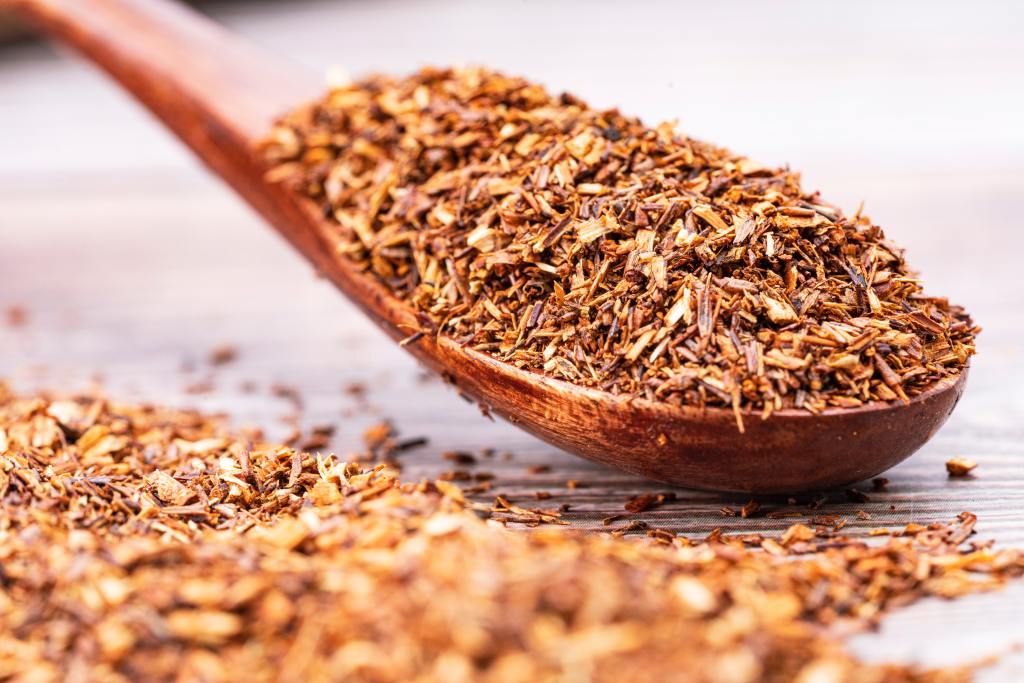
I decided to start this series of herb profile posts with what may be a bit of an unusual choice. Rooibos is very widely consumed in tea form and is probably in some of the decaf tea bags in your kitchen cabinet right now! But it isn’t often high on the list of plants associated with herbalism. Yet, rooibos is one of my absolute favorite herbs, and one I would not like to live without! So, read on to learn more about this cozy and versatile plant.

A Bit of Background:

Rooibos grows mainly in South Africa and is a shrub-like plant. It is prepared much like tea leaves: regular or red rooibos is oxidized or fermented like black tea, whereas green rooibos undergoes a similar process to green tea. Their tastes and benefits are also quite comparable, with the main exception being rooibos is caffeine free and actually contains much higher levels of antioxidants than tea! Also, the taste varies in that rooibos has a bit of a sweet, cinnamon-y tartness that is absent in black tea.

Health Benefits:

Rooibos is purported to carry with it a host of benefits. Full of antioxidants and polyphenols, it is said to be an immune-boosting, inflammation-busting, blood sugar-regulating wonder.

On a personal and anecdotal note, I find both varieties of rooibos to be earthy, grounding, delicious, and cozy! It meets my standards of a highly hygge herb. I love drinking it hot or cold, any time of year.

Recipe Time!

It is hard to go astray blending rooibos with other herbs for tea blends. It is often my go-to base ingredient for anchoring tea blends and giving them a full-bodied, satisfying, cozy flavor. To get you started, here are a few of my favorite simple combinations for rooibos-based teas:

Red rooibos—

Rooibos + chai spices

Rooibos + chamomile + ginger

Rooibos + mint + cacao nibs + fennel

Green rooibos—

Green rooibos + tulsi + dandelion root + ginger

Green rooibos + dried fruit + chamomile

Green rooibos + elderflower + ginger + calendula

Are you a fan of rooibos? Or if you’ve never tried it, are you ready to now?

Categories
Hygge

This Hygge Business

What is all this “hygge” business about?

You may already be familiar with the popular term, which gained recognition due to the publication of the book The Little Book of Hygge by Meik Wiking (and many other books on the topic by others since). “Hygge” is a Danish concept (from a Norwegian word) that refers to a particular type of cultivated coziness and comfort. Things like slow living, hand-made and baked goods, candlelight, quality time in nature, comfortable simplicity, and companionship during such activities.

As you might gather, herbalism and hygge go well together! Creating traditional recipes with natural herbal ingredients and taking slow, quiet moments to enjoy them are all about as hygge as it gets. Sharing one’s love of this with others? Even more so. And gardening, herbal baking, gifting handmade items, using herbal bath products, learning about the botanical world…it all conjures those hygge vibes.

The hygge concept has other points of appeal for me, personally, too. For starters, I learned a few years ago through a DNA test that much of my cultural heritage stems from the very region hygge comes from. Suddenly, my intense, innate need to seek out and cultivate coziness makes more sense! Bring on the pastries, hikes, and scented candles.

My life situation, even before the pandemic, involves being very much rooted (aka stuck) at home. I am a stay-at-home-mom to three kids currently six and under, one of which is being temporarily homeschooled due to the pandemic. Even after they begin attending school in the fall (the twins are four and will be doing half-day pre-k in the fall and big sister will be in first grade), I will still be spending almost all my time at home. My life is fairly solitary and a bit lonely. Focusing on cultivating hygge coziness helps me feel more present, grounded, content, and fulfilled. And it helps take the edge off when loneliness or anxiety get overwhelming.

Connecting with hygge makes me feel connected to something traditional, visceral, and both elementary yet kind of complicated at the same time. In today’s world it is difficult to give yourself permission to slow down and drink in every moment. But this cultivates peace of mind and connection with the small and slow things, the natural world around you, and the quiet contentment you can find within yourself if you pause and listen.