Happy September! It’s a new month (one of the best ones!) and time for a new plant profile. Since I’ve officially joined in on the Plant Wonder Collective on Instagram, I’m going to begin featuring the PWC herb of the month in my plant profile blog posts to coincide. So, for September, let’s take a look at lemon balm!
I think of lemon balm as being one of the most “chill” herbs I’ve had the pleasure to befriend and work with. The spirit of this plant is so happy, cheerful, and uplifting. And its scent and taste are, too! It should come as no surprise, then, that lemon balm is considered a relaxing nervine herb. But it is so much more than that, too!
Originally native to southern and Central Europe, the Middle East, and parts of Asia, lemon balm is now much more widespread in its naturalization. One thing I find fascinating about lemon balm is its varied recorded historical uses—from the Greeks and Romans, to the Middle Ages, and beyond. It was a favorite strewing herb and had many medicinal, culinary, and even perfuming applications. In folklore, lemon balm is associated with protection and joy (echoing its medicinal qualities) and is associated with the goddess Diana.
Lemon balm has a primarily sour taste (though many find it sweet as well) and is energetically cooling and drying. It has a wide range of properties—relaxing nervine, antiviral and antimicrobial, antioxidant, antispasmodic, digestant, and probably more. Lemon balm is well known as a gentle, safe aid for stress, anxiety, indigestion, nausea, and insomnia. It is also helpful for colds, fever, flu, and other infections, as well as topically for rashes, small wounds, and bug bites. It is great for the heart, cognitive function, and pain, and can help with depression and seasonal affective disorder as well.
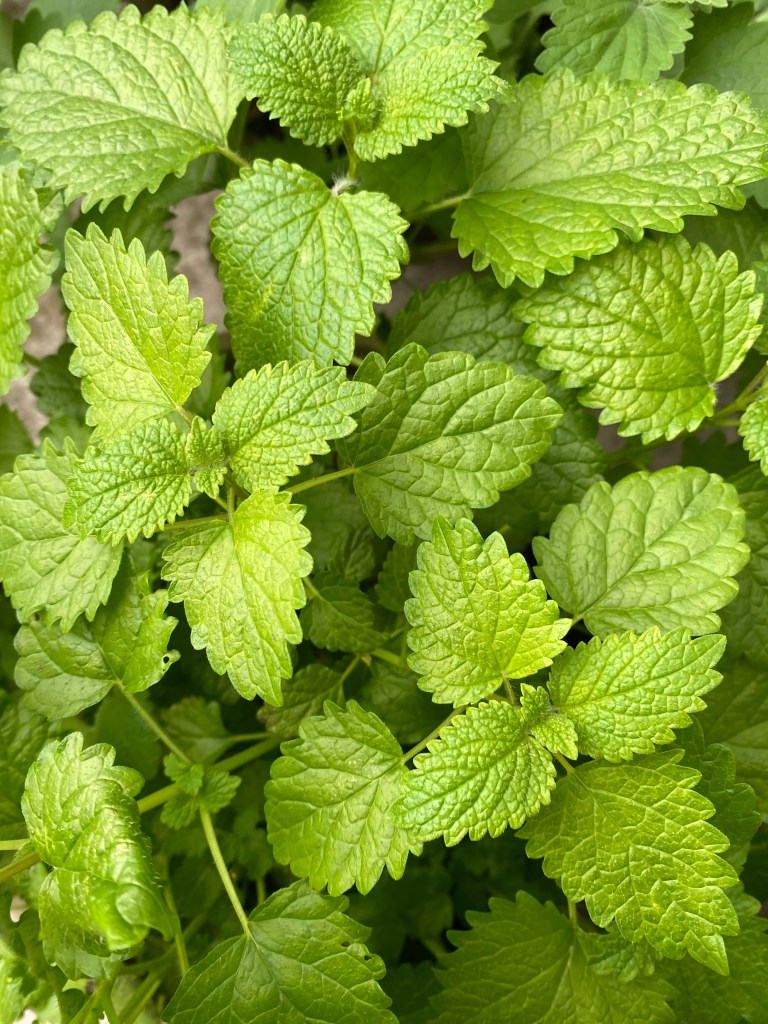
One thing I’ve observed about lemon balm is that it smells and tastes much more potent and lemony when fresh. Dried lemon balm is equally useful and you’ll find it in many herbal teas, but nothing compares to fresh lemon balm. If you don’t have access to garden space, this is one herb you’ll definitely want to consider growing in a sunny windowsill!
I’ll be sharing more lemon balm recipes both here and over on Instagram throughout September, but I’ll leave you with one of the simplest and most soothing tea recipes I’ve encountered. It’s a classic you’re sure to have seen before on other recipe blogs or books, or even in a supermarket tea. There is a reason for that! It tastes wonderful cold or hot, it’s safe for kids and adults, and it is a gently relaxing tea to help with stress, anxiety, depression, digestion, colds, and insomnia.
Simple Soother:
1 part lemon balm
1 part chamomile
½ part lavender
That’s it! You can use fresh or dried herbs interchangeably in this recipe; I use what I have on hand. I like to cold brew big jars of this overnight and sip it any time of the day. I also share it with my kids, because they love it!
Are you a lemon balm lover? What is your favorite way to work with lemon balm?
———
Sources:
• Rosalee de la Foret, Herb Mentor monograph
• Rebecca Beyer, Wild Witchcraft
• Sarah Farr, Healing Herbal Teas
• Tina Sams, Herbal Medicine for Emotional Healing


 The Herbology Faerie