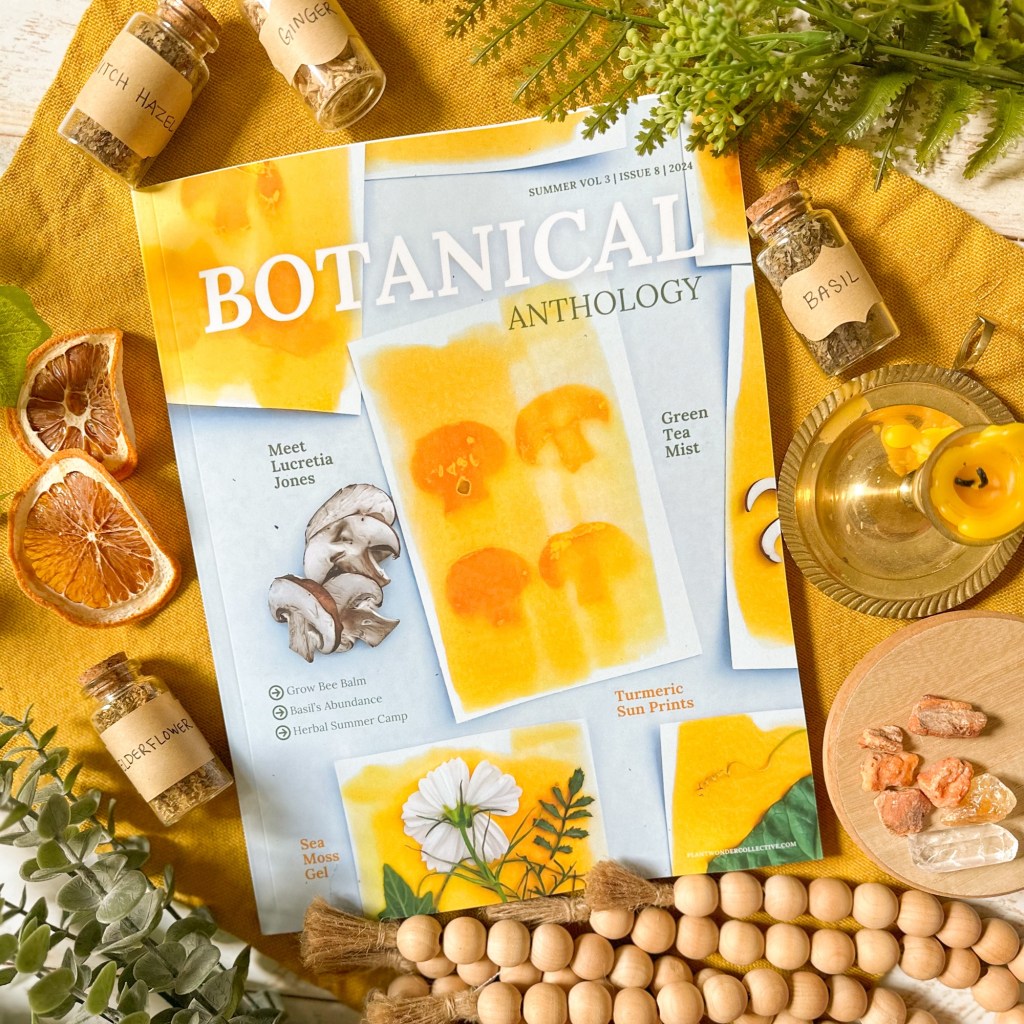
It’s here! The launch of theSummer edition of Botanical Anthology is TODAY! It’s coming at ya just when the heat is rising, and plants are coming into their full glory.
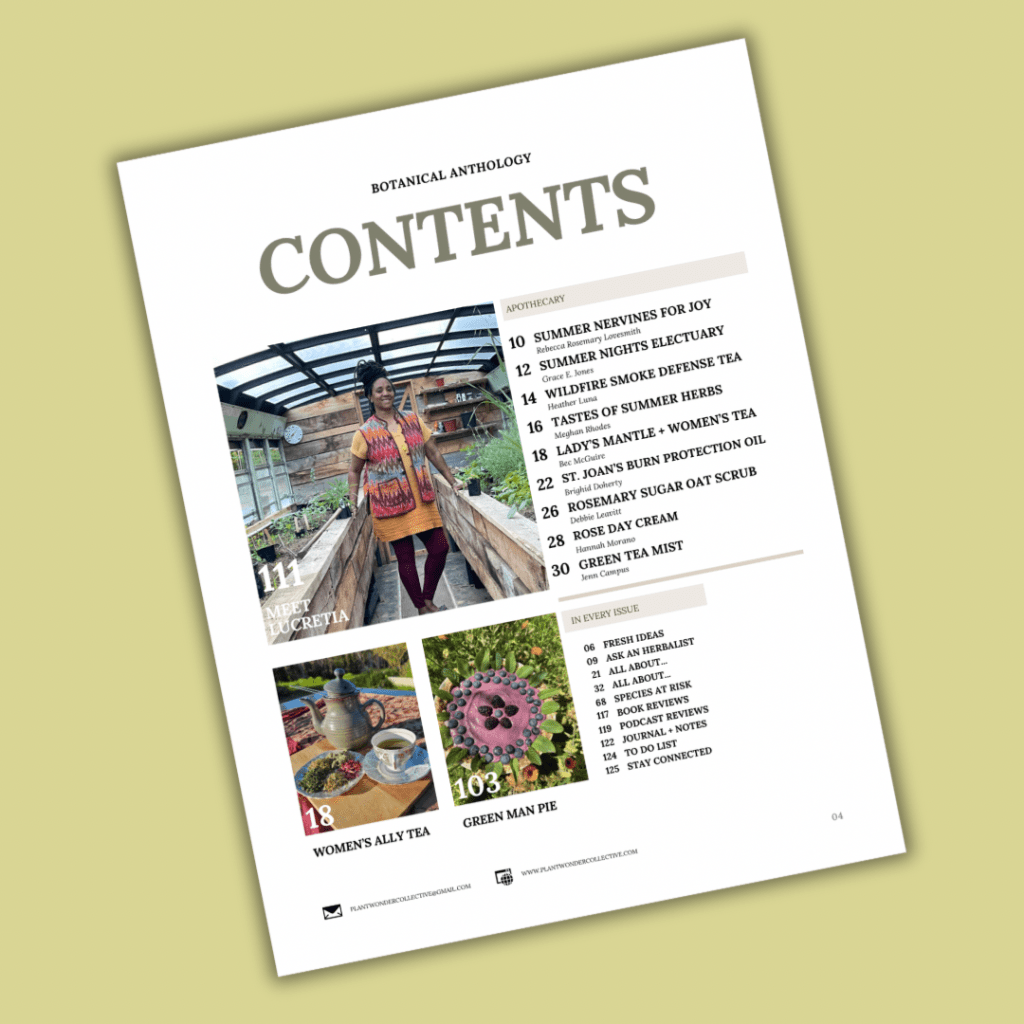
A plant lover’s dream, Botanical Anthology is a seasonal, plant-centered digital + print magazine bringing you over 40 articles from over 40 contributors in 110+ pages to incorporate herbs in your apothecary, kitchen, self-care, foraging, gardening, crafts, and summer celebrations. This is our ninth edition, beginning our next circle around the sun.
(I am extra proud of this magazine because not only am I a contributing writer, but I am also the copyeditor of the magazine!)
At Plant Wonder Collective, we love sharing daily inspiration on our plant of the month, but for this project, we really want to connect to the seasons. Let us be your guide to working with plants in the months ahead.
Through 6/19, grab your digital copy for just $16 and receive the All About Rose booklet for free!
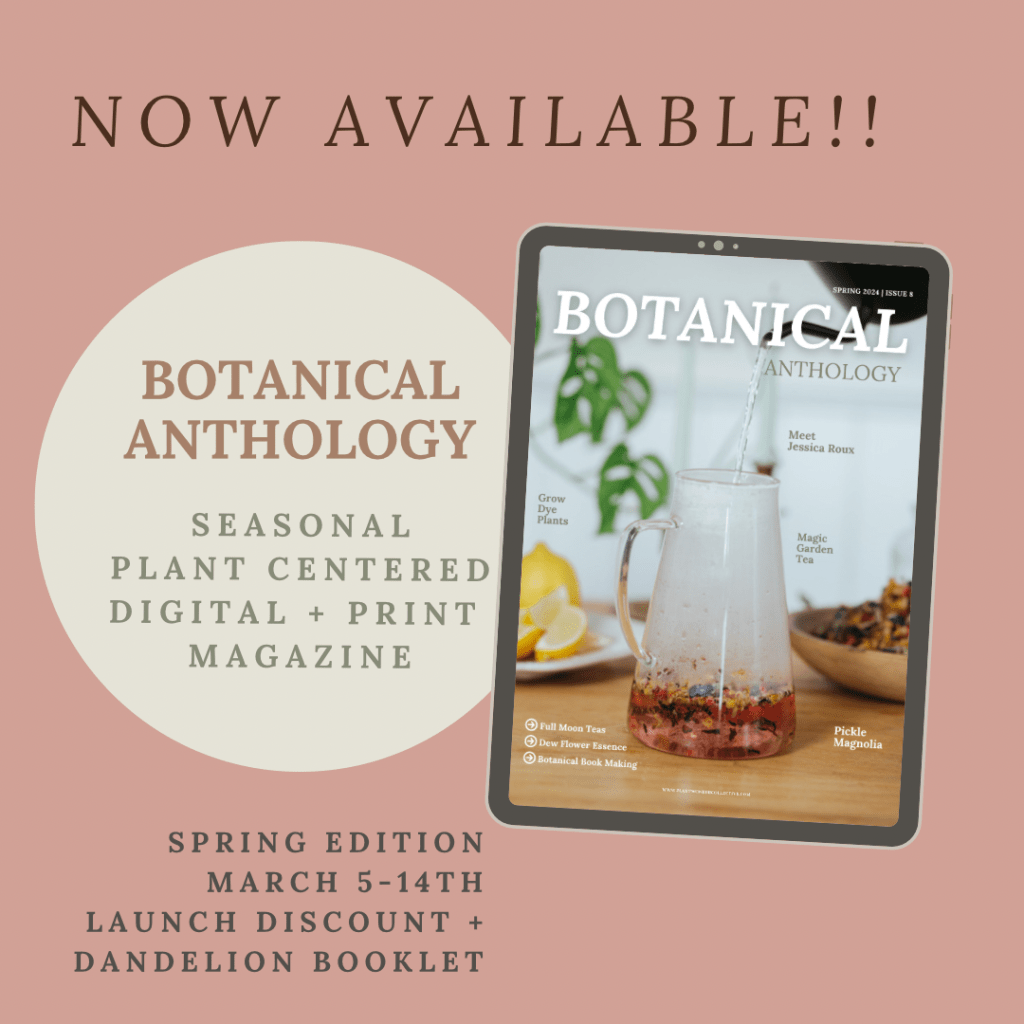
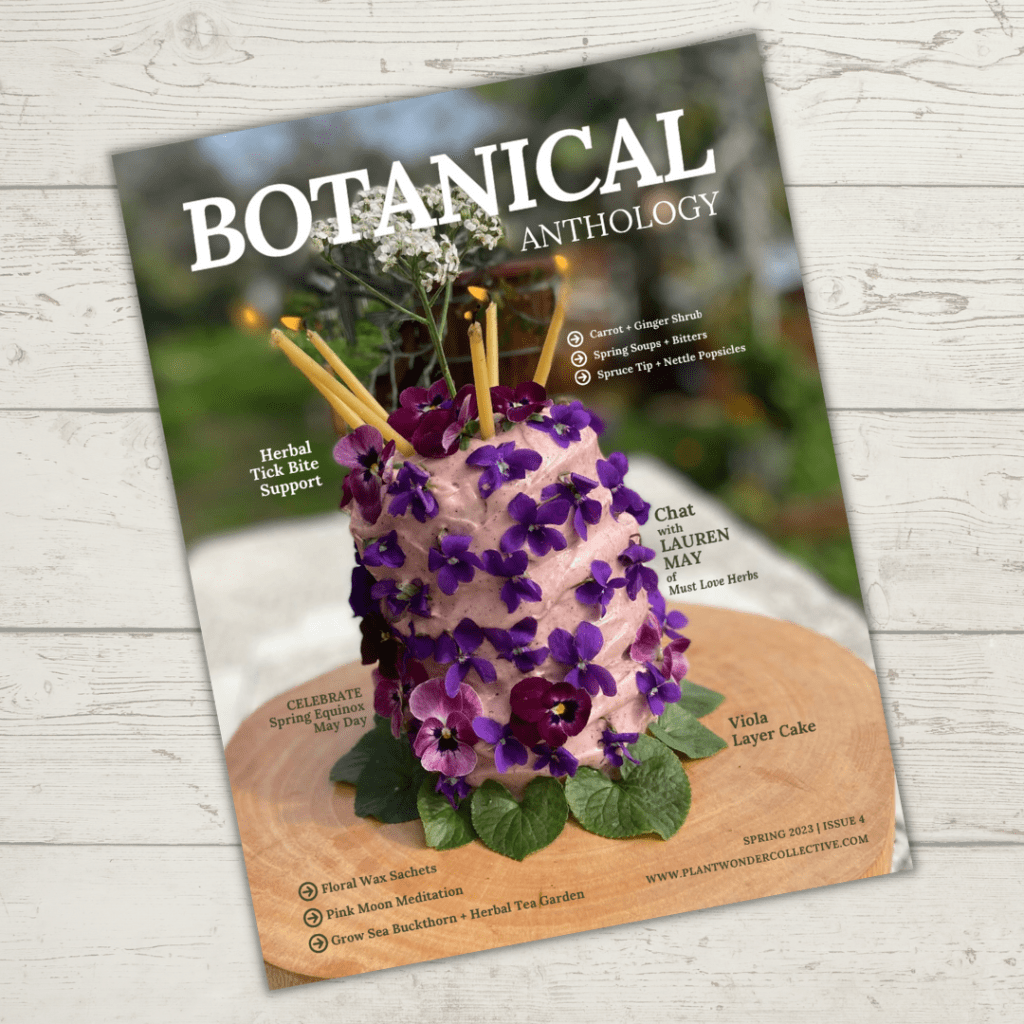
Today is the day! The spring issue of Botanical Anthology, the plant-centered independent magazine I contribute articles to (and edit) comes out today! I am so excited about all the lovely spring recipes, apothecary preparations, celebrations, crafts, sabbat magic, gardening, foraging, poetry, and more inside its pages.
This digital + print magazine contains over 40 articles from 38 creative contributors. It is a gorgeous springtime plant-filled wonder and is evergreen—you can come back to it every year, more like a book than a magazine.
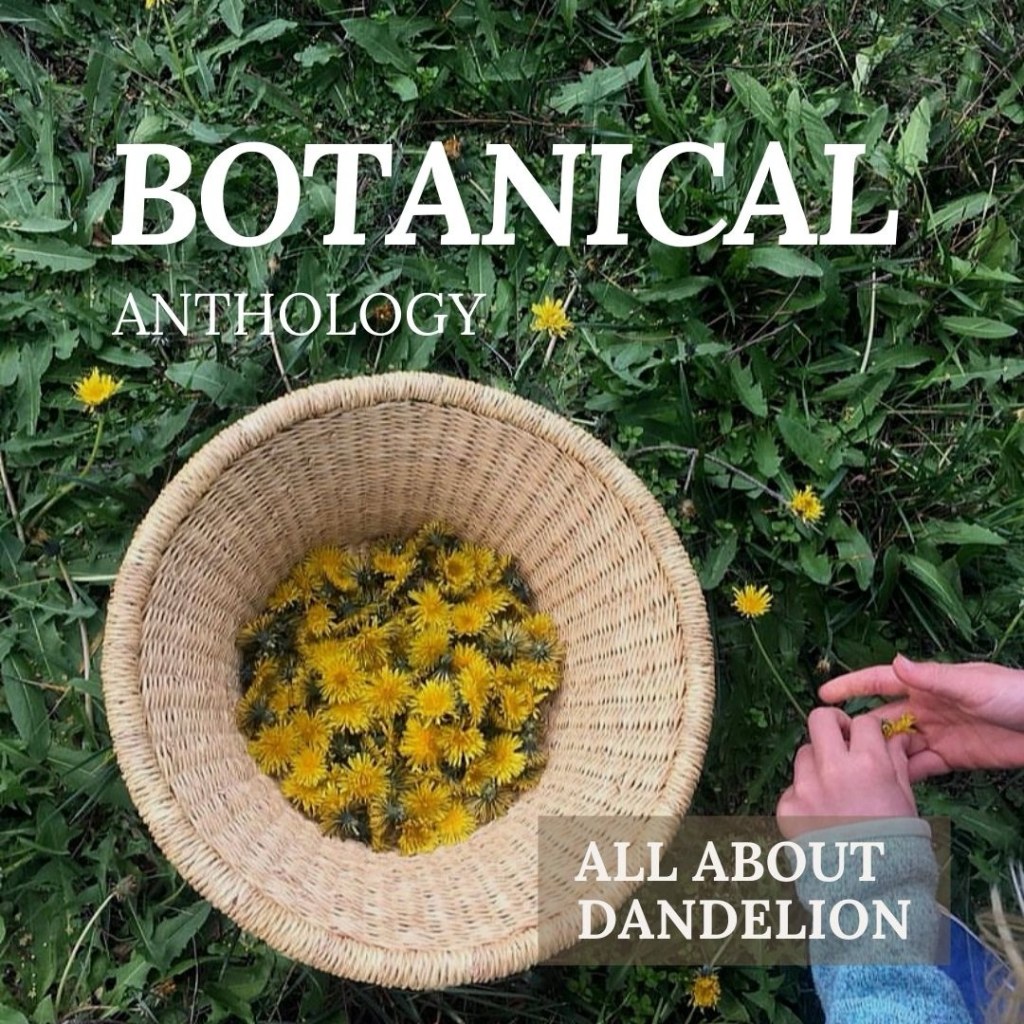
And this time around, the bonus booklet is all about DANDELION! It is the biggest bonus booklet yet, and possibly my favorite one so far. (The bonus booklet is exclusive to those who purchase the magazine now through 3/14.)
Full disclosure—if you use my link to purchase a digital copy, I get a little tiny boost; but if you prefer a physical copy, I get a teensy one if you use my link for that, too.
Hello, friends! I apologize that it has been so long since I’ve shared any recipes, projects or herbal info with you here. November has been a very busy and unusual month! So I thought I would pop in and tell you a few things that have been going on lately, including some exciting publications coming out soon.
Not to start on a sad note, but my grandmother died at the beginning of November. We were not close, but I have still felt the effects of losing a family member, and have also spent some time helping my parents with a few things regarding her home and belongings. So, that has thrown off my usual autumn recipe writing and making.
My grandma
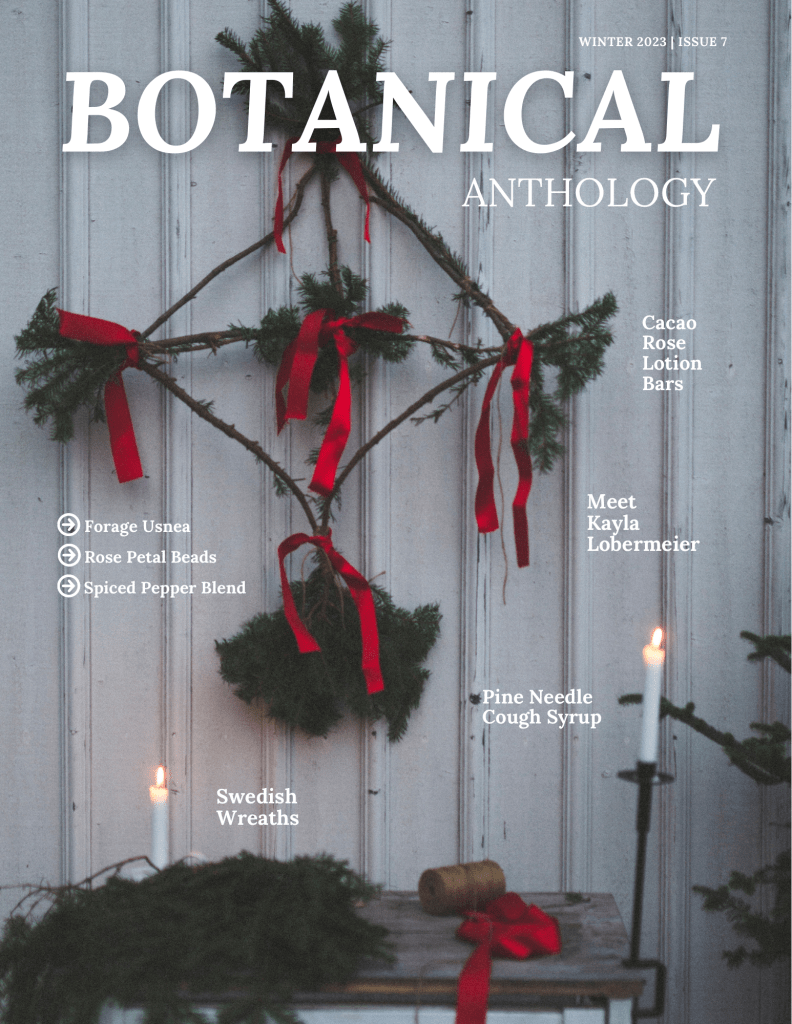
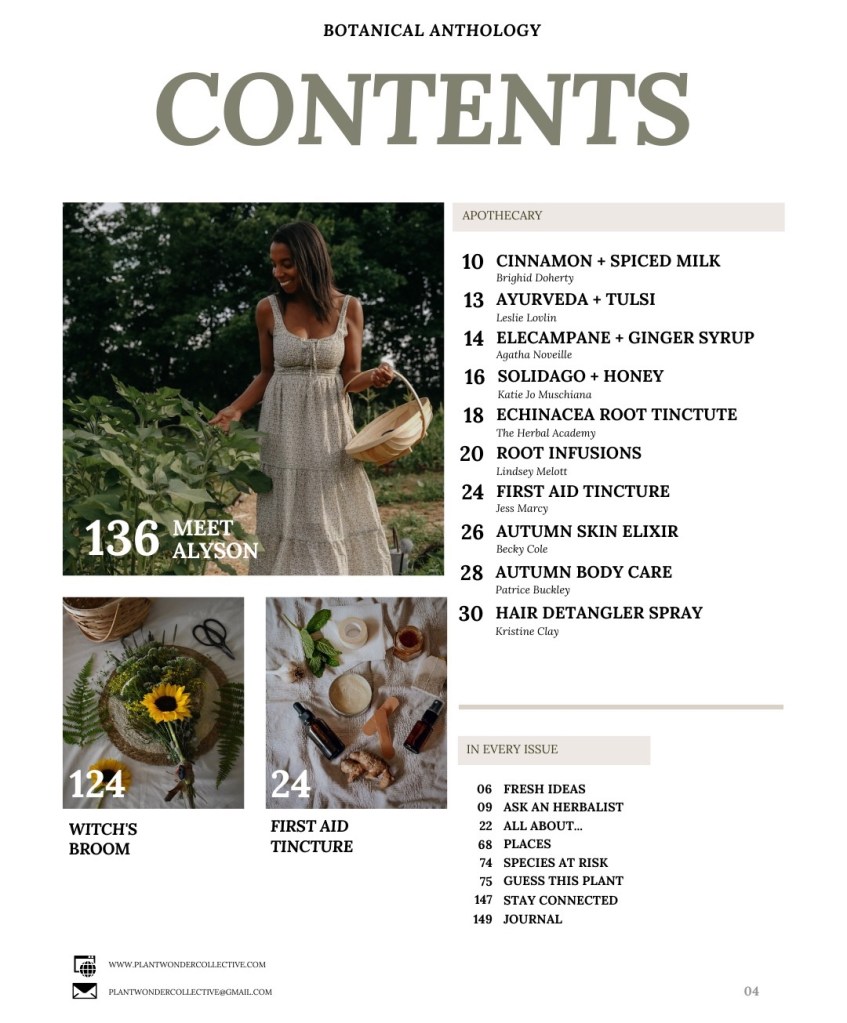
On a happier note, I have been hard at work helping to edit the upcoming winter edition of the Botanical Anthology magazine! With an almost month-early release date and lots of extra side projects tied in, this endeavor has kept me on my toes. I can’t wait to share more with you about this cozy plant-centered publication and the articles I’ve written for it.
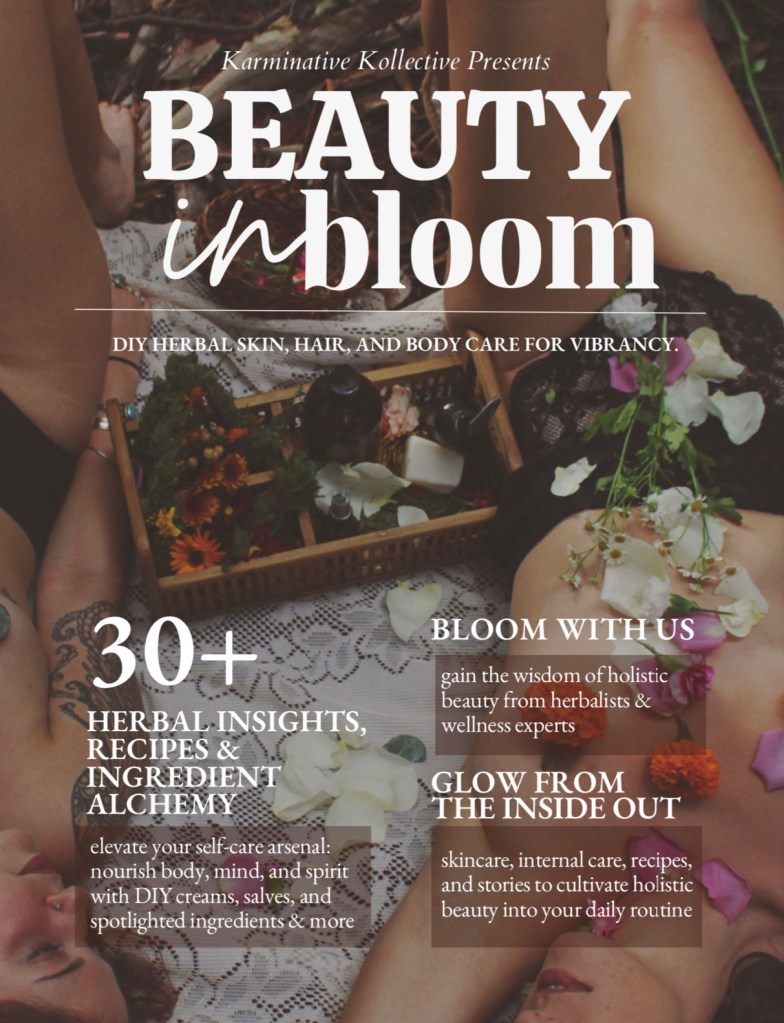
I have also written articles for other publications! The winter edition of Willow & Sage came out this month and includes a Lavender Pine Lip Balm recipe by me. And soon, a new publication called Beauty in Bloom will release with two articles by me inside!
I’ve been hard at work finishing my Winter Tea Booklet, the recipe ebook (already available!) in my Etsy shop. Rosemary Faerie tier Patreon patrons will receive this as one of their December gifts!
As ever, I’ve been creating other posts and printables for those lovely Patreon patrons, too. This month they’ve received a tea recipe coloring page, an herb monograph all about cardamom, a mini guide to crafting winter candles (also in my Etsy shop), and more!
I will be back soon to share more about the Botanical Anthology and Beauty in Bloom, as well as more recipes again! Thank you for sticking with me here, my faerie friends!
This article appears in the Winter 2022 edition of Botanical Anthology. You can purchase a digital copy HERE or a print copy HERE.
Along with the joys winter brings, it unfortunately also carries increased risk of illness in its wake. Between extra time spent indoors during colder weather and the season’s gatherings and festivities, exposure to many types of illnesses sees a dramatic uptick. To that end, immune support becomes a constant refrain.
Herbal allies can be indispensable when it comes to this winter barrage of germs. But what does “herbal immune boosting” mean? It is a many-pronged approach to keeping your body functioning optimally so that you might avoid some illnesses altogether, or at least lessen their severity. Different types of herbs work together synergistically to aid with this never-ending task.
Adaptogens Fatigue, burnout, and chronic stress are common problems that weaken the immune system and its ability to fend off illness. Adaptogenic herbs help restore balance and protect the body’s systems and processes to counter these effects, the immune system being an important beneficiary. Tulsi, astragalus, reishi and chaga mushrooms and licorice root are just a few examples of adaptogens.
Nervines Stress and insomnia deplete the body and create the perfect breeding ground for germs. Luckily, nervine herbs help combat both of these issues, and many are gentle and safe for everyday use for most individuals. As an added bonus, some nervines have antimicrobial properties, too. Gentle nervine herbs include chamomile, lavender, lemon balm, tulsi, rosemary, linden, hawthorn, and passionflower.
Diaphoretics Diaphoretic herbs are warming and promote circulation. Once sick, these herbs go on to help sweat out a fever and offer respiratory relief. These include yarrow, elderflower and berry, chamomile, ginger, catnip, cayenne, garlic, and linden.
Aromatics Aromatic herbs don’t just taste great—they provide important immune boosting actions, too. Most aid digestion, while also offering strong antimicrobial support. These germ-killers include ginger, cardamom, cinnamon, cloves, anise, allspice, rosemary, and fennel.
Antioxidants Antioxidants like vitamin C aid immunity by supporting and stimulating antimicrobial actions on a cellular level as well as protecting body tissues from damage. Antioxidant herbs that provide much-needed immune boosting include rooibos, rose hips, hibiscus, elderberry, orange peel, and raspberry leaves.
Alteratives Alterative herbs aid in detoxifying your body by supporting the organs and systems that handle this important task. You need your liver, kidneys, and lymphatic system in tip-top shape to fight off illness! This category of herbs includes echinacea, calendula, dandelion root, burdock root, and nettles.
There are countless combinations one can work with to create an immune-boosting herbal recipe. To make things a little less daunting, here is a simple tea as a starting point. It features elderberry, a tried-and- true immunity aid, but also rooibos, an oft-overlooked antioxidant powerhouse. There is a bit here from each of the above categories, and plenty to tempt the taste buds, as well.
Blend this combination of herbs as the recipe states, or use it as a jumping-off point to inspire your own immune supporting formulation!
Method Mix all ingredients except orange in a bowl. Transfer to an airtight container.
To make a single cup of tea, add 1 tablespoon to a tea strainer, eco-friendly tea bag, or French press. Pour about 1 1⁄2 cups hot water over the tea and steep for 5 to 10 minutes. Add fresh orange zest or orange slice and honey to taste, if desired.
Notes This recipe yields approximately 10 servings of tea. If making a small batch, measure the parts in teaspoons—it should yield about 2 servings of tea.
For educational purposes only. Not intended for medical advice. Always consult your physician.
*This post contains affiliate links, which means if you choose to buy something from a link that I share, I will make a small percentage of the sale *at no extra cost to you*.
This is an excerpt from the article Cinnamon, More than One Spice by Brighid Doherty featured in the Autumn edition of Botanical Anthology. A plant lover’s dream, it is a seasonal, plant centered quarterly publication bringing you over 50 articles from 49 contributors to incorporate herbs in your apothecary, kitchen, foraging and gardening, crafts, and celebrations.
To learn more about the similarities and differences between the two types of cinnamon plus their medicinal qualities check out our autumn edition. This herbal magazine, featuring remedies and recipes with medicinal plants for budding herbalists, can be purchased as a digital version here and as a printed version here.
Photo by Brighid Doherty
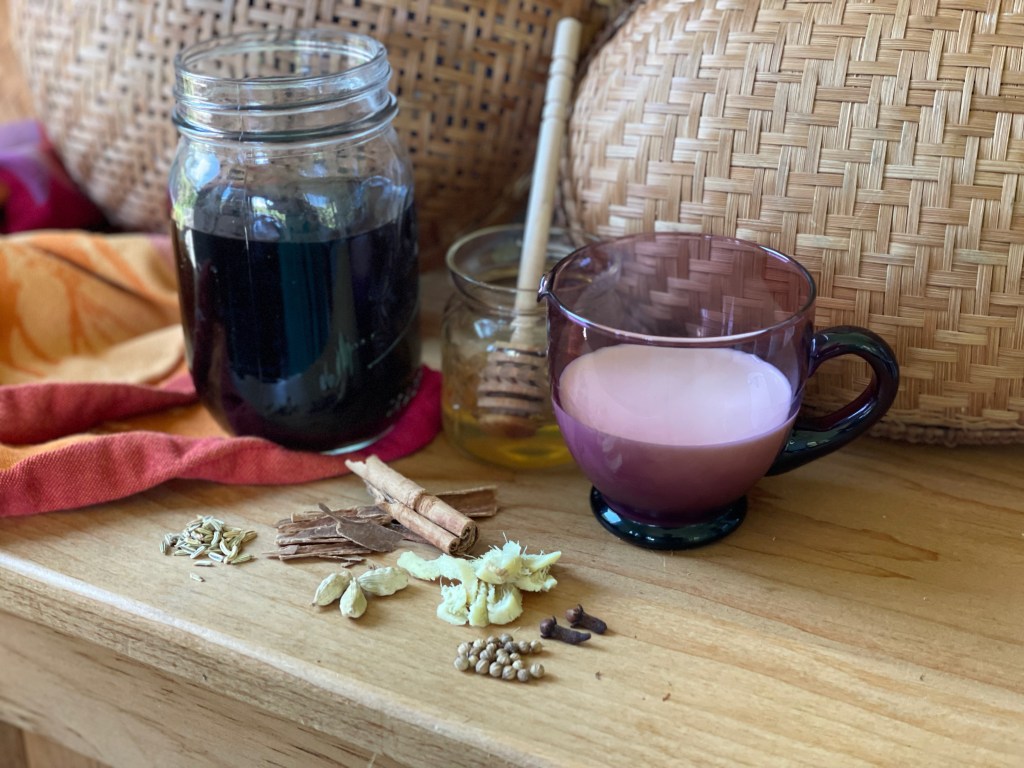
Breathe Easy Spiced Milk
This infusion is a nourishing combination of mullein, cinnamon, milk and honey that supports lung health. Whether the lungs have been exposed to excessive smoke or air pollution or experience chronic asthma, allergies, bronchitis or coughs, this remedy will help them function better. All of the ingredients soothe and nourish lung tissue. Mullein is a classic lung tonic herb. Cinnamon is warming, soothing and antimicrobial. Milk soothes lung tissue and provides important minerals allowing them to be calm. Honey sweetens and adds anti-microbial and soothing properties to the beverage.
Photo by Brighid Doherty
Materials
½ oz mullein leaves
2 c water, boiling hot
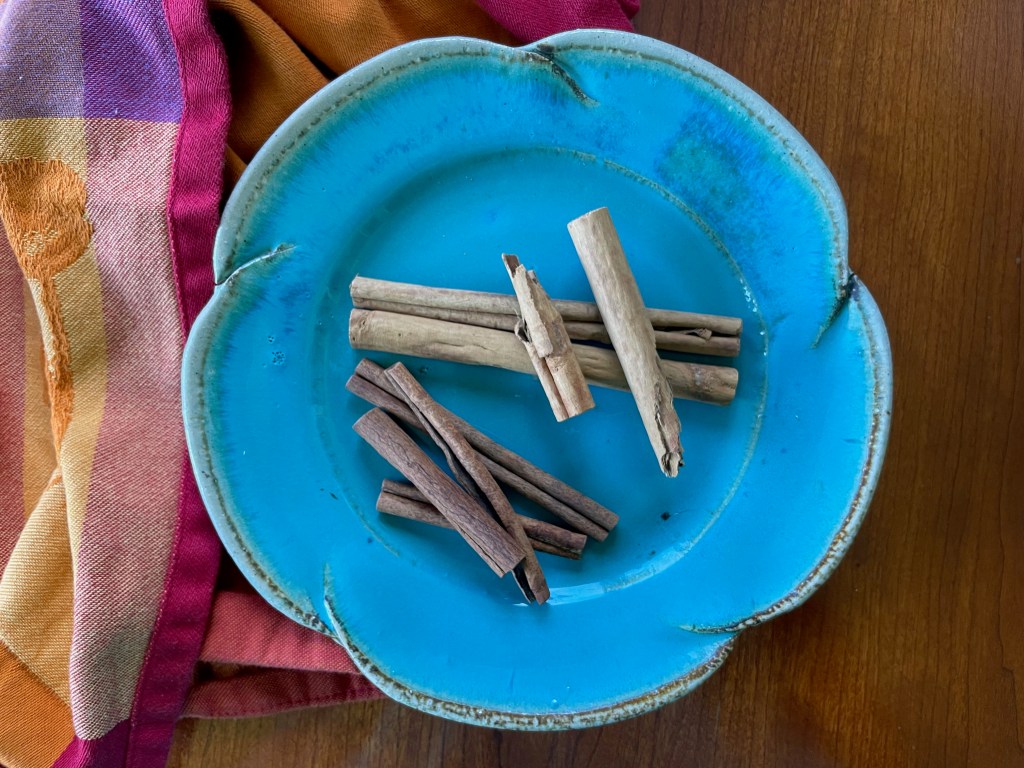
2 tbsp cinnamon chips or 2 quills
1-2 teaspoon each of cloves, cardamom, ginger, fennel seeds, optional
2 c organic whole milk or half and half
1 tbsp or more honey
1 quart mason jar and lid
Unbleached coffee filter paper and ceramic drip cup or fine mesh strainer
Small sauce pot
Method
Add mullein and boiling water to a quart mason jar and cover with a tight lid. Steep for 4-8 hours.
Strain the infusion into a small sauce pot. Add the milk, cinnamon and other desired spices. Simmer gently for 20-40 minutes.
Strain out the cinnamon and spices. Sweeten with honey to your preference. Pour into the quart jar to store.
Drink at least one cup per day. Enjoy warm or cold.
Store mullein infusion in the fridge for up to 1 week. Once the milk has been added it should be consumed within three days.
Notes
Mullein leaves have fine hairs that have the potential to irritate the throat when consumed. To avoid the hairs, mullein infusion is best strained through a fine mesh or unbleached coffee filter.
Premixed chai blends can be used instead of using cinnamon alone, or you can make your own spice blend.
Photo by Brighid Doherty
Brighid is a mother, gardener, herbalist, educator, podcaster, and author living on a bridged island in Maine. She is founder of The Solidago Herb School, The Healthy Herb Podcast, and author of Drinkable Healing Herbal Infusions. Connect with her @solidagoherbschool and solidagoherbschool.com
I am so excited to share that yesterday was the launch of the autumn issue of Botanical Anthology!
We have worked hard to create a beautiful, useful, cozy, and magical botanical compendium (because it’s way too huge to call a “magazine,” in reality) about all things plants + fall. (I am both a contributing writer for this magazine, with 4 articles / pieces in this issue, as well as its copyeditor!)
If you love plants, living aligned with the seasons, trying your hand at homemade foods + skin products + decor + fun crafts, connecting to nature, and extreme coziness, you’ll love the BA. It is a seasonal, plant-centered quarterly digital + print journal bringing you over 50 articles from 49 contributors to incorporate herbs into your autumn apothecary, kitchen, foraging and gardening, crafts, and celebrations.
From September 12th – 21st, receive the Botanical Anthology Autumn edition digital download, plus our garlic bonus booklet digital download, for just $18. Come next week, the garlic booklet will no longer be included, and the price will increase. (It is also available in print on Amazon for ~$26; Amazon changes the price periodically but that’s the current price.)
In this issue:
* Infuse a first aid tincture, steep root infusions + transition skincare to autumn
* Make pumpkin spice marshmallows, sip cacao bone broth + bake chocolate chestnut cookies
* Harvest medicinal roots, forage birch polypore + put your garden to rest
* Print leaves, dye with mushrooms + weave a cornucopia
* Divine with apples, craft a witch’s broom + discover olive folklore
* Celebrate Autumn Equinox + Samhain with simple observances
We are so proud of this labor of love, creativity, and love of plants. Let us be your guide to work with plants as you journey through the autumn season!
This is an excerpt from the Summer edition of Botanical Anthology. A plant lover’s dream, it is a seasonal, plant centered quarterly publication bringing you over 45 articles from 46 contributors to incorporate herbs in your apothecary, kitchen, summer foraging and gardening, crafts, and celebrations.
This herbal magazine, featuring remedies and recipes with medicinal plants for budding herbalists, can be purchased as a digital version here and as a printed version here.
Photo by Kristine Clay
If you enjoy the classic herbal cocktail, the mint julep, then this fruity, floral rendition is sure to become a fast favorite.
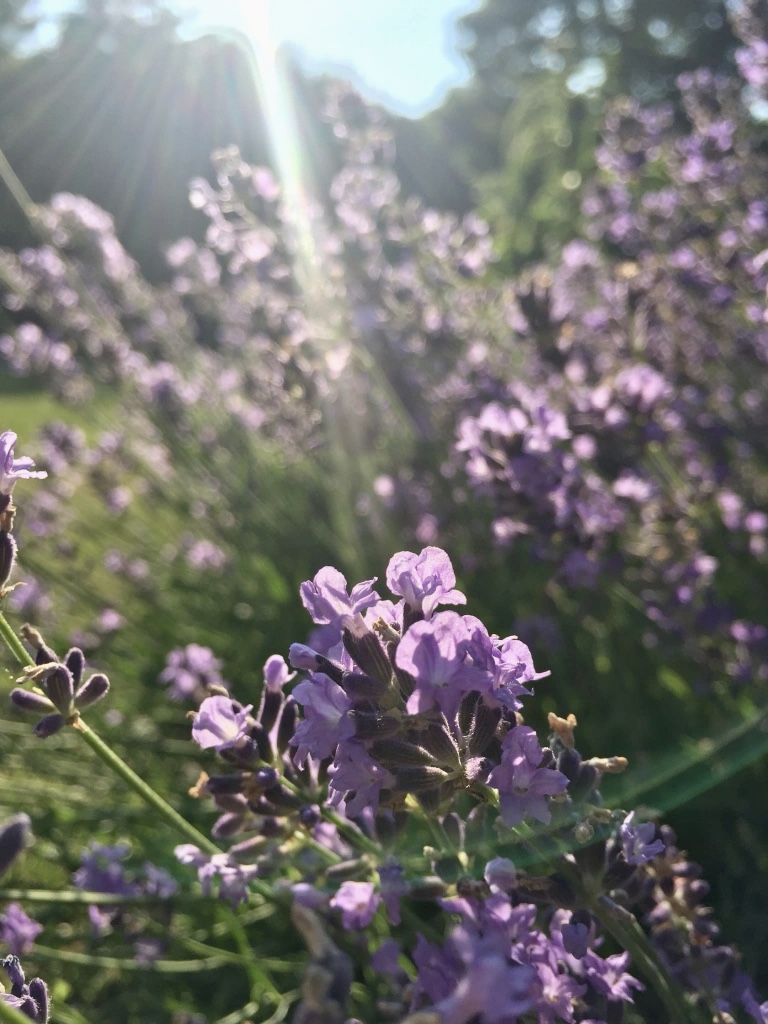
Infused whiskey lends stunning color and bursts with fresh strawberry flavor, while lavender rounds out the beverage with pleasant herbaceous notes that hint of mint. Lavender can ease stress and anxiety, helping you to unwind as you sip.
Serve this boozy beverage at your next get together or enjoy with friends on a warm summer evening.
Strawberry Whiskey Materials
2 c strawberries, fresh, sliced
Whiskey
16 oz jar
Strawberry Whiskey Method
Place strawberries in a jar.
Pour whiskey over top, filling the jar.
Cap tightly with a lid and shake well. Let the strawberries steep in whiskey for at least 1-2 weeks, shaking daily or as often as you remember.
You can use the whiskey after about a week, but giving it a full 2 weeks to infuse will allow the flavor to really develop.
Note
If you won’t be using the whiskey right away, there’s no need to strain out the infusing strawberries after 2 weeks. Longer steep times allow the flavor to deepen, and can make for a very tasty liquor.
Photo by Kristine Clay
Lavender Simple Syrup Materials
¼ c lavender, dried
½ c sugar
¼ c lime juice
¼ c water
Lavender Simple Syrup Method
Add the ingredients to a small saucepan.
Bring the liquid to a rapid boil then reduce the heat and simmer lightly for about 10 minutes.
Remove from heat and let the syrup cool.
Strain out the lavender pieces and bottle the syrup.
Store leftover syrup in the refrigerator.
Photo by Kristine Clay
Strawberry Lavender Julep Materials
1 ½ f. oz strawberry whiskey
½ fl oz lavender simple syrup
Ice cubes
Fresh lavender sprigs
Club soda or sparkling water, optional
Strawberry Lavender Julep Method
Pour whiskey and simple syrup into a glass and stir.
Add ice.
If desired, top with a splash of club soda or sparkling water.
Garnish with a sprig or two of fresh lavender.
Note
This recipe makes one cocktail.
Article written by Kristine Clay. Kristine is a mother, herbalist, & writer who lives on an off-grid homestead in the Ecuadorian Andes. She enjoys crafting botanical concoctions, baking, and hiking with her partner in the eco-sanctuary they steward. You can read her musings about herbs, nourishing foods, & holistic mothering on her blog: mamalibelula.com and find out more about Andean plants, regenerative land management, & raising rabbits at: SierrayCielo.org.
I am so, so very excited to share with you about this labor of love, the Summer edition of Botanical Anthology, which is launching tomorrow, June 12!
I am personally more involved than ever in the production of this publication—aside from writing articles for it, I am now its copyeditor. I’ve worked closely with the magazine’s founder/editor, my friend Harmonie, on the design and content of this edition as well as editing all the articles. I can tell you that all 46 contributors are bringing amazing articles, recipes, and other content centering around summer and how to incorporate herbs in your apothecary, kitchen, spring foraging and gardening, crafts, and summer celebrations.
Here is a sampling of what’s inside:
* Whip up an itch soothing salve, steep a California poppy tincture + infuse an evening primrose oil
* Whisk a milky oats honey mustard, make watermint chocolate chip ice cream + bake a starflower cucumber cake
* Grow amaranth, make fertilizer with comfrey + learn why you should add herbs to your garden
* Create clay mushrooms, eco print with coreopsis + make sidewalk chalk
* Form summer rituals, build a Lion’s Gate altar + discover rose family folklore
* Celebrate Summer Solstice + Lammas with simple observances
* Meet Rebecca Desnos, Susan Leopold + Tiffany Jones
From June 12th – 21st, receive the Botanical Anthology Summer edition digital download, plus our lavender bonus booklet download, for just $18. Come next week, the lavender booklet will no longer be included, and the price will increase.
And now you can purchase a printed option via Amazon!! Plus we have gift card and digital subscription options on our website!
As a thank you for being here with me as a BLOG FOLLOWER, enjoy $3 off the publication with the code: BASummer23Take$3
Thank you so much for taking the time to read this message as I share my excitement about this magazine I am so lucky to be a part of. If you’d like to learn more about the publication and what’s inside, and consider buying your own copy, follow this link:
This blog post is a little something different: an excerpt from the spring edition of Botanical Anthology!
This plant centered digital publication is packed with seasonal crafts, recipes, foraging tips, articles, & more. Click here to learn more about the digital edition, or click here to check out the print edition.
Carrie Tuttle is an environmental educator, mom, and poet. She has been weaving magic into her home via kitchen and garden witchery for 30 years. She lives in Wyoming with her family, pets, and gardens.
Fires of Beltane Loose Floral Incense
By Carrie Tuttle
Beltane is a glorious celebration of fire. Translated roughly as bright fire, the day falls at the halfway point between the Spring Equinox and the Summer Solstice. Here we find a day associated with bonfires, feasting, and the fertility of the land beneath our feet. Beltane, or Mayday, is awash with flowers. In Gaelic lands, and in modern Paganism, it is celebrated with a flower wreathed Maypole, floral wreaths for the May Queen and celebrants, as well as decorating homes and sacred places and spaces with spring florals.
For many this is a time of year when spring begins its raucous state of growth; a riot of flowers, lengthening days, and getting our gardens underway. One practice to honor this day, and its connection to fire and growth, is through the crafting of ritual incense. The use of incense is common in ritual and dates back thousands of years to ancient Mesopotamia, where the burning of herbs and resins facilitated sacred communication with the gods. In addition, it is believed that the healing elements of herbs can be transferred through their burning as well, leading many to blend their own healing incense.
Using a loose incense allows the crafter to use dried flowers and herbs in their whole form, without having to pulverize, mix and add a binder; required in the blending of stick and cone incense. It is a simple and quick way to craft incense, and involves only the herbs and a source of heat, such as a charcoal disc or electric incense burner.
The Beltane incense below was crafted with following herbs for their corresponding symbolism:
Lavender: love, luck, grace, and connection to ones higher self
Apple or crabapple twigs: beauty, health, fertility, and harmony
Rose: romance, passion, rebirth, renewal
Jasmine : sensuality, positivity, connection to the divine
Mugwort: dreams, protection, self-love, magic
You may also add other herbs from your local environment, or from your gardens, as it enhances your connection to the land, and to your personal practice. Just be sure to look into their properties, as you don’t want to burn anything that could be toxic.
Blending these dried herbs together to burn is its own wild alchemy, because as you blend you put your intentions for this fiery holiday into work. You may imagine the correspondences as you blend each herb, or add your own magical intent.
Materials
3 tbsp jasmine flower
2 tbsp lavender
2 tbsp mugwort
1 tbsp roses
1 tbsp apple twigs, cut into ½ inch bits
Method
Mix well, place in a jar and label.
Burn over a charcoal disk or in your outdoor Beltane fire of choice.
Notes
The batch makes approximately ½ cup of the incense blend.
Increase the batch size to use in a bonfire or to give as gifts.
“The odor of burning juniper is the sweetest fragrance on the face of the earth, in my honest judgment; I doubt if all the smoking censers of Dante’s paradise could equal it.”
—Edward Abbey
Happy (belated) New Year!
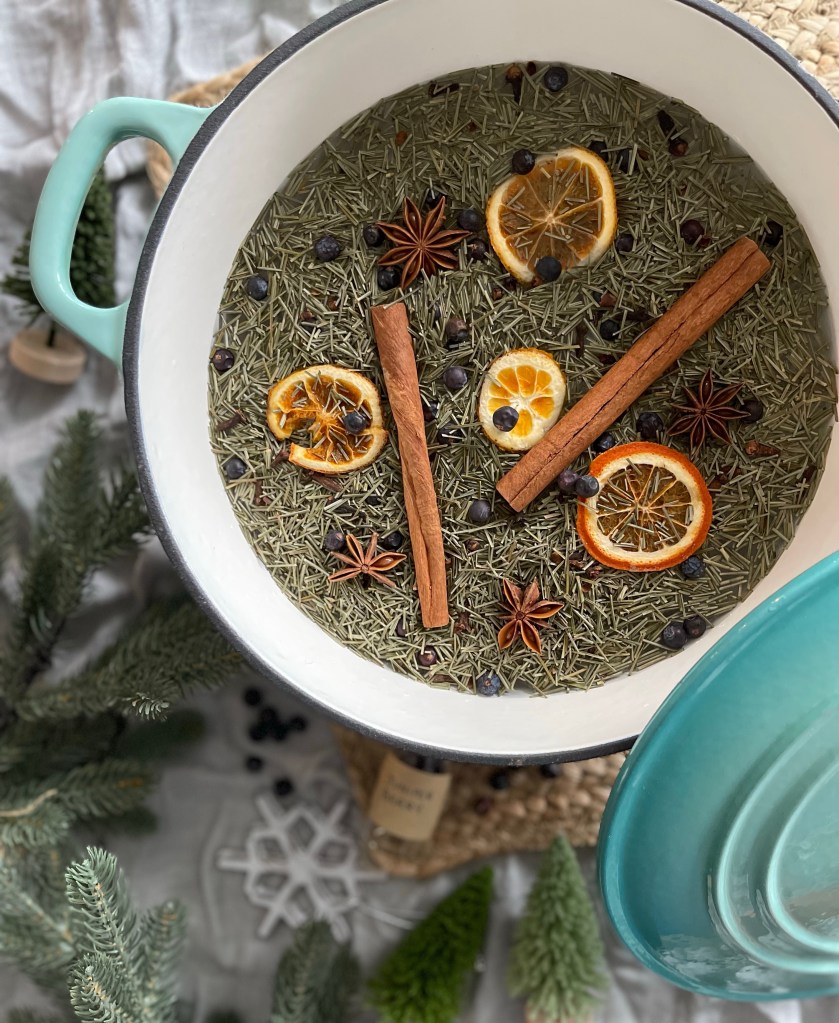
Today, my wildlings are back at school, and I am celebrating the beginning of the new year with a simmer pot containing dried juniper berries, pine needles, orange slices, cinnamon, rosemary, and cloves. (You can read more about it on my Instagram post HERE.)
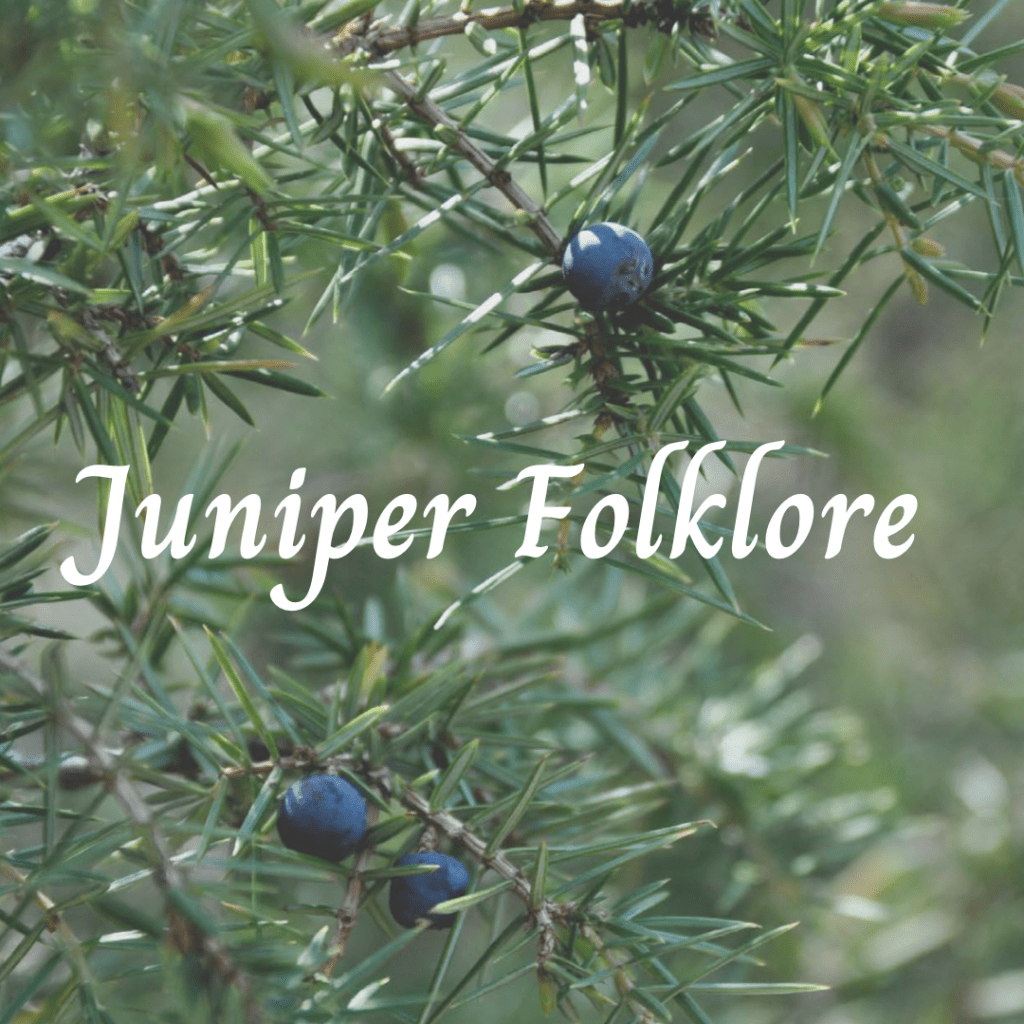
Did you know I wrote an article all about juniper folklore for the recent Winter Botanical Anthology? I’m case you missed it, and because juniper is such a lovely botanical for this time of year, I thought I’d share that article with you here today!
Though it’s perhaps not the first evergreen one thinks of in connection to winter, juniper has a long and storied history that often ties it to the colder parts of the year.
Juniper represents hope and warmth, thriving in overwrought soil where other trees can’t. It is symbolically, elementally, and astrologically associated with fire, ruled by the Sun and closely tied to Mars. Juniper also symbolizes eternal life.
The juniper tree’s berry-like cones and twigs provide food for animals, often the only available winter sustenance. They offer culinary and medicinal uses for humans, and there are many ritualistic applications for juniper’s wood and berries, as well. It is quite interesting how juniper’s folk associations mirror its medicinal uses.
The age-old use of juniper medicinally for healing, relieving stagnation, and protection from diseases probably stems in large part from the berries’ diuretic and anti-inflammatory properties. One of the most pleasant ways to administer these medicinal benefits came in the form of gin, the juniper berry liquor that dates back as far as the 11th century, as well as medicinal juniper twig beer.
In accord with these historical medical practices, juniper was—and still is—used in folk practice for protection. For disease, poison, plague, spirits, demons, and especially thievery, juniper has been a potent ward.
Often, smoke and charms are the vehicle by which juniper performs this protective service. Many cultures, including ancient Greeks and Egyptians, used juniper incense in this manner. Various types of protective amulets and charms were made from juniper berries, as well. The trees have even been long used in some places as Yule or Christmas trees or greenery for some added protection.
The Scottish have a long-standing winter tradition. The day after Hogmanay, the celebration of New Year’s eve, women would perform a saining, a smoke cleansing of the entire house with smoldering juniper branches. The aromatic smoke was carried and dispersed throughout the house for blessings, purification, and protection for the coming year; the same was performed through barns and to purify livestock.
Several species of juniper are also native to the Americas, as reflected by juniper’s presence in many indigenous Americans’ traditions and tales. Among those, the Hopi, Navajo, Blackfoot, and Seneca tell legends surrounding the tree or its berries. A Seneca tale involves junipers and other evergreens standing up to old man winter so spring may return.
While winter persists, perhaps juniper is a plant to explore a deeper relationship with. Whether it’s branches in greenery that decorates the home, fragrant incense, or even a sip of gin, inviting juniper in is a way to connect to this plant’s long history.

















 The Herbology Faerie