The ocean is a treasure trove of botanical goodness in the form of nutritious and beneficial seaweed, which I was challenged to work with last month for the Plant Wonder Collective. Though I am very much landlocked in the midwest, I am lucky to be able to purchase seaweed online (even better luck for those of you who live close to the source, though!) and enjoy its plentiful benefits.
Sea kelp – Ascophyllum nodosum – graces us with so many medicinal properties. It is full of nutrients and antioxidants, may boost immunity and help modulate inflammation, and is thought to aid digestion, heart, and thyroid function. For skincare purposes, it offers nourishment, anti-inflammatory properties, may stimulate collagen production, and is often used to help with acne. It also can add a bit of gentle exfoliation to skin recipes.
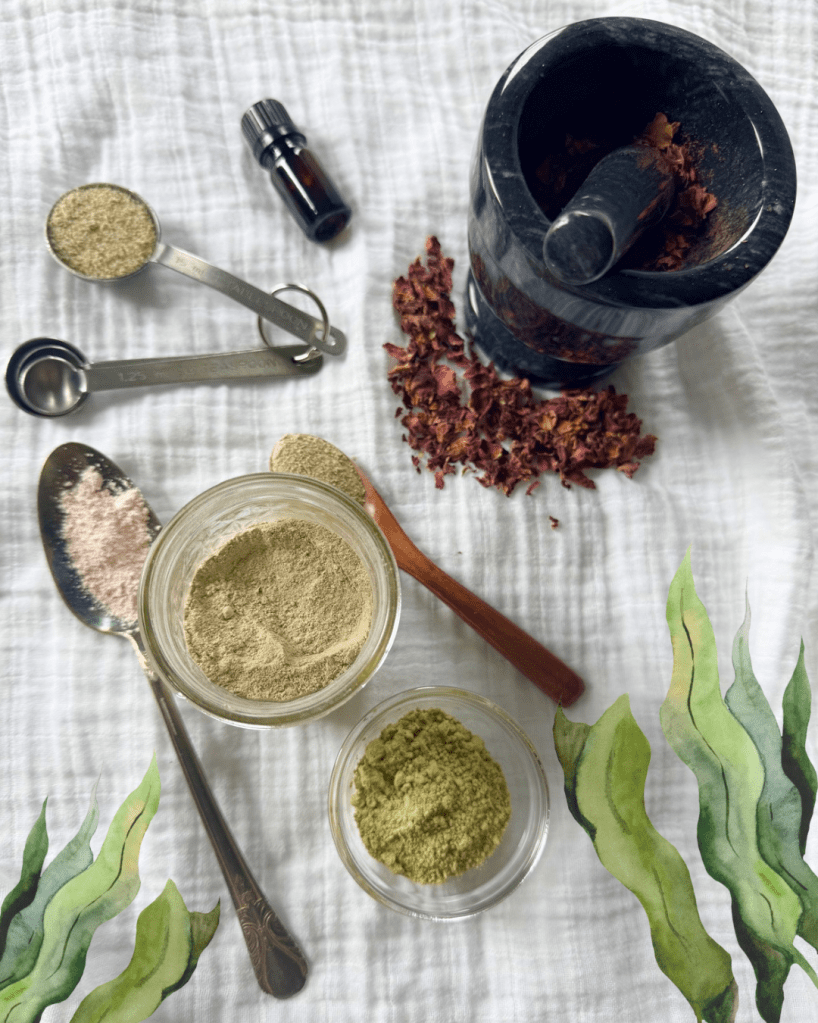
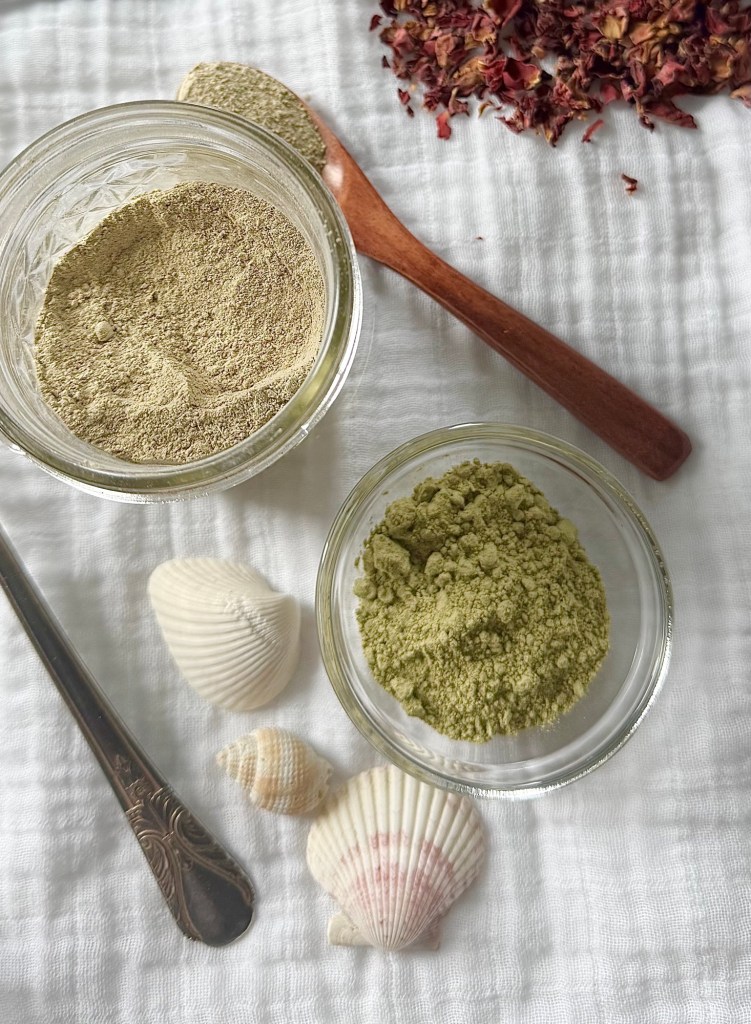
I keep seeing commercial sea kelp facial masks, so I thought I’d create an easy and gentle one at home for myself. It combines all that sea kelp goodness with soothing oats, conditioning pink kaolin clay, and nourishing rose. You can make up a jar of the powder to keep on hand and then customize it each time you use it by choosing which wetting agent meets your skin’s needs at the time!
Note—if you’re like me and looking to source some quality sea kelp online, Mountain Rose Herbs is a great place to find it! I am a proud affiliate of MRH, and love sourcing my herbal ingredients from them!
Sea Kelp & Rose Face Mask
Materials
Mask powder: 1 8-oz or 2 4-oz jars Spice grinder or mortar & pestle Mixing bowl ¼ c sea kelp powder 3 Tbsp rose petal powder 2 Tbsp oat powder 2 Tbsp pink kaolin clay
Face mask: Small bowl or mug 1 tsp face mask powder Honey, jojoba oil, other herb-infused facial oil, floral hydrosol, and/or water to wet Optional: 1 drop essential oil (rose or lavender)
Method
Grind the oats and rose petals in your grinder or mortar and pestle – the finer powder, the better. Mix all the powder ingredients in a mixing bowl and spoon into jar/s. Cap tightly and store in a cool, dark place.
To use the face mask, mix 1 tsp of the mask powder in a small bowl or mug with your choice of wetting agent until the desired consistency is reached – sticky but not too dry. Apply to a clean face and leave on for 10 minutes. Remove gently with warm water.
Have you worked with sea kelp or another type of seaweed before?
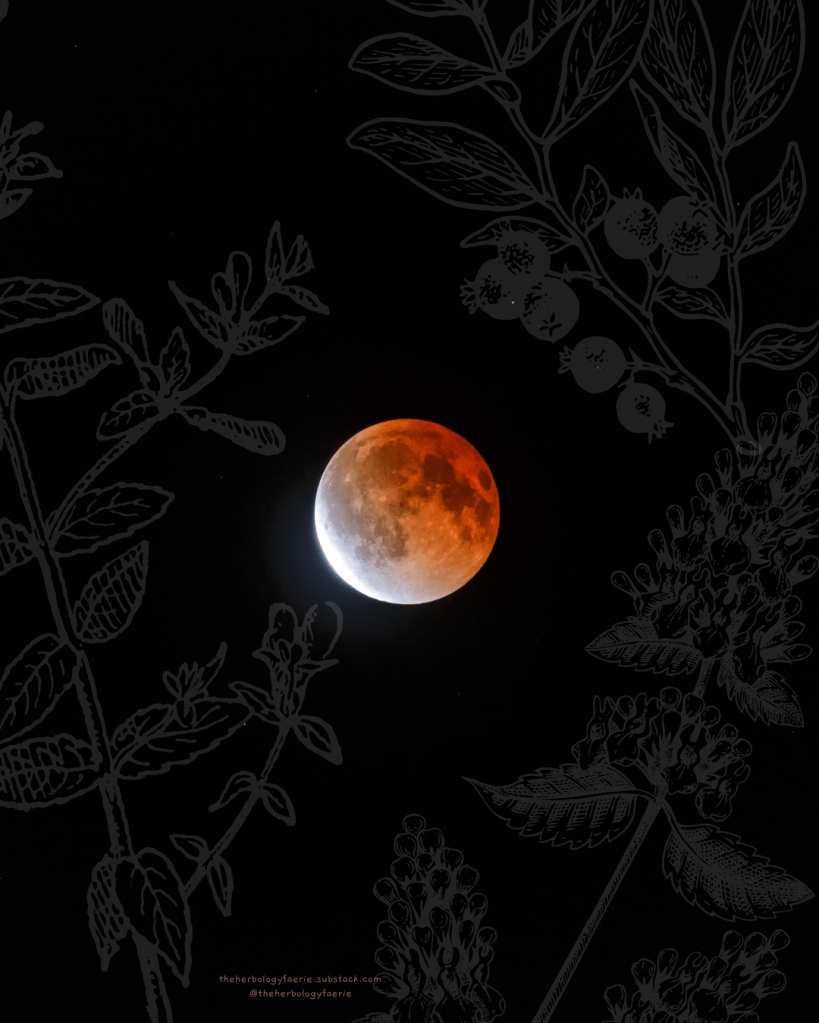
The May full moon is the Flower Moon, a time to celebrate the abundance that is now in full bloom. Joyful, playful, and colorful! It is a moon associated with romance, pleasure, and fun.
The Flower Moon resides in the house of Scorpio this year, which brings an intense energy. The desire to see deeper in a time of more lighthearted fun opens the way for soul-searching and truth-seeking. Add to this the presiding sun sign of Taurus, which imbues a need for comfort and attunement to the senses, and you have a recipe for experiencing blissful enlightenment.
Beltane aligns with the Flower Moon this year! Beltane, or May Day, is the cross-quarter sabbat on the Wheel of the Year when we celebrate the midpoint of spring. It brings a thinning of the veil between our world and the Faerie realm, enchantment, and wonder.
As the opposite sabbat on the wheel across from Samhain, both have related attributes but from a different angle. We think about protection from the otherworldly (the faerie realm, though, vs the spirit realm) and ancestral connection at Beltane as we do at Samhain. But Beltane is unique in its ties to the approach of summer, fertility, sacred fires, and joyful celebration.
How can we embody the Flower Moon and Beltane in a cozy, low-key but meaningful modern celebration to mark the occasion?
If you have the accessibility to do so, perhaps gather a bouquet or some potted flowers and light a fire (bonfire, fire pit, candle/s) outdoors at sunset, with a gathering of loved ones if possible, and enjoy animated conversation together. Make wishes on slips of paper or flower petals and offer them to the flames. Sip a special tea for the occasion, of course! (All this can be done solo if needed, and indoors if needed, too. Tailor the simple, cozy ritual to meet you where you are!)
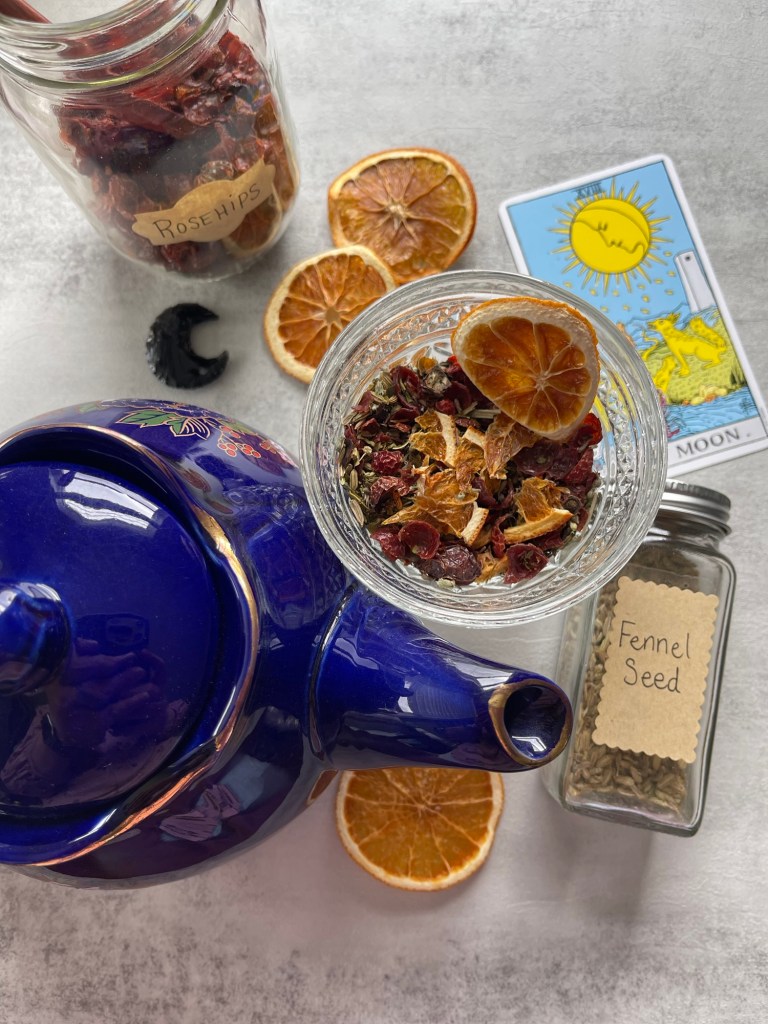
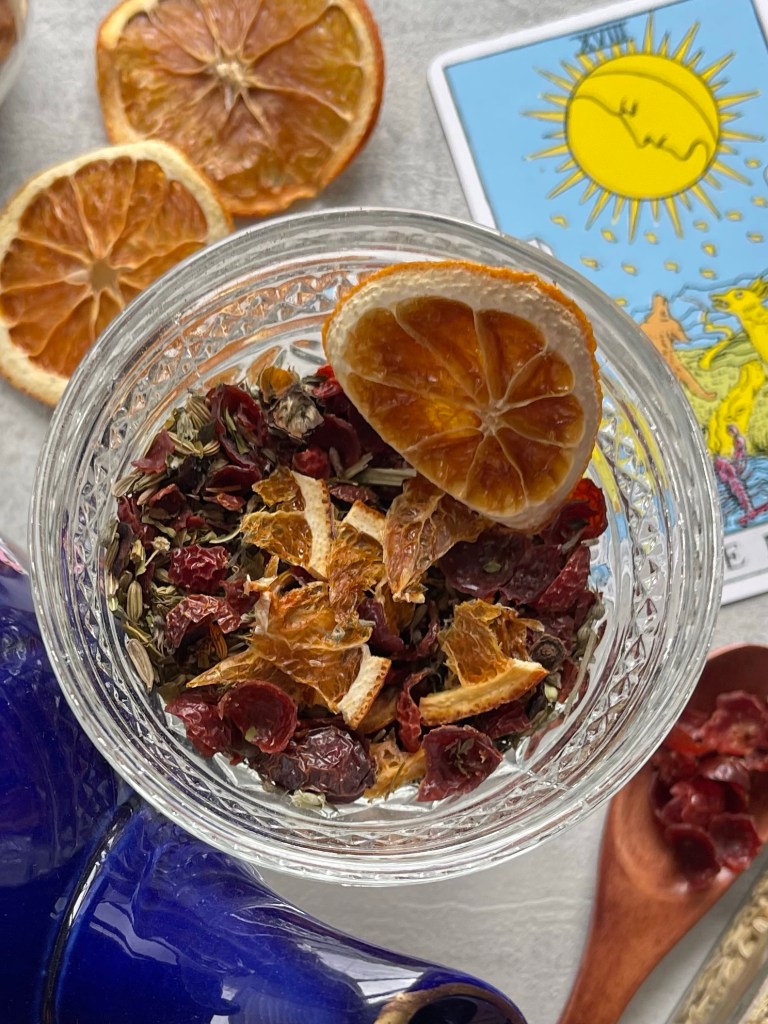
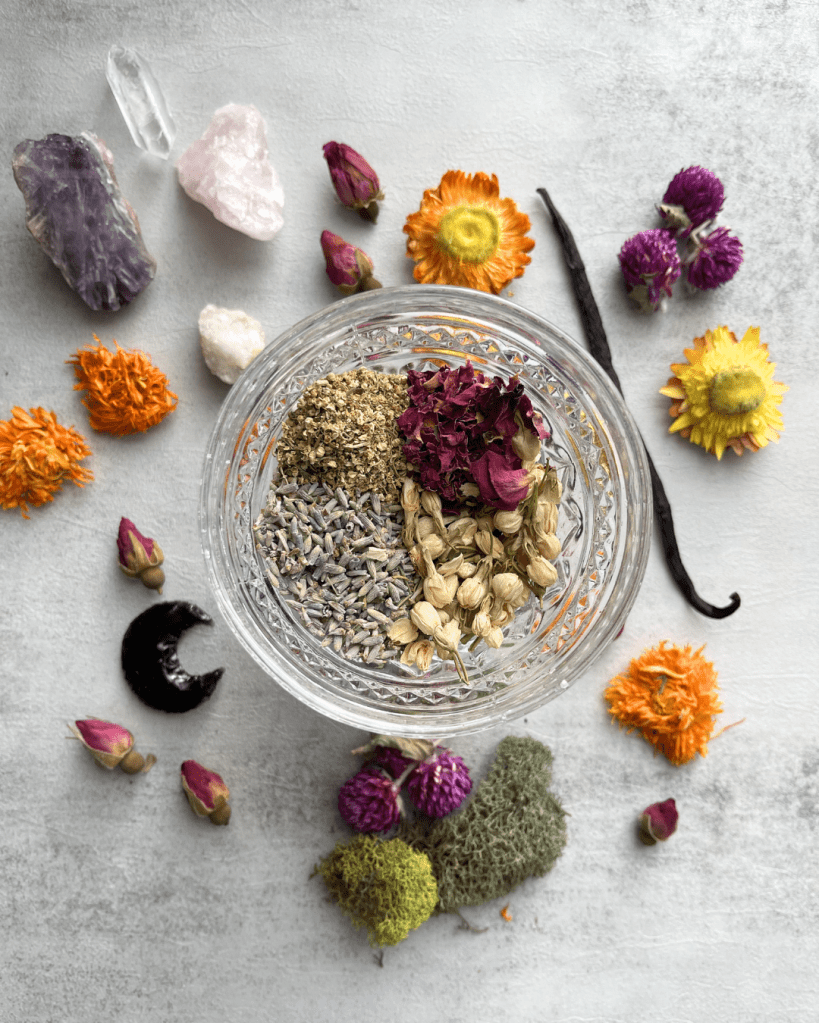
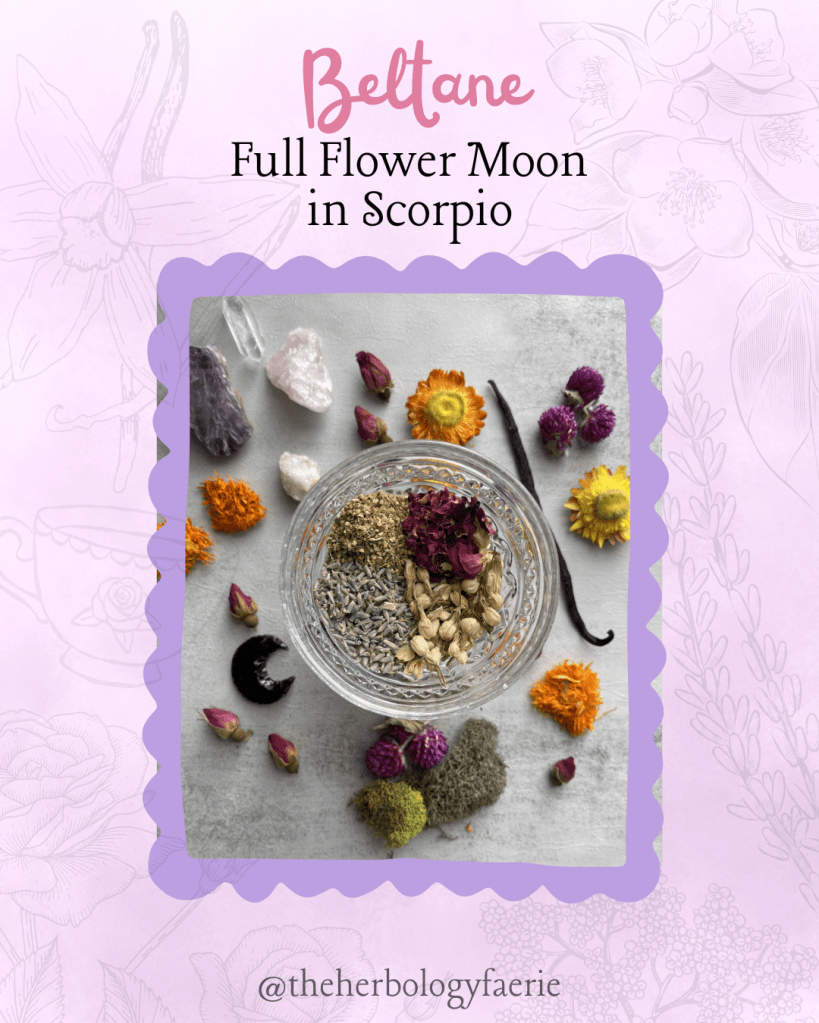
The tea blend for the Beltane Flower Moon relies on the ease and abundance of flowers in season, perfect for capturing the essence of this moon and the sabbat. The flowers not only represent sweetness and fertility, but also divination and deep-rooted feelings. If you have access to the listed flowers in fresh form, by all means use them! And if you don’t have access to any of the flowers in the recipe, you can substitute with (food safe) fresh florals that are local to you if you’d like, or dried flowers, which of course are always a lovely option for herbal teas.
To make a single cup of tea, add 1 tablespoon to a tea strainer, eco-friendly tea bag, or French press. Pour 1 to 1 ½ cups hot water over the tea and steep for 3-5 minutes. Add honey to taste, if desired.
To cold-brew this tea blend, add the ingredients to a glass jar or French press, steep overnight in the refrigerator, strain, and serve.
To make a larger amount for your Beltane gathering, treat the proportions as “parts” and scale up, such as 1 tsp = ½ cup or 1 cup – choosing your scale depending on the number of people you are serving. You can also do this to mix up a large jar of the tea blend, especially if you’re using dried flowers, to enjoy throughout the Beltane season!
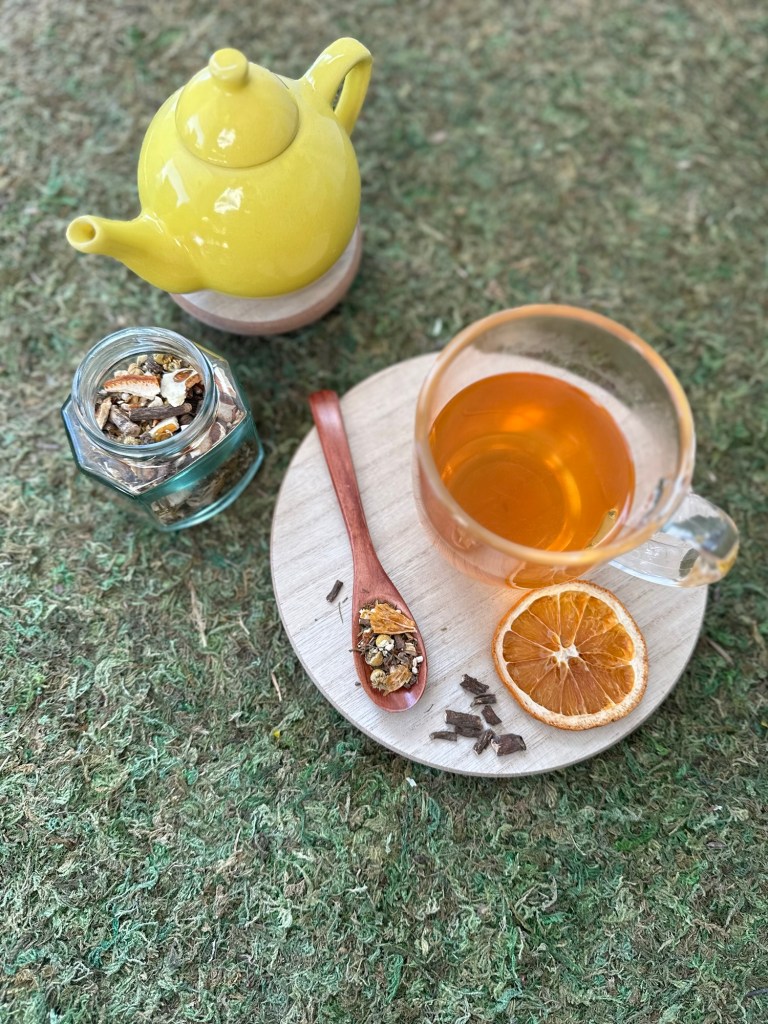
Dandelion root is a botanical friend that somehow manages to ground and uplift at the same time. Perhaps it is the fact that helping to replenish and nourish the body through its herbal actions allows for a lighter, energized constitution. How can a plant that has such sunny, nectar-filled blossoms not have the very best of roots?
A tea blend anchored by dandelion root can offer the best sort of boost to the body and spirit. While dandelion provides a steady base of stabilization with its nutritive and detoxifying qualities, it can serve as a recipe component that lays the groundwork for adaptogens and nervines to do their work optimally.
Layer on top botanical ingredients that work in conjunction with that solid foundation. Ashwagandha lends additional balancing and nourishment through its adaptogenic properties, while chamomile eases and soothes. Orange refreshes and uplifts, and offers a healthy dose of vitamin C. So does your choice of either green tea or green rooibos, which you can select based on your relationship with caffeine.
Sip this tea hot or cold! It could serve as a wonderful springtime morning beverage, or a late afternoon pick-me-up. Bring some in a thermos to sip as you take a spring hike and enjoy the dandelions!
To make a single cup of tea, add 1 tablespoon to a tea strainer, eco-friendly tea bag, or French press. Pour 1 to 11/2 cups hot water over the tea and steep for about 5 minutes. Add sweetener of choice to taste, if desired.
Notes
• To cold-brew this tea, add the ingredients (1 tablespoon of tea blend per 8 ounces of water) to a glass jar or French press, steep overnight in the refrigerator, strain, and serve.
———
I first shared this recipe in the Botanical Anthology’s All About Dandelion booklet! (I’m in there but I do not get any kind of affiliate kickbacks if you grab yourself a copy, full disclosure. I’m just sharing the plant love!)
Rosemary is a beautiful plant! It helps protect mind, body, and spirit. This herb is both an ancient remedy and a culinary delight, and there are so many ways to work with it.
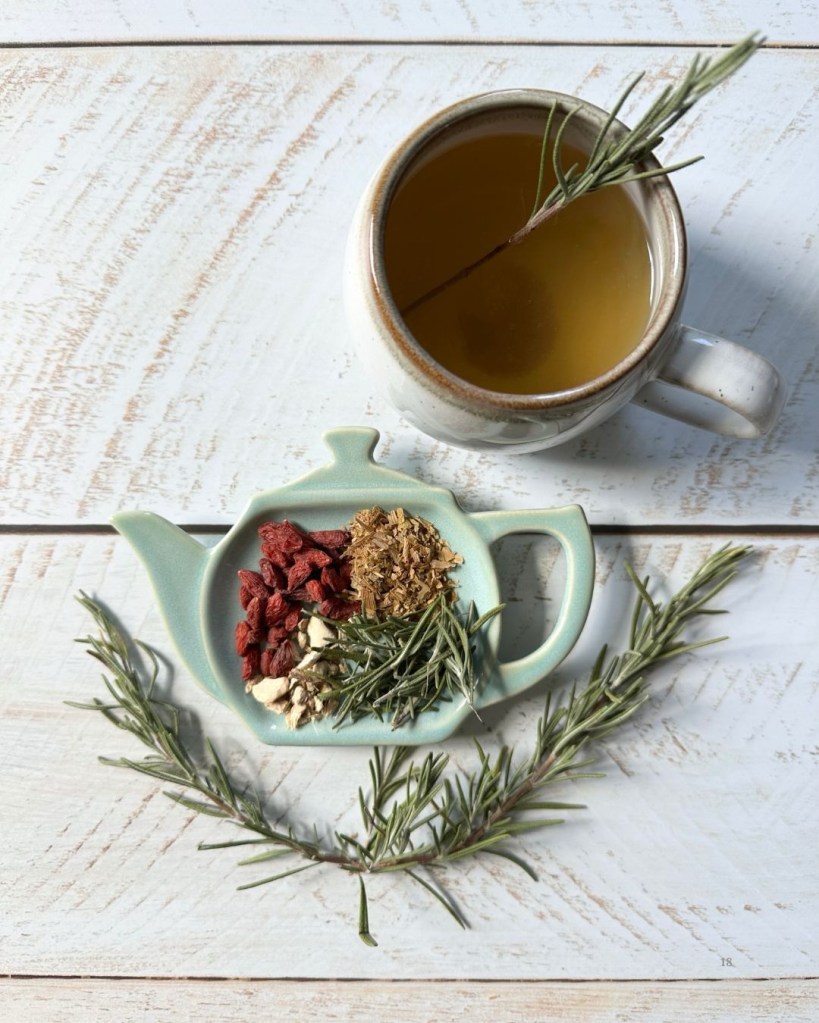
In the All About Rosemary booklet, which accompanies the autumn issue of Botanical Anthology, I shared my longevity tea recipe which combines this delightfully pungent and tasty herb with other plants valued for their neuroprotective properties. Here is the recipe portion of my article – you can find the full article in the booklet!
Materials
2 tsp rosemary, dried
1 tsp ginkgo leaves, dried
1 tsp goji berries, dried
½ tsp ginger, dried
Method
Mix the ingredients in a bowl to make a single cuppa, but you’ll probably want to scale up the
recipe and make a larger batch to sip often!
To brew one cup of tea, place a tablespoon of the blend in a tea strainer or disposable eco-
friendly paper tea bag. Pour just-boiled water over the tea and allow to steep for 10 minutes.
If you’d like, you can sweeten your tea with a bit of honey, maple syrup, or sugar.
————
Aside from my tea, the All About Rosemary booklet contains so many jewels worth reading and recipes worth trying:
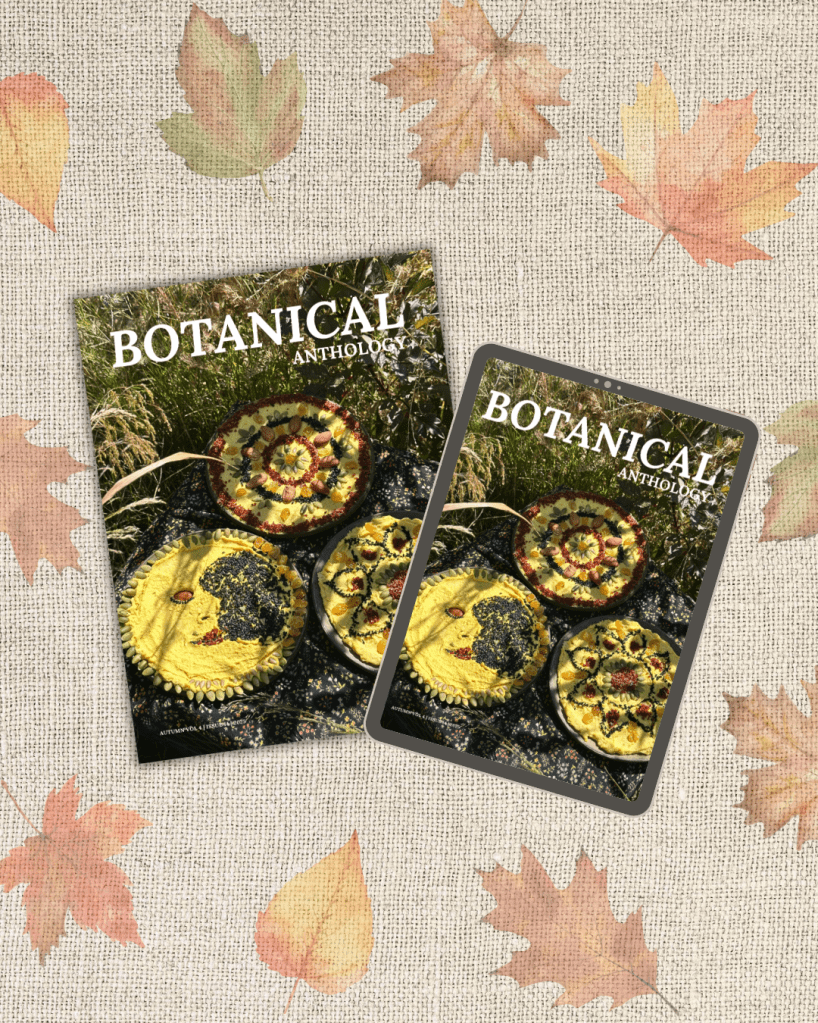
And all this accompanies the full Botanical Anthology magazine issue. I am sharing about it because this independent magazine, a labor of love by creative folks, is near and dear to me as I help edit and compile this publication and write articles for it.
With 40 articles from 38 contributors, there is something in this magazine for every budding herbalist, natural health enthusiast, (urban) homesteader, kitchen witch, and nature lover.
TODAY is the last day to download our digital version at a discounted price of $15 and receive the free All About Rosemary booklet. I hope you’ll consider treating yourself to a copy and enjoying the autumn plant goodness!
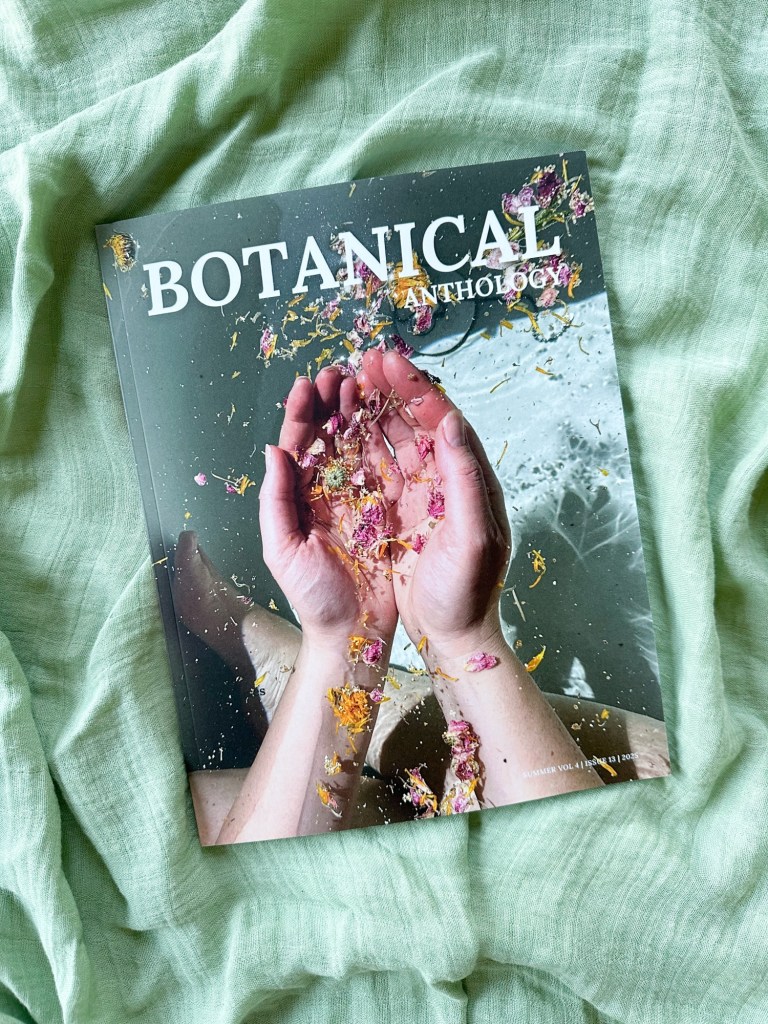
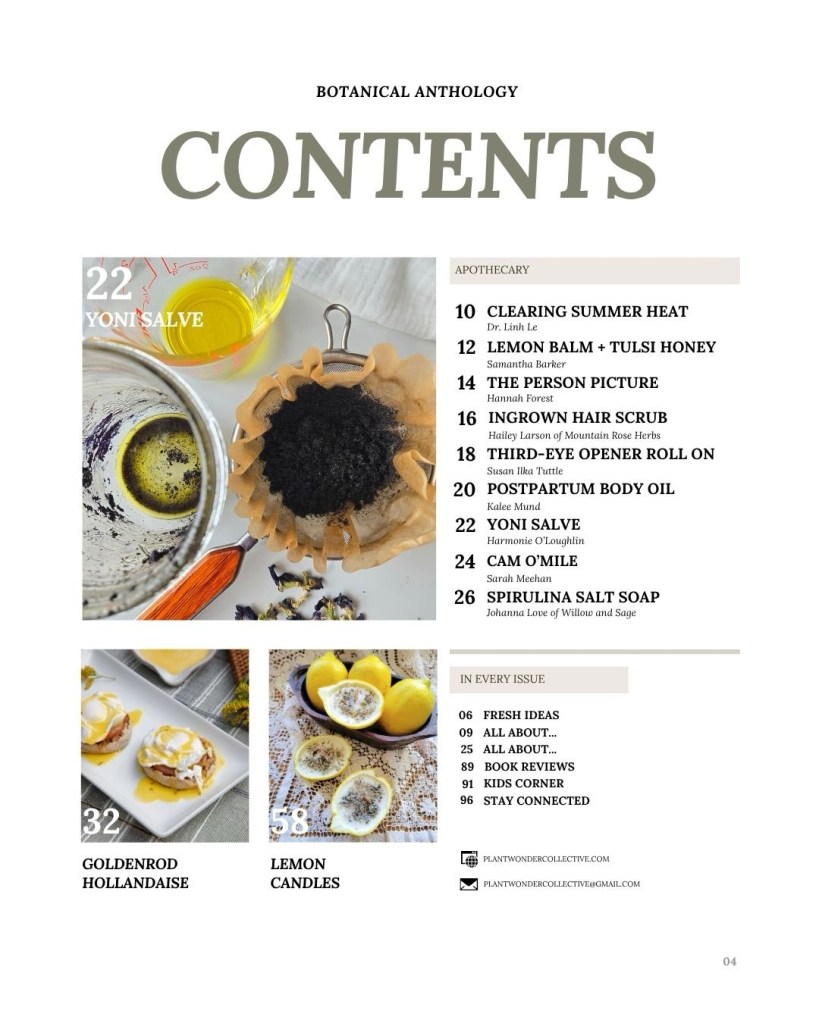
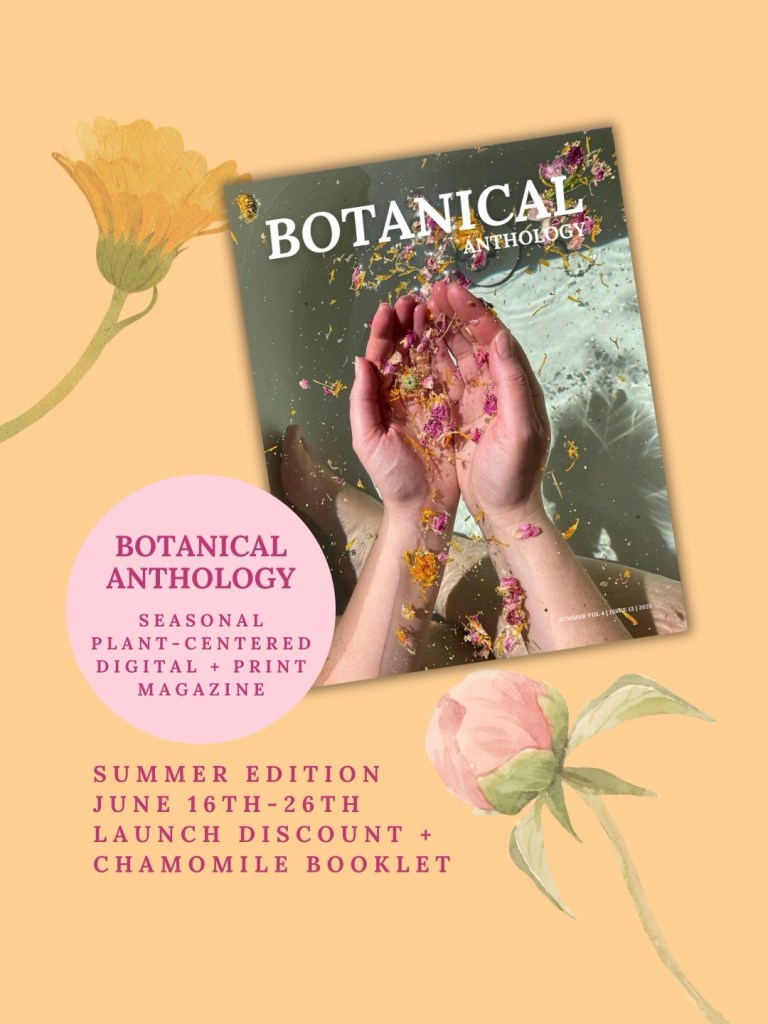
Botanical Anthology is an indie magazine made by and for plant lovers, which I am lucky to write articles for, edit, and help produce. It is very much a labor of love and is full of herbal and seasonal magic! Apothecary knowledge, tasty recipes, gardening tips, creative crafts, folklore, seasonal celebrations, interviews, and more!
Now through 6/26, you can pick up the digital (ebook) edition for only $15 and it comes with the All About Chamomile bonus booklet free!
Or purchase the print edition via Amazon or Lulu, and email your proof of purchase to plantwondercollective@gmail.com to get your free digital All About Chamomile booklet!
Linden makes a lovely, calming, skin replenishing ingredient in botanical recipes in the form of an infused oil! It also complements the scent and properties of lavender infused oil very nicely. I decided to incorporate both into a homemade body wash recipe using simple, natural ingredients!
Homemade herbal recipes that contain water can have a short shelf life, so it’s best to make them in small batches. However, if you make a larger amount of infused oil in advance—infused oils keep longer than water-based products—then it is easy to store the oils in glass jars and mix up batches of the body wash as needed. An additional option is to add a bit of natural preservative, such as leucidal liquid—made from fermented radishes!
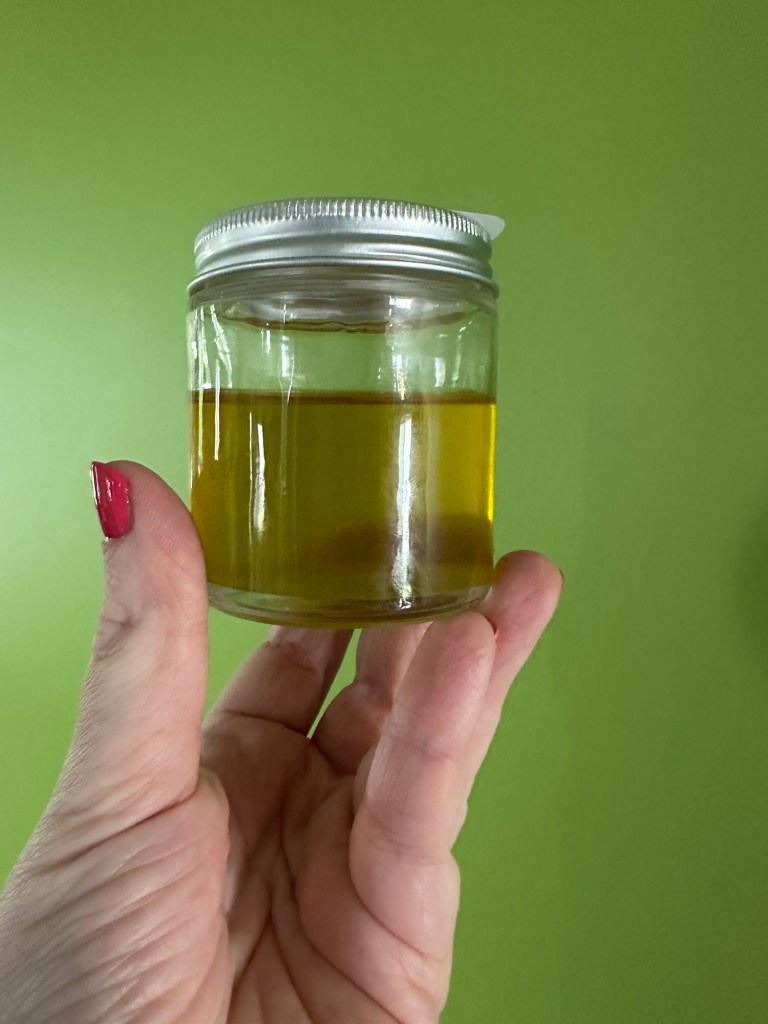
Begin by infusing your herbal oil. Do this by filling one jar about ½ full of dried linden, then filling with jojoba oil until the dried plant material is completely submerged, using a chopstick or wooden spoon handle to remove any air bubbles. Do the same with the dried lavender and sweet almond oil, filling the jar about ⅓ full with the lavender. Place both jars into a saucepan or bottom of a double boiler pan with about 1 ½ to 2 inches of water and place on the stove over low heat for 3-5 hours, watching closely to ensure that it doesn’t get too hot (you don’t want to cook your herbs!) and making sure the plant material stays submerged. Remove from heat and allow to cool once the oils have changed in color from the herbs and smell fragrant. After cooling, strain through a fine mesh strainer with cheesecloth into clean jars.
To make the body wash, find a soap or body wash pump bottle to repurpose; remove the old label and clean well. Add the castille soap, herb-infused oils, honey if using, and water (decrease amount if you want a thicker body wash; you might also want to add small amounts of water at a time and test the consistency till you reach your preferred thickness). Cap and shake, and you might also want to stir it with a chopstick to ensure the honey is fully incorporated. Then add essential oils and leucidal liquid and shake/stir again.
Use in the shower or bath, shaking well each time you use. Enjoy the relaxing scent and the nourishing properties of the linden and lavender oils!
——
For educational purposes only. Not intended for medical advice. Always consult your physician.
*This post contains affiliate links, which means if you choose to buy something from a link that I share, I will make a small percentage of the sale *at no extra cost to you*.
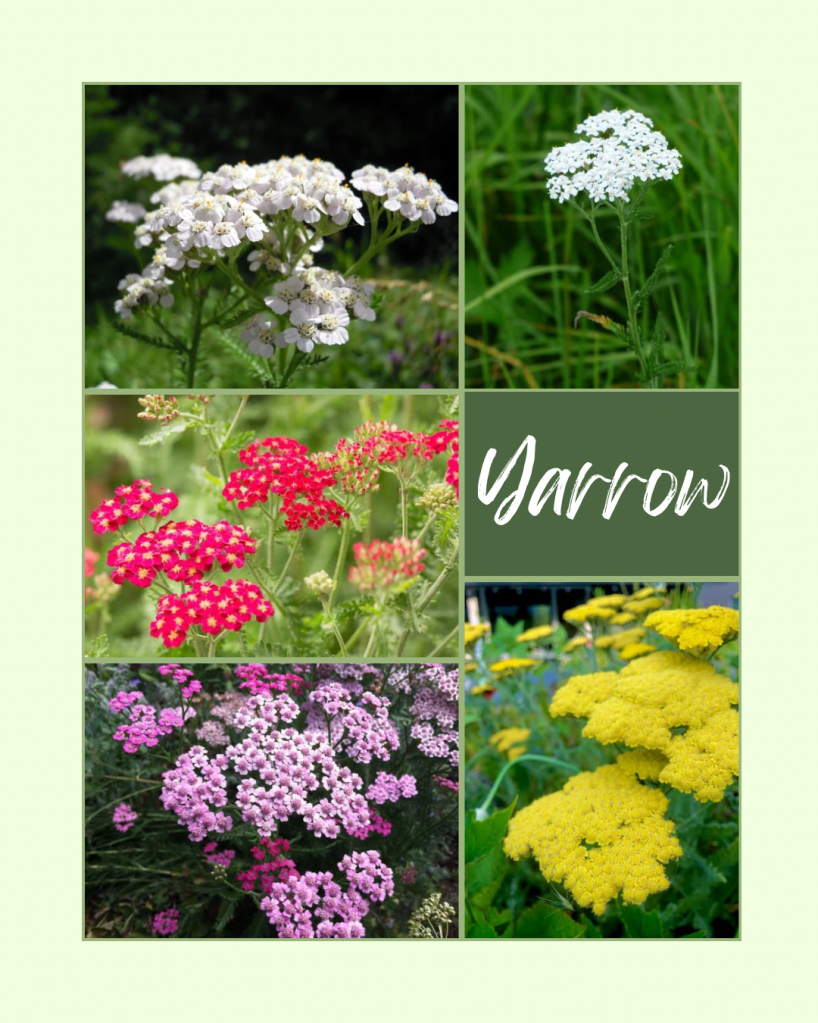
Yarrow is a plant that I had not previously worked with very much, outside of adding a pinch of it to tea blends here and there. So I am really loving learning more about it in terms of its medicinal and spiritual attributes.
Yarrow is a bit of a chameleon; it can be both cooling and warming, aiding flow and stopping it, and in astroherbalism terms it has ties to both water and air. But harmonizing lies at the center where these variances overlap. Finding wisdom in discernment, in balance, in both drawing clear boundaries yet allowing for flow and openness, all bring harmony. (Yarrow cards shown from The Herbal Astrology Oracle and The Herbcrafter’s Tarot.)
In folklore, yarrow is associated with love and visionary abilities; the tides of emotion and the clarity of communication that a combination of water and air brings.
—
One of my new favorite ways to work with yarrow is in a lovely skin toner. Toners are not just about wiping down your face at night to improve skin and treat blemishes; they are a beneficial ritual that, when used before bed, can offer (magical-metaphorical-mindful-whatever you feel best calling it) plant-infused healing, nurturing, and intention. Botanical glamour magicks or simple self-care, it’s all the same.
Yarrow is at the heart of this new skin toner recipe I’ve created to offer the medicinal applications of astringency (pore tightening and texture benefitting), anti-inflammation, promoting circulation, and anti-microbial action for acne. But it is also present for its more esoteric value of promoting love, beauty, attraction, happiness, balance, and protection. Its association with war and battle—Achilles was said to have treated his soldiers’ wounds on the battlefield with it—means that your use of it each night is like putting on your own magical armor to defend against outside forces. And the folk application that witches might have used yarrow to boost the potency of workings translates here as an amplifier for your own inner power.
This toner also includes lavender for calming the skin and the mind, hawthorn for its antioxidants and heart-mending magic, and rose water for moisture, soothing, and beauty.
Add dried plant material to your jar. Add rose water, then top up with witch hazel, leaving about 1 inch of headspace at the top of the jar. Stir with a wooden chopstick or the handle of a wooden spoon to make sure all the plant material is submerged and your liquids are well combined.
If using a BPA-free plastic lid, cap it tightly; if using waxed paper and a regular metal canning lid, add the waxed paper first before screwing the lid on to prevent corrosion of the metal.
Label your jar with the contents and date, and allow to steep for 2-4 weeks. Top up with extra witch hazel if the plant material floats to the top and dries out.
Strain the plant material out with a mesh strainer and coffee filter or cheesecloth, bottle (a spray bottle works well), and use by spritzing or swiping over your face gently with a soft cloth.
Note: you can also add a few drops of lavender, rose, jasmine, or geranium essential oil to the toner if you’d like!
—
This year will be my first year to grow yarrow in my little chaotic herb garden at home. I am a bit of a “throw it at the wall and see what sticks” gardener, so I have a few spots where I plan to plant a bit: in those “luck garden” flower beds I mentioned earlier in this month’s Little Rituals post, in a couple containers in my patio tea garden, and around my daughter’s new rose bush because my fellow PWC friend Erin Harwood (@plantmagicwitherin on Instagram and Ponderings & Wanderings on Substack) shared that yarrow can aid in attracting helpful insects that feast on pesky aphids. Check out her Substack for lovely plant content, by the way!
—
Aside from love, beauty, protection, and healing, yarrow is valued for its divinitory insight, emotional strength, and has ties with the faeries and animal magic.
A simple yarrow tea can be drunk to aid in clarity and insight.
A pouch of yarrow can be carried as a token and talisman for courage, protection, and love.
In the kitchen, yarrow has a long history of use in fermented drinks like beer and mead. If you are a brewer, try replacing hops with yarrow to mix things up! Or, perhaps infuse some yarrow honey, add the young fresh leaves to a salad, or grind the dried flowers for seasoning blends and salts—I plan on trying that soon!
Sometimes you just need to treat yourself to a pampering session at home. These late spring days when the weather is just starting to warm up enough to wear sandals is the perfect time for a cozy home pedicure! Natural ingredients can make this a luxurious and healthy experience, and when the recipe is quick and easy to whip up, that’s all the better!
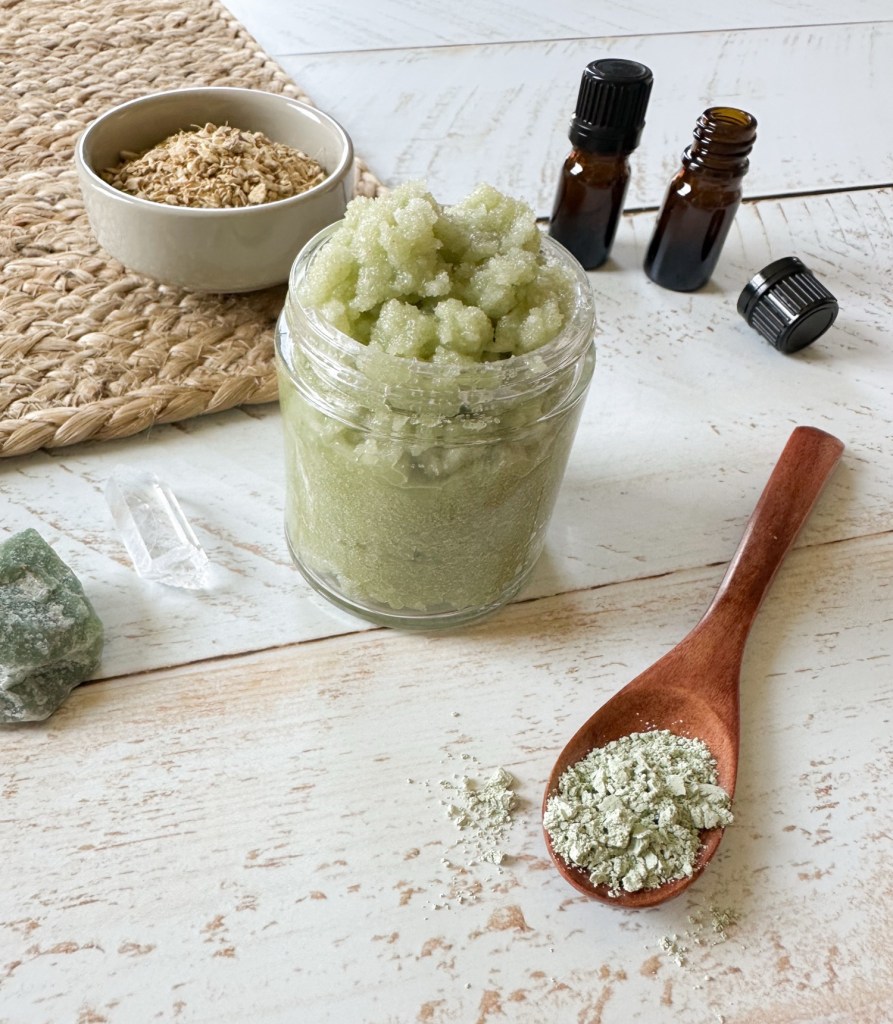
Coconut oil makes a great base for skin exfoliators. Its thick and whippy texture and moisturizing properties are the perfect vehicle for a sugar scrub. Add in nourishing and moisturizing sweet almond oil (or another botanical oil of your choice), nourishing French green clay, circulation-boosting ginger, and tea tree oil with its skin (and antifungal) benefits, and you have a recipe fit for a self-care goddess.
Combine the sugar, French green clay, and ginger powder in one small bowl with a whisk. You may choose not to use all of this mixture in your end product; it depends how much grit versus moisturization you prefer in your scrub.
In the other bowl, combine coconut oil, sweet almond oil, and essential oils, stirring well to combine. Sprinkle in the sugar mixture and stir well, testing the feel with your fingers as you go to decide how much you want to add.
Spoon into small glass jars for storage. Use this on rough feet before a diy pedicure, or on rough elbows and knees in the shower. This makes a lovely gift, too!
——
For educational purposes only. Not intended for medical advice. Always consult your physician.
*This post contains affiliate links, which means if you choose to buy something from a link that I share, I will make a small percentage of the sale *at no extra cost to you*.
My love for Beatrix Potter knows no bounds. I wish so very much that I could sit down to tea with her and learn about her fascinating life! She was far more than just an author and artist: a studied naturalist, a conservationist, an entrepreneur, a generous benefactor to many causes, and an accomplished farmer and gardener.
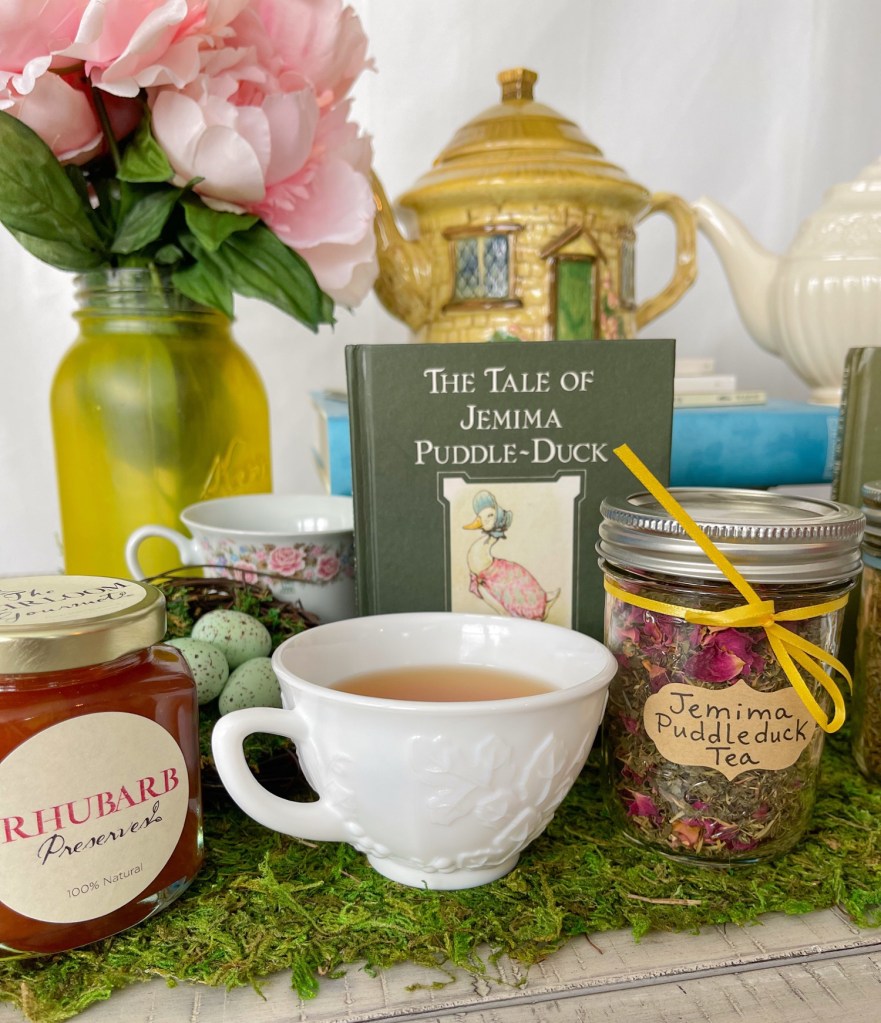
One of my favorite tales by Beatrix Potter is that of Jemima Puddleduck. Poor Jemima—she just wants to be left alone to sit on her own nest of eggs. The farmer’s wife and children always seem to find her hiding spots, such as the rhubarb bush, and retrieve her eggs for the hen to warm instead. So, Jemima searches out a secluded spot in the woods to hide her nest, only to be offered a shed by an overly-polite foxy gentleman. More unforeseen events befall Jemima, but in the end she avoids catastrophe and hatches four ducklings on her own.
I created an herbal tea blend inspired by Jemima’s story, which includes the mint and thyme the fox requested for their dinner party, roses seen in an illustration of the garden, and rhubarb from the bush she attempted to hide her eggs in. (This tart tea is made with botanicals appropriate for a Beatrix Potter-themed baby shower, children’s birthday party, or Easter brunch!)
To make a single cup of tea, add 1 tablespoon to a tea strainer, eco-friendly tea bag, or French press. Pour 1 to 1 ½ cups hot water over the tea and steep for 3-4 minutes. Sweeten to taste with a bit of fruit preserves or simple syrup, if desired. (Strawberry can easily be substituted for rhubarb!)
For educational purposes only. Not intended for medical advice. Always consult your physician.
*This post contains affiliate links, which means if you choose to buy something from a link that I share, I will make a small percentage of the sale *at no extra cost to you*.
We are firmly in the heart of Aries season, so I am sharing my simple tea recipe meant to help you ground into this energy! My daughter is a very fiery Aries herself so I am all too familiar with the spirit of this sign.
Associated with the Emperor in tarot; the root and solar plexus chakras; yang energy; red, pink, yellow, and white; and diamond, carnelian, citrine, and fire opal.
To make a single cup of tea, add 1 tablespoon to a tea strainer, eco- friendly tea bag, or French press. Pour 1 to 1 1⁄2 cups hot water over the tea and steep for 3-4 minutes. Add honey or other sweetener, if desired.
———
For educational purposes only. Not intended for medical advice. Always consult your physician.
*This post contains affiliate links, which means if you choose to buy something from a link that I share, I will make a small percentage of the sale *at no extra cost to you*.