Categories
Herbs and Herbalism

DIY Herbal Education

(Note: This is NOT a sponsored post. All opinions are my own and I am not paid by any of the below mentioned herbal resources.)

I am a fledgling herbalist on a strict budget. I also want to make sure I am diversifying my educational sources. And, as someone whose goal is to practice home / folk herbalism on a personal level, I don’t need any specific certificate to legitimize my studies. (If you’re someone who does need those things and has funds to invest in your studies, I think that’s awesome! My point is just that it’s only one of many possible herbalist paths.)

Rather than spend what for me is a prohibitive amount of money on in-depth herbalist courses, I’ve taken a different approach. I have put together my own low-cost, piecemeal system for studying herbalism that moves at my chosen pace, prioritizes my values, and feels right to me. If this type of approach speaks to you, I encourage you to do the same! I am going to share a bit about my own journey here to perhaps give you a spark of inspiration and some possible starting points. But, I encourage you to try different methods and resources based on your own situation!

Books

Books are kind of an obvious resource, but it can be overwhelming to know where to start! That can obviously be very personal and dependent on your goals, too. To that end, here is a brief list of a few of my favorite herbalism books—

Alchemy of Herbs by Rosalee de la Forêt

Wild Remedies by Rosalee de la Forêt

Healing Herbal Teas by Sarah Farr

• anything by Rosemary Gladstar

The Illustrated Herbiary by Maia Toll

• DK Encyclopedia of Herbal Medicine

Patreon

I have recently begun following a couple herbalists on Patreon who share a wealth of monthly resources at reasonable prices (with varying tiers based on your needs and ability to give). There are many herbalists doing this on Patreon, and I think it is an amazing approach! I so appreciate these herbalists’ work and how they make herbalism affordable and approachable.
Definitely do your own searching and find the herbalists on Patreon whose offerings are right for you. I have chosen to give my patronage to BIPOC herbalists—here are the ones I follow, in case you’d like to check them out—

Medicine Mija, who is local to me, which is an added bonus in my case! You can also find her on Instagram at @medicinemija and she has a shop you can buy herbal goods, too.

Folk Herbalism for Everyone, who goes by @thehillbillyafrican on Instagram. I love that she includes videos and podcasts, too!

Instagram

Building on that, Instagram is another great resource. There are too many herbalist accounts for me to even begin listing them here, but believe me when I say you can learn so much from them on insta. I’d recommend beginning by searching for the authors of your favorite herbalism books.

Actually…I can’t not share one particular Instagram account. Alexis Nikole, who goes by the handle blackforager, is a joy to watch. Her passion for educating others about foraging for wild and often overlooked foods is fascinating! Do yourself a favor and go follow and learn from her.

Apothecary At Home

I’ve blogged about it before, and I will continue to do so because it is such a great herbalism learning resource! Apothecary At Home is a monthly subscription study box that brings you herbs, supplies, educational materials, and more to help you further your studies at whatever your preferred pace is. It meets you where you are. And you have the option to select individual months based on your desired topics, if you need to be a bit choosy due to funds. The cost is fully worth it considering all the supplies and herbs you get for building your apothecary while you’re building your knowledge, though!

Herb Mentor

There are really good herbal schools that conduct online courses, but the cost can be a bit much for some (like me). However, I’ve found a unique and affordable resource in the platform Herb Mentor from LearningHerbs.com. It brings together a host of articles, monographs, videos, podcasts, herb walks, recipes, video courses, and more for herbalists of all levels and walks. The cost is really reasonable, the scope of information is useful, and the interface is easy to navigate. This is my go-to place to look things up and I love working through the courses at my own speed.
——

Whew! That was a lot. And it’s only the tip of the iceberg. If you are looking to further your herbal studies, there are so many paths to take, and not all of them have to cost a lot. What are some of your favorite ways to study herbalism?

Categories
Herbs and Herbalism

Herb Profile: Rosemary

It’s been awhile, Herbology Faeries! Life has been chaos for me lately, with my wildlings’ school year beginning and all the changes involved with that. But, I am taking a moment to slow down and share with you about a recent favorite herbal ally: rosemary.

Many people think of rosemary as a primarily culinary herb, but it’s so much more than that! There are good reasons the Owens women in the Practical Magic books and movie say to “plant rosemary by your garden gate.”

Rosemary is a pungent, warming, drying, and aromatic herb. According to the plant monograph in Learning Herbs’s Herb Mentor database, rosemary boasts “carminative, circulatory stimulant, hepatic, antimicrobial, stimulating/relaxing nervine, [and] antioxidant” properties. Its uses include “mental stimulation, digestion, colds/flu, fungal infections, hair wash, food preservation, [and] skin protection.” It can be used in many applications, like teas, tinctures, skin and hair products, and food. Traditional wisdom attributes remembrance and protection to rosemary, as well.

Basically, use rosemary as much as you can. It is an herb you can’t go wrong with, because it adds so many benefits to your life and tastes amazing! Lately I have been taking a brain-boosting tincture that includes herbs good for memory and mental acuity like rosemary (of course), gotu kola, ginkgo, and sage. While the intended use of the tincture is for brain health, I notice a very marked calming effect when I take this tincture! Rosemary has always been a culinary favorite of mind, but I’ve also realized that I need to explore more therapeutic and broader uses for the herb because it’s just one that really jives well with me.

And now it’s recipe time! Rosemary pairs amazingly well with grapefruit, so this is a fun fizzy drink (alcoholic or not, it’s equally amazing either way)!

Rosemary Grapefruit Fizz

•Rosemary tincture or bitters (store-bought or homemade; see my post on tincture-making!)

•Grapefruit soda OR grapefruit juice & soda water & simple syrup

•Optional: gin or whiskey
(You could also sub rosemary simple syrup for the tincture / bitters if you’re going the juice and soda water route!)

Are you a fan of rosemary? Which ways do you like to work with this herb?

Categories
wheel of the year

Celebrate Lughnasadh!

In the northern hemisphere, the wheel of the year has turned to Lughnasadh! This August 1st sabbat marks the midpoint between Litha (summer solstice) and Mabon (autumn equinox). Even though Lughnasadh sits squarely within summer, it is the first harvest festival of the year and the kickoff to the harvest season. Lughnasadh is associated with abundance, as well as the sun, the colors yellow and gold, wheat, sunflowers, corn, berries, peppers, tomatoes, squash, beer, and bread.

Since my little wildlings’ schools start right around Lughnasadh, it’s a busy-but-happy time for us. Just like with Litha, I have some low-energy plans to help mark this sabbat in cozy, grounding ways.

Harvest Treat: Herbed Beer Bread

Bread-baking and enjoying is an essential part of Lughnasadh / Lammas (the other name for the day, which means “bread mass”). My favorite type of bread to bake, which is also thematically on-point for this sabbat, is beer bread. It is SUPER quick and easy, yet delicious, hearty, and rustic. It takes very few ingredients and the beer does most of the work for you—no yeast, proofing, or kneading required!

I’ve put together a Lughnasadh bread recipe Pinterest board that you can peruse and come up with a recipe that speaks to you! My plan is to start with a beer bread base using lemon beer, with some seasonally-specific additions, like possibly orange, pumpkin seeds, cardamom, cinnamon, and / or calendula. (Depending on how ambitious I feel this weekend!) These flavors are bright and sweet, with the citrus and spices sort of bridging the gap between summer and autumn.

Check this link for the Pinterest board!

Harvest Sip: Lughnasadh Sun Tea

If you have fresh herbs growing in your garden or window sill, now is the perfect time to harvest some and make a sun tea. But if you don’t have fresh herbs on hand, or you’re just wanting to try a new recipe, here is the potion I’m brewing for Lughnasadh:

3 parts green rooibos (or green tea)

2 parts tulsi

2 parts lemon balm (fresh or dried)

1.5 parts cinnamon chips

1 part dried orange peel OR some fresh orange slices

Dried or fresh pears, peaches, and/or lemon

Harvest Fun: Sunflower Picking and Harvest Decorating

Mr. Herbology Faerie likes to tease me by fake-complaining when I decorate the house for fall before September 1st. Which I usually ignore! This year will be no exception, though I do plan to hold off on pumpkins and leaves until September. Instead, I’ll focus on sunflowers, wheat, gourds, and yellow in honor of Lughnasadh. Decorating for the sabbats can be a cozy and therapeutic way to ground yourself in the season!

A fun family activity I’m hoping we squeeze in on Lughnasadh weekend is sunflower picking at a local flower farm. We went last year a little too late in the season to get any sunflowers; this year the plan is to head there in time for a sunflower bouquet for Lughnasadh.

Those are some of my low-key plans for celebrating Lughnasadh and the start of the harvest season! How are you planning to celebrate?

Categories
Herbs and Herbalism

Tinctures for Home Herbalists

If you’re more of a hobby herbalist like me, or if you’re new to herbalism, tinctures may feel a little daunting. Herbal teas seem less intense, due to their simpler water-based preparation and short wait time. It feels like you can’t mess a tea up! But tinctures are a bit more intimidating to beginners, or at least they have been to me. So today, I’m sharing what I’ve learned about tinctures including different types, methods, and uses.

Let’s start with demystifying the various types of tinctures with a little list—

Tincture: An herbal preparation made by macerating (soaking) herbs in menstruum (alcohol, usually vodka) for a period of weeks. The alcohol extracts helpful components from the herbs and creates a highly concentrated liquid that is typically ingested by the dropper full, alone or mixed with other liquids.

Bitters: You may hear this term specifically in regard to cocktails, culinary uses, or digestive aids. Well, guess what…bitters are the same thing as a tincture! It’s just a bit of a more specific term regarding use—the bitter component is the star and can be used to impart flavor and/or stimulate the liver and digestion.

Elixir: A tincture made with a sweetening agent, usually honey. Elixirs have a shorter shelf-life than tinctures without sugar.

Glycerite: A tincture made with vegetable glycerine instead of alcohol. Often used by kids and those who obstain from alcohol completely (though the alcohol in a tincture dose is minimal). Glycerine typically works better with fresh plant material than dried.

I started out by making elixirs, because honey seemed like a no-brainer to make tinctures more palatable. I also began with multi-herb combos and even different types of alcohol. I don’t recommend any of the above for beginners! My elixirs didn’t always keep fresh for long, sometimes tasting “off” far too soon after straining and bottling. Definitely consider an online class, YouTube video, herbalist’s Patreon, or recipe book’s guidance when making your first tinctures, and keep it simple: one herb and vodka.

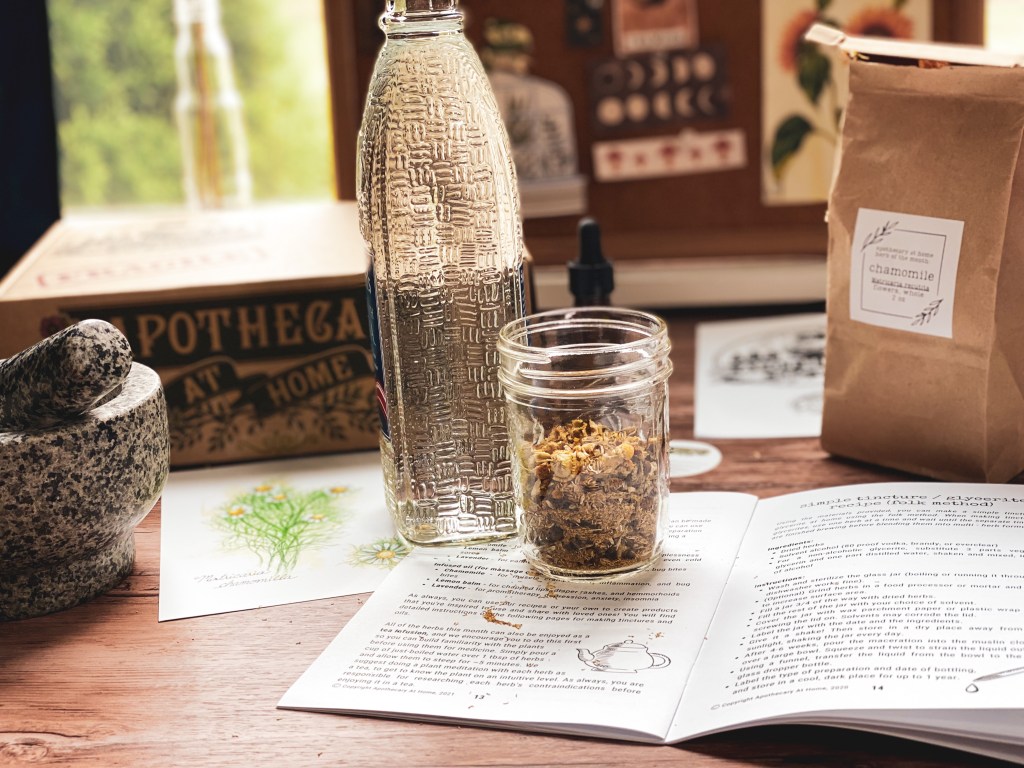
Making a chamomile tincture with guidance from Apothecary At Home

I am not going to go into super depth about the process of making tinctures because I am not an expert herbalist by any means. As I mentioned, I recommend seeking expert guidance for tincture-making, which is what I always do. But here is a brief outline of the process:

Generally, you want to fill a small, sterilized glass jar 3/4 full with dried herb, fill with enough vodka to cover the herb completely, and cap tightly with waxed paper under the lid. Label it with the date made and the date it should be ready, as well as the contents. Keep in a cool dark place, and shake daily. After around 6 weeks, strain and bottle in small, dark glass bottles or jars.

Some great starter herbs for tinctures that are useful in both medicinal and culinary respects include lavender, lemon balm, dandelion root, tulsi, rose hip, hawthorn berry, or juniper berry. These all have various health-supportive uses, like vitamin and mineral supplementation, immune system boosting, and even anxiety, inflammation, and heart support. Plus they taste great!

Tinctures are super convenient once bottled! You can take doses straight if you prefer—a few drops to one dropper full, either straight on or held under the tongue for several seconds. You can also add the same amount to plain water, fizzy water, tea, or even cocktails. A refreshing combo I really love in the summer is lemon lime soda, frozen fruit, and a dropper of fresh lemon balm tincture (which I didn’t make; I bought it from Raven Energy Herbal Apothecary on Instagram).

So, do tinctures seem any less daunting to you now? Or are you already a tincture expert? I’d love to chat about this useful herbal potion in the comments!

Categories
Apothecary At Home Herbs and Herbalism

Apothecary At Home: Mental Health Mastery Study Box

I am so excited to share with you a new way to study herbalism that I’ve discovered! I am partnering with Apothecary At Home, a monthly subscription service sending monthly herbalism study boxes based around health-supportive themes.

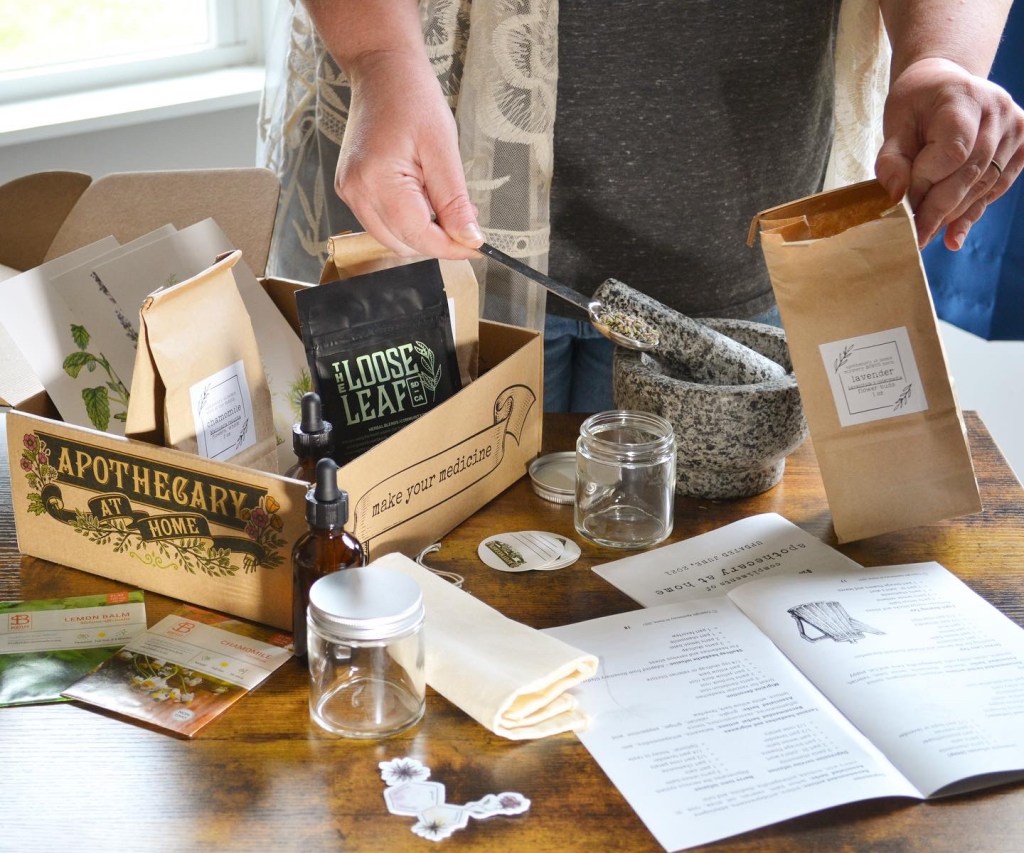
Each box contains generous quantities of dried herbs (two features herbs plus one mystery herb); supplies like bottles, labels, and muslin straining bags; a highly detailed, deeply researched study guide with monographs, recipes, instructions, book recommendations, and more; original plant monograph artwork; and fun extras like tea blends, stickers, and more. You are encouraged to work at your own pace and comfort level with the supplied materials to gain a hands-on relationship with herbalism.

I adore the practical, experience-centered approach to this study box. There is no better way to learn herbalism than hands-on with the herbs themselves, and Apothecary At Home brings herbalism class straight to your mailbox so you can do just that. They also offer additional support including an exclusive Facebook community for students and optional monthly Zoom classes centered around each theme! If connecting with other herbalism students at all levels is of interest for you, AAH even creates opportunities for that. And beyond the obvious benefits of teaching you how to create your own herbal medicine, there is something so therapeutic, grounding, connecting, and creatively fulfilling about working with this box.

I feel like a sweet granny witch in her cottage mixing potions when I work with this box!

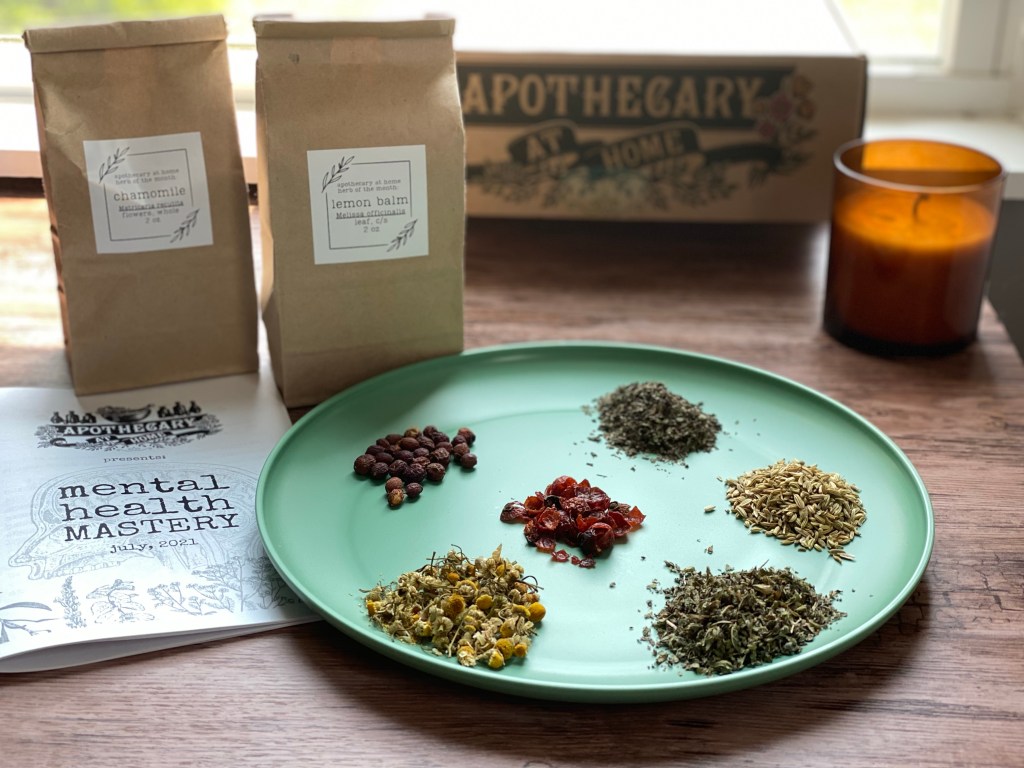
The theme for July’s box is Mental Health Mastery, a topic that is universally useful! With relaxing nervine herbs like chamomile, lemon balm, and lavender, you have nearly everything you need to create your own teas, tinctures, bath soaks, aromatherapy aids, and other preparations to relieve stress, ease anxiety and depression, help you sleep, soothe digestion, and more.

I have already begun creating remedies from this box and I am really enjoying the experience. I’m loving the tea recipes—I have mixed up a jar of Stress Less tea and last night I slept like a baby after drinking a strong cup of it! I plan to begin work on a couple of soothing tinctures next using the study guide. As someone who is already somewhat versed on these herbalism topics, I can say I’ve already learned new information and perspectives from my studies with this box!

I can’t recommend Apothecary At Home enough! I highly recommend checking out their lovely Instagram account to connect with them and see if it would be a good fit for you. They have a new additional tier of educational box in the works, too, so stay tuned to their social media for info on that. And watch this space for more peeks at their recipes and boxes!