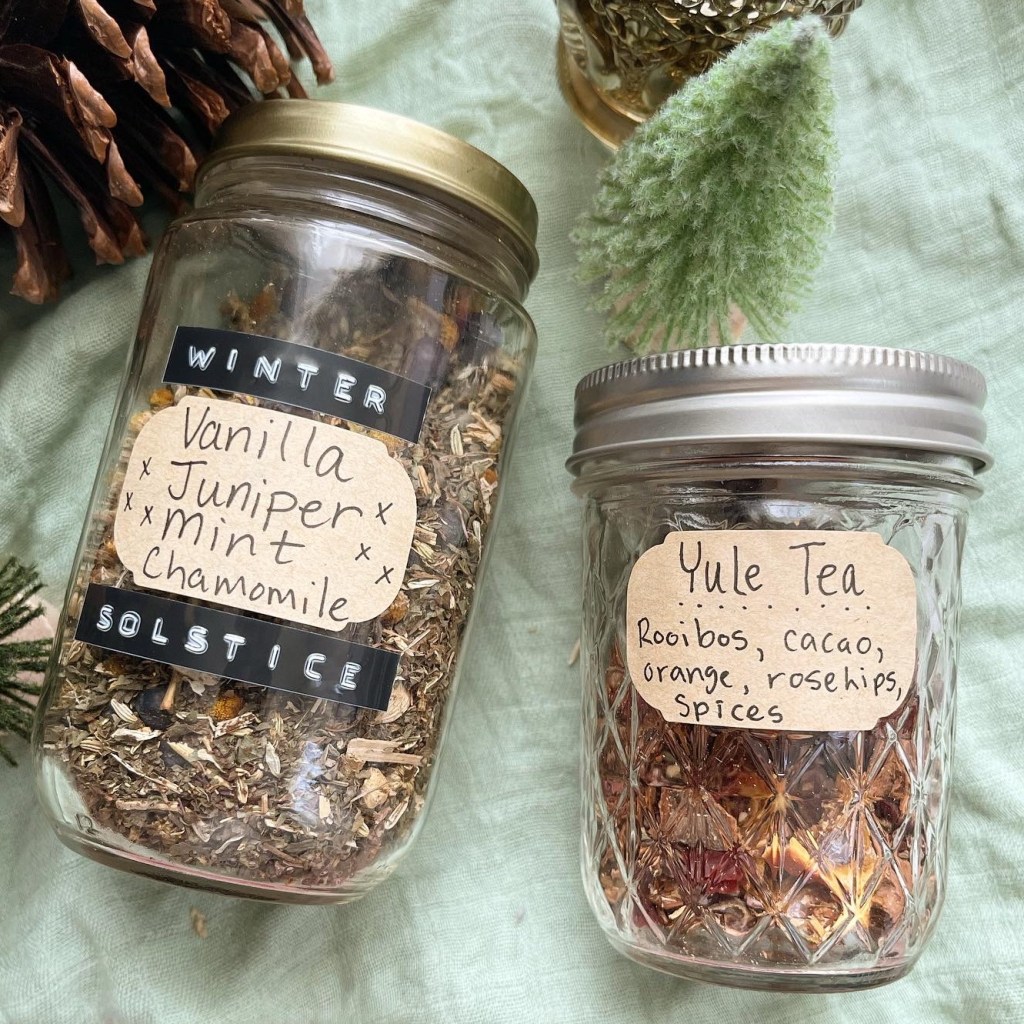
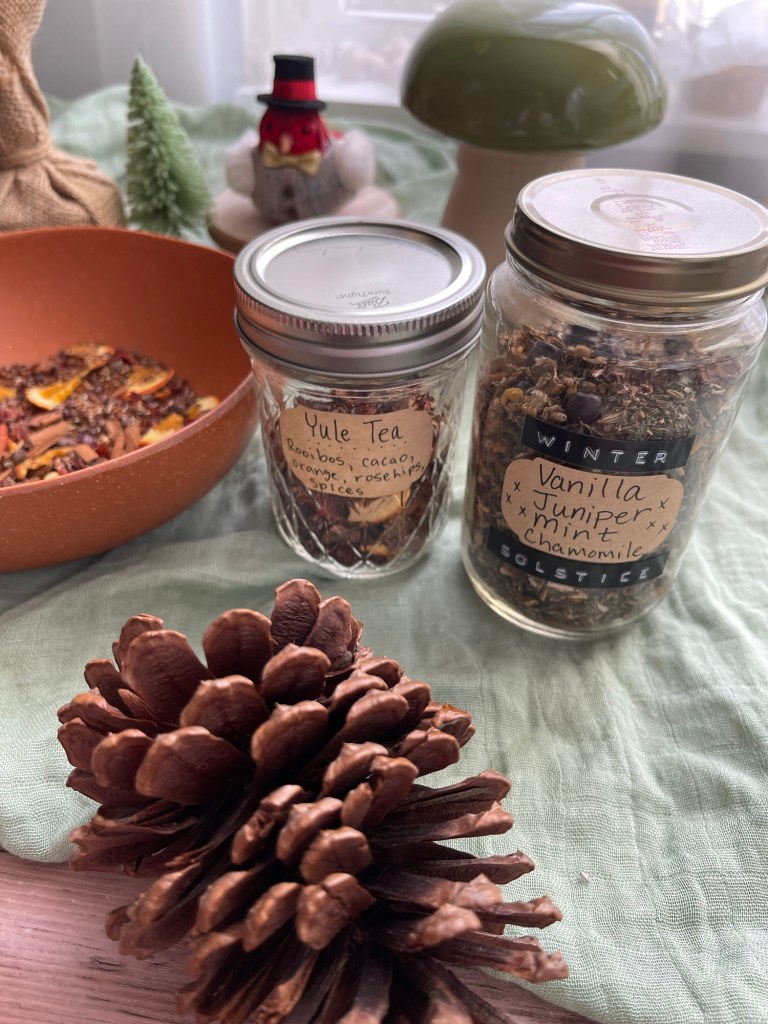
Today I’m sharing two herbal tea blends to enjoy for Yule // the Winter Solstice!
The Yule Tea blend is a sweet and festive spiced sip, full of immune-boosting ingredients that taste lovely. The combo of orange and spices is traditional for the season, in part because of those properties and in part because of associations with protection, divination, prosperity, and luck derived from them.
The Winter Solstice Tea tastes decadent like a holiday cake, but without the heartburn or feeling of overindulgence! With soothing herbs that promote digestion, relieve pain, and aid in circulation, it’s like a sweet, warm hug. And chamomile represents the sun that returns brighter each day after the solstice; juniper is a powerful talisman of winter protection, cleansing, and luck; and the other botanicals have ties to healing, love, and luck, too.
To make a single cup of tea, add 1 tablespoon to a tea strainer, eco- friendly tea bag, or French press. Pour 1 to 1 ½ cups hot water over the tea and steep for 3-5 minutes. Add honey or maple syrup to taste, if desired.
For educational purposes only. Not intended for medical advice. Always consult your physician.
*This post contains affiliate links, which means if you choose to buy something from a link that I share, I will make a small percentage of the sale *at no extra cost to you*.
Though the Falling Leaves Moon or Hunter’s Moon fell on October 17th this year and has technically passed, the full moon’s energy can still be tapped into. Read on to learn more about this month’s full moon and a corresponding tea recipe!
The Ojibwe named the full moon during what we call October the Falling Leaves Moon. We await the “peak” of the vibrant colors knowing the shedding of these leaves marks winter’s approach. As this full moon nears, we may feel Aries’ pull to dive into autumn with an energy as vibrant as the leaves. But the sun sign Libra may temper this drive with a need for balance to conserve our energies for the coming cold.
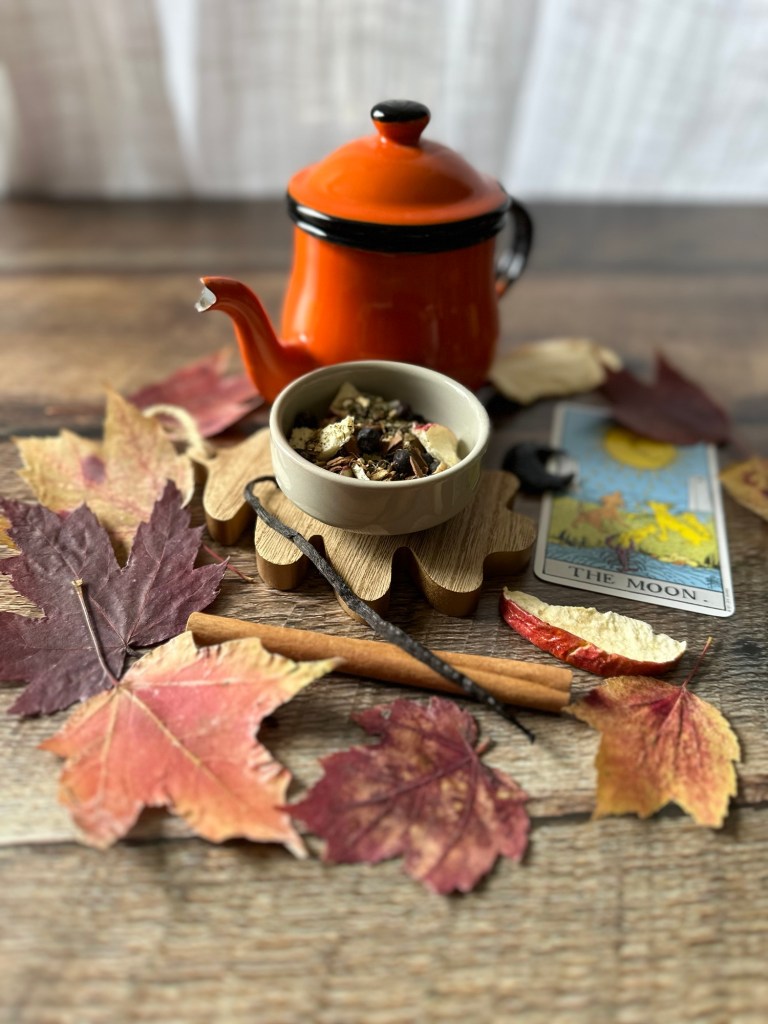
Brew this tea to mark the Falling Leaves Moon which includes gifts given from trees for both their symbolic and astro-herbalism connections. Hawthorn bolsters the heart, while juniper, cinnamon, and ginger support the Aries fire. Apple and vanilla round things out with sweetness to cool that fire off a bit and bring things back to balance.
To make a single cup of tea, add 1 tablespoon to a tea strainer, eco-friendly tea bag, or French press. Pour 1 to 1 ½ cups hot water over the tea and steep for about 5 minutes. Strain, and serve. Add sweetener of choice to taste, if desired.
If you’d like recipes to mark each month’s full moon, check out the current and upcoming issues of Botanical Anthology where I share these recipes!
For educational purposes only. Not intended for medical advice. Always consult your physician.
*This post contains affiliate links, which means if you choose to buy something from a link that I share, I will make a small percentage of the sale *at no extra cost to you*.
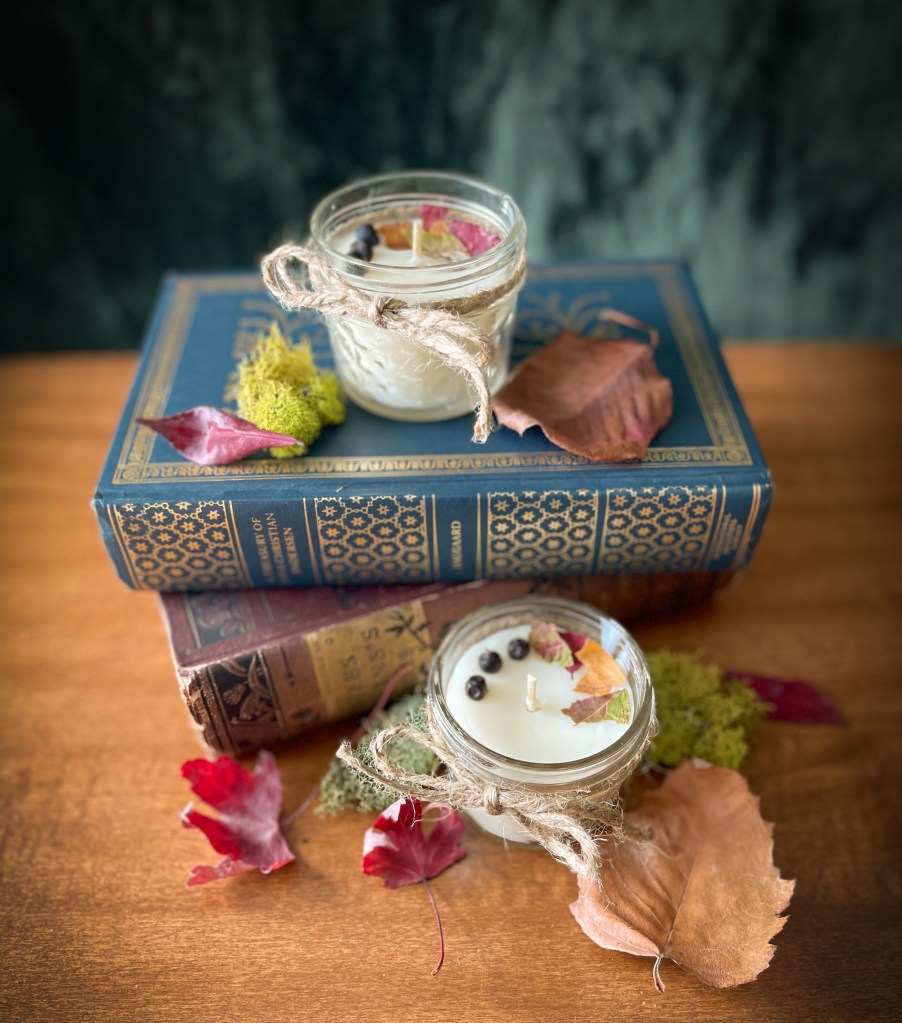
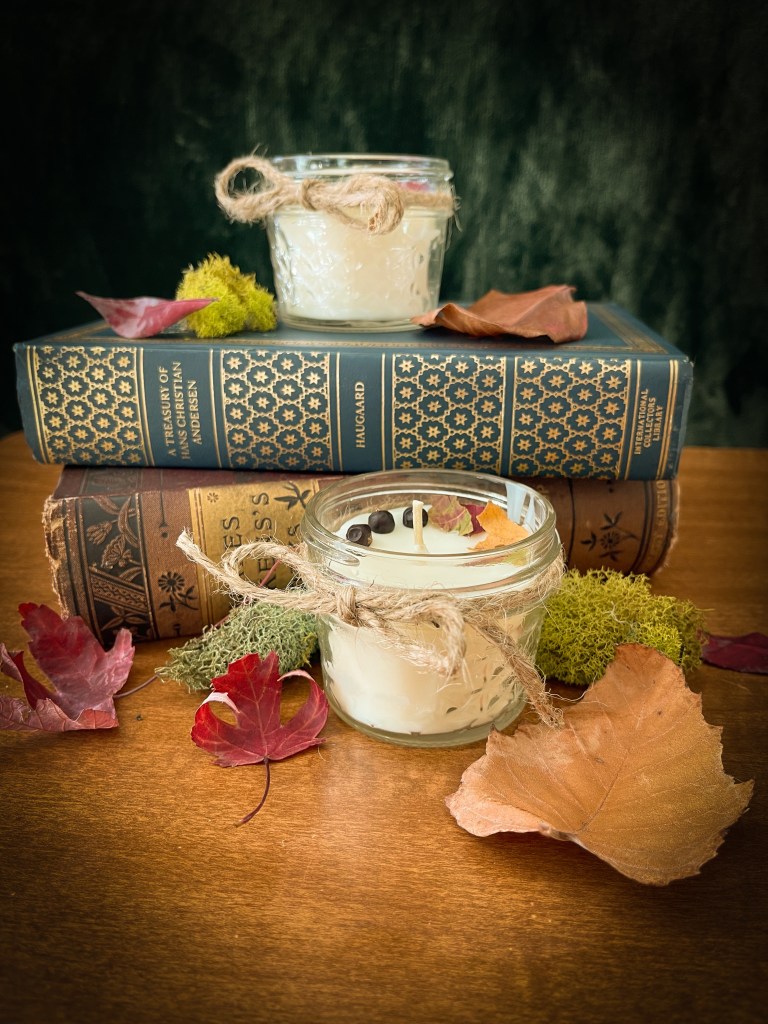
It has been so very dry where I live lately…but today, we finally got some much-needed autumn rain! It was the perfect time to pull out this AutumnRaincandle and light it to add to the cozy vibes of the day.
For these candles, I combined beeswax, a bit of coconutoil, and essentialoils for a natural scent option. (Make sure you do your due diligence in choosing ethical essential oil companies to buy from).
The essential oils I used to emulate the scent of autumn rain (after some experimentation) are ylangylang, juniper, cypress, grapefruit, and frankincense. To me, this combination evokes the sweet, earthy, and green scent of rain on autumn leaves. That fragrance is a very special sort of magic, isn’t it?!
Here is how I made the candles, if you want to try making your own!
(I recommend combining your essential oils beforehand in a glass eo jar to let the scents mix and do their thing before making the candles!)
Method:
Prepare your area; wax will be dribbled! Protect your work surface if you prefer.
Melt the beeswax pellets and coconut oil in the double boiler (can also be microwaved). While they melt, prepare candle jars with wicks, using positioners or popsicle sticks.
Once the wax is melted, remove from heat and carefully add and stir in essential oils. They will not mix or dissolve completely, but will disperse well enough with mixing.
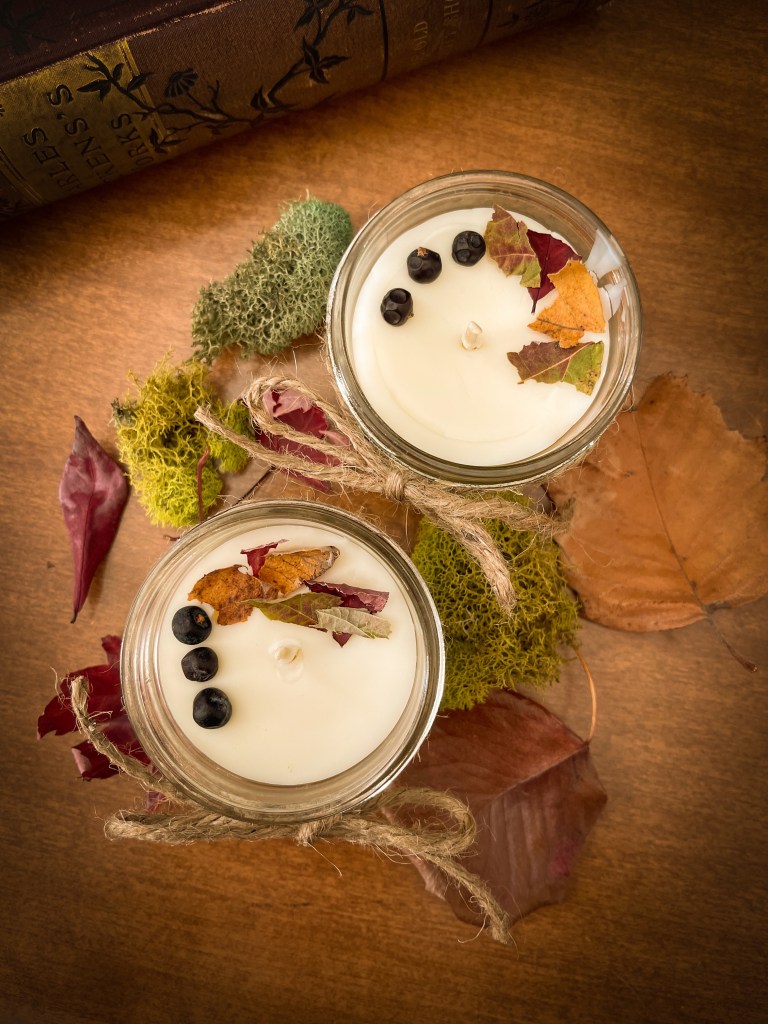
Carefully pour hot wax into jars. Allow wax to cool and set nearly completely before topping with optional adornments. (I used juniper berries and autumn leaves!)
((A trick to avoid wick tunneling: pour the candle wax about half to three-quarters full and allow to cool a bit (you might put them in the fridge to speed up the process). Using a toothpick, poke three or four deep holes into the mostly-set wax and then pour the rest of the hot wax on top. This helps the wax to settle flat and not tunnel around the wick, for some reason!))
Trim wicks and allow candles to cure for a minimum of 24-48 hours before burning. (Longer is better!)
For educational purposes only. Not intended for medical advice. Always consult your physician.
*This post contains affiliate links, which means if you choose to buy something from a link that I share, I will make a small percentage of the sale *at no extra cost to you*.
“The odor of burning juniper is the sweetest fragrance on the face of the earth, in my honest judgment; I doubt if all the smoking censers of Dante’s paradise could equal it.”
—Edward Abbey
Happy (belated) New Year!
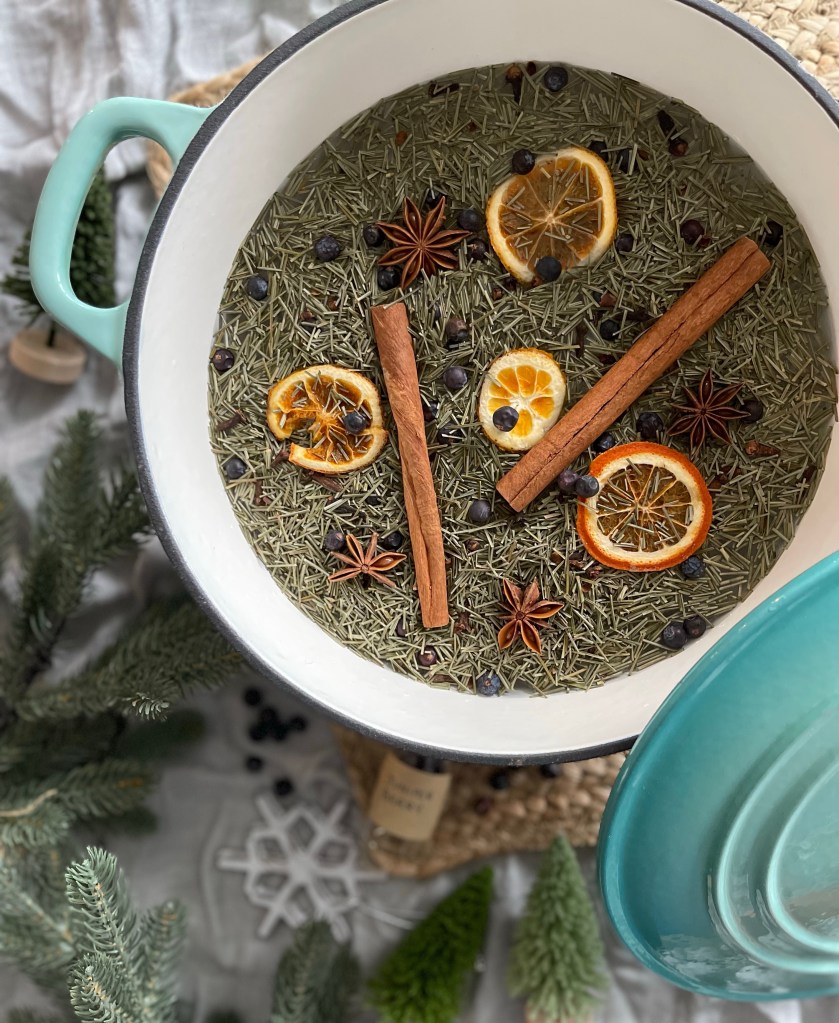
Today, my wildlings are back at school, and I am celebrating the beginning of the new year with a simmer pot containing dried juniper berries, pine needles, orange slices, cinnamon, rosemary, and cloves. (You can read more about it on my Instagram post HERE.)
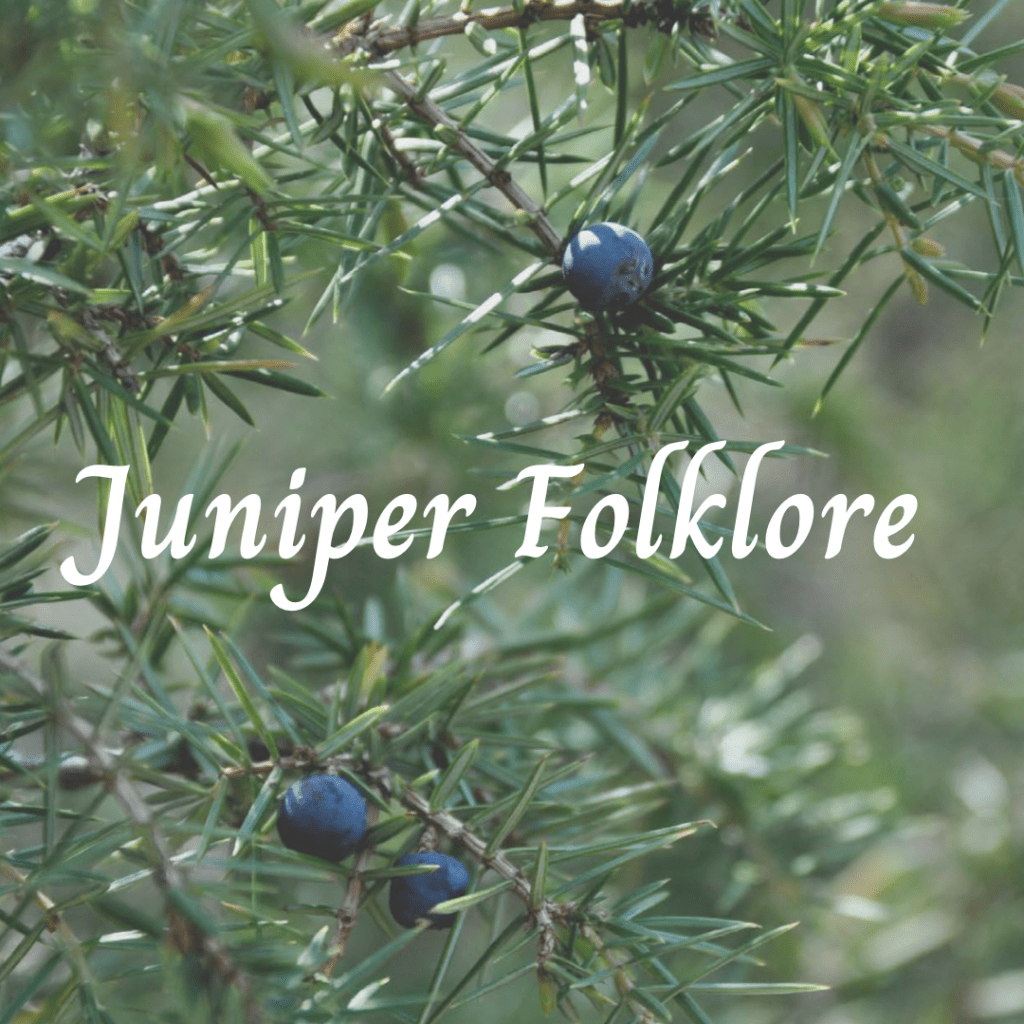
Did you know I wrote an article all about juniper folklore for the recent Winter Botanical Anthology? I’m case you missed it, and because juniper is such a lovely botanical for this time of year, I thought I’d share that article with you here today!
Though it’s perhaps not the first evergreen one thinks of in connection to winter, juniper has a long and storied history that often ties it to the colder parts of the year.
Juniper represents hope and warmth, thriving in overwrought soil where other trees can’t. It is symbolically, elementally, and astrologically associated with fire, ruled by the Sun and closely tied to Mars. Juniper also symbolizes eternal life.
The juniper tree’s berry-like cones and twigs provide food for animals, often the only available winter sustenance. They offer culinary and medicinal uses for humans, and there are many ritualistic applications for juniper’s wood and berries, as well. It is quite interesting how juniper’s folk associations mirror its medicinal uses.
The age-old use of juniper medicinally for healing, relieving stagnation, and protection from diseases probably stems in large part from the berries’ diuretic and anti-inflammatory properties. One of the most pleasant ways to administer these medicinal benefits came in the form of gin, the juniper berry liquor that dates back as far as the 11th century, as well as medicinal juniper twig beer.
In accord with these historical medical practices, juniper was—and still is—used in folk practice for protection. For disease, poison, plague, spirits, demons, and especially thievery, juniper has been a potent ward.
Often, smoke and charms are the vehicle by which juniper performs this protective service. Many cultures, including ancient Greeks and Egyptians, used juniper incense in this manner. Various types of protective amulets and charms were made from juniper berries, as well. The trees have even been long used in some places as Yule or Christmas trees or greenery for some added protection.
The Scottish have a long-standing winter tradition. The day after Hogmanay, the celebration of New Year’s eve, women would perform a saining, a smoke cleansing of the entire house with smoldering juniper branches. The aromatic smoke was carried and dispersed throughout the house for blessings, purification, and protection for the coming year; the same was performed through barns and to purify livestock.
Several species of juniper are also native to the Americas, as reflected by juniper’s presence in many indigenous Americans’ traditions and tales. Among those, the Hopi, Navajo, Blackfoot, and Seneca tell legends surrounding the tree or its berries. A Seneca tale involves junipers and other evergreens standing up to old man winter so spring may return.
While winter persists, perhaps juniper is a plant to explore a deeper relationship with. Whether it’s branches in greenery that decorates the home, fragrant incense, or even a sip of gin, inviting juniper in is a way to connect to this plant’s long history.

 The Herbology Faerie