Categories
Herbs and Herbalism plant wonder collective Recipes

Medicinal Hawthorn Syrup

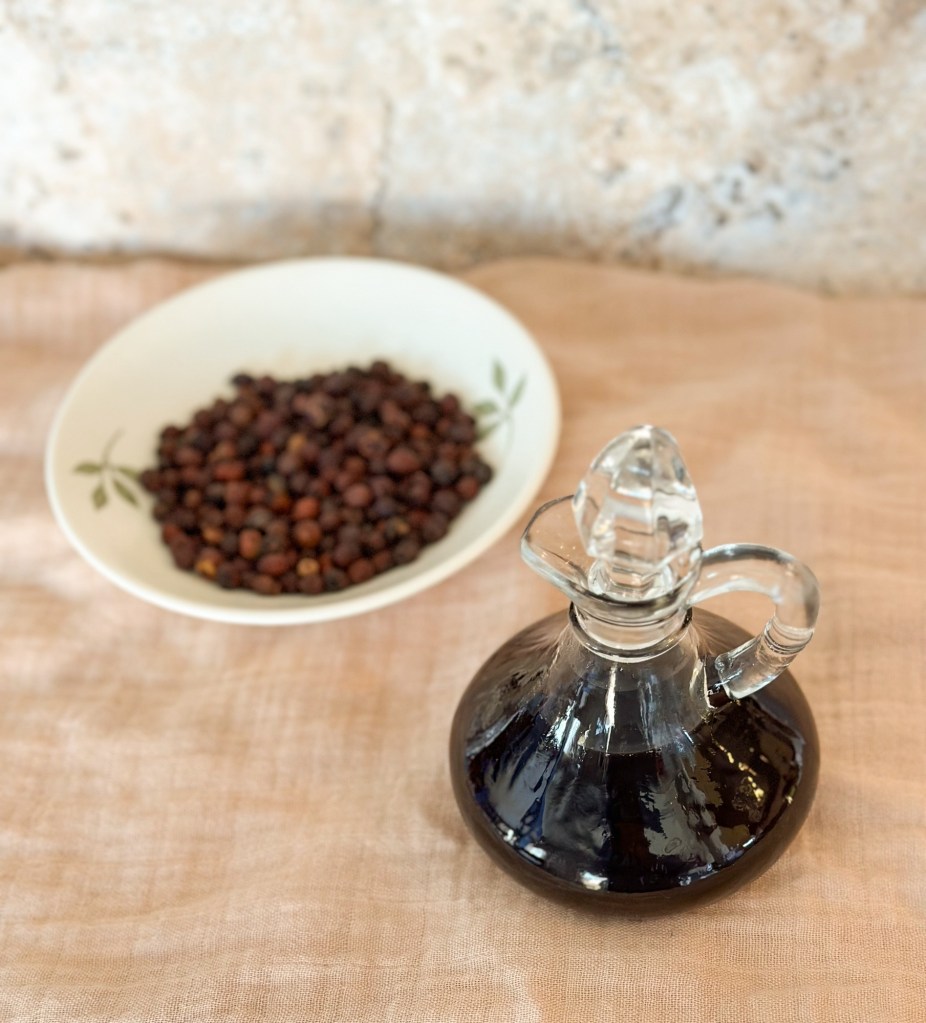
Hawthorn syrup is an amazing and delicious late-winter herbal medicine! Not only does it support circulation, blood pressure, overall heart health, digestion, and the immune system; it also helps dispel some of those late-winter blues with its sweet nervine powers. But it doesn’t need to be reserved for this time of year—it is a gentle tonic herb that can in most cases be safely taken frequently, year-round.

Whether you take a couple spoonfuls a day, mix it into water or tea, or use it as a mocktail or cocktail ingredient (who says medicine can’t be fun?!), hawthorn syrup will bolster your body as well as your emotional wellbeing. And the flavor is so, so nice—from dried berries it produces a tangy, slightly earthy berry flavor. Reminds me a little of fig, or port wine.

All you need is three ingredients to make this syrup. Here is the recipe!


Ingredients:

1 cup water

1 cup sugar (I used raw cane sugar)

1 cup dried hawthorn berries

Directions:

In a saucepan, heat water and sugar over low-medium heat until the sugar dissolves completely, stirring often with a wooden spoon. 

Add the hawthorn berries and allow to come to a light simmer, stirring often. Continue to simmer and stir for about 10 minutes. (We are being careful to keep this a syrup and not a caramel!)

Remove from heat and allow the hawthorn berries to steep in the syrup for another 20-30 minutes as it cools. Strain through a mesh strainer, and store in a clean jar or bottle in the fridge. Use within about 3-4 weeks.

Instead of discarding all the used syrup berries, brew a cup of tea with some of them!

A note about dried hawthorn berries: if you see a white substance on the outside of them, this is not mold and they’re not bad! It is the natural sugar in the berries that sort of collected on the surface as they dried.

Hawthorn is the Plant Wonder Collective plant of the month!

Plant Wonder Collective: Connecting you to nature through food, drink, play, garden, medicine, magic, and art.

If you’d like to support the work of PWC, please consider joining our Study Circle on Patreon for exclusive recipes, articles, digital downloads and printables for the plant of the month. We appreciate you being on this learning journey with us!


For educational purposes only. Not intended for medical advice. Always consult your physician.

*This post contains affiliate links, which means if you choose to buy something from a link that I share, I will make a small percentage of the sale *at no extra cost to you*.

Categories
Herbs and Herbalism plant wonder collective Recipes

Turmeric Tincture Inside & Out

Turmeric has so many health benefits—for mind, body, and spirit. As for the body, it has properties that support the immune system, modulate inflammation and pain, support the liver, and so much more. Regarding mind and spirit, turmeric has a warming, cozy, grounding taste and strengthening energy.

One very versatile way to work with turmeric is in tincture form. Turmeric tincture is easy to make and so beneficial! It only requires two ingredients, a couple simple supplies, and 6 weeks of waiting for it to infuse its goodness.

And did you know you can use it internally and externally? Internally, putting a few drops up to a dropperful in a couple ounces of water, a small mug of tea, or a shot glass of orange juice (my favorite) to drink can deliver those wonderful aforementioned benefits—like immune support, pain, inflammation, digestion, and more.

Externally, try mixing a few drops with your favorite body oil (like calendula olive oil) or moisturizer and massage into skin for cramps, aches, and even arthritis.

Here is what you need to know for making a simple turmeric tincture!


Ingredients

Dried turmeric root pieces

Plain vodka or other clear alcohol, highest proof available (80 or higher is best)

1-pint glass canning jar

BPA-free plastic canning jar lid

Mesh strainer

Optional: cheesecloth

Dropper bottle/s

Instructions

Start with a sanitized, dry jar. Fill the jar 1/2 full with the dried turmeric root pieces.

Top with vodka / alcohol, covering the plant material with about an inch of liquid. Poke the hops down with a wooden chopstick or the handle of a wooden spoon to ensure complete coverage and add more vodka if needed.

Cap tightly and label with the date and name of the tincture. Store in a cool, dark place, shaking daily. Allow to macerate for 6-8 weeks.

Strain with a fine mesh strainer and/or cheesecloth, and store in a clean jar or bottles in a dark place. Add to a dropper bottle for dosing. 

Use a few drops to one dropperful internally up to 3 times a day, or combine a dropperful with about ¼ cup body oil for external use.


Turmeric is the Plant Wonder Collective plant of the month!

Plant Wonder Collective: Connecting you to nature through food, drink, play, garden, medicine, magic, and art.

If you’d like to support the work of PWC, please consider joining our Study Circle on Patreon for exclusive recipes, articles, digital downloads and printables for the plant of the month. We appreciate you being on this learning journey with us!


For educational purposes only. Not intended for medical advice. Always consult your physician.

*This post contains affiliate links, which means if you choose to buy something from a link that I share, I will make a small percentage of the sale *at no extra cost to you*.

Categories
Herbs and Herbalism plant wonder collective Recipes

Mushroom Coffee

I am so excited that September is mushroom month at the Plant Wonder Collective! I love all things mushroom for culinary, medicinal, craft, and folklore purposes. I can’t wait to share the mushroom love this month!

The medicinal and therapeutic qualities of mushrooms have become much more widely known and embraced in the mainstream, and that has led to lots of commercially available mushroom coffee blends and coffee alternatives. Which is great! But they can be quite costly. So today I am sharing a simple and cost-effective diy option if you’d like to try making your own mushroom coffee at home.

((I will note, if your aim is primarily to get the medicinal benefits, you might not get the most out of your woody mushrooms by brewing them in a simple infusion or decoction. (In the summer Botanical Anthology, Susan Ilka Tuttle shared a great article on how to make a reishi double decoction to extract all the beneficial constituents.) But there are definitely water-soluble constituents you can benefit from if coffee is the most accessible & preferable method for you.))

This coffee-alternative blend uses reishi mushrooms, coral tooth mushrooms, roasted dandelion root, roasted chicory root, and cinnamon chips. You could easily modify the recipe with your own favorite hearty spices like cloves and allspice. Or combine it with actual coffee! (This is my preference usually.)

The idea of mushroom coffee sounds quite odd and even off-putting to some, but it tastes nothing like the mushrooms on your pizza! It tastes bitter, earthy, and pungent, but in a way that is reminiscent of traditional coffee—especially when combined with coffee itself or roasted roots that are often used in place of coffee.


Before we get into the recipe, let’s take a quick look at the benefits of the two mushrooms we’re using—

Reishi

Reishi mushroom has long been associated with longevity. It can aid the liver, help with blood pressure and cholesterol, boost the immune system, reduce inflammation, help you relax, and much more. Reishi has been pretty well-studied and the results are so promising!

Coral Tooth

Coral tooth is very closely related to lion’s mane mushroom, and is used interchangeably with it. It may help boost the immune system, modulate inflammation, relieve allergies and eczema, reduce anxiety symptoms, and more.


Mushroom Herbal Coffee Blend

Ingredients per about two cups

  • 1 tsp dried mushrooms of choice (reishi and coral tooth in this case), broken into small pieces or crushed with mortar and pestle
  • 1 tsp roasted dandelion root
  • 1 tsp roasted chicory root
  • 1 tsp cinnamon stick chips
  • 1/2 tsp cloves

Method

Add ingredients plus about three cups water (adjust according to your coffee strength preferences) to a saucepan and simmer over low-medium heat for anywhere from 20 to 40 minutes, strain, and serve how you take your coffee.

Or—

You can also grind the blend in a coffee grinder to a rough grind and brew in a French press or drip coffee maker. Not as many medicinal constituents will extract from the mushrooms, but you’ll still get some benefits and enjoy the earthy taste.

Alternatively, you can mix this blend to your preferred ratio with traditional ground coffee and brew as usual.

One more note:

Take care when foraging or purchasing medicinal mushrooms and make sure you are absolutely certain of the species before consuming! Also be sure to forage ethically or purchase mushrooms that were sourced ethically. My reishi and coral tooth were ethically foraged by my brother and his partner and gifted to me!


Have you ever tried mushroom coffee? Are you interested or curious to try it?

Categories
herbal skincare plant wonder collective Recipes

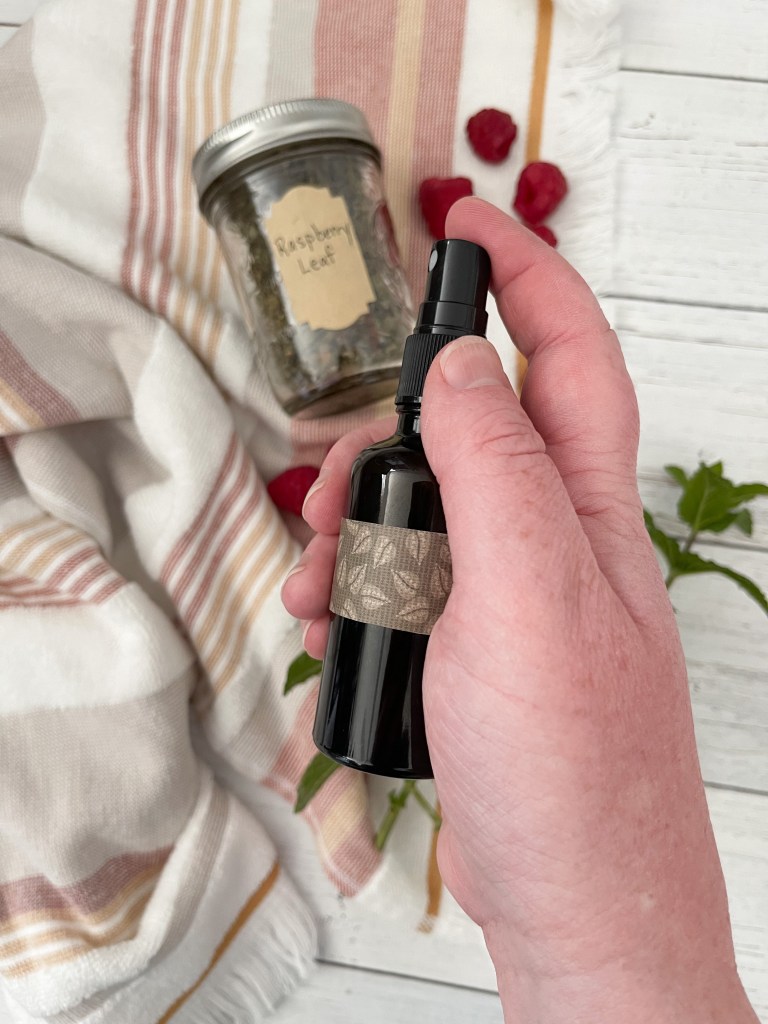
Raspberry Leaf Face Refreshing Mist

In these dog days of summer, your skin can easily become overheated and stressed out! That’s where raspberry leaf comes in. Raspberry leaf is well known for its tissue tightening and toning properties, and in a gentle face mist, this action can help to prevent moisture loss and provide soothing.

This recipe isn’t for a witch hazel or alcohol based toner—I didn’t want it to be that strongly astringent. So, instead, I’ve made a strong tea with the raspberry leaf and combined that with a cooling mint hydrosol—which you can easily make on your stovetop with some fresh mint, or you can purchase ready-made mint (or rose, lavender, or chamomile) hydrosol if you prefer.

Because this is an entirely water-based recipe, it has a shorter shelf life so you’ll want to make it in small batches and store it in the fridge. But it’s totally worth it for a very gentle, refreshing, soothing summer face mist that even the kids can use after a sweaty day of playing out in the hot sun! (It makes a great after-sun spray, too!)

This recipe comes in two parts: the mint hydrosol recipe and the raspberry tea / face mist recipe. Let’s start with the mint hydrosol!

Mint Hydrosol

Materials:
Large stock pot with lid
Small heat-safe bowl (ceramic or glass)
Heat-safe glass measuring cup
Distilled water
Fresh mint leaves
Ice

Method:
Place the heat-safe bowl upside down in the stock pot and fill the bottom of the pot with enough water that it covers the bowl. Place the glass measuring cup right-side up on top of the bowl. Place a good amount of mint leaves in the water around the bowl—a couple big handfuls of plant material. Place the pot lid upside-down on the pot and place ice cubes on top. Simmer on medium heat until a sufficient amount of steam has condensed and dripped into the measuring cup—that’s your hydrosol! Store this in the fridge.

Raspberry Leaf Facial Mist

Materials:
3 tablespoons dried raspberry leaf
Large tea mug
Plate to cover the mug with
Distilled water
Tea kettle
Strainer
Glass bowl or measuring cup
Small misting bottle (4-8 oz)

Method:
Place raspberry leaf in the tea mug and cover with water freshly boiled in a tea kettle; cover with plate and allow to steep for 10-15 minutes. Strain into a glass bowl or measuring cup and allow to cool or refrigerate.

Fill the misting bottle half full with mint hydrosol and half with raspberry leaf tea. Cap tightly and shake well to mix. Store in the fridge to prolong its shelf life and so it’s nice and cool when you’re ready to mist your face!

Categories
Folklore plant wonder collective Tea

Mugwort Diana Tea

Long time, no write! I have been away from this space because life has been very busy lately…including editing a novel and a magazine, writing articles and taking photos for various publications, and some unexpected life bits mixed in along the way. So, I am more than ready to return today with a calming tea featuring the Plant Wonder Collective’s herb of the month for June: mugwort!

Mugwort is sacred to the goddess Artemis (Greek) / Diana (Roman): the goddess of the hunt, the moon, fertility, wild places, maidens, and magic. (In fact, the Latin name of this plant is Artemisia vulgaris.) I decided it would be very fitting to create a tea blend in Artemis / Diana’s honor that focuses on mugwort but also includes other herbs specifically associated with her. Here are the ingredients–


Mugwort: dream work, clairvoyance, magic, visions; used medicinally for anxiety, menstruation & uterine health, digestion, pain relief

(California) Poppy: dream work, moon magic, love, visions, luck; used medicinally for sleep, anxiety, menstrual cramps, headaches, pain relief

Lemon Balm: clarity, comfort, emotional healing, love, focus, memory; used medicinally for anxiety, colds, fever, sleep, depression

Pine: fertility, grounding, spirituality, strength, wisdom, peace; used medicinally for nutrients, inflammation, cold and flu, skin applications

Nutmeg: awareness, clairvoyance, divination, dream work, memory, the mind; used medicinally for stress, sleep, digestion


Mugwort and these other accompanying herbs make an excellent tea for sleep, and perhaps dream work. Here is the simple recipe for brewing a cup!

1 part mugwort

½ part California poppy

1 part lemon balm

½ part pine needles

¼ part freshly grated nutmeg

Brew with hot water for 4-5 minutes, and sweeten with honey or maple syrup if you’d like.


Have you worked with mugwort before? What is your favorite way to work with mugwort?

Categories
Herbs and Herbalism plant wonder collective Recipes

Dill Potato Soup

For dill month with the Plant Wonder Collective, I decided to make potato soup! Dill pairs so nicely with potatoes, and gives the soup a fresher flavor for springtime rather than a heavier, wintry taste.

You could make your own favorite potato soup recipe and simply add dill in wherever herbs are called for, or you can try out this easy slow cooker recipe I used!

Slow Cooker Dill Potato Soup

Ingredients

  • 6 slices bacon, diced
  • 2-3 pounds petite red/gold potatoes, chopped (no need to peel)
  • 3-4 cups chicken stock
  • 1 yellow onion, chopped
  • 3-4 cloves garlic, minced
  • 2-3 sprigs fresh dill
  • 2 sprigs fresh thyme or 1 tsp dried thyme
  • 1 tablespoon butter
  • 1 cup shredded cheddar cheese, plus more to top
  • 1 pint (16 oz) heavy cream
  • Salt and pepper, to taste

Directions

  • Cook bacon according to your preferred method.
  • Add potatoes, bacon, 3 cups of the chicken stock, onion, garlic, dill, thyme, and butter into 4-quart slow cooker and stir to combine.
  • Cover and cook, on low heat for about 7-8 hours or high heat for about 3-4 hours, until potatoes are tender.
  • Use a potato masher to mash the potatoes to your desired consistency. Add in cheese and heavy cream, stirring until smooth. Salt and pepper to taste.
  • Replace cover and cook on low heat until warmed through, stirring occasionally, for about 15-20 minutes. If the mixture is too thick, add more chicken stock as needed.
  • Top with more shredded cheese to serve.

Recipe adapted from this one by Damn Delicious.

Categories
Herbs and Herbalism plant wonder collective Recipes

Dill & Cheese Beer Bread

March is dill month at the Plant Wonder Collective! I was searching for inspiration and recipes online, and realized that dill bread is a bit of an old-fashioned, simple, cozy favorite. Perfect!

We may think of dill as being mostly reserved for culinary uses (dill pickles and dill havarti—yum!) but there is some historical precedent for other applications. Dill is great for digestion and is often found in infant gripe water. It is nutrient-dense and high in flavonoids, which make it a great cardio-tonic herbal ally. Dill can help with inflammation and pain, and has been historically used for soothing in many contexts (it’s name comes from an Old Norse word meaning “to soothe”).

Interestingly, in the Middle Ages dill was used for protection and as a ward against witchcraft! It also represented luck and wealth, and might be found hanging in a home or worn as charms.

Whatever its other benefits, dill tastes really green and fresh! I used it to flavor a loaf of beer bread I made, and it tasted great paired with the mozzarella cheese I added. (Would be great with cheddar, too!) Here is the recipe if you’d like to try it!

Dill & Cheese Beer Bread

Ingredients

  • 3 cups all-purpose flour
  • 1/2 tsp salt
  • 2 tsp dried or 4 tsp fresh dill
  • 1 12-oz can or bottle of beer
  • 1 Tbsp baking powder
  • 1 cup shredded cheese of your choice (mozzarella, cheddar, or havarti)
  • 2 Tbsp butter, melted

Instructions

  1. Preheat oven to 350° F.
  2. Grease a 9 x 5 bread pan or line with parchment paper.
  3. In a bowl, combine all ingredients except the beer and butter. Mix well.
  4. Add the beer gradually and stir well to incorporate.
  5. Transfer dough into the loaf pan.
  6. Pour the melted butter over the top. You can also sprinkle a little more dill and shredded cheese over the top if you wish.
  7. Bake for 40 – 50 minutes. Check with a toothpick—if it comes out clean, the bread is ready to come out.
  8. Let cool slightly, then turn out onto a cooling rack. Slice and enjoy!

Recipe inspired by this one from TheSaltyPot.com.

Categories
Herbs and Herbalism plant wonder collective Recipes Tea

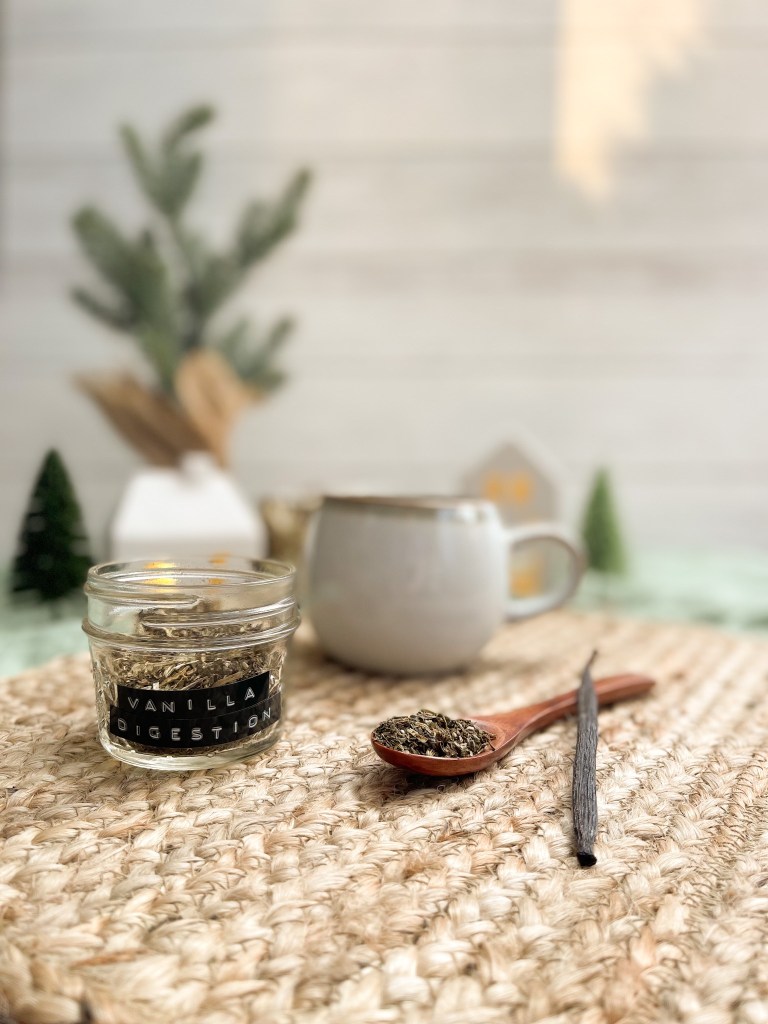
Vanilla Digestion Tea

It’s the time of year when digestion is key! Heavy, rich foods abound due to the holidays and the approach of winter, and many of us need some extra relief.

Often, digestion teas rely heavily on ginger, but I find it too spicy and irritating sometimes. I often need more of a cooling approach to indigestion instead. That’s where this tasty vanilla digestion tea comes in!

Vanilla is an aromatic stimulant and carminative botanical, with anti-inflammatory, digestive-soothing, calming, and fever easing benefits. These properties make it a great ingredient in a digestion tea!

In the interest of a more cooling approach to digestion, I’ve combined the vanilla with meadowsweet, mint, and fennel seed. If you add honey or your sweetener of choice, it’s a light and tasty dessert all on its own with a taste reminiscent of candy canes!

A bit of a breakdown of the other herbal ingredients I’ve combined with the vanilla here—

Mint can be both warming and cooling, depending on your constitution, but I find it affects me in a soothing and cooling manner. It is a mildly stimulating herb, so it aids in moving things along in the digestion process.

Meadowsweet is a top tier digestion reliever. Its cooling, drying, astringent, inflammation modulating, and even pain modulating properties make it an indispensable ally. However, if you’re sensitive to aspirin, you should avoid meadowsweet because it contains naturally-occurring salicylic acid. (If this is you, substitute chamomile or elderflower.)

Fennel is one of my very favorite herbs for digestion. It’s a pungent aromatic herb with antispasmodic and carminative properties, making it ideal for a digestion tea. Interestingly, I found a hand-written note in my great grandmother’s herbalism books suggesting to use fennel for calming. Though it isn’t technically considered a nervine or adaptogen, there is an inextricable link between gut health and mental health, so it does check out!

Here is the simple and sweet recipe for cooling vanilla digestion tea:

1 part vanilla (use chopped vanilla beans or powdered vanilla bean—my choice for economical purposes)

2 parts meadowsweet

2 parts mint

1 part fennel seed

——

Brew for about 5 minutes; longer can cause a bitter taste from the meadowsweet.

Do you suffer from digestive issues this time of year? Let me know if you try this tea! You might find that soothed digestion leads to a calmer state of mind this time of year!

Categories
Herbs and Herbalism plant wonder collective

October: Elderberry Month

I can’t believe October is already more than halfway through! Life has certainly been busy over here in the Herbology Faerie’s apothecary. My children have been home for their two week fall break, my husband took a trip for work, there have been visitors and visits, sickness, and it’s just been a bit of chaos around here. But I have still been connecting with the plant world, so I am here to share a bit about that!

This month has been elderberry month at the Plant Wonder Collective! I have so enjoyed working with lovely elderberry this October. I have not yet had the time to write up a monograph post for elderberry this month, but I will try to do that before October is done. Meanwhile, here is a link to the Plant Wonder Collective’s elderberry monograph post!

Elderberry Monograph

I have concocted a couple of fun elderberry potions this month which I have shared on Instagram. I’ll share them here, too, to make them easier to find. First up: an elderberry hot toddy!

Elderberry Hot Toddy

Next, I shared the beginnings of my elderberry infused gin this week. It is still infusing, but I will be straining it soon and sharing a cocktail or two made with this lovely liquor. Here is the initial post about its creation!

Elderberry Gin

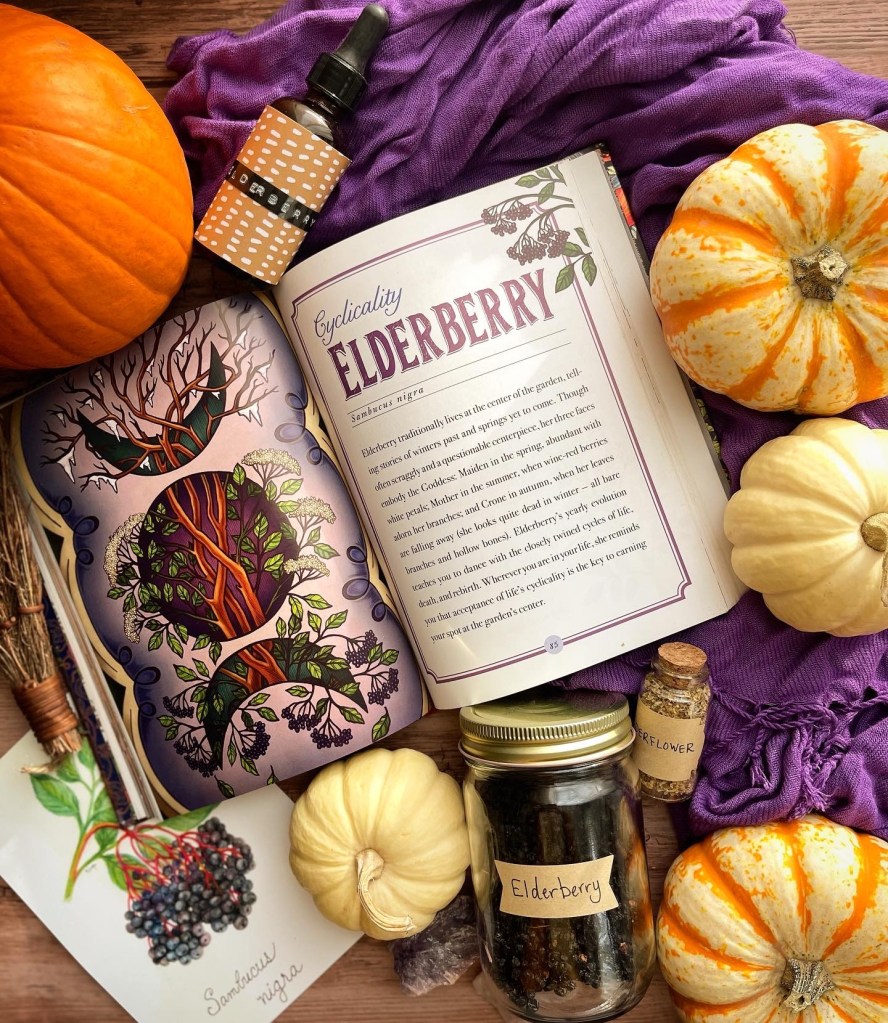
And one last post to share: here is some elderberry wisdom from The Illustrated Herbiary by Maia Toll. Elderberry reminds us to embrace the cycles and seasons of life and our place within them.

I hope October is treating you well, friends! Perhaps you’ll find some inspiration here to connect with elderberry in your own ways this month, or in the months to come!

Categories
Herbs and Herbalism plant wonder collective Recipes

Lemon Balm Simple Syrup Mocktails & Cocktails

Happy Tuesday! Whether you’re here from my Instagram post or you found this blog post first, welcome to the lemon balm party!

Lemon balm is a subtle but sweet and tasty herb for making simple syrup. I decided to brew some up and then experiment with using it to create some tasty mocktails and cocktails.

I used fresh lemon balm to make a small batch of simple syrup with my usual recipe: dissolve ½ cup of sugar in ½ cup of water on the stovetop over medium heat, add in about 1 cup of the herb, remove from heat and steep for 30 minutes, strain, and refrigerate for up to 2 weeks. 

Then came the fun part! Of course, you can use the syrup in any kind of tea (black, green, herbal) for a bit of sweetness and the calming, soothing effects of lemon balm. But I decided to take a few diy concoctions for a spin! My favorite combination was ginger ale, a splash of apple cider (apple juice works too), and about a tablespoon of lemon balm simple syrup. If you find your lemon balm syrup’s flavor turned out too subtle, though, you can always just combine it with seltzer or ginger ale so it can be the star of the show. 

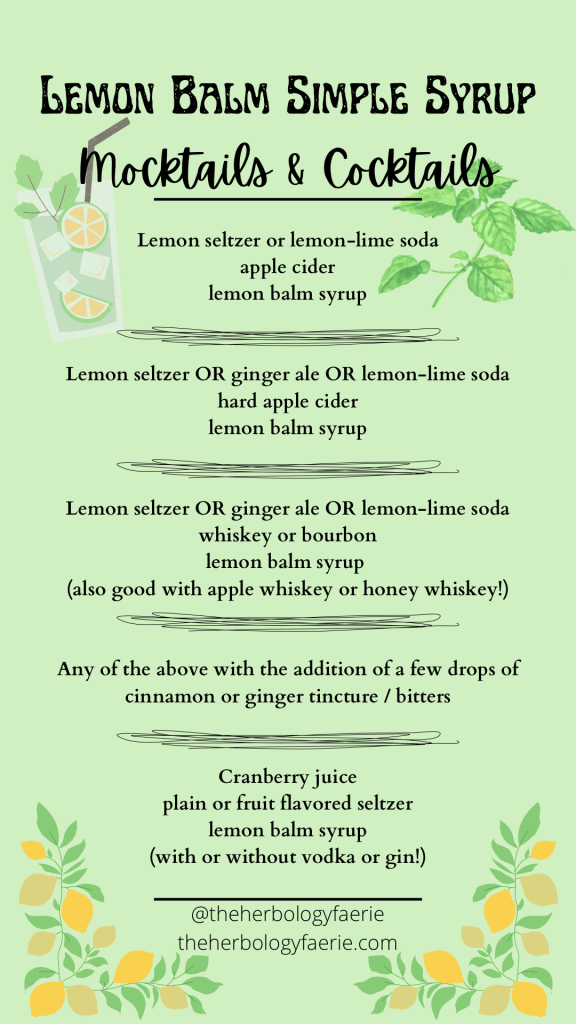
There are plenty more ways to combine lemon balm simple syrup in other mocktails and cocktails, too. Here are some of my favorite combinations!

Follow along for more Lemon Balm wonder throughout the day and join us this month through our hashtags and at @plantwondercollective on Instagram!

#plantwondercollective

#pwclemonbalm

Meet the participants!

@plantwondercollective

@florasfeastbotanicals

@wineberryadventurescouts

@herbalfae

@mamalibelula

@theherbologyfaerie

@herbal_pirate

@katwb444

Plant Wonder Collective: Connecting you to nature through food, drink, play, garden, medicine, magic and art.