Categories
Recipes Tea wheel of the year

Yule + Winter Solstice Tea Blends

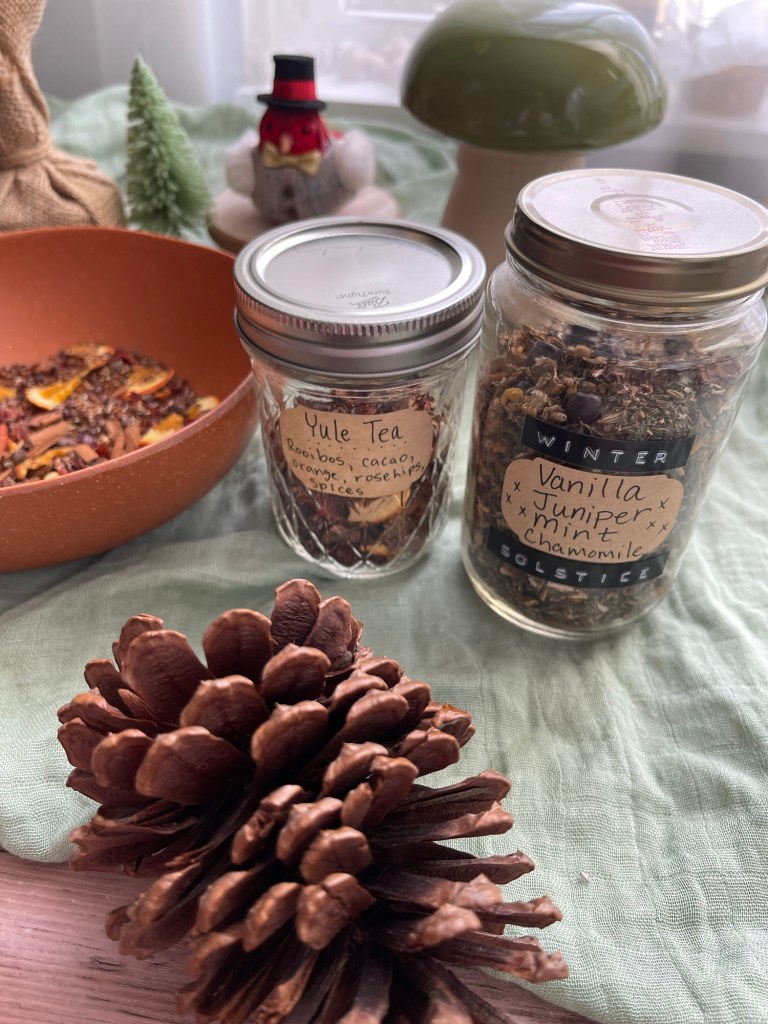
Today I’m sharing two herbal tea blends to enjoy for Yule // the Winter Solstice!
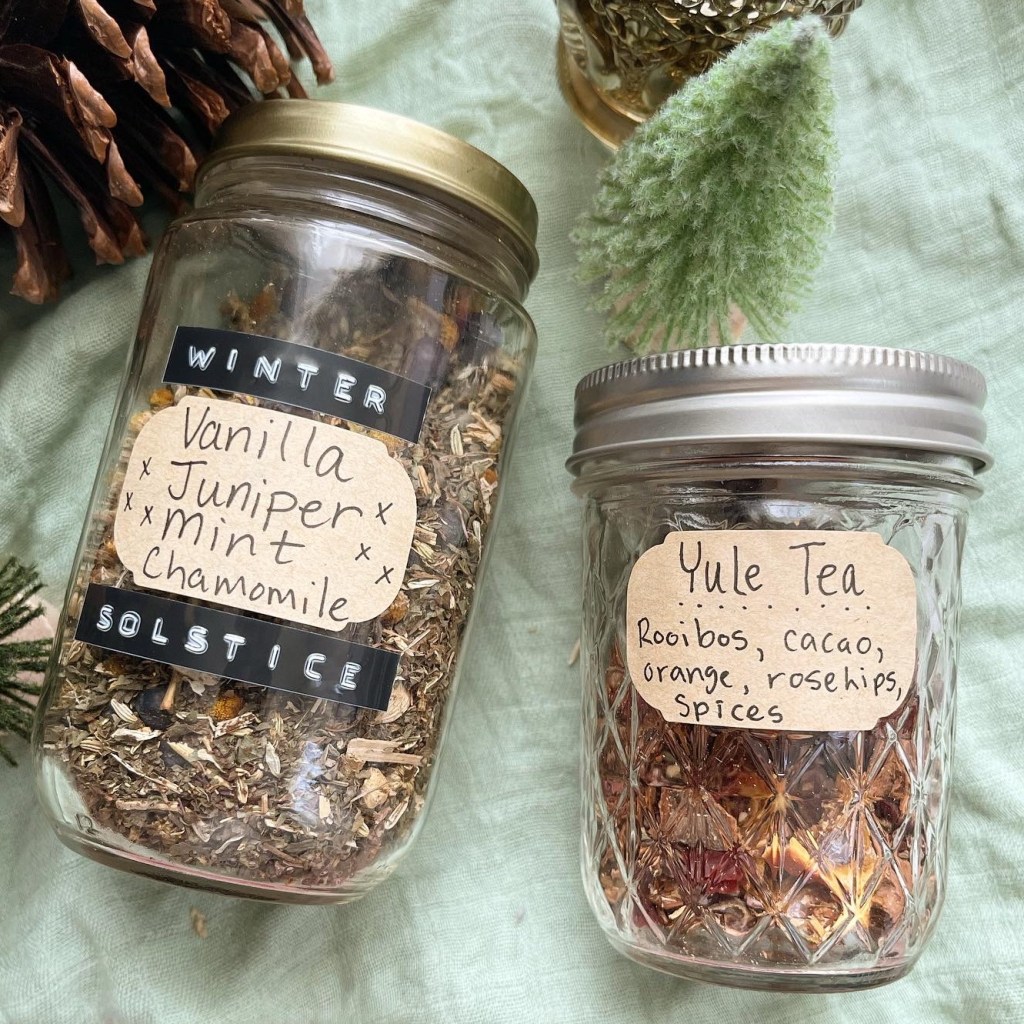
The Yule Tea blend is a sweet and festive spiced sip, full of immune-boosting ingredients that taste lovely. The combo of orange and spices is traditional for the season, in part because of those properties and in part because of associations with protection, divination, prosperity, and luck derived from them.

Yule:
1 tsp rooibos
1 tsp cacao nibs
½ tsp orange peel
½ tsp cinnamon pieces
½ tsp rose hips
¼ tsp allspice berries
¼ tsp star anise
¼ tsp nutmeg

The Winter Solstice Tea tastes decadent like a holiday cake, but without the heartburn or feeling of overindulgence! With soothing herbs that promote digestion, relieve pain, and aid in circulation, it’s like a sweet, warm hug. And chamomile represents the sun that returns brighter each day after the solstice; juniper is a powerful talisman of winter protection, cleansing, and luck; and the other botanicals have ties to healing, love, and luck, too.

Winter Solstice:
1 tsp chamomile
1 tsp mint
½ tsp meadowsweet
½ tsp cinnamon pieces
¼ tsp ginger
¼ tsp vanilla bean powder or ¼ a vanilla bean
4-5 juniper berries
2-3 cardamom pods

To brew—

To make a single cup of tea, add 1 tablespoon to a tea strainer, eco- friendly tea bag, or French press. Pour 1 to 1 ½ cups hot water over the tea and steep for 3-5 minutes. Add honey or maple syrup to taste, if desired.

For educational purposes only. Not intended for medical advice. Always consult your physician.

*This post contains affiliate links, which means if you choose to buy something from a link that I share, I will make a small percentage of the sale *at no extra cost to you*.
Categories
Recipes wheel of the year

Samhain Tea

Samhain is one of the most widely-known sabbats, as it is so closely tied up in Halloween. However, the roots of this celebration run a bit deeper. The last harvest festival, Samhain marks a time when the veil between worlds thins and spirits are closer at hand, so death and remembrance are at the forefront. The death of the earth as winter approaches is also represented with this day. Shadow work, ancestor remembrance and communion, and protection are all important at this time.

A really special way I love to celebrate Samhain is to brew up a batch of Samhain Tea to take along trick-or-treating in thermoses. It’s such a simple but special ritual! If you don’t go trick-or-treating, you could take the tea along on a spooky hike, sip while you cozy up around a fire telling scary stories, or while you spend this day / night in some other way: a warm cup of Samhain Tea can bolster your courage and help ground you. 

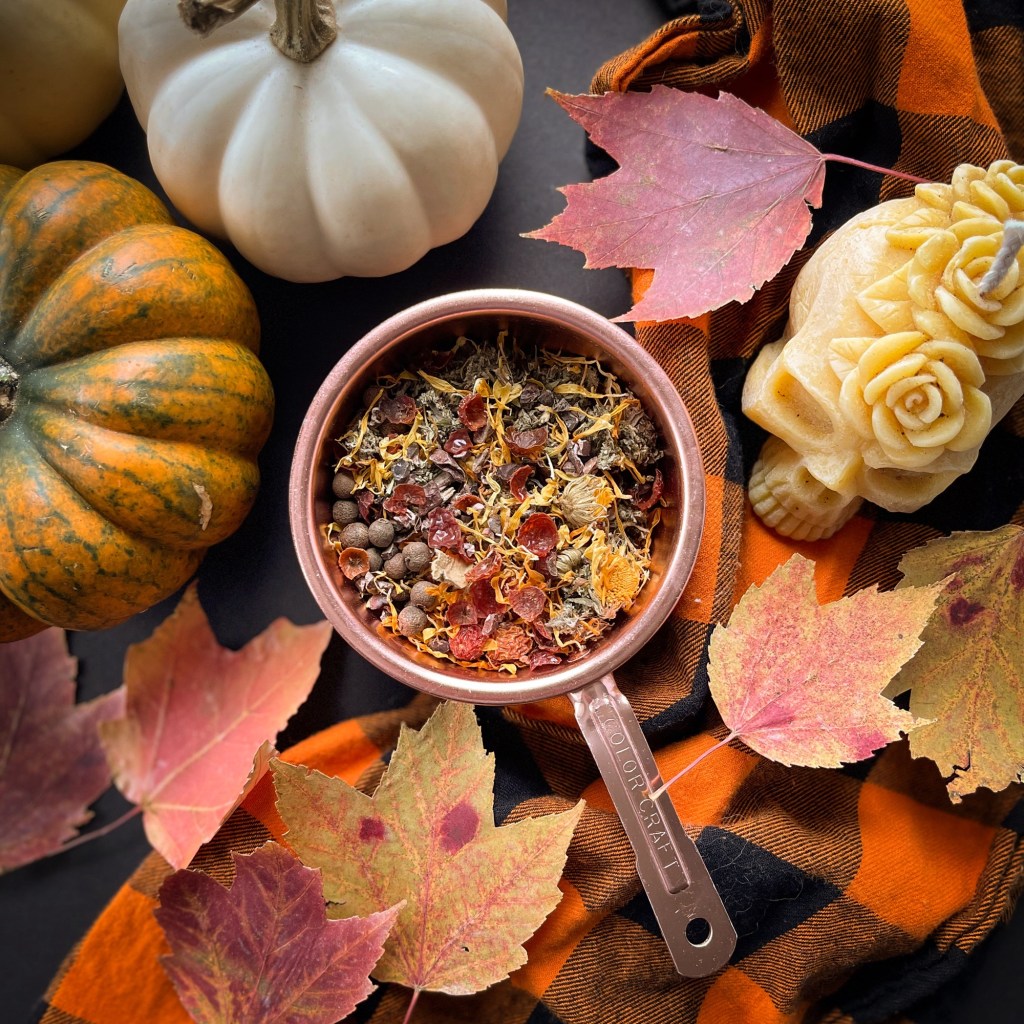
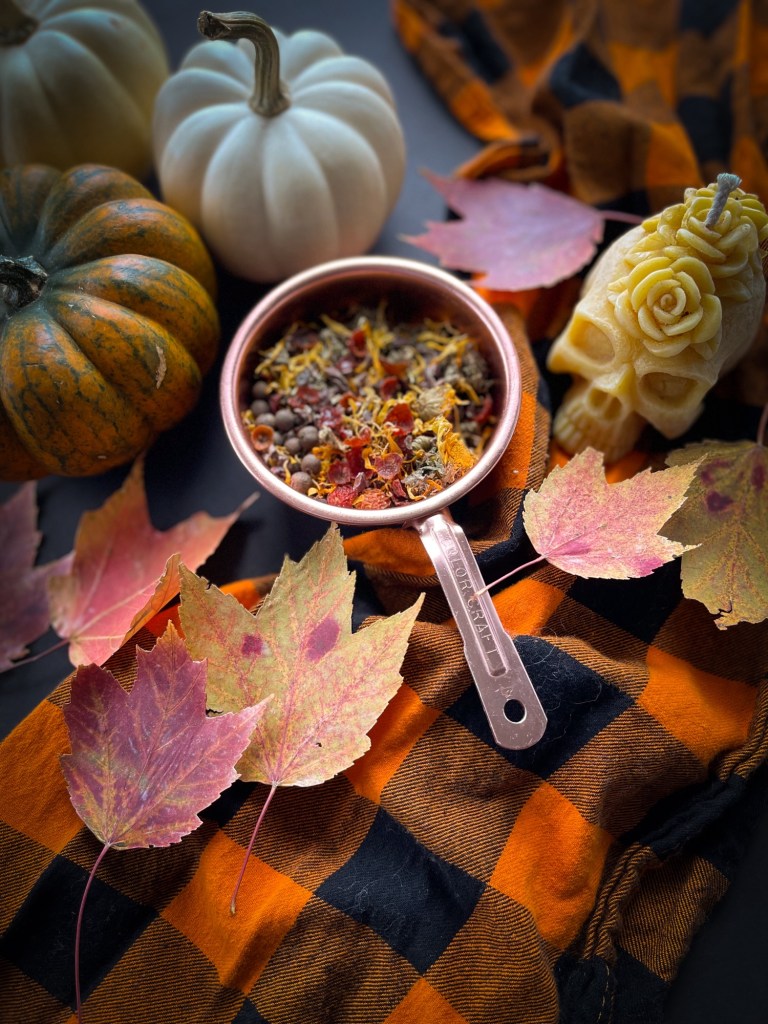
This Samhain tea blend features seasonally appropriate and healthy rose hips, mugwort for dreams, rosemary for remembrance, calendula to honor the departed, cacao for sacredness and offering, and allspice for luck and prosperity. 

Here’s what you need—


Ingredients

1 part cacao nibs 

1 part rose hips

1 part calendula 

1⁄2 part mugwort 

1⁄2 part allspice

1⁄2 part rosemary

Directions

To make a single cup of tea, add 1-2 tablespoons to a tea strainer, eco-friendly tea bag, or French press. Pour 1 to 1 1⁄2 cups hot water over the tea and steep for 4-5 minutes. Add honey or other sweetener, if desired. 


For educational purposes only. Not intended for medical advice. Always consult your physician.

*This post contains affiliate links, which means if you choose to buy something from a link that I share, I will make a small percentage of the sale *at no extra cost to you*.

Categories
Herbs and Herbalism Recipes

Roasted Roots + Coffee Mix

When I first became interested in herbalism, my dad surprised me by gifting me all of my great grandmother’s herbalism and gardening books. By chance, or most likely not, I had wandered into a family legacy. My dad then regaled me with stories of some of her practices, like how she used to brew sassafras tea and root beer, made dandelion fritters, and added chicory and dandelion root to the coffee she brewed every day. 

It is actually a long-standing tradition to add roots like dandelion, chicory, and burdock to coffee to add nutritional benefits and cut some of the bitterness. Beyond those roots, you can get creative with sweet and aromatic spices if you’d like to add more complex flavors. It’s really a very hygge—simple and intentionally cozy—process to develop your own personal mix and roast the ingredients yourself. 

I love that I am carrying on my great grandma’s legacy. Many times when I make coffee, I also mix in roasted roots like she used to cut her coffee with. Herbs like dandelion, chicory, and burdock are nutritious and grounding, and help lessen the overall caffeine in your mug. They taste quite similar to coffee, though perhaps more complex and earthy, and you can put your own spin on your recipe with the addition of other flavorful botanicals. 


Here is a closer look at some of the ingredients you might add to your own roasted root blend:

Dandelion root

Strong liver, gallbladder, + kidney support 

Vitamin + mineral rich

Supports heart + balances blood pressure

Chicory root

Vitamin + mineral rich

Digestion support

Antioxidant rich

Supports liver + stomach

Burdock root

Kidney + liver support

Anti-inflammatory • Antioxidant • Detoxifying

Antibacterial + antifungal • Skin clearing

Blood sugar regulating

Cacao

Mildly stimulating

Synergizes other herbs

Heart + blood pressure support

Blood sugar regulating

Cinnamon

Digestive support • Circulation stimulating

Blood sugar regulating • Analgesic

Antimicrobial + antifungal

Antioxidants • Supports brain health

Warming + drying

Allspice, cardamom, cloves, fennel

Digestive support

Promotes circulation • Immune support

Soothing • warming • uplifting


Method

Roast equal parts of chosen roots on a baking sheet at 375° for 20 minutes, stirring once or twice to prevent burning. Allow to cool.

Mix in any spices or additional ingredients like cacao nibs and cinnamon chips, then grind in a coffee grinder and brew as you normally brew coffee. Opt for a coarser grind if brewing with a French press.


Adapted from my Roasted Roots article from the Autumn 2022 edition of Botanical Anthology.

For educational purposes only. Not intended for medical advice. Always consult your physician.

*This post contains affiliate links, which means if you choose to buy something from a link that I share, I will make a small percentage of the sale *at no extra cost to you*.

Categories
Folklore Herbs and Herbalism Recipes

Protection Carpet & Sweeping Powder

This time of year, the quest for protection from illness lines right up nicely with the folk idea of protection from negative energy, unfriendly spirits, and the like. Whether you are seeking one, the other, or both forms of protection, there is a simple and cozy way to invoke that sentiment, freshen your house, and refresh the energies of your home: herbal carpet powder!

Did you know that strewing herbs on the floor goes way, way back? From the ancient Romans to the Middle Ages, and even up to about the 18th century herbs were strewn over the floor with rushes and straw to release a pleasant aroma and repel unwanted pests. Some households swept them up each day and replaced them with fresh herbs, while others left them for a longer interval. Rosemary, lavender, chamomile, hyssop, sage, and marjoram were among the many herbs commonly used for this purpose. Modern carpet / vacuum powders aren’t left on the floor for very long—you let them sit for 15-30 minutes before vacuuming back up—but they certainly hearken back to this practice.

While you can easily buy ready-made carpet powders at the grocery store, it is incredibly easy and fun to make your own and stir a bit of intention and personalization into the mix. If you have pets and small children, it would be best to leave out any essential oils or only use the gentlest ones you’re already used to using around your small people and creatures. Otherwise, you can experiment and create your own blend that combines the scents and intentions you prefer!

For this recipe, I’ve used rosemary for protection and remembrance (for the upcoming sabbat of Samhain); allspice and cinnamon for prosperity, luck, and healing; and orange for lovely, cozy, and uplifting vibes. And all these ingredients have antibacterial and antimicrobial properties!


Ingredients:

3 cups baking soda

3 tsp rosemary powder

1 tsp allspice powder

1 tsp cinnamon powder

20 drops sweet orange essential oil

OR 1-2 tsp orange zest

Method:

Mix ingredients well in a bowl and transfer to a glass jar. I used an empty Himalayan pink salt shaker jar because of the convenient shaker lid! Sprinkle on your carpet (and even wood or tile floors if you like), allow to sit for 15-30 minutes, and then vacuum up thoroughly. You can also sprinkle a bit of this powder around doorways and windowsills to repel insects (and maybe more? 👻).


For educational purposes only. Not intended for medical advice. Always consult your physician.

*This post contains affiliate links, which means if you choose to buy something from a link that I share, I will make a small percentage of the sale *at no extra cost to you*.

Categories
Hygge Recipes

Gluten Free Chai Apple Crisp

It may not be pumpkin spice time yet (Says who? It’s always pumpkin spice time to me!) but apples are ripening and it’s a great time to whip up some apple crisp. I am gathering with friends this evening, so I made a chai apple crisp that is gluten-free for one of my friends’ dietary needs.

You can’t fault me for rushing Autumn if I’m using chai spices! And anyway, there are so many benefits to chai spices. Medicinally they’re immunity boosting, digestion aiding, circulation stimulating, and so much more—check out THIS blog post for more on that. Chai spices also help soothe, relax, and even help with sleep. And symbolically / spiritually, many of these warming spices are said to bring prosperity, protection, joy, and divinatory insight. Plus, they’re just cozy and tasty! Perfect for a gathering with friends paired with tart Granny Smith apples.

Here is the recipe!


Gluten-Free Chai Apple Crisp—

Ingredients

For the filling—

  • 8-10 Granny Smith apples, peeled, cored, and sliced or chopped
  • 2 Tbsp gluten-free flour blend
  • 2 Tbsp sugar
  • 1 tsp pumpkin spice mix (cinnamon, nutmeg, ginger, and cloves) or ¼ tsp of each 
  • 1/4 – 1/2 tsp allspice
  • 1/2 tsp cardamom powder
  • 1 tsp vanilla extract

For the crumble—

  • 1 cup gluten-free old-fashioned oats
  • 1/2 cup gluten-free flour blend
  • 1/8 tsp salt
  • 1 cup dark brown sugar
  • 1/2 tsp pumpkin spice
  • 1/8 tsp allspice
  • 1/4 tsp cardamom
  • 1 stick of butter of choice, cold, cubed

Method

Preheat oven to 375° F. Grease a 9 x 13 glass baking dish and set aside.

Prepare apples and put in a large mixing bowl. Sprinkle with sugar, flour, and spices and stir to coat; add vanilla extract and stir again. Scoop this mixture into your greased baking dish.

In the same mixing bowl if you’d like, mix the oats, flour, spices, and salt well. (If you’d like to ease back on the spices, omit them from the crumble.) Add the brown sugar and butter and cut in with a pastry blender or fork until pebbly consistency is reached. Sprinkle over the apple filling evenly.

Bake 30 to 35 minutes; cool before serving.


Notes

Serves 6-8

Substitute in your favorite chai spices and play around with the amounts to your preference!

Would also be amazing with walnuts in the crumble topping.

This recipe could easily be adapted to be non gluten free with conventional flour.


Are you a big fan of apple crisp? And do you think August is too soon for it? Let me know in the comments!