Blessed Imbolc! This sabbat marks the halfway point between the winter solstice and spring equinox, so it is also called midwinter. And it is Candlemas, when candles were brought to be blessed for the year.
It’s also a time that is traditionally dedicated to St. Brigid and/or the goddess Brigid. This Celtic goddess is a fire deity who embodies the light and warmth of spring. She is sometimes represented as a triple-goddess or as presiding over three flames: the flame of inspiration and creativity, the flame of the hearth, and the flame of the forge and smithing. Brigid is also associated with healing, wisdom, poetry, livestock, and protection.
As Celtic legend tells, the Cailleach–the crone goddess of winter–and Brigid split the year between them. When the Cailleach’s fire goes out, she cedes rule to Brigid, who presides over her half of the year until Samhain when her counterpart returns.
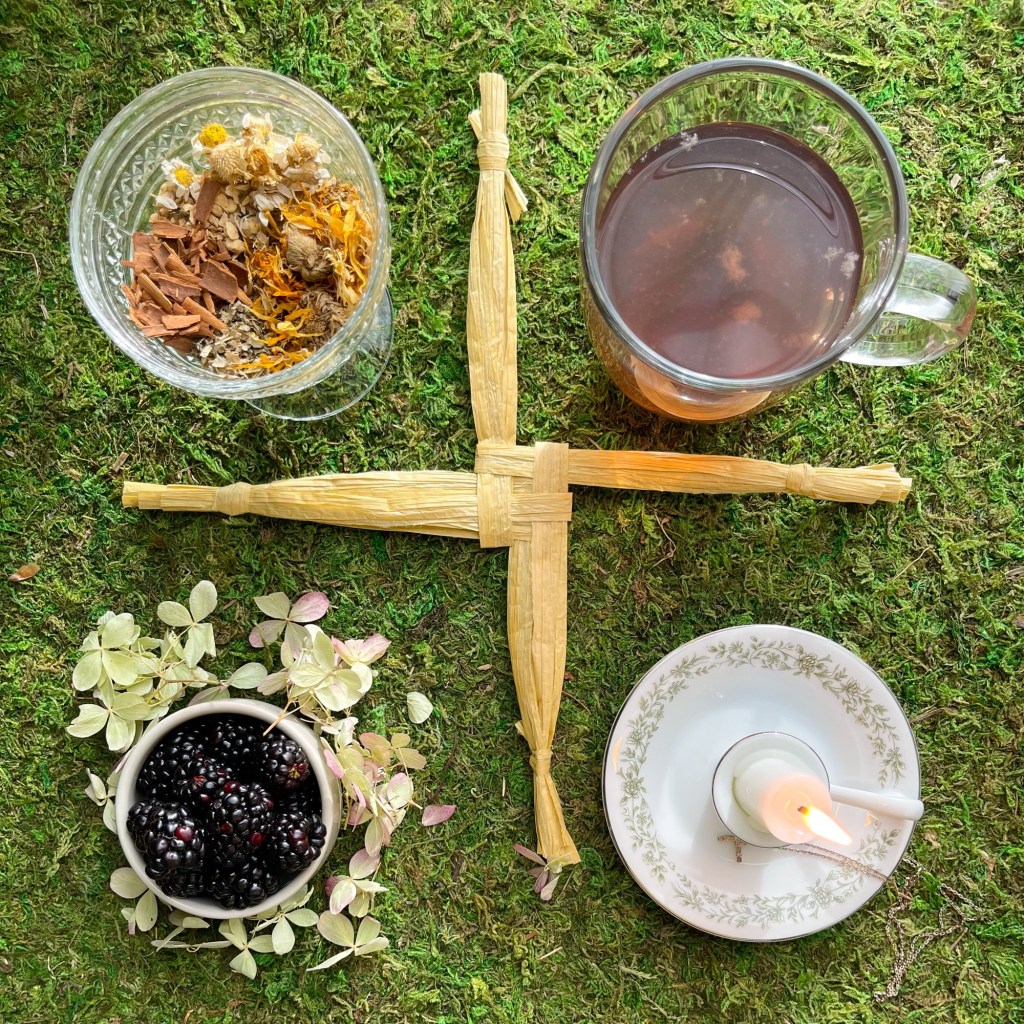
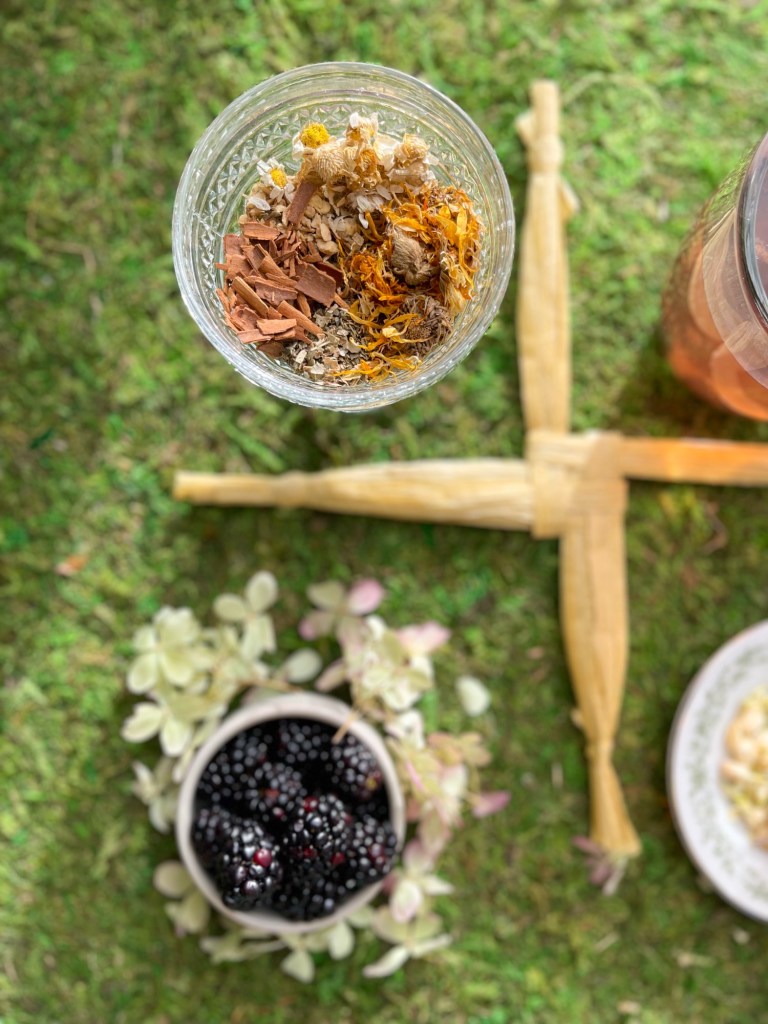
This tea to welcome Brigid’s return contains blackberry leaf and fruit along with chamomile, which are all sacred to the goddess, in combination with calendula, ginger, and cinnamon to represent her three flames.
If using fresh blackberries, muddle 2-3 in the bottom of a cup (you’ll strain the tea after brewing); if using dried berries, simply add them to the tea herbs. Add 1 tablespoon to a tea strainer, eco-friendly tea bag, or French press. Pour 1 to 1 ½ cups hot water over the tea and steep for 5 minutes. Strain out the muddled blackberries now if using this method. Add honey or other sweetener, if desired.
For educational purposes only. Not intended for medical advice. Always consult your physician.
*This post contains affiliate links, which means if you choose to buy something from a link that I share, I will make a small percentage of the sale *at no extra cost to you*.
Samhain is one of the most widely-known sabbats, as it is so closely tied up in Halloween. However, the roots of this celebration run a bit deeper. The last harvest festival, Samhain marks a time when the veil between worlds thins and spirits are closer at hand, so death and remembrance are at the forefront. The death of the earth as winter approaches is also represented with this day. Shadow work, ancestor remembrance and communion, and protection are all important at this time.
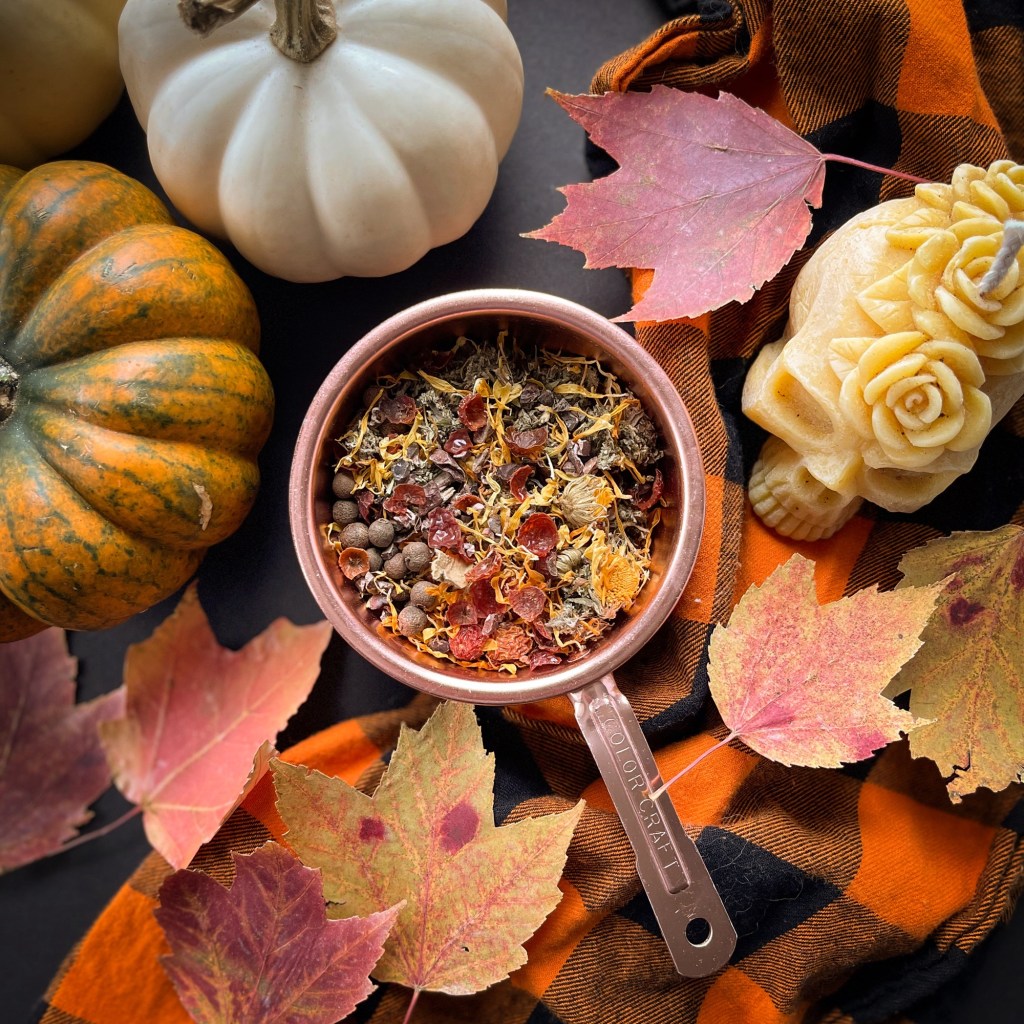
A really special way I love to celebrate Samhain is to brew up a batch of Samhain Tea to take along trick-or-treating in thermoses. It’s such a simple but special ritual! If you don’t go trick-or-treating, you could take the tea along on a spooky hike, sip while you cozy up around a fire telling scary stories, or while you spend this day / night in some other way: a warm cup of Samhain Tea can bolster your courage and help ground you.
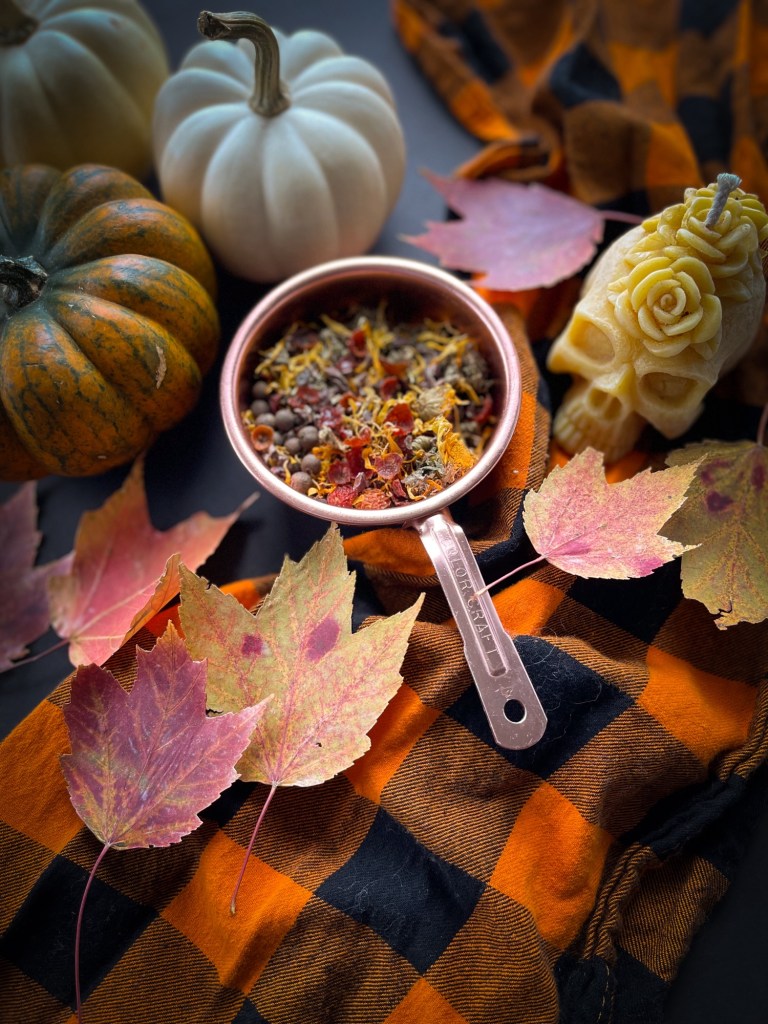
This Samhain tea blend features seasonally appropriate and healthy rose hips, mugwort for dreams, rosemary for remembrance, calendula to honor the departed, cacao for sacredness and offering, and allspice for luck and prosperity.
To make a single cup of tea, add 1-2 tablespoons to a tea strainer, eco-friendly tea bag, or French press. Pour 1 to 1 1⁄2 cups hot water over the tea and steep for 4-5 minutes. Add honey or other sweetener, if desired.
For educational purposes only. Not intended for medical advice. Always consult your physician.
*This post contains affiliate links, which means if you choose to buy something from a link that I share, I will make a small percentage of the sale *at no extra cost to you*.
Lammas / Lughnasadh / the First Harvest festival is almost here, coming up on August 1!
In years past, I was very much NOT a fan of the month of August. Where I live it tends to be incredibly hot, buggy, and like a dragging obstacle between me and my favorite season: autumn.
But recently, I came to see August in a new light. I’ve learned about the sabbat of Lughnasadh / Lammas (they tend to be used interchangeably) on the wheel of the year. Lammas marks the first harvest festival—the first of three, including Mabon and Samhain. The connections with Lammas tend to be the late summer veg and herb harvests, grain, bread making, beer, wine, fruits and vegetables, abundance, and gratitude. This opens the doorway for our descent toward autumn. Nights begin to gradually get cooler, and sunflowers bloom at the flower farm near my home. I can get behind this imagery, this spirit of anticipating autumn and gratitude for the end of summer’s abundance!
Lammas and Calendula
When I first learned about Lammas, I immediately, intuitively connected it with calendula. This may not resonate for you—you may have another plant you feel called to at this time. But for me, it’s all about this gorgeous, sunny orange flower.
Medicinally, calendula offers immune boosting, gut healing, inflammation modulating, stagnation clearing, and liver supporting properties when used internally. Externally, it supports skin healing and treats bug bites, rashes, burns, wound healing, and overall skin health support.
Spiritually, calendula is connected to the sun, Leo and Cancer—giving fiery yet nurturing qualities, warmth, comfort, healing, protection, happiness, peace, abundance, hard work, and responsibility. I find that ingesting, and even just seeing this plant on my home altar spaces, helps bolster and nourish me during this industrious time! I tend to add calendula into most of my teas and baked goods during the Lammas season.
Lammas Tea Meditation Download
To celebrate this occasion, I am sharing with you a special Lammas Tea Meditation journaling page that you can download, print, and perhaps pair with a mug of calendula tea. Quiet your mind, breathe deeply, and allow your impressions of the herb to wash over you and impart its gifts.
Download, print, and use this mediation journal page along with any other Lammas / Lughnasadh / First Harvest celebrations and reflections!
This article appears in the Winter 2022 edition of Botanical Anthology. You can purchase a digital copy HERE or a print copy HERE.
Along with the joys winter brings, it unfortunately also carries increased risk of illness in its wake. Between extra time spent indoors during colder weather and the season’s gatherings and festivities, exposure to many types of illnesses sees a dramatic uptick. To that end, immune support becomes a constant refrain.
Herbal allies can be indispensable when it comes to this winter barrage of germs. But what does “herbal immune boosting” mean? It is a many-pronged approach to keeping your body functioning optimally so that you might avoid some illnesses altogether, or at least lessen their severity. Different types of herbs work together synergistically to aid with this never-ending task.
Adaptogens Fatigue, burnout, and chronic stress are common problems that weaken the immune system and its ability to fend off illness. Adaptogenic herbs help restore balance and protect the body’s systems and processes to counter these effects, the immune system being an important beneficiary. Tulsi, astragalus, reishi and chaga mushrooms and licorice root are just a few examples of adaptogens.
Nervines Stress and insomnia deplete the body and create the perfect breeding ground for germs. Luckily, nervine herbs help combat both of these issues, and many are gentle and safe for everyday use for most individuals. As an added bonus, some nervines have antimicrobial properties, too. Gentle nervine herbs include chamomile, lavender, lemon balm, tulsi, rosemary, linden, hawthorn, and passionflower.
Diaphoretics Diaphoretic herbs are warming and promote circulation. Once sick, these herbs go on to help sweat out a fever and offer respiratory relief. These include yarrow, elderflower and berry, chamomile, ginger, catnip, cayenne, garlic, and linden.
Aromatics Aromatic herbs don’t just taste great—they provide important immune boosting actions, too. Most aid digestion, while also offering strong antimicrobial support. These germ-killers include ginger, cardamom, cinnamon, cloves, anise, allspice, rosemary, and fennel.
Antioxidants Antioxidants like vitamin C aid immunity by supporting and stimulating antimicrobial actions on a cellular level as well as protecting body tissues from damage. Antioxidant herbs that provide much-needed immune boosting include rooibos, rose hips, hibiscus, elderberry, orange peel, and raspberry leaves.
Alteratives Alterative herbs aid in detoxifying your body by supporting the organs and systems that handle this important task. You need your liver, kidneys, and lymphatic system in tip-top shape to fight off illness! This category of herbs includes echinacea, calendula, dandelion root, burdock root, and nettles.
There are countless combinations one can work with to create an immune-boosting herbal recipe. To make things a little less daunting, here is a simple tea as a starting point. It features elderberry, a tried-and- true immunity aid, but also rooibos, an oft-overlooked antioxidant powerhouse. There is a bit here from each of the above categories, and plenty to tempt the taste buds, as well.
Blend this combination of herbs as the recipe states, or use it as a jumping-off point to inspire your own immune supporting formulation!
Method Mix all ingredients except orange in a bowl. Transfer to an airtight container.
To make a single cup of tea, add 1 tablespoon to a tea strainer, eco-friendly tea bag, or French press. Pour about 1 1⁄2 cups hot water over the tea and steep for 5 to 10 minutes. Add fresh orange zest or orange slice and honey to taste, if desired.
Notes This recipe yields approximately 10 servings of tea. If making a small batch, measure the parts in teaspoons—it should yield about 2 servings of tea.
For educational purposes only. Not intended for medical advice. Always consult your physician.
*This post contains affiliate links, which means if you choose to buy something from a link that I share, I will make a small percentage of the sale *at no extra cost to you*.
I decided to whip up an adorably tiny roller bottle of September-inspired perfume oil recently! I love teeny roller bottles because I can make a small amount to test out the scent combination, and I don’t have to worry about making too much if it’s something I’m only going to use for a short period because it’s intention is geared to a specific occasion or month.
The basis of this essential oil blend is Ho wood and benzoin, which are creamy, vanilla-esque scents that I find very cozy. Combined with these are notes that are spicy, woodsy, sweet, and a hint of floral. To me, this combination evokes early autumn: the sweet and creamy scents are rich, yet sunny and light, and the spice is subtle enough to hint at autumn without being too heavy.
If you have sensitive skin, you probably ought to cut back on the EOs when making this recipe, and you can leave out the cinnamon and cardamom if they might be irritating. (The cinnamon chips included will gradually infuse in the base oil anyway!)
And, as always, be sure to source and use essential oils responsibly and from reputable, sustainable sources. (Not an ad and not sponsored at all, but I get most of my essential oils from Mountain Rose Herbs and Simply Earth.)
Materials:
5 ml roller bottle
Dropper
Carrier oil of choice (I like olive oil even though it’s a bit unorthodox—I used calendula-infused olive oil to make it extra special!)
Cinnamon stick chips
Essential oils, in drops:
3 Ho wood
3 benzoin
2 cypress
2 sweet orange
1 geranium
1 cinnamon
1 cardamom
Method:
Add a few pieces of cinnamon stick chips. Fill the bottle about halfway with carrier oil using a dropper. Carefully add the essential oil drops, then top with more carrier oil—make sure to leave room to insert the roller ball top. Add the roller and cap tightly, shake to mix well, and let it sit a day or two before using.
One of my new favorite things to make is lotion bars, made with herbal infused oils! They’re easier to make than you might think, and feel so soothing and luxurious on your skin.
I started with olive oil I had infused with calendula a while back for skincare purposes. Calendula is very healing and beneficial to the skin, and olive oil is quite moisturizing and good for the hands, arms, and legs. Very helpful this time of year when we begin getting dry, chapped skin from the cold & dry weather!
I combined the herb-infused oil with beeswax and shea butter, then added a small bit of tangerine essential oil for a cheery scent addition. (The essential oil is optional, though. Also, remember to choose ethical essential oil companies to buy from!)
Here is the full recipe, in case you’d like to make some of your own!
Calendula Olive Oil Lotion Bars
(Makes 8 good sized lotion bars)
Materials:
Silicone molds or silicone cupcake liners
Double boiler (optional)
112 g shea butter
80 g beeswax pellets
96 g olive oil infused with calendula flowers
12-16 drops essential oil (optional; I used tangerine)
Method:
Prepare your supplies and area; you might want to put down a layer of parchment or waxed paper in case of dribbles.
Melt the beeswax pellets, shea butter, and calendula olive oil slowly over low heat in the double boiler. If you don’t have a double boiler, set a large glass mixing bowl over a small saucepan containing about 1 inch of water, put your ingredients in the mixing bowl, and it works the same way.
Once the ingredients are melted, remove from heat and carefully add and stir in essential oil if you’re using it.
Carefully pour the hot liquid into your silicone molds. Allow to cool completely for a good long while before trying to turn them out—I like to have the molds all lined up on a baking sheet and transfer that to the fridge for quicker setting, but that’s optional.
Once the lotion bars are finished, store them in individual small tins, waxed paper bags, or jars for gifting. They warm up quickly when rubbed against the skin and turn into a light but nourishing lotion. These can double as lip balm, too!
I made a couple batches of these and plan to gift them to friends and family for the holidays! (Sorry for the spoiler, friends and family! 😂) They’re such a nice little handmade gift that feels extra special. And the calendula oil is like a bit of sunshine to soak up during the winter months!
This recipe was inspired by a recipe in 101 Easy Homemade Products for your Skin, Health, and Home by Jan Berry.



 The Herbology Faerie