We are firmly in the heart of Aries season, so I am sharing my simple tea recipe meant to help you ground into this energy! My daughter is a very fiery Aries herself so I am all too familiar with the spirit of this sign.
Associated with the Emperor in tarot; the root and solar plexus chakras; yang energy; red, pink, yellow, and white; and diamond, carnelian, citrine, and fire opal.
To make a single cup of tea, add 1 tablespoon to a tea strainer, eco- friendly tea bag, or French press. Pour 1 to 1 1⁄2 cups hot water over the tea and steep for 3-4 minutes. Add honey or other sweetener, if desired.
———
For educational purposes only. Not intended for medical advice. Always consult your physician.
*This post contains affiliate links, which means if you choose to buy something from a link that I share, I will make a small percentage of the sale *at no extra cost to you*.
When I first became interested in herbalism, my dad surprised me by gifting me all of my great grandmother’s herbalism and gardening books. By chance, or most likely not, I had wandered into a family legacy. My dad then regaled me with stories of some of her practices, like how she used to brew sassafras tea and root beer, made dandelion fritters, and added chicory and dandelion root to the coffee she brewed every day.
It is actually a long-standing tradition to add roots like dandelion, chicory, and burdock to coffee to add nutritional benefits and cut some of the bitterness. Beyond those roots, you can get creative with sweet and aromatic spices if you’d like to add more complex flavors. It’s really a very hygge—simple and intentionally cozy—process to develop your own personal mix and roast the ingredients yourself.
I love that I am carrying on my great grandma’s legacy. Many times when I make coffee, I also mix in roasted roots like she used to cut her coffee with. Herbs like dandelion, chicory, and burdock are nutritious and grounding, and help lessen the overall caffeine in your mug. They taste quite similar to coffee, though perhaps more complex and earthy, and you can put your own spin on your recipe with the addition of other flavorful botanicals.
Here is a closer look at some of the ingredients you might add to your own roasted root blend:
Roast equal parts of chosen roots on a baking sheet at 375° for 20 minutes, stirring once or twice to prevent burning. Allow to cool.
Mix in any spices or additional ingredients like cacao nibs and cinnamon chips, then grind in a coffee grinder and brew as you normally brew coffee. Opt for a coarser grind if brewing with a French press.
Adapted from my Roasted Roots article from the Autumn 2022 edition of Botanical Anthology.
For educational purposes only. Not intended for medical advice. Always consult your physician.
*This post contains affiliate links, which means if you choose to buy something from a link that I share, I will make a small percentage of the sale *at no extra cost to you*.
DIY botanical hand soap is incredibly simple to make and can bring lovely, refreshing scent, moisturizing properties, and natural ingredients to the sinks in your home. It also makes a nice house-warming or holiday gift!
It is something extra special to concoct your own personalized soap from some of your favorite natural ingredients. You can capture the season, cozy vibes, and your favorite scents all in something you use many times a day! And the process of very easy and fun! My eight-year-old daughter especially enjoys creating this hand soap with me.
Simply combine castile soap, water, herb-infused oil (such as coconut, jojoba, sweet almond, or olive oil), and essential oils (these are optional but help add a stronger scent). You can also add ingredients like vegetable glycerine and/or aloe vera for extra moisturization, and vitamin E oil to extend the shelf life.
For this particular batch of hand soap, I invoked an autumnal energy by including rose-infused jojoba oil, orange essential oil, frankincense essential oil, cinnamon sticks, star anise, dried orange, and a few cloves. The dried botanicals and spices are added for accent and visual appeal, and they are hard enough so they won’t break down too much in the soap mixture to interfere with the soap. If you’d like, envision a warming and cozy intention while adding these to this soap your family and friends will use in your home.
Starting with a clean jar, add 1 cup water. Add 1/2 cup castille soap and all other ingredients. Replace lid and carefully swirl vigorously to mix. If the jar looks too empty, top up with a bit more water and castille soap.
The mixture will be a bit foamy at the top, and will be thin but luxuriously moisturizing for the skin.
Note: you may need to give it a swirl once in a while as the ingredients can separate while it sits and settles. Also, if very young children or anyone with skin sensitivities will be using the soap, you can omit the essential oils.
Would you make DIY hand soap? Which ingredients or scents would you use in yours?
For educational purposes only. Not intended for medical advice. Always consult your physician.
*This post contains affiliate links, which means if you choose to buy something from a link that I share, I will make a small percentage of the sale *at no extra cost to you*.
Mabon is almost here! Otherwise known as the Autumn Equinox, this sabbat marks the official beginning of fall, the second harvest festival, one of the two points in the year when day and night are equal, the height of preparations for the dark part of the year, and a day of thanksgiving and gratitude.
Depending on the year, my birthday falls right before or sometimes on Mabon (9/21), so it always feels *extra* special to me. I can always be counted on to make a bit of a fuss to celebrate the equinox! I suppose I may love fall so much because I’m a Mabon baby, but I think this most cozy, crisp, and magical time of the year would be my favorite regardless of my birthday.
My favorite flavor of autumn is…no, not pumpkin spice…but apple! And spiced apple, which is nearly the same as pumpkin spice, but with a different vehicle. I love pumpkin, don’t get me wrong—but apple will always be the flavor of September to me. So I am brewing up a simple and delicious batch of spiced apple cider for my family to enjoy this Mabon weekend.
In this recipe, apples are combined with vitamin C rich oranges and beneficial, warming, digestion-promoting, immune-boosting spices. This drink offers a cozy, warming, festive sip with many benefits!
Here is the recipe:
Materials—
½ to 1 gallon of fresh apple cider
2-3 apples, sliced
1-2 oranges, sliced
1 small to medium knob of fresh ginger, sliced, or 2 tsp dried ginger
To make a hot spiced cider, fill a large stock pot or slow cooker with the fresh apple cider, sliced apples and oranges, sliced ginger if using fresh, and cinnamon sticks. Place the rest of the spices in a cheesecloth bag or large eco friendly paper tea bag and add to the pot. Heat over low heat, stirring occasionally, and serve warm.
If the autumn equinox is still quite warm where you live, you can make this as a cold drink instead! Place all the ingredients in a pitcher in the refrigerator overnight. Try mixing it with sparkling apple cider, ginger beer, ginger ale, or Prosecco for a fizzy twist!
What are you doing to mark Mabon / the autumn solstice this year?
For educational purposes only. Not intended for medical advice. Always consult your physician.
*This post contains affiliate links, which means if you choose to buy something from a link that I share, I will make a small percentage of the sale *at no extra cost to you*.
I am so excited that September is mushroom month at the Plant Wonder Collective! I love all things mushroom for culinary, medicinal, craft, and folklore purposes. I can’t wait to share the mushroom love this month!
The medicinal and therapeutic qualities of mushrooms have become much more widely known and embraced in the mainstream, and that has led to lots of commercially available mushroom coffee blends and coffee alternatives. Which is great! But they can be quite costly. So today I am sharing a simple and cost-effective diy option if you’d like to try making your own mushroom coffee at home.
((I will note, if your aim is primarily to get the medicinal benefits, you might not get the most out of your woody mushrooms by brewing them in a simple infusion or decoction. (In the summer Botanical Anthology, Susan Ilka Tuttle shared a great article on how to make a reishi double decoction to extract all the beneficial constituents.) But there are definitely water-soluble constituents you can benefit from if coffee is the most accessible & preferable method for you.))
This coffee-alternative blend uses reishi mushrooms, coral tooth mushrooms, roasted dandelion root, roasted chicory root, and cinnamon chips. You could easily modify the recipe with your own favorite hearty spices like cloves and allspice. Or combine it with actual coffee! (This is my preference usually.)
The idea of mushroom coffee sounds quite odd and even off-putting to some, but it tastes nothing like the mushrooms on your pizza! It tastes bitter, earthy, and pungent, but in a way that is reminiscent of traditional coffee—especially when combined with coffee itself or roasted roots that are often used in place of coffee.
Before we get into the recipe, let’s take a quick look at the benefits of the two mushrooms we’re using—
Reishi
Reishi mushroom has long been associated with longevity. It can aid the liver, help with blood pressure and cholesterol, boost the immune system, reduce inflammation, help you relax, and much more. Reishi has been pretty well-studied and the results are so promising!
Coral Tooth
Coral tooth is very closely related to lion’s mane mushroom, and is used interchangeably with it. It may help boost the immune system, modulate inflammation, relieve allergies and eczema, reduce anxiety symptoms, and more.
Mushroom Herbal Coffee Blend
Ingredientsper about two cups
1 tsp dried mushrooms of choice (reishi and coral tooth in this case), broken into small pieces or crushed with mortar and pestle
1 tsp roasted dandelion root
1 tsp roasted chicory root
1 tsp cinnamon stick chips
1/2 tsp cloves
Method
Add ingredients plus about three cups water (adjust according to your coffee strength preferences) to a saucepan and simmer over low-medium heat for anywhere from 20 to 40 minutes, strain, and serve how you take your coffee.
Or—
You can also grind the blend in a coffee grinder to a rough grind and brew in a French press or drip coffee maker. Not as many medicinal constituents will extract from the mushrooms, but you’ll still get some benefits and enjoy the earthy taste.
Alternatively, you can mix this blend to your preferred ratio with traditional ground coffee and brew as usual.
One more note:
Take care when foraging or purchasing medicinal mushrooms and make sure you are absolutely certain of the species before consuming! Also be sure to forage ethically or purchase mushrooms that were sourced ethically. My reishi and coral tooth were ethically foraged by my brother and his partner and gifted to me!
Have you ever tried mushroom coffee? Are you interested or curious to try it?
It may not be pumpkin spice time yet (Says who? It’s always pumpkin spice time to me!) but apples are ripening and it’s a great time to whip up some apple crisp. I am gathering with friends this evening, so I made a chai apple crisp that is gluten-free for one of my friends’ dietary needs.
You can’t fault me for rushing Autumn if I’m using chai spices! And anyway, there are so many benefits to chai spices. Medicinally they’re immunity boosting, digestion aiding, circulation stimulating, and so much more—check out THIS blog post for more on that. Chai spices also help soothe, relax, and even help with sleep. And symbolically / spiritually, many of these warming spices are said to bring prosperity, protection, joy, and divinatory insight. Plus, they’re just cozy and tasty! Perfect for a gathering with friends paired with tart Granny Smith apples.
Here is the recipe!
Gluten-Free Chai Apple Crisp—
Ingredients
For the filling—
8-10 Granny Smith apples, peeled, cored, and sliced or chopped
2 Tbsp gluten-free flour blend
2 Tbsp sugar
1 tsp pumpkin spice mix (cinnamon, nutmeg, ginger, and cloves) or ¼ tsp of each
1/4 – 1/2 tsp allspice
1/2 tsp cardamom powder
1 tsp vanilla extract
For the crumble—
1 cup gluten-free old-fashioned oats
1/2 cup gluten-free flour blend
1/8 tsp salt
1 cup dark brown sugar
1/2 tsp pumpkin spice
1/8 tsp allspice
1/4 tsp cardamom
1 stick of butter of choice, cold, cubed
Method
Preheat oven to 375° F. Grease a 9 x 13 glass baking dish and set aside.
Prepare apples and put in a large mixing bowl. Sprinkle with sugar, flour, and spices and stir to coat; add vanilla extract and stir again. Scoop this mixture into your greased baking dish.
In the same mixing bowl if you’d like, mix the oats, flour, spices, and salt well. (If you’d like to ease back on the spices, omit them from the crumble.) Add the brown sugar and butter and cut in with a pastry blender or fork until pebbly consistency is reached. Sprinkle over the apple filling evenly.
Bake 30 to 35 minutes; cool before serving.
Notes
Serves 6-8
Substitute in your favorite chai spices and play around with the amounts to your preference!
Would also be amazing with walnuts in the crumble topping.
This recipe could easily be adapted to be non gluten free with conventional flour.
Are you a big fan of apple crisp? And do you think August is too soon for it? Let me know in the comments!
To celebrate the winter solstice and Yule, I have made some special candles to help mark the occasion as my family and I make (and eat!) cookies and read books about the solstice. Although it is the official beginning of winter, it is also the darkest night—and the light of our candles reminds us that the warmth of the sun shines through and will strengthen with each coming day. It is how people have long gathered their courage to face the winter’s cold: the returning of the light offers hope.
For my Yule Forest candles, I combined beeswax, a bit of coconut oil, and essential oils for a natural scent option. (Make sure you do your due diligence in choosing ethical essential oil companies to buy from 💚). Here are the scents I chose, along with their symbolic attributes:
Here are the directions for making the candles if you’d like to make some, too!
Making 6 candles:
We will enjoy the gentle light and wintry woods scent of one of these candles (I made 6 so I could gift the others to loved ones) while munching on chai snickerdoodles and reading. The pictured books (Goodbye Autumn, Hello Winter and the winter story from Little Witch Hazel) are a couple of our favorites to welcome the solstice.
I am *just* beginning to teach myself the art of candle making! It is not terribly difficult, but there is definitely a knack to it and little things to learn through the process. I am no expert yet, but I am quickly learning some of the finer points!
I have decided to use a combo of beeswax and coconut oil for my candle base for the time being, and I scent my candles with essential oils. The scent is more subtle than that from my favorite store-bought candles, but it’s lovely and natural, healthier, and much more magical and special to make them myself. All the cozy and loving intention is poured into each one with the wax.
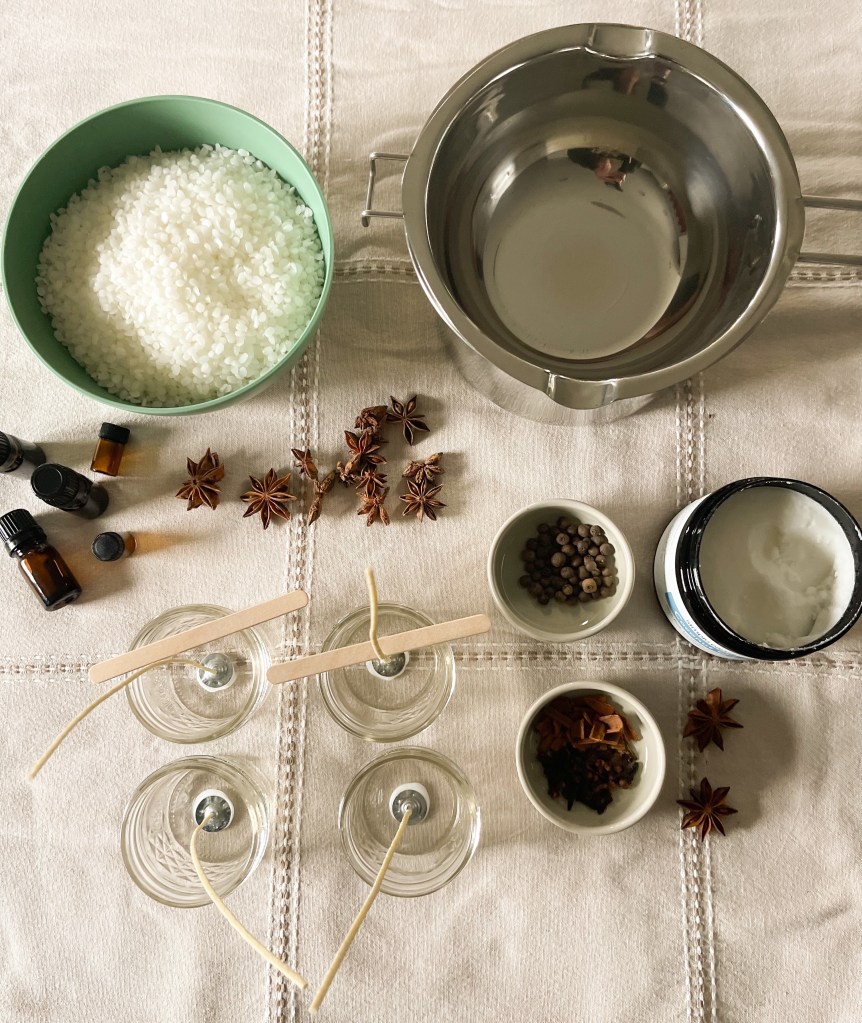
For those who are also interested in candle making but aren’t sure where to start, here is a little list of the basic supplies I decided to begin with:
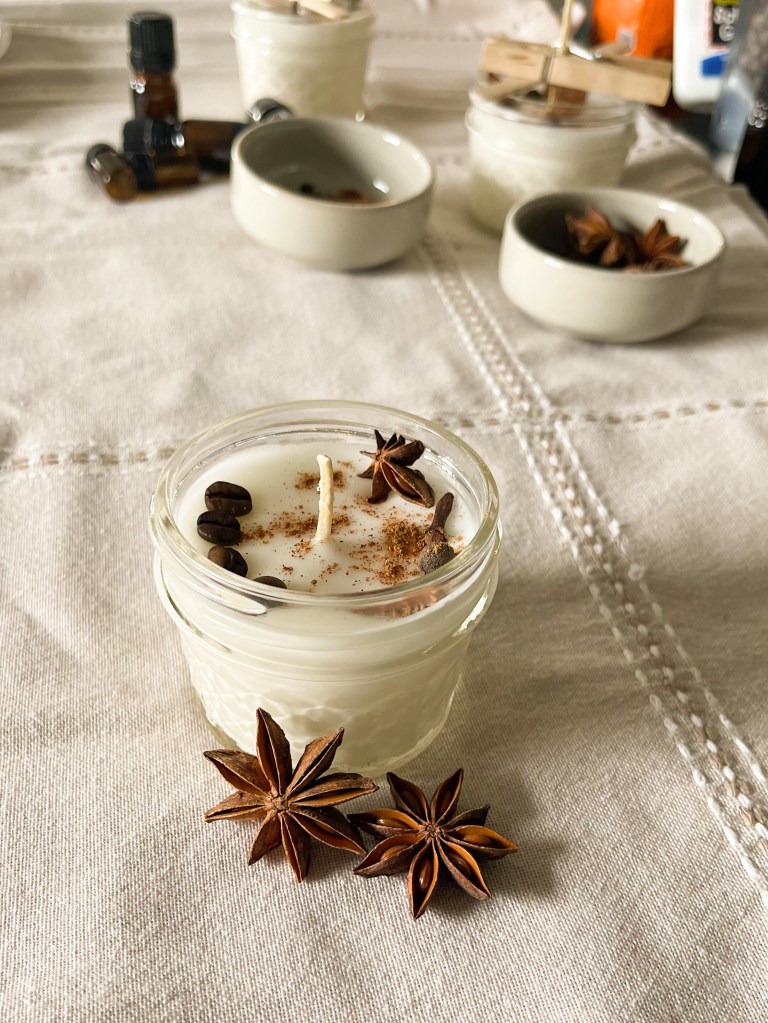
This batch of beeswax candles combines the scents of coffee, cinnamon, vanilla, clove, nutmeg, ginger, cardamom, lemon, blood orange, and balsam copaiba essential oils. (The coffee oil is a separate one from Simply Earth; the rest are in a pumpkin spice oil blend from Plant Therapy.)
Aside from providing a cozy, delicious scent perfect for this time of year, these botanicals are grounding, balancing, energizing, and represent love, luck, and healing. I’ve topped each candle with coffee beans, star anise, allspice, cinnamon, and cloves.
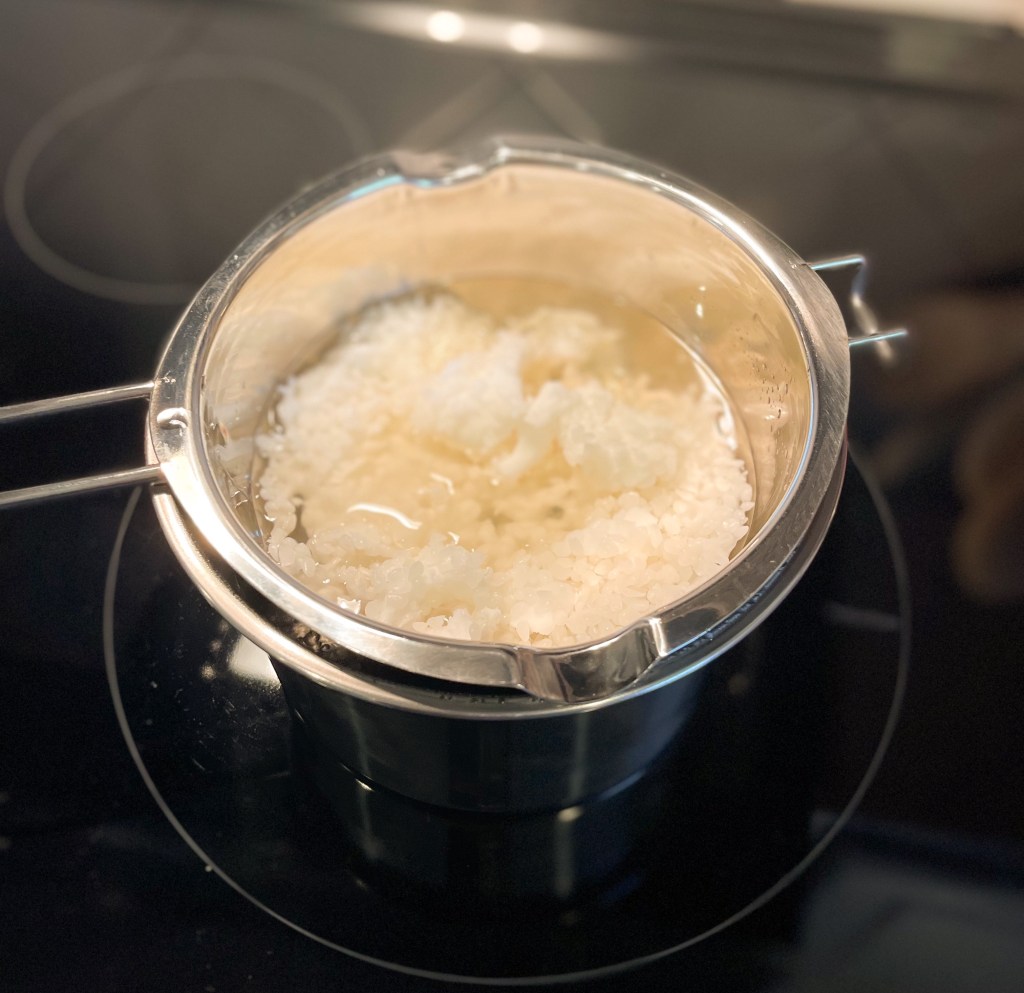
Here are the instructions for how I made this batch of candles—it makes 6 four-ounce candles.
(A couple notes: I am still experimenting with the essential oil amounts. You could definitely use more than I did here for a stronger scent—up to 200 drops! But I went conservative here for lightly scented candles. Also, be very careful topping candles with cinnamon, and make sure it isn’t too near the wick! It can spark if it catches the flame just right.)
I plan to keep a couple of these and share the love by gifting the rest this holiday season! And I hope to make more with different scent profiles and additions soon—I’ll share those here or on Instagram when I do.
Have you ever tried your hand at candle making? Is it something you’re interested in trying?
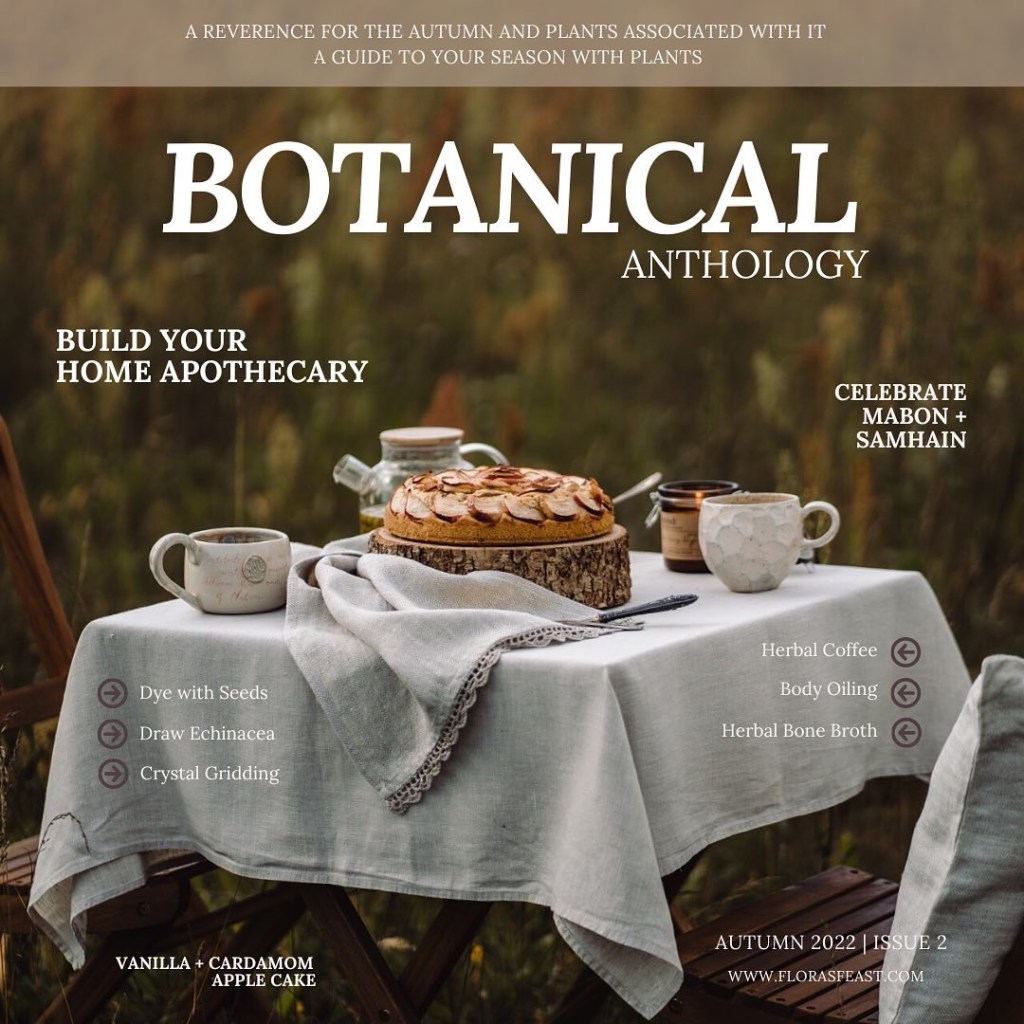
The Autumn Botanical Anthology digital magazine is available TODAY! To celebrate, I’m giving you a sneak peek at one of my articles from the publication below. But first, I must tell you a bit about this magazine I am so proud to be a part of!
This labor of love is a seasonal, plant centered digital magazine bringing you over 45 articles from 30 contributors to incorporate autumnal herbs in your apothecary, kitchen, harvests, crafts, and fall celebrations.
Until 9/28, grab your copy for $20 and receive the bonus cinnamon booklet. Download instantly and dive right into the 150+ pages of plant magic!
Now without further ado, here is one of my articles!
Roasted Roots: An Herbal Coffee Tradition
Herbal coffee is a tradition that can be found, with a little digging, in many family histories. It was once common practice to replace or mix ground coffee with the roasted roots of plants like dandelion, chicory, and burdock. Not only did these easily-foraged plants make coffee go further, but they also cut some of the bitterness in the flavor. These roots also provided a nutritious and grounding alternative ingredient or replacement for coffee without the unwanted side effects of caffeine. Additional spices can be added to the mix for flavor and further health benefits, as well.
Here is a closer look at some of the ingredients you might add to your own roasted root blend.
Dandelion root
Strong liver, gallbladder, + kidney support
Vitamin + mineral rich
Supports heart + balances blood pressure
Chicory root
Vitamin + mineral rich
Digestion support
Antioxidant rich
Supports liver + stomach
Burdock root
Kidney + liver support
Anti-inflammatory • Antioxidant • Detoxifying
Antibacterial + antifungal • Skin clearing
Blood sugar regulating
Cacao
Mildly stimulating
Synergizes other herbs
Heart + blood pressure support
Blood sugar regulating
Cinnamon
Digestive support • Circulation stimulating
Blood sugar regulating • Analgesic
Antimicrobial + antifungal
Antioxidants • Supports brain health
Warming + drying
Allspice, cardamom, cloves, fennel
Digestive support
Promotes circulation • Immune support
Soothing • warming • uplifting
When cooler autumn days make you long for more cups of cozy hot coffee, consider instead roasting and brewing up this alternative herbal blend. Get creative and formulate your own flavorful blend! Or to get started, here is a simple and tasty recipe to try.
Materials
1 part dandelion root
1 part chicory root
1 part burdock root
½ part cinnamon chips
¼ part cacao nibs
¼ part allspice
Method
Preheat oven to 375°.
Spread dandelion, chicory, and burdock roots in a thin layer on a baking sheet. Roast for 10-15 minutes, stirring once or twice to prevent burning. Roast for a shorter time if using a dark or nonstick pan.
Allow to cool.
Mix in cacao nibs, cinnamon chips, and allspice.
Grind in a coffee grinder and brew as you normally brew coffee. Approximately 1 heaping tablespoon of the mixture makes 1 strong cup of herbal coffee.
Notes
Opt for a coarser grind if brewing with a French press.
If using pre-roasted chicory root, add it when mixing in cacao, cinnamon, and allspice.
This blend may also be mixed with coffee, using your desired ratio (50/50 is recommended), to reduce bitterness and caffeine.
Aside from chai, another beverage that I associate with autumn and winter is spiced or mulled wine. The warm, soothing-yet-spirited drink is rich with digestive, warming, and immune-supporting spices. Not to mention how festive and rooted it feels to share this deep, tart ruby liquid with others at a gathering in the colder months.
But! I very rarely imbibe actual spiced wine. Instead, I mix up a similar potion replacing the wine element with extremely beneficial harvest berries and botanicals. They add the same vibrant garnet color, along with nutritional and healing properties, without the alcohol content. An herbal substitute for mulled wine is also quicker and more convenient when you want this type of pick-me-up (any time of day!) and it can be shared with anyone.
You can make your own preferred version of spiced “wine” tea with various ingredients and methods! I’ll share my recipe with you here so you can either use it yourself, or use it as a starting point to concoct your own recipe.
Spiced “Wine” Tea
Rosehips: These tasty red jewels are ready for harvest in October in many locations. You can use fresh or dried (I always have dried rosehips on hand). They add a tart cherry type of flavor, vitamin C, and minerals that aid in heart health, circulation, pain relief, cholesterol and blood pressure health, and even pain.
Elderberries: Dried elderberries impart a deep berry flavor and amazing immune-boosting benefits. Aside from their antiviral properties, elderberries also have anti-inflammatory benefits. I am always conscious to be moderate with the amount of elderberries included, in case of possible digestive discomfort. (I’ve never experienced this side effect myself, but I’ve read that it can happen so I use caution.)
Hawthorn berries: Hawthorn berries add nearly magical benefits of not only boosting heart health in a physical sense, but also soothing and strengthening the emotional heart and aiding with anxiety.
Hibiscus: This is a go-to base ingredient in fruity, berry-flavored teas for me. Hibiscus is an excellent heart ally and gives the tea a full-bodied, cranberry-ish, and even wine-ish taste.
Orange peel, dried or fresh: Obviously vitamin C is a big part of spiced wine. But so is rich, strong flavor! Orange in some form is almost essential to this type of brew.
Spices – cloves, cinnamon, allspice, ginger: You can’t have spiced wine without your warming, grounding, immune-boosting spices! These add taste, physical and mental health benefits, warming cozy comfort, and synergy between ingredients. Of course, you can get creative and use your own favorite combination of mulling spices!
Optional – rooibos: Rooibos is an herbal ally I adore and use often to fill out and add body to teas while providing wonderful benefits. (See my rooibos profile post for more on this herb!)
You can play around with your favorite berries (even adding fresh or dried blackberries or cherries!), spices, flavorings, and even splash in apple cider for a fruity kick or ginger ale for a fizzy twist. It’s up to you how you concoct your festive, warming brew. Then enjoy it all autumn and winter on quiet afternoons or cozy family gatherings! Or take a thermos of it on your outdoor autumn adventures!
What additional or different ingredients are you going to try in your spiced “wine” tea? I’d love to hear so I can try them, too!












 The Herbology Faerie