Categories
plant wonder collective Recipes

Blackberry Elderberry Lemonade

School starts very early where we live (July 31 was our first day this year!), so it can be interesting to combine autumn immune boosting herbs with cold summer treats and summer seasonal plants. 

That’s where blackberry comes in! Blackberry is a nourishing, protective, antioxidant-rich ally in itself, and is in its prime this time of year. The vitamins and nutrients in blackberry can help to bolster the immune system and fight off illness. 
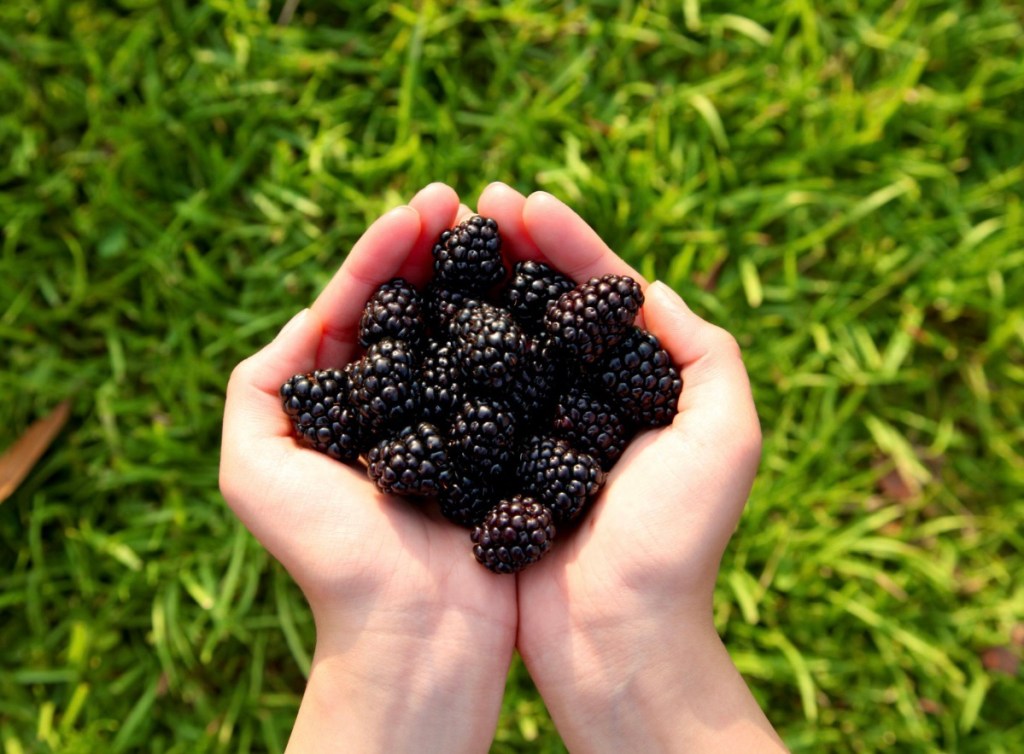
Add in elderberry, whose immune modulating properties are well known, along with fresh ginger for zing and an extra immune boost, and you have the start to an herbal syrup that can be used to make summer-friendly lemonade! (As an added bonus, since my kids don’t love the taste of elderberry on its own, blackberry is a perfect flavor partner to help add some sweetness and round out some of elderberry’s more mineral-y twang.)

Here’s the recipe if you’d like to try it for yourself and get a summertime immune boost!

Materials

Simple syrup:

2 c water

1 ½ c sugar (I used raw cane sugar)

1 c blackberries 

¼ c dried elderberries

3-4 slices fresh ginger 

Lemonade:

1 to 1 ½ c fresh lemon juice (5-6 lemons)

4 c ice

5 c water

Method

To make the simple syrup, add sugar and water to a saucepan and dissolve over low-medium heat. Add blackberries, elderberries, and ginger slices. Mash the contents with a potato masher. Simmer on low for 5 to 7 minutes, then remove from heat and allow to infuse for a further 10 minutes. Strain with a mesh strainer into a clean jar, cap, and refrigerate. 

To make the lemonade, juice the lemons and add to a pitcher. Add the ice, water, and 1 cup of the simple syrup. Stir well and taste; add more simple syrup if it isn’t sweet enough for your taste. Chill and serve over ice, or use frozen blackberries as ice cubes!

Notes

•Frozen or fresh blackberries can be used in this recipe interchangeably. 

•If your kids are averse to the taste of elderberry, you might choose to use less elderberries; if you’re making this for adults you might choose to add a bit more instead. 


For educational purposes only. Not intended for medical advice. Always consult your physician.

*This post contains affiliate links, which means if you choose to buy something from a link that I share, I will make a small percentage of the sale *at no extra cost to you*.

Categories
Herbs and Herbalism Recipes

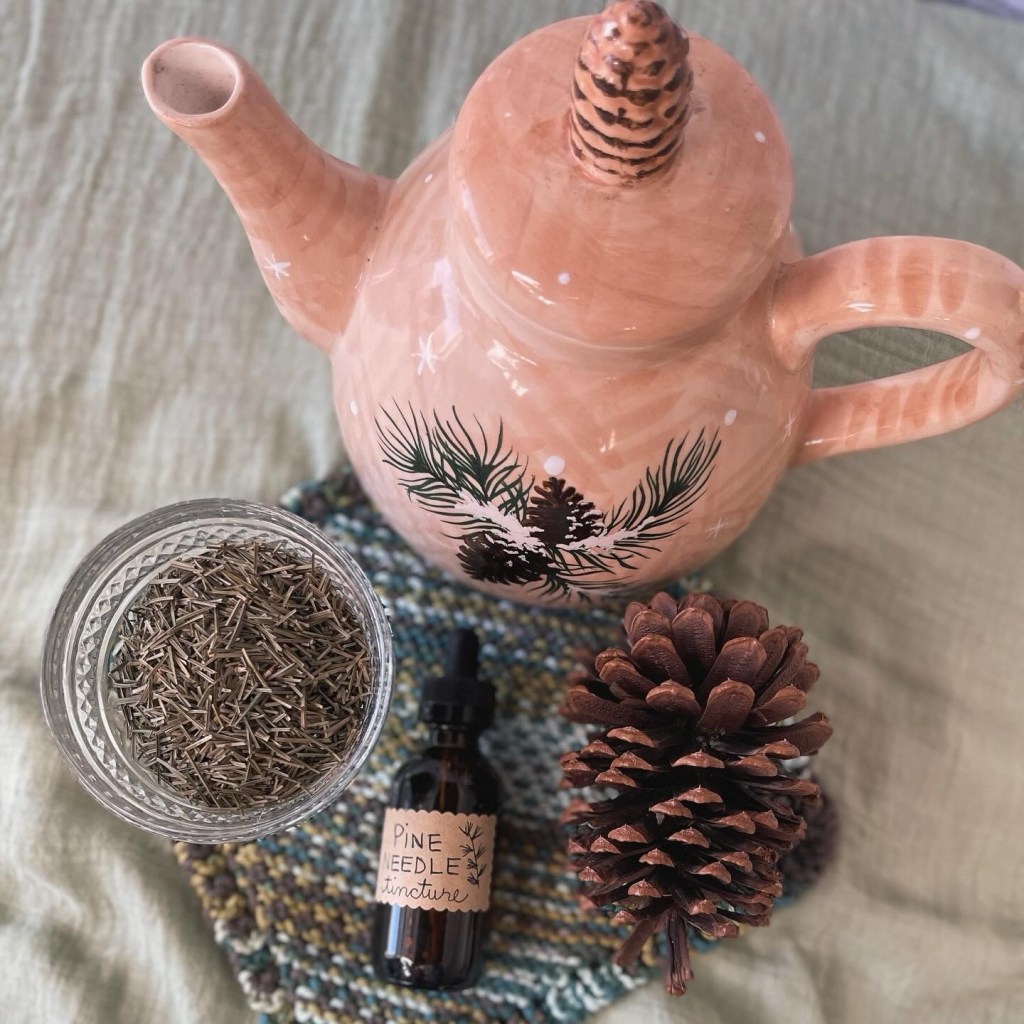
Pine Needle Tincture

A tincture is a simple and powerful way to experience an herb’s benefits and energies. I’ve brewed up a batch of pine needle tincture to enjoy the taste and effects this winter season!

Pine has so many benefits to body and mind. Medicinally, it can help aid the immune system with its high vitamin C content and antimicrobial qualities, it can help with pain and inflammation, and it can offer relief to colds and coughs. Energetically, pine is said to encourage peace, harmony, wisdom, intuition, grounding, and courage.


Here is the simple recipe for making your own pine tincture!

Materials

To make a pine tincture, fill a clean glass jar about ¾ full with dried pine needles (make sure you’ve sourced from a safe-to-consume species!) and top with high-proof alcohol such as vodka, filling to about an inch over the plant material. Stir with a wooden spoon or chopstick, and cap tightly with a bpa-free plastic lid. Store in a cool, dark place and shake daily for about 4-6 weeks. Strain and rebottle in a clean jar / dropper jars.


This can be taken medicinally by drops or dropperful in water or under the tongue…but it can also be enjoyed by the dropperful as an addition to tea or juice—or even used as fancy bitters in cocktails and mocktails! (I am envisioning it as a very cool wintry addition to an Irish whisky with gin & lime!) You can also mix a bit with a carrier oil and use it externally for minor pains and inflammation.


For educational purposes only. Not intended for medical advice. Always consult your physician.

*This post contains affiliate links, which means if you choose to buy something from a link that I share, I will make a small percentage of the sale *at no extra cost to you*.

Categories
Botanical Anthology Herbs and Herbalism Recipes

Immune Boosting Herbs + Tea

This article appears in the Winter 2022 edition of Botanical Anthology. You can purchase a digital copy HERE or a print copy HERE.

Along with the joys winter brings, it unfortunately also carries increased risk of illness in its wake. Between extra time spent indoors during colder weather and the season’s gatherings and festivities, exposure to many types of illnesses sees a dramatic uptick. To that end, immune support becomes a constant refrain.

Herbal allies can be indispensable when it comes to this winter barrage of germs. But what does “herbal immune boosting” mean? It is a many-pronged approach to keeping your body functioning optimally so that you might avoid some illnesses altogether, or at least lessen their severity. Different types of herbs work together synergistically to aid with this never-ending task.


Adaptogens
Fatigue, burnout, and chronic stress are common problems that weaken the immune system and its ability to fend off illness. Adaptogenic herbs help restore balance and protect the body’s systems and processes to counter these effects, the immune system being an important beneficiary. Tulsi, astragalus, reishi and chaga mushrooms and licorice root are just a few examples of adaptogens.

Nervines
Stress and insomnia deplete the body and create the perfect breeding ground for germs. Luckily, nervine herbs help combat both of these issues, and many are gentle and safe for everyday use for most individuals. As an added bonus, some nervines have antimicrobial properties, too. Gentle nervine herbs include chamomile, lavender, lemon balm, tulsi, rosemary, linden, hawthorn, and passionflower.

Diaphoretics
Diaphoretic herbs are warming and promote circulation. Once sick, these herbs go on to help sweat out a fever and offer respiratory relief. These include yarrow, elderflower and berry, chamomile, ginger, catnip, cayenne, garlic, and linden.

Aromatics
Aromatic herbs don’t just taste great—they provide important immune boosting actions, too. Most aid digestion, while also offering strong antimicrobial support. These germ-killers include ginger, cardamom, cinnamon, cloves, anise, allspice, rosemary, and fennel.

Antioxidants
Antioxidants like vitamin C aid immunity by supporting and stimulating antimicrobial actions on a cellular level as well as protecting body tissues from damage. Antioxidant herbs that provide much-needed immune boosting include rooibos, rose hips, hibiscus, elderberry, orange peel, and raspberry leaves.

Alteratives
Alterative herbs aid in detoxifying your body by supporting the organs and systems that handle this important task. You need your liver, kidneys, and lymphatic system in tip-top shape to fight off illness! This category of herbs includes echinacea, calendula, dandelion root, burdock root, and nettles.


There are countless combinations one can work with to create an immune-boosting herbal recipe. To make things a little less daunting, here is a simple tea as a starting point. It features elderberry, a tried-and- true immunity aid, but also rooibos, an oft-overlooked antioxidant powerhouse. There is a bit here from each of the above categories, and plenty to tempt the taste buds, as well.

Blend this combination of herbs as the recipe states, or use it as a jumping-off point to inspire your own immune supporting formulation!


Materials
3 tbsp elderberry, dried 2 tbsp rooibos
2 tbsp tulsi
1 tbsp calendula
1 tbsp lemon balm
1⁄2 tbsp yarrow
1⁄2 tbsp ginger
1⁄2 tbsp cinnamon
Fresh orange zest or slice, if desired
Honey, if desired

Method
Mix all ingredients except orange in a bowl. Transfer to an airtight container.

To make a single cup of tea, add 1 tablespoon to a tea strainer, eco-friendly tea bag, or French press. Pour about 1 1⁄2 cups hot water over the tea and steep for 5 to 10 minutes. Add fresh orange zest or orange slice and honey to taste, if desired.

Notes This recipe yields approximately 10 servings of tea.
If making a small batch, measure the parts in teaspoons—it should yield about 2 servings of tea.


For educational purposes only. Not intended for medical advice. Always consult your physician.

*This post contains affiliate links, which means if you choose to buy something from a link that I share, I will make a small percentage of the sale *at no extra cost to you*.

Categories
Herbs and Herbalism Recipes

Oregano Face Steam

It’s that time of year: colds, coughs, congestion, sinus headaches, the works. I don’t know about you, but I have a constant runny nose, and often a bit of a cough, once my wildlings start bringing fall germs home from school. This also wreaks havoc on my skin! I get dry, sore skin around my nose and sinuses, and my face just feels dry and tight. 

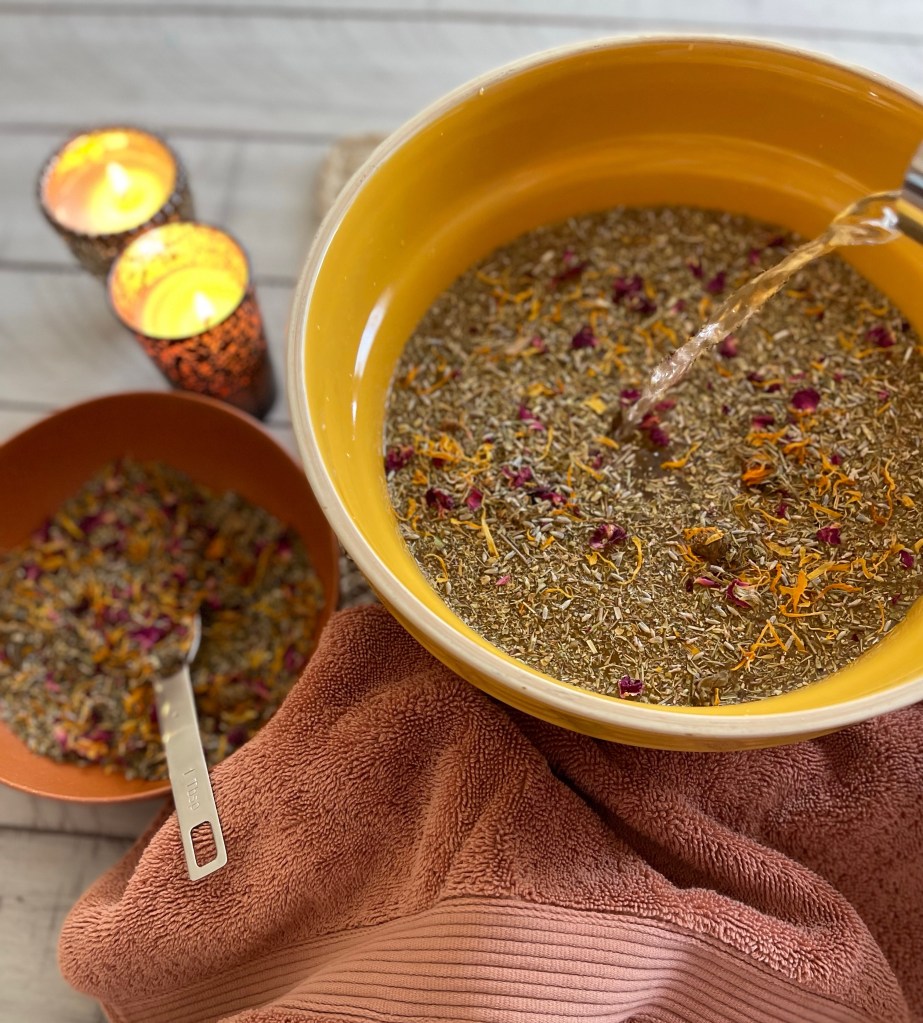
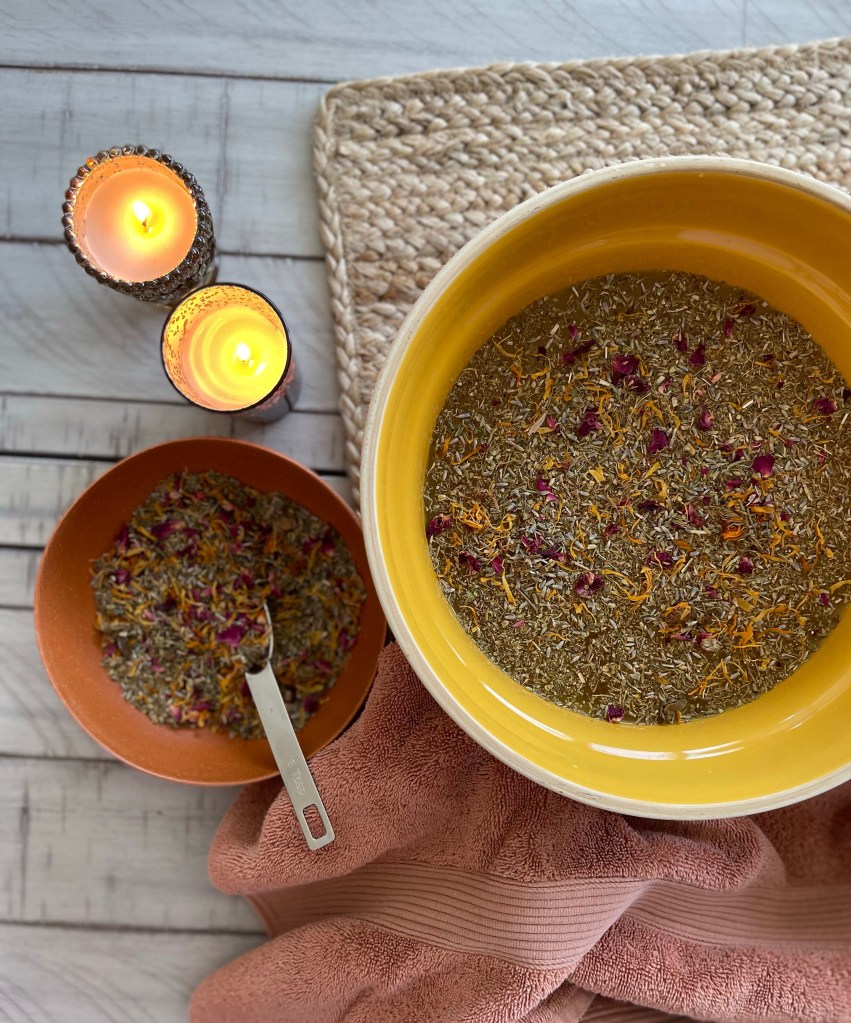
So I decided to try something that would be great for both my sinuses and my skin: a facial steam. It’s really quite easy! Just add your herbs to a big bowl, pour in hot water from your tea kettle, drape a towel over your head, lean over the bowl—trapping in the lovely aromatic steam—and let the botanicals do their magic!

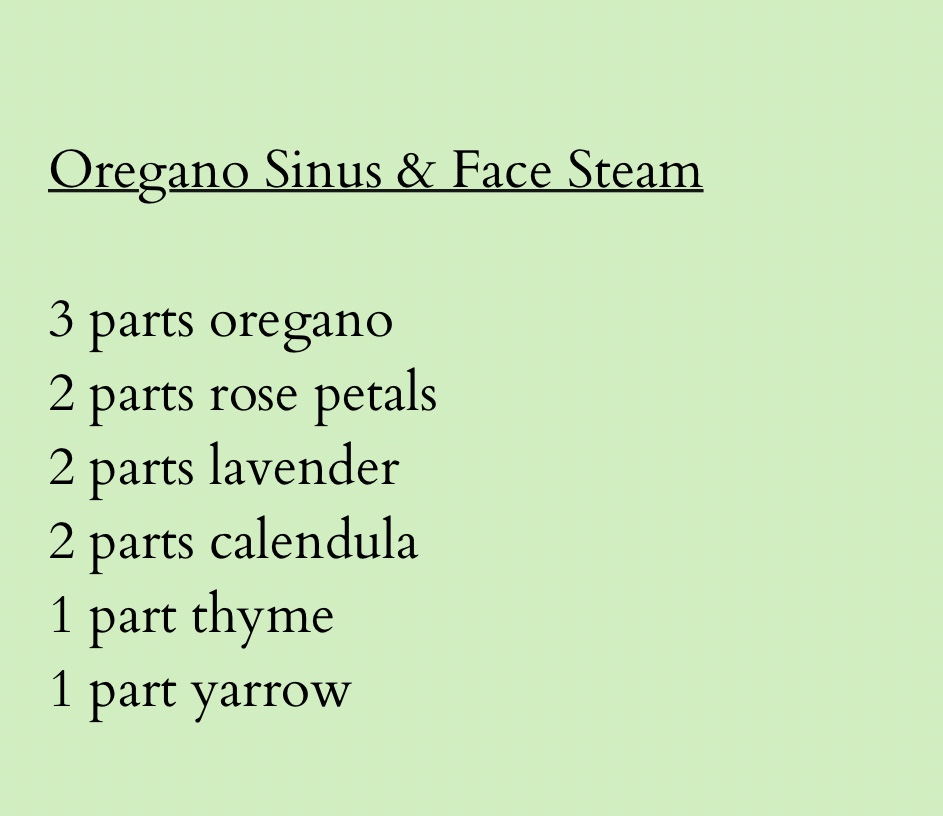
Oregano is the star of the show today. With its antimicrobial and lung-soothing properties, as well as its warming and stimulating effects, oregano is a lovely ally. With it I combined rose petals, lavender, and calendula for my skin issues and yarrow and thyme to boost the sinus clearing and germ-fighting properties. 

Let me tell you, this was a relaxing and divine way to get some relief! I think I’ll be doing this quite often now.

Here is the recipe, so you can try this lovely steam, too! I used dried herbs to make this recipe, which makes it super simple for wintertime use! For the “parts” size, I used tablespoons, then tripled the recipe; this made more than enough of the mixture to put some in a jar and do it again a few more times.

Mix the dried herbs well in a bowl. In a separate bowl, add your desired amount—I’d recommend 2-3 tablespoons. Then add steaming (not boiling) water heated in a tea kettle. Put a towel over your shoulders and head and lean over the bowl, carefully draping the towel to enclose the hot steam with your face. Close your eyes, relax, and enjoy inhaling the fragrant steam for several minutes!


Have you ever tried a facial steam? If so, which are your favorite herbs to include?