Categories
Recipes Tea wheel of the year

Yule + Winter Solstice Tea Blends

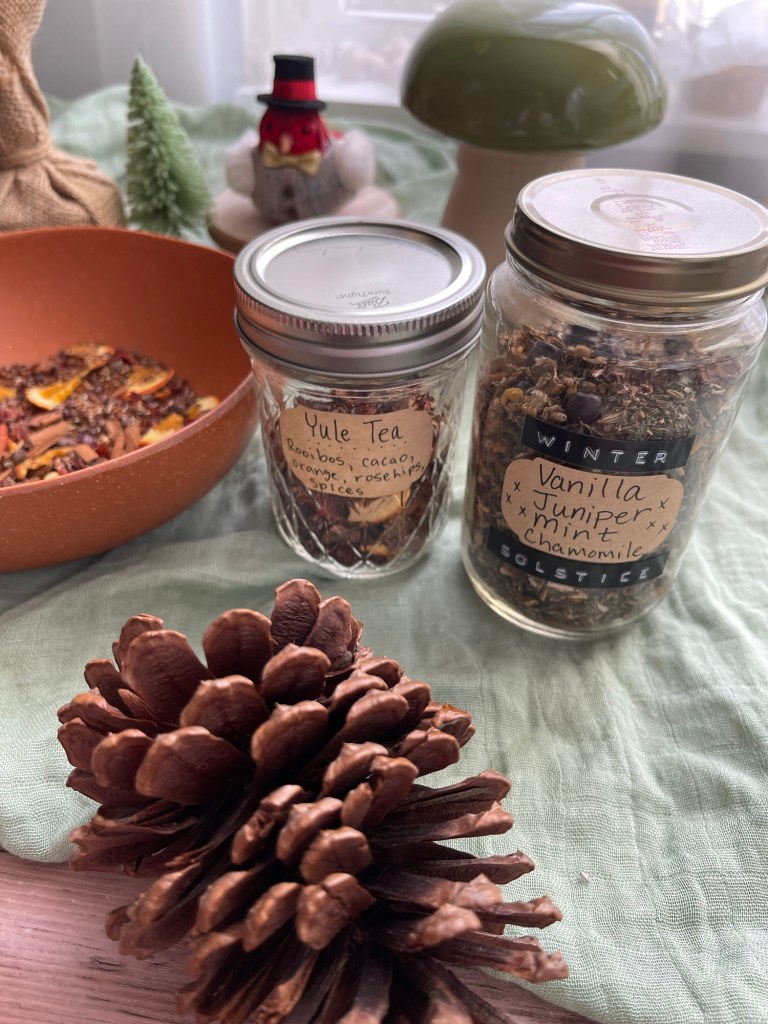
Today I’m sharing two herbal tea blends to enjoy for Yule // the Winter Solstice!
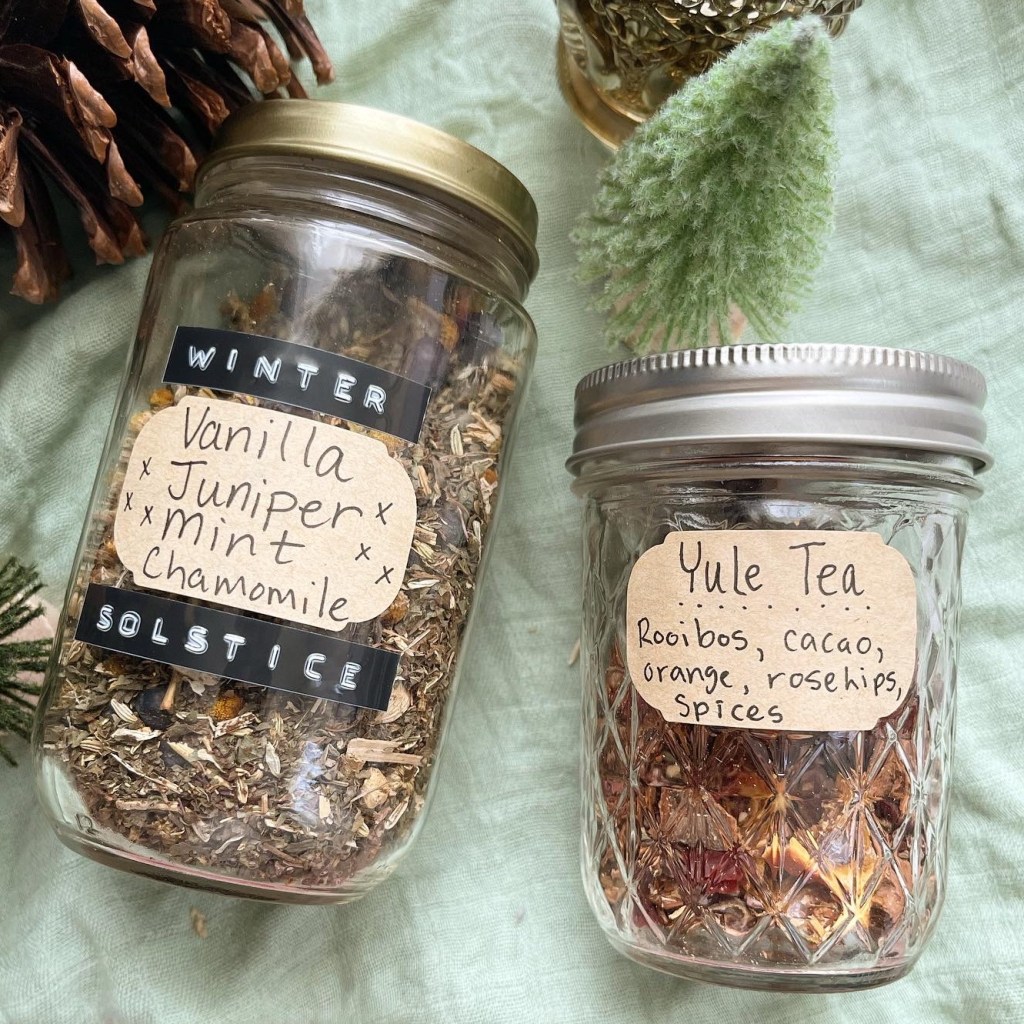
The Yule Tea blend is a sweet and festive spiced sip, full of immune-boosting ingredients that taste lovely. The combo of orange and spices is traditional for the season, in part because of those properties and in part because of associations with protection, divination, prosperity, and luck derived from them.

Yule:
1 tsp rooibos
1 tsp cacao nibs
½ tsp orange peel
½ tsp cinnamon pieces
½ tsp rose hips
¼ tsp allspice berries
¼ tsp star anise
¼ tsp nutmeg

The Winter Solstice Tea tastes decadent like a holiday cake, but without the heartburn or feeling of overindulgence! With soothing herbs that promote digestion, relieve pain, and aid in circulation, it’s like a sweet, warm hug. And chamomile represents the sun that returns brighter each day after the solstice; juniper is a powerful talisman of winter protection, cleansing, and luck; and the other botanicals have ties to healing, love, and luck, too.

Winter Solstice:
1 tsp chamomile
1 tsp mint
½ tsp meadowsweet
½ tsp cinnamon pieces
¼ tsp ginger
¼ tsp vanilla bean powder or ¼ a vanilla bean
4-5 juniper berries
2-3 cardamom pods

To brew—

To make a single cup of tea, add 1 tablespoon to a tea strainer, eco- friendly tea bag, or French press. Pour 1 to 1 ½ cups hot water over the tea and steep for 3-5 minutes. Add honey or maple syrup to taste, if desired.

For educational purposes only. Not intended for medical advice. Always consult your physician.

*This post contains affiliate links, which means if you choose to buy something from a link that I share, I will make a small percentage of the sale *at no extra cost to you*.
Categories
Botanical Anthology Recipes

Botanical Anthology: Licorice Root Fizz

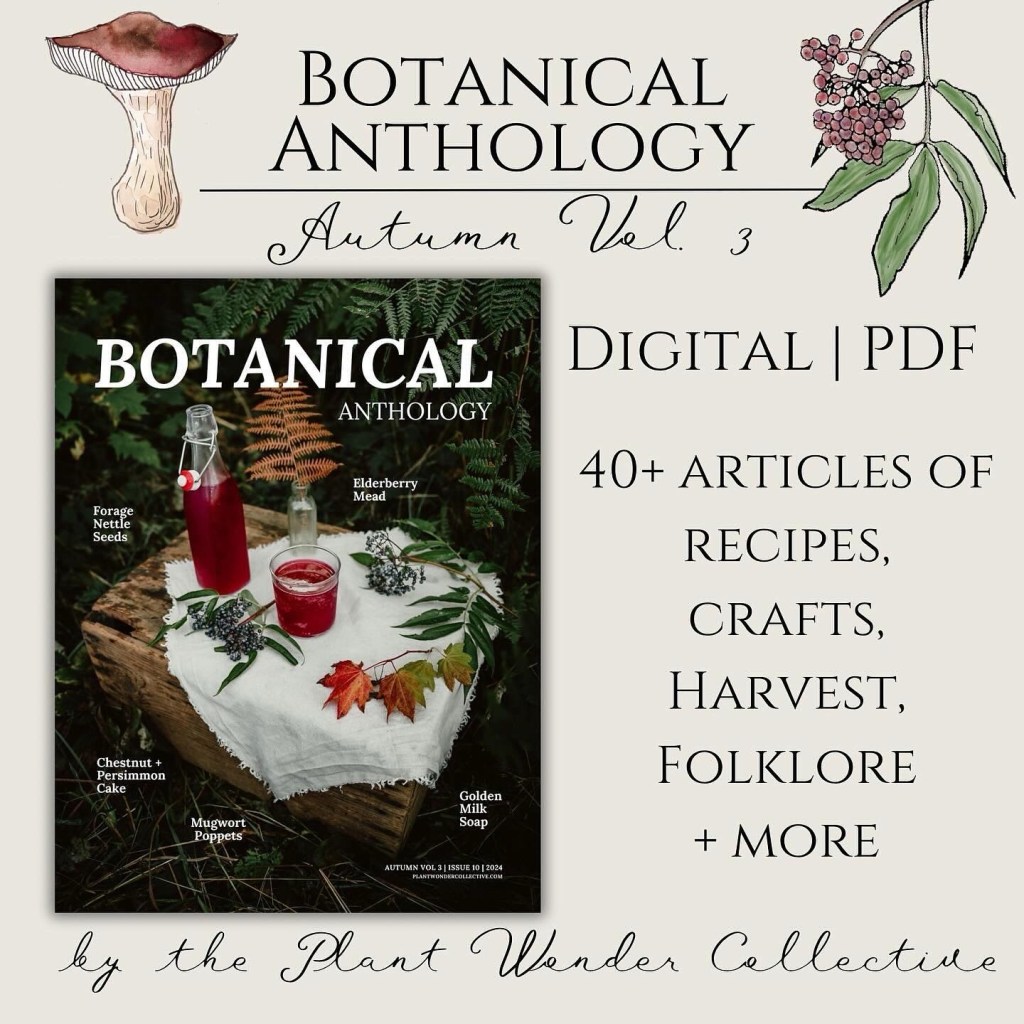
This is an excerpt from the article Root Mocktails by Leah Jorgensen Jean featured in the Autumn Vol 3 | Issue 10 | 2024 edition of Botanical Anthology. To learn more about mocktails and for the accompanying S’mores mocktail recipe using marshmallow root, check out the entire article! Our herbal magazine, featuring remedies, recipes and projects with plants for the autumn season, can be purchased as a digital version here and as a printed version here

Licorice Root Fizz 

Licorice Root Fizz is a delightful drink for those who appreciate its distinctive flavor. Licorice root provides a sweet, herbal taste that is soothing and mildly spicy.  Combined with sparkling water, it transforms into a refreshing and unique beverage, delivering an unexpectedly intense, complex, and invigorating experience. It is an excellent alternative for those who enjoy sipping on licorice-flavored liquors such as Pastis, Sambuca, Ouzo, Pernod, or Absinthe.

Materials

¼ c water
¼ c granulated sugar

2 tbsp licorice root, dried

Ice cubes
Juice of ½ lemon

Sparkling water or club soda
Lemon slice or twist, for garnish

Method
In a small saucepan, combine the water, sugar, and licorice root. Heat over medium heat, stirring occasionally, until the sugar is completely dissolved.  Bring the mixture to a gentle simmer, then remove from the heat. Let the licorice root syrup cool to room temperature, then strain it through a fine-mesh sieve or cheesecloth. Transfer the syrup to a clean jar or bottle and store it in the refrigerator until ready to use.

To make the Licorice Root Fizz, fill a glass with ice, and add 2 to 3 tablespoons of the licorice root syrup, depending on your sweetness preference. Squeeze the juice from the lemon into the glass and stir to combine. Top with sparkling water or club soda, stirring gently to mix. Garnish with a lemon slice or twist and serve immediately.


Notes

  • Licorice should not be used while pregnant or nursing and those who have high blood pressure.

Leah Jorgensen Jean is a professional winemaker, holistic nutritionist, and regenerative herbal medicine grower based in Newberg, Oregon. She received her certificate in herbalism from Ecoversity and grows and prepares medicinal plants for her small town herbalist community.  Visit her on Instagram @cosmicculturebotanicals 

These recipes are excerpts from her first book The Herbalist’s Guide for the Sober Curious: 65 Garden-To-Glass Recipes published by Chartwell Books available wherever books are sold in January 2025. Visit her on Instagram @cosmicculturebotanicals 

Categories
Herbs and Herbalism Tea wheel of the year

Lammas, Calendula, & a Tea Meditation

Lammas / Lughnasadh / the First Harvest festival is almost here, coming up on August 1!

In years past, I was very much NOT a fan of the month of August. Where I live it tends to be incredibly hot, buggy, and like a dragging obstacle between me and my favorite season: autumn.

But recently, I came to see August in a new light. I’ve learned about the sabbat of Lughnasadh / Lammas (they tend to be used interchangeably) on the wheel of the year. Lammas marks the first harvest festival—the first of three, including Mabon and Samhain. The connections with Lammas tend to be the late summer veg and herb harvests, grain, bread making, beer, wine, fruits and vegetables, abundance, and gratitude. This opens the doorway for our descent toward autumn. Nights begin to gradually get cooler, and sunflowers bloom at the flower farm near my home. I can get behind this imagery, this spirit of anticipating autumn and gratitude for the end of summer’s abundance!

Lammas and Calendula

When I first learned about Lammas, I immediately, intuitively connected it with calendula. This may not resonate for you—you may have another plant you feel called to at this time. But for me, it’s all about this gorgeous, sunny orange flower.

Medicinally, calendula offers immune boosting, gut healing, inflammation modulating, stagnation clearing, and liver supporting properties when used internally. Externally, it supports skin healing and treats bug bites, rashes, burns, wound healing, and overall skin health support.

Spiritually, calendula is connected to the sun, Leo and Cancer—giving fiery yet nurturing qualities, warmth, comfort, healing, protection, happiness, peace, abundance, hard work, and responsibility. I find that ingesting, and even just seeing this plant on my home altar spaces, helps bolster and nourish me during this industrious time! I tend to add calendula into most of my teas and baked goods during the Lammas season.

Lammas Tea Meditation Download

To celebrate this occasion, I am sharing with you a special Lammas Tea Meditation journaling page that you can download, print, and perhaps pair with a mug of calendula tea. Quiet your mind, breathe deeply, and allow your impressions of the herb to wash over you and impart its gifts.

Download, print, and use this mediation journal page along with any other Lammas / Lughnasadh / First Harvest celebrations and reflections!

Categories
Herbs and Herbalism plant wonder collective Recipes

Turmeric Tincture Inside & Out

Turmeric has so many health benefits—for mind, body, and spirit. As for the body, it has properties that support the immune system, modulate inflammation and pain, support the liver, and so much more. Regarding mind and spirit, turmeric has a warming, cozy, grounding taste and strengthening energy.

One very versatile way to work with turmeric is in tincture form. Turmeric tincture is easy to make and so beneficial! It only requires two ingredients, a couple simple supplies, and 6 weeks of waiting for it to infuse its goodness.

And did you know you can use it internally and externally? Internally, putting a few drops up to a dropperful in a couple ounces of water, a small mug of tea, or a shot glass of orange juice (my favorite) to drink can deliver those wonderful aforementioned benefits—like immune support, pain, inflammation, digestion, and more.

Externally, try mixing a few drops with your favorite body oil (like calendula olive oil) or moisturizer and massage into skin for cramps, aches, and even arthritis.

Here is what you need to know for making a simple turmeric tincture!


Ingredients

Dried turmeric root pieces

Plain vodka or other clear alcohol, highest proof available (80 or higher is best)

1-pint glass canning jar

BPA-free plastic canning jar lid

Mesh strainer

Optional: cheesecloth

Dropper bottle/s

Instructions

Start with a sanitized, dry jar. Fill the jar 1/2 full with the dried turmeric root pieces.

Top with vodka / alcohol, covering the plant material with about an inch of liquid. Poke the hops down with a wooden chopstick or the handle of a wooden spoon to ensure complete coverage and add more vodka if needed.

Cap tightly and label with the date and name of the tincture. Store in a cool, dark place, shaking daily. Allow to macerate for 6-8 weeks.

Strain with a fine mesh strainer and/or cheesecloth, and store in a clean jar or bottles in a dark place. Add to a dropper bottle for dosing. 

Use a few drops to one dropperful internally up to 3 times a day, or combine a dropperful with about ¼ cup body oil for external use.


Turmeric is the Plant Wonder Collective plant of the month!

Plant Wonder Collective: Connecting you to nature through food, drink, play, garden, medicine, magic, and art.

If you’d like to support the work of PWC, please consider joining our Study Circle on Patreon for exclusive recipes, articles, digital downloads and printables for the plant of the month. We appreciate you being on this learning journey with us!


For educational purposes only. Not intended for medical advice. Always consult your physician.

*This post contains affiliate links, which means if you choose to buy something from a link that I share, I will make a small percentage of the sale *at no extra cost to you*.

Categories
Herbs and Herbalism Hygge wheel of the year

Yule: Candles, Tea, and Books

Happy Yuletide! I can’t say that I am the most knowledgeable regarding the background and traditions of winter solstice celebrations and rituals, but I am learning more as I go and loving what I learn. I wanted to pop in today to share a few of my favorite cozy Yule traditions with you.

Whether you celebrate Christmas, Yule, a combination, or simply mark the winter solstice, the astronomical beginning of winter and the shortest day and longest night are at the center of this occasion. It is a time of merriment as a way to bring light and cheer into the darkness, and to remind ourselves that the sun and its life-giving warmth will return. This is very much based in the agrarian lifestyle of our ancestors and the greater danger winter posed to their survival. Today we feel the hold-over of these traditions in more metaphorical ways but they’re still deeply ingrained. Other pagan and Christian elements and traditions of this holiday came in later, but all still revolve around the natural occurrence of the winter solstice.

Despite the jolly festivities, as I get older I feel the need more and more to snuggle in at home, slow down, eat cozy treats, and enjoy quiet times with my family just playing games and reading books. I think my connection to the natural world slowing down and going to its winter rest deepens the older I get! So I don’t feel the need for more gifts and parties, but rather candles, tea, and good books.

Candles

I absolutely love making my own candles this time of year. With a few simple, natural ingredients, candles that are healthier and more special than the store bought variety can easily be whipped up in your kitchen. Candles add a warming glow to Yuletide evenings and events, can be given as very special gifts, and you can add your own intention both when you’re stirring the wax to make them and when you take the time to light them each night.

Check out the recipe for these Yule Forest Candles I shared last year, these cozy Pumpkin Spice Coffee Candles from when I was just beginning to learn candlemaking, or purchase the Winter Candlemaking Guide from my Etsy shop to learn how to make candles at home.

Tea

Hot tea is a wonderful way to spend a winter evening during the Yuletide season! There is nothing better than brewing a big pot of tea tailored to the energies of the season, your health, or simply your mood. 

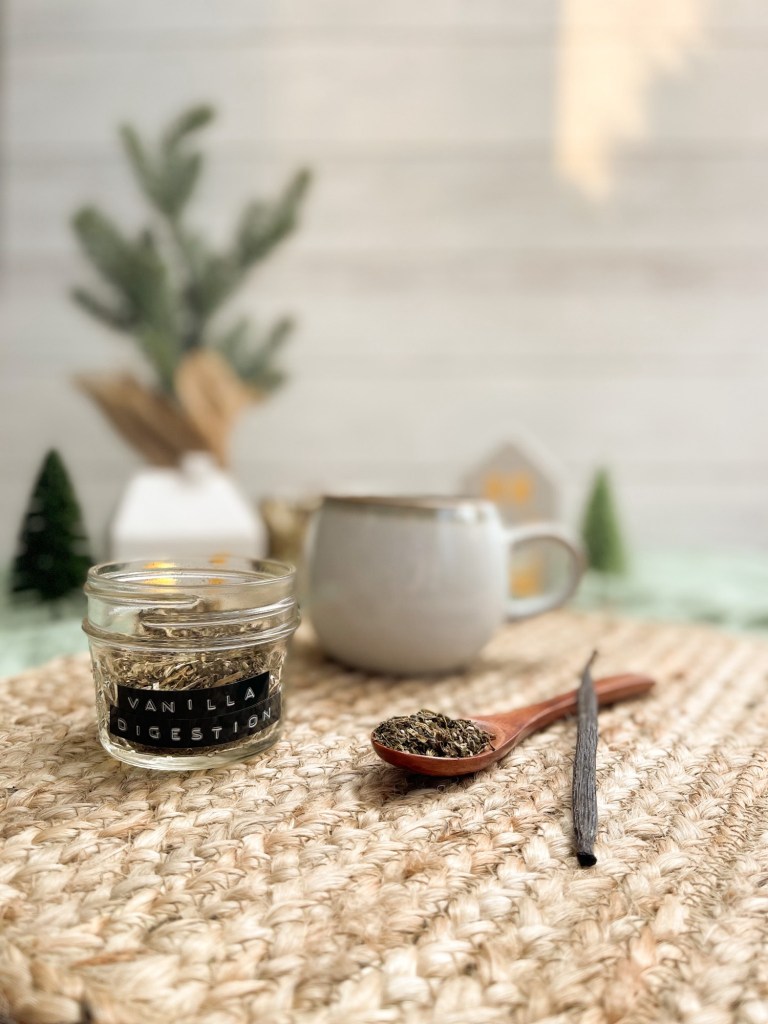
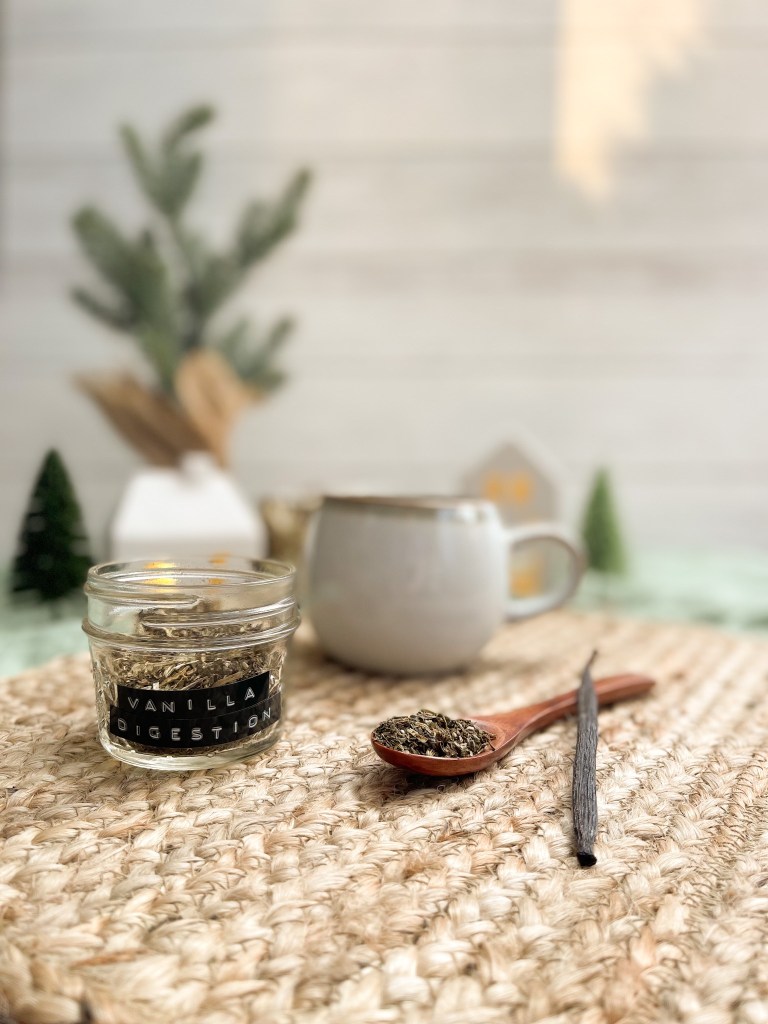
During this season of eating sweets and overindulging, a digestive-boosting tea like the Vanilla Digestion Tea I shared last year can be both helpful and tasty. An Immune Boosting Tea Blend can’t go amiss this time of year, either. Mushroom Coffee makes for a hearty and energizing, yet grounding, brew. Or check out the many other winter tea recipes in my Winter Tea Booklet in my Etsy shop.

Books

I am never at a loss for good books to read! Here I will keep the explanation short and simply share some links to books that are perfect for this season. 

Children’s books about Yule / the Winter Solstice / Wintertime (that are wonderful for adults, too):

The Shortest Day (Susan Cooper)

The Winter Solstice

Goodbye Autumn, Hello Winter

The Tomten

Flower Fairies of the Winter

The Shortest Day (Wendy Pfeffer)

The Nutcracker Ballet

Adult fiction and nonfiction – my recent cozy or cozy-adjacent favorites

Emily Wilde’s Encyclopedia of Faeries

Legends and Lattes

A Spell in the Wild

The Wake-Up Call

The Tale of Hilltop Farm (the Cottage Tales of Beatrix Potter)

The Hobbit

Kitchen Witch

A Morbid Taste for Bones (the Brother Cadfael mysteries)

Little Women

Slavic Kitchen Alchemy

Healing Herbal Teas

What cozy ways are you enjoying the Yuletide season?


For educational purposes only. Not intended for medical advice. Always consult your physician.

*This post contains affiliate links, which means if you choose to buy something from a link that I share, I will make a small percentage of the sale *at no extra cost to you*.

Categories
Herbs and Herbalism Recipes

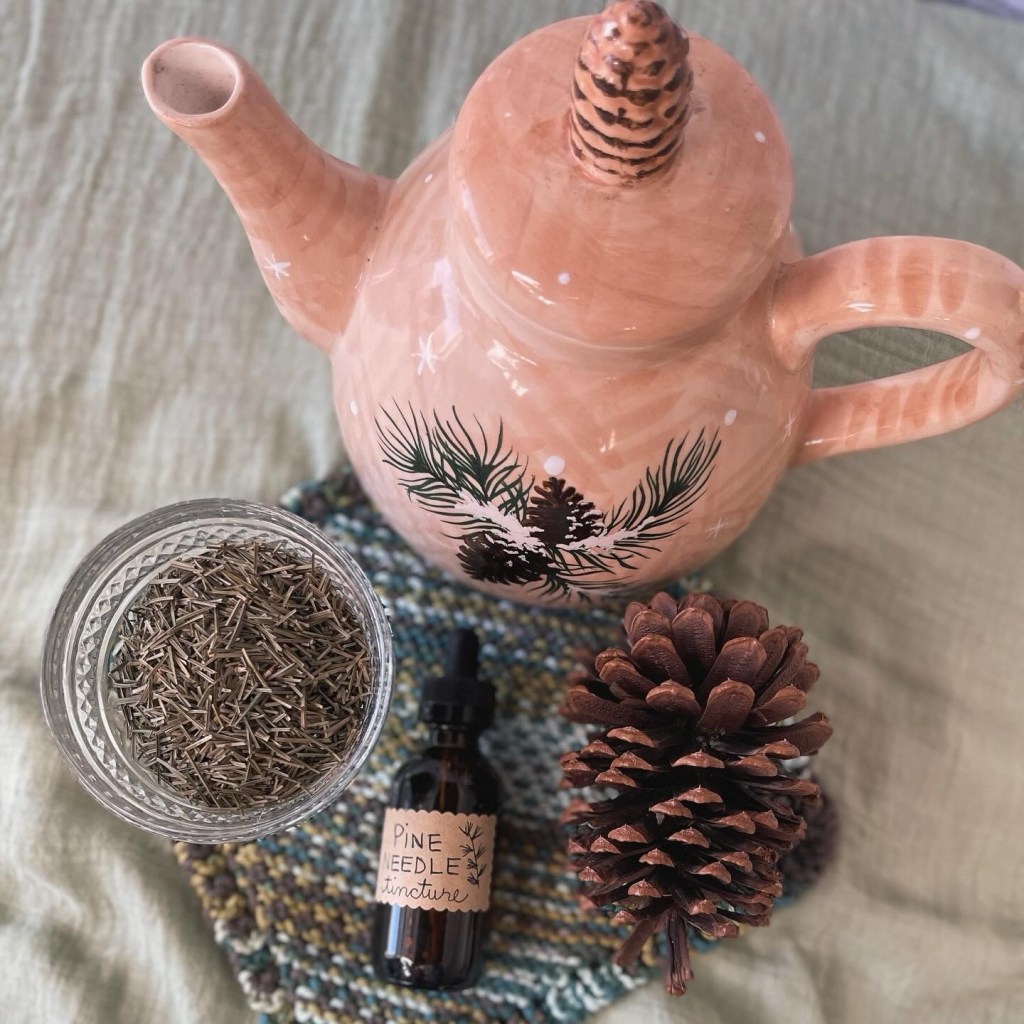
Pine Needle Tincture

A tincture is a simple and powerful way to experience an herb’s benefits and energies. I’ve brewed up a batch of pine needle tincture to enjoy the taste and effects this winter season!

Pine has so many benefits to body and mind. Medicinally, it can help aid the immune system with its high vitamin C content and antimicrobial qualities, it can help with pain and inflammation, and it can offer relief to colds and coughs. Energetically, pine is said to encourage peace, harmony, wisdom, intuition, grounding, and courage.


Here is the simple recipe for making your own pine tincture!

Materials

To make a pine tincture, fill a clean glass jar about ¾ full with dried pine needles (make sure you’ve sourced from a safe-to-consume species!) and top with high-proof alcohol such as vodka, filling to about an inch over the plant material. Stir with a wooden spoon or chopstick, and cap tightly with a bpa-free plastic lid. Store in a cool, dark place and shake daily for about 4-6 weeks. Strain and rebottle in a clean jar / dropper jars.


This can be taken medicinally by drops or dropperful in water or under the tongue…but it can also be enjoyed by the dropperful as an addition to tea or juice—or even used as fancy bitters in cocktails and mocktails! (I am envisioning it as a very cool wintry addition to an Irish whisky with gin & lime!) You can also mix a bit with a carrier oil and use it externally for minor pains and inflammation.


For educational purposes only. Not intended for medical advice. Always consult your physician.

*This post contains affiliate links, which means if you choose to buy something from a link that I share, I will make a small percentage of the sale *at no extra cost to you*.

Categories
Hygge Recipes

Gluten Free Chai Apple Crisp

It may not be pumpkin spice time yet (Says who? It’s always pumpkin spice time to me!) but apples are ripening and it’s a great time to whip up some apple crisp. I am gathering with friends this evening, so I made a chai apple crisp that is gluten-free for one of my friends’ dietary needs.

You can’t fault me for rushing Autumn if I’m using chai spices! And anyway, there are so many benefits to chai spices. Medicinally they’re immunity boosting, digestion aiding, circulation stimulating, and so much more—check out THIS blog post for more on that. Chai spices also help soothe, relax, and even help with sleep. And symbolically / spiritually, many of these warming spices are said to bring prosperity, protection, joy, and divinatory insight. Plus, they’re just cozy and tasty! Perfect for a gathering with friends paired with tart Granny Smith apples.

Here is the recipe!


Gluten-Free Chai Apple Crisp—

Ingredients

For the filling—

  • 8-10 Granny Smith apples, peeled, cored, and sliced or chopped
  • 2 Tbsp gluten-free flour blend
  • 2 Tbsp sugar
  • 1 tsp pumpkin spice mix (cinnamon, nutmeg, ginger, and cloves) or ¼ tsp of each 
  • 1/4 – 1/2 tsp allspice
  • 1/2 tsp cardamom powder
  • 1 tsp vanilla extract

For the crumble—

  • 1 cup gluten-free old-fashioned oats
  • 1/2 cup gluten-free flour blend
  • 1/8 tsp salt
  • 1 cup dark brown sugar
  • 1/2 tsp pumpkin spice
  • 1/8 tsp allspice
  • 1/4 tsp cardamom
  • 1 stick of butter of choice, cold, cubed

Method

Preheat oven to 375° F. Grease a 9 x 13 glass baking dish and set aside.

Prepare apples and put in a large mixing bowl. Sprinkle with sugar, flour, and spices and stir to coat; add vanilla extract and stir again. Scoop this mixture into your greased baking dish.

In the same mixing bowl if you’d like, mix the oats, flour, spices, and salt well. (If you’d like to ease back on the spices, omit them from the crumble.) Add the brown sugar and butter and cut in with a pastry blender or fork until pebbly consistency is reached. Sprinkle over the apple filling evenly.

Bake 30 to 35 minutes; cool before serving.


Notes

Serves 6-8

Substitute in your favorite chai spices and play around with the amounts to your preference!

Would also be amazing with walnuts in the crumble topping.

This recipe could easily be adapted to be non gluten free with conventional flour.


Are you a big fan of apple crisp? And do you think August is too soon for it? Let me know in the comments!

Categories
Herbs and Herbalism plant wonder collective Recipes

Dill & Cheese Beer Bread

March is dill month at the Plant Wonder Collective! I was searching for inspiration and recipes online, and realized that dill bread is a bit of an old-fashioned, simple, cozy favorite. Perfect!

We may think of dill as being mostly reserved for culinary uses (dill pickles and dill havarti—yum!) but there is some historical precedent for other applications. Dill is great for digestion and is often found in infant gripe water. It is nutrient-dense and high in flavonoids, which make it a great cardio-tonic herbal ally. Dill can help with inflammation and pain, and has been historically used for soothing in many contexts (it’s name comes from an Old Norse word meaning “to soothe”).

Interestingly, in the Middle Ages dill was used for protection and as a ward against witchcraft! It also represented luck and wealth, and might be found hanging in a home or worn as charms.

Whatever its other benefits, dill tastes really green and fresh! I used it to flavor a loaf of beer bread I made, and it tasted great paired with the mozzarella cheese I added. (Would be great with cheddar, too!) Here is the recipe if you’d like to try it!

Dill & Cheese Beer Bread

Ingredients

  • 3 cups all-purpose flour
  • 1/2 tsp salt
  • 2 tsp dried or 4 tsp fresh dill
  • 1 12-oz can or bottle of beer
  • 1 Tbsp baking powder
  • 1 cup shredded cheese of your choice (mozzarella, cheddar, or havarti)
  • 2 Tbsp butter, melted

Instructions

  1. Preheat oven to 350° F.
  2. Grease a 9 x 5 bread pan or line with parchment paper.
  3. In a bowl, combine all ingredients except the beer and butter. Mix well.
  4. Add the beer gradually and stir well to incorporate.
  5. Transfer dough into the loaf pan.
  6. Pour the melted butter over the top. You can also sprinkle a little more dill and shredded cheese over the top if you wish.
  7. Bake for 40 – 50 minutes. Check with a toothpick—if it comes out clean, the bread is ready to come out.
  8. Let cool slightly, then turn out onto a cooling rack. Slice and enjoy!

Recipe inspired by this one from TheSaltyPot.com.

Categories
Herbs and Herbalism plant wonder collective Recipes Tea

Vanilla Digestion Tea

It’s the time of year when digestion is key! Heavy, rich foods abound due to the holidays and the approach of winter, and many of us need some extra relief.

Often, digestion teas rely heavily on ginger, but I find it too spicy and irritating sometimes. I often need more of a cooling approach to indigestion instead. That’s where this tasty vanilla digestion tea comes in!

Vanilla is an aromatic stimulant and carminative botanical, with anti-inflammatory, digestive-soothing, calming, and fever easing benefits. These properties make it a great ingredient in a digestion tea!

In the interest of a more cooling approach to digestion, I’ve combined the vanilla with meadowsweet, mint, and fennel seed. If you add honey or your sweetener of choice, it’s a light and tasty dessert all on its own with a taste reminiscent of candy canes!

A bit of a breakdown of the other herbal ingredients I’ve combined with the vanilla here—

Mint can be both warming and cooling, depending on your constitution, but I find it affects me in a soothing and cooling manner. It is a mildly stimulating herb, so it aids in moving things along in the digestion process.

Meadowsweet is a top tier digestion reliever. Its cooling, drying, astringent, inflammation modulating, and even pain modulating properties make it an indispensable ally. However, if you’re sensitive to aspirin, you should avoid meadowsweet because it contains naturally-occurring salicylic acid. (If this is you, substitute chamomile or elderflower.)

Fennel is one of my very favorite herbs for digestion. It’s a pungent aromatic herb with antispasmodic and carminative properties, making it ideal for a digestion tea. Interestingly, I found a hand-written note in my great grandmother’s herbalism books suggesting to use fennel for calming. Though it isn’t technically considered a nervine or adaptogen, there is an inextricable link between gut health and mental health, so it does check out!

Here is the simple and sweet recipe for cooling vanilla digestion tea:

1 part vanilla (use chopped vanilla beans or powdered vanilla bean—my choice for economical purposes)

2 parts meadowsweet

2 parts mint

1 part fennel seed

——

Brew for about 5 minutes; longer can cause a bitter taste from the meadowsweet.

Do you suffer from digestive issues this time of year? Let me know if you try this tea! You might find that soothed digestion leads to a calmer state of mind this time of year!