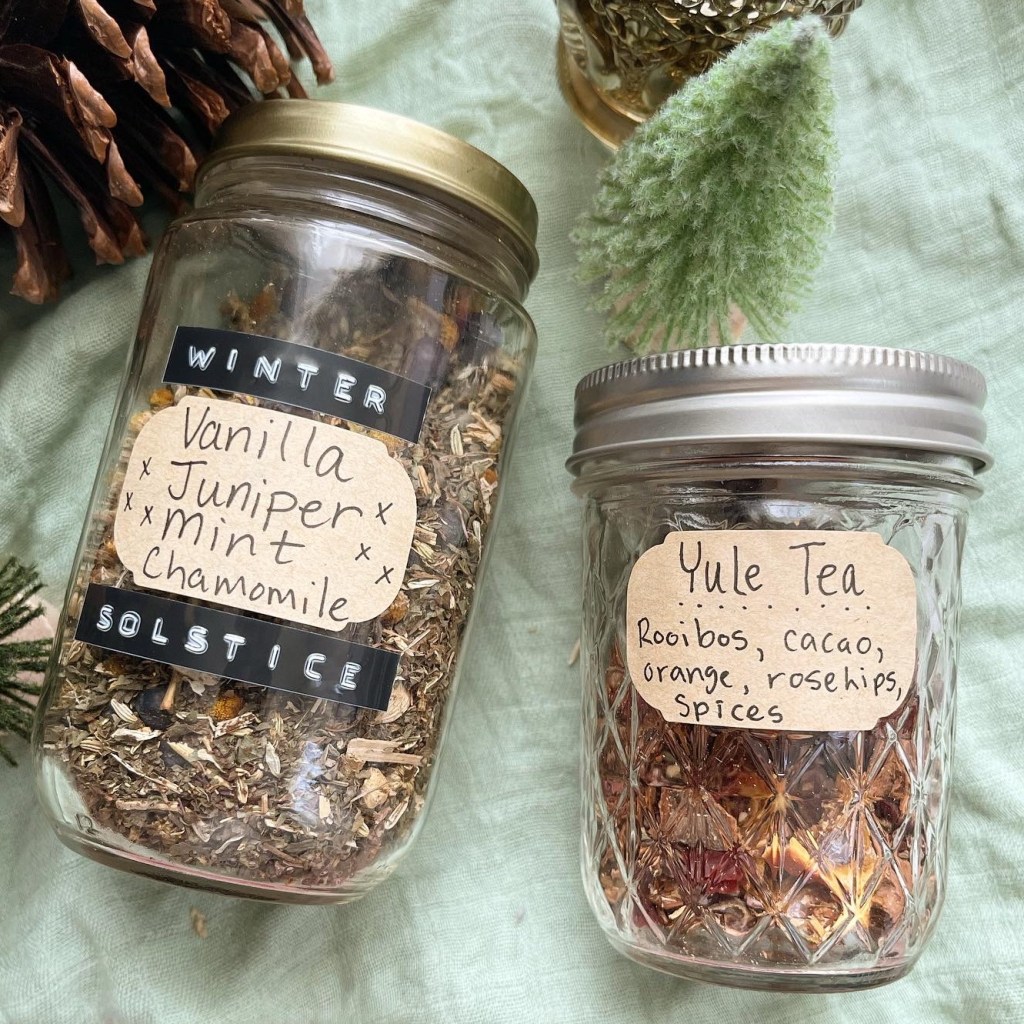
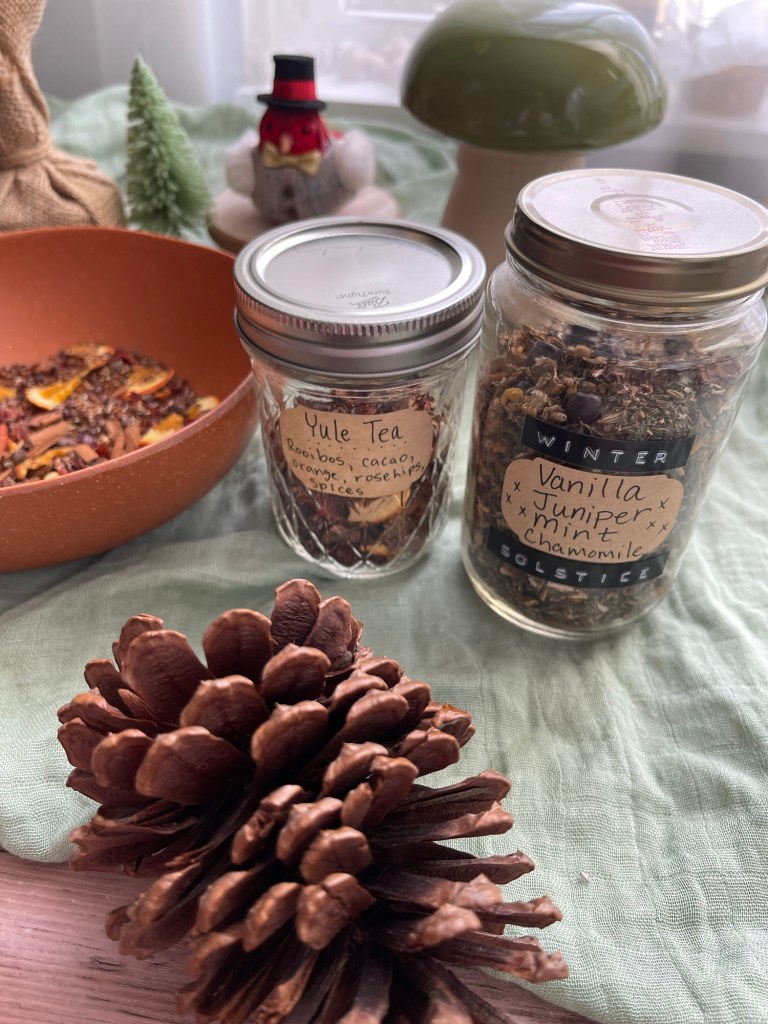
Today I’m sharing two herbal tea blends to enjoy for Yule // the Winter Solstice!
The Yule Tea blend is a sweet and festive spiced sip, full of immune-boosting ingredients that taste lovely. The combo of orange and spices is traditional for the season, in part because of those properties and in part because of associations with protection, divination, prosperity, and luck derived from them.
The Winter Solstice Tea tastes decadent like a holiday cake, but without the heartburn or feeling of overindulgence! With soothing herbs that promote digestion, relieve pain, and aid in circulation, it’s like a sweet, warm hug. And chamomile represents the sun that returns brighter each day after the solstice; juniper is a powerful talisman of winter protection, cleansing, and luck; and the other botanicals have ties to healing, love, and luck, too.
To make a single cup of tea, add 1 tablespoon to a tea strainer, eco- friendly tea bag, or French press. Pour 1 to 1 ½ cups hot water over the tea and steep for 3-5 minutes. Add honey or maple syrup to taste, if desired.
For educational purposes only. Not intended for medical advice. Always consult your physician.
*This post contains affiliate links, which means if you choose to buy something from a link that I share, I will make a small percentage of the sale *at no extra cost to you*.
As a lover of all things autumn, I love branching out and learning about how different cultures mark my favorite season! I have recently learned a bit about the Mid-Autumn Festival in Chinese culture, which takes place around mid-September to early October and centers around the timing of what we know as the Harvest Moon.
During this autumn equinox festival, celebrations focus on the harvest—with gratitude and family gatherings; the moon; Chang’e (the goddess of the moon); and her companion, a white rabbit who pounds herbs in his mortar and pestle to make immortality elixir. Other symbols and parts of the celebration include lanterns, mooncakes, cassia wine, and burning incense as an offering to Chang’e.
This festival and the lore surrounding Chang’e and the Moon Rabbit are a wonderful Craftbrunch theme! There are lovely picture books on this folklore to share with children, you can decorate lanterns and make moon cakes, and more.
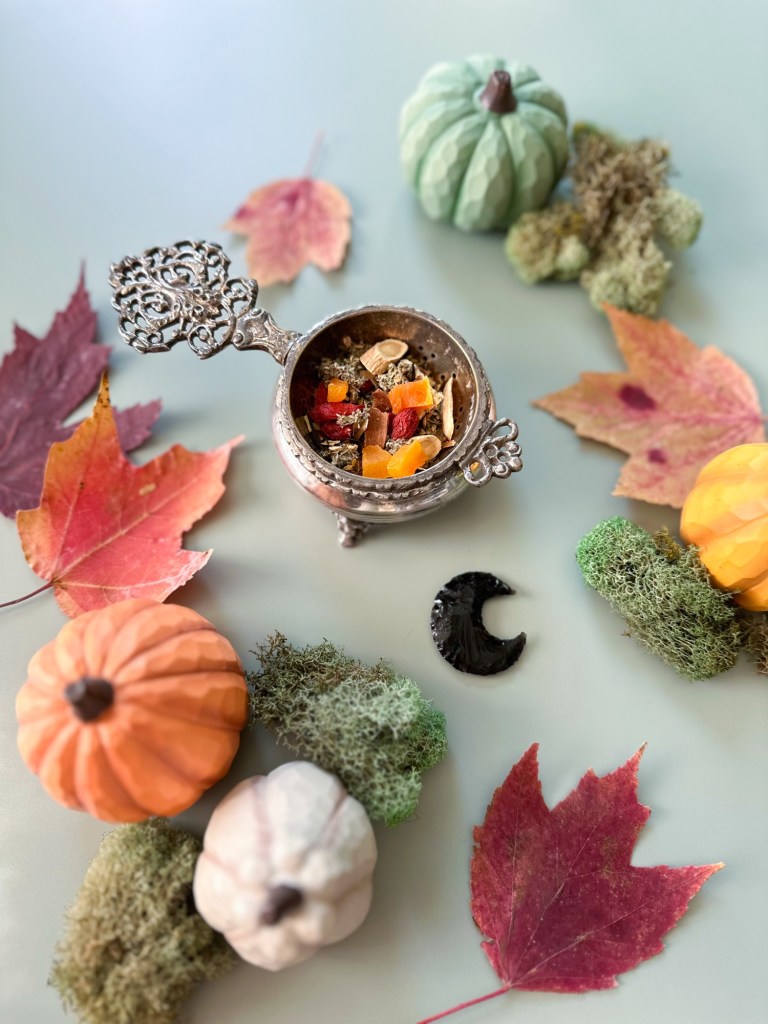
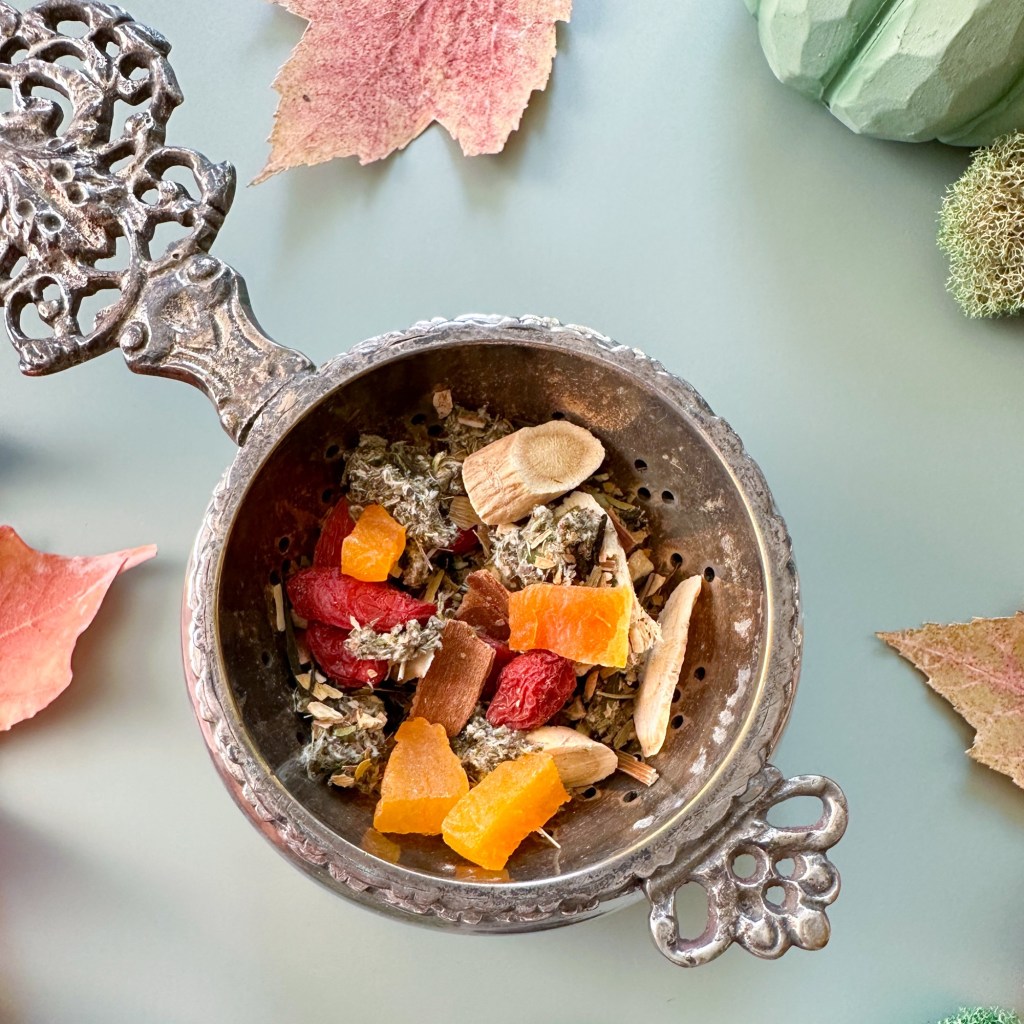
My contribution to the #autumnnaturemagic #Craftbrunch celebration I’ve joined on Instagram is a tea blend based on the idea of the immortality elixir that the Moon Rabbit makes! Most of the ingredients are longevity herbs in TCM (Traditional Chinese Medicine), and the cassia cinnamon and dried apricots are present to represent cassia wine, which I’ve not tried but I read it tastes like peaches or apricots!
(This tea is safe for adults and kids alike, but if you prefer you can substitute decaf green tea or leave it out altogether.)
Here is the recipe! It should be enough for a few cups of tea but you can increase accordingly for the number of people you’re serving.
Brew for 3-4 minutes with just-boiled water; you can brew longer if you omit the green tea, or perhaps put the green tea in a separate tea strainer and remove it before the other ingredients.
Garnish with cinnamon sticks and dried apricots if you like! Sip this tea before a lantern-lit autumn hike under the moonlight!
For educational purposes only. Not intended for medical advice. Always consult your physician.
*This post contains affiliate links, which means if you choose to buy something from a link that I share, I will make a small percentage of the sale *at no extra cost to you*.
School starts very early where we live (July 31 was our first day this year!), so it can be interesting to combine autumn immune boosting herbs with cold summer treats and summer seasonal plants.
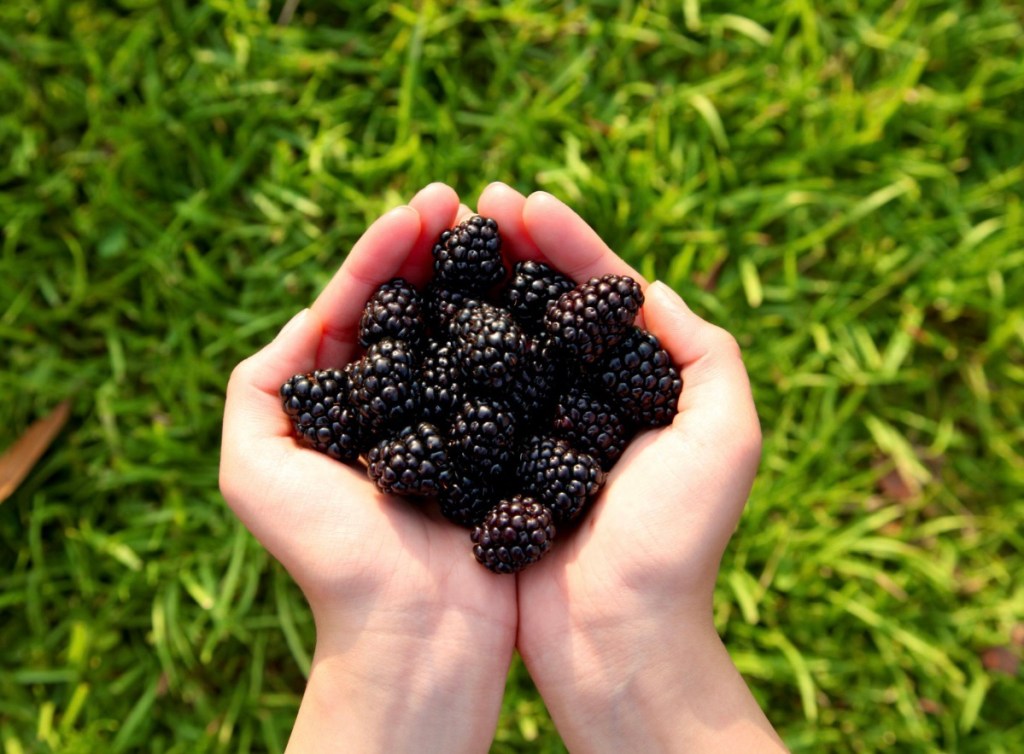
That’s where blackberry comes in! Blackberry is a nourishing, protective, antioxidant-rich ally in itself, and is in its prime this time of year. The vitamins and nutrients in blackberry can help to bolster the immune system and fight off illness.
Add in elderberry, whose immune modulating properties are well known, along with fresh ginger for zing and an extra immune boost, and you have the start to an herbal syrup that can be used to make summer-friendly lemonade! (As an added bonus, since my kids don’t love the taste of elderberry on its own, blackberry is a perfect flavor partner to help add some sweetness and round out some of elderberry’s more mineral-y twang.)
Here’s the recipe if you’d like to try it for yourself and get a summertime immune boost!
To make the simple syrup, add sugar and water to a saucepan and dissolve over low-medium heat. Add blackberries, elderberries, and ginger slices. Mash the contents with a potato masher. Simmer on low for 5 to 7 minutes, then remove from heat and allow to infuse for a further 10 minutes. Strain with a mesh strainer into a clean jar, cap, and refrigerate.
To make the lemonade, juice the lemons and add to a pitcher. Add the ice, water, and 1 cup of the simple syrup. Stir well and taste; add more simple syrup if it isn’t sweet enough for your taste. Chill and serve over ice, or use frozen blackberries as ice cubes!
Notes
•Frozen or fresh blackberries can be used in this recipe interchangeably.
•If your kids are averse to the taste of elderberry, you might choose to use less elderberries; if you’re making this for adults you might choose to add a bit more instead.
For educational purposes only. Not intended for medical advice. Always consult your physician.
*This post contains affiliate links, which means if you choose to buy something from a link that I share, I will make a small percentage of the sale *at no extra cost to you*.
This article appears in the Winter 2022 edition of Botanical Anthology. You can purchase a digital copy HERE or a print copy HERE.
Along with the joys winter brings, it unfortunately also carries increased risk of illness in its wake. Between extra time spent indoors during colder weather and the season’s gatherings and festivities, exposure to many types of illnesses sees a dramatic uptick. To that end, immune support becomes a constant refrain.
Herbal allies can be indispensable when it comes to this winter barrage of germs. But what does “herbal immune boosting” mean? It is a many-pronged approach to keeping your body functioning optimally so that you might avoid some illnesses altogether, or at least lessen their severity. Different types of herbs work together synergistically to aid with this never-ending task.
Adaptogens Fatigue, burnout, and chronic stress are common problems that weaken the immune system and its ability to fend off illness. Adaptogenic herbs help restore balance and protect the body’s systems and processes to counter these effects, the immune system being an important beneficiary. Tulsi, astragalus, reishi and chaga mushrooms and licorice root are just a few examples of adaptogens.
Nervines Stress and insomnia deplete the body and create the perfect breeding ground for germs. Luckily, nervine herbs help combat both of these issues, and many are gentle and safe for everyday use for most individuals. As an added bonus, some nervines have antimicrobial properties, too. Gentle nervine herbs include chamomile, lavender, lemon balm, tulsi, rosemary, linden, hawthorn, and passionflower.
Diaphoretics Diaphoretic herbs are warming and promote circulation. Once sick, these herbs go on to help sweat out a fever and offer respiratory relief. These include yarrow, elderflower and berry, chamomile, ginger, catnip, cayenne, garlic, and linden.
Aromatics Aromatic herbs don’t just taste great—they provide important immune boosting actions, too. Most aid digestion, while also offering strong antimicrobial support. These germ-killers include ginger, cardamom, cinnamon, cloves, anise, allspice, rosemary, and fennel.
Antioxidants Antioxidants like vitamin C aid immunity by supporting and stimulating antimicrobial actions on a cellular level as well as protecting body tissues from damage. Antioxidant herbs that provide much-needed immune boosting include rooibos, rose hips, hibiscus, elderberry, orange peel, and raspberry leaves.
Alteratives Alterative herbs aid in detoxifying your body by supporting the organs and systems that handle this important task. You need your liver, kidneys, and lymphatic system in tip-top shape to fight off illness! This category of herbs includes echinacea, calendula, dandelion root, burdock root, and nettles.
There are countless combinations one can work with to create an immune-boosting herbal recipe. To make things a little less daunting, here is a simple tea as a starting point. It features elderberry, a tried-and- true immunity aid, but also rooibos, an oft-overlooked antioxidant powerhouse. There is a bit here from each of the above categories, and plenty to tempt the taste buds, as well.
Blend this combination of herbs as the recipe states, or use it as a jumping-off point to inspire your own immune supporting formulation!
Method Mix all ingredients except orange in a bowl. Transfer to an airtight container.
To make a single cup of tea, add 1 tablespoon to a tea strainer, eco-friendly tea bag, or French press. Pour about 1 1⁄2 cups hot water over the tea and steep for 5 to 10 minutes. Add fresh orange zest or orange slice and honey to taste, if desired.
Notes This recipe yields approximately 10 servings of tea. If making a small batch, measure the parts in teaspoons—it should yield about 2 servings of tea.
For educational purposes only. Not intended for medical advice. Always consult your physician.
*This post contains affiliate links, which means if you choose to buy something from a link that I share, I will make a small percentage of the sale *at no extra cost to you*.
Mabon is almost here! Otherwise known as the Autumn Equinox, this sabbat marks the official beginning of fall, the second harvest festival, one of the two points in the year when day and night are equal, the height of preparations for the dark part of the year, and a day of thanksgiving and gratitude.
Depending on the year, my birthday falls right before or sometimes on Mabon (9/21), so it always feels *extra* special to me. I can always be counted on to make a bit of a fuss to celebrate the equinox! I suppose I may love fall so much because I’m a Mabon baby, but I think this most cozy, crisp, and magical time of the year would be my favorite regardless of my birthday.
My favorite flavor of autumn is…no, not pumpkin spice…but apple! And spiced apple, which is nearly the same as pumpkin spice, but with a different vehicle. I love pumpkin, don’t get me wrong—but apple will always be the flavor of September to me. So I am brewing up a simple and delicious batch of spiced apple cider for my family to enjoy this Mabon weekend.
In this recipe, apples are combined with vitamin C rich oranges and beneficial, warming, digestion-promoting, immune-boosting spices. This drink offers a cozy, warming, festive sip with many benefits!
Here is the recipe:
Materials—
½ to 1 gallon of fresh apple cider
2-3 apples, sliced
1-2 oranges, sliced
1 small to medium knob of fresh ginger, sliced, or 2 tsp dried ginger
To make a hot spiced cider, fill a large stock pot or slow cooker with the fresh apple cider, sliced apples and oranges, sliced ginger if using fresh, and cinnamon sticks. Place the rest of the spices in a cheesecloth bag or large eco friendly paper tea bag and add to the pot. Heat over low heat, stirring occasionally, and serve warm.
If the autumn equinox is still quite warm where you live, you can make this as a cold drink instead! Place all the ingredients in a pitcher in the refrigerator overnight. Try mixing it with sparkling apple cider, ginger beer, ginger ale, or Prosecco for a fizzy twist!
What are you doing to mark Mabon / the autumn solstice this year?
For educational purposes only. Not intended for medical advice. Always consult your physician.
*This post contains affiliate links, which means if you choose to buy something from a link that I share, I will make a small percentage of the sale *at no extra cost to you*.
It may not be pumpkin spice time yet (Says who? It’s always pumpkin spice time to me!) but apples are ripening and it’s a great time to whip up some apple crisp. I am gathering with friends this evening, so I made a chai apple crisp that is gluten-free for one of my friends’ dietary needs.
You can’t fault me for rushing Autumn if I’m using chai spices! And anyway, there are so many benefits to chai spices. Medicinally they’re immunity boosting, digestion aiding, circulation stimulating, and so much more—check out THIS blog post for more on that. Chai spices also help soothe, relax, and even help with sleep. And symbolically / spiritually, many of these warming spices are said to bring prosperity, protection, joy, and divinatory insight. Plus, they’re just cozy and tasty! Perfect for a gathering with friends paired with tart Granny Smith apples.
Here is the recipe!
Gluten-Free Chai Apple Crisp—
Ingredients
For the filling—
8-10 Granny Smith apples, peeled, cored, and sliced or chopped
2 Tbsp gluten-free flour blend
2 Tbsp sugar
1 tsp pumpkin spice mix (cinnamon, nutmeg, ginger, and cloves) or ¼ tsp of each
1/4 – 1/2 tsp allspice
1/2 tsp cardamom powder
1 tsp vanilla extract
For the crumble—
1 cup gluten-free old-fashioned oats
1/2 cup gluten-free flour blend
1/8 tsp salt
1 cup dark brown sugar
1/2 tsp pumpkin spice
1/8 tsp allspice
1/4 tsp cardamom
1 stick of butter of choice, cold, cubed
Method
Preheat oven to 375° F. Grease a 9 x 13 glass baking dish and set aside.
Prepare apples and put in a large mixing bowl. Sprinkle with sugar, flour, and spices and stir to coat; add vanilla extract and stir again. Scoop this mixture into your greased baking dish.
In the same mixing bowl if you’d like, mix the oats, flour, spices, and salt well. (If you’d like to ease back on the spices, omit them from the crumble.) Add the brown sugar and butter and cut in with a pastry blender or fork until pebbly consistency is reached. Sprinkle over the apple filling evenly.
Bake 30 to 35 minutes; cool before serving.
Notes
Serves 6-8
Substitute in your favorite chai spices and play around with the amounts to your preference!
Would also be amazing with walnuts in the crumble topping.
This recipe could easily be adapted to be non gluten free with conventional flour.
Are you a big fan of apple crisp? And do you think August is too soon for it? Let me know in the comments!
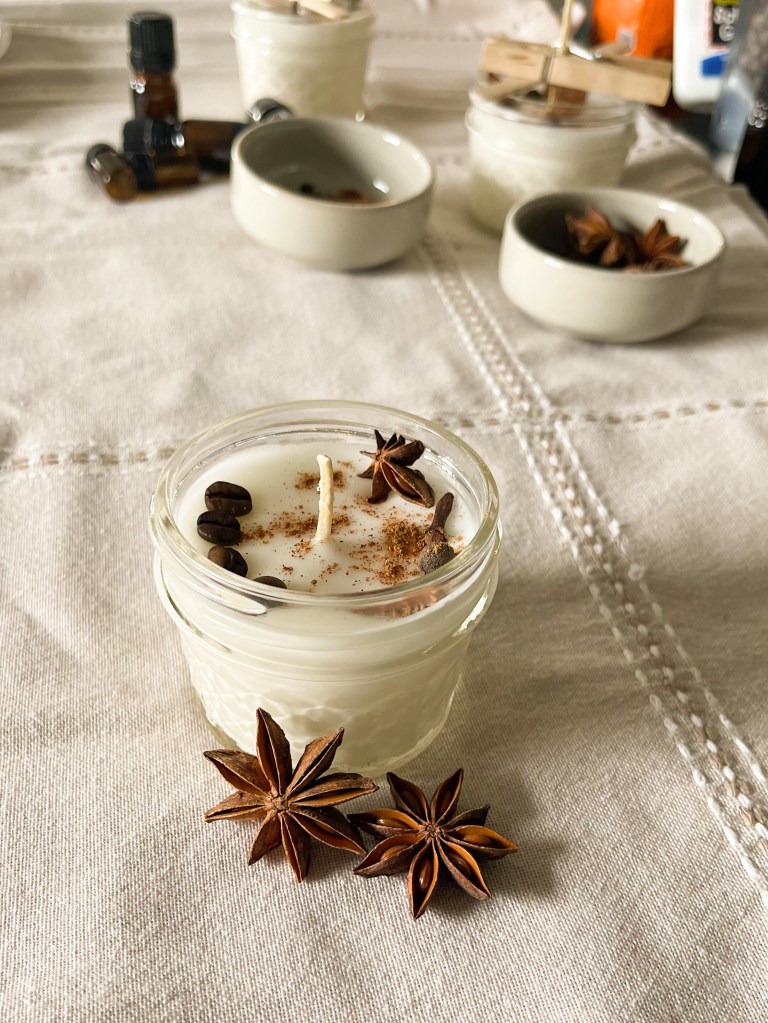
I am *just* beginning to teach myself the art of candle making! It is not terribly difficult, but there is definitely a knack to it and little things to learn through the process. I am no expert yet, but I am quickly learning some of the finer points!
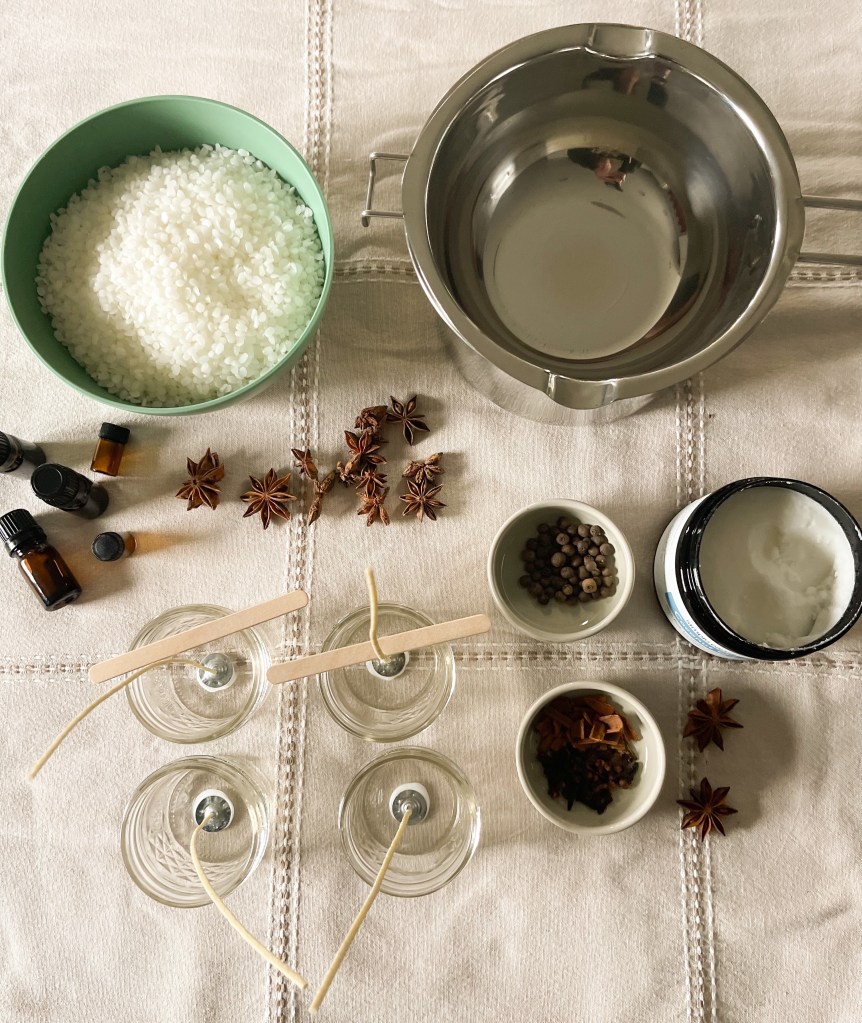
I have decided to use a combo of beeswax and coconut oil for my candle base for the time being, and I scent my candles with essential oils. The scent is more subtle than that from my favorite store-bought candles, but it’s lovely and natural, healthier, and much more magical and special to make them myself. All the cozy and loving intention is poured into each one with the wax.
For those who are also interested in candle making but aren’t sure where to start, here is a little list of the basic supplies I decided to begin with:
This batch of beeswax candles combines the scents of coffee, cinnamon, vanilla, clove, nutmeg, ginger, cardamom, lemon, blood orange, and balsam copaiba essential oils. (The coffee oil is a separate one from Simply Earth; the rest are in a pumpkin spice oil blend from Plant Therapy.)
Aside from providing a cozy, delicious scent perfect for this time of year, these botanicals are grounding, balancing, energizing, and represent love, luck, and healing. I’ve topped each candle with coffee beans, star anise, allspice, cinnamon, and cloves.
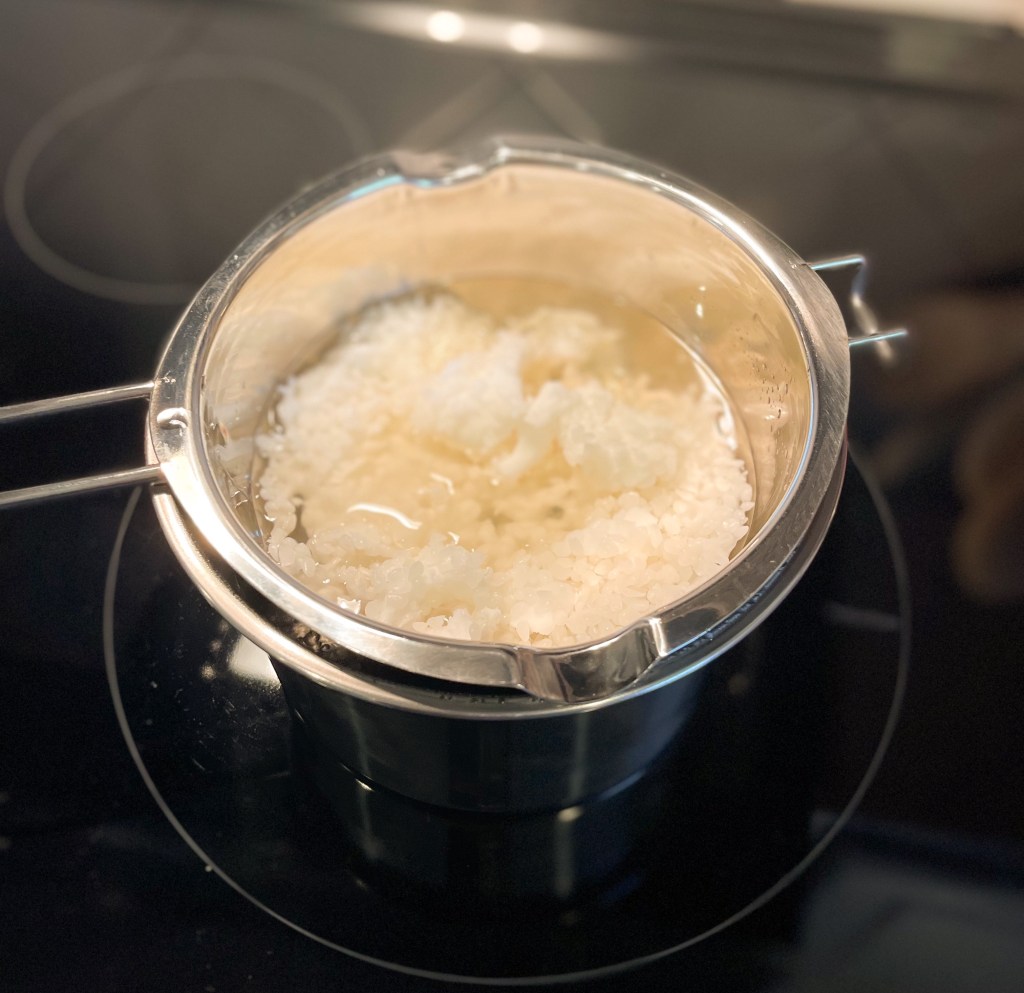
Here are the instructions for how I made this batch of candles—it makes 6 four-ounce candles.
(A couple notes: I am still experimenting with the essential oil amounts. You could definitely use more than I did here for a stronger scent—up to 200 drops! But I went conservative here for lightly scented candles. Also, be very careful topping candles with cinnamon, and make sure it isn’t too near the wick! It can spark if it catches the flame just right.)
I plan to keep a couple of these and share the love by gifting the rest this holiday season! And I hope to make more with different scent profiles and additions soon—I’ll share those here or on Instagram when I do.
Have you ever tried your hand at candle making? Is it something you’re interested in trying?
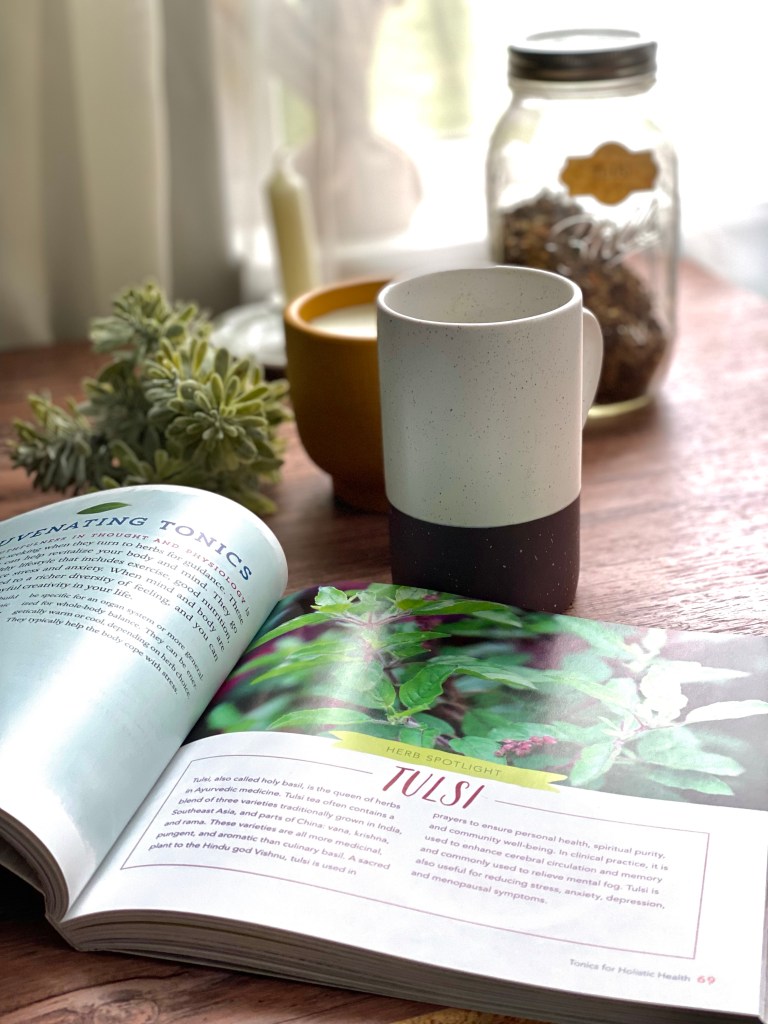
Hello, Herbology Faeries! It has been busy around these parts and I’ve had less time for the blog than I would have hoped this past month…but I am back today with another herb profile. Today we’re talking about an herb I lean on a LOT for support and grounding: tulsi!
Tulsi, or Holy Basil, is a pungent, aromatic, and somewhat warming herb. Though tulsi has reached herbal popularity heights in Western herbalism, it is a sacred plant in India and is native to subtropical climates. It thrives best grown in warm, sunny regions.
It’s easy to see why tulsi is so revered in India and beyond. Tulsi is an herb that does it ALL. It is a relaxing nervine and an adaptogen, meaning it addresses stress, anxiety, depression, and overall health and functioning. Tulsi is also incredibly helpful for pain, infections, viruses, heart health and blood pressure, allergies, high blood sugar, digestion, cognitive health, the immune system, and more. It is one of those herbs you can’t go wrong with as a daily tonic. (Some suggest caution if fertility is a priority for you, as tulsi may affect that.) Not only offering these health benefits, tulsi is also grounding and soothing to the spirit.
Tulsi represents spiritual and physical health, the well-being of the home and community, and mindfulness and the body-mind connection. Maia Toll says very aptly in her book The Illustrated Herbiary that tulsi reminds you to “come home” to your body and to honor your body and your spirit. If you ever feel like you need a reminder that you are enough, tulsi is definitely the ally to seek out.
You can use tulsi in teas, tinctures, oils, honey, and even as a culinary herb to flavor foods. Tulsi pairs excellently with spicy botanicals like ginger and cardamom, or with cooling herbs like mint and hibiscus. Honestly, though, I’ve rarely felt there was a combination of herbs that didn’t blend well with tulsi.
Instead of offering a recipe, I’m going to suggest a couple of simple options to help you get to know tulsi. The first is to purchase some tulsi and make a strong cup of hot tulsi tea. In my opinion, this herb stands so well on its own and is so incredibly grounding and nourishing, you will benefit from getting to know it on its own. I’m not kidding—sipping a strong mug of hot tulsi is like wrapping up in the softest blanket. It is pure comfort.
The other option I’m suggesting is this: if you need the simplest, cheapest, or most low-energy means of introduction to tulsi, you can find boxed tulsi tea without too much trouble. Traditional Medicinals sells a delicious Tulsi with Ginger tea, Numi makes a Tulsi blend, and Pukka has a Tulsi Clarity tea—you might even be able to find one of these at the grocery store, depending on your location. Trying a store bought variety of herbal tea is a super accessible, and no less legitimate approach!
So, are you a tulsi / holy basil lover already? If not, are you planning to give this amazing herb a try?
I’m back with another herb profile about one of my very favorite herbs, this time being dandelion root! Dandelions may evoke visions of sunny spring days for many, but I’ve come to associate dandelion root with cozy, grounding autumn and winter brews. It’s such a simple and beneficial herb to use, and it’s definitely one of my main staples.
(Dandelion leaves are used as well as the root—in teas, as salad greens, in pesto, and more. The flowers are even used in making wine. But the root is my favorite part to work with, so that’s my focus for this post.)
The bitter and yet somewhat sweet dandelion root is usually harvested in the autumn. (If harvesting your own, make sure it is from an area free of weed sprays!) It can be used in a myriad of ways, but for teas and tinctures it is usually used dried and sometimes roasted. The roots tend to be cooling and drying, and offer benefits such as liver function aid, digestion aid, inflammation modulation, nutrition, and overall balancing and grounding.
Many herbalists prefer dandelion root in tinctures, but my favorite ways to work with it involve teas. Dandelion makes an excellent addition to or replacement for coffee! Roasted dandelion root and chicory, with or without additions like cacao nibs and cinnamon, make an excellent and healthy coffee alternative. I also love pairing dandelion root with herbal chai mixes—it adds an earthy grounding element and all kinds of healthy benefits.
One of my favorite dandelion root tea blends is one shared by The Herbal Academy, called Grounding Gratitude Tea. The mix of dandy root and tulsi, which offers a mildly stimulating, calm energy, along with warming ginger, is one of my go-to teas to make me feel at home in my own body.
So, are you a dandelion root fan? What is your favorite way to work with this lovely plant ally?
Aside from chai, another beverage that I associate with autumn and winter is spiced or mulled wine. The warm, soothing-yet-spirited drink is rich with digestive, warming, and immune-supporting spices. Not to mention how festive and rooted it feels to share this deep, tart ruby liquid with others at a gathering in the colder months.
But! I very rarely imbibe actual spiced wine. Instead, I mix up a similar potion replacing the wine element with extremely beneficial harvest berries and botanicals. They add the same vibrant garnet color, along with nutritional and healing properties, without the alcohol content. An herbal substitute for mulled wine is also quicker and more convenient when you want this type of pick-me-up (any time of day!) and it can be shared with anyone.
You can make your own preferred version of spiced “wine” tea with various ingredients and methods! I’ll share my recipe with you here so you can either use it yourself, or use it as a starting point to concoct your own recipe.
Spiced “Wine” Tea
Rosehips: These tasty red jewels are ready for harvest in October in many locations. You can use fresh or dried (I always have dried rosehips on hand). They add a tart cherry type of flavor, vitamin C, and minerals that aid in heart health, circulation, pain relief, cholesterol and blood pressure health, and even pain.
Elderberries: Dried elderberries impart a deep berry flavor and amazing immune-boosting benefits. Aside from their antiviral properties, elderberries also have anti-inflammatory benefits. I am always conscious to be moderate with the amount of elderberries included, in case of possible digestive discomfort. (I’ve never experienced this side effect myself, but I’ve read that it can happen so I use caution.)
Hawthorn berries: Hawthorn berries add nearly magical benefits of not only boosting heart health in a physical sense, but also soothing and strengthening the emotional heart and aiding with anxiety.
Hibiscus: This is a go-to base ingredient in fruity, berry-flavored teas for me. Hibiscus is an excellent heart ally and gives the tea a full-bodied, cranberry-ish, and even wine-ish taste.
Orange peel, dried or fresh: Obviously vitamin C is a big part of spiced wine. But so is rich, strong flavor! Orange in some form is almost essential to this type of brew.
Spices – cloves, cinnamon, allspice, ginger: You can’t have spiced wine without your warming, grounding, immune-boosting spices! These add taste, physical and mental health benefits, warming cozy comfort, and synergy between ingredients. Of course, you can get creative and use your own favorite combination of mulling spices!
Optional – rooibos: Rooibos is an herbal ally I adore and use often to fill out and add body to teas while providing wonderful benefits. (See my rooibos profile post for more on this herb!)
You can play around with your favorite berries (even adding fresh or dried blackberries or cherries!), spices, flavorings, and even splash in apple cider for a fruity kick or ginger ale for a fizzy twist. It’s up to you how you concoct your festive, warming brew. Then enjoy it all autumn and winter on quiet afternoons or cozy family gatherings! Or take a thermos of it on your outdoor autumn adventures!
What additional or different ingredients are you going to try in your spiced “wine” tea? I’d love to hear so I can try them, too!








 The Herbology Faerie