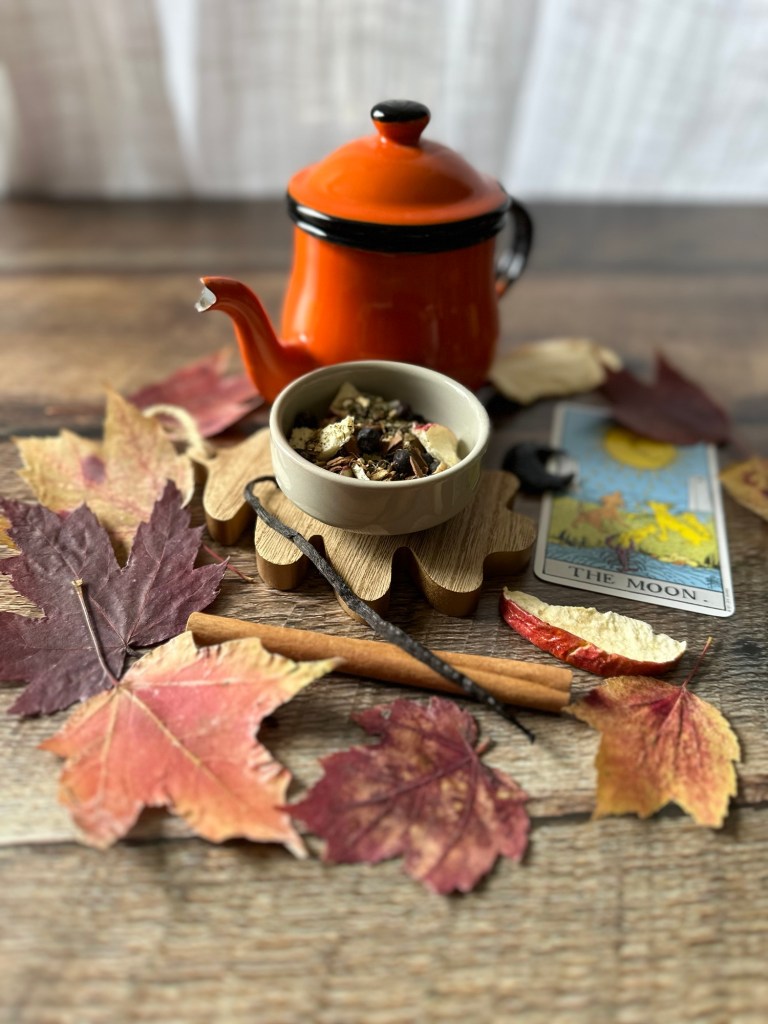
Though the Falling Leaves Moon or Hunter’s Moon fell on October 17th this year and has technically passed, the full moon’s energy can still be tapped into. Read on to learn more about this month’s full moon and a corresponding tea recipe!
The Ojibwe named the full moon during what we call October the Falling Leaves Moon. We await the “peak” of the vibrant colors knowing the shedding of these leaves marks winter’s approach. As this full moon nears, we may feel Aries’ pull to dive into autumn with an energy as vibrant as the leaves. But the sun sign Libra may temper this drive with a need for balance to conserve our energies for the coming cold.
Brew this tea to mark the Falling Leaves Moon which includes gifts given from trees for both their symbolic and astro-herbalism connections. Hawthorn bolsters the heart, while juniper, cinnamon, and ginger support the Aries fire. Apple and vanilla round things out with sweetness to cool that fire off a bit and bring things back to balance.
To make a single cup of tea, add 1 tablespoon to a tea strainer, eco-friendly tea bag, or French press. Pour 1 to 1 ½ cups hot water over the tea and steep for about 5 minutes. Strain, and serve. Add sweetener of choice to taste, if desired.
If you’d like recipes to mark each month’s full moon, check out the current and upcoming issues of Botanical Anthology where I share these recipes!
For educational purposes only. Not intended for medical advice. Always consult your physician.
*This post contains affiliate links, which means if you choose to buy something from a link that I share, I will make a small percentage of the sale *at no extra cost to you*.
The Hobbit and The Lord of the Rings books by J.R.R. Tolkien have been my very favorite books since I first read them as a teenager, and I have always felt a very strong connection to hobbits: simple folk who prefer the comforts of home, well-stocked larders and bookshelves, and the joy of silly fun with family and friends, yet who can be prevailed upon to draw deeply from a well of courage and wit to save the world on occasion. If any fictional folk represents me, it’s the hobbit-folk.
So the publication anniversary of The Hobbit (my birthday, 9/21) and the birthday of both Bilbo and Frodo Baggins (9/22) alongside the beginning of fall are all something I like to mark wrapped up into one special span of a couple days. I might read bits of The Hobbit to my own halflings, or we might watch the 1970s Rankin Bass animated film of The Hobbit (wonderfully nostalgic and kid friendly).
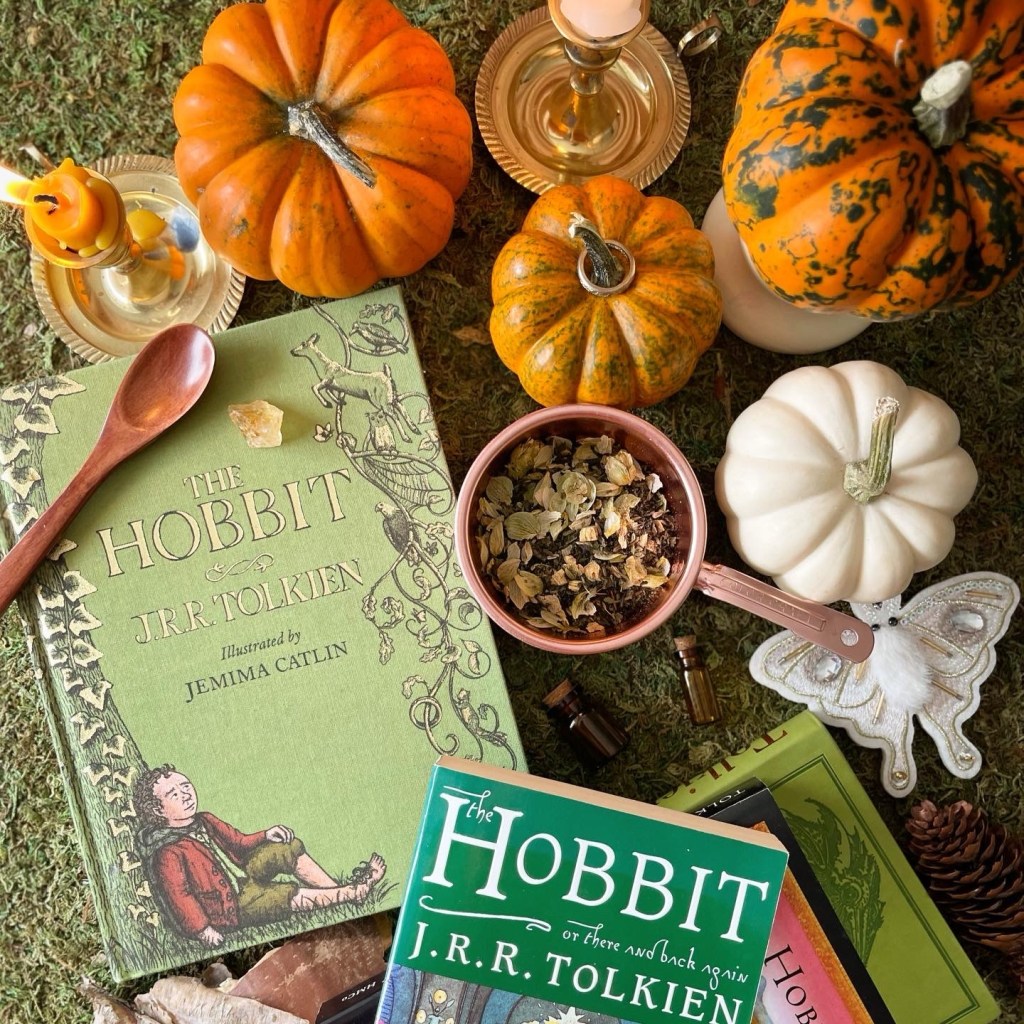
We may enjoy a hobbit-y teatime, too, with fresh baked goods and hobbit-inspired tea from the recipe I created. It combines smoky lapsang souchong tea for that famous pipe-leaf all hobbits love, hops to represent the tankards of ale they heartily imbibe, reishi mushrooms foraged right from the woods surrounding the shire, and other flavorful herbs and spices.
To make a single cup of tea, add 1 tablespoon to a tea strainer, eco- friendly tea bag, or French press. Pour 1 to 1 1⁄2 cups hot water over the tea and steep for 5 minutes. Add honey or other sweetener, if desired.
For educational purposes only. Not intended for medical advice. Always consult your physician.
*This post contains affiliate links, which means if you choose to buy something from a link that I share, I will make a small percentage of the sale *at no extra cost to you*.
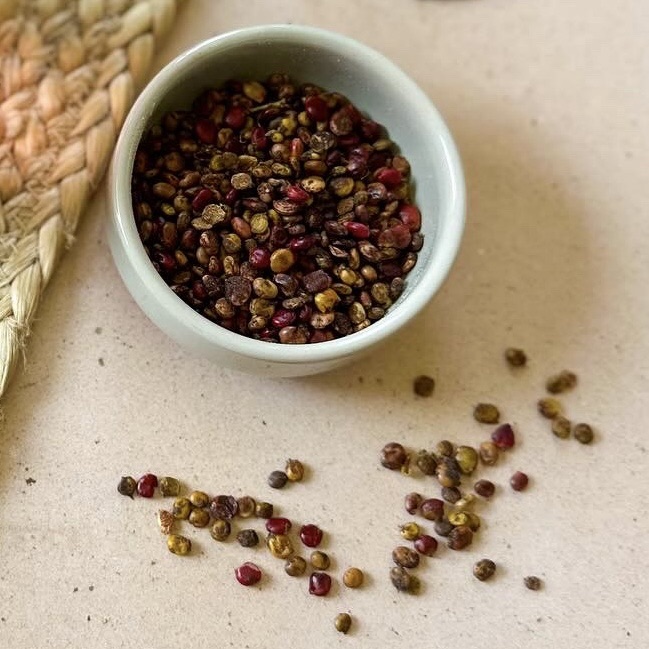
It’s sumac month at the Plant Wonder Collective, and I am so excited because this is a new plant for me! I am loving getting acquainted with these little ruby gems.
The taste of sumac is hard to describe; sour, tart, earthy, and in my opinion, delicious. It’s cooling and drying—very astringent and gives that tannin feeling of black tea or red wine. But the flavor is light, and both fruity yet complex and mineral-y.
From tea to spice rub, tincture to wound salve, and even a lovely pink dye, sumac has a host of applications. This plant is full of antioxidants, offers anti-inflammatory aid, is wonderfully healing inside and out, and can help with unpleasant conditions such as water retention and diarrhea. It is good for the cardiovascular system, can aid in drying out the sinuses, and can even lower blood sugar, too! Sumac is widely forageable in the U.S. and has a long history of use by indigenous peoples.
Sumac is tart and delicious as a cold beverage, much like lemonade, and so is often cold-brewed as such—I found lots of simple instructions for doing just that online. But of course I wanted to add a different spin on the typical sumac “lemon”ade, and a September-y flavor profile!
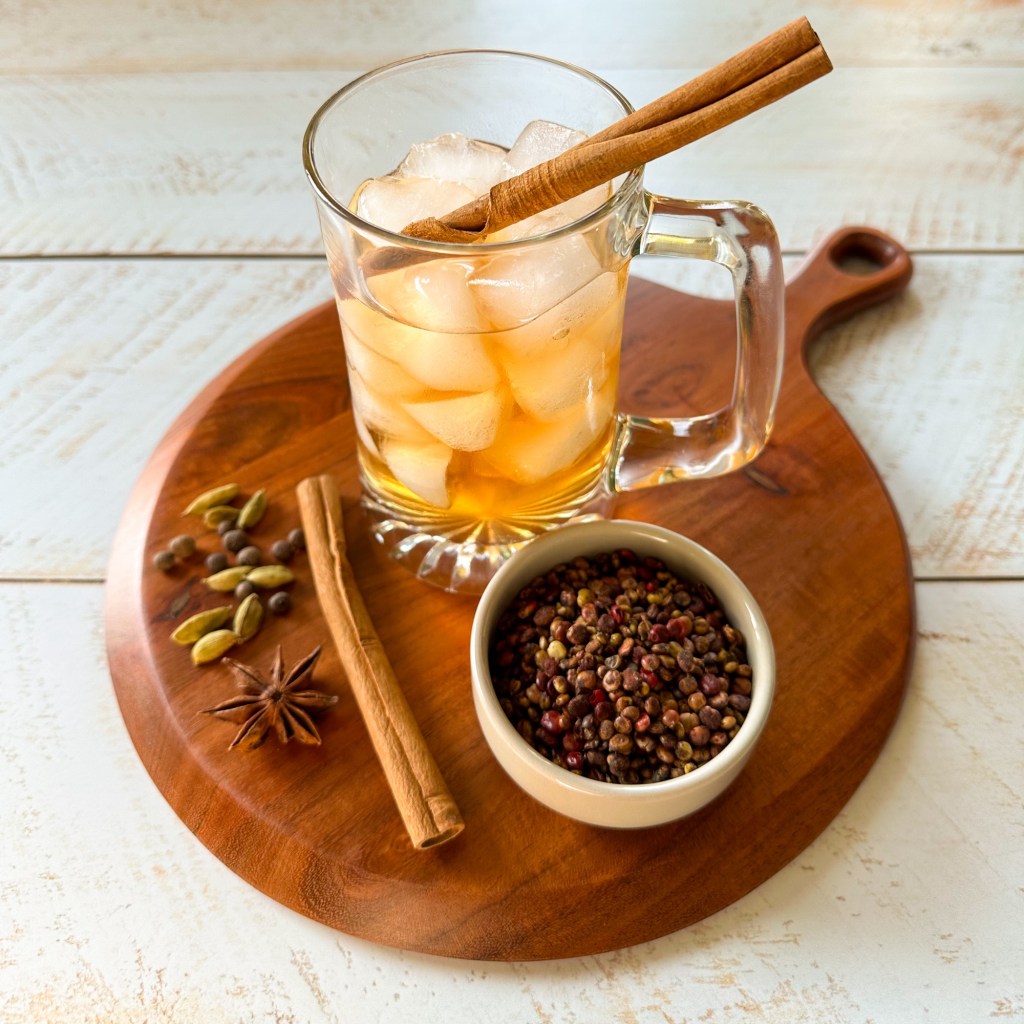
Since I am a huge fan of tart apples and fall cider, I thought I’d try a sumac cider combining this month’s plant with apple and spices! It makes for a lip smacking, satisfyingly-sour and tasty beverage that’s easy to make and kid-friendly, too.
Combine all ingredients in a pitcher; you might decide to use a large tea strainer or large eco-friendly paper tea bag to hold the mulling spices for ease of removal. Allow to cold brew either at room temperature or in the refrigerator for 4 hours to overnight.
Strain the spices and sumac berries out using a fine mesh sieve (a cheesecloth or coffee filter can help, too). Chill and serve over ice!
If you’d like to make this a bit more of an adult drink, you can always add a splash of bourbon or your preferred liquor to your cup; you could also make a stronger brew of the base cider-ade and add then Prosecco or champagne for fizz.
For educational purposes only. Not intended for medical advice. Always consult your physician.
*This post contains affiliate links, which means if you choose to buy something from a link that I share, I will make a small percentage of the sale *at no extra cost to you*.
As a lover of all things autumn, I love branching out and learning about how different cultures mark my favorite season! I have recently learned a bit about the Mid-Autumn Festival in Chinese culture, which takes place around mid-September to early October and centers around the timing of what we know as the Harvest Moon.
During this autumn equinox festival, celebrations focus on the harvest—with gratitude and family gatherings; the moon; Chang’e (the goddess of the moon); and her companion, a white rabbit who pounds herbs in his mortar and pestle to make immortality elixir. Other symbols and parts of the celebration include lanterns, mooncakes, cassia wine, and burning incense as an offering to Chang’e.
This festival and the lore surrounding Chang’e and the Moon Rabbit are a wonderful Craftbrunch theme! There are lovely picture books on this folklore to share with children, you can decorate lanterns and make moon cakes, and more.
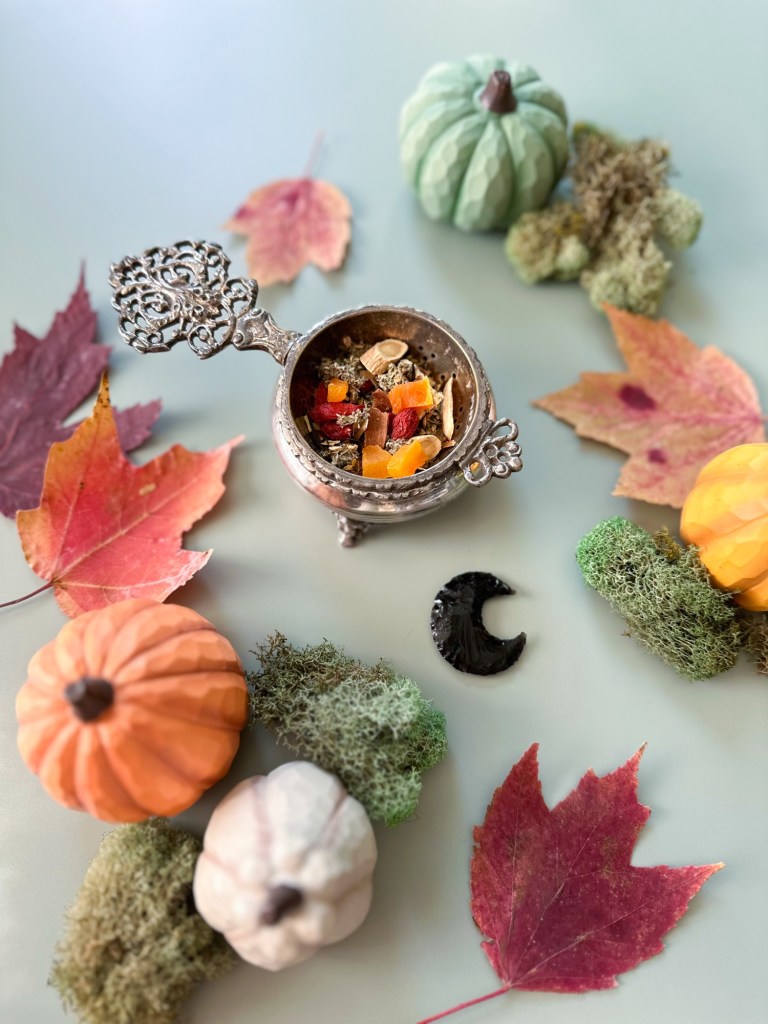
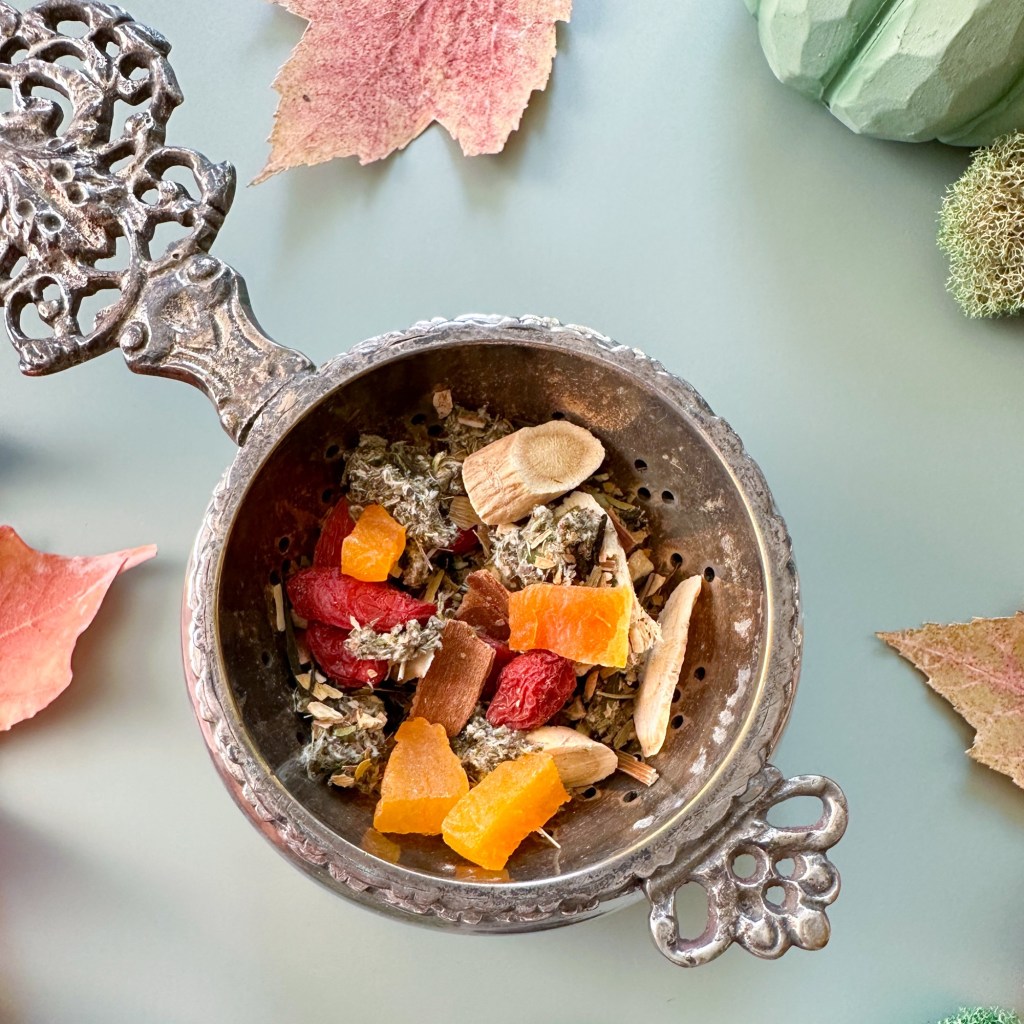
My contribution to the #autumnnaturemagic #Craftbrunch celebration I’ve joined on Instagram is a tea blend based on the idea of the immortality elixir that the Moon Rabbit makes! Most of the ingredients are longevity herbs in TCM (Traditional Chinese Medicine), and the cassia cinnamon and dried apricots are present to represent cassia wine, which I’ve not tried but I read it tastes like peaches or apricots!
(This tea is safe for adults and kids alike, but if you prefer you can substitute decaf green tea or leave it out altogether.)
Here is the recipe! It should be enough for a few cups of tea but you can increase accordingly for the number of people you’re serving.
Brew for 3-4 minutes with just-boiled water; you can brew longer if you omit the green tea, or perhaps put the green tea in a separate tea strainer and remove it before the other ingredients.
Garnish with cinnamon sticks and dried apricots if you like! Sip this tea before a lantern-lit autumn hike under the moonlight!
For educational purposes only. Not intended for medical advice. Always consult your physician.
*This post contains affiliate links, which means if you choose to buy something from a link that I share, I will make a small percentage of the sale *at no extra cost to you*.
Lammas / Lughnasadh / the First Harvest festival is almost here, coming up on August 1!
In years past, I was very much NOT a fan of the month of August. Where I live it tends to be incredibly hot, buggy, and like a dragging obstacle between me and my favorite season: autumn.
But recently, I came to see August in a new light. I’ve learned about the sabbat of Lughnasadh / Lammas (they tend to be used interchangeably) on the wheel of the year. Lammas marks the first harvest festival—the first of three, including Mabon and Samhain. The connections with Lammas tend to be the late summer veg and herb harvests, grain, bread making, beer, wine, fruits and vegetables, abundance, and gratitude. This opens the doorway for our descent toward autumn. Nights begin to gradually get cooler, and sunflowers bloom at the flower farm near my home. I can get behind this imagery, this spirit of anticipating autumn and gratitude for the end of summer’s abundance!
Lammas and Calendula
When I first learned about Lammas, I immediately, intuitively connected it with calendula. This may not resonate for you—you may have another plant you feel called to at this time. But for me, it’s all about this gorgeous, sunny orange flower.
Medicinally, calendula offers immune boosting, gut healing, inflammation modulating, stagnation clearing, and liver supporting properties when used internally. Externally, it supports skin healing and treats bug bites, rashes, burns, wound healing, and overall skin health support.
Spiritually, calendula is connected to the sun, Leo and Cancer—giving fiery yet nurturing qualities, warmth, comfort, healing, protection, happiness, peace, abundance, hard work, and responsibility. I find that ingesting, and even just seeing this plant on my home altar spaces, helps bolster and nourish me during this industrious time! I tend to add calendula into most of my teas and baked goods during the Lammas season.
Lammas Tea Meditation Download
To celebrate this occasion, I am sharing with you a special Lammas Tea Meditation journaling page that you can download, print, and perhaps pair with a mug of calendula tea. Quiet your mind, breathe deeply, and allow your impressions of the herb to wash over you and impart its gifts.
Download, print, and use this mediation journal page along with any other Lammas / Lughnasadh / First Harvest celebrations and reflections!
I am so excited that June’s full moon (the Strawberry Moon) and Litha (the summer solstice) fall together this year. It is a convergence that doesn’t happen often—in fact, the last time it did was 1985! All that bright energy of both the longest day and the full moon combined—so magical!
For me, I think the order of the day is celebration, gratitude, and soaking up every bit of that energy I can. I feel like too often, we see these astrological occasions as calls to act in grandiose ways, to manifest changes and new directions, to enact grand gestures. But this pressure is not necessary, and most likely you have many plates spinning already at this busy cusp of summer! Instead, it is perfectly okay to give yourself permission to rest, recharge from the added light, lean into the sensation of lightness, and simply enjoy and give thanks. Mindfulness can be your act of devotion.
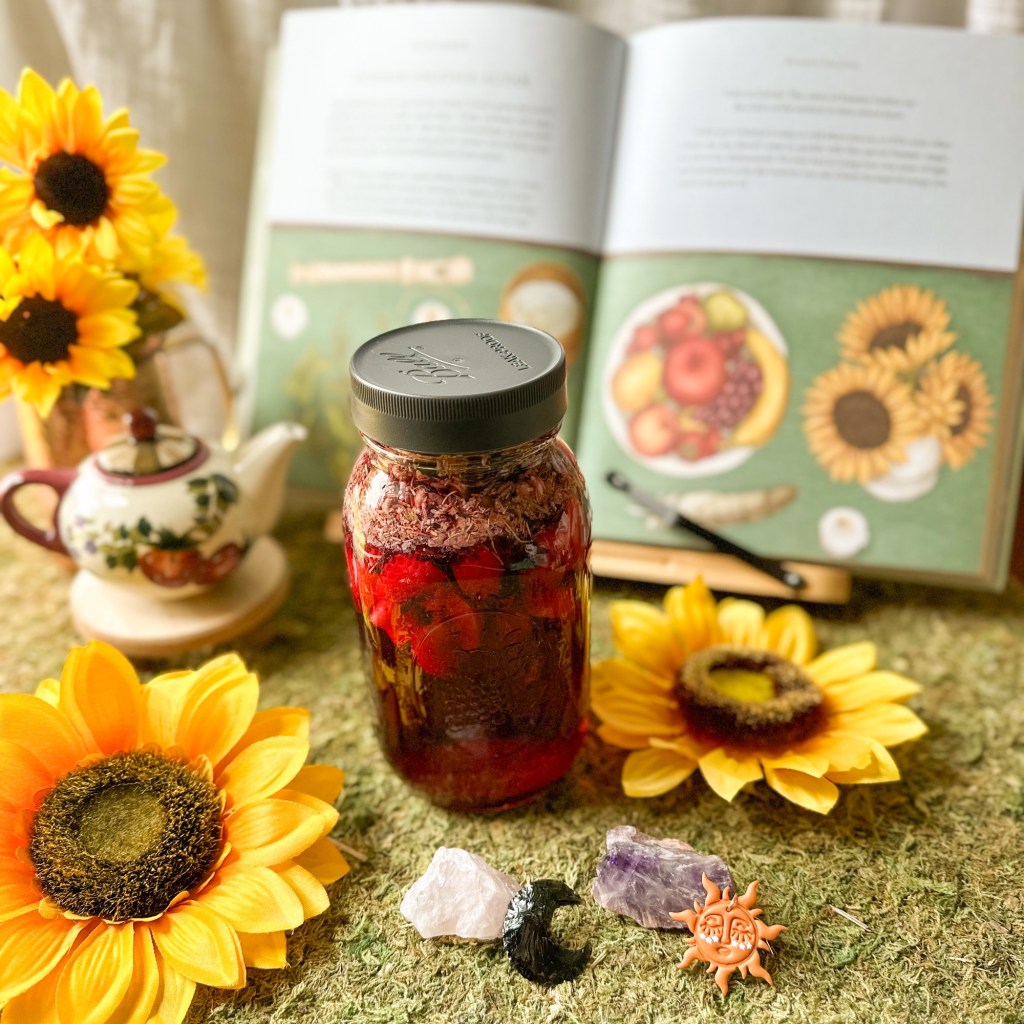
To this end, I am going to brew a Sun and Moon Tea!
I am calling the tea such because I’ve chosen a blend of herbs and botanicals that includes affinities for both the sun and the moon to reflect the meaning of the occasion. There are also botanicals chosen for their ties to Litha, fire, water, and Venus, all of which I am feeling strong influences of during this time.
Here are the ingredients, and a few of their astrological ties:
•Linden (sun, Litha)
•Chamomile (sun, Litha)
•Jasmine (moon, water)
•Rosemary (sun, moon, fire)
•Strawberry (strawberry moon, Venus, water)
•Hibiscus (fire, water, Venus)
•Lavender (Litha)
And here is the recipe! It’s simple, so you can concentrate on enjoying your mindful moments under the solstice sun and Strawberry Moon.
Ingredients
32 oz mason jar
1 cup sliced strawberries
2 Tbsp hibiscus
1 Tbsp rosemary
1 Tbsp linden
1 Tbsp chamomile
1 Tbsp jasmine
½ Tbsp lavender
Honey to taste, optional
Directions
Add ingredients to mason jar and fill with cold, fresh water. (If using dried herbs, you might choose to place them in a large eco-friendly tea bag or linen reusable tea bag.)
Cap tightly and place in a sunny location (free of disturbance by kids or pets!) for 2-3 hours.
If not using a tea bag or strainer, strain tea into a fresh jar or a pitcher over ice if drinking immediately. You can stir in honey while it is still warm if you’d like! Refrigerate and drink cold.
Note—
You can substitute fresh herbs for dried ones if you have access to them! You don’t necessarily have to go by the measurements in that case—just add sprigs of each.
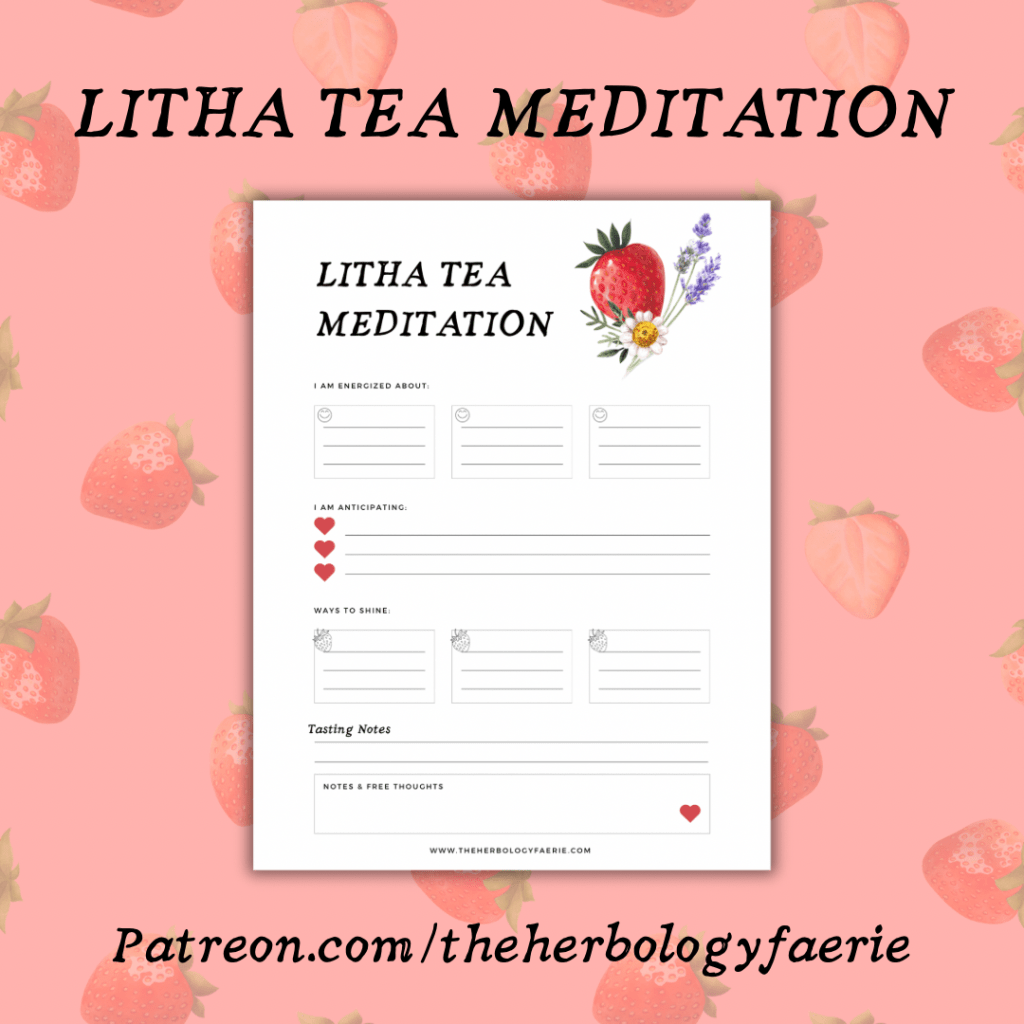
For a printable Litha Tea Meditation journaling page and a printable version of this recipe, join my Patreon at Patreon.com/theherbologyfaerie!
Butterfly Pea Flower is just so very magical! It is astounding how brilliantly blue the flowers can so easily turn the water in a cup of tea. It feels like a bit of faerie magic, for sure!
When I was doing some research for the faerie + plant folklore book I am writing (!!), I came across a type of Eastern European faerie called Er Tütra, which means Morning Mist: the name for a type of weather spirit/faerie. These Morning Mist folk are only visible to human eyes in the form of their namesake natural phenomenon, but they are hard at work to promote the health and growth of crops—an invaluable service to the fauna and humans of the land.
I made the connection between butterfly pea flower and these Morning Mist faeries because of the folklore surrounding this lovely plant. There are strong ties between butterfly pea flower in Southeast Asian cultures and motherhood and divine feminine symbolism, with a distinct focus on protection and mothering. The Er Tütra certainly perform this caretaking role for the land and crops. What’s more, there are very interesting studies on the use of butterfly pea flower in natural insecticides for crops! Yet another cool connection.
Here is the recipe for the Butterfly Pea Faerie tea! Embody the springtime Morning Mist with this tea blend and perhaps offer some to the Er Tütra for their aid in your spring garden.
To make a single cup of tea, add 1 tablespoon to a tea strainer, eco- friendly tea bag, or French press. Pour 1 to 1 1⁄2 cups hot water over the tea and steep for 3-4 minutes. Add honey or your preferred sweetener to taste, if desired.
To cold-brew this tea blend, add the ingredients to a glass jar or French press, steep overnight in the refrigerator, strain, and serve.
This recipe was shared as a part of Butterfly Pea Flower month at the Plant Wonder Collective! If you’d like to support the work of PWC, please consider joining our Study Circle on Patreon for exclusive recipes, articles, digital downloads and printables for the plant of the month, including this graphic available for print as an apothecary jar sticker. We appreciate you being on this learning journey with us!
For educational purposes only. Not intended for medical advice. Always consult your physician.
*This post contains affiliate links, which means if you choose to buy something from a link that I share, I will make a small percentage of the sale *at no extra cost to you*.
Happy Yuletide! I can’t say that I am the most knowledgeable regarding the background and traditions of winter solstice celebrations and rituals, but I am learning more as I go and loving what I learn. I wanted to pop in today to share a few of my favorite cozy Yule traditions with you.
Whether you celebrate Christmas, Yule, a combination, or simply mark the winter solstice, the astronomical beginning of winter and the shortest day and longest night are at the center of this occasion. It is a time of merriment as a way to bring light and cheer into the darkness, and to remind ourselves that the sun and its life-giving warmth will return. This is very much based in the agrarian lifestyle of our ancestors and the greater danger winter posed to their survival. Today we feel the hold-over of these traditions in more metaphorical ways but they’re still deeply ingrained. Other pagan and Christian elements and traditions of this holiday came in later, but all still revolve around the natural occurrence of the winter solstice.
Despite the jolly festivities, as I get older I feel the need more and more to snuggle in at home, slow down, eat cozy treats, and enjoy quiet times with my family just playing games and reading books. I think my connection to the natural world slowing down and going to its winter rest deepens the older I get! So I don’t feel the need for more gifts and parties, but rather candles, tea, and good books.
Candles
I absolutely love making my own candles this time of year. With a few simple, natural ingredients, candles that are healthier and more special than the store bought variety can easily be whipped up in your kitchen. Candles add a warming glow to Yuletide evenings and events, can be given as very special gifts, and you can add your own intention both when you’re stirring the wax to make them and when you take the time to light them each night.
Hot tea is a wonderful way to spend a winter evening during the Yuletide season! There is nothing better than brewing a big pot of tea tailored to the energies of the season, your health, or simply your mood.
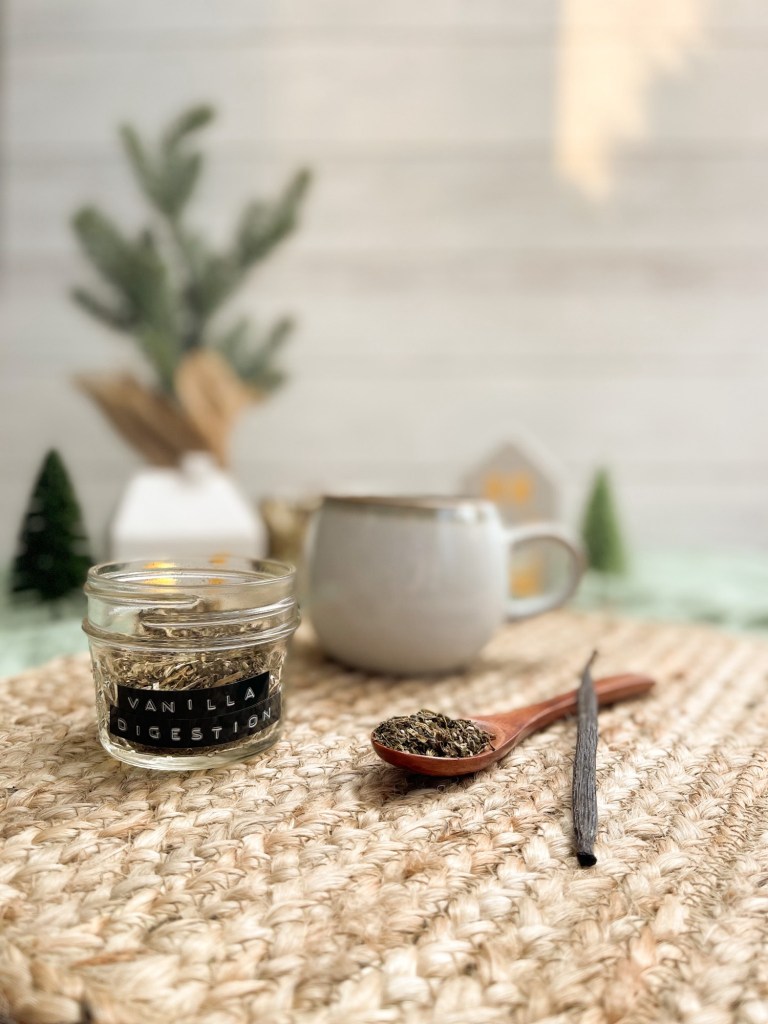
During this season of eating sweets and overindulging, a digestive-boosting tea like the Vanilla Digestion Tea I shared last year can be both helpful and tasty. An Immune Boosting Tea Blend can’t go amiss this time of year, either. Mushroom Coffee makes for a hearty and energizing, yet grounding, brew. Or check out the many other winter tea recipes in my Winter Tea Booklet in my Etsy shop.
Books
I am never at a loss for good books to read! Here I will keep the explanation short and simply share some links to books that are perfect for this season.
Children’s books about Yule / the Winter Solstice / Wintertime (that are wonderful for adults, too):
What cozy ways are you enjoying the Yuletide season?
For educational purposes only. Not intended for medical advice. Always consult your physician.
*This post contains affiliate links, which means if you choose to buy something from a link that I share, I will make a small percentage of the sale *at no extra cost to you*.
This article appears in the Winter 2022 edition of Botanical Anthology. You can purchase a digital copy HERE or a print copy HERE.
Along with the joys winter brings, it unfortunately also carries increased risk of illness in its wake. Between extra time spent indoors during colder weather and the season’s gatherings and festivities, exposure to many types of illnesses sees a dramatic uptick. To that end, immune support becomes a constant refrain.
Herbal allies can be indispensable when it comes to this winter barrage of germs. But what does “herbal immune boosting” mean? It is a many-pronged approach to keeping your body functioning optimally so that you might avoid some illnesses altogether, or at least lessen their severity. Different types of herbs work together synergistically to aid with this never-ending task.
Adaptogens Fatigue, burnout, and chronic stress are common problems that weaken the immune system and its ability to fend off illness. Adaptogenic herbs help restore balance and protect the body’s systems and processes to counter these effects, the immune system being an important beneficiary. Tulsi, astragalus, reishi and chaga mushrooms and licorice root are just a few examples of adaptogens.
Nervines Stress and insomnia deplete the body and create the perfect breeding ground for germs. Luckily, nervine herbs help combat both of these issues, and many are gentle and safe for everyday use for most individuals. As an added bonus, some nervines have antimicrobial properties, too. Gentle nervine herbs include chamomile, lavender, lemon balm, tulsi, rosemary, linden, hawthorn, and passionflower.
Diaphoretics Diaphoretic herbs are warming and promote circulation. Once sick, these herbs go on to help sweat out a fever and offer respiratory relief. These include yarrow, elderflower and berry, chamomile, ginger, catnip, cayenne, garlic, and linden.
Aromatics Aromatic herbs don’t just taste great—they provide important immune boosting actions, too. Most aid digestion, while also offering strong antimicrobial support. These germ-killers include ginger, cardamom, cinnamon, cloves, anise, allspice, rosemary, and fennel.
Antioxidants Antioxidants like vitamin C aid immunity by supporting and stimulating antimicrobial actions on a cellular level as well as protecting body tissues from damage. Antioxidant herbs that provide much-needed immune boosting include rooibos, rose hips, hibiscus, elderberry, orange peel, and raspberry leaves.
Alteratives Alterative herbs aid in detoxifying your body by supporting the organs and systems that handle this important task. You need your liver, kidneys, and lymphatic system in tip-top shape to fight off illness! This category of herbs includes echinacea, calendula, dandelion root, burdock root, and nettles.
There are countless combinations one can work with to create an immune-boosting herbal recipe. To make things a little less daunting, here is a simple tea as a starting point. It features elderberry, a tried-and- true immunity aid, but also rooibos, an oft-overlooked antioxidant powerhouse. There is a bit here from each of the above categories, and plenty to tempt the taste buds, as well.
Blend this combination of herbs as the recipe states, or use it as a jumping-off point to inspire your own immune supporting formulation!
Method Mix all ingredients except orange in a bowl. Transfer to an airtight container.
To make a single cup of tea, add 1 tablespoon to a tea strainer, eco-friendly tea bag, or French press. Pour about 1 1⁄2 cups hot water over the tea and steep for 5 to 10 minutes. Add fresh orange zest or orange slice and honey to taste, if desired.
Notes This recipe yields approximately 10 servings of tea. If making a small batch, measure the parts in teaspoons—it should yield about 2 servings of tea.
For educational purposes only. Not intended for medical advice. Always consult your physician.
*This post contains affiliate links, which means if you choose to buy something from a link that I share, I will make a small percentage of the sale *at no extra cost to you*.
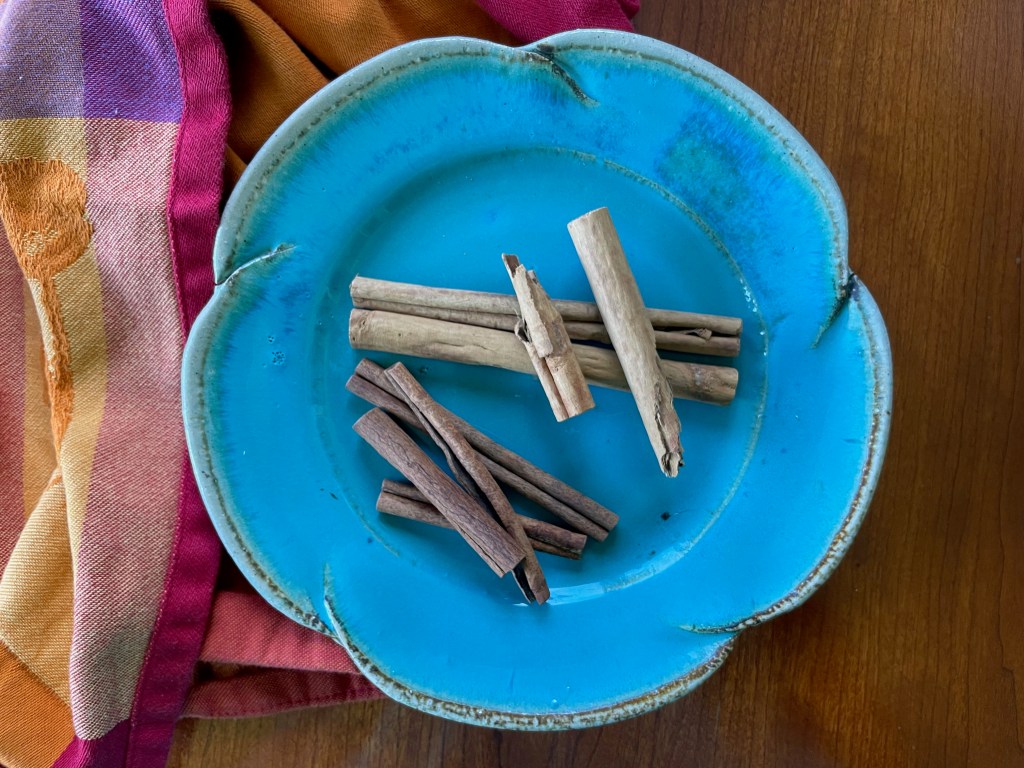
This is an excerpt from the article Cinnamon, More than One Spice by Brighid Doherty featured in the Autumn edition of Botanical Anthology. A plant lover’s dream, it is a seasonal, plant centered quarterly publication bringing you over 50 articles from 49 contributors to incorporate herbs in your apothecary, kitchen, foraging and gardening, crafts, and celebrations.
To learn more about the similarities and differences between the two types of cinnamon plus their medicinal qualities check out our autumn edition. This herbal magazine, featuring remedies and recipes with medicinal plants for budding herbalists, can be purchased as a digital version here and as a printed version here.
Photo by Brighid Doherty
Breathe Easy Spiced Milk
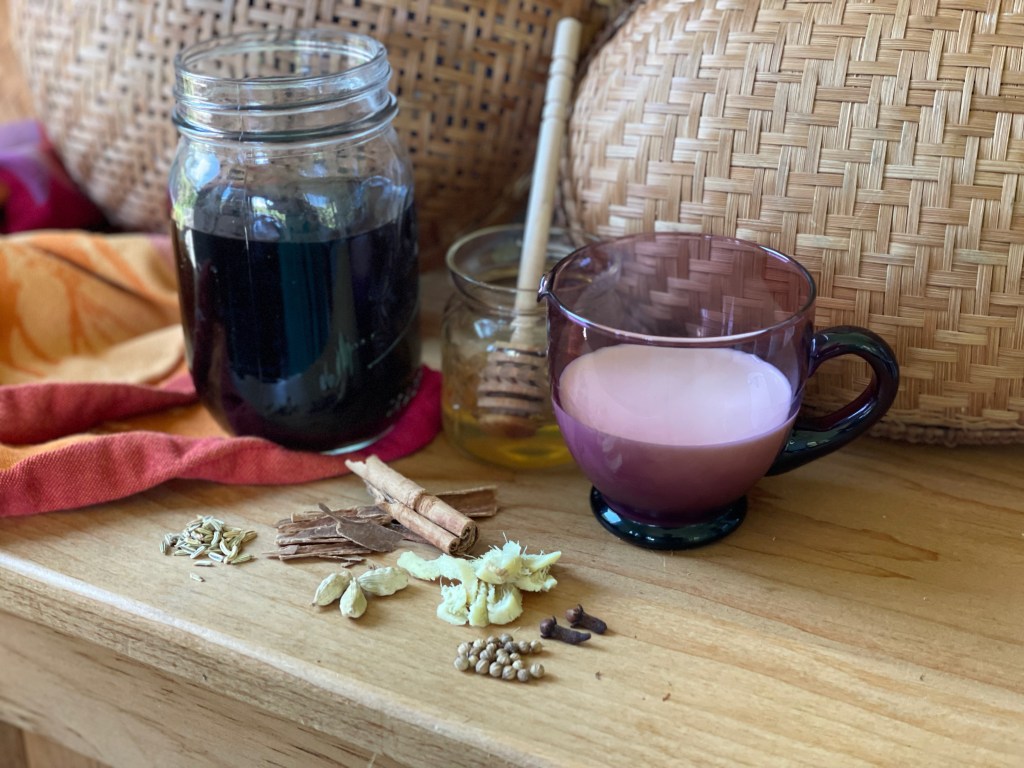
This infusion is a nourishing combination of mullein, cinnamon, milk and honey that supports lung health. Whether the lungs have been exposed to excessive smoke or air pollution or experience chronic asthma, allergies, bronchitis or coughs, this remedy will help them function better. All of the ingredients soothe and nourish lung tissue. Mullein is a classic lung tonic herb. Cinnamon is warming, soothing and antimicrobial. Milk soothes lung tissue and provides important minerals allowing them to be calm. Honey sweetens and adds anti-microbial and soothing properties to the beverage.
Photo by Brighid Doherty
Materials
½ oz mullein leaves
2 c water, boiling hot
2 tbsp cinnamon chips or 2 quills
1-2 teaspoon each of cloves, cardamom, ginger, fennel seeds, optional
2 c organic whole milk or half and half
1 tbsp or more honey
1 quart mason jar and lid
Unbleached coffee filter paper and ceramic drip cup or fine mesh strainer
Small sauce pot
Method
Add mullein and boiling water to a quart mason jar and cover with a tight lid. Steep for 4-8 hours.
Strain the infusion into a small sauce pot. Add the milk, cinnamon and other desired spices. Simmer gently for 20-40 minutes.
Strain out the cinnamon and spices. Sweeten with honey to your preference. Pour into the quart jar to store.
Drink at least one cup per day. Enjoy warm or cold.
Store mullein infusion in the fridge for up to 1 week. Once the milk has been added it should be consumed within three days.
Notes
Mullein leaves have fine hairs that have the potential to irritate the throat when consumed. To avoid the hairs, mullein infusion is best strained through a fine mesh or unbleached coffee filter.
Premixed chai blends can be used instead of using cinnamon alone, or you can make your own spice blend.
Photo by Brighid Doherty
Brighid is a mother, gardener, herbalist, educator, podcaster, and author living on a bridged island in Maine. She is founder of The Solidago Herb School, The Healthy Herb Podcast, and author of Drinkable Healing Herbal Infusions. Connect with her @solidagoherbschool and solidagoherbschool.com










 The Herbology Faerie