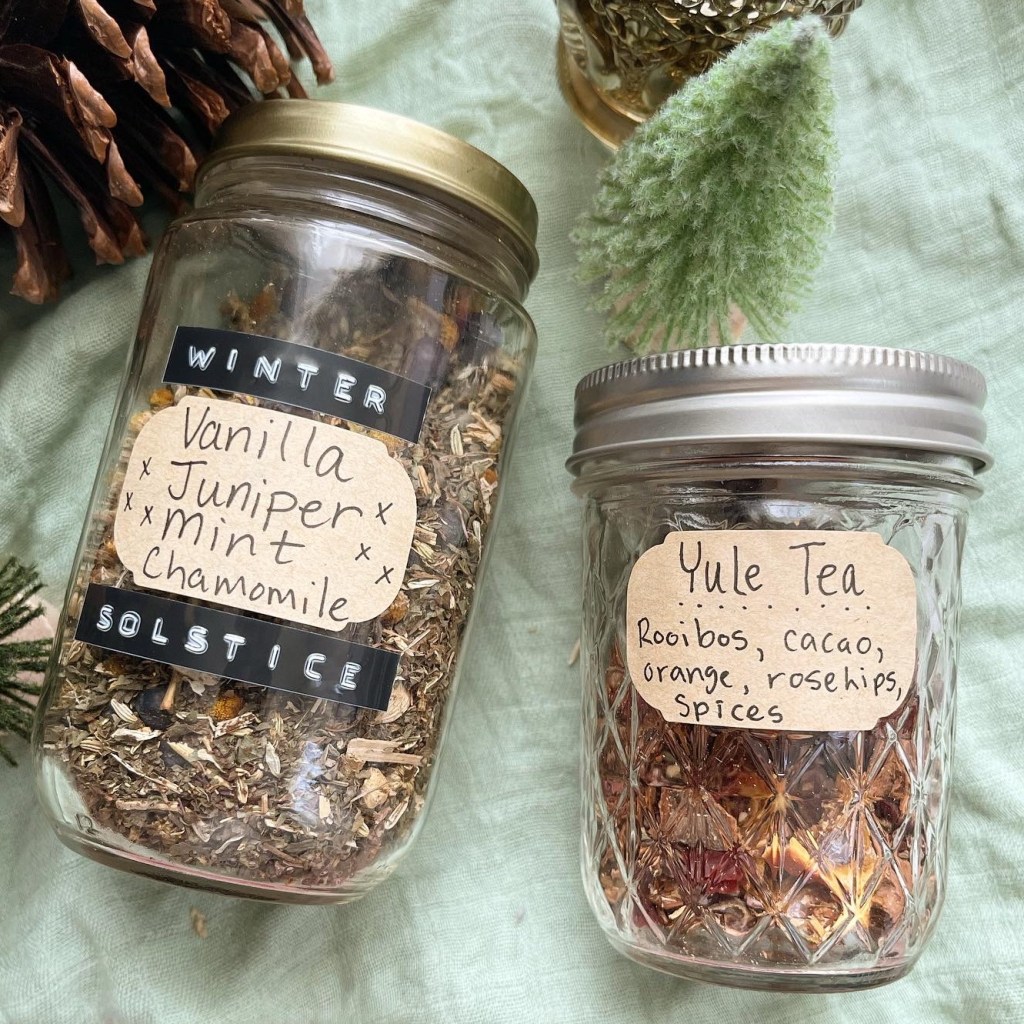
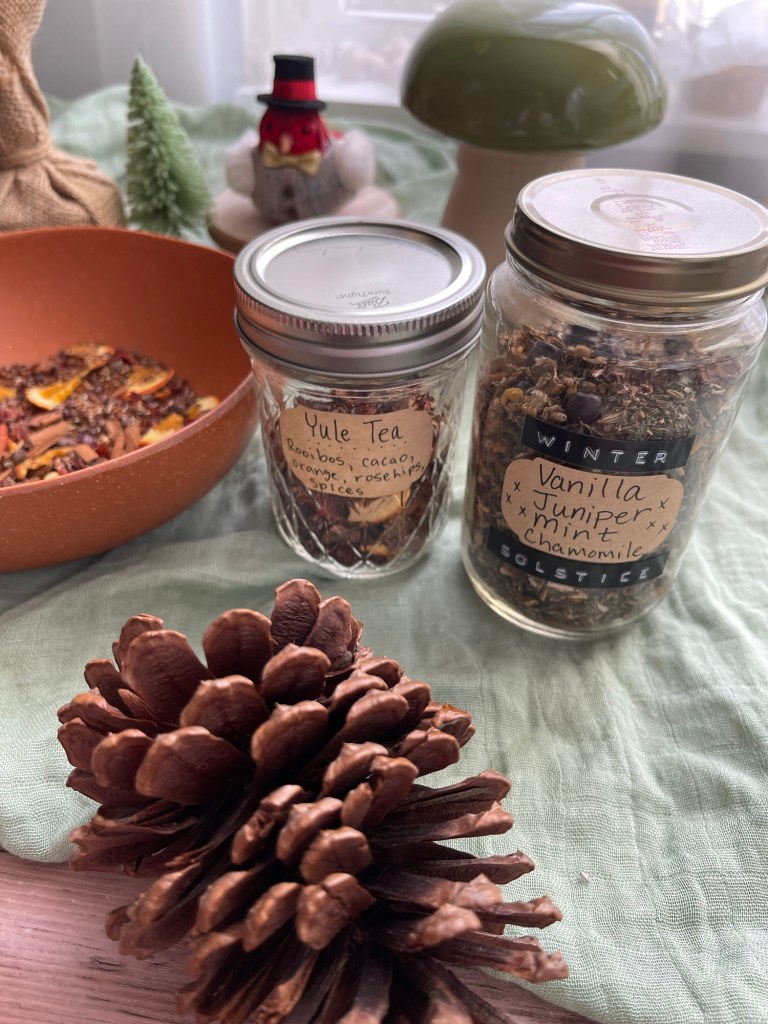
Today I’m sharing two herbal tea blends to enjoy for Yule // the Winter Solstice!
The Yule Tea blend is a sweet and festive spiced sip, full of immune-boosting ingredients that taste lovely. The combo of orange and spices is traditional for the season, in part because of those properties and in part because of associations with protection, divination, prosperity, and luck derived from them.
The Winter Solstice Tea tastes decadent like a holiday cake, but without the heartburn or feeling of overindulgence! With soothing herbs that promote digestion, relieve pain, and aid in circulation, it’s like a sweet, warm hug. And chamomile represents the sun that returns brighter each day after the solstice; juniper is a powerful talisman of winter protection, cleansing, and luck; and the other botanicals have ties to healing, love, and luck, too.
To make a single cup of tea, add 1 tablespoon to a tea strainer, eco- friendly tea bag, or French press. Pour 1 to 1 ½ cups hot water over the tea and steep for 3-5 minutes. Add honey or maple syrup to taste, if desired.
For educational purposes only. Not intended for medical advice. Always consult your physician.
*This post contains affiliate links, which means if you choose to buy something from a link that I share, I will make a small percentage of the sale *at no extra cost to you*.
Butterfly Pea Flower is just so very magical! It is astounding how brilliantly blue the flowers can so easily turn the water in a cup of tea. It feels like a bit of faerie magic, for sure!
When I was doing some research for the faerie + plant folklore book I am writing (!!), I came across a type of Eastern European faerie called Er Tütra, which means Morning Mist: the name for a type of weather spirit/faerie. These Morning Mist folk are only visible to human eyes in the form of their namesake natural phenomenon, but they are hard at work to promote the health and growth of crops—an invaluable service to the fauna and humans of the land.
I made the connection between butterfly pea flower and these Morning Mist faeries because of the folklore surrounding this lovely plant. There are strong ties between butterfly pea flower in Southeast Asian cultures and motherhood and divine feminine symbolism, with a distinct focus on protection and mothering. The Er Tütra certainly perform this caretaking role for the land and crops. What’s more, there are very interesting studies on the use of butterfly pea flower in natural insecticides for crops! Yet another cool connection.
Here is the recipe for the Butterfly Pea Faerie tea! Embody the springtime Morning Mist with this tea blend and perhaps offer some to the Er Tütra for their aid in your spring garden.
To make a single cup of tea, add 1 tablespoon to a tea strainer, eco- friendly tea bag, or French press. Pour 1 to 1 1⁄2 cups hot water over the tea and steep for 3-4 minutes. Add honey or your preferred sweetener to taste, if desired.
To cold-brew this tea blend, add the ingredients to a glass jar or French press, steep overnight in the refrigerator, strain, and serve.
This recipe was shared as a part of Butterfly Pea Flower month at the Plant Wonder Collective! If you’d like to support the work of PWC, please consider joining our Study Circle on Patreon for exclusive recipes, articles, digital downloads and printables for the plant of the month, including this graphic available for print as an apothecary jar sticker. We appreciate you being on this learning journey with us!
For educational purposes only. Not intended for medical advice. Always consult your physician.
*This post contains affiliate links, which means if you choose to buy something from a link that I share, I will make a small percentage of the sale *at no extra cost to you*.
This article appears in the Winter 2022 edition of Botanical Anthology. You can purchase a digital copy HERE or a print copy HERE.
Along with the joys winter brings, it unfortunately also carries increased risk of illness in its wake. Between extra time spent indoors during colder weather and the season’s gatherings and festivities, exposure to many types of illnesses sees a dramatic uptick. To that end, immune support becomes a constant refrain.
Herbal allies can be indispensable when it comes to this winter barrage of germs. But what does “herbal immune boosting” mean? It is a many-pronged approach to keeping your body functioning optimally so that you might avoid some illnesses altogether, or at least lessen their severity. Different types of herbs work together synergistically to aid with this never-ending task.
Adaptogens Fatigue, burnout, and chronic stress are common problems that weaken the immune system and its ability to fend off illness. Adaptogenic herbs help restore balance and protect the body’s systems and processes to counter these effects, the immune system being an important beneficiary. Tulsi, astragalus, reishi and chaga mushrooms and licorice root are just a few examples of adaptogens.
Nervines Stress and insomnia deplete the body and create the perfect breeding ground for germs. Luckily, nervine herbs help combat both of these issues, and many are gentle and safe for everyday use for most individuals. As an added bonus, some nervines have antimicrobial properties, too. Gentle nervine herbs include chamomile, lavender, lemon balm, tulsi, rosemary, linden, hawthorn, and passionflower.
Diaphoretics Diaphoretic herbs are warming and promote circulation. Once sick, these herbs go on to help sweat out a fever and offer respiratory relief. These include yarrow, elderflower and berry, chamomile, ginger, catnip, cayenne, garlic, and linden.
Aromatics Aromatic herbs don’t just taste great—they provide important immune boosting actions, too. Most aid digestion, while also offering strong antimicrobial support. These germ-killers include ginger, cardamom, cinnamon, cloves, anise, allspice, rosemary, and fennel.
Antioxidants Antioxidants like vitamin C aid immunity by supporting and stimulating antimicrobial actions on a cellular level as well as protecting body tissues from damage. Antioxidant herbs that provide much-needed immune boosting include rooibos, rose hips, hibiscus, elderberry, orange peel, and raspberry leaves.
Alteratives Alterative herbs aid in detoxifying your body by supporting the organs and systems that handle this important task. You need your liver, kidneys, and lymphatic system in tip-top shape to fight off illness! This category of herbs includes echinacea, calendula, dandelion root, burdock root, and nettles.
There are countless combinations one can work with to create an immune-boosting herbal recipe. To make things a little less daunting, here is a simple tea as a starting point. It features elderberry, a tried-and- true immunity aid, but also rooibos, an oft-overlooked antioxidant powerhouse. There is a bit here from each of the above categories, and plenty to tempt the taste buds, as well.
Blend this combination of herbs as the recipe states, or use it as a jumping-off point to inspire your own immune supporting formulation!
Method Mix all ingredients except orange in a bowl. Transfer to an airtight container.
To make a single cup of tea, add 1 tablespoon to a tea strainer, eco-friendly tea bag, or French press. Pour about 1 1⁄2 cups hot water over the tea and steep for 5 to 10 minutes. Add fresh orange zest or orange slice and honey to taste, if desired.
Notes This recipe yields approximately 10 servings of tea. If making a small batch, measure the parts in teaspoons—it should yield about 2 servings of tea.
For educational purposes only. Not intended for medical advice. Always consult your physician.
*This post contains affiliate links, which means if you choose to buy something from a link that I share, I will make a small percentage of the sale *at no extra cost to you*.
Aside from chai, another beverage that I associate with autumn and winter is spiced or mulled wine. The warm, soothing-yet-spirited drink is rich with digestive, warming, and immune-supporting spices. Not to mention how festive and rooted it feels to share this deep, tart ruby liquid with others at a gathering in the colder months.
But! I very rarely imbibe actual spiced wine. Instead, I mix up a similar potion replacing the wine element with extremely beneficial harvest berries and botanicals. They add the same vibrant garnet color, along with nutritional and healing properties, without the alcohol content. An herbal substitute for mulled wine is also quicker and more convenient when you want this type of pick-me-up (any time of day!) and it can be shared with anyone.
You can make your own preferred version of spiced “wine” tea with various ingredients and methods! I’ll share my recipe with you here so you can either use it yourself, or use it as a starting point to concoct your own recipe.
Spiced “Wine” Tea
Rosehips: These tasty red jewels are ready for harvest in October in many locations. You can use fresh or dried (I always have dried rosehips on hand). They add a tart cherry type of flavor, vitamin C, and minerals that aid in heart health, circulation, pain relief, cholesterol and blood pressure health, and even pain.
Elderberries: Dried elderberries impart a deep berry flavor and amazing immune-boosting benefits. Aside from their antiviral properties, elderberries also have anti-inflammatory benefits. I am always conscious to be moderate with the amount of elderberries included, in case of possible digestive discomfort. (I’ve never experienced this side effect myself, but I’ve read that it can happen so I use caution.)
Hawthorn berries: Hawthorn berries add nearly magical benefits of not only boosting heart health in a physical sense, but also soothing and strengthening the emotional heart and aiding with anxiety.
Hibiscus: This is a go-to base ingredient in fruity, berry-flavored teas for me. Hibiscus is an excellent heart ally and gives the tea a full-bodied, cranberry-ish, and even wine-ish taste.
Orange peel, dried or fresh: Obviously vitamin C is a big part of spiced wine. But so is rich, strong flavor! Orange in some form is almost essential to this type of brew.
Spices – cloves, cinnamon, allspice, ginger: You can’t have spiced wine without your warming, grounding, immune-boosting spices! These add taste, physical and mental health benefits, warming cozy comfort, and synergy between ingredients. Of course, you can get creative and use your own favorite combination of mulling spices!
Optional – rooibos: Rooibos is an herbal ally I adore and use often to fill out and add body to teas while providing wonderful benefits. (See my rooibos profile post for more on this herb!)
You can play around with your favorite berries (even adding fresh or dried blackberries or cherries!), spices, flavorings, and even splash in apple cider for a fruity kick or ginger ale for a fizzy twist. It’s up to you how you concoct your festive, warming brew. Then enjoy it all autumn and winter on quiet afternoons or cozy family gatherings! Or take a thermos of it on your outdoor autumn adventures!
What additional or different ingredients are you going to try in your spiced “wine” tea? I’d love to hear so I can try them, too!
Since tea is my preferred vehicle for herbalism and ritual, I thought today I’d touch on my favorite type of tea during autumn: CHAI. It is full of benefits befitting the season: digestive, circulation-stimulating, warming, anti-inflammatory, immunity-boosting, and so many more. And chai is extremely grounding, protective, and COZY.
So I’m going to touch on a few of my favorite chai botanicals, digging in with a bit of research and preparation ideas.
Origins
I of course have to begin with the origins of chai. Even if what we think of as the “traditional fall spices” that are included in chai go way back, neither the spices nor chai have Western origins. Masala chai hails from India, a centuries-old traditional and health tonic drink. While recipes can vary widely, the main basis includes black tea and warming spices (the words masala chai literally mean “spiced tea”). The Western world recognized the benefits and amazing taste of chai spices long ago and has adopted and adapted them in many ways (which connects to a long and complicated history of colonialism we won’t get into here today). But regardless, chai and its related spices come to us thanks to their ancient origins in India.
There are so many non-traditional and revised spins on chai out there, either to incorporate different flavor profiles or to address varying health concerns. Milk and black pepper are common and traditional ingredients which helps to make the nutrients more bioavailable, but I sometimes enjoy chai without milk or with plant milk. Some versions include berries, fruits, or different herb or tea bases. My favorite base ingredient isn’t even tea—it’s rooibos! But in general, the essential components combine to aid digestion, immunity, and more, making chai a boon to holistic health.
Components
I’ve recently done some research on the specific benefits of some of my favorite chai spices! Read on for a brief run-through of each:
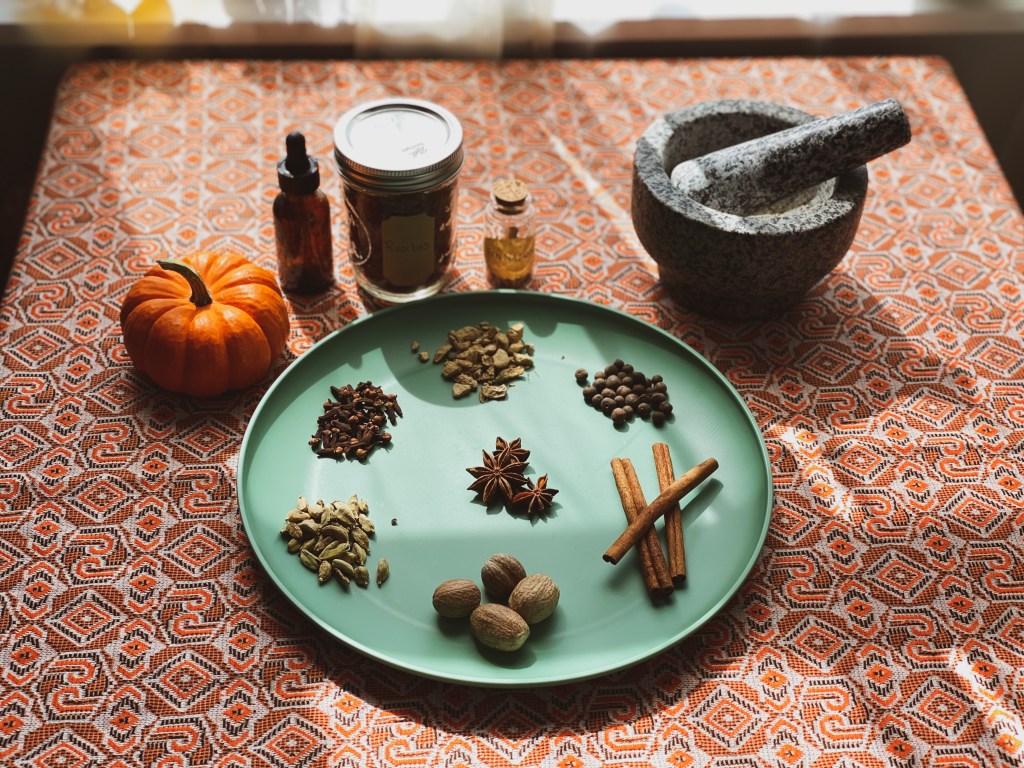
Cinnamon – This warming, drying, pungent bark has anti-microbial, analgesic, antioxidant, and many other qualities and helps with digestion, cramping, regulating blood sugar, soothing sore throats and colds, and more. Folk tradition also holds to other benefits including protection, purification, energizing, healing, love, and prosperity.
Ginger – Another warming, drying botanical. Ginger is a healing powerhouse! It aids in everything from circulation, inflammation, digestion, pain, cramps, cold and flu, sore throats, nausea, heart health, energy, and many more. It is an energizing and synergy-boosting herb, in both health and folk tradition aspects.
Nutmeg – I had no idea of this until recently, but nutmeg is great for stress, anxiety, and insomnia. This pungent, warming, drying spice is also antispasmodic and anti-microbial, along with many other properties. It is also believed to aid in happiness, love, overall health, and psychic abilities, if that’s your thing.
Cloves – Cloves are great for your teeth and breath! They’re also known to be antiviral, antibacterial, anti-fungal, anti-inflammatory, antispasmodic, analgesic, anesthetic, and expectorant. Whew! These fragrant little powerhouses aid digestion, colds and flu, arthritis, pain, headaches, and spasms. Cloves are thought to offer protection, purification, general healing, and mental aid.
Other common chai ingredients include cardamom, allspice, anise, fennel, black tea, and peppercorns. Flavor or health variations can include turmeric, rose, mint, fruit like apple or orange, astragalus, echinacea, reishi…it goes on and on. Don’t be afraid to put your own spin on your chai recipes!
Preparation
Due to the hardy nature of the seeds, roots, barks, and such that make up chai, it’s often suggested to make a decoction with the herbs before combining with the tea component, rather than an infusion. A decoction is simple, though: just boil the ingredients on the stovetop for an extended period (it depends on how concentrated you’re going for, but it can be as little as 15-20 minutes), strain, and add to your brewed black or rooibos tea (if you’re not making a strictly herbal chai). Then top with plant or dairy milk if you like! A decoction tends to turn out more concentrated than a simple tea infusion, so that’s why you often add additional liquid to the mix after decocting. How much liquid you add depends on how long you simmer your decoction.
All that said, though, I often don’t have time to make a decoction and need a quicker cuppa! When this is the case, I grind the spices well with my mortar and pestle (you can use a coffee grinder, too) and steep for longer than I normally would with a simple tea infusion—as much as 10 or 12 minutes.
I could go on and on about chai—I feel like I already have in this post—but I think I’ll stop here for now! Are you a fan of chai? What ingredients do you like to incorporate? Which of the basic chai components is your favorite?
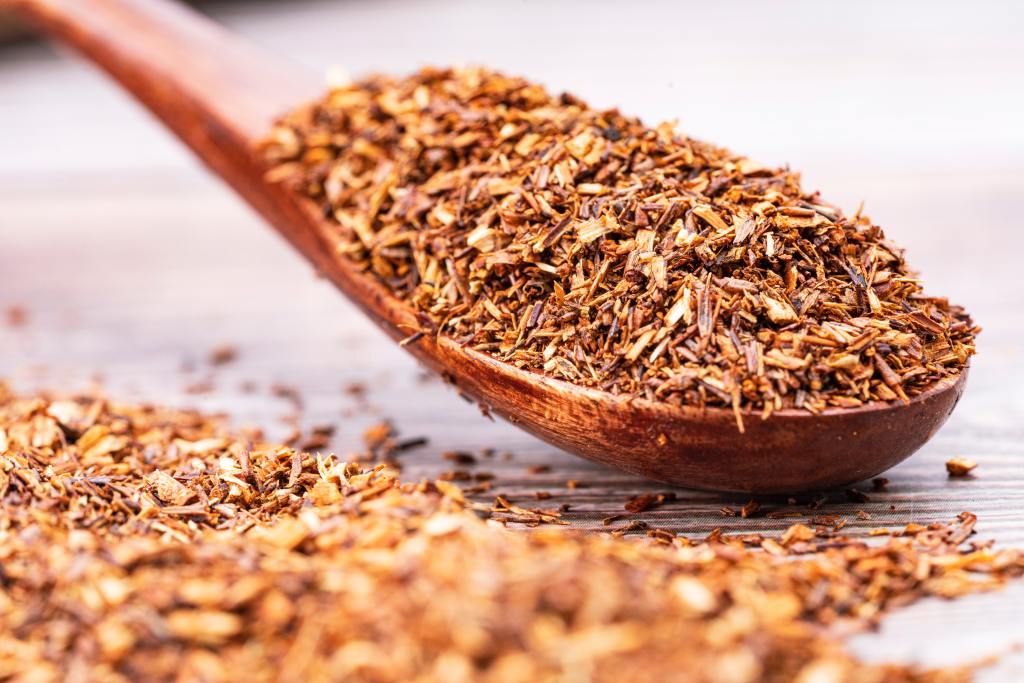
I decided to start this series of herb profile posts with what may be a bit of an unusual choice. Rooibos is very widely consumed in tea form and is probably in some of the decaf tea bags in your kitchen cabinet right now! But it isn’t often high on the list of plants associated with herbalism. Yet, rooibos is one of my absolute favorite herbs, and one I would not like to live without! So, read on to learn more about this cozy and versatile plant.
A Bit of Background:
Rooibos grows mainly in South Africa and is a shrub-like plant. It is prepared much like tea leaves: regular or red rooibos is oxidized or fermented like black tea, whereas green rooibos undergoes a similar process to green tea. Their tastes and benefits are also quite comparable, with the main exception being rooibos is caffeine free and actually contains much higher levels of antioxidants than tea! Also, the taste varies in that rooibos has a bit of a sweet, cinnamon-y tartness that is absent in black tea.
Health Benefits:
Rooibos is purported to carry with it a host of benefits. Full of antioxidants and polyphenols, it is said to be an immune-boosting, inflammation-busting, blood sugar-regulating wonder.
On a personal and anecdotal note, I find both varieties of rooibos to be earthy, grounding, delicious, and cozy! It meets my standards of a highly hygge herb. I love drinking it hot or cold, any time of year.
Recipe Time!
It is hard to go astray blending rooibos with other herbs for tea blends. It is often my go-to base ingredient for anchoring tea blends and giving them a full-bodied, satisfying, cozy flavor. To get you started, here are a few of my favorite simple combinations for rooibos-based teas:
Red rooibos—
Rooibos + chai spices
Rooibos + chamomile + ginger
Rooibos + mint + cacao nibs + fennel
Green rooibos—
Green rooibos + tulsi + dandelion root + ginger
Green rooibos + dried fruit + chamomile
Green rooibos + elderflower + ginger + calendula
Are you a fan of rooibos? Or if you’ve never tried it, are you ready to now?




 The Herbology Faerie