July’s Thunder Moon captures the essence of summer’s balmy, heady heat. Afternoon storms during this time help balance out the strength of the sun but also pack a punch with their turbulent energy. The sun in Cancer contributes a further watery element of heightened emotion and intuition; lightning can strike in so many ways.
Add to it the presiding Capricorn sign of the full moon this cycle, and you introduce an element of stabilization and determination. This synergy can be a powerful tool, offering a ripe energy for soul searching, brave and honest internal reflection and truth seeking.
Nettle lends strength to this endeavor and rose softens the heart to create openness. Cinnamon provides luck, and birch offers protection.
Thunder Moon in Capricorn Tea Materials
1 tbsp nettle
1 tbsp rose
½ tsp cinnamon bark
¼ tsp birch bark
Method
To make a single cup of tea, add 1 tablespoon to a tea strainer, eco-friendly tea bag, or French press. Pour 1 to 1 1⁄2 cups hot water over the tea and steep for about 5 minutes. Add sweetener of choice to taste, if desired.
Notes
To cold-brew, add the ingredients (1 tablespoon of tea blend per 8 ounces of water) to a glass jar or French press, steep overnight in the refrigerator (or under the moon), strain, and serve.
We are firmly in the heart of Aries season, so I am sharing my simple tea recipe meant to help you ground into this energy! My daughter is a very fiery Aries herself so I am all too familiar with the spirit of this sign.
Associated with the Emperor in tarot; the root and solar plexus chakras; yang energy; red, pink, yellow, and white; and diamond, carnelian, citrine, and fire opal.
To make a single cup of tea, add 1 tablespoon to a tea strainer, eco- friendly tea bag, or French press. Pour 1 to 1 1⁄2 cups hot water over the tea and steep for 3-4 minutes. Add honey or other sweetener, if desired.
———
For educational purposes only. Not intended for medical advice. Always consult your physician.
*This post contains affiliate links, which means if you choose to buy something from a link that I share, I will make a small percentage of the sale *at no extra cost to you*.
As a lover of all things autumn, I love branching out and learning about how different cultures mark my favorite season! I have recently learned a bit about the Mid-Autumn Festival in Chinese culture, which takes place around mid-September to early October and centers around the timing of what we know as the Harvest Moon.
During this autumn equinox festival, celebrations focus on the harvest—with gratitude and family gatherings; the moon; Chang’e (the goddess of the moon); and her companion, a white rabbit who pounds herbs in his mortar and pestle to make immortality elixir. Other symbols and parts of the celebration include lanterns, mooncakes, cassia wine, and burning incense as an offering to Chang’e.
This festival and the lore surrounding Chang’e and the Moon Rabbit are a wonderful Craftbrunch theme! There are lovely picture books on this folklore to share with children, you can decorate lanterns and make moon cakes, and more.
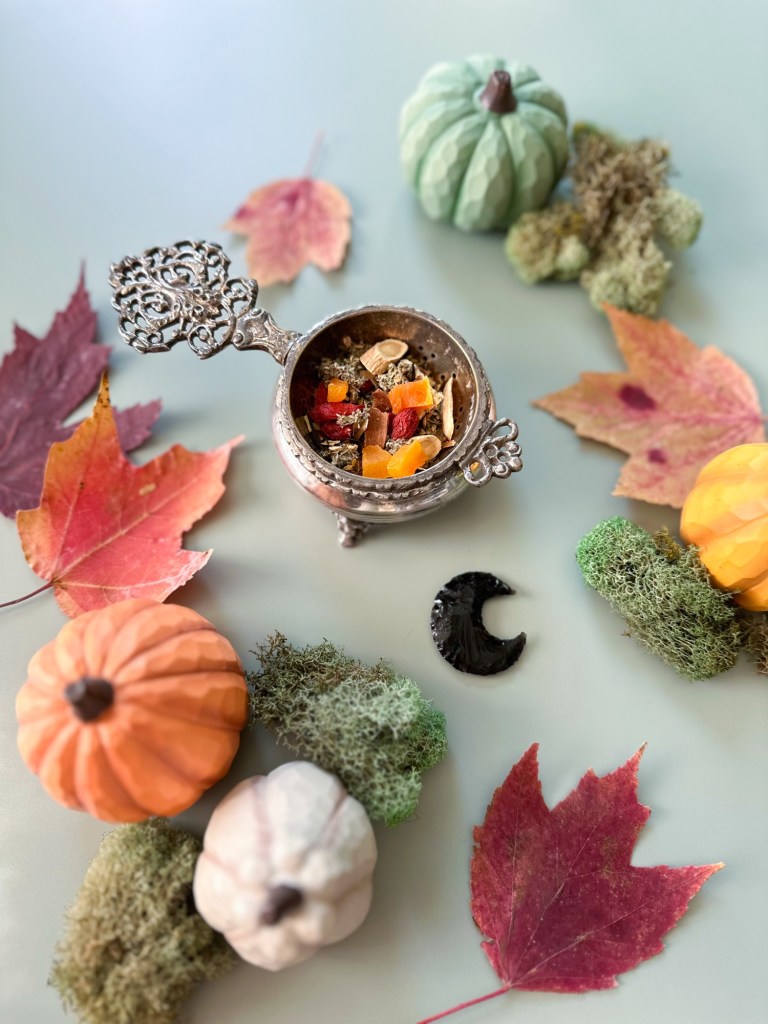
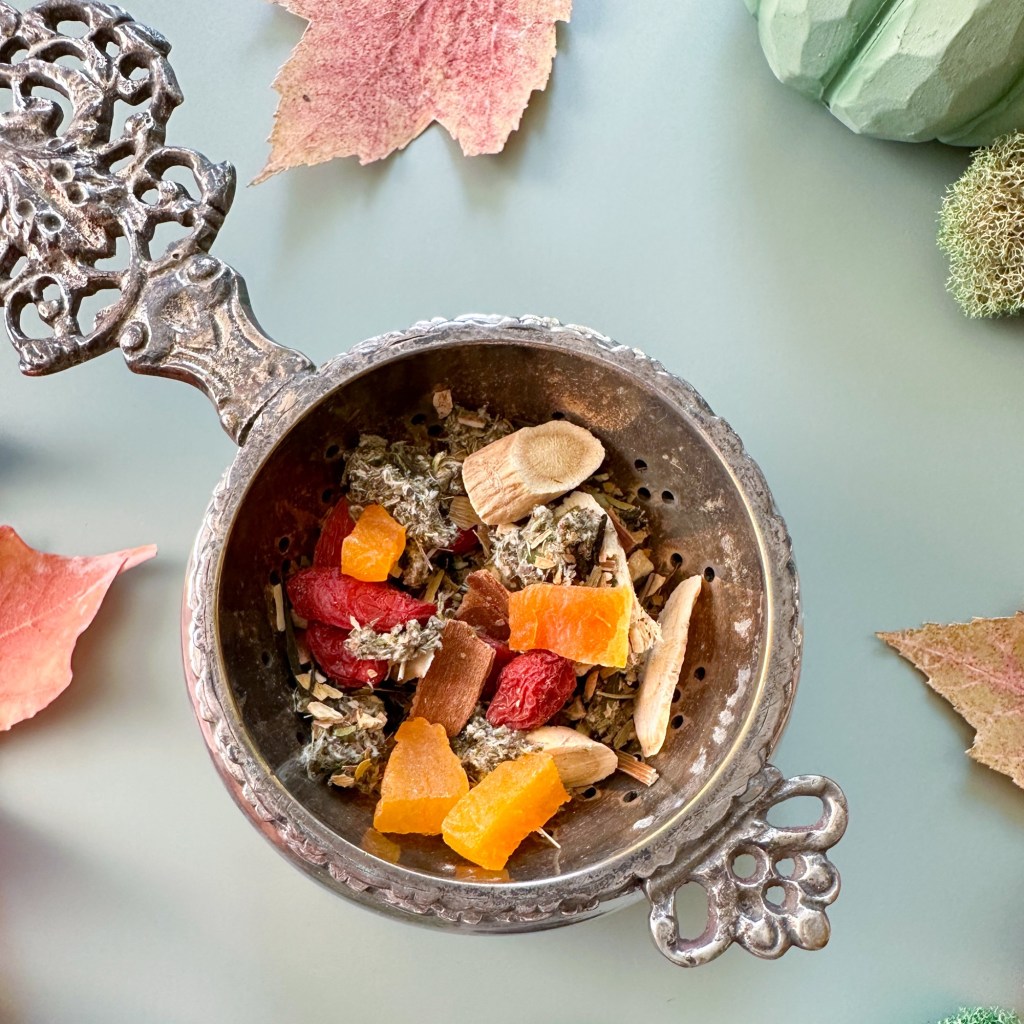
My contribution to the #autumnnaturemagic #Craftbrunch celebration I’ve joined on Instagram is a tea blend based on the idea of the immortality elixir that the Moon Rabbit makes! Most of the ingredients are longevity herbs in TCM (Traditional Chinese Medicine), and the cassia cinnamon and dried apricots are present to represent cassia wine, which I’ve not tried but I read it tastes like peaches or apricots!
(This tea is safe for adults and kids alike, but if you prefer you can substitute decaf green tea or leave it out altogether.)
Here is the recipe! It should be enough for a few cups of tea but you can increase accordingly for the number of people you’re serving.
Brew for 3-4 minutes with just-boiled water; you can brew longer if you omit the green tea, or perhaps put the green tea in a separate tea strainer and remove it before the other ingredients.
Garnish with cinnamon sticks and dried apricots if you like! Sip this tea before a lantern-lit autumn hike under the moonlight!
For educational purposes only. Not intended for medical advice. Always consult your physician.
*This post contains affiliate links, which means if you choose to buy something from a link that I share, I will make a small percentage of the sale *at no extra cost to you*.
Butterfly Pea Flower is just so very magical! It is astounding how brilliantly blue the flowers can so easily turn the water in a cup of tea. It feels like a bit of faerie magic, for sure!
When I was doing some research for the faerie + plant folklore book I am writing (!!), I came across a type of Eastern European faerie called Er Tütra, which means Morning Mist: the name for a type of weather spirit/faerie. These Morning Mist folk are only visible to human eyes in the form of their namesake natural phenomenon, but they are hard at work to promote the health and growth of crops—an invaluable service to the fauna and humans of the land.
I made the connection between butterfly pea flower and these Morning Mist faeries because of the folklore surrounding this lovely plant. There are strong ties between butterfly pea flower in Southeast Asian cultures and motherhood and divine feminine symbolism, with a distinct focus on protection and mothering. The Er Tütra certainly perform this caretaking role for the land and crops. What’s more, there are very interesting studies on the use of butterfly pea flower in natural insecticides for crops! Yet another cool connection.
Here is the recipe for the Butterfly Pea Faerie tea! Embody the springtime Morning Mist with this tea blend and perhaps offer some to the Er Tütra for their aid in your spring garden.
To make a single cup of tea, add 1 tablespoon to a tea strainer, eco- friendly tea bag, or French press. Pour 1 to 1 1⁄2 cups hot water over the tea and steep for 3-4 minutes. Add honey or your preferred sweetener to taste, if desired.
To cold-brew this tea blend, add the ingredients to a glass jar or French press, steep overnight in the refrigerator, strain, and serve.
This recipe was shared as a part of Butterfly Pea Flower month at the Plant Wonder Collective! If you’d like to support the work of PWC, please consider joining our Study Circle on Patreon for exclusive recipes, articles, digital downloads and printables for the plant of the month, including this graphic available for print as an apothecary jar sticker. We appreciate you being on this learning journey with us!
For educational purposes only. Not intended for medical advice. Always consult your physician.
*This post contains affiliate links, which means if you choose to buy something from a link that I share, I will make a small percentage of the sale *at no extra cost to you*.
This time of year, the quest for protection from illness lines right up nicely with the folk idea of protection from negative energy, unfriendly spirits, and the like. Whether you are seeking one, the other, or both forms of protection, there is a simple and cozy way to invoke that sentiment, freshen your house, and refresh the energies of your home: herbal carpet powder!
Did you know that strewing herbs on the floor goes way, way back? From the ancient Romans to the Middle Ages, and even up to about the 18th century herbs were strewn over the floor with rushes and straw to release a pleasant aroma and repel unwanted pests. Some households swept them up each day and replaced them with fresh herbs, while others left them for a longer interval. Rosemary, lavender, chamomile, hyssop, sage, and marjoram were among the many herbs commonly used for this purpose. Modern carpet / vacuum powders aren’t left on the floor for very long—you let them sit for 15-30 minutes before vacuuming back up—but they certainly hearken back to this practice.
While you can easily buy ready-made carpet powders at the grocery store, it is incredibly easy and fun to make your own and stir a bit of intention and personalization into the mix. If you have pets and small children, it would be best to leave out any essential oils or only use the gentlest ones you’re already used to using around your small people and creatures. Otherwise, you can experiment and create your own blend that combines the scents and intentions you prefer!
For this recipe, I’ve used rosemary for protection and remembrance (for the upcoming sabbat of Samhain); allspice and cinnamon for prosperity, luck, and healing; and orange for lovely, cozy, and uplifting vibes. And all these ingredients have antibacterial and antimicrobial properties!
Mix ingredients well in a bowl and transfer to a glass jar. I used an empty Himalayan pink salt shaker jar because of the convenient shaker lid! Sprinkle on your carpet (and even wood or tile floors if you like), allow to sit for 15-30 minutes, and then vacuum up thoroughly. You can also sprinkle a bit of this powder around doorways and windowsills to repel insects (and maybe more? 👻).
For educational purposes only. Not intended for medical advice. Always consult your physician.
*This post contains affiliate links, which means if you choose to buy something from a link that I share, I will make a small percentage of the sale *at no extra cost to you*.
Long time, no write! I have been away from this space because life has been very busy lately…including editing a novel and a magazine, writing articles and taking photos for various publications, and some unexpected life bits mixed in along the way. So, I am more than ready to return today with a calming tea featuring the Plant Wonder Collective’s herb of the month for June: mugwort!
Mugwort is sacred to the goddess Artemis (Greek) / Diana (Roman): the goddess of the hunt, the moon, fertility, wild places, maidens, and magic. (In fact, the Latin name of this plant is Artemisia vulgaris.) I decided it would be very fitting to create a tea blend in Artemis / Diana’s honor that focuses on mugwort but also includes other herbs specifically associated with her. Here are the ingredients–
Mugwort: dream work, clairvoyance, magic, visions; used medicinally for anxiety, menstruation & uterine health, digestion, pain relief
(California) Poppy: dream work, moon magic, love, visions, luck; used medicinally for sleep, anxiety, menstrual cramps, headaches, pain relief
Lemon Balm: clarity, comfort, emotional healing, love, focus, memory; used medicinally for anxiety, colds, fever, sleep, depression
Pine: fertility, grounding, spirituality, strength, wisdom, peace; used medicinally for nutrients, inflammation, cold and flu, skin applications
Nutmeg: awareness, clairvoyance, divination, dream work, memory, the mind; used medicinally for stress, sleep, digestion
Mugwort and these other accompanying herbs make an excellent tea for sleep, and perhaps dream work. Here is the simple recipe for brewing a cup!
1 part mugwort
½ part California poppy
1 part lemon balm
½ part pine needles
¼ part freshly grated nutmeg
Brew with hot water for 4-5 minutes, and sweeten with honey or maple syrup if you’d like.
Have you worked with mugwort before? What is your favorite way to work with mugwort?
“The odor of burning juniper is the sweetest fragrance on the face of the earth, in my honest judgment; I doubt if all the smoking censers of Dante’s paradise could equal it.”
—Edward Abbey
Happy (belated) New Year!
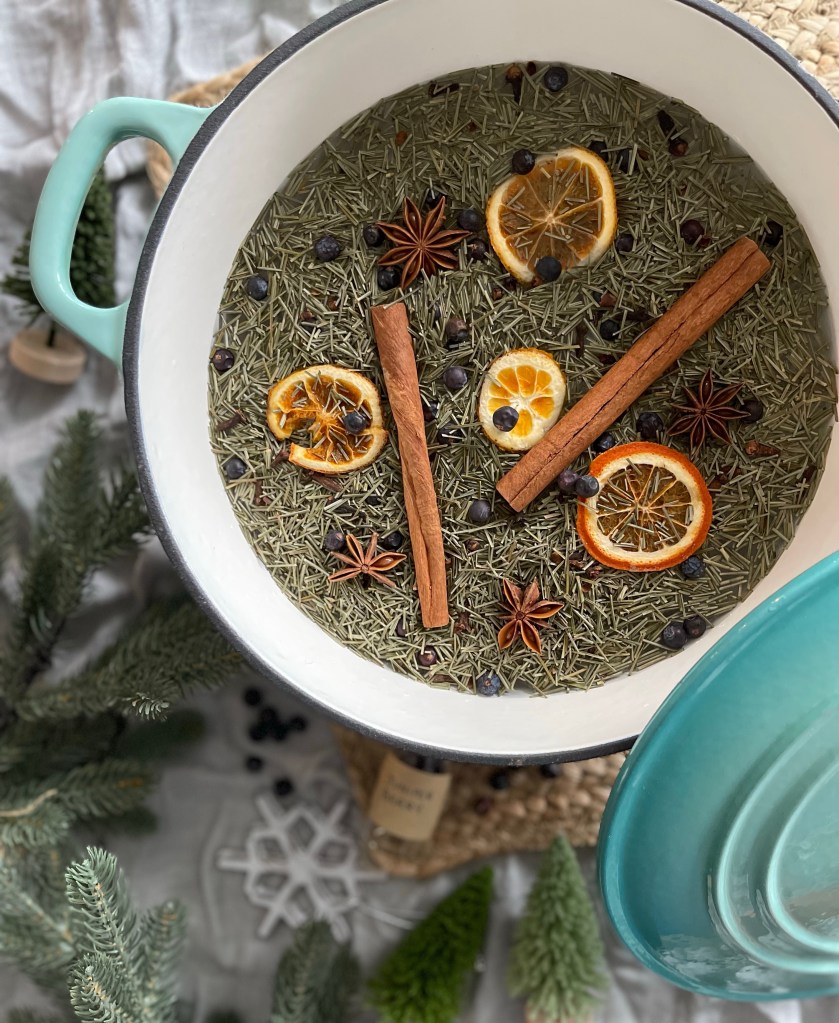
Today, my wildlings are back at school, and I am celebrating the beginning of the new year with a simmer pot containing dried juniper berries, pine needles, orange slices, cinnamon, rosemary, and cloves. (You can read more about it on my Instagram post HERE.)
Did you know I wrote an article all about juniper folklore for the recent Winter Botanical Anthology? I’m case you missed it, and because juniper is such a lovely botanical for this time of year, I thought I’d share that article with you here today!
Though it’s perhaps not the first evergreen one thinks of in connection to winter, juniper has a long and storied history that often ties it to the colder parts of the year.
Juniper represents hope and warmth, thriving in overwrought soil where other trees can’t. It is symbolically, elementally, and astrologically associated with fire, ruled by the Sun and closely tied to Mars. Juniper also symbolizes eternal life.
The juniper tree’s berry-like cones and twigs provide food for animals, often the only available winter sustenance. They offer culinary and medicinal uses for humans, and there are many ritualistic applications for juniper’s wood and berries, as well. It is quite interesting how juniper’s folk associations mirror its medicinal uses.
The age-old use of juniper medicinally for healing, relieving stagnation, and protection from diseases probably stems in large part from the berries’ diuretic and anti-inflammatory properties. One of the most pleasant ways to administer these medicinal benefits came in the form of gin, the juniper berry liquor that dates back as far as the 11th century, as well as medicinal juniper twig beer.
In accord with these historical medical practices, juniper was—and still is—used in folk practice for protection. For disease, poison, plague, spirits, demons, and especially thievery, juniper has been a potent ward.
Often, smoke and charms are the vehicle by which juniper performs this protective service. Many cultures, including ancient Greeks and Egyptians, used juniper incense in this manner. Various types of protective amulets and charms were made from juniper berries, as well. The trees have even been long used in some places as Yule or Christmas trees or greenery for some added protection.
The Scottish have a long-standing winter tradition. The day after Hogmanay, the celebration of New Year’s eve, women would perform a saining, a smoke cleansing of the entire house with smoldering juniper branches. The aromatic smoke was carried and dispersed throughout the house for blessings, purification, and protection for the coming year; the same was performed through barns and to purify livestock.
Several species of juniper are also native to the Americas, as reflected by juniper’s presence in many indigenous Americans’ traditions and tales. Among those, the Hopi, Navajo, Blackfoot, and Seneca tell legends surrounding the tree or its berries. A Seneca tale involves junipers and other evergreens standing up to old man winter so spring may return.
While winter persists, perhaps juniper is a plant to explore a deeper relationship with. Whether it’s branches in greenery that decorates the home, fragrant incense, or even a sip of gin, inviting juniper in is a way to connect to this plant’s long history.




 The Herbology Faerie