Categories
Botanical Anthology Recipes

Lemon Balm Sugar Cookies

This is an excerpt from the article Lemon Balm Sugar Cookies by Kristine Brown from the Herbal Cookie Tray Vol 2 booklet featured as the bonus for the Winter Vol 3 | Issue 11 | 2024 edition of Botanical Anthology. To learn more about the ingredients and uses of this recipe, check out the entire article in the magazine! Our herbal magazine, featuring remedies, recipes and projects with plants for the winter season, can be purchased as a Digital version: HERE and as a Print version: HERE.


Lemon Balm Sugar Cookies

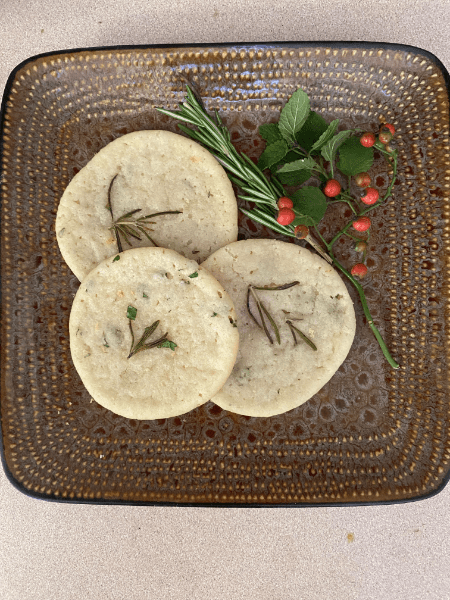
Make delightful sugar cookies that melt-in-your-mouth good! The mild lemon flavor adds a delicate blend of tang that compliments the savory rosemary flavor from the garnish perfectly. They can be prepped a day or two ahead so you can cut and bake when you’re ready.
Materials

2 tbsp lemon balm, minced
1 tsp lemon juice
1 c butter, softened
⅔ c sugar
1 egg
2 ⅓ c all-purpose flour
Sprigs of rosemary for garnish

Method

In a small bowl, combine lemon balm and lemon juice, pressing the mixture with the back of a spoon to blend. 

In a large mixing bowl with a hand mixer, cream butter and sugar until light and fluffy. Beat in the egg and the lemon mixture. Gradually beat in flour and salt. 

Cover and refrigerate 3 hours or until firm enough to roll in wax paper. 

Preheat the oven to 350°F. Place the dough on waxed paper and slice into slices about 1/8″ thick. Press bits of rosemary sprigs into each cookie to look like a pine tree. 

Bake on an ungreased cookie sheet for 8 to 10 minutes. Cookies will brown slightly around edges. 

Notes

  • Yields about 60 cookies. 
  • If you are using dried lemon balm, you will only need about 1 tablespoon.
  • This recipe can be made gluten free by substituting 1:1 gluten free flour blend for the all-purpose flour. 
  • This recipe can be made dairy free by substituting coconut oil or tallow for the butter. 
Kristine Brown, RH (AHG) is the writer and illustrator of the children’s publication Herbal Roots zine, which includes ebooks, online courses, and a membership offering, Herb Club. She is the author of Herbalism at Home, The Homesteader’s Guide to Growing Herbs, and Nature Anatomy Activities for Kids and Nature Anatomy Guided Journal for Kids. Find her online at herbalrootszine.com and on social media @herbalrootszine
Categories
Recipes wheel of the year

Samhain Tea

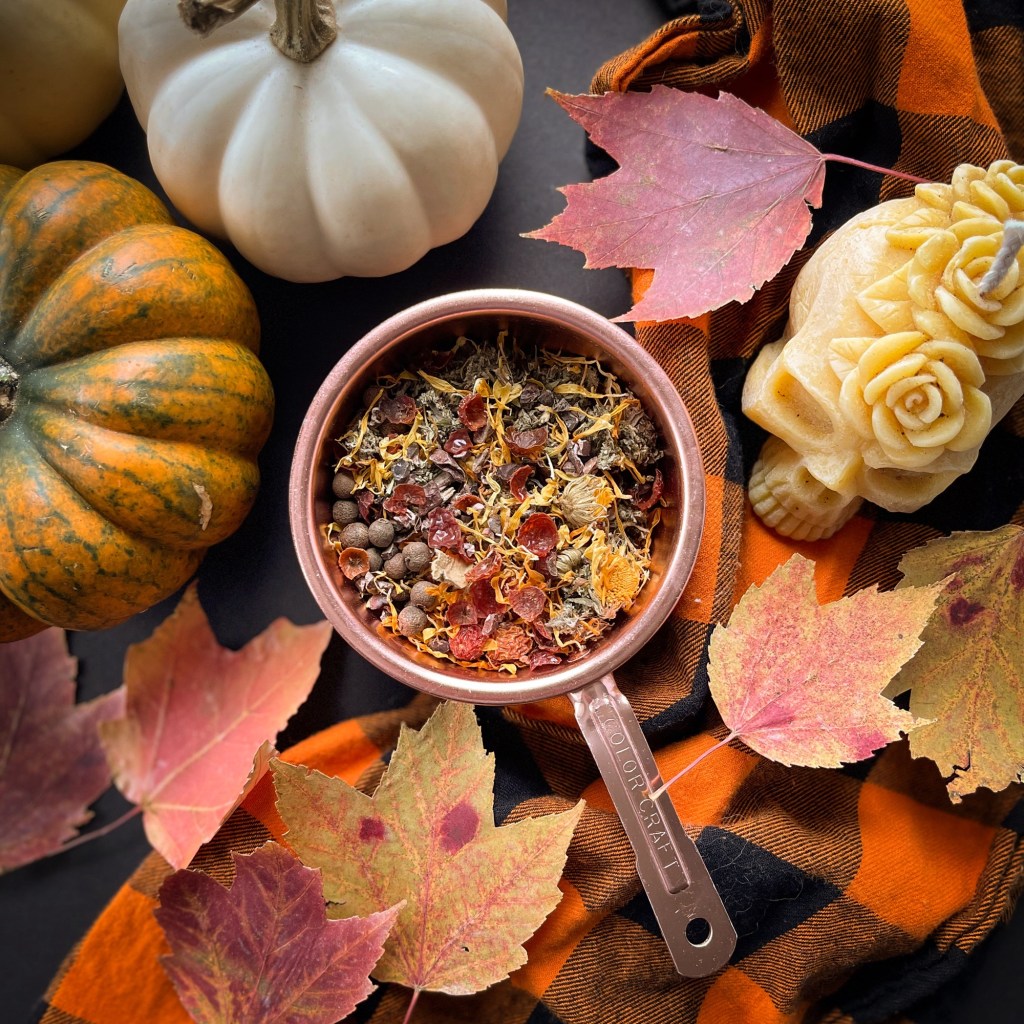
Samhain is one of the most widely-known sabbats, as it is so closely tied up in Halloween. However, the roots of this celebration run a bit deeper. The last harvest festival, Samhain marks a time when the veil between worlds thins and spirits are closer at hand, so death and remembrance are at the forefront. The death of the earth as winter approaches is also represented with this day. Shadow work, ancestor remembrance and communion, and protection are all important at this time.

A really special way I love to celebrate Samhain is to brew up a batch of Samhain Tea to take along trick-or-treating in thermoses. It’s such a simple but special ritual! If you don’t go trick-or-treating, you could take the tea along on a spooky hike, sip while you cozy up around a fire telling scary stories, or while you spend this day / night in some other way: a warm cup of Samhain Tea can bolster your courage and help ground you. 

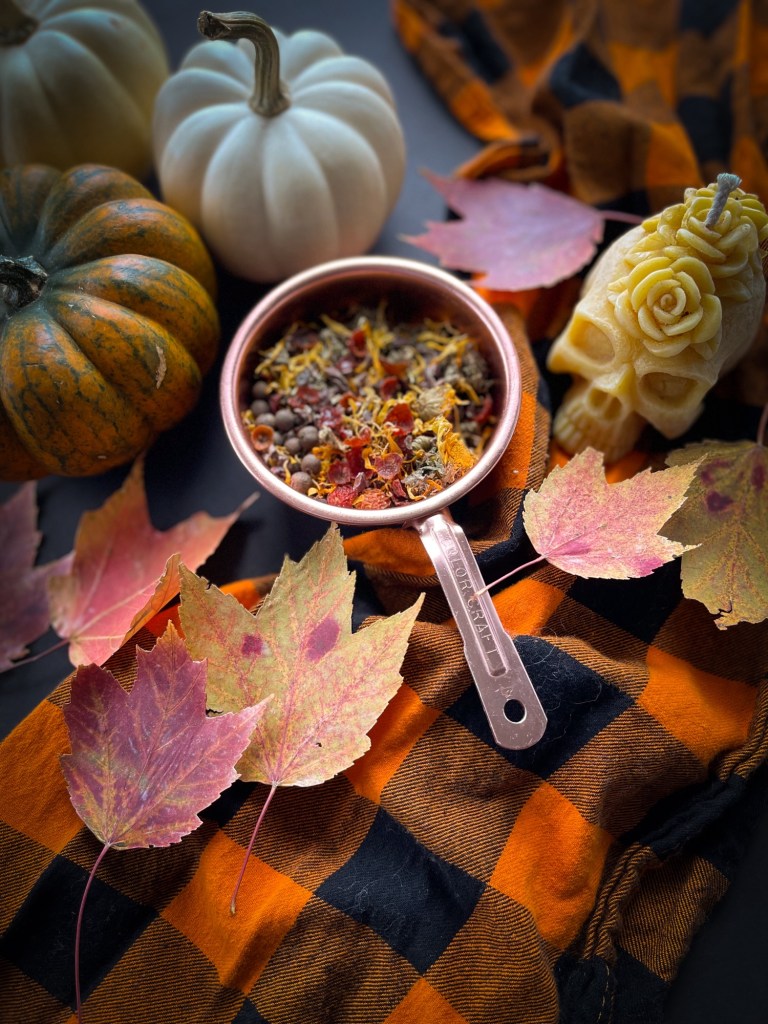
This Samhain tea blend features seasonally appropriate and healthy rose hips, mugwort for dreams, rosemary for remembrance, calendula to honor the departed, cacao for sacredness and offering, and allspice for luck and prosperity. 

Here’s what you need—


Ingredients

1 part cacao nibs 

1 part rose hips

1 part calendula 

1⁄2 part mugwort 

1⁄2 part allspice

1⁄2 part rosemary

Directions

To make a single cup of tea, add 1-2 tablespoons to a tea strainer, eco-friendly tea bag, or French press. Pour 1 to 1 1⁄2 cups hot water over the tea and steep for 4-5 minutes. Add honey or other sweetener, if desired. 


For educational purposes only. Not intended for medical advice. Always consult your physician.

*This post contains affiliate links, which means if you choose to buy something from a link that I share, I will make a small percentage of the sale *at no extra cost to you*.

Categories
plant wonder collective Recipes Tea

Headache Helper Tea

I recently had a friend dealing with recurring tension headaches ask what herbs might be helpful in a tea to offer him some relief. (He is also being treated by his doctor, but needed some additional gentle diy to help relax his frazzled nerves and throbbing head & get him some sleep!) 

Oatstraw immediately came to mind. They’re a wonderfully gentle soother for frayed nerves, burnout, overwhelm, stress, tension—all things that lack of sleep and depletion from migraines and tension headaches can cause. 

In addition to the oatstraw, I added damiana (a headache-easing favorite of mine), calming linden, sleepy passionflower, and cooling peppermint to the batch of tea I made for my friend. He reported back that the tea was very helpful and he got a decent night’s sleep after drinking his first cup!

To make a big batch to keep on hand, choose a larger unit of measure such as a quarter cup or half cup for your parts. For a single mug of tea, choose a small unit of measure – I’d suggest half teaspoons (it will still make a very strong cuppa, or two cups). 

Here is the recipe:


Ingredients

4 parts oatstraw

4 parts damiana

3 parts linden

2 parts passionflower

2 parts peppermint 

Directions

To make a single cup of tea, add 1-2 tablespoons to a tea strainer, eco-friendly tea bag, or French press. Pour 1 to 1 1⁄2 cups hot water over the tea and steep for 4-5 minutes. Add honey or other sweetener, if desired. 


What are your favorite herbal tea ingredients to help combat headaches?


For educational purposes only. Not intended for medical advice. Always consult your physician.

*This post contains affiliate links, which means if you choose to buy something from a link that I share, I will make a small percentage of the sale *at no extra cost to you*.

Categories
Recipes Tea

October: Falling Leaves Moon in Aries + Tea Recipe

Though the Falling Leaves Moon or Hunter’s Moon fell on October 17th this year and has technically passed, the full moon’s energy can still be tapped into. Read on to learn more about this month’s full moon and a corresponding tea recipe!


The Ojibwe named the full moon during what we call October the Falling Leaves Moon. We await the “peak” of the vibrant colors knowing the shedding of these leaves marks winter’s approach. As this full moon nears, we may feel Aries’ pull to dive into autumn with an energy as vibrant as the leaves. But the sun sign Libra may temper this drive with a need for balance to conserve our energies for the coming cold.

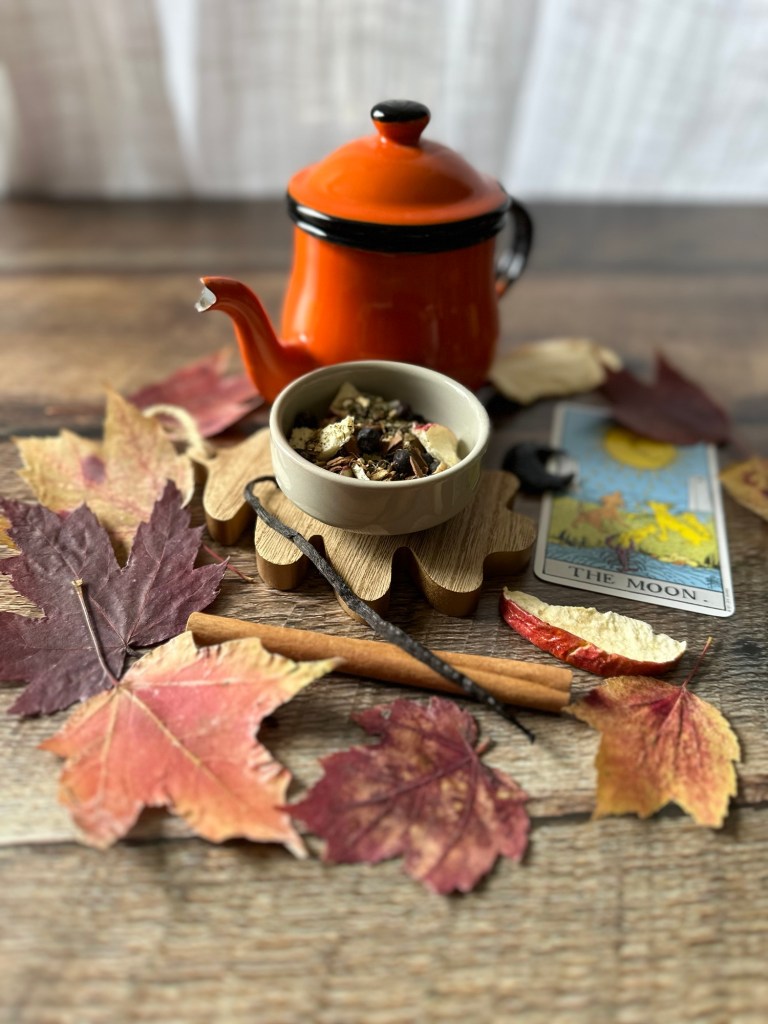
Brew this tea to mark the Falling Leaves Moon which includes gifts given from trees for both their symbolic and astro-herbalism connections. Hawthorn bolsters the heart, while juniper, cinnamon, and ginger support the Aries fire. Apple and vanilla round things out with sweetness to cool that fire off a bit and bring things back to balance.

Falling Leaves Moon in Aries Tea Materials-

1 tbsp apple pieces, dried 

1 tsp hawthorn leaf

1 tsp juniper berries

½ tsp cinnamon stick pieces

¼ tsp ginger root, dried 

¼ tsp vanilla bean powder or ¼ vanilla bean pod

Method-

To make a single cup of tea, add 1 tablespoon to a tea strainer, eco-friendly tea bag, or French press. Pour 1 to 1 ½ cups hot water over the tea and steep for about 5 minutes. Strain, and serve. Add sweetener of choice to taste, if desired.

If you’d like recipes to mark each month’s full moon, check out the current and upcoming issues of Botanical Anthology where I share these recipes!


For educational purposes only. Not intended for medical advice. Always consult your physician.

*This post contains affiliate links, which means if you choose to buy something from a link that I share, I will make a small percentage of the sale *at no extra cost to you*.

Categories
Hygge Recipes Tea

Happy Hobbit Weekend & Tea!

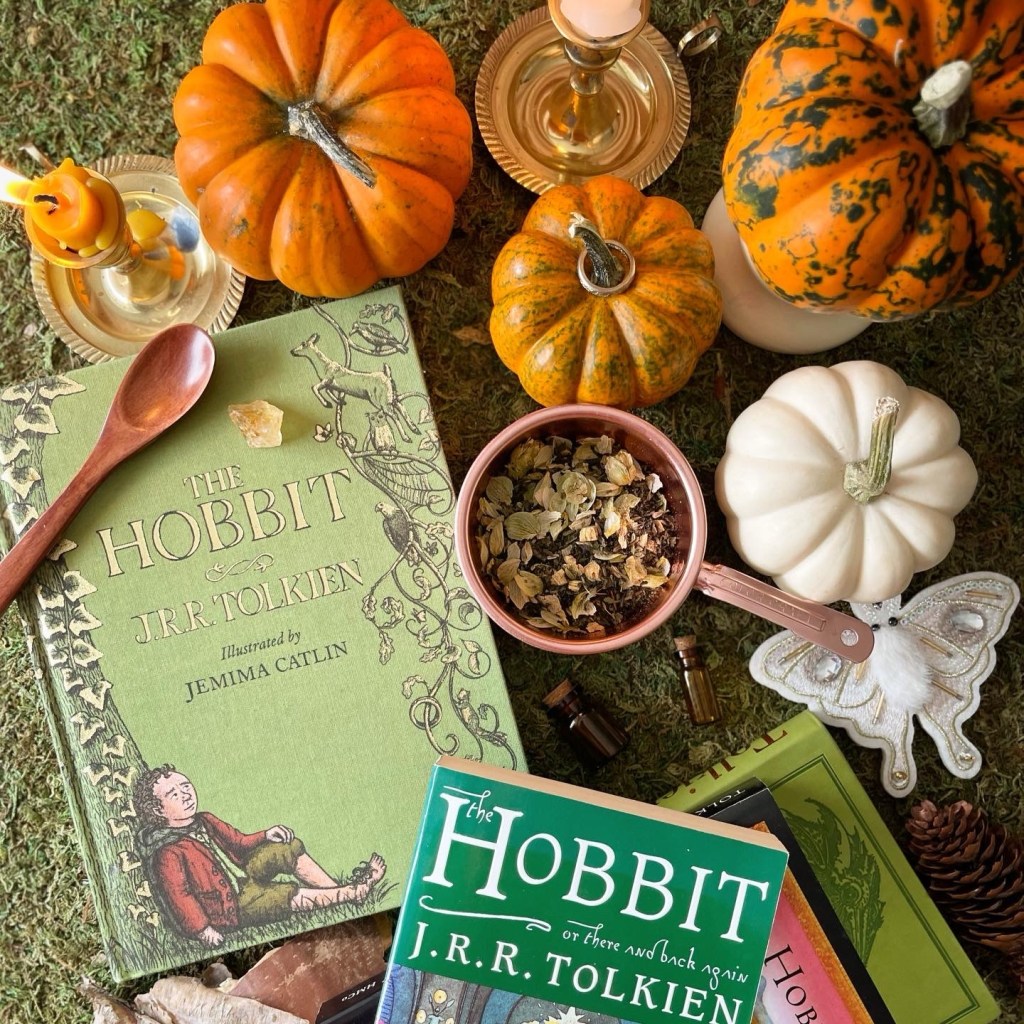
The Hobbit and The Lord of the Rings books by J.R.R. Tolkien have been my very favorite books since I first read them as a teenager, and I have always felt a very strong connection to hobbits: simple folk who prefer the comforts of home, well-stocked larders and bookshelves, and the joy of silly fun with family and friends, yet who can be prevailed upon to draw deeply from a well of courage and wit to save the world on occasion. If any fictional folk represents me, it’s the hobbit-folk. 

So the publication anniversary of The Hobbit (my birthday, 9/21) and the birthday of both Bilbo and Frodo Baggins (9/22) alongside the beginning of fall are all something I like to mark wrapped up into one special span of a couple days. I might read bits of The Hobbit to my own halflings, or we might watch the 1970s Rankin Bass animated film of The Hobbit (wonderfully nostalgic and kid friendly).

We may enjoy a hobbit-y teatime, too, with fresh baked goods and hobbit-inspired tea from the recipe I created. It combines smoky lapsang souchong tea for that famous pipe-leaf all hobbits love, hops to represent the tankards of ale they heartily imbibe, reishi mushrooms foraged right from the woods surrounding the shire, and other flavorful herbs and spices.


Ingredients:

1 part loose leaf lapsang souchong (or other black tea)

1 part mint

1⁄2 part reishi, broken into small pieces (substitute with licorice root if you are unable to find reishi)

1⁄2 part hops

1⁄4 part fennel

1⁄4 part nutmeg

1⁄4 part powdered vanilla bean or 1 vanilla bean per 4 cups of tea, split

Directions:

To make a single cup of tea, add 1 tablespoon to a tea strainer, eco- friendly tea bag, or French press. Pour 1 to 1 1⁄2 cups hot water over the tea and steep for 5 minutes. Add honey or other sweetener, if desired.


For educational purposes only. Not intended for medical advice. Always consult your physician.

*This post contains affiliate links, which means if you choose to buy something from a link that I share, I will make a small percentage of the sale *at no extra cost to you*.

Categories
Herbs and Herbalism plant wonder collective Recipes

Sumac Cider-Ade

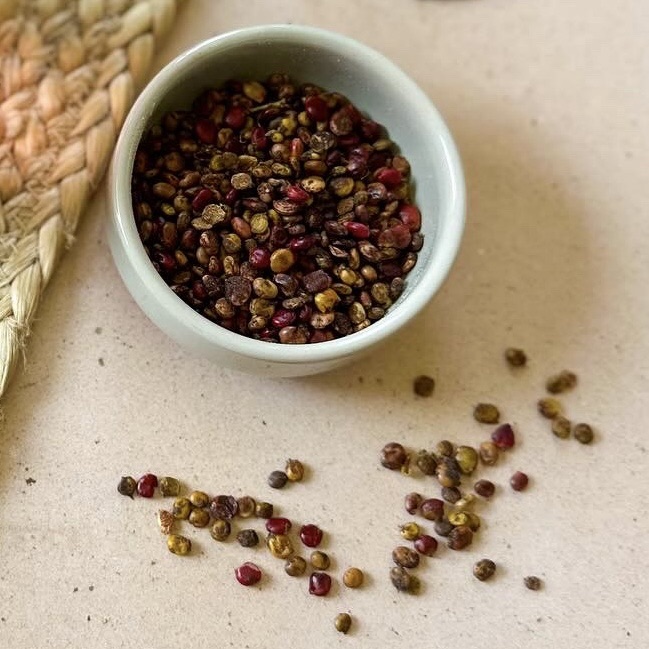
It’s sumac month at the Plant Wonder Collective, and I am so excited because this is a new plant for me! I am loving getting acquainted with these little ruby gems. 

The taste of sumac is hard to describe; sour, tart, earthy, and in my opinion, delicious. It’s cooling and drying—very astringent and gives that tannin feeling of black tea or red wine. But the flavor is light, and both fruity yet complex and mineral-y.

From tea to spice rub, tincture to wound salve, and even a lovely pink dye, sumac has a host of applications. This plant is full of antioxidants, offers anti-inflammatory aid, is wonderfully healing inside and out, and can help with unpleasant conditions such as water retention and diarrhea. It is good for the cardiovascular system, can aid in drying out the sinuses, and can even lower blood sugar, too! Sumac is widely forageable in the U.S. and has a long history of use by indigenous peoples

(For more info on sumac, consider checking out the free mini month of content on the Plant Wonder Collective Study Circle Patreon!)

Sumac is tart and delicious as a cold beverage, much like lemonade, and so is often cold-brewed as such—I found lots of simple instructions for doing just that online. But of course I wanted to add a different spin on the typical sumac “lemon”ade, and a September-y flavor profile! 

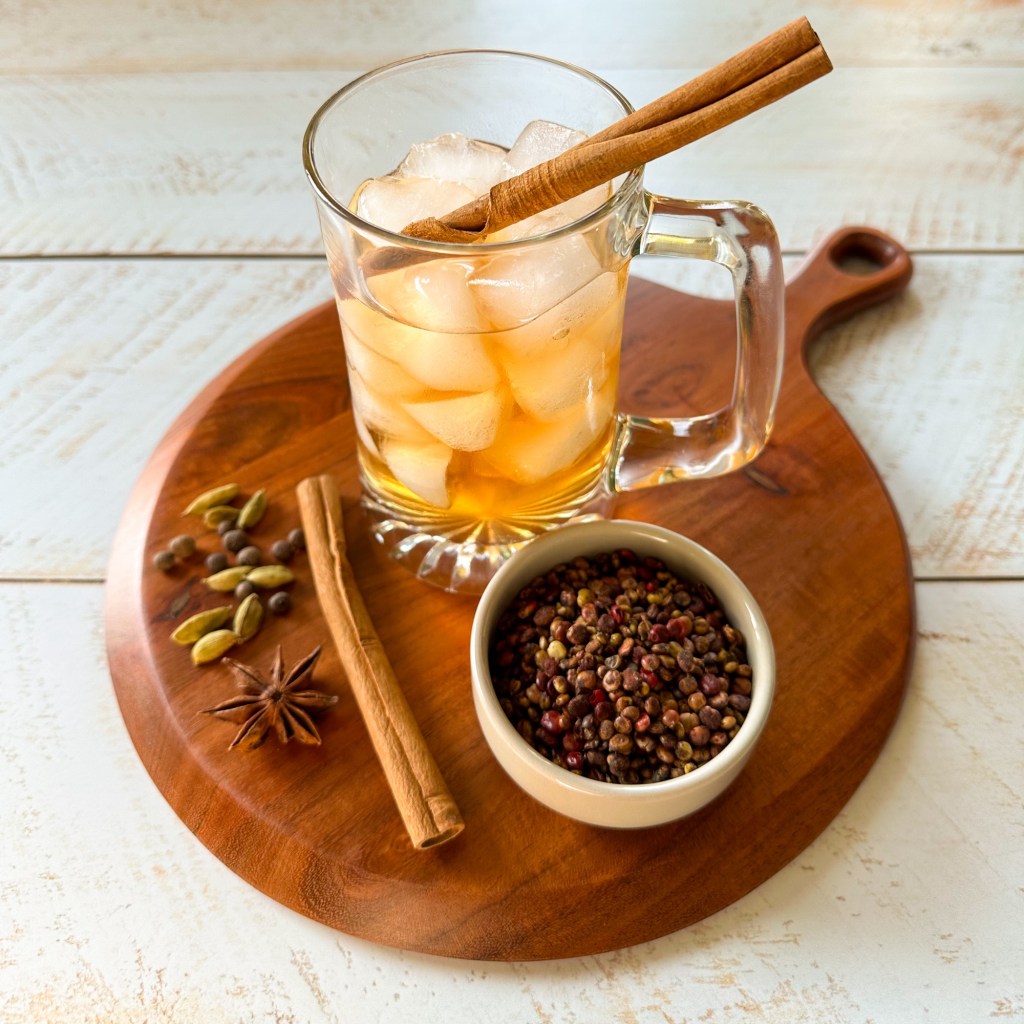
Since I am a huge fan of tart apples and fall cider, I thought I’d try a sumac cider combining this month’s plant with apple and spices! It makes for a lip smacking, satisfyingly-sour and tasty beverage that’s easy to make and kid-friendly, too. 


Ingredients:

4 cups apple cider / juice

¼ cup sumac berries, crushed with mortar & pestle

2 tsp simple syrup

1 lemon or orange, juiced

1 cinnamon stick, broken into pieces / crushed with mortar & pestle

3-4 slices fresh ginger or 1 Tbsp dried ginger pieces

7 cardamom pods

6 cloves

1 tsp allspice berries 

1 star anise

Instructions:

Combine all ingredients in a pitcher; you might decide to use a large tea strainer or large eco-friendly paper tea bag to hold the mulling spices for ease of removal. Allow to cold brew either at room temperature or in the refrigerator for 4 hours to overnight. 

Strain the spices and sumac berries out using a fine mesh sieve (a cheesecloth or coffee filter can help, too). Chill and serve over ice!

If you’d like to make this a bit more of an adult drink, you can always add a splash of bourbon or your preferred liquor to your cup; you could also make a stronger brew of the base cider-ade and add then Prosecco or champagne for fizz. 


For educational purposes only. Not intended for medical advice. Always consult your physician.

*This post contains affiliate links, which means if you choose to buy something from a link that I share, I will make a small percentage of the sale *at no extra cost to you*.

Categories
Craftbrunch Folklore Recipes Tea

Chang’e  and the Moon Rabbit: Immortality Elixir Tea 

As a lover of all things autumn, I love branching out and learning about how different cultures mark my favorite season! I have recently learned a bit about the Mid-Autumn Festival in Chinese culture, which takes place around mid-September to early October and centers around the timing of what we know as the Harvest Moon. 

During this autumn equinox festival, celebrations focus on the harvest—with gratitude and family gatherings; the moon; Chang’e (the goddess of the moon); and her companion, a white rabbit who pounds herbs in his mortar and pestle to make immortality elixir. Other symbols and parts of the celebration include lanterns, mooncakes, cassia wine, and burning incense as an offering to Chang’e.

This festival and the lore surrounding Chang’e and the Moon Rabbit are a wonderful Craftbrunch theme! There are lovely picture books on this folklore to share with children, you can decorate lanterns and make moon cakes, and more. 

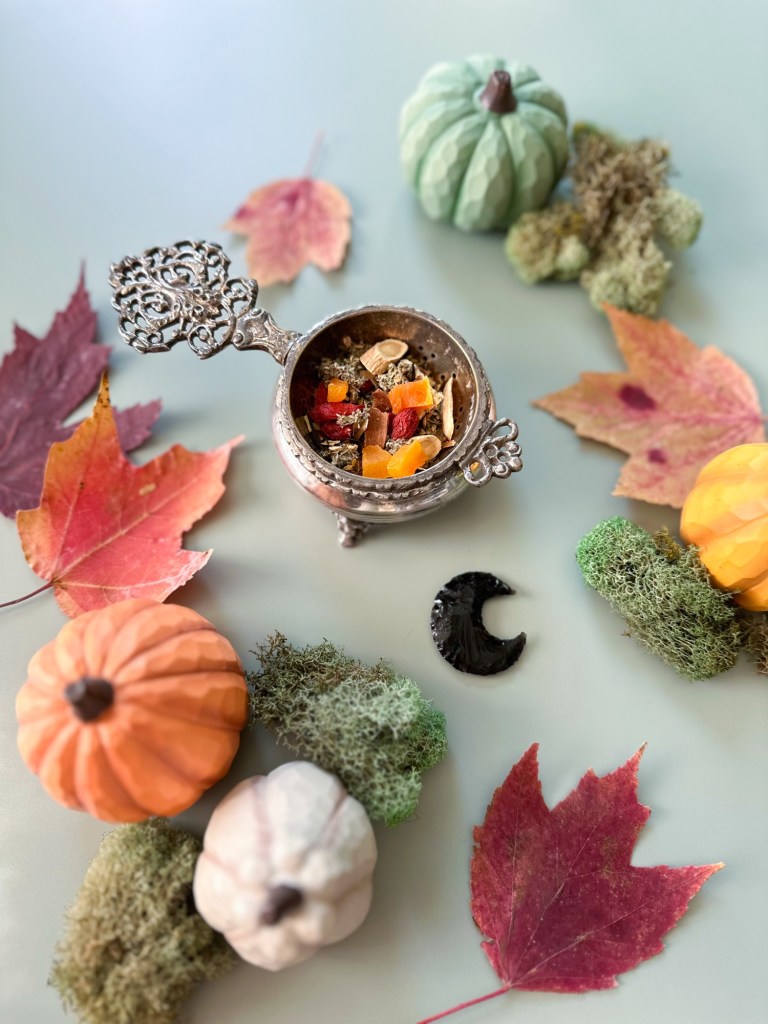
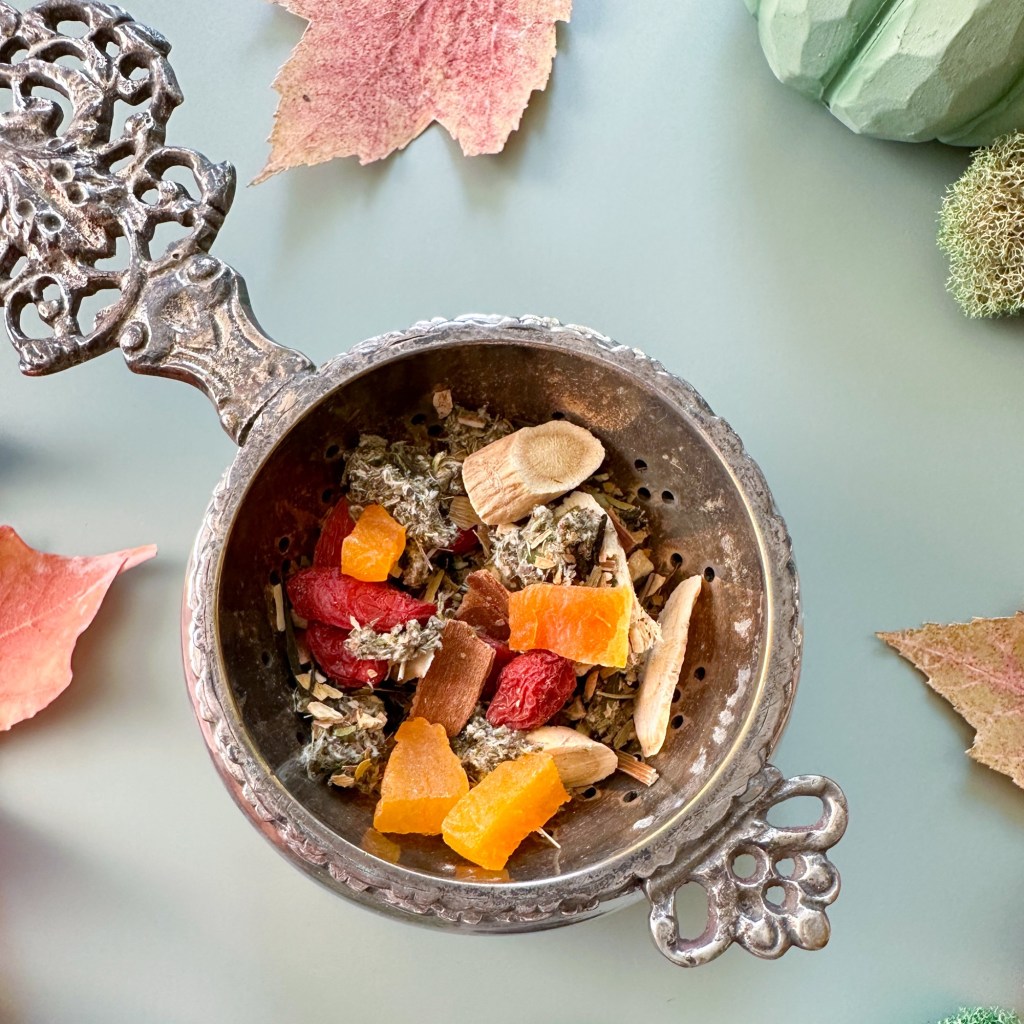
My contribution to the #autumnnaturemagic #Craftbrunch celebration I’ve joined on Instagram is a tea blend based on the idea of the immortality elixir that the Moon Rabbit makes! Most of the ingredients are longevity herbs in TCM (Traditional Chinese Medicine), and the cassia cinnamon and dried apricots are present to represent cassia wine, which I’ve not tried but I read it tastes like peaches or apricots!

(This tea is safe for adults and kids alike, but if you prefer you can substitute decaf green tea or leave it out altogether.)

Here is the recipe! It should be enough for a few cups of tea but you can increase accordingly for the number of people you’re serving. 


Moon Rabbit’s Immortality Tea

Ingredients:

1 Tbsp Green tea

1 Tbsp Astragalus root

1 Tbsp Ginkgo (I like golden ginkgo)

1 Tbsp Mugwort

1 Tbsp Goji berries, dried

½ Tbsp Ginger, dried, or 1-2 small knobs fresh

Cassia cinnamon, 1-2 sticks broken into pieces

Dried apricots – 3-4, chopped

Instructions:

Brew for 3-4 minutes with just-boiled water; you can brew longer if you omit the green tea, or perhaps put the green tea in a separate tea strainer and remove it before the other ingredients. 

Garnish with cinnamon sticks and dried apricots if you like! Sip this tea before a lantern-lit autumn hike under the moonlight!


For educational purposes only. Not intended for medical advice. Always consult your physician.

*This post contains affiliate links, which means if you choose to buy something from a link that I share, I will make a small percentage of the sale *at no extra cost to you*.

Categories
Botanical Anthology Recipes

Botanical Anthology: Licorice Root Fizz

This is an excerpt from the article Root Mocktails by Leah Jorgensen Jean featured in the Autumn Vol 3 | Issue 10 | 2024 edition of Botanical Anthology. To learn more about mocktails and for the accompanying S’mores mocktail recipe using marshmallow root, check out the entire article! Our herbal magazine, featuring remedies, recipes and projects with plants for the autumn season, can be purchased as a digital version here and as a printed version here

Licorice Root Fizz 

Licorice Root Fizz is a delightful drink for those who appreciate its distinctive flavor. Licorice root provides a sweet, herbal taste that is soothing and mildly spicy.  Combined with sparkling water, it transforms into a refreshing and unique beverage, delivering an unexpectedly intense, complex, and invigorating experience. It is an excellent alternative for those who enjoy sipping on licorice-flavored liquors such as Pastis, Sambuca, Ouzo, Pernod, or Absinthe.

Materials

¼ c water
¼ c granulated sugar

2 tbsp licorice root, dried

Ice cubes
Juice of ½ lemon

Sparkling water or club soda
Lemon slice or twist, for garnish

Method
In a small saucepan, combine the water, sugar, and licorice root. Heat over medium heat, stirring occasionally, until the sugar is completely dissolved.  Bring the mixture to a gentle simmer, then remove from the heat. Let the licorice root syrup cool to room temperature, then strain it through a fine-mesh sieve or cheesecloth. Transfer the syrup to a clean jar or bottle and store it in the refrigerator until ready to use.

To make the Licorice Root Fizz, fill a glass with ice, and add 2 to 3 tablespoons of the licorice root syrup, depending on your sweetness preference. Squeeze the juice from the lemon into the glass and stir to combine. Top with sparkling water or club soda, stirring gently to mix. Garnish with a lemon slice or twist and serve immediately.


Notes

  • Licorice should not be used while pregnant or nursing and those who have high blood pressure.

Leah Jorgensen Jean is a professional winemaker, holistic nutritionist, and regenerative herbal medicine grower based in Newberg, Oregon. She received her certificate in herbalism from Ecoversity and grows and prepares medicinal plants for her small town herbalist community.  Visit her on Instagram @cosmicculturebotanicals 

These recipes are excerpts from her first book The Herbalist’s Guide for the Sober Curious: 65 Garden-To-Glass Recipes published by Chartwell Books available wherever books are sold in January 2025. Visit her on Instagram @cosmicculturebotanicals 

Categories
plant wonder collective Recipes

Blackberry Elderberry Lemonade

School starts very early where we live (July 31 was our first day this year!), so it can be interesting to combine autumn immune boosting herbs with cold summer treats and summer seasonal plants. 

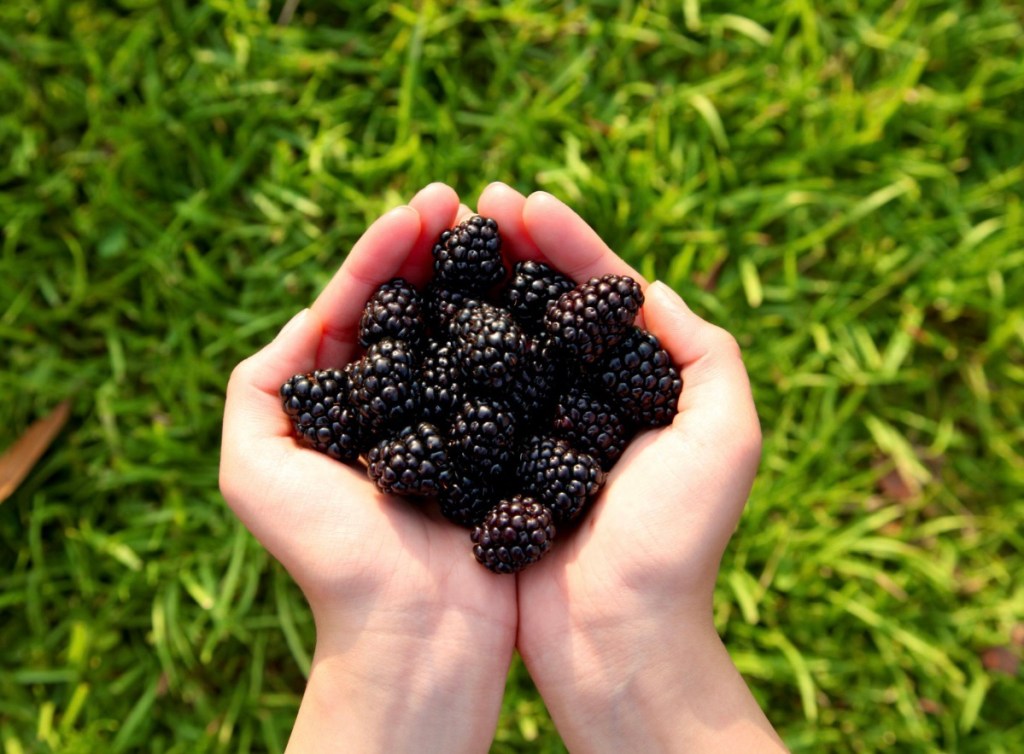
That’s where blackberry comes in! Blackberry is a nourishing, protective, antioxidant-rich ally in itself, and is in its prime this time of year. The vitamins and nutrients in blackberry can help to bolster the immune system and fight off illness. 

Add in elderberry, whose immune modulating properties are well known, along with fresh ginger for zing and an extra immune boost, and you have the start to an herbal syrup that can be used to make summer-friendly lemonade! (As an added bonus, since my kids don’t love the taste of elderberry on its own, blackberry is a perfect flavor partner to help add some sweetness and round out some of elderberry’s more mineral-y twang.)

Here’s the recipe if you’d like to try it for yourself and get a summertime immune boost!

Materials

Simple syrup:

2 c water

1 ½ c sugar (I used raw cane sugar)

1 c blackberries 

¼ c dried elderberries

3-4 slices fresh ginger 

Lemonade:

1 to 1 ½ c fresh lemon juice (5-6 lemons)

4 c ice

5 c water

Method

To make the simple syrup, add sugar and water to a saucepan and dissolve over low-medium heat. Add blackberries, elderberries, and ginger slices. Mash the contents with a potato masher. Simmer on low for 5 to 7 minutes, then remove from heat and allow to infuse for a further 10 minutes. Strain with a mesh strainer into a clean jar, cap, and refrigerate. 

To make the lemonade, juice the lemons and add to a pitcher. Add the ice, water, and 1 cup of the simple syrup. Stir well and taste; add more simple syrup if it isn’t sweet enough for your taste. Chill and serve over ice, or use frozen blackberries as ice cubes!

Notes

•Frozen or fresh blackberries can be used in this recipe interchangeably. 

•If your kids are averse to the taste of elderberry, you might choose to use less elderberries; if you’re making this for adults you might choose to add a bit more instead. 


For educational purposes only. Not intended for medical advice. Always consult your physician.

*This post contains affiliate links, which means if you choose to buy something from a link that I share, I will make a small percentage of the sale *at no extra cost to you*.

Categories
Recipes Tea wheel of the year

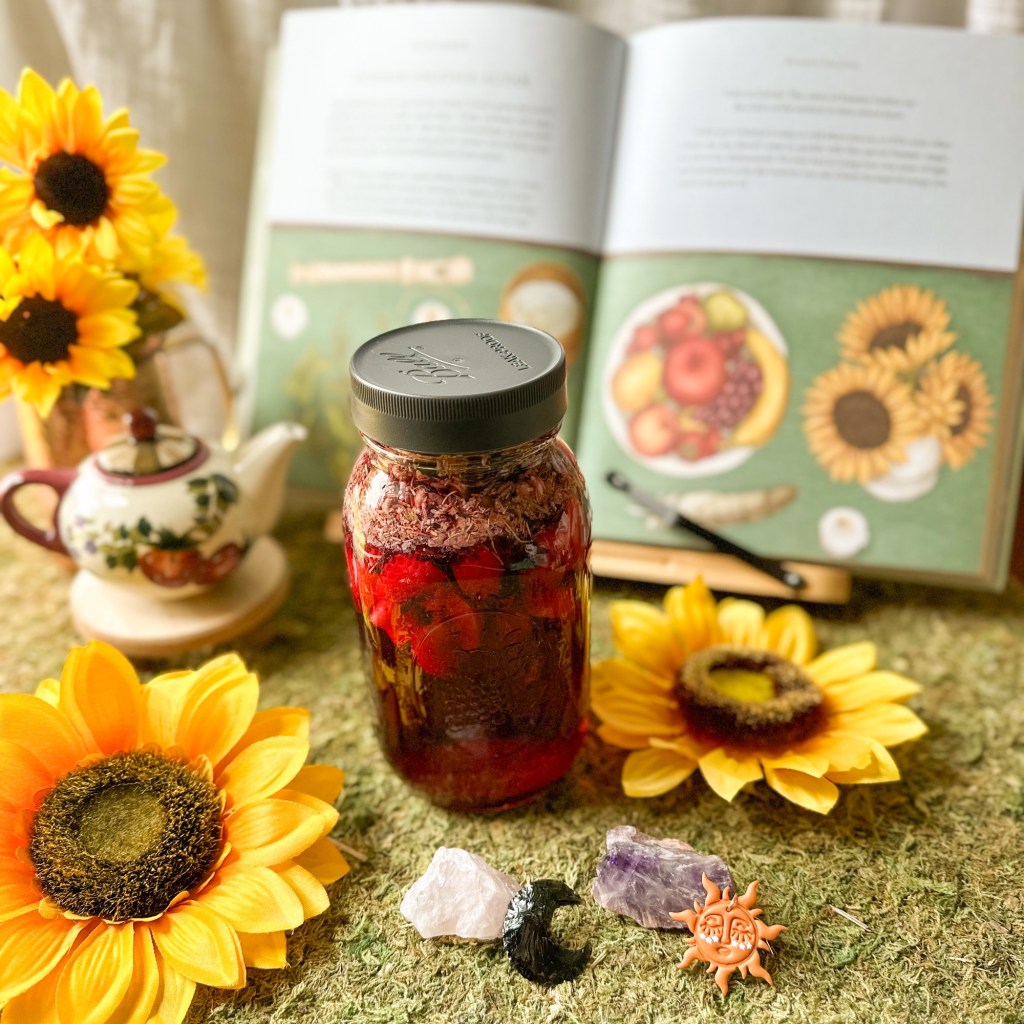
Summer Solstice Sun & Strawberry Moon Tea

I am so excited that June’s full moon (the Strawberry Moon) and Litha (the summer solstice) fall together this year. It is a convergence that doesn’t happen often—in fact, the last time it did was 1985! All that bright energy of both the longest day and the full moon combined—so magical! 

For me, I think the order of the day is celebration, gratitude, and soaking up every bit of that energy I can. I feel like too often, we see these astrological occasions as calls to act in grandiose ways, to manifest changes and new directions, to enact grand gestures. But this pressure is not necessary, and most likely you have many plates spinning already at this busy cusp of summer! Instead, it is perfectly okay to give yourself permission to rest, recharge from the added light, lean into the sensation of lightness, and simply enjoy and give thanks. Mindfulness can be your act of devotion.

To this end, I am going to brew a Sun and Moon Tea!

I am calling the tea such because I’ve chosen a blend of herbs and botanicals that includes affinities for both the sun and the moon to reflect the meaning of the occasion. There are also botanicals chosen for their ties to Litha, fire, water, and Venus, all of which I am feeling strong influences of during this time. 

Here are the ingredients, and a few of their astrological ties:

•Linden (sun, Litha)

•Chamomile (sun, Litha)

•Jasmine (moon, water)

•Rosemary (sun, moon, fire)

•Strawberry (strawberry moon, Venus, water)

•Hibiscus (fire, water, Venus)

•Lavender (Litha)

And here is the recipe! It’s simple, so you can concentrate on enjoying your mindful moments under the solstice sun and Strawberry Moon. 


Ingredients

32 oz mason jar

1 cup sliced strawberries

2 Tbsp hibiscus

1 Tbsp rosemary

1 Tbsp linden

1 Tbsp chamomile

1 Tbsp jasmine

½ Tbsp lavender

Honey to taste, optional

Directions

Add ingredients to mason jar and fill with cold, fresh water. (If using dried herbs, you might choose to place them in a large eco-friendly tea bag or linen reusable tea bag.) 

Cap tightly and place in a sunny location (free of disturbance by kids or pets!) for 2-3 hours. 

If not using a tea bag or strainer, strain tea into a fresh jar or a pitcher over ice if drinking immediately. You can stir in honey while it is still warm if you’d like! Refrigerate and drink cold. 

Note—

You can substitute fresh herbs for dried ones if you have access to them! You don’t necessarily have to go by the measurements in that case—just add sprigs of each. 


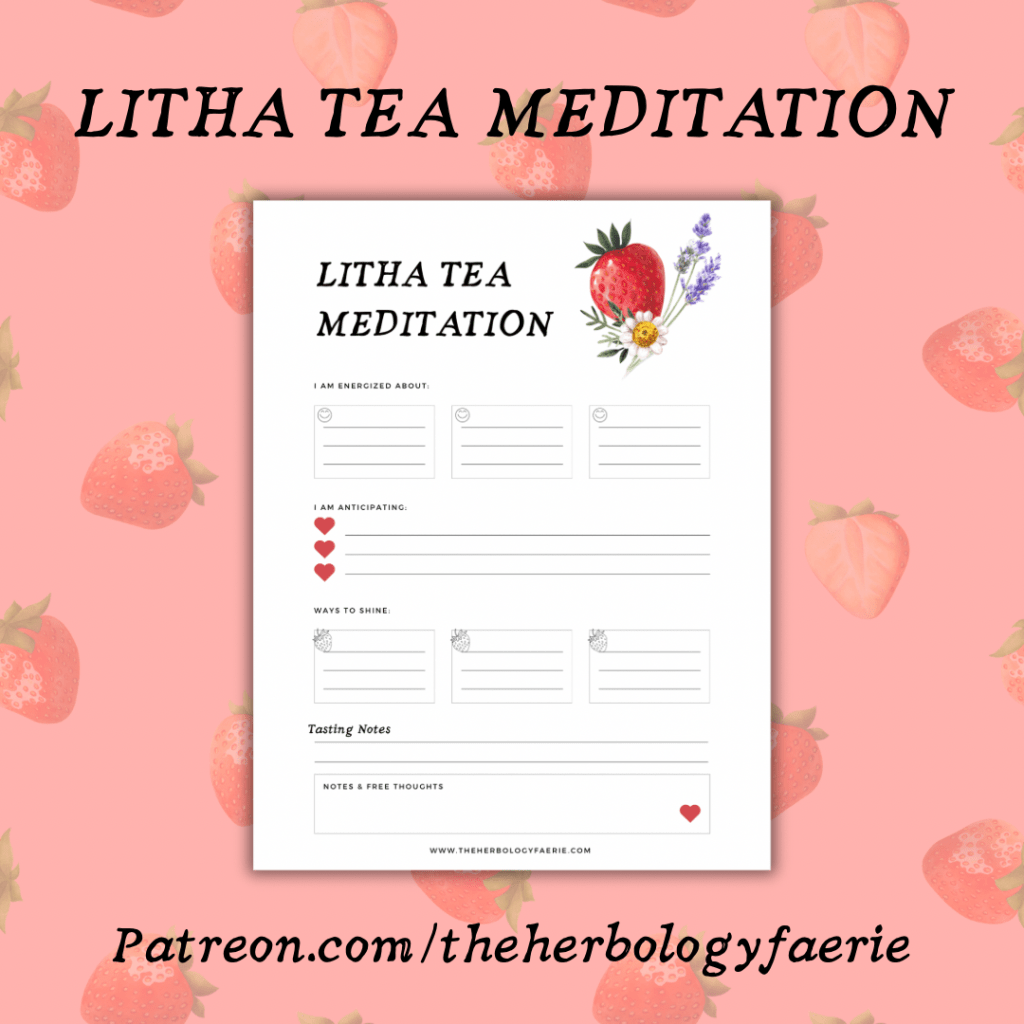
For a printable Litha Tea Meditation journaling page and a printable version of this recipe, join my Patreon at Patreon.com/theherbologyfaerie!