Categories
Herbs and Herbalism plant wonder collective Recipes Tea

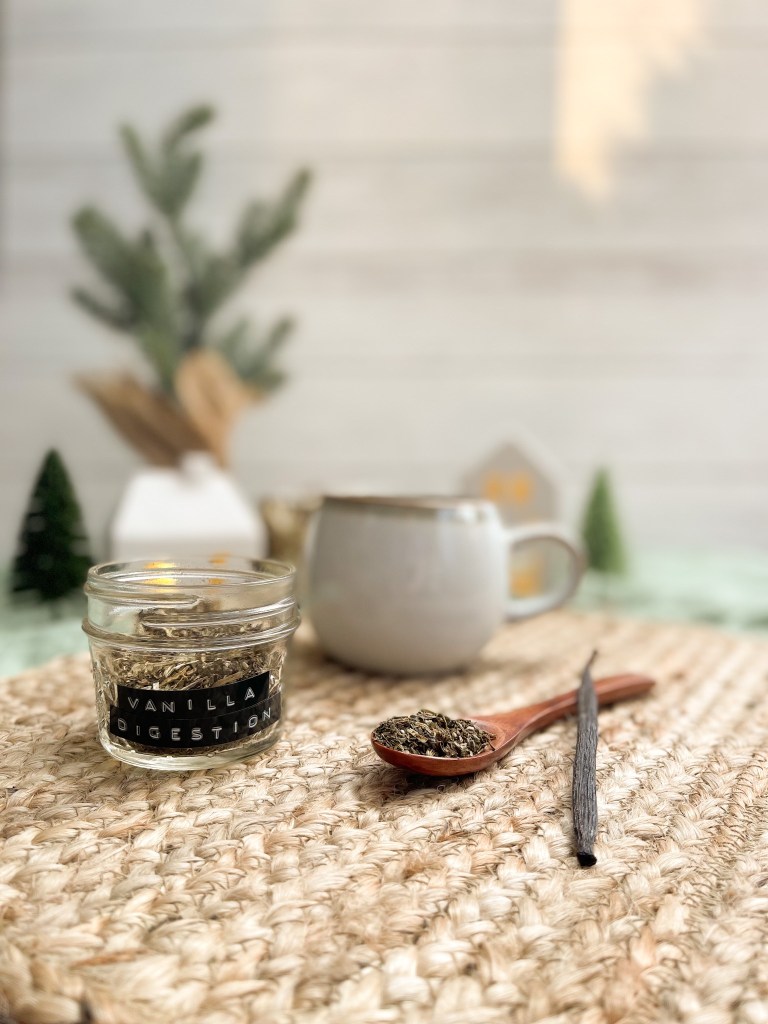
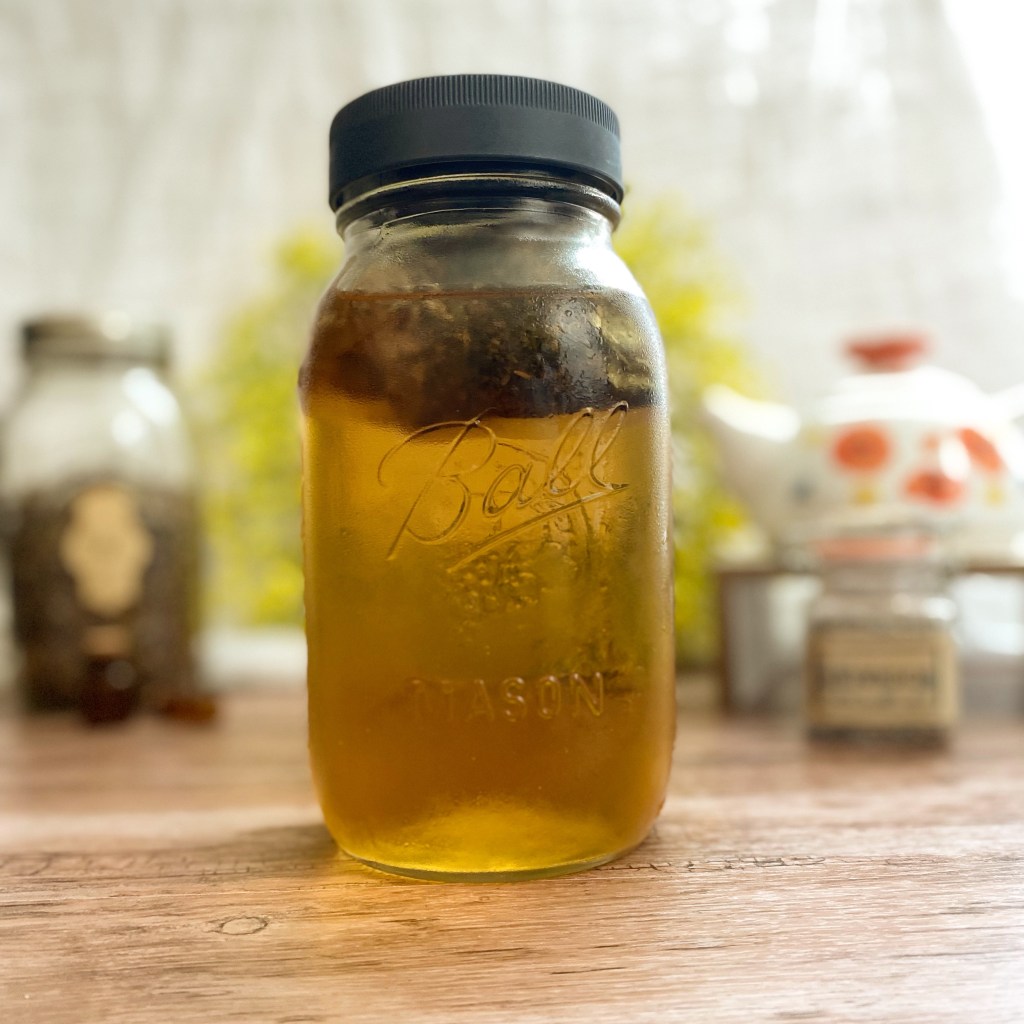
Vanilla Digestion Tea

It’s the time of year when digestion is key! Heavy, rich foods abound due to the holidays and the approach of winter, and many of us need some extra relief.

Often, digestion teas rely heavily on ginger, but I find it too spicy and irritating sometimes. I often need more of a cooling approach to indigestion instead. That’s where this tasty vanilla digestion tea comes in!

Vanilla is an aromatic stimulant and carminative botanical, with anti-inflammatory, digestive-soothing, calming, and fever easing benefits. These properties make it a great ingredient in a digestion tea!

In the interest of a more cooling approach to digestion, I’ve combined the vanilla with meadowsweet, mint, and fennel seed. If you add honey or your sweetener of choice, it’s a light and tasty dessert all on its own with a taste reminiscent of candy canes!

A bit of a breakdown of the other herbal ingredients I’ve combined with the vanilla here—

Mint can be both warming and cooling, depending on your constitution, but I find it affects me in a soothing and cooling manner. It is a mildly stimulating herb, so it aids in moving things along in the digestion process.

Meadowsweet is a top tier digestion reliever. Its cooling, drying, astringent, inflammation modulating, and even pain modulating properties make it an indispensable ally. However, if you’re sensitive to aspirin, you should avoid meadowsweet because it contains naturally-occurring salicylic acid. (If this is you, substitute chamomile or elderflower.)

Fennel is one of my very favorite herbs for digestion. It’s a pungent aromatic herb with antispasmodic and carminative properties, making it ideal for a digestion tea. Interestingly, I found a hand-written note in my great grandmother’s herbalism books suggesting to use fennel for calming. Though it isn’t technically considered a nervine or adaptogen, there is an inextricable link between gut health and mental health, so it does check out!

Here is the simple and sweet recipe for cooling vanilla digestion tea:

1 part vanilla (use chopped vanilla beans or powdered vanilla bean—my choice for economical purposes)

2 parts meadowsweet

2 parts mint

1 part fennel seed

——

Brew for about 5 minutes; longer can cause a bitter taste from the meadowsweet.

Do you suffer from digestive issues this time of year? Let me know if you try this tea! You might find that soothed digestion leads to a calmer state of mind this time of year!

Categories
Herbs and Herbalism Recipes

Pumpkin Spice Coffee Beeswax Candles

I am *just* beginning to teach myself the art of candle making! It is not terribly difficult, but there is definitely a knack to it and little things to learn through the process. I am no expert yet, but I am quickly learning some of the finer points!

I have decided to use a combo of beeswax and coconut oil for my candle base for the time being, and I scent my candles with essential oils. The scent is more subtle than that from my favorite store-bought candles, but it’s lovely and natural, healthier, and much more magical and special to make them myself. All the cozy and loving intention is poured into each one with the wax.

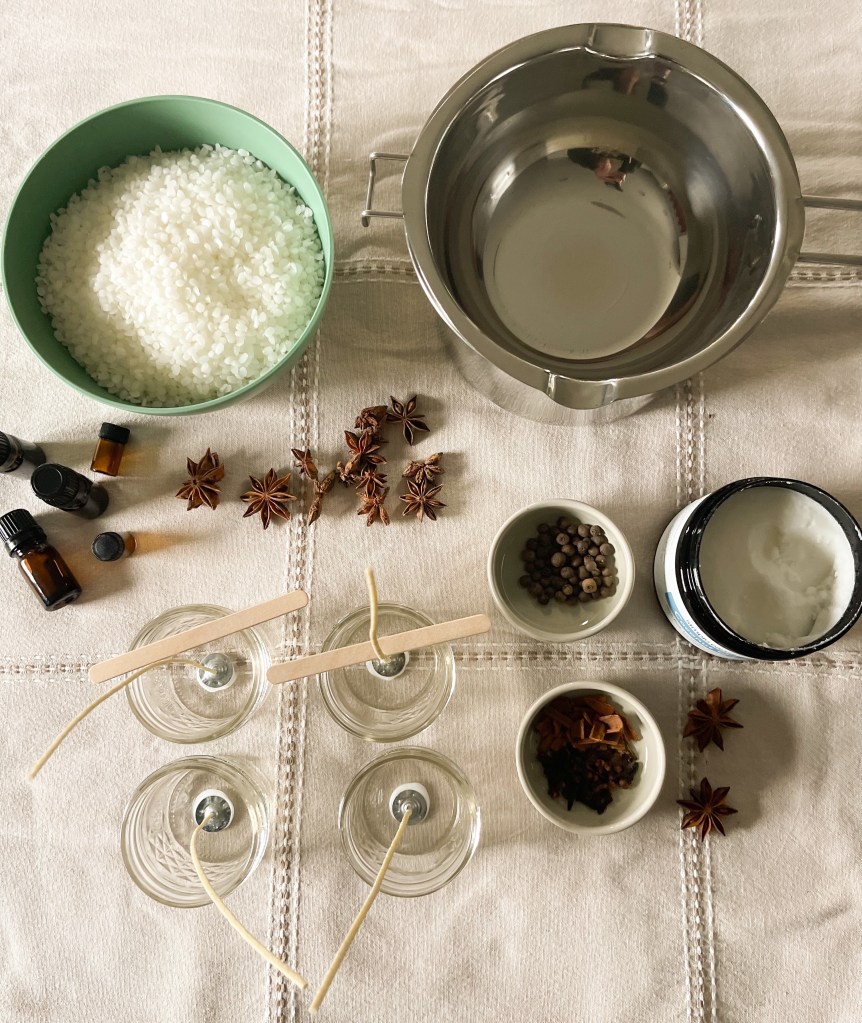
For those who are also interested in candle making but aren’t sure where to start, here is a little list of the basic supplies I decided to begin with:

This batch of beeswax candles combines the scents of coffee, cinnamon, vanilla, clove, nutmeg, ginger, cardamom, lemon, blood orange, and balsam copaiba essential oils. (The coffee oil is a separate one from Simply Earth; the rest are in a pumpkin spice oil blend from Plant Therapy.)

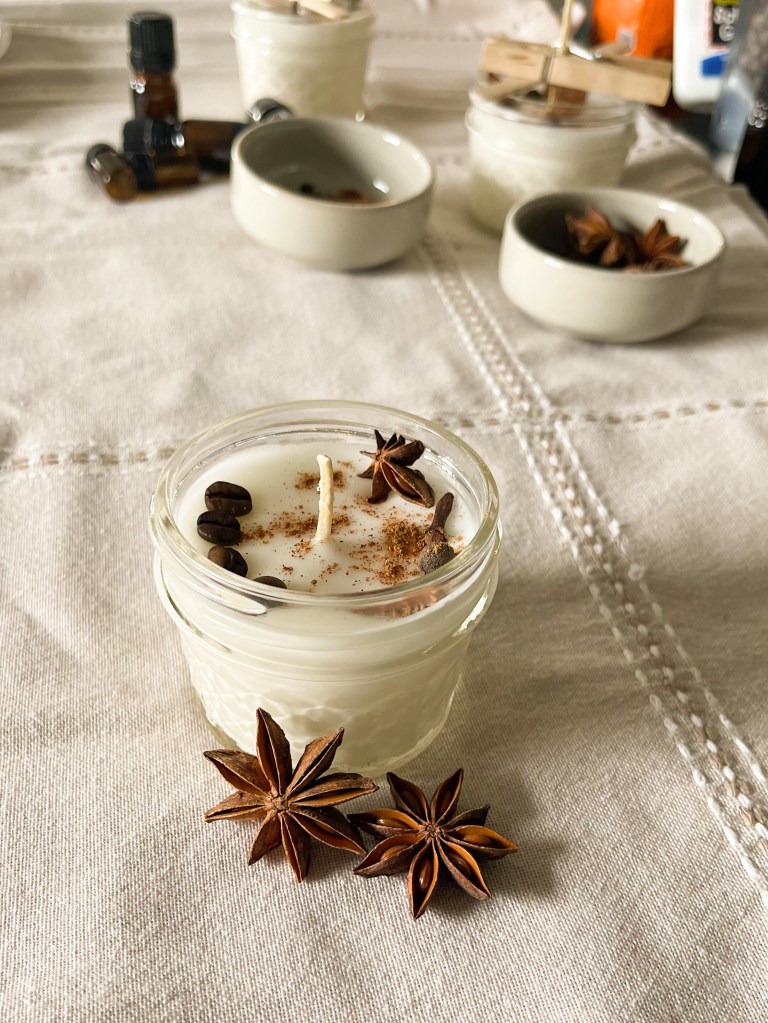
Aside from providing a cozy, delicious scent perfect for this time of year, these botanicals are grounding, balancing, energizing, and represent love, luck, and healing. I’ve topped each candle with coffee beans, star anise, allspice, cinnamon, and cloves. 

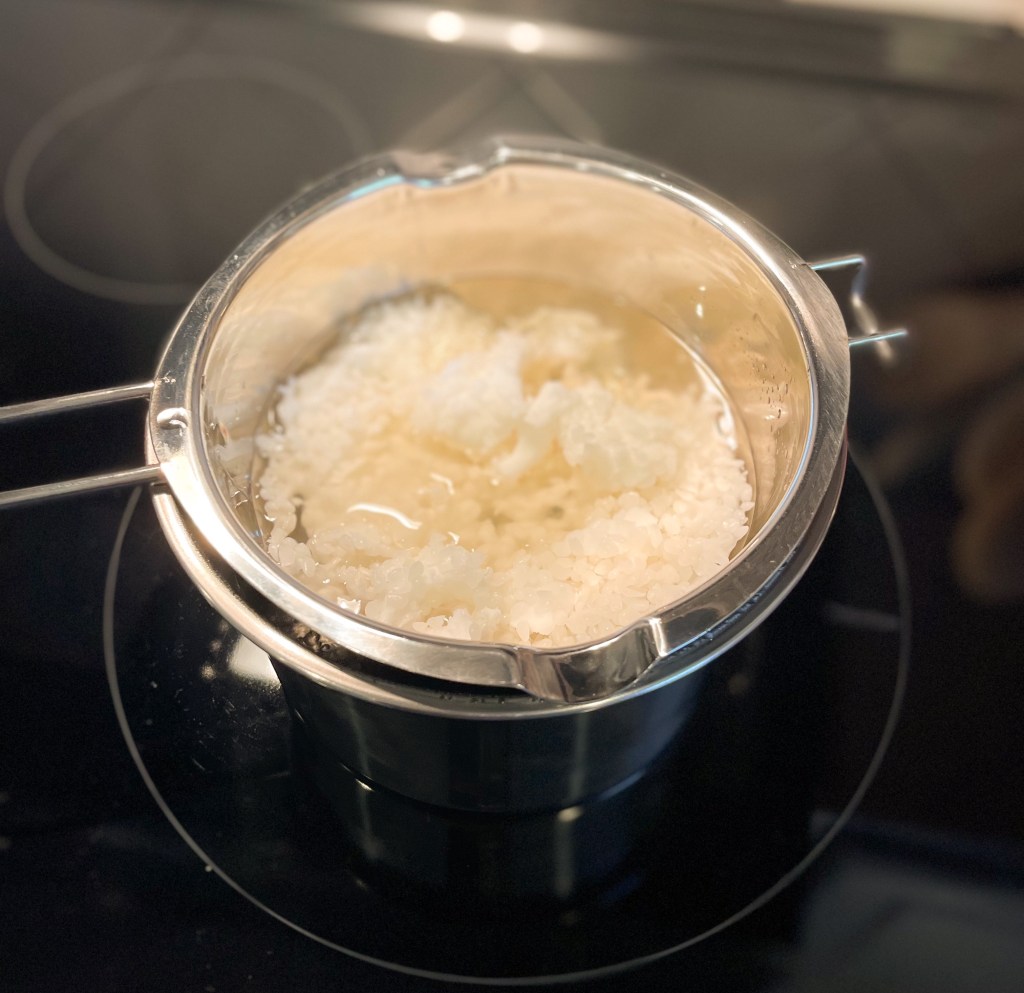
Here are the instructions for how I made this batch of candles—it makes 6 four-ounce candles.

(A couple notes: I am still experimenting with the essential oil amounts. You could definitely use more than I did here for a stronger scent—up to 200 drops! But I went conservative here for lightly scented candles. Also, be very careful topping candles with cinnamon, and make sure it isn’t too near the wick! It can spark if it catches the flame just right.)

I plan to keep a couple of these and share the love by gifting the rest this holiday season! And I hope to make more with different scent profiles and additions soon—I’ll share those here or on Instagram when I do.

Have you ever tried your hand at candle making? Is it something you’re interested in trying?

Categories
Herbs and Herbalism Recipes

Oregano Face Steam

It’s that time of year: colds, coughs, congestion, sinus headaches, the works. I don’t know about you, but I have a constant runny nose, and often a bit of a cough, once my wildlings start bringing fall germs home from school. This also wreaks havoc on my skin! I get dry, sore skin around my nose and sinuses, and my face just feels dry and tight. 

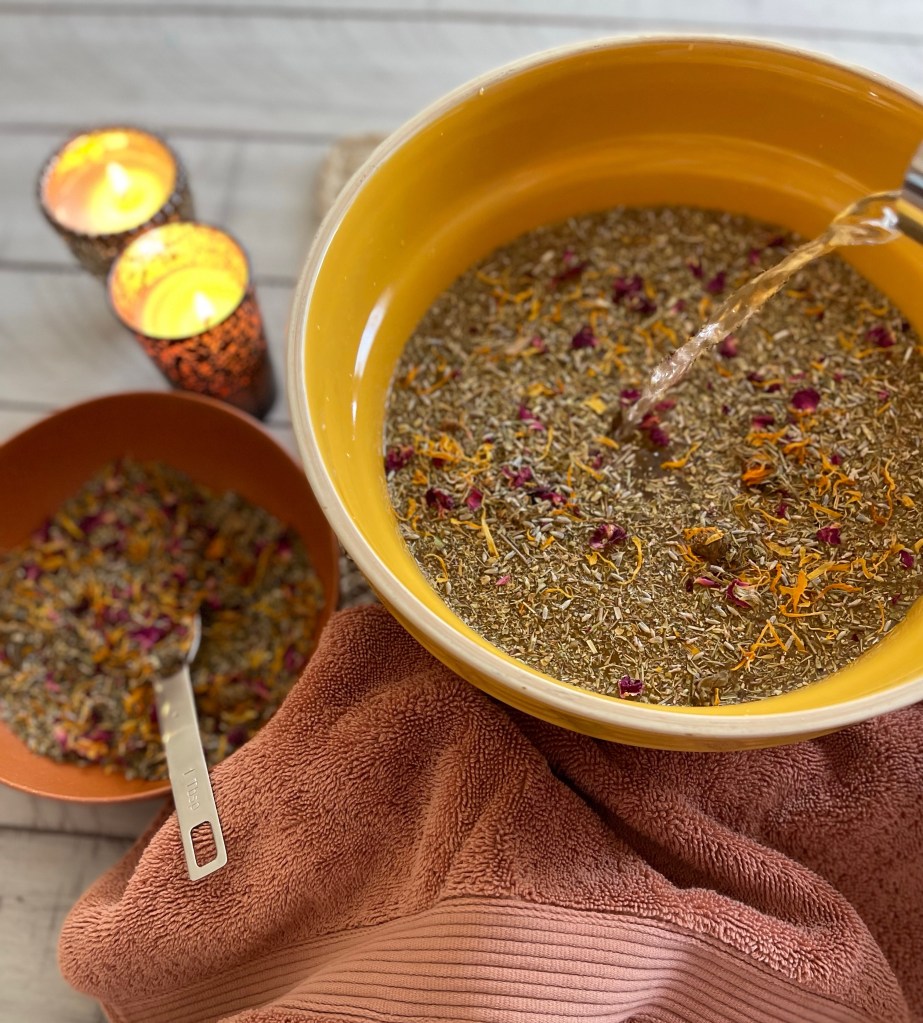
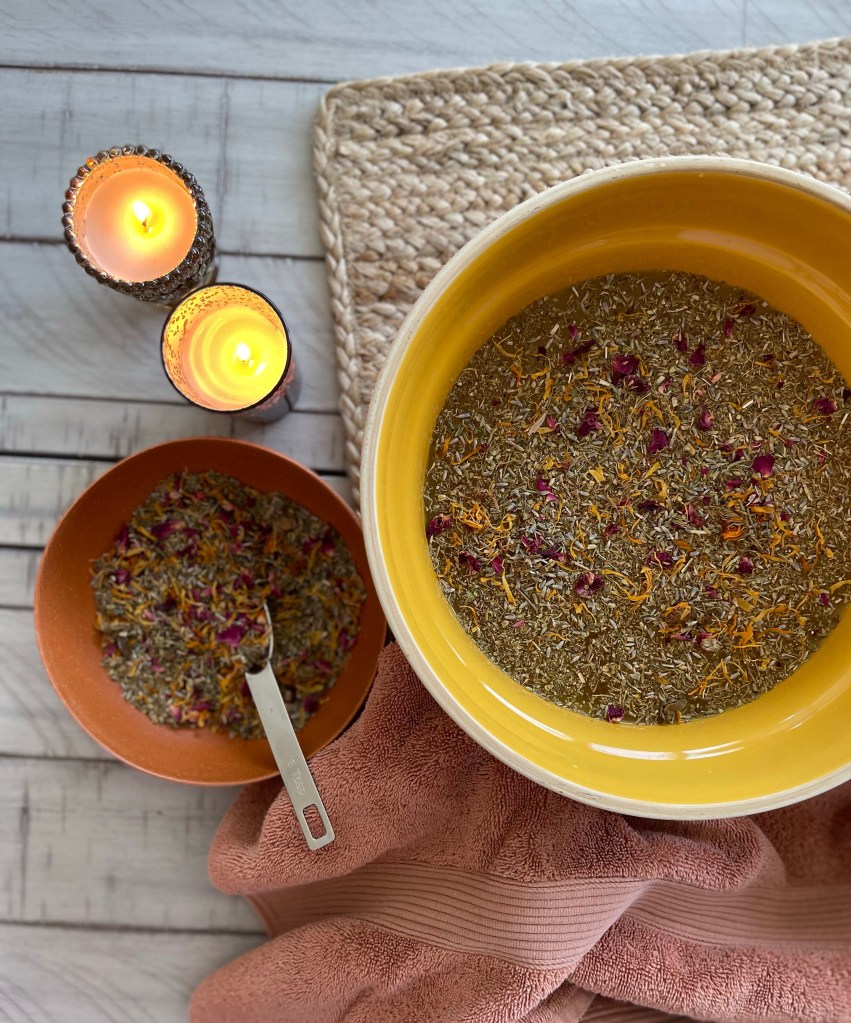
So I decided to try something that would be great for both my sinuses and my skin: a facial steam. It’s really quite easy! Just add your herbs to a big bowl, pour in hot water from your tea kettle, drape a towel over your head, lean over the bowl—trapping in the lovely aromatic steam—and let the botanicals do their magic!

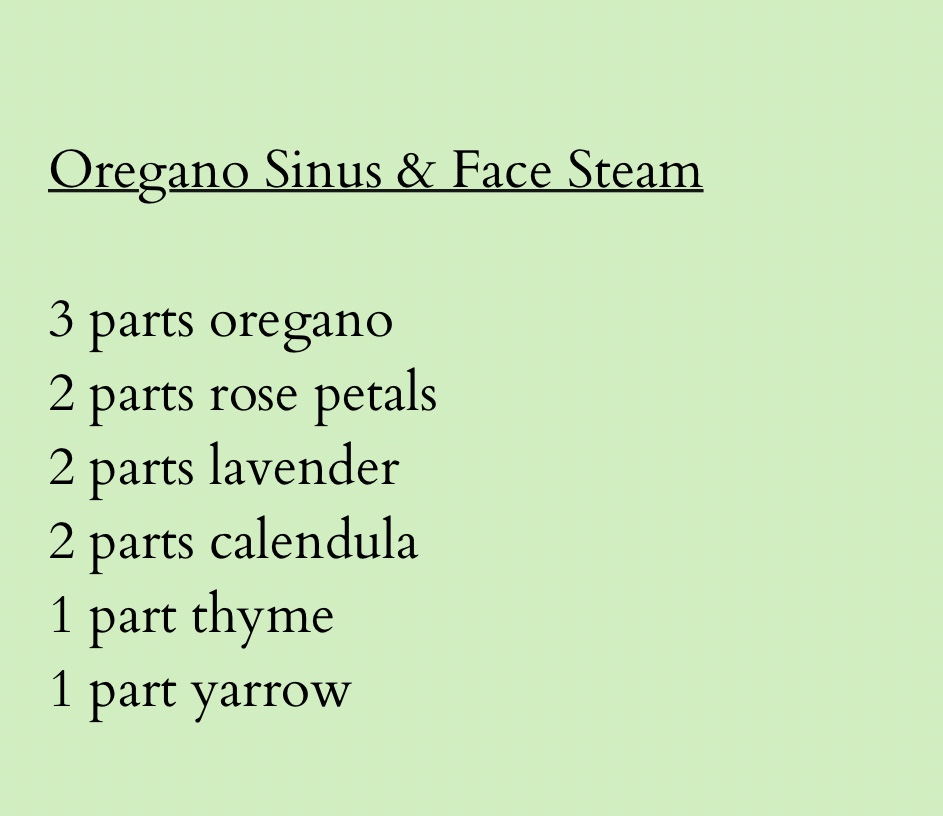
Oregano is the star of the show today. With its antimicrobial and lung-soothing properties, as well as its warming and stimulating effects, oregano is a lovely ally. With it I combined rose petals, lavender, and calendula for my skin issues and yarrow and thyme to boost the sinus clearing and germ-fighting properties. 

Let me tell you, this was a relaxing and divine way to get some relief! I think I’ll be doing this quite often now.

Here is the recipe, so you can try this lovely steam, too! I used dried herbs to make this recipe, which makes it super simple for wintertime use! For the “parts” size, I used tablespoons, then tripled the recipe; this made more than enough of the mixture to put some in a jar and do it again a few more times.

Mix the dried herbs well in a bowl. In a separate bowl, add your desired amount—I’d recommend 2-3 tablespoons. Then add steaming (not boiling) water heated in a tea kettle. Put a towel over your shoulders and head and lean over the bowl, carefully draping the towel to enclose the hot steam with your face. Close your eyes, relax, and enjoy inhaling the fragrant steam for several minutes!


Have you ever tried a facial steam? If so, which are your favorite herbs to include?

Categories
Herbs and Herbalism Hygge Recipes

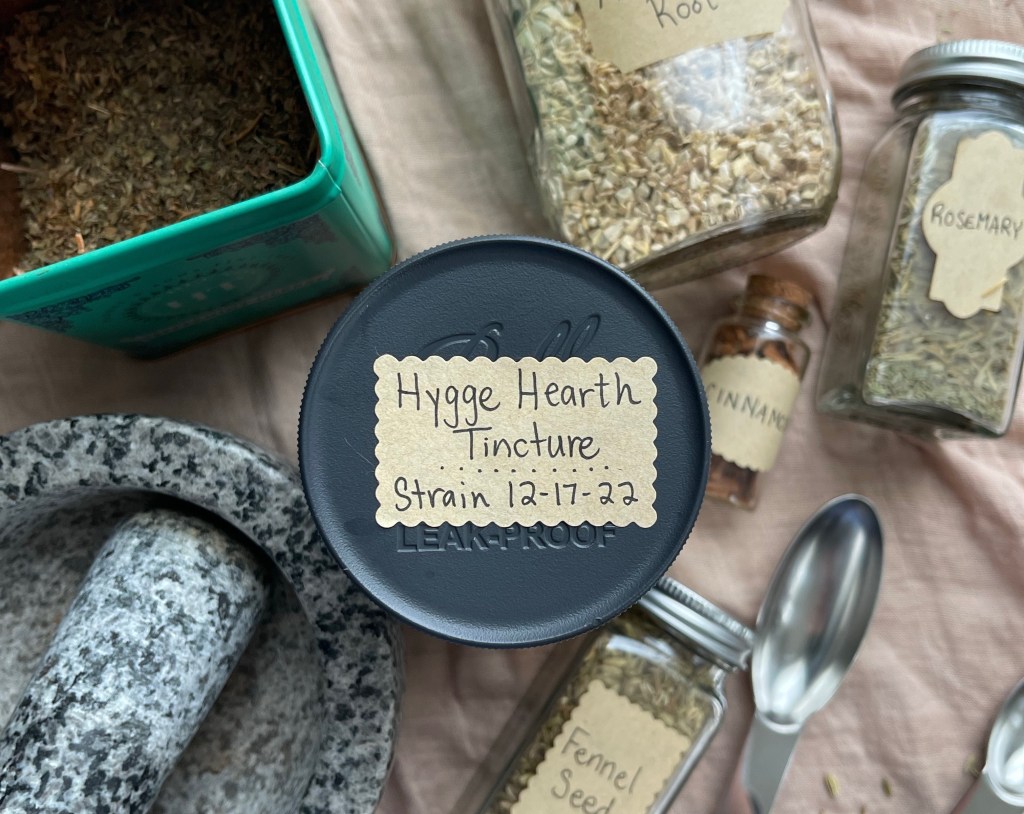
Hygge Hearth Tincture

Inspiration struck this morning and I decided to start a tincture that will be ready just in time for Yule! It has all the happy, cozy, hygge vibes with digestion support, stress relief, balancing, and immune boosting to boot.

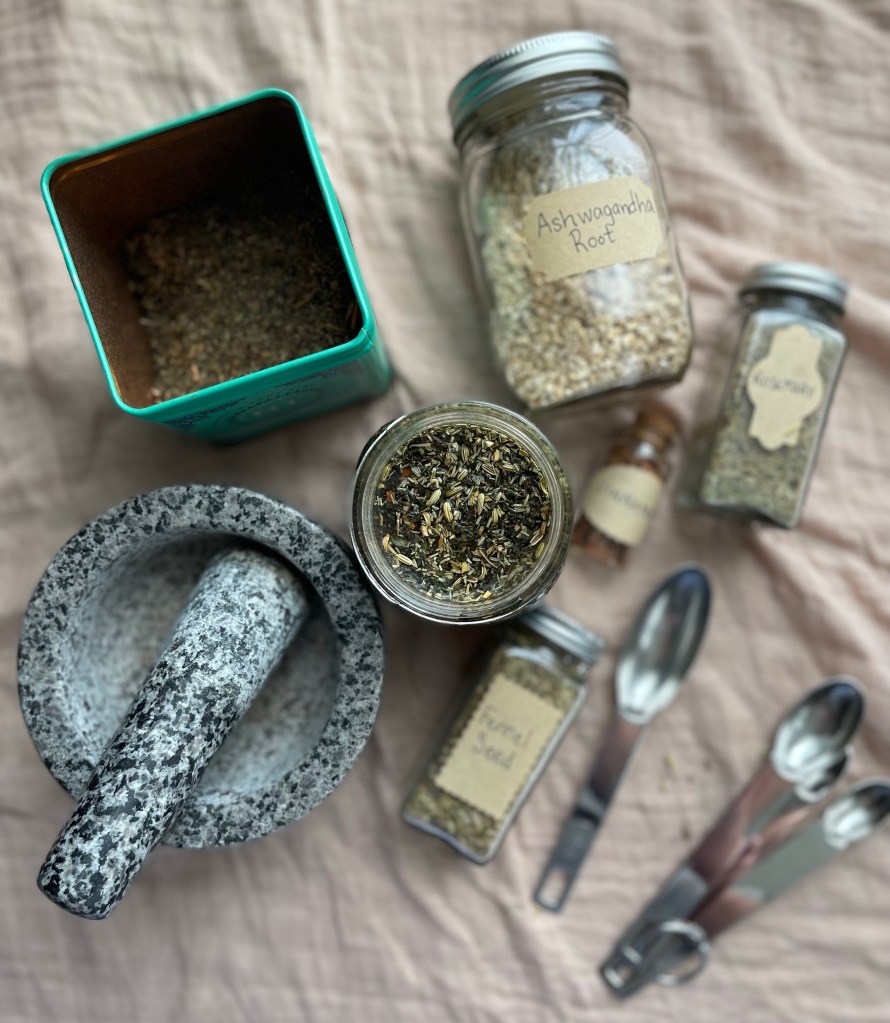
Mint is the star of the show here, paired with “really good Ceylon cinnamon” (please tell me you read that in Ina Garten’s voice 😂). I adore the sweet combo of cooling mint and warming cinnamon! With these I combined fennel seed, rosemary, and ashwagandha root. 

Then I topped it off with not the usual vodka, but GIN for more cozy, botanical, wintry vibes.

Here is the full recipe! For once, I actually loosely measured instead of doing it in parts!

Add herbs to a 16 oz glass jar. Cap and shake the jar thoroughly to mix herbs. Top with gin, filling to near the brim. Cap with a plastic canning jar lid or parchment paper and canning lid. Store in a cool, dark place, shaking daily, and strain after 6-8 weeks. Store in dark glass jars or dropper bottles if you can. 

You can take this tincture in tea, coffee, still or sparkling water, ginger ale, juice, or even cocktails! Ginger ale is my favorite vehicle for tinctures—if you prefer, use your favorite homemade or natural ginger ale.

Categories
Botanical Anthology Recipes

Roasted Roots: An Herbal Coffee Tradition

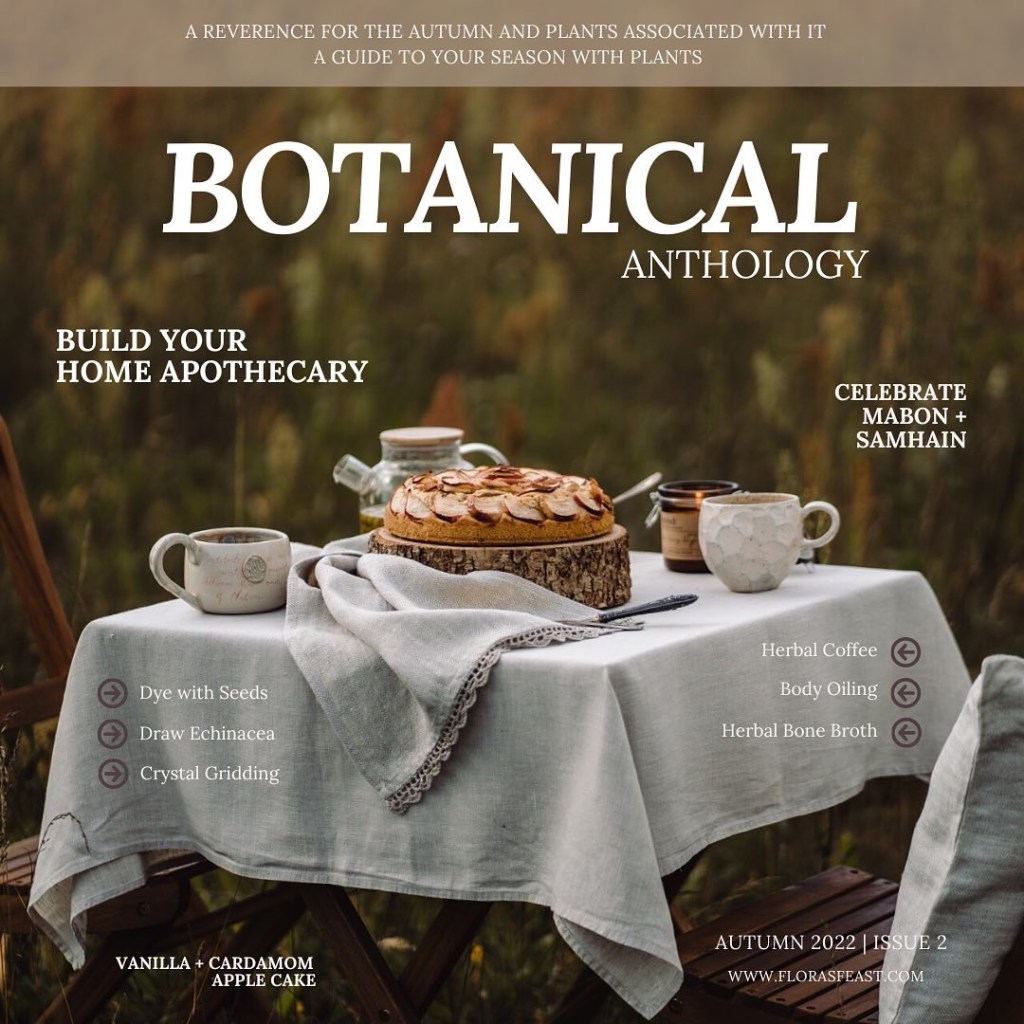
The Autumn Botanical Anthology digital magazine is available TODAY! To celebrate, I’m giving you a sneak peek at one of my articles from the publication below. But first, I must tell you a bit about this magazine I am so proud to be a part of!

Cover image by @marigold_stories

This labor of love is a seasonal, plant centered digital magazine bringing you over 45 articles from 30 contributors to incorporate autumnal herbs in your apothecary, kitchen, harvests, crafts, and fall celebrations.  

Until 9/28, grab your copy for $20 and receive the bonus cinnamon booklet. Download instantly and dive right into the 150+ pages of plant magic!

https://www.florasfeast.com/product-page/botanical-anthology-autumn-2022

Now without further ado, here is one of my articles!

Roasted Roots: An Herbal Coffee Tradition

Herbal coffee is a tradition that can be found, with a little digging, in many family histories. It was once common practice to replace or mix ground coffee with the roasted roots of plants like dandelion, chicory, and burdock. Not only did these easily-foraged plants make coffee go further, but they also cut some of the bitterness in the flavor. These roots also provided a nutritious and grounding alternative ingredient or replacement for coffee without the unwanted side effects of caffeine. Additional spices can be added to the mix for flavor and further health benefits, as well.

Here is a closer look at some of the ingredients you might add to your own roasted root blend.

Dandelion root

Strong liver, gallbladder, + kidney support 

Vitamin + mineral rich

Supports heart + balances blood pressure

Chicory root

Vitamin + mineral rich

Digestion support

Antioxidant rich

Supports liver + stomach

Burdock root

Kidney + liver support

Anti-inflammatory • Antioxidant • Detoxifying

Antibacterial + antifungal • Skin clearing

Blood sugar regulating

Cacao

Mildly stimulating

Synergizes other herbs

Heart + blood pressure support

Blood sugar regulating

Cinnamon

Digestive support • Circulation stimulating

Blood sugar regulating • Analgesic

Antimicrobial + antifungal

Antioxidants • Supports brain health

Warming + drying

Allspice, cardamom, cloves, fennel

Digestive support

Promotes circulation • Immune support

Soothing • warming • uplifting

When cooler autumn days make you long for more cups of cozy hot coffee, consider instead roasting and brewing up this alternative herbal blend. Get creative and formulate your own flavorful blend!  Or to get started, here is a simple and tasty recipe to try.

Materials

1 part dandelion root

1 part chicory root

1 part burdock root

½ part cinnamon chips

¼ part cacao nibs

¼ part allspice

Method

Preheat oven to 375°.

Spread dandelion, chicory, and burdock roots in a thin layer on a baking sheet. Roast for 10-15 minutes, stirring once or twice to prevent burning. Roast for a shorter time if using a dark or nonstick pan.

Allow to cool.

Mix in cacao nibs, cinnamon chips, and allspice. 

Grind in a coffee grinder and brew as you normally brew coffee. Approximately 1 heaping tablespoon of the mixture makes 1 strong cup of herbal coffee.

Notes

Opt for a coarser grind if brewing with a French press.

If using pre-roasted chicory root, add it when mixing in cacao, cinnamon, and allspice. 

This blend may also be mixed with coffee, using your desired ratio (50/50 is recommended), to reduce bitterness and caffeine.

Categories
Herbs and Herbalism plant wonder collective Recipes

Lemon Balm Simple Syrup Mocktails & Cocktails

Happy Tuesday! Whether you’re here from my Instagram post or you found this blog post first, welcome to the lemon balm party!

Lemon balm is a subtle but sweet and tasty herb for making simple syrup. I decided to brew some up and then experiment with using it to create some tasty mocktails and cocktails.

I used fresh lemon balm to make a small batch of simple syrup with my usual recipe: dissolve ½ cup of sugar in ½ cup of water on the stovetop over medium heat, add in about 1 cup of the herb, remove from heat and steep for 30 minutes, strain, and refrigerate for up to 2 weeks. 

Then came the fun part! Of course, you can use the syrup in any kind of tea (black, green, herbal) for a bit of sweetness and the calming, soothing effects of lemon balm. But I decided to take a few diy concoctions for a spin! My favorite combination was ginger ale, a splash of apple cider (apple juice works too), and about a tablespoon of lemon balm simple syrup. If you find your lemon balm syrup’s flavor turned out too subtle, though, you can always just combine it with seltzer or ginger ale so it can be the star of the show. 

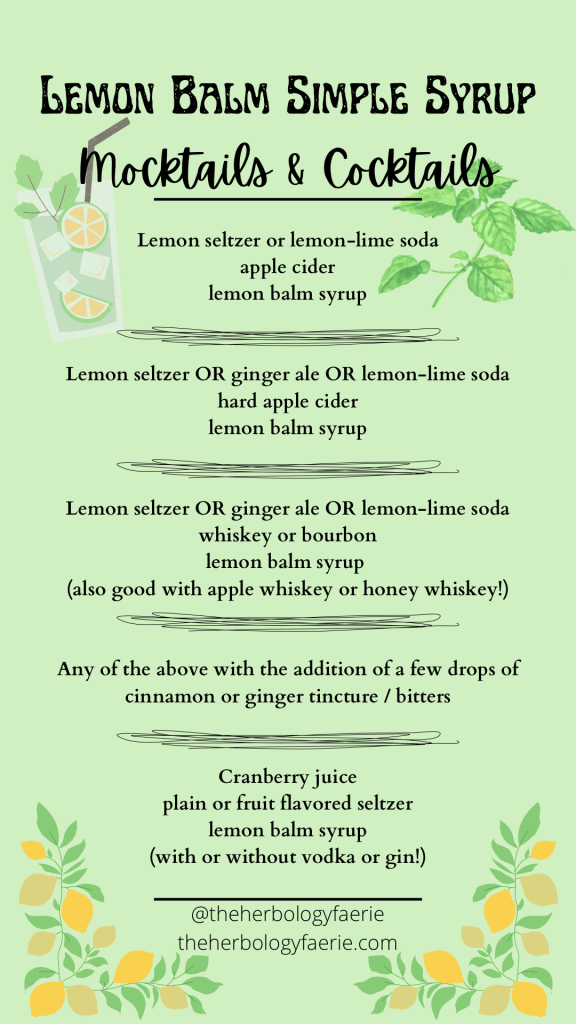
There are plenty more ways to combine lemon balm simple syrup in other mocktails and cocktails, too. Here are some of my favorite combinations!

Follow along for more Lemon Balm wonder throughout the day and join us this month through our hashtags and at @plantwondercollective on Instagram!

#plantwondercollective

#pwclemonbalm

Meet the participants!

@plantwondercollective

@florasfeastbotanicals

@wineberryadventurescouts

@herbalfae

@mamalibelula

@theherbologyfaerie

@herbal_pirate

@katwb444

Plant Wonder Collective: Connecting you to nature through food, drink, play, garden, medicine, magic and art.

Categories
Herbs and Herbalism plant wonder collective Recipes

Tulsi Heart-Support Tincture

You have a physical aspect to your heart, and an energetic and emotional aspect to your heart as well. It may seem like more of a metaphorical connection until you think deeply about it. That piercing aches in your chest that come periodically for some and often for others certainly points toward this inextricable connection. The emotional and energetic health of your heart can have a big impact on the physical health of your heart, and vice-versa.

Herbs can be an invaluable ally when it comes to both of these aspects of heart health, and what’s really amazing is that the same herbs can help with both. Nature certainly knows what she is doing!

My favorite herb for heart ease is tulsi. Tulsi is the Queen of Herbs, and she is a wonderful heart soother. She can aid in reducing inflammation and regulating blood pressure, but she can also help ease emotional tension and stress weighing your heart down. As both an adaptogen and a nervine, tulsi holds your hand and has your back.

I’ve brewed up a heart ease “potion,” a tincture that pairs tulsi with two other herbs that work on much the same dualistic levels for the heart: linden and hawthorn. Both of these lovely herbs are nervines often used to address blood pressure and cardiovascular health, as well as anxiety, stress, and depression. There are also folkloric and spiritual connections between all three of these herbs and protection.

Here is the recipe if you’d like to make this heart supporting tincture, too! I used the folk method, measuring in parts.

I will probably take a dropper full of this at a time in tea, ginger ale, or fruity seltzer water. It will be brimming with the intention of bringing ease and strength to my physical and emotional heart.

Have you worked with tulsi to ease and strengthen your heart?


Note: check with your physician before taking significant amounts of these herbs if you have high blood pressure, any heart conditions, or if you take any heart or blood pressure medications.


Follow along for more Tulsi wonder on Instagram with the Plant Wonder Collective! Participants share posts on the featured herb throughout the month. You can find us via

@plantwondercollective

#plantwondercollective

#pwctulsi

Plant Wonder Collective: Connecting you to nature through food, drink, play, garden, medicine, magic and art.

Categories
Herbs and Herbalism Recipes

Building a Foundation With Adaptogens

Not long ago, I shared a post that was a brief overview of nervine herbs and how they work to relax, tone, soothe, calm, and even gently stimulate the nervous system, digestive function, and circulation. Nervines are such gentle, steady friends!

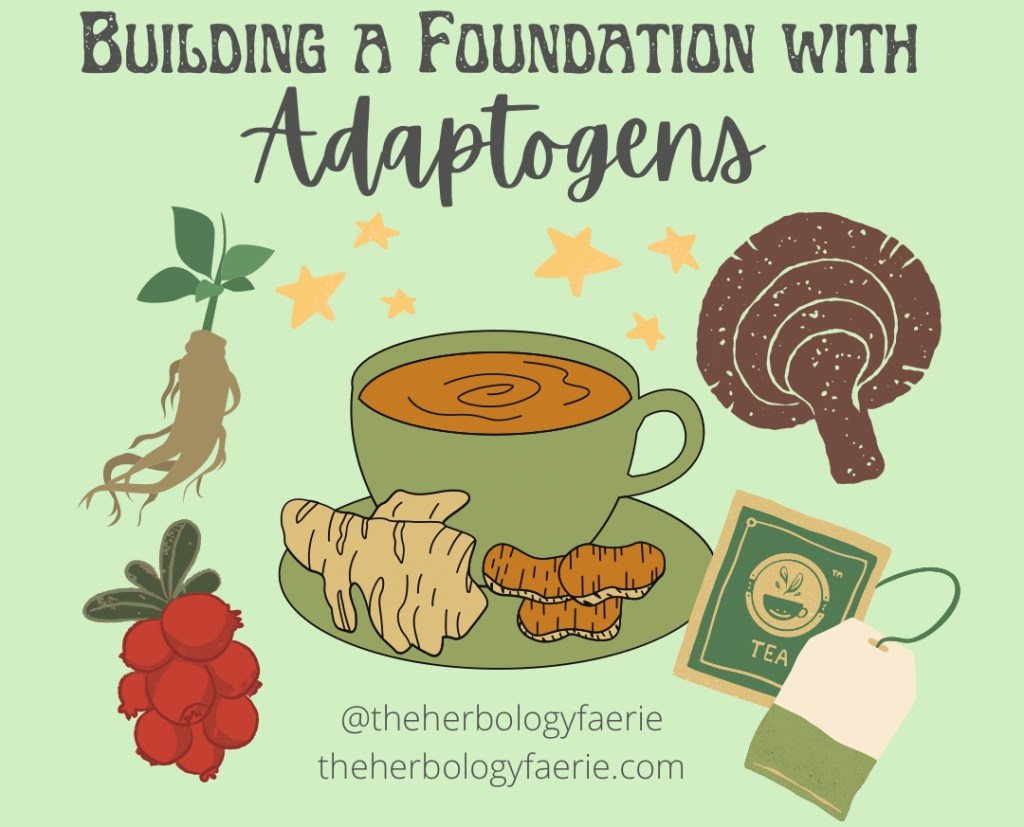
I thought today I would touch on another, often overlapping category of herbs and botanicals: adaptogens.

Where nervines primarily help calm, adaptogens are known for helping to stabilize and protect. They are extremely grounding; help to protect from fatigue, overwhelm, and burnout; aid against anxiety, depression, and chronic stress; support and protect brain function; build resilience and uplift; and aid the immune system. Basically, adaptogens are powerhouse holistic mental and physical health supporters! Though every person’s constitution and health situation is different and they must use caution before trying any new substances, many adaptogens are generally as safe as most nervines are in normal doses.

If you prefer a less clinical perspective, think of it this way. While nervines can offer you a steady, calming pulse of reassurance and mental and physical support, adaptogens can hold you up, offer you inner strength, sharpen your mind, and keep you going. Adaptogens have your back.

So, who are these adaptogenic allies? Here is a list of a few of my favorites!

Tulsi

Nettles

Rhodiola

Schisandra

Eleuthero

Ashwagandha

Reishi

Astragalus

Licorice

Maca

Green tea

Ginseng

Most of these adaptogens can be found where you purchase herbs online if you can’t find them in person—Mountain Rose Herbs is often where I go to look for herbs on this list.


And now it’s recipe time! I thought I’d share two adaptogen recipes: a tea and a tincture. The tea is a great one to sip in the morning—you might even want to replace coffee with it sometimes for a more stable energy boost. In both the tea and the tincture, I’ve added some nervines too for taste and added benefits.

Simple Strength Adaptogen Tea:

1 part green tea

1 part tulsi

½ part mint 

½ part cardamom

¼ part fennel


Adaptogen Tincture:

1 part ashwagandha 

1 part astragalus 

1 part nettle

½ part mint

Vodka

. . . . . . .

Place herbs in a clean glass jar. Fill about ½ inch above the herbs with vodka, using a wooden spoon to make sure the herbs are fully covered. Place waxed paper and canning lid or bpa-free plastic lid on jar and store in a cool, dry place. Shake the jar each day, and if the herbs rise above the vodka or appear to have absorbed too much, add a bit more to cover them. (You can also move your mixture to a larger jar mid-process if needed.) Allow to macerate for 4-6 weeks. Strain into dropper bottles; take one dropperful either in a glass of water, in another beverage, or under the tongue.


If your health situation supports it, then daily doses of a couple of adaptogens that are suited to your needs can be an amazing holistic health approach. Many people sip on an adaptogen-based beverage every day instead of coffee to build up a strong foundation and mental and physical reserves. (I actually enjoy drinking coffee that has adaptogens right in it!)

Are you new to adaptogenic herbs? If not, which are your favorites? If so, which do you think you’d like to try?

Categories
Herbs and Herbalism Recipes

Herb Profile: Hibiscus

July is flying by! I blinked and now we are halfway through this month already; I kind of can’t even get my bearings. My twins’ fifth birthday began the month, there are other family goings-on, and it’s already back-to-school shopping time as my kids go back to school at the end of this month! (We have a different school calendar than most where we live.) Needless to say, my brain is a bit scrambled. But I’m here to talk about a favorite herb of mine for this crazy time of year—it’s not a nervine, but it pairs well with them and has an incredibly soothing effect during this hottest part of the year. It’s hibiscus!

There are actually many varieties of hibiscus, but the species most commonly referred to and used for consumption is Hibiscus sabdariffa. This hibiscus is also called roselle or sorrel. It is likely native to North or West Africa but now grows in many places throughout the world, and has been long used in Africa, Southeast Asia, Latin America, and the Caribbean.

Hibiscus is considered a sour herb with cooling and moistening properties. It is especially helpful for heart health, blood pressure regulation, inflammation modulating, summer cooling, and nutrition as it’s dense with vitamins, minerals, and antioxidants. 

Hibiscus tastes delicious—hibiscus tea is strongly reminiscent of cranberry juice! My kids love making hibiscus and berry sun tea during the summer months and then chilling it in the fridge for a sweet, cooling summer beverage. When you’re making your own blends with hibiscus, think about combining it with chamomile or mint, cinnamon, honey, and your favorite fruits.

Hibiscus doesn’t do well as an alcohol tincture, so tea or food tend to be the most common ways it’s consumed. (It used to be commonly made into jam, and in some regions is eaten pickled!) Though that summer connection with hibiscus is strong, I also love using it as an ingredient in wintertime non-alcoholic mulled “wine” tea as it has that sharp, deep berry flavor that mimics wine and tastes great with warming spices. 

But since we are still very much in the heat of summer in the U.S. where I am, I’m going to share a super simple and refreshing hibiscus drink I love to make. It’s a very flexible recipe; use whichever ingredients you like or have on-hand!

——————————

Do you enjoy hibiscus? What are your favorite types of hibiscus drinks, or even foods if you’ve tried them?

——————————————

Sources:

• Rosalee de la Foret, Herb Mentor monograph

• Apothecary At Home’s hibiscus herb-of-the-month club box

• Sarah Farr, Healing Herbal Teas

Categories
Herbalism in Fiction Recipes Tea

Courage Tea

I just finished reading the third and fourth books in the Practical Magic series by Alice Hoffman, Magic Lessons and The Book of Magic. I do not exaggerate when I say these books have been life altering for me. They capture so much, I can’t even put a fraction of it into words. All I can say is, go read these magical books!

Now, a thread that runs through all the stories is courage: courage to love, courage to get hurt, courage to take leaps and trust others and trust yourself. This is illustrated throughout the books by the frequent mention of Courage Tea. It’s an old family recipe that dates back to the Owens women who started it all, Hannah and Maria. The recipe has been passed down through the centuries to bolster the Owenses in the face of all the trials and demands of life, as well as those in need they minister to.

Hints of the recipe are dropped throughout the series, but the whole recipe is never explicitly stated. As explained in The Rules of Magic:

Aunt Isabelle refused to hand over the formula for Courage Tea. That, she said, was one recipe you had to discover for yourself.”

Piecing together the hints and clues of the Courage Tea recipe from the books is actually a pretty fun scavenger hunt. I’ve spent a good deal of time on this exercise, and have filled in the blanks with my own additions as Aunt Isabelle instructed. I encourage you to do the same and come up with your own version if you read the books! But until then, here is my interpretation:

Courage Tea

Instructions:

To make a single cup of tea, add 1 tablespoon to a tea strainer, eco-friendly tea bag, or French press. Pour about 1 1⁄2 cups hot water over the tea and steep for 4 to 5 minutes. Add sugar or honey to taste, if desired.


(A few notes on ingredients: I found dried currants at the grocery store but they’re also sold online in some places. I use powdered vanilla bean in tea recipes because it is more affordable than whole vanilla beans while still imparting natural vanilla flavor; you can also add a dash of vanilla extract instead. You may want to adjust the thyme to taste based on how savory you like your tea to taste, as it can be quite strong. And, if you’d prefer a decaf version, you can leave out the green tea or replace it with rooibos.)

What would you put in your version of Courage Tea?


For educational purposes only. Not intended for medical advice. Always consult your physician.

*This post contains affiliate links, which means if you choose to buy something from a link that I share, I will make a small percentage of the sale *at no extra cost to you*.