Categories
Herbs and Herbalism seasons

Herbs to Love in January

January is such an odd time of year. We feel the pull to start things anew at the turning of the year, and yet we are also drawn to habits and practices of wintering and hibernation, especially those of us residing in places that get cold and snowy in the winter. It’s a strange dichotomy that tugs us from two directions! To get our footing firmly beneath us, it is best to try and tune outside influences out and pay attention to what our bodies and spirits are calling for. Not always an easy task, but certainly rewarding and stabilizing!

To that end, here are a few of the herbs I love to lean on in January for extra winter mind, body, and spirit support-

Eucalyptus: This camphorous, fragrant plant that is native to Australia but now naturalized much more widely is a wonderful winter ally due to its healing properties. There are few plants more soothing and refreshing to enjoy in a steam, summer pot, bath, or tea than eucalyptus – it is a go-to for easing cold symptoms and promoting healthy breathing. In spiritual terms eucalyptus has ties to water, the moon, feminine energy, and healing and protection. It has long been a traditional plant in smoke cleansing and is a lovely addition to smoke bundles and loose incense, and can be utilized in talismans and sachets for protection and health.

Hops: Though some might find hops an unusual choice for January, I find it to be a de-frazzling, nourishing, sleep-aiding miracle worker after a busy and stressful December. Hops helps you unwind, destress, sleep, cools off tense feelings, heals skin, and soothes digestion. This makes it an exceptional plant to depend on as a strong reset button of sorts! Hops has traditional uses in teas, baths, and especially sleep pillows and sachets – it is not just for brewing beer, though that is certainly also a big part of its history! This plant is associated with the air element, the planet Mars, the goddesses Brighid and Demeter, as well as Imbolc, winter, good dreams, and healing. 

Echinacea: I adore this flower, also called coneflower. It is native to the U.S. and is best known as a cold and flu remedy—so important this time of year! It is very stimulating to the immune system and isn’t something to reach for daily, but to certainly work with in times of need. It also helps with acne and other skin issues and infections. Use in teas and salves for these reasons! But make sure to source your echinacea responsibly, as it is a victim of over-harvesting and is an at-risk plant as a result. Echinacea also has spiritual ties to strengthening, so consider adding it to workings for that purpose and even to adopt the imagery (a responsible usage that doesn’t harm the species!) for strength as well. 

Schisandra: This five-flavored wonder berry is an equalizing adaptogen to get the body back into a better state after the holidays. It offers liver support, sleep support, heart support, balance, energy, immune support, and so much more. This plant has long been valued in Traditional Chinese Medicine as a restorative, nourishing botanical that can help to reset and rebuild the chronically stressed and wrung-out individual. One of the best ways to take schisandra is via decoction (long-simmered tea) to ensure extraction of all the good stuff it has to offer. In metaphysical terms, schisandra is thought to have the same balancing effect on the spirit and is highly valued for re-centering and helping to stabilize energy. 

Astragalus: This plant shows up in my January apothecary for very similar reasons to schisandra! Astragalus is a member of the pea family, and is a sweet root that supports and sustains. This adaptogen aids in immunity, helps with fatigue, promotes resilience, supports the heart and liver, improves digestion, and so much more. It is a wonderful herb to work with after you have been ill and need to rebuild your energy stores, and also after periods of stress when you feel wrung out and need restorative aid. Try it in a chai decoction – a wonderful and tasty way to enjoy this root! Like schisandra, astragalus is also quite important in TCM. It is associated with protection, strength, luck, enhancing vitality, and even boosting divination. 

Lemon: This citrus fruit is a tart, refreshing vitamin C boost in the cold of winter, with antimicrobial properties to help ward off winter illness, aromatherapy perks in a winter simmer pot, and useful properties for homemade cleaning products. Lemon works in so many applications, tastes and works wonderfully in so many recipes, and is an all-around powerhouse of a botanical ally! It is associated with the moon and water, as well as love, joy, friendship, purity, and longevity. 

Which of these are herbs YOU love in January? Or do you have some different favorites?
Categories
Craftbrunch Folklore Recipes Tea

Chang’e  and the Moon Rabbit: Immortality Elixir Tea 

As a lover of all things autumn, I love branching out and learning about how different cultures mark my favorite season! I have recently learned a bit about the Mid-Autumn Festival in Chinese culture, which takes place around mid-September to early October and centers around the timing of what we know as the Harvest Moon. 

During this autumn equinox festival, celebrations focus on the harvest—with gratitude and family gatherings; the moon; Chang’e (the goddess of the moon); and her companion, a white rabbit who pounds herbs in his mortar and pestle to make immortality elixir. Other symbols and parts of the celebration include lanterns, mooncakes, cassia wine, and burning incense as an offering to Chang’e.

This festival and the lore surrounding Chang’e and the Moon Rabbit are a wonderful Craftbrunch theme! There are lovely picture books on this folklore to share with children, you can decorate lanterns and make moon cakes, and more. 

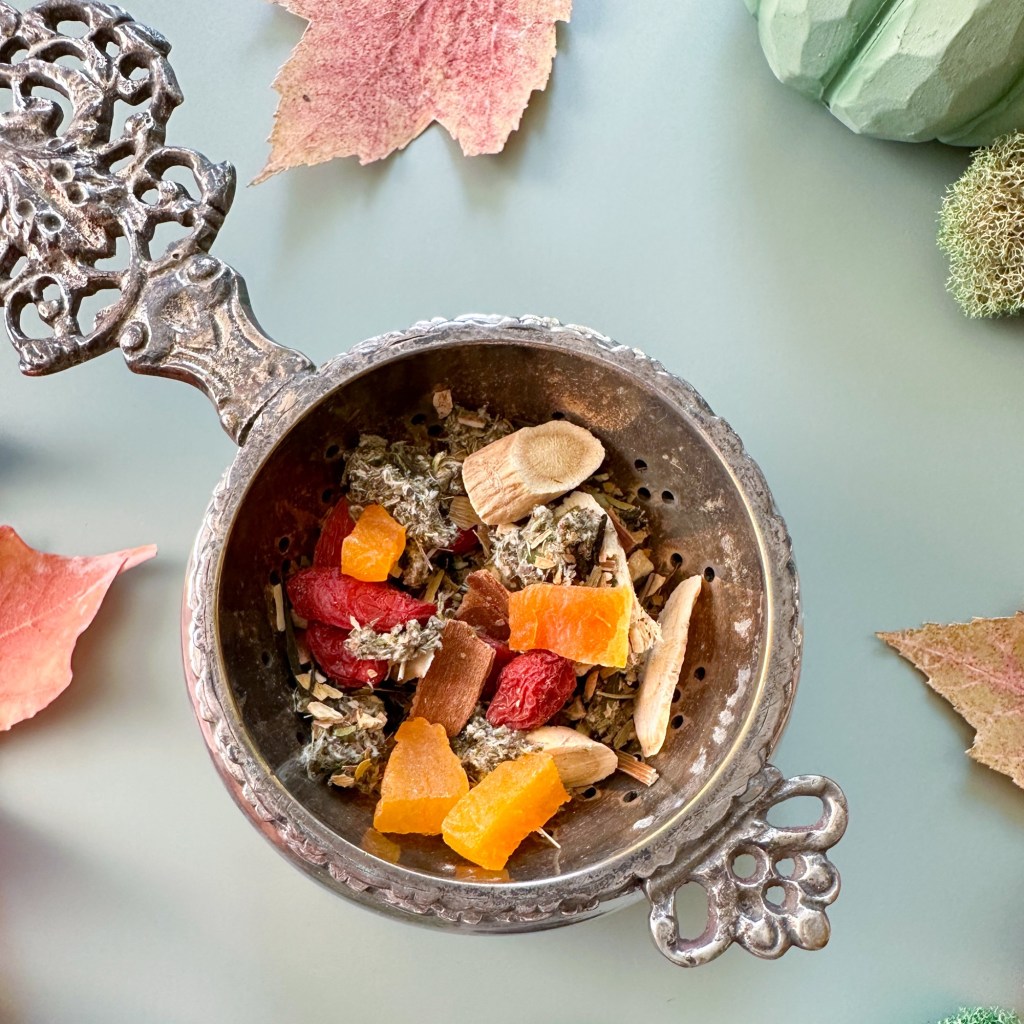
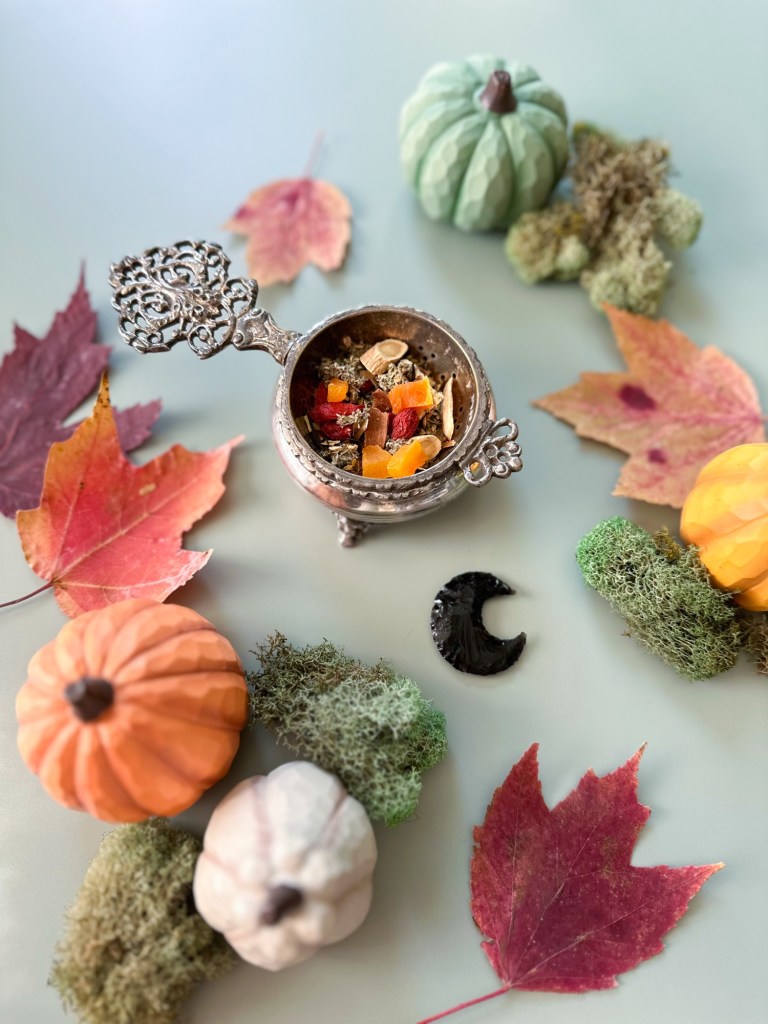
My contribution to the #autumnnaturemagic #Craftbrunch celebration I’ve joined on Instagram is a tea blend based on the idea of the immortality elixir that the Moon Rabbit makes! Most of the ingredients are longevity herbs in TCM (Traditional Chinese Medicine), and the cassia cinnamon and dried apricots are present to represent cassia wine, which I’ve not tried but I read it tastes like peaches or apricots!

(This tea is safe for adults and kids alike, but if you prefer you can substitute decaf green tea or leave it out altogether.)

Here is the recipe! It should be enough for a few cups of tea but you can increase accordingly for the number of people you’re serving. 


Moon Rabbit’s Immortality Tea

Ingredients:

1 Tbsp Green tea

1 Tbsp Astragalus root

1 Tbsp Ginkgo (I like golden ginkgo)

1 Tbsp Mugwort

1 Tbsp Goji berries, dried

½ Tbsp Ginger, dried, or 1-2 small knobs fresh

Cassia cinnamon, 1-2 sticks broken into pieces

Dried apricots – 3-4, chopped

Instructions:

Brew for 3-4 minutes with just-boiled water; you can brew longer if you omit the green tea, or perhaps put the green tea in a separate tea strainer and remove it before the other ingredients. 

Garnish with cinnamon sticks and dried apricots if you like! Sip this tea before a lantern-lit autumn hike under the moonlight!


For educational purposes only. Not intended for medical advice. Always consult your physician.

*This post contains affiliate links, which means if you choose to buy something from a link that I share, I will make a small percentage of the sale *at no extra cost to you*.

Categories
Herbs and Herbalism Recipes

Building a Foundation With Adaptogens

Not long ago, I shared a post that was a brief overview of nervine herbs and how they work to relax, tone, soothe, calm, and even gently stimulate the nervous system, digestive function, and circulation. Nervines are such gentle, steady friends!

I thought today I would touch on another, often overlapping category of herbs and botanicals: adaptogens.

Where nervines primarily help calm, adaptogens are known for helping to stabilize and protect. They are extremely grounding; help to protect from fatigue, overwhelm, and burnout; aid against anxiety, depression, and chronic stress; support and protect brain function; build resilience and uplift; and aid the immune system. Basically, adaptogens are powerhouse holistic mental and physical health supporters! Though every person’s constitution and health situation is different and they must use caution before trying any new substances, many adaptogens are generally as safe as most nervines are in normal doses.

If you prefer a less clinical perspective, think of it this way. While nervines can offer you a steady, calming pulse of reassurance and mental and physical support, adaptogens can hold you up, offer you inner strength, sharpen your mind, and keep you going. Adaptogens have your back.

So, who are these adaptogenic allies? Here is a list of a few of my favorites!

Tulsi

Nettles

Rhodiola

Schisandra

Eleuthero

Ashwagandha

Reishi

Astragalus

Licorice

Maca

Green tea

Ginseng

Most of these adaptogens can be found where you purchase herbs online if you can’t find them in person—Mountain Rose Herbs is often where I go to look for herbs on this list.


And now it’s recipe time! I thought I’d share two adaptogen recipes: a tea and a tincture. The tea is a great one to sip in the morning—you might even want to replace coffee with it sometimes for a more stable energy boost. In both the tea and the tincture, I’ve added some nervines too for taste and added benefits.

Simple Strength Adaptogen Tea:

1 part green tea

1 part tulsi

½ part mint 

½ part cardamom

¼ part fennel


Adaptogen Tincture:

1 part ashwagandha 

1 part astragalus 

1 part nettle

½ part mint

Vodka

. . . . . . .

Place herbs in a clean glass jar. Fill about ½ inch above the herbs with vodka, using a wooden spoon to make sure the herbs are fully covered. Place waxed paper and canning lid or bpa-free plastic lid on jar and store in a cool, dry place. Shake the jar each day, and if the herbs rise above the vodka or appear to have absorbed too much, add a bit more to cover them. (You can also move your mixture to a larger jar mid-process if needed.) Allow to macerate for 4-6 weeks. Strain into dropper bottles; take one dropperful either in a glass of water, in another beverage, or under the tongue.


If your health situation supports it, then daily doses of a couple of adaptogens that are suited to your needs can be an amazing holistic health approach. Many people sip on an adaptogen-based beverage every day instead of coffee to build up a strong foundation and mental and physical reserves. (I actually enjoy drinking coffee that has adaptogens right in it!)

Are you new to adaptogenic herbs? If not, which are your favorites? If so, which do you think you’d like to try?