Categories
herbal skincare Herbs and Herbalism

Beauty in Bloom!

I am extremely late to be posting this, but…I wanted to share about a publication I contributed two articles to! I am so excited to have had the opportunity to contribute to this gorgeous publication.

Beauty in Bloom” is a collaborative effort of 18 herbalists sharing 30+ recipes and DIY projects to help you with herbal self care and natural beauty from the inside out.
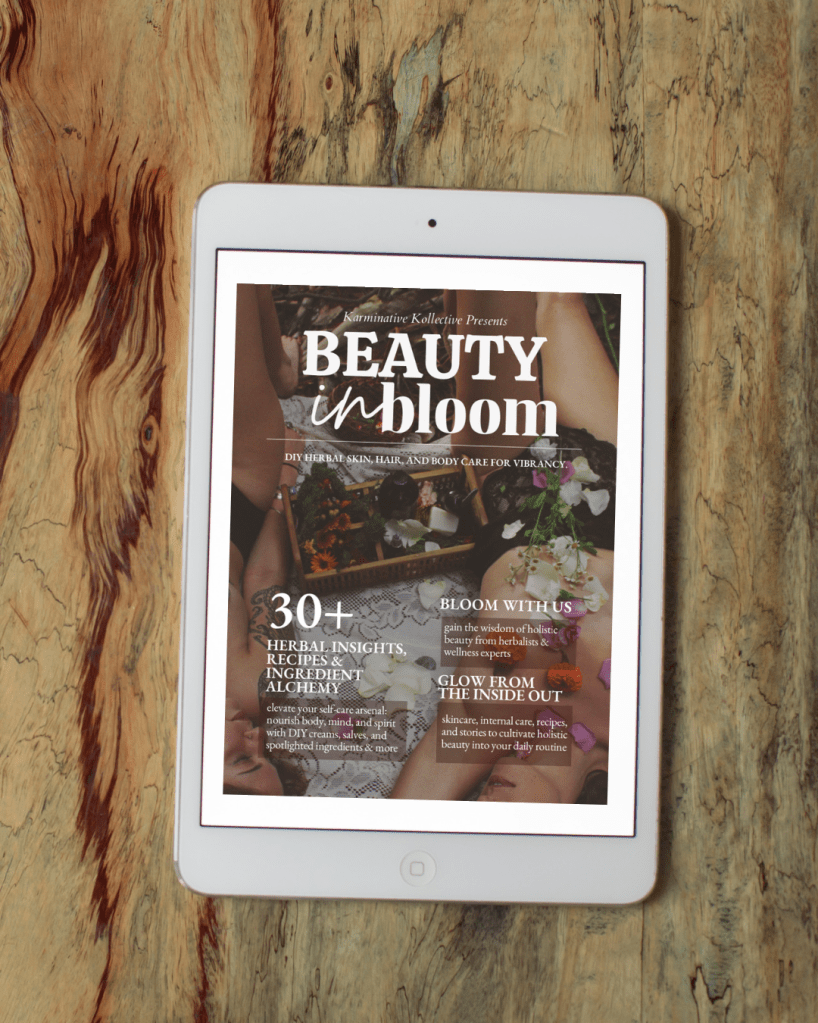
Holistic Beauty Glow-Up

At the heart of Beauty in Bloom lies the mission to redefine beauty as a holistic, interconnected experience beyond skin-deep. We believe in the power of the plants to nourish, heal, and elevate our well-being, and this belief has fueled the creation of our publication.

Beauty in Bloom is more than a beauty guide; it celebrates the synergy between humanity and nature. Our mission is to inspire you to embrace beauty practices that enhance your external radiance and honor the earth.

You’ll learn how to make your own skincare and hair care products and health remedies from herbalists and holistic health professionals, Including:

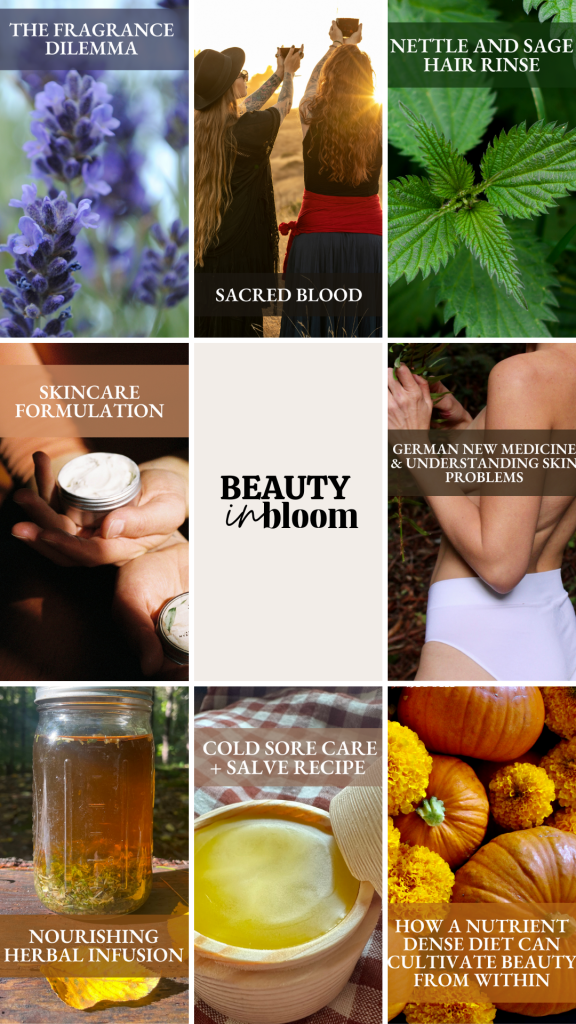
  • Healing Psoriasis Holistically- Tips & Tricks to support psoriasis
  • Cold Sore Care- Holistically formulate Herbal Salve & Tea Infusions for Cold Sores
  • DIY Magnesium Oil- For Sore Muscles & Nervous System
  • Gut Loving Mocktail- Mocktails for IBS, GERD, Bloating and Digestive Issues
  • DIY Herbal Cream Making and Cream Recipe
  • DIY Calendula + Olive Oil Lotion Bars
  • DIY Green Tea + Matcha Bath Soak
  • DIY Nettle + Sage Hair Rinse
  • Dina Charya- Dive into 6 Ayurveda self-care practices
  • Hibiscus Tinted Lip Balm Recipe- Avoid toxic chemicals in most colored lip products and make a nourishing one from commonly found herbs.
  • DIY Rendering Tallow for Skin Health
  • How a Nutrient-Dense Diet Can Cultivate Beauty From Within
  • Nurturing Your Skin’s Guardian- The Acid Mantle and Tending To Skin Health
  • Herbal Glow Gycerite Recipe for Glowing Skin
  • Thyme- Herbal Spotlight on Thyme and The Benefits for Skin Health
  • Held By The Earth- Self-Care and Connecting to Natural Medicines as a Birthright
  • Sacred Blood- Rituals for Menstrual Cycle Stages
  • Herbal Allies for The Lymphatic System
  • Kakuda Plum- Ingredient Spotlight and Skin Care Uses
  • Skin Care Formulation with Australian Lemon Myrtle and sandalwood
  • German New Medicine- Knowing Patterns for Wellness and Healthy Skin
  • Mallow Succus- Using Mallow for Hair Rinse and Body Nourishment
  • Chamomile- Creating Healing Serums for Skin
  • Supporting the Nervous System for Healthy Skin
  • From Head to Toe- Self-Care Practices and a DIY Spa Day from home
  • The Fragrance Dilemma- Toxic Phthalates and the Impact on Skin & Endocrine Systems

All of the projects are easy to make and use commonly found herbs, flowers, oils, and other natural ingredients. No fancy equipment or previous experience is required! “Beauty in Bloom” is packed with basic formulas to make your own one-of-a-kind creations. Going organic has never been easier or more affordable. With the wisdom of 18 Herbalists, “Beauty in Bloom” empowers you to use local, natural ingredients to make something beautiful, effective, and good for you and your family.
Choose your path to “Beauty in Bloom”:

📖 Printed Petals: Immerse yourself in the tangible beauty of “Beauty in Bloom.” Click [here] to order your printed copy and receive a carefully crafted guide delivered to your doorstep.

🌐 Digital Bloom: Dive into the world of “Beauty in Bloom” instantly. Click [here] to secure your digital copy now. Access over 30 recipes and formulas for DIY skincare and holistic well-being from the comfort of your digital device.

What to Expect in Beauty in Bloom:

DIY Herbal Formulas: Unleash your creativity with over 30 recipes and formulas for homemade body lotions, skin creams, herbal medicines, and more.

Educational Insights: Dive deep into topics like Ayurveda, hormonal balance, and the benefits of natural ingredients, guided by herbalists and holistic health professionals.

Empowering You: “Beauty in Bloom” is more than a publication; it’s your companion on the path to self-empowerment, enabling you to take charge of your beauty and well-being.

Join us in redefining beauty as a holistic experience that begins within and blooms into a radiant, harmonious existence.

Let the beauty revolution begin!

Categories
Botanical Anthology Recipes

Strawberry Lavender Julep by Kristine Clay

This is an excerpt from the Summer edition of Botanical Anthology. A plant lover’s dream, it is a seasonal, plant centered quarterly publication bringing you over 45 articles from 46 contributors to incorporate herbs in your apothecary, kitchen, summer foraging and gardening, crafts, and celebrations.

This herbal magazine, featuring remedies and recipes with medicinal plants for budding herbalists, can be purchased as a digital version here and as a printed version here.


Photo by Kristine Clay

If you enjoy the classic herbal cocktail, the mint julep, then this fruity, floral rendition is sure to become a fast favorite.

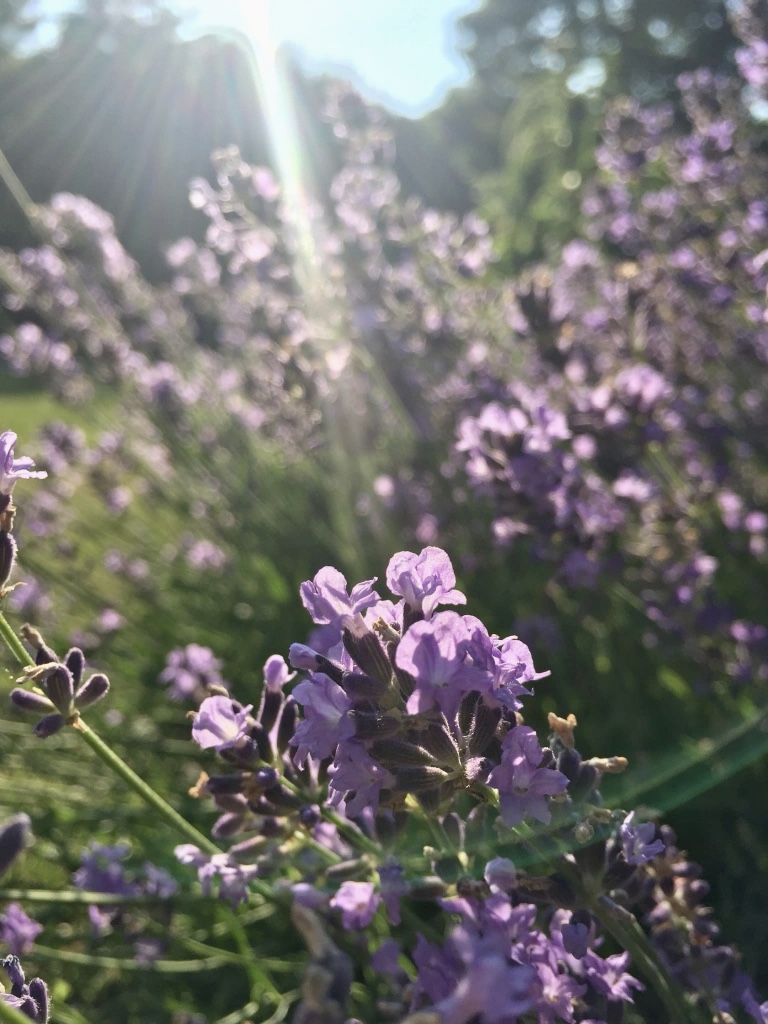
Infused whiskey lends stunning color and bursts with fresh strawberry flavor, while lavender rounds out the beverage with pleasant herbaceous notes that hint of mint. Lavender can ease stress and anxiety, helping you to unwind as you sip.

Serve this boozy beverage at your next get together or enjoy with friends on a warm summer evening. 

Strawberry Whiskey Materials

2 c strawberries, fresh, sliced 

Whiskey

16 oz jar

Strawberry Whiskey Method 

Place strawberries in a jar. 

Pour whiskey over top, filling the jar.

Cap tightly with a lid and shake well. Let the strawberries steep in whiskey for at least 1-2 weeks, shaking daily or as often as you remember. 

You can use the whiskey after about a week, but giving it a full 2 weeks to infuse will allow the flavor to really develop.

Note

If you won’t be using the whiskey right away, there’s no need to strain out the infusing strawberries after 2 weeks. Longer steep times allow the flavor to deepen, and can make for a very tasty liquor.

Photo by Kristine Clay

Lavender Simple Syrup Materials

¼ c lavender, dried

½ c sugar

¼ c lime juice

¼ c water

Lavender Simple Syrup Method

Add the ingredients to a small saucepan.

Bring the liquid to a rapid boil then reduce the heat and simmer lightly for about 10 minutes. 

Remove from heat and let the syrup cool. 

Strain out the lavender pieces and bottle the syrup. 

Store leftover syrup in the refrigerator.

Photo by Kristine Clay

Strawberry Lavender Julep Materials

1 ½ f. oz strawberry whiskey

½ fl oz lavender simple syrup

Ice cubes

Fresh lavender sprigs 

Club soda or sparkling water, optional 

Strawberry Lavender Julep Method

Pour whiskey and simple syrup into a glass and stir. 

Add ice. 

If desired, top with a splash of club soda or sparkling water. 

Garnish with a sprig or two of fresh lavender.

Note

This recipe makes one cocktail.


Article written by Kristine Clay. Kristine is a mother, herbalist, & writer who lives on an off-grid homestead in the Ecuadorian Andes. She enjoys crafting botanical concoctions, baking, and hiking with her partner in the eco-sanctuary they steward. You can read her musings about herbs, nourishing foods, & holistic mothering on her blog: mamalibelula.com and find out more about Andean plants, regenerative land management, & raising rabbits at: SierrayCielo.org.

Categories
Herbs and Herbalism Tea

Cold-Brewed Herbal Tea

Cold brewing is a pretty popular method for making coffee. It’s easy, it takes the bitter edge out of the coffee, and your brew is ready and waiting when you get up in the morning. But cold brewing isn’t necessarily everyone’s go-to method when it comes to herbal tea. While cold brewing isn’t ideal for every situation, it can definitely be an incredible tool for making herbalism simple, accessible, and an easily integrated part of your daily routine! (And for the record, it is my go-to more than half of the time!)

When is cold brewing herbal tea ideal?

There are plenty of scenarios in which cold brewing your herbal tea overnight in the fridge is a great option. 

If you’re using fresh herbs like lemon balm, mints, and rosemary, cold brewing brings out all the freshest, greenest flavors and energies and pairs well with fresh fruit.

When working with bitter herbs like chamomile and nettles, cold brewing works wonderfully to cut the bitter edge. This also goes for black and green teas—and it renders them slightly less tannic and caffeinated, if that’s what you’re going for. And if you’re a sweetener or sugar type, you might even find that your cold brewed teas don’t need any added sweetness like hot teas do!

Some herbs are more mucilaginous and simply do better in cold water, or are at least very well-suited to cold water. Marshmallow root, licorice root, and hibiscus fall into this category.

For convenience, I love to cold brew big jars of my daily sips overnight. I use this method especially for daily nourishing and supportive tonic teas I want to sip through the day. They’re just there, ready and waiting when I need them—no excuses or barriers to getting my “health potion!” And if I’m going to be on the go, I can just grab my jar and take it with me, for even more convenience. 

Obviously cold brewing your tea is especially useful in hot weather, or anytime if you’re simply a cold beverage person. You don’t have to wait for the hot tea to cool down if you brew it cold!

When is cold brewing not the best method for herbal tea?

Sometimes, there are certain factors that make cold brewing teas less than ideal. Here are a few occasions to think twice about cold brewing. 

If you’re using your tea to treat a cold or cough, hot tea may be best. Hot tea extracts quickly to address your symptoms, it can make a stronger tea more quickly, and the heat may soothe your nose, sinuses, mouth, throat, and lungs more effectively. 

There are certain botanicals that just don’t brew well, or as well, in cold water. Roots, woody herbs, and seeds tend to need hot water in the form of a regular hot brew, or even a decoction, to extract all the flavor and constituents effectively. Some examples of these herbs include chai-type spices (cloves, dried ginger, allspice), dandelion and burdock roots, astragalus, reishi, dried hawthorn berries, dried rose hips, and many others. 

Even a few tender herbs sometimes do better when brewed hot, too, if you’re looking to extract vitamins, minerals, and other nutrients more fully to make a true “nourishing infusion.” Nettles are a good example of this—though I personally dislike the taste of them as a hot tea enough that I’ll take my chances with the lesser amounts of nutrients in a cold brew! Raspberry leaf and red clover are other herbs that must be brewed hot if your goal is to extract the most nutrients possible.

Cold weather is also, of course, a possible factor. Sometimes you prefer a cozy, warm drink to encourage circulation and warm you up!

What do you need to cold brew herbal tea?

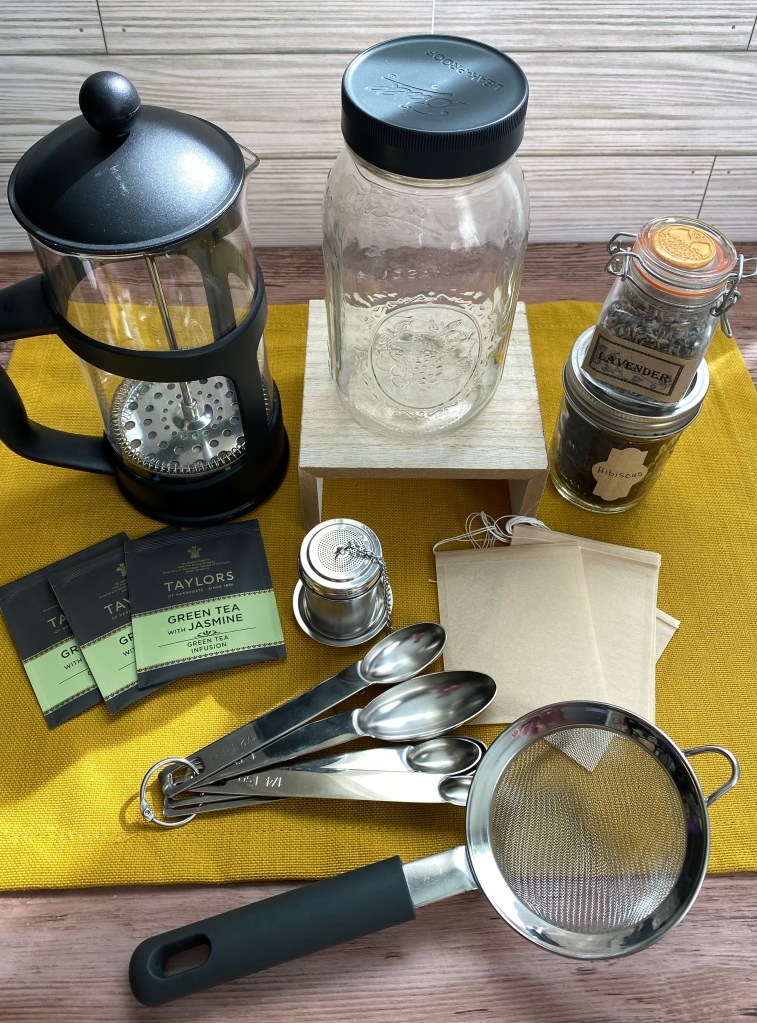
Cold brewing herbal tea does not require much in the way of equipment, tools, or skills. The most important part is a container—large glass jars work best—and herbs! You can even begin getting your feet wet by cold brewing about 3 store bought tea bags at a time per quart jar. (Jasmine green tea bags are my favorite to do this way.)

You will also need a way to strain your tea, whether you opt for a mesh kitchen strainer, a metal tea strainer, or environmentally-friendly paper tea bags (my usual choice for convenience). You can also bypass all these separate items by using a French press (reserved only for tea and not used for coffee) or a cold brewing jar.

Method

My method for cold brewing herbal tea is very simple and takes little effort or thought. I either place three store-bought tea bags into a quart jar, fill with water, and place in the fridge overnight, or I fill a large eco-friendly paper tea bag with dried herbs and use the same sized jar, also brewing in the fridge overnight. 

Here are some ideas if you’d like specific recipes for loose leaf, dried herbs to cold brew. In these recipes I’m using a quart jar and the parts are probably heaping tablespoons.

1 part chamomile, 1 part lemon balm, ½ part lavender

1 part mint, 1 part nettles, ½ part rosemary, ½ part lavender

1 part calendula, 1 part chamomile, 1 part elderflower, ½ part ginger

1 part tulsi, 1 part hibiscus, 1 part mint

Have you ever tried cold brewing your herbal tea? Which herbs are your favorite to cold brew?

Categories
Herbs and Herbalism Recipes

Herb Profile: Hibiscus

July is flying by! I blinked and now we are halfway through this month already; I kind of can’t even get my bearings. My twins’ fifth birthday began the month, there are other family goings-on, and it’s already back-to-school shopping time as my kids go back to school at the end of this month! (We have a different school calendar than most where we live.) Needless to say, my brain is a bit scrambled. But I’m here to talk about a favorite herb of mine for this crazy time of year—it’s not a nervine, but it pairs well with them and has an incredibly soothing effect during this hottest part of the year. It’s hibiscus!

There are actually many varieties of hibiscus, but the species most commonly referred to and used for consumption is Hibiscus sabdariffa. This hibiscus is also called roselle or sorrel. It is likely native to North or West Africa but now grows in many places throughout the world, and has been long used in Africa, Southeast Asia, Latin America, and the Caribbean.

Hibiscus is considered a sour herb with cooling and moistening properties. It is especially helpful for heart health, blood pressure regulation, inflammation modulating, summer cooling, and nutrition as it’s dense with vitamins, minerals, and antioxidants. 

Hibiscus tastes delicious—hibiscus tea is strongly reminiscent of cranberry juice! My kids love making hibiscus and berry sun tea during the summer months and then chilling it in the fridge for a sweet, cooling summer beverage. When you’re making your own blends with hibiscus, think about combining it with chamomile or mint, cinnamon, honey, and your favorite fruits.

Hibiscus doesn’t do well as an alcohol tincture, so tea or food tend to be the most common ways it’s consumed. (It used to be commonly made into jam, and in some regions is eaten pickled!) Though that summer connection with hibiscus is strong, I also love using it as an ingredient in wintertime non-alcoholic mulled “wine” tea as it has that sharp, deep berry flavor that mimics wine and tastes great with warming spices. 

But since we are still very much in the heat of summer in the U.S. where I am, I’m going to share a super simple and refreshing hibiscus drink I love to make. It’s a very flexible recipe; use whichever ingredients you like or have on-hand!

——————————

Do you enjoy hibiscus? What are your favorite types of hibiscus drinks, or even foods if you’ve tried them?

——————————————

Sources:

• Rosalee de la Foret, Herb Mentor monograph

• Apothecary At Home’s hibiscus herb-of-the-month club box

• Sarah Farr, Healing Herbal Teas

Categories
Herbs and Herbalism

Recharging Your Battery With Nervine Herbs

I can’t believe it’s almost June! May has really flown by. Before mental health month is over, I thought I would jump on the blog and talk a bit about one of my favorite types of mental health support: nervine herbs!

Many nervine herbs are gentle and safe for frequent use and can be a part of your daily mental health support regimen. Nervines are known for their benefits to the nervous system, hence the name. They support, tone, nourish, and soothe, offering us calming, anti-anxiety, digestion soothing, pain relieving, and grounding benefits, among many others.

Here are a few of my favorite nervine herbs:

Chamomile

Rosemary (relaxing / stimulating)

Tulsi

Lavender

Lemon balm

Linden

Hawthorn

Elderflower

Rose

Passionflower

Skullcap

Peppermint (stimulating)

Cacao (stimulating)

Most of the preceding list of herbs are normally categorized as relaxing nervines. Relaxing nervines do just what they sound like: they help to relax your nervous system. Stimulating nervines don’t stimulate in the caffeine sense; instead, they are uplifting and stimulate digestion. And some nervines do both at the same time! Also, each different nervine has its own particular chemical constituents that aid in different ways on top of the nervine qualities. For example, hawthorn is amazing for heart health, passionflower and skullcap are helpful in aiding sleep, and chamomile is known especially for helping with pain, cramps, indigestion, and fever.

As with anything, consult your doctor as needed and don’t take huge doses of any herb over short periods of time. But do think about branching out and trying different nervines to see what works well to support your particular needs. 

And since summer is fast approaching here in the northern hemisphere, I am going to leave you with a simple, cooling and soothing infusion recipe featuring nervine herbs. This is a favorite of mine! You can make this with fresh or dried herbs (I grow all of these in my mini herb garden); drink it hot or cold (my summer preference is definitely cold); and sun brew, cold brew overnight in the fridge, or infuse with hot water (I usually prefer to cold brew or sun brew). Regardless of how you make it, the soothing properties of these nervine herbs are a refreshing way to take in a bit of calm.

Soothing Summer Tea:

•Lemon balm – 2-3 parts

•Peppermint – 1 part

•Spearmint – 1 part

•Rosemary – 1 part

•Catnip – .5 part

•Chamomile – .5-1 part

If making with fresh herbs in a large jar, go heavier on the lemon balm and mints and lighter on the other herbs. Also, if drinking this cold, it’s great with a slice or two of lime tossed in. It’s crisp, refreshing, calming, cooling, and supportive — mind and body relief!

Obviously mental health is a complex issue and each person’s medical and therapeutic needs are extremely different. Herbs won’t solve or prevent problems or fulfill all your needs, but they can be a wonderful ally as part of a daily holistic approach.

Which nervine herbs are your favorite mental health allies?