Categories
Herbs and Herbalism seasons

Herbs to Love in February

February is an interesting in-between time. It is the month when our hearts begin to thaw to thoughts of spring, even while the ground remains frozen and cold in more northerly areas like mine. We have Valentine’s Day, which not everyone leans into the romance of – but we can all use a reminder to love ourselves a bit more! 

Here are a few of the herbs I love to lean on in February for a happy heart & mind!
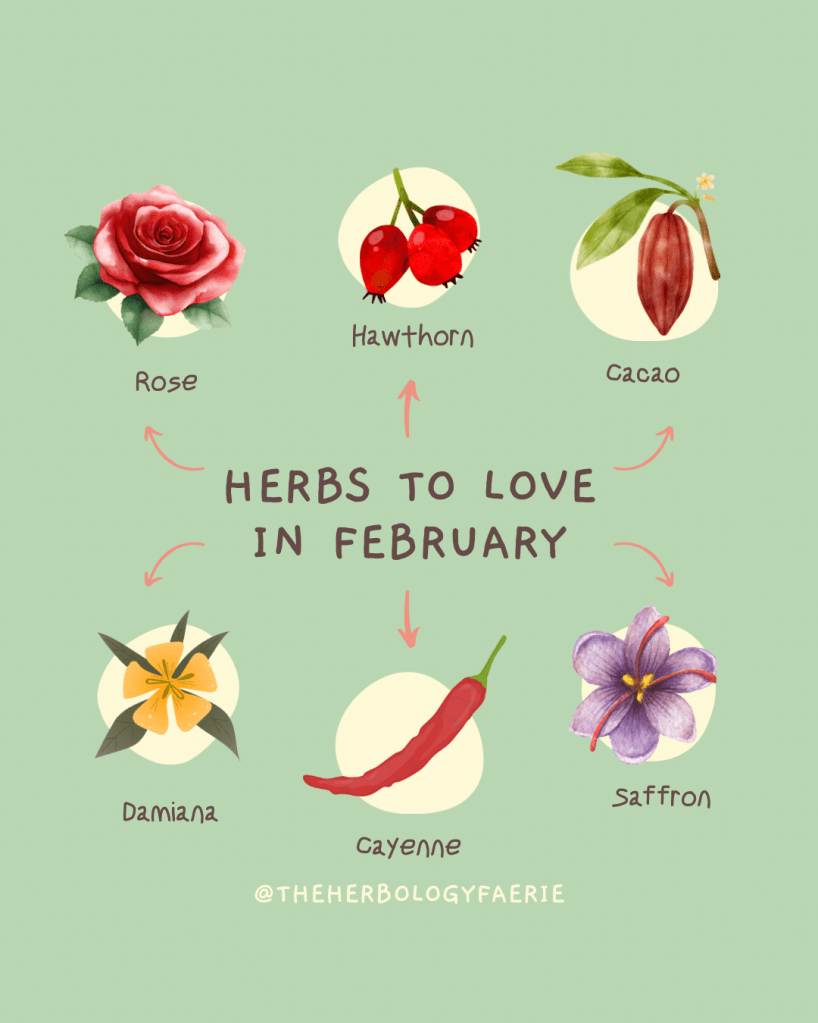
Rose: the ultimate heart-loving botanical! A calming, soothing plant that benefits the cardiovascular system as well as the emotions. Rose is a relaxing nervine, which means it has gentle nervous system-calming properties that help to relax us, aid sleep, alleviate anxiety, and nourish the spirit. This gorgeous flower also helps to replenish and tone skin when used topically, which ties right into its folk association with beauty. 

Hawthorn: another member of the Rosaceae family, hawthorn soothes grief, calms, benefits the heart and digestion, is anti-inflammatory, and contains a high amount of antioxidants. The leaves, berries, and blossoms of hawthorn are all used in foods and medicines. This flowering tree is strongly associated with faeries and faerie magic! It often marks doorways to the faerie realm, and so is sacred to the folk. Its ties to the heart, as well as its ritual uses for fertility and love, make it a wonderful February plant. 

Cacao: February’s other essential botanical! Cacao energizes, uplifts, eases depression and anxiety, and is highly nutritive. Chocolate is good for you! It is yet another plant that is wonderful for heart health, and it can help boost focus and brain function, too. All reasons for chocolate to be a traditional Valentine’s Day gift – for others, or for yourself!

Damiana: perhaps better known as an aphrodisiac, but don’t forget its other benefits and uses! Damiana is wonderful as a stress-busting nervine herb, for nervous tension, and it is my favorite herb for headaches. This fire-associated plant has ties to romance, love, divination, and boosting magical workings. 

Cayenne: super spice! Not only is it delicious, but it is wonderful for the heart, circulation, the immune system, pain and cramps, digestion, depression, and so much more. While the cold of winter lingers, I love to spice up my culinary creations with cayenne. It offers a much needed fiery boost to the mind and body.

Saffron: it’s not one of the most expensive herbs in the world for no reason! These tiny threads from a particular type of crocus flowers (which remind me of February!) offer luxurious benefits. From the heart to the liver, lungs, brain, digestive system, menstrual organs, and pancreas…saffron is worthy of its high price! Its golden presence adds a complexity of flavor and a bright hue to any recipe you add it to. Place a couple threads in a cup of chai or moon milk and savor, or reach for recipes for baked goods that incorporate this very special ingredient for color and flavor. 

Which of these are herbs YOU love in February? Or do you have some different favorites?

Categories
Herbs and Herbalism

Damiana + Herbs for Headache Relief

I am lucky to not have chronic headache issues, which I know so many people have! But I do still sometimes deal with clusters of headaches, especially stress-related and cycle-related ones. And I’ve recently been ill and have experienced some unpleasant headaches associated with that. (Such a bad cold and flu season this year!) When those problems arise, herbs can absolutely help.

I have several favorite herbal allies to lean on in this circumstance, usually brewing them in tea, and damiana is the star of the show. Though perhaps better known as an aphrodisiac herb, damiana is amazing to relieve tension headaches and that pressure and pounding sensation in the head. It is my headache secret weapon and always in my headache tea blends! I love its warm (but not too warm) soothing, tension-relieving, and pain modulation and easing.

Other herbs I rely on for headache teas:

Meadowsweet– cooling, astringent, eases stabbing pain, high in salicylic acid (aspirin!)

Mint– cooling, antispasmodic, nutritious, pain-relieving, uplifting and relaxing

Lavender– soothing, relaxing, gentle, pain-relieving and aromatic 

Cramp bark– gentle, pain-relieving, spasm easing, muscle tension relieving

Skullcap & Passionflower– sleep aiding, nerve & tension easing, soothing

If you use essential oils, an oil roller or balm using peppermint and lavender oils mixed with a carrier oil is a great remedy, too. Roll or rub this on your temples, the back of your neck, or wherever your headaches tend to be concentrated. (Can you tell mine is well-loved? I need to replace that oily label!)


What are your favorite natural headache remedies?


For educational purposes only. Not intended for medical advice. Always consult your physician.

*This post contains affiliate links, which means if you choose to buy something from a link that I share, I will make a small percentage of the sale *at no extra cost to you*.

Categories
plant wonder collective Recipes Tea

Headache Helper Tea

I recently had a friend dealing with recurring tension headaches ask what herbs might be helpful in a tea to offer him some relief. (He is also being treated by his doctor, but needed some additional gentle diy to help relax his frazzled nerves and throbbing head & get him some sleep!) 

Oatstraw immediately came to mind. They’re a wonderfully gentle soother for frayed nerves, burnout, overwhelm, stress, tension—all things that lack of sleep and depletion from migraines and tension headaches can cause. 

In addition to the oatstraw, I added damiana (a headache-easing favorite of mine), calming linden, sleepy passionflower, and cooling peppermint to the batch of tea I made for my friend. He reported back that the tea was very helpful and he got a decent night’s sleep after drinking his first cup!

To make a big batch to keep on hand, choose a larger unit of measure such as a quarter cup or half cup for your parts. For a single mug of tea, choose a small unit of measure – I’d suggest half teaspoons (it will still make a very strong cuppa, or two cups). 

Here is the recipe:


Ingredients

4 parts oatstraw

4 parts damiana

3 parts linden

2 parts passionflower

2 parts peppermint 

Directions

To make a single cup of tea, add 1-2 tablespoons to a tea strainer, eco-friendly tea bag, or French press. Pour 1 to 1 1⁄2 cups hot water over the tea and steep for 4-5 minutes. Add honey or other sweetener, if desired. 


What are your favorite herbal tea ingredients to help combat headaches?


For educational purposes only. Not intended for medical advice. Always consult your physician.

*This post contains affiliate links, which means if you choose to buy something from a link that I share, I will make a small percentage of the sale *at no extra cost to you*.