Categories
Hygge Recipes Tea

Happy Hobbit Weekend & Tea!

The Hobbit and The Lord of the Rings books by J.R.R. Tolkien have been my very favorite books since I first read them as a teenager, and I have always felt a very strong connection to hobbits: simple folk who prefer the comforts of home, well-stocked larders and bookshelves, and the joy of silly fun with family and friends, yet who can be prevailed upon to draw deeply from a well of courage and wit to save the world on occasion. If any fictional folk represents me, it’s the hobbit-folk. 
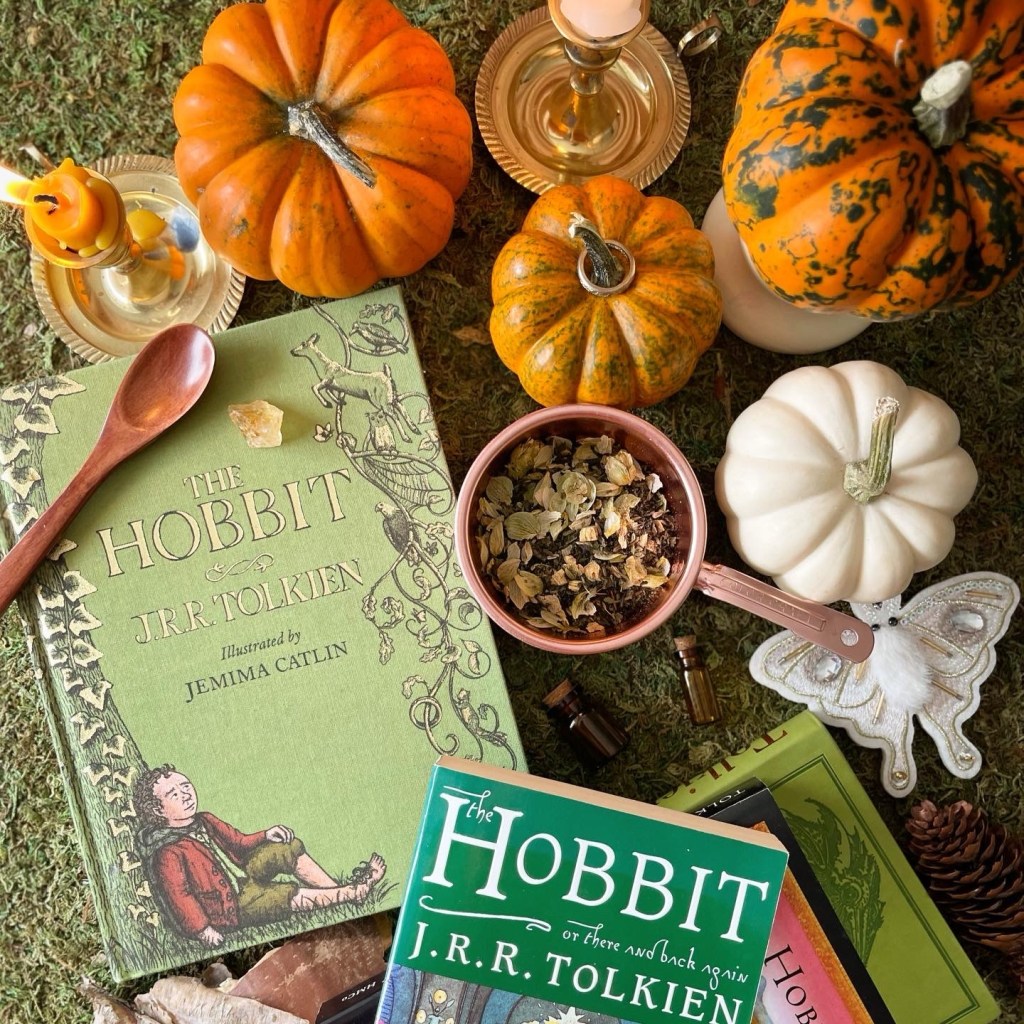
So the publication anniversary of The Hobbit (my birthday, 9/21) and the birthday of both Bilbo and Frodo Baggins (9/22) alongside the beginning of fall are all something I like to mark wrapped up into one special span of a couple days. I might read bits of The Hobbit to my own halflings, or we might watch the 1970s Rankin Bass animated film of The Hobbit (wonderfully nostalgic and kid friendly).

We may enjoy a hobbit-y teatime, too, with fresh baked goods and hobbit-inspired tea from the recipe I created. It combines smoky lapsang souchong tea for that famous pipe-leaf all hobbits love, hops to represent the tankards of ale they heartily imbibe, reishi mushrooms foraged right from the woods surrounding the shire, and other flavorful herbs and spices.


Ingredients:

1 part loose leaf lapsang souchong (or other black tea)

1 part mint

1⁄2 part reishi, broken into small pieces (substitute with licorice root if you are unable to find reishi)

1⁄2 part hops

1⁄4 part fennel

1⁄4 part nutmeg

1⁄4 part powdered vanilla bean or 1 vanilla bean per 4 cups of tea, split

Directions:

To make a single cup of tea, add 1 tablespoon to a tea strainer, eco- friendly tea bag, or French press. Pour 1 to 1 1⁄2 cups hot water over the tea and steep for 5 minutes. Add honey or other sweetener, if desired.


For educational purposes only. Not intended for medical advice. Always consult your physician.

*This post contains affiliate links, which means if you choose to buy something from a link that I share, I will make a small percentage of the sale *at no extra cost to you*.

Categories
Herbs and Herbalism Recipes

Roasted Roots + Coffee Mix

When I first became interested in herbalism, my dad surprised me by gifting me all of my great grandmother’s herbalism and gardening books. By chance, or most likely not, I had wandered into a family legacy. My dad then regaled me with stories of some of her practices, like how she used to brew sassafras tea and root beer, made dandelion fritters, and added chicory and dandelion root to the coffee she brewed every day. 

It is actually a long-standing tradition to add roots like dandelion, chicory, and burdock to coffee to add nutritional benefits and cut some of the bitterness. Beyond those roots, you can get creative with sweet and aromatic spices if you’d like to add more complex flavors. It’s really a very hygge—simple and intentionally cozy—process to develop your own personal mix and roast the ingredients yourself. 

I love that I am carrying on my great grandma’s legacy. Many times when I make coffee, I also mix in roasted roots like she used to cut her coffee with. Herbs like dandelion, chicory, and burdock are nutritious and grounding, and help lessen the overall caffeine in your mug. They taste quite similar to coffee, though perhaps more complex and earthy, and you can put your own spin on your recipe with the addition of other flavorful botanicals. 


Here is a closer look at some of the ingredients you might add to your own roasted root blend:

Dandelion root

Strong liver, gallbladder, + kidney support 

Vitamin + mineral rich

Supports heart + balances blood pressure

Chicory root

Vitamin + mineral rich

Digestion support

Antioxidant rich

Supports liver + stomach

Burdock root

Kidney + liver support

Anti-inflammatory • Antioxidant • Detoxifying

Antibacterial + antifungal • Skin clearing

Blood sugar regulating

Cacao

Mildly stimulating

Synergizes other herbs

Heart + blood pressure support

Blood sugar regulating

Cinnamon

Digestive support • Circulation stimulating

Blood sugar regulating • Analgesic

Antimicrobial + antifungal

Antioxidants • Supports brain health

Warming + drying

Allspice, cardamom, cloves, fennel

Digestive support

Promotes circulation • Immune support

Soothing • warming • uplifting


Method

Roast equal parts of chosen roots on a baking sheet at 375° for 20 minutes, stirring once or twice to prevent burning. Allow to cool.

Mix in any spices or additional ingredients like cacao nibs and cinnamon chips, then grind in a coffee grinder and brew as you normally brew coffee. Opt for a coarser grind if brewing with a French press.


Adapted from my Roasted Roots article from the Autumn 2022 edition of Botanical Anthology.

For educational purposes only. Not intended for medical advice. Always consult your physician.

*This post contains affiliate links, which means if you choose to buy something from a link that I share, I will make a small percentage of the sale *at no extra cost to you*.

Categories
Herbs and Herbalism plant wonder collective Recipes Tea

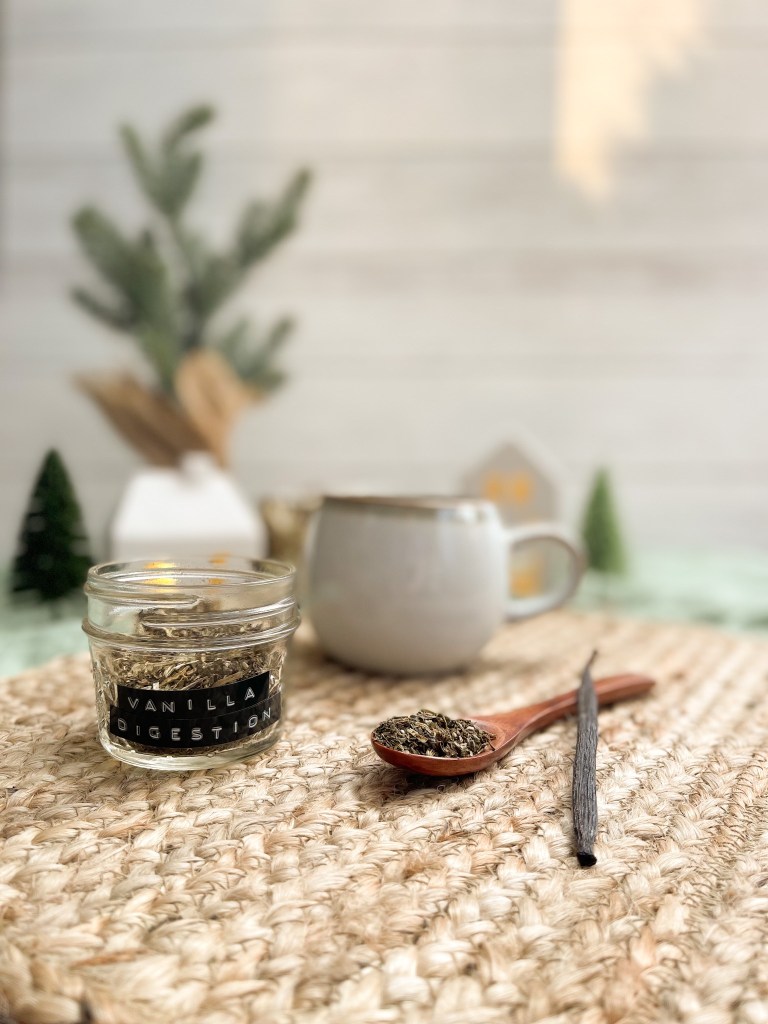
Vanilla Digestion Tea

It’s the time of year when digestion is key! Heavy, rich foods abound due to the holidays and the approach of winter, and many of us need some extra relief.

Often, digestion teas rely heavily on ginger, but I find it too spicy and irritating sometimes. I often need more of a cooling approach to indigestion instead. That’s where this tasty vanilla digestion tea comes in!

Vanilla is an aromatic stimulant and carminative botanical, with anti-inflammatory, digestive-soothing, calming, and fever easing benefits. These properties make it a great ingredient in a digestion tea!

In the interest of a more cooling approach to digestion, I’ve combined the vanilla with meadowsweet, mint, and fennel seed. If you add honey or your sweetener of choice, it’s a light and tasty dessert all on its own with a taste reminiscent of candy canes!

A bit of a breakdown of the other herbal ingredients I’ve combined with the vanilla here—

Mint can be both warming and cooling, depending on your constitution, but I find it affects me in a soothing and cooling manner. It is a mildly stimulating herb, so it aids in moving things along in the digestion process.

Meadowsweet is a top tier digestion reliever. Its cooling, drying, astringent, inflammation modulating, and even pain modulating properties make it an indispensable ally. However, if you’re sensitive to aspirin, you should avoid meadowsweet because it contains naturally-occurring salicylic acid. (If this is you, substitute chamomile or elderflower.)

Fennel is one of my very favorite herbs for digestion. It’s a pungent aromatic herb with antispasmodic and carminative properties, making it ideal for a digestion tea. Interestingly, I found a hand-written note in my great grandmother’s herbalism books suggesting to use fennel for calming. Though it isn’t technically considered a nervine or adaptogen, there is an inextricable link between gut health and mental health, so it does check out!

Here is the simple and sweet recipe for cooling vanilla digestion tea:

1 part vanilla (use chopped vanilla beans or powdered vanilla bean—my choice for economical purposes)

2 parts meadowsweet

2 parts mint

1 part fennel seed

——

Brew for about 5 minutes; longer can cause a bitter taste from the meadowsweet.

Do you suffer from digestive issues this time of year? Let me know if you try this tea! You might find that soothed digestion leads to a calmer state of mind this time of year!

Categories
Herbs and Herbalism Hygge Recipes

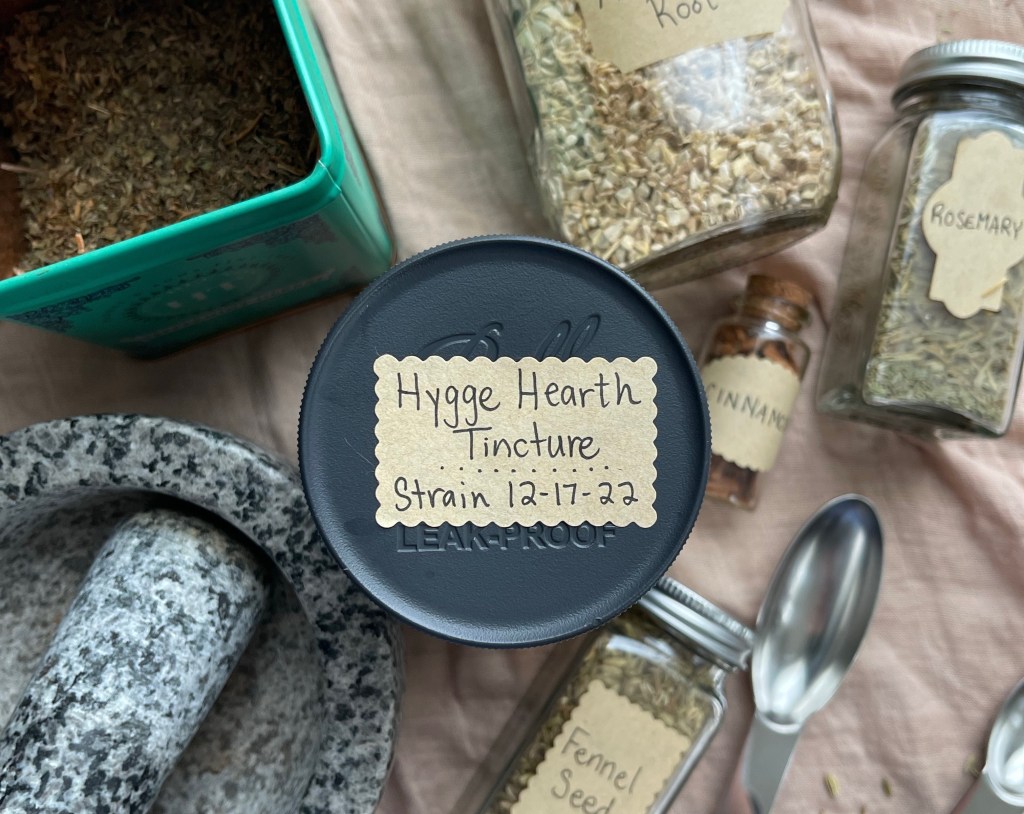
Hygge Hearth Tincture

Inspiration struck this morning and I decided to start a tincture that will be ready just in time for Yule! It has all the happy, cozy, hygge vibes with digestion support, stress relief, balancing, and immune boosting to boot.

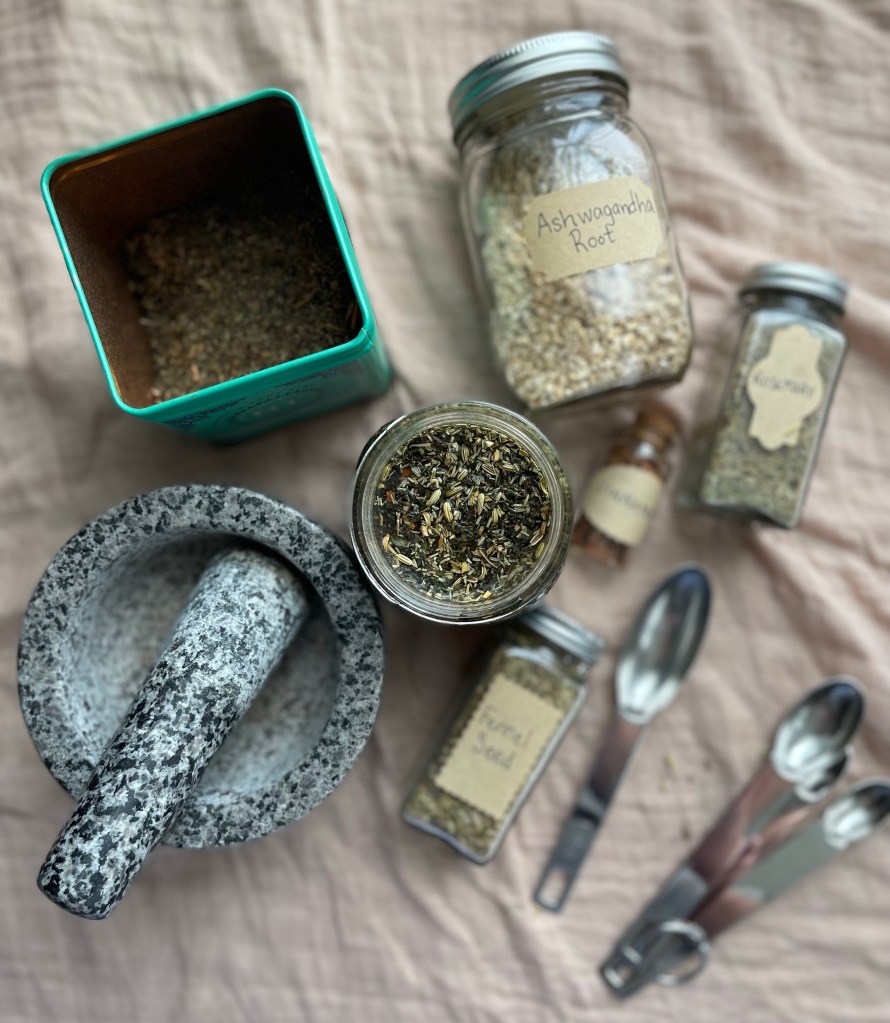
Mint is the star of the show here, paired with “really good Ceylon cinnamon” (please tell me you read that in Ina Garten’s voice 😂). I adore the sweet combo of cooling mint and warming cinnamon! With these I combined fennel seed, rosemary, and ashwagandha root. 

Then I topped it off with not the usual vodka, but GIN for more cozy, botanical, wintry vibes.

Here is the full recipe! For once, I actually loosely measured instead of doing it in parts!

Add herbs to a 16 oz glass jar. Cap and shake the jar thoroughly to mix herbs. Top with gin, filling to near the brim. Cap with a plastic canning jar lid or parchment paper and canning lid. Store in a cool, dark place, shaking daily, and strain after 6-8 weeks. Store in dark glass jars or dropper bottles if you can. 

You can take this tincture in tea, coffee, still or sparkling water, ginger ale, juice, or even cocktails! Ginger ale is my favorite vehicle for tinctures—if you prefer, use your favorite homemade or natural ginger ale.