Categories
Herbs and Herbalism plant wonder collective Recipes

Sumac Cider-Ade

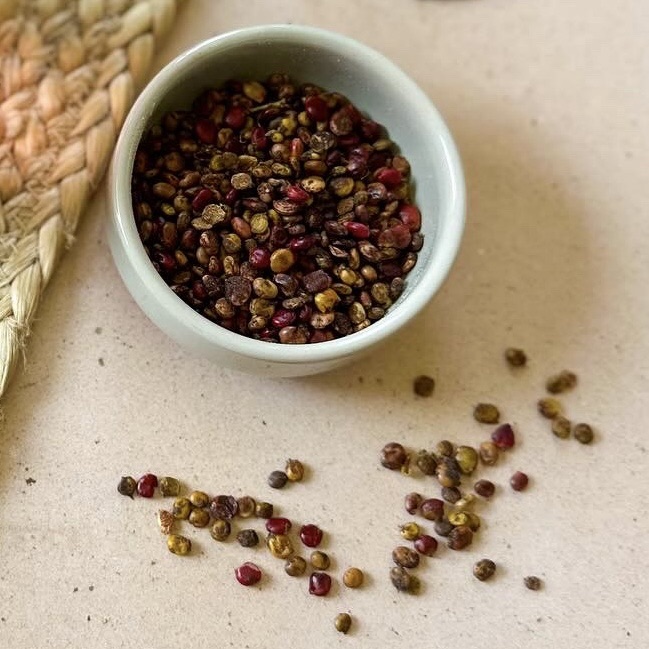
It’s sumac month at the Plant Wonder Collective, and I am so excited because this is a new plant for me! I am loving getting acquainted with these little ruby gems. 

The taste of sumac is hard to describe; sour, tart, earthy, and in my opinion, delicious. It’s cooling and drying—very astringent and gives that tannin feeling of black tea or red wine. But the flavor is light, and both fruity yet complex and mineral-y.

From tea to spice rub, tincture to wound salve, and even a lovely pink dye, sumac has a host of applications. This plant is full of antioxidants, offers anti-inflammatory aid, is wonderfully healing inside and out, and can help with unpleasant conditions such as water retention and diarrhea. It is good for the cardiovascular system, can aid in drying out the sinuses, and can even lower blood sugar, too! Sumac is widely forageable in the U.S. and has a long history of use by indigenous peoples

(For more info on sumac, consider checking out the free mini month of content on the Plant Wonder Collective Study Circle Patreon!)

Sumac is tart and delicious as a cold beverage, much like lemonade, and so is often cold-brewed as such—I found lots of simple instructions for doing just that online. But of course I wanted to add a different spin on the typical sumac “lemon”ade, and a September-y flavor profile! 

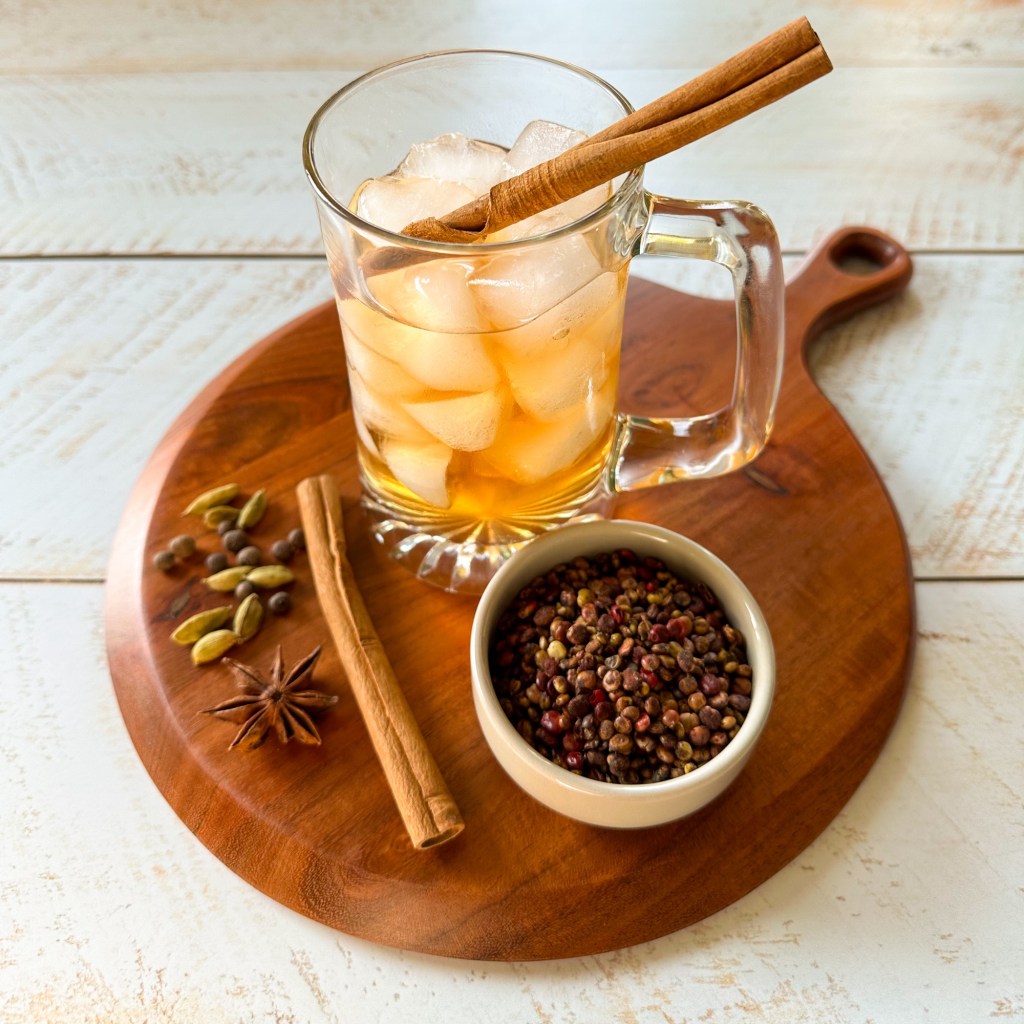
Since I am a huge fan of tart apples and fall cider, I thought I’d try a sumac cider combining this month’s plant with apple and spices! It makes for a lip smacking, satisfyingly-sour and tasty beverage that’s easy to make and kid-friendly, too. 


Ingredients:

4 cups apple cider / juice

¼ cup sumac berries, crushed with mortar & pestle

2 tsp simple syrup

1 lemon or orange, juiced

1 cinnamon stick, broken into pieces / crushed with mortar & pestle

3-4 slices fresh ginger or 1 Tbsp dried ginger pieces

7 cardamom pods

6 cloves

1 tsp allspice berries 

1 star anise

Instructions:

Combine all ingredients in a pitcher; you might decide to use a large tea strainer or large eco-friendly paper tea bag to hold the mulling spices for ease of removal. Allow to cold brew either at room temperature or in the refrigerator for 4 hours to overnight. 

Strain the spices and sumac berries out using a fine mesh sieve (a cheesecloth or coffee filter can help, too). Chill and serve over ice!

If you’d like to make this a bit more of an adult drink, you can always add a splash of bourbon or your preferred liquor to your cup; you could also make a stronger brew of the base cider-ade and add then Prosecco or champagne for fizz. 


For educational purposes only. Not intended for medical advice. Always consult your physician.

*This post contains affiliate links, which means if you choose to buy something from a link that I share, I will make a small percentage of the sale *at no extra cost to you*.

Categories
Herbs and Herbalism Recipes

Roasted Roots + Coffee Mix

When I first became interested in herbalism, my dad surprised me by gifting me all of my great grandmother’s herbalism and gardening books. By chance, or most likely not, I had wandered into a family legacy. My dad then regaled me with stories of some of her practices, like how she used to brew sassafras tea and root beer, made dandelion fritters, and added chicory and dandelion root to the coffee she brewed every day. 

It is actually a long-standing tradition to add roots like dandelion, chicory, and burdock to coffee to add nutritional benefits and cut some of the bitterness. Beyond those roots, you can get creative with sweet and aromatic spices if you’d like to add more complex flavors. It’s really a very hygge—simple and intentionally cozy—process to develop your own personal mix and roast the ingredients yourself. 

I love that I am carrying on my great grandma’s legacy. Many times when I make coffee, I also mix in roasted roots like she used to cut her coffee with. Herbs like dandelion, chicory, and burdock are nutritious and grounding, and help lessen the overall caffeine in your mug. They taste quite similar to coffee, though perhaps more complex and earthy, and you can put your own spin on your recipe with the addition of other flavorful botanicals. 


Here is a closer look at some of the ingredients you might add to your own roasted root blend:

Dandelion root

Strong liver, gallbladder, + kidney support 

Vitamin + mineral rich

Supports heart + balances blood pressure

Chicory root

Vitamin + mineral rich

Digestion support

Antioxidant rich

Supports liver + stomach

Burdock root

Kidney + liver support

Anti-inflammatory • Antioxidant • Detoxifying

Antibacterial + antifungal • Skin clearing

Blood sugar regulating

Cacao

Mildly stimulating

Synergizes other herbs

Heart + blood pressure support

Blood sugar regulating

Cinnamon

Digestive support • Circulation stimulating

Blood sugar regulating • Analgesic

Antimicrobial + antifungal

Antioxidants • Supports brain health

Warming + drying

Allspice, cardamom, cloves, fennel

Digestive support

Promotes circulation • Immune support

Soothing • warming • uplifting


Method

Roast equal parts of chosen roots on a baking sheet at 375° for 20 minutes, stirring once or twice to prevent burning. Allow to cool.

Mix in any spices or additional ingredients like cacao nibs and cinnamon chips, then grind in a coffee grinder and brew as you normally brew coffee. Opt for a coarser grind if brewing with a French press.


Adapted from my Roasted Roots article from the Autumn 2022 edition of Botanical Anthology.

For educational purposes only. Not intended for medical advice. Always consult your physician.

*This post contains affiliate links, which means if you choose to buy something from a link that I share, I will make a small percentage of the sale *at no extra cost to you*.

Categories
Botanical Anthology Herbs and Herbalism Recipes

Immune Boosting Herbs + Tea

This article appears in the Winter 2022 edition of Botanical Anthology. You can purchase a digital copy HERE or a print copy HERE.

Along with the joys winter brings, it unfortunately also carries increased risk of illness in its wake. Between extra time spent indoors during colder weather and the season’s gatherings and festivities, exposure to many types of illnesses sees a dramatic uptick. To that end, immune support becomes a constant refrain.

Herbal allies can be indispensable when it comes to this winter barrage of germs. But what does “herbal immune boosting” mean? It is a many-pronged approach to keeping your body functioning optimally so that you might avoid some illnesses altogether, or at least lessen their severity. Different types of herbs work together synergistically to aid with this never-ending task.


Adaptogens
Fatigue, burnout, and chronic stress are common problems that weaken the immune system and its ability to fend off illness. Adaptogenic herbs help restore balance and protect the body’s systems and processes to counter these effects, the immune system being an important beneficiary. Tulsi, astragalus, reishi and chaga mushrooms and licorice root are just a few examples of adaptogens.

Nervines
Stress and insomnia deplete the body and create the perfect breeding ground for germs. Luckily, nervine herbs help combat both of these issues, and many are gentle and safe for everyday use for most individuals. As an added bonus, some nervines have antimicrobial properties, too. Gentle nervine herbs include chamomile, lavender, lemon balm, tulsi, rosemary, linden, hawthorn, and passionflower.

Diaphoretics
Diaphoretic herbs are warming and promote circulation. Once sick, these herbs go on to help sweat out a fever and offer respiratory relief. These include yarrow, elderflower and berry, chamomile, ginger, catnip, cayenne, garlic, and linden.

Aromatics
Aromatic herbs don’t just taste great—they provide important immune boosting actions, too. Most aid digestion, while also offering strong antimicrobial support. These germ-killers include ginger, cardamom, cinnamon, cloves, anise, allspice, rosemary, and fennel.

Antioxidants
Antioxidants like vitamin C aid immunity by supporting and stimulating antimicrobial actions on a cellular level as well as protecting body tissues from damage. Antioxidant herbs that provide much-needed immune boosting include rooibos, rose hips, hibiscus, elderberry, orange peel, and raspberry leaves.

Alteratives
Alterative herbs aid in detoxifying your body by supporting the organs and systems that handle this important task. You need your liver, kidneys, and lymphatic system in tip-top shape to fight off illness! This category of herbs includes echinacea, calendula, dandelion root, burdock root, and nettles.


There are countless combinations one can work with to create an immune-boosting herbal recipe. To make things a little less daunting, here is a simple tea as a starting point. It features elderberry, a tried-and- true immunity aid, but also rooibos, an oft-overlooked antioxidant powerhouse. There is a bit here from each of the above categories, and plenty to tempt the taste buds, as well.

Blend this combination of herbs as the recipe states, or use it as a jumping-off point to inspire your own immune supporting formulation!


Materials
3 tbsp elderberry, dried 2 tbsp rooibos
2 tbsp tulsi
1 tbsp calendula
1 tbsp lemon balm
1⁄2 tbsp yarrow
1⁄2 tbsp ginger
1⁄2 tbsp cinnamon
Fresh orange zest or slice, if desired
Honey, if desired

Method
Mix all ingredients except orange in a bowl. Transfer to an airtight container.

To make a single cup of tea, add 1 tablespoon to a tea strainer, eco-friendly tea bag, or French press. Pour about 1 1⁄2 cups hot water over the tea and steep for 5 to 10 minutes. Add fresh orange zest or orange slice and honey to taste, if desired.

Notes This recipe yields approximately 10 servings of tea.
If making a small batch, measure the parts in teaspoons—it should yield about 2 servings of tea.


For educational purposes only. Not intended for medical advice. Always consult your physician.

*This post contains affiliate links, which means if you choose to buy something from a link that I share, I will make a small percentage of the sale *at no extra cost to you*.

Categories
Botanical Anthology

Cinnamon + Spiced Milk by Brighid Doherty

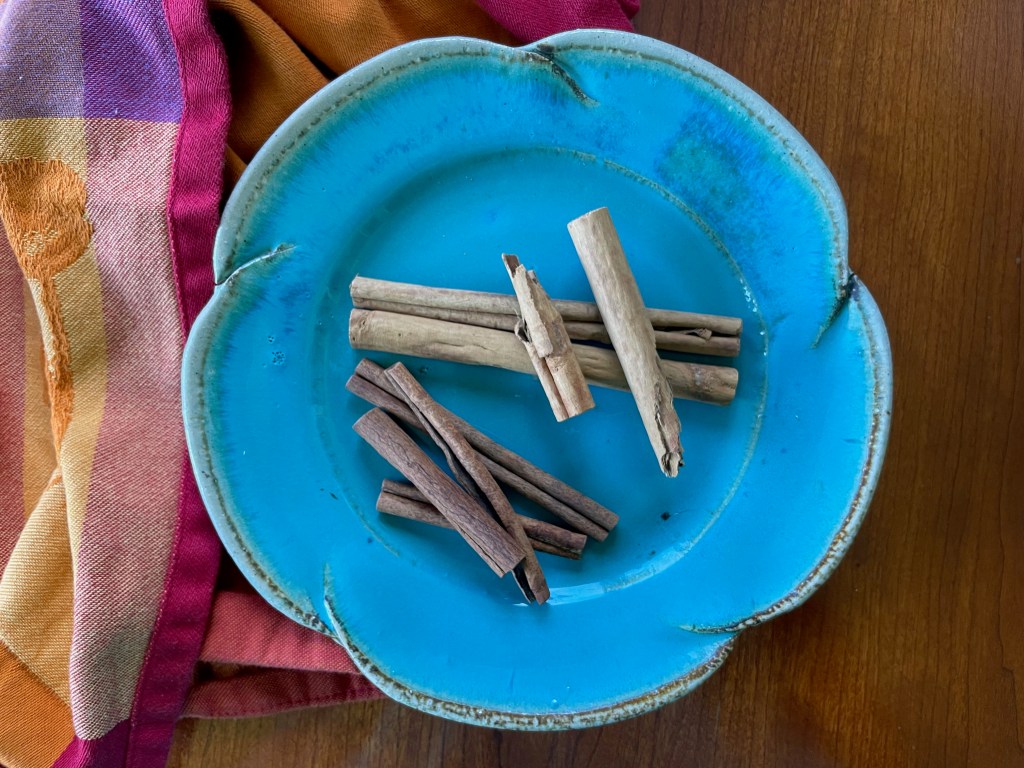
This is an excerpt from the article Cinnamon, More than One Spice by Brighid Doherty featured in the Autumn edition of Botanical Anthology. A plant lover’s dream, it is a seasonal, plant centered quarterly publication bringing you over 50 articles from 49 contributors to incorporate herbs in your apothecary, kitchen, foraging and gardening, crafts, and celebrations.

To learn more about the similarities and differences between the two types of cinnamon plus their medicinal qualities check out our autumn edition. This herbal magazine, featuring remedies and recipes with medicinal plants for budding herbalists, can be purchased as a digital version here and as a printed version here.

Photo by Brighid Doherty

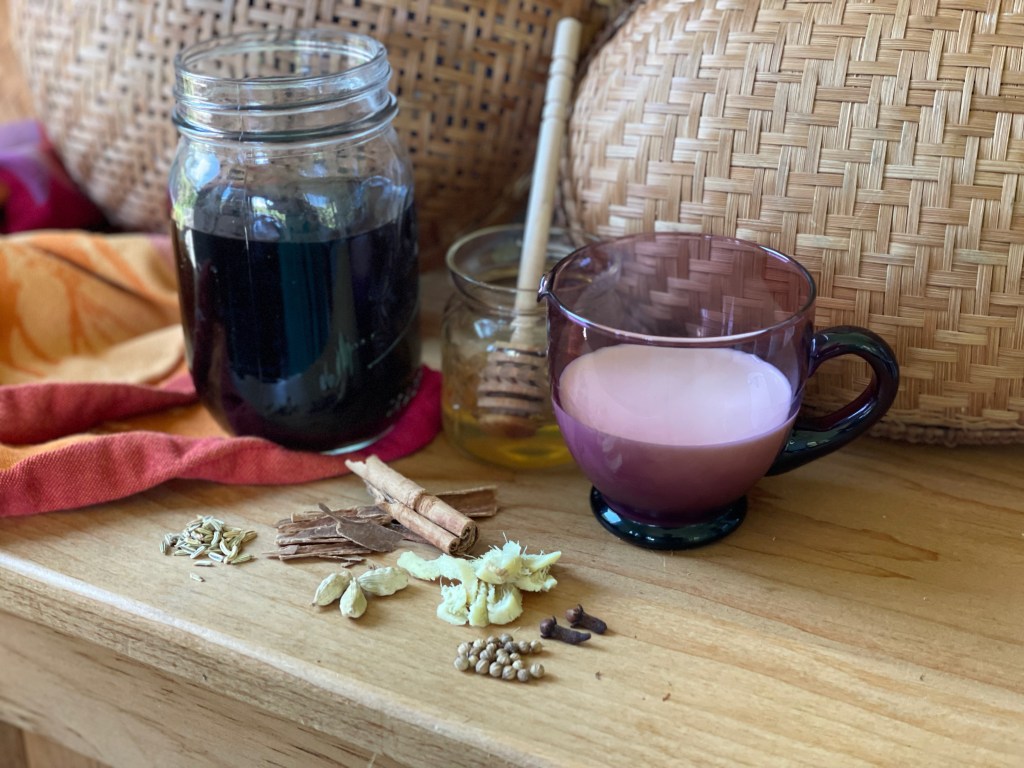
Breathe Easy Spiced Milk

This infusion is a nourishing combination of mullein, cinnamon, milk and honey that supports lung health. Whether the lungs have been exposed to excessive smoke or air pollution or experience chronic asthma, allergies, bronchitis or coughs, this remedy will help them function better. All of the ingredients soothe and nourish lung tissue. Mullein is a classic lung tonic herb. Cinnamon is warming, soothing and antimicrobial. Milk soothes lung tissue and provides important minerals allowing them to be calm. Honey sweetens and adds anti-microbial and soothing properties to the beverage.

Photo by Brighid Doherty

Materials

½ oz mullein leaves

2 c water, boiling hot 

2 tbsp cinnamon chips or 2 quills  

1-2 teaspoon each of cloves, cardamom, ginger, fennel seeds, optional

2 c organic whole milk or half and half

1 tbsp or more honey

1 quart mason jar and lid

Unbleached coffee filter paper and ceramic drip cup or fine mesh strainer

Small sauce pot

Method

Add mullein and boiling water to a quart mason jar and cover with a tight lid. Steep for 4-8 hours.

Strain the infusion into a small sauce pot. Add the milk, cinnamon and other desired spices. Simmer gently for 20-40 minutes.

Strain out the cinnamon and spices. Sweeten with honey to your preference. Pour into the quart jar to store.

Drink at least one cup per day.  Enjoy warm or cold.

Store mullein infusion in the fridge for up to 1 week. Once the milk has been added it should be consumed within three days.

Notes

Mullein leaves have fine hairs that have the potential to irritate the throat when consumed.  To avoid the hairs, mullein infusion is best strained through a fine mesh or unbleached coffee filter.  

Premixed chai blends can be used instead of using cinnamon alone, or you can make your own spice blend.

Photo by Brighid Doherty

Brighid is a mother, gardener, herbalist, educator, podcaster, and author living on a bridged island in Maine. She is founder of The Solidago Herb School, The Healthy Herb Podcast, and author of Drinkable Healing Herbal Infusions. Connect with her @solidagoherbschool and solidagoherbschool.com

Categories
Folklore plant wonder collective Tea

Mugwort Diana Tea

Long time, no write! I have been away from this space because life has been very busy lately…including editing a novel and a magazine, writing articles and taking photos for various publications, and some unexpected life bits mixed in along the way. So, I am more than ready to return today with a calming tea featuring the Plant Wonder Collective’s herb of the month for June: mugwort!

Mugwort is sacred to the goddess Artemis (Greek) / Diana (Roman): the goddess of the hunt, the moon, fertility, wild places, maidens, and magic. (In fact, the Latin name of this plant is Artemisia vulgaris.) I decided it would be very fitting to create a tea blend in Artemis / Diana’s honor that focuses on mugwort but also includes other herbs specifically associated with her. Here are the ingredients–


Mugwort: dream work, clairvoyance, magic, visions; used medicinally for anxiety, menstruation & uterine health, digestion, pain relief

(California) Poppy: dream work, moon magic, love, visions, luck; used medicinally for sleep, anxiety, menstrual cramps, headaches, pain relief

Lemon Balm: clarity, comfort, emotional healing, love, focus, memory; used medicinally for anxiety, colds, fever, sleep, depression

Pine: fertility, grounding, spirituality, strength, wisdom, peace; used medicinally for nutrients, inflammation, cold and flu, skin applications

Nutmeg: awareness, clairvoyance, divination, dream work, memory, the mind; used medicinally for stress, sleep, digestion


Mugwort and these other accompanying herbs make an excellent tea for sleep, and perhaps dream work. Here is the simple recipe for brewing a cup!

1 part mugwort

½ part California poppy

1 part lemon balm

½ part pine needles

¼ part freshly grated nutmeg

Brew with hot water for 4-5 minutes, and sweeten with honey or maple syrup if you’d like.


Have you worked with mugwort before? What is your favorite way to work with mugwort?

Categories
Herbs and Herbalism

Etsy Shop!

Hi there, friends! I know it has been a long time since my last post. Life has been very busy this month! But I am ready to dive back in.

Today is a bit of a different type of post because instead of sharing a recipe or some interesting herbal info, I am here to tell you about a new project I’ve recently been working on—an Etsy shop with downloadable herbalism content!

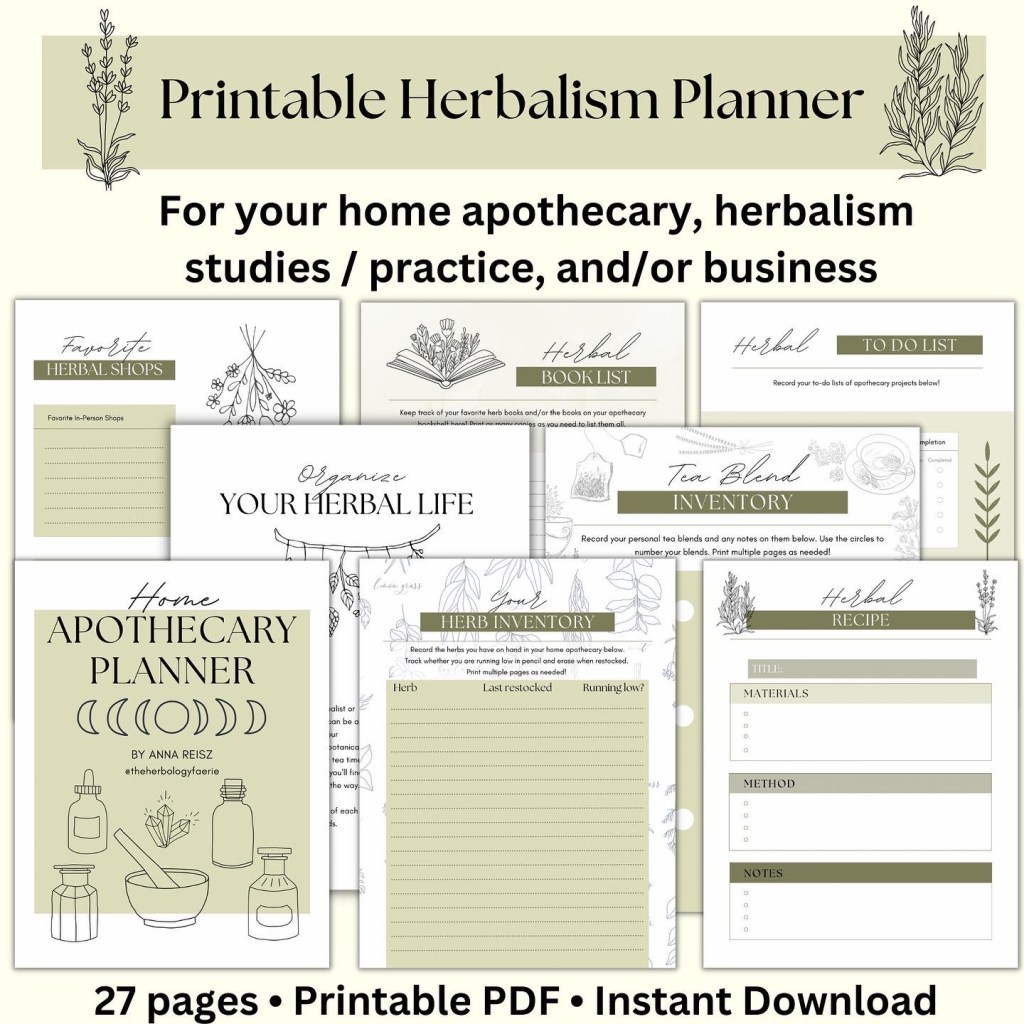
I began making myself some printable herbal journals and planners for organizational purposes (I get bitten by the organization bug in January for sure) and realized I could share them with others, too. So here is a bit about what I have available so far:

Home Apothecary Planners I created a planner to help organize your inventory of herbs, herbal tea blends, tinctures, infused oils; to plan projects; to record recipes, craft instructions, and favorite places to buy herbs; to log foraging and keep a log of your favorite herbalism books; and to record basic herb profiles. This planner comes in a couple color options (with more to come).

Herbal Materia MedicaThis printable is a more in-depth template for creating your own herbal Materia Medica with profiles of all your favorite herbs. It is all clean lines and user-friendly, with two different cover options, pages for a master running table of contents list, more in-depth plant profiles, and recipe pages with various design options for you to print as needed.

Coming soon— I am so excited to say that I am working on writing a spring tea recipe e-booklet, which I plan to release March 1! And, I also plan to write more tea recipe e-books for all the seasons. I have big plans for the future in the realm of recipe book writing (it’s my *Big Dream* as far as the direction I’m going with herbalism), and these booklets are the first step. I am pouring a lot of love, hard work, and *magic* into this project and I can’t wait to share it with you, my friends!

Categories
Botanical Anthology Folklore Hygge Recipes

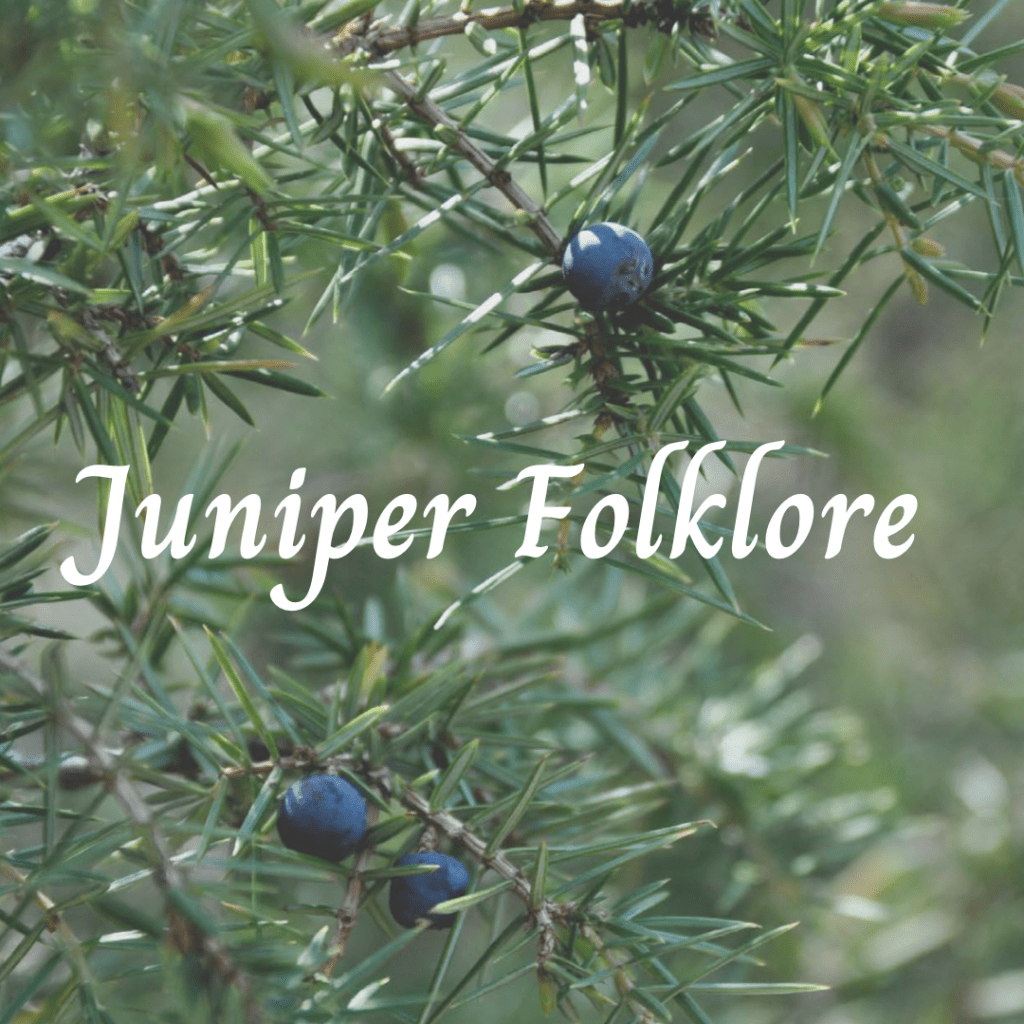
Juniper Folklore

“The odor of burning juniper is the sweetest fragrance on the face of the earth, in my honest judgment; I doubt if all the smoking censers of Dante’s paradise could equal it.”

—Edward Abbey


Happy (belated) New Year!

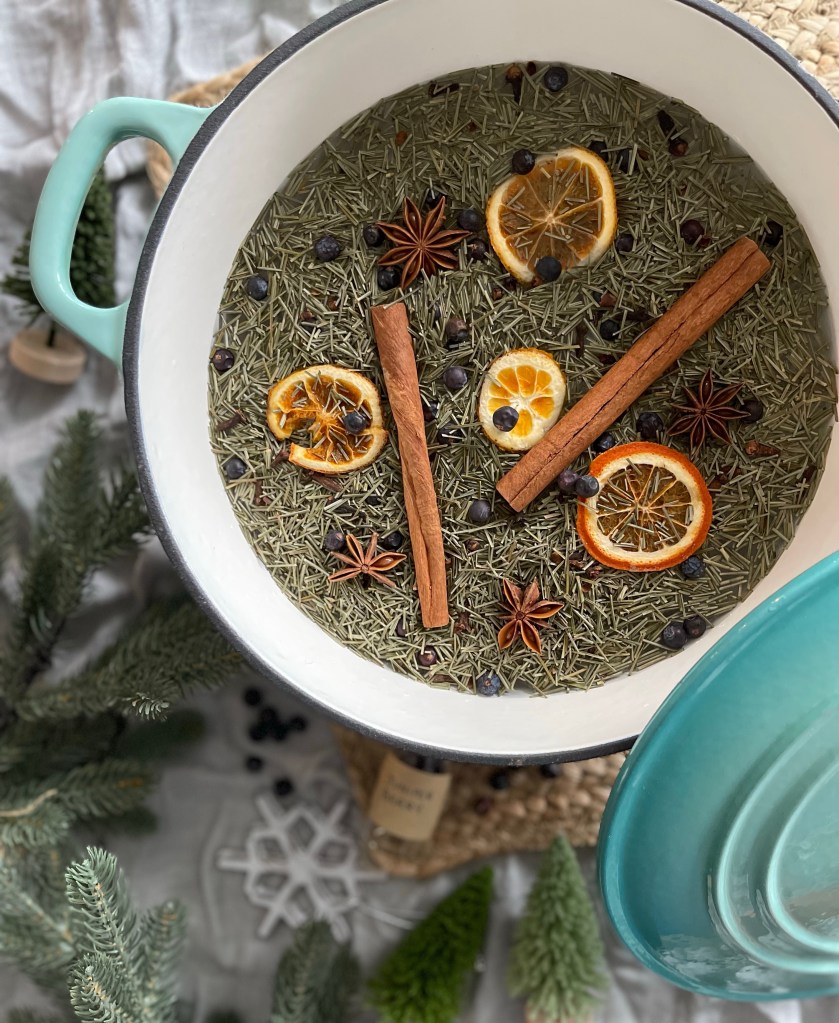
Today, my wildlings are back at school, and I am celebrating the beginning of the new year with a simmer pot containing dried juniper berries, pine needles, orange slices, cinnamon, rosemary, and cloves. (You can read more about it on my Instagram post HERE.)

Did you know I wrote an article all about juniper folklore for the recent Winter Botanical Anthology? I’m case you missed it, and because juniper is such a lovely botanical for this time of year, I thought I’d share that article with you here today!


Though it’s perhaps not the first evergreen one thinks of in connection to winter, juniper has a long and storied history that often ties it to the colder parts of the year. 

Juniper represents hope and warmth, thriving in overwrought soil where other trees can’t. It is symbolically, elementally, and astrologically associated with fire, ruled by the Sun and closely tied to Mars. Juniper also symbolizes eternal life.

The juniper tree’s berry-like cones and twigs provide food for animals, often the only available winter sustenance. They offer culinary and medicinal uses for humans, and there are many ritualistic applications for juniper’s wood and berries, as well. It is quite interesting how juniper’s folk associations mirror its medicinal uses.

The age-old use of juniper medicinally for healing, relieving stagnation, and protection from diseases probably stems in large part from the berries’ diuretic and anti-inflammatory properties. One of the most pleasant ways to administer these medicinal benefits came in the form of gin, the juniper berry liquor that dates back as far as the 11th century, as well as medicinal juniper twig beer. 

In accord with these historical medical practices, juniper was—and still is—used in folk practice for protection. For disease, poison, plague, spirits, demons, and especially thievery, juniper has been a potent ward. 

Often, smoke and charms are the vehicle by which juniper performs this protective service. Many cultures, including ancient Greeks and Egyptians, used juniper incense in this manner. Various types of protective amulets and charms were made from juniper berries, as well. The trees have even been long used in some places as Yule or Christmas trees or greenery for some added protection.

The Scottish have a long-standing winter tradition. The day after Hogmanay, the celebration of New Year’s eve, women would perform a saining, a smoke cleansing of the entire house with smoldering juniper branches. The aromatic smoke was carried and dispersed throughout the house for blessings, purification, and protection for the coming year; the same was performed through barns and to purify livestock. 

Several species of juniper are also native to the Americas, as reflected by juniper’s presence in many indigenous Americans’ traditions and tales. Among those, the Hopi, Navajo, Blackfoot, and Seneca tell legends surrounding the tree or its berries. A Seneca tale involves junipers and other evergreens standing up to old man winter so spring may return. 

While winter persists, perhaps juniper is a plant to explore a deeper relationship with. Whether it’s branches in greenery that decorates the home, fragrant incense, or even a sip of gin, inviting juniper in is a way to connect to this plant’s long history.

Categories
Herbs and Herbalism

Herbs to Bounce Back

This mama was SICK for Christmas. I caught a nasty stomach virus and was down for the count for a couple days. Ever since, I’ve felt weak and depleted! My muscles feel sore and weak, I am feeling extra worn down, and my stomach is still not back to normal. So, I thought I would turn to my apothecary and make some restorative tea today to help me bounce back.

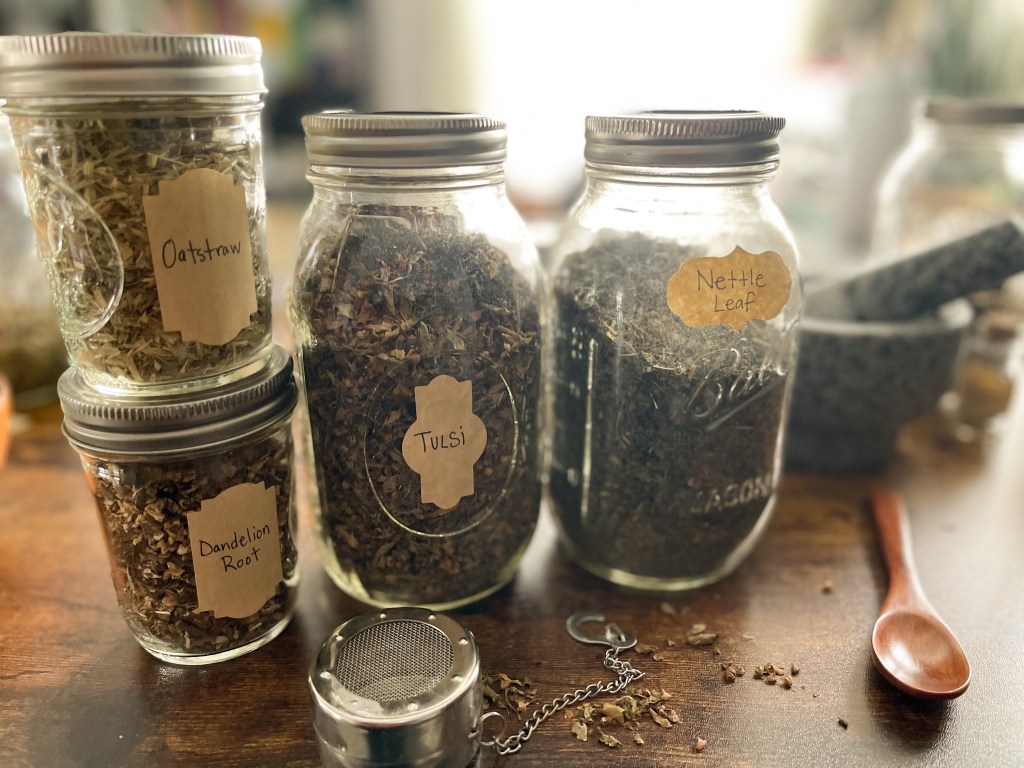
Some of my favorite herbs for building back strength after an illness include (but are not limited to!) nettle, oatstraw, dandelion root, and tulsi. You could combine all four into a soothing tea, or turn to your favorite tinctures and tea blends that contain these allies.


Here is a little bit of information on how these herbs help after an illness!

Nettle is a powerful nourishing and nutritive adaptogen that excels at building strength. Among so many benefits, it helps with fatigue, rebuilding deficient nutrients, building blood, and flushing things out.

Oatstraw aids in some of the same ways as nettle, with a bit of a different approach and the benefit of being a relaxing nervine. It is incredibly replenishing, tasty, and helps with burnout and exhaustion.

Dandelion root does important work by aiding liver function. It is nutritive, helps rebuild gut flora, aids in digestion and flushing things out, and is incredibly grounding to boot.

Tulsi is my go to herb for many things! It is an incredibly helpful adaptogen and a relaxing nervine, aiding in balancing things out and bringing you back to center.


What are your favorite herbs or remedies for rebuilding strength after illness?


Sources:

• Rosalee de la Foret, Alchemy of Herbs

HerbMentor monographs

Categories
Herbs and Herbalism plant wonder collective Recipes Tea

Vanilla Digestion Tea

It’s the time of year when digestion is key! Heavy, rich foods abound due to the holidays and the approach of winter, and many of us need some extra relief.

Often, digestion teas rely heavily on ginger, but I find it too spicy and irritating sometimes. I often need more of a cooling approach to indigestion instead. That’s where this tasty vanilla digestion tea comes in!

Vanilla is an aromatic stimulant and carminative botanical, with anti-inflammatory, digestive-soothing, calming, and fever easing benefits. These properties make it a great ingredient in a digestion tea!

In the interest of a more cooling approach to digestion, I’ve combined the vanilla with meadowsweet, mint, and fennel seed. If you add honey or your sweetener of choice, it’s a light and tasty dessert all on its own with a taste reminiscent of candy canes!

A bit of a breakdown of the other herbal ingredients I’ve combined with the vanilla here—

Mint can be both warming and cooling, depending on your constitution, but I find it affects me in a soothing and cooling manner. It is a mildly stimulating herb, so it aids in moving things along in the digestion process.

Meadowsweet is a top tier digestion reliever. Its cooling, drying, astringent, inflammation modulating, and even pain modulating properties make it an indispensable ally. However, if you’re sensitive to aspirin, you should avoid meadowsweet because it contains naturally-occurring salicylic acid. (If this is you, substitute chamomile or elderflower.)

Fennel is one of my very favorite herbs for digestion. It’s a pungent aromatic herb with antispasmodic and carminative properties, making it ideal for a digestion tea. Interestingly, I found a hand-written note in my great grandmother’s herbalism books suggesting to use fennel for calming. Though it isn’t technically considered a nervine or adaptogen, there is an inextricable link between gut health and mental health, so it does check out!

Here is the simple and sweet recipe for cooling vanilla digestion tea:

1 part vanilla (use chopped vanilla beans or powdered vanilla bean—my choice for economical purposes)

2 parts meadowsweet

2 parts mint

1 part fennel seed

——

Brew for about 5 minutes; longer can cause a bitter taste from the meadowsweet.

Do you suffer from digestive issues this time of year? Let me know if you try this tea! You might find that soothed digestion leads to a calmer state of mind this time of year!

Categories
Herbs and Herbalism plant wonder collective

October: Elderberry Month

I can’t believe October is already more than halfway through! Life has certainly been busy over here in the Herbology Faerie’s apothecary. My children have been home for their two week fall break, my husband took a trip for work, there have been visitors and visits, sickness, and it’s just been a bit of chaos around here. But I have still been connecting with the plant world, so I am here to share a bit about that!

This month has been elderberry month at the Plant Wonder Collective! I have so enjoyed working with lovely elderberry this October. I have not yet had the time to write up a monograph post for elderberry this month, but I will try to do that before October is done. Meanwhile, here is a link to the Plant Wonder Collective’s elderberry monograph post!

Elderberry Monograph

I have concocted a couple of fun elderberry potions this month which I have shared on Instagram. I’ll share them here, too, to make them easier to find. First up: an elderberry hot toddy!

Elderberry Hot Toddy

Next, I shared the beginnings of my elderberry infused gin this week. It is still infusing, but I will be straining it soon and sharing a cocktail or two made with this lovely liquor. Here is the initial post about its creation!

Elderberry Gin

And one last post to share: here is some elderberry wisdom from The Illustrated Herbiary by Maia Toll. Elderberry reminds us to embrace the cycles and seasons of life and our place within them.

I hope October is treating you well, friends! Perhaps you’ll find some inspiration here to connect with elderberry in your own ways this month, or in the months to come!