July’s Thunder Moon captures the essence of summer’s balmy, heady heat. Afternoon storms during this time help balance out the strength of the sun but also pack a punch with their turbulent energy. The sun in Cancer contributes a further watery element of heightened emotion and intuition; lightning can strike in so many ways.
Add to it the presiding Capricorn sign of the full moon this cycle, and you introduce an element of stabilization and determination. This synergy can be a powerful tool, offering a ripe energy for soul searching, brave and honest internal reflection and truth seeking.
Nettle lends strength to this endeavor and rose softens the heart to create openness. Cinnamon provides luck, and birch offers protection.
Thunder Moon in Capricorn Tea Materials
1 tbsp nettle
1 tbsp rose
½ tsp cinnamon bark
¼ tsp birch bark
Method
To make a single cup of tea, add 1 tablespoon to a tea strainer, eco-friendly tea bag, or French press. Pour 1 to 1 1⁄2 cups hot water over the tea and steep for about 5 minutes. Add sweetener of choice to taste, if desired.
Notes
To cold-brew, add the ingredients (1 tablespoon of tea blend per 8 ounces of water) to a glass jar or French press, steep overnight in the refrigerator (or under the moon), strain, and serve.
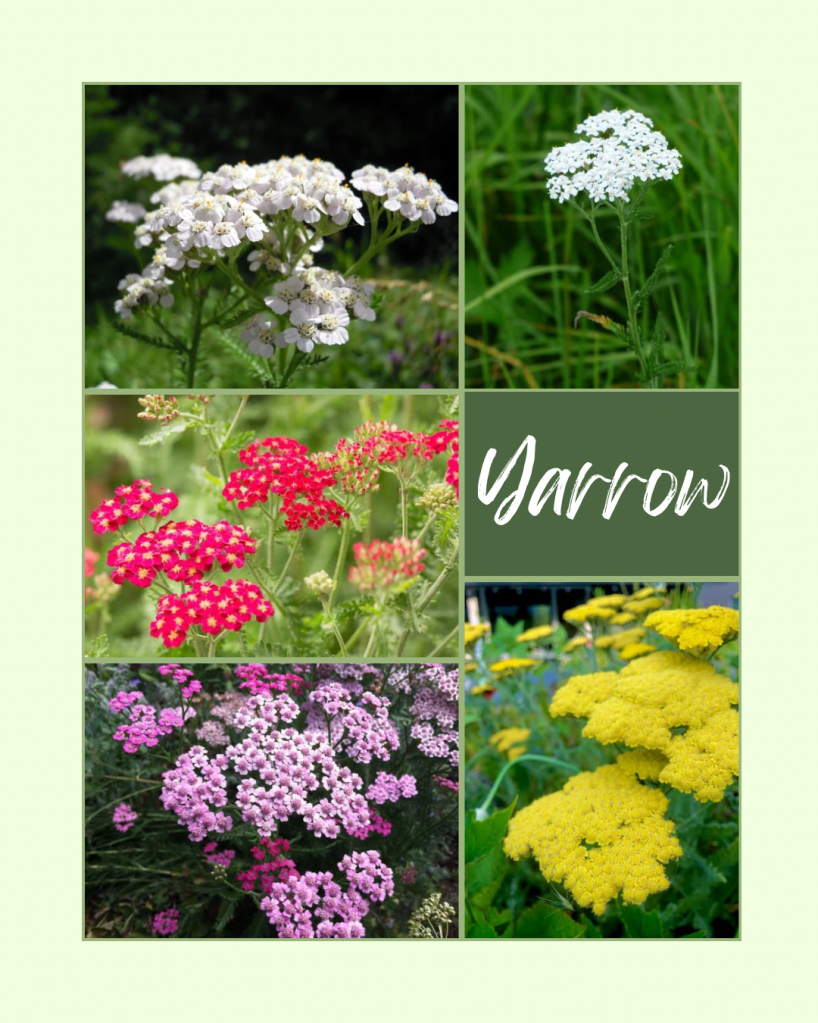
Yarrow is a plant that I had not previously worked with very much, outside of adding a pinch of it to tea blends here and there. So I am really loving learning more about it in terms of its medicinal and spiritual attributes.
Yarrow is a bit of a chameleon; it can be both cooling and warming, aiding flow and stopping it, and in astroherbalism terms it has ties to both water and air. But harmonizing lies at the center where these variances overlap. Finding wisdom in discernment, in balance, in both drawing clear boundaries yet allowing for flow and openness, all bring harmony. (Yarrow cards shown from The Herbal Astrology Oracle and The Herbcrafter’s Tarot.)
In folklore, yarrow is associated with love and visionary abilities; the tides of emotion and the clarity of communication that a combination of water and air brings.
—
One of my new favorite ways to work with yarrow is in a lovely skin toner. Toners are not just about wiping down your face at night to improve skin and treat blemishes; they are a beneficial ritual that, when used before bed, can offer (magical-metaphorical-mindful-whatever you feel best calling it) plant-infused healing, nurturing, and intention. Botanical glamour magicks or simple self-care, it’s all the same.
Yarrow is at the heart of this new skin toner recipe I’ve created to offer the medicinal applications of astringency (pore tightening and texture benefitting), anti-inflammation, promoting circulation, and anti-microbial action for acne. But it is also present for its more esoteric value of promoting love, beauty, attraction, happiness, balance, and protection. Its association with war and battle—Achilles was said to have treated his soldiers’ wounds on the battlefield with it—means that your use of it each night is like putting on your own magical armor to defend against outside forces. And the folk application that witches might have used yarrow to boost the potency of workings translates here as an amplifier for your own inner power.
This toner also includes lavender for calming the skin and the mind, hawthorn for its antioxidants and heart-mending magic, and rose water for moisture, soothing, and beauty.
Add dried plant material to your jar. Add rose water, then top up with witch hazel, leaving about 1 inch of headspace at the top of the jar. Stir with a wooden chopstick or the handle of a wooden spoon to make sure all the plant material is submerged and your liquids are well combined.
If using a BPA-free plastic lid, cap it tightly; if using waxed paper and a regular metal canning lid, add the waxed paper first before screwing the lid on to prevent corrosion of the metal.
Label your jar with the contents and date, and allow to steep for 2-4 weeks. Top up with extra witch hazel if the plant material floats to the top and dries out.
Strain the plant material out with a mesh strainer and coffee filter or cheesecloth, bottle (a spray bottle works well), and use by spritzing or swiping over your face gently with a soft cloth.
Note: you can also add a few drops of lavender, rose, jasmine, or geranium essential oil to the toner if you’d like!
—
This year will be my first year to grow yarrow in my little chaotic herb garden at home. I am a bit of a “throw it at the wall and see what sticks” gardener, so I have a few spots where I plan to plant a bit: in those “luck garden” flower beds I mentioned earlier in this month’s Little Rituals post, in a couple containers in my patio tea garden, and around my daughter’s new rose bush because my fellow PWC friend Erin Harwood (@plantmagicwitherin on Instagram and Ponderings & Wanderings on Substack) shared that yarrow can aid in attracting helpful insects that feast on pesky aphids. Check out her Substack for lovely plant content, by the way!
—
Aside from love, beauty, protection, and healing, yarrow is valued for its divinitory insight, emotional strength, and has ties with the faeries and animal magic.
A simple yarrow tea can be drunk to aid in clarity and insight.
A pouch of yarrow can be carried as a token and talisman for courage, protection, and love.
In the kitchen, yarrow has a long history of use in fermented drinks like beer and mead. If you are a brewer, try replacing hops with yarrow to mix things up! Or, perhaps infuse some yarrow honey, add the young fresh leaves to a salad, or grind the dried flowers for seasoning blends and salts—I plan on trying that soon!
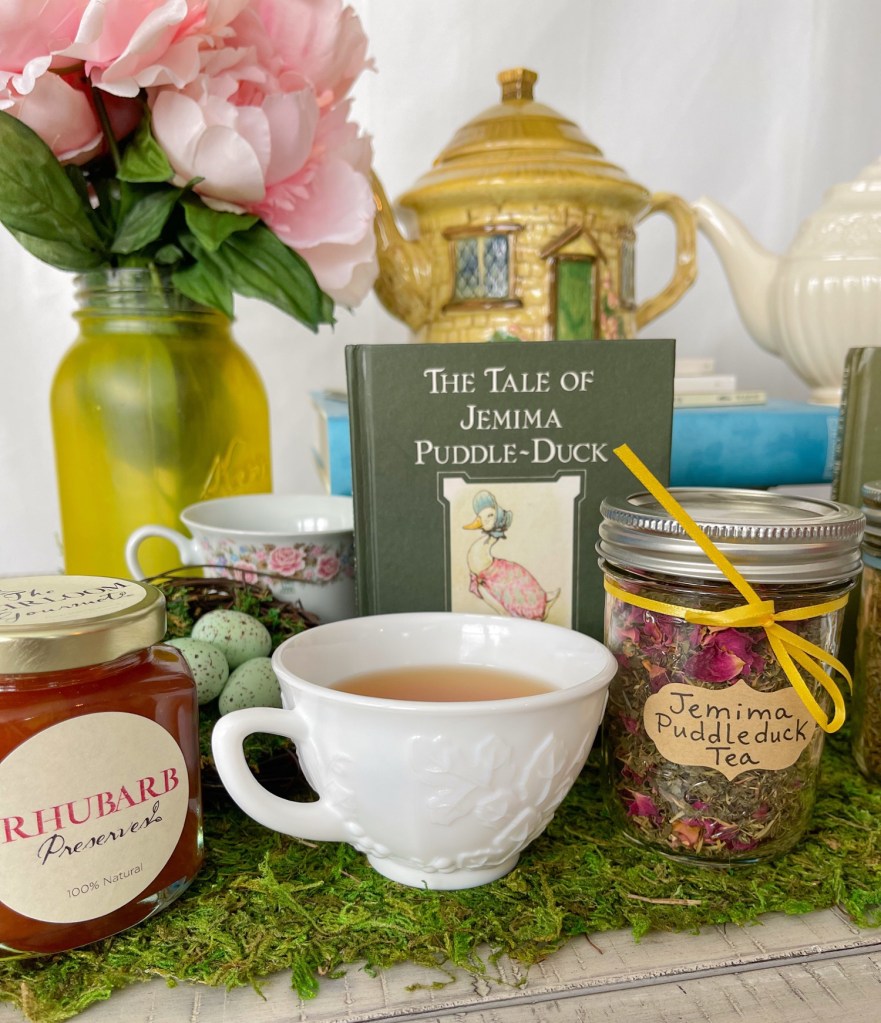
My love for Beatrix Potter knows no bounds. I wish so very much that I could sit down to tea with her and learn about her fascinating life! She was far more than just an author and artist: a studied naturalist, a conservationist, an entrepreneur, a generous benefactor to many causes, and an accomplished farmer and gardener.
One of my favorite tales by Beatrix Potter is that of Jemima Puddleduck. Poor Jemima—she just wants to be left alone to sit on her own nest of eggs. The farmer’s wife and children always seem to find her hiding spots, such as the rhubarb bush, and retrieve her eggs for the hen to warm instead. So, Jemima searches out a secluded spot in the woods to hide her nest, only to be offered a shed by an overly-polite foxy gentleman. More unforeseen events befall Jemima, but in the end she avoids catastrophe and hatches four ducklings on her own.
I created an herbal tea blend inspired by Jemima’s story, which includes the mint and thyme the fox requested for their dinner party, roses seen in an illustration of the garden, and rhubarb from the bush she attempted to hide her eggs in. (This tart tea is made with botanicals appropriate for a Beatrix Potter-themed baby shower, children’s birthday party, or Easter brunch!)
To make a single cup of tea, add 1 tablespoon to a tea strainer, eco-friendly tea bag, or French press. Pour 1 to 1 ½ cups hot water over the tea and steep for 3-4 minutes. Sweeten to taste with a bit of fruit preserves or simple syrup, if desired. (Strawberry can easily be substituted for rhubarb!)
For educational purposes only. Not intended for medical advice. Always consult your physician.
*This post contains affiliate links, which means if you choose to buy something from a link that I share, I will make a small percentage of the sale *at no extra cost to you*.
We are firmly in the heart of Aries season, so I am sharing my simple tea recipe meant to help you ground into this energy! My daughter is a very fiery Aries herself so I am all too familiar with the spirit of this sign.
Associated with the Emperor in tarot; the root and solar plexus chakras; yang energy; red, pink, yellow, and white; and diamond, carnelian, citrine, and fire opal.
To make a single cup of tea, add 1 tablespoon to a tea strainer, eco- friendly tea bag, or French press. Pour 1 to 1 1⁄2 cups hot water over the tea and steep for 3-4 minutes. Add honey or other sweetener, if desired.
———
For educational purposes only. Not intended for medical advice. Always consult your physician.
*This post contains affiliate links, which means if you choose to buy something from a link that I share, I will make a small percentage of the sale *at no extra cost to you*.
I am lucky to not have chronic headache issues, which I know so many people have! But I do still sometimes deal with clusters of headaches, especially stress-related and cycle-related ones. And I’ve recently been ill and have experienced some unpleasant headaches associated with that. (Such a bad cold and flu season this year!) When those problems arise, herbs can absolutely help.
I have several favorite herbal allies to lean on in this circumstance, usually brewing them in tea, and damiana is the star of the show. Though perhaps better known as an aphrodisiac herb, damiana is amazing to relieve tension headaches and that pressure and pounding sensation in the head. It is my headache secret weapon and always in my headache tea blends! I love its warm (but not too warm) soothing, tension-relieving, and pain modulation and easing.
Other herbs I rely on for headache teas:
Meadowsweet– cooling, astringent, eases stabbing pain, high in salicylic acid (aspirin!)
Mint– cooling, antispasmodic, nutritious, pain-relieving, uplifting and relaxing
Lavender– soothing, relaxing, gentle, pain-relieving and aromatic
If you use essential oils, an oil roller or balm using peppermint and lavender oils mixed with a carrier oil is a great remedy, too. Roll or rub this on your temples, the back of your neck, or wherever your headaches tend to be concentrated. (Can you tell mine is well-loved? I need to replace that oily label!)
What are your favorite natural headache remedies?
For educational purposes only. Not intended for medical advice. Always consult your physician.
*This post contains affiliate links, which means if you choose to buy something from a link that I share, I will make a small percentage of the sale *at no extra cost to you*.
Blessed Imbolc! This sabbat marks the halfway point between the winter solstice and spring equinox, so it is also called midwinter. And it is Candlemas, when candles were brought to be blessed for the year.
It’s also a time that is traditionally dedicated to St. Brigid and/or the goddess Brigid. This Celtic goddess is a fire deity who embodies the light and warmth of spring. She is sometimes represented as a triple-goddess or as presiding over three flames: the flame of inspiration and creativity, the flame of the hearth, and the flame of the forge and smithing. Brigid is also associated with healing, wisdom, poetry, livestock, and protection.
As Celtic legend tells, the Cailleach–the crone goddess of winter–and Brigid split the year between them. When the Cailleach’s fire goes out, she cedes rule to Brigid, who presides over her half of the year until Samhain when her counterpart returns.
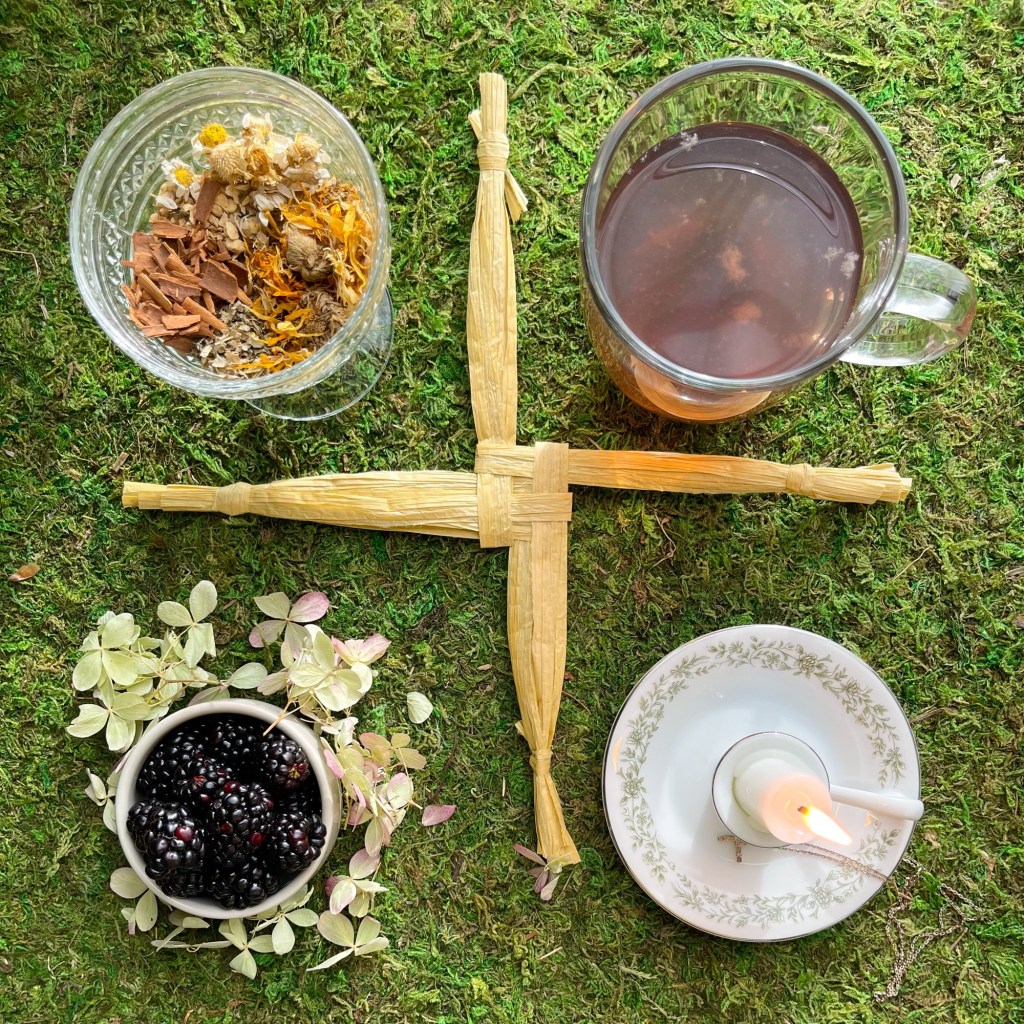
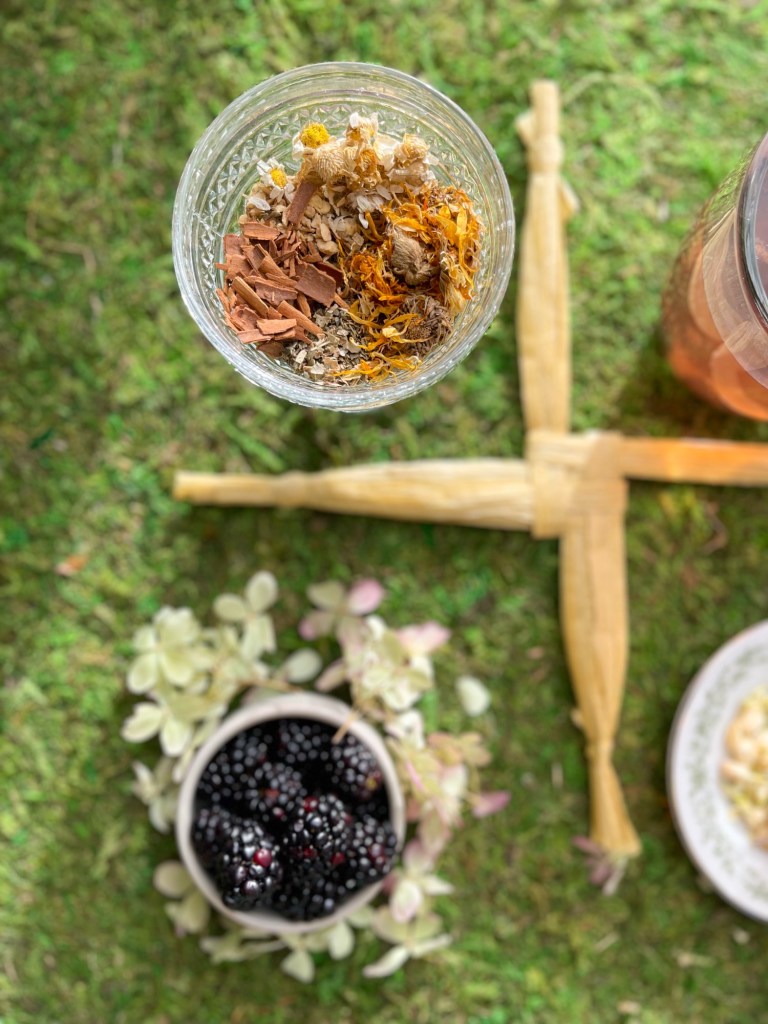
This tea to welcome Brigid’s return contains blackberry leaf and fruit along with chamomile, which are all sacred to the goddess, in combination with calendula, ginger, and cinnamon to represent her three flames.
If using fresh blackberries, muddle 2-3 in the bottom of a cup (you’ll strain the tea after brewing); if using dried berries, simply add them to the tea herbs. Add 1 tablespoon to a tea strainer, eco-friendly tea bag, or French press. Pour 1 to 1 ½ cups hot water over the tea and steep for 5 minutes. Strain out the muddled blackberries now if using this method. Add honey or other sweetener, if desired.
For educational purposes only. Not intended for medical advice. Always consult your physician.
*This post contains affiliate links, which means if you choose to buy something from a link that I share, I will make a small percentage of the sale *at no extra cost to you*.
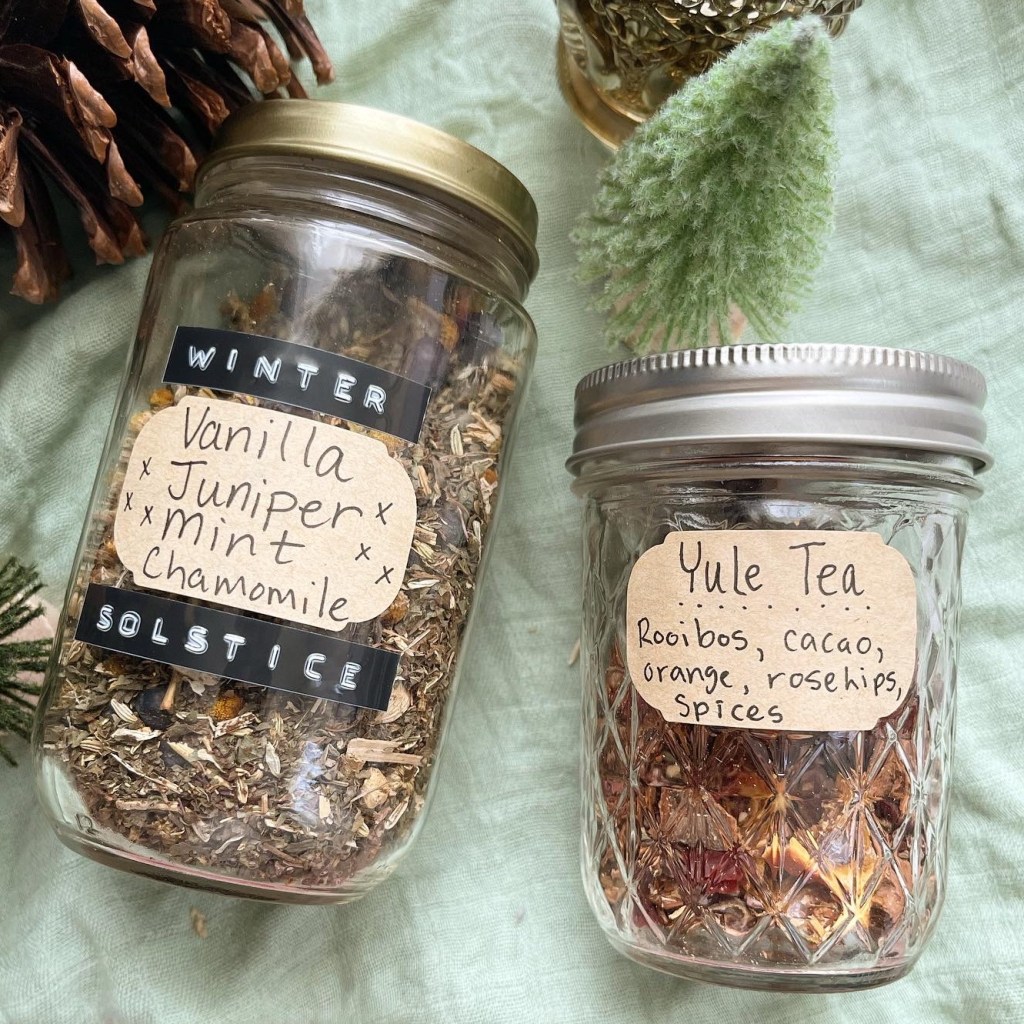
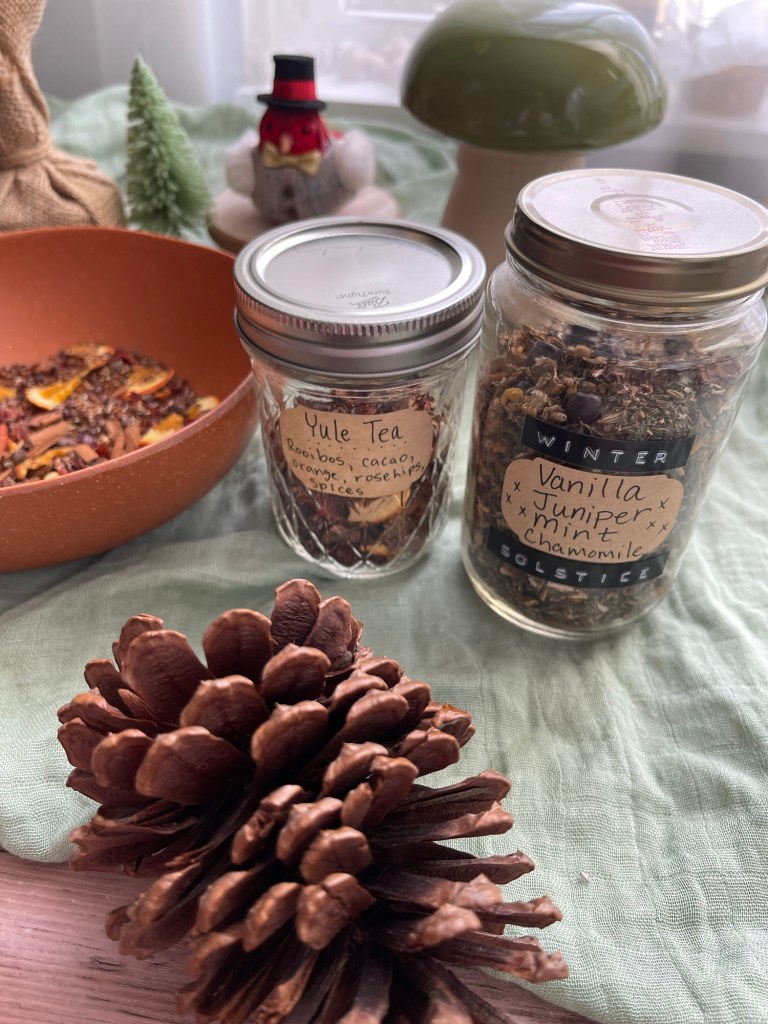
Today I’m sharing two herbal tea blends to enjoy for Yule // the Winter Solstice!
The Yule Tea blend is a sweet and festive spiced sip, full of immune-boosting ingredients that taste lovely. The combo of orange and spices is traditional for the season, in part because of those properties and in part because of associations with protection, divination, prosperity, and luck derived from them.
The Winter Solstice Tea tastes decadent like a holiday cake, but without the heartburn or feeling of overindulgence! With soothing herbs that promote digestion, relieve pain, and aid in circulation, it’s like a sweet, warm hug. And chamomile represents the sun that returns brighter each day after the solstice; juniper is a powerful talisman of winter protection, cleansing, and luck; and the other botanicals have ties to healing, love, and luck, too.
To make a single cup of tea, add 1 tablespoon to a tea strainer, eco- friendly tea bag, or French press. Pour 1 to 1 ½ cups hot water over the tea and steep for 3-5 minutes. Add honey or maple syrup to taste, if desired.
For educational purposes only. Not intended for medical advice. Always consult your physician.
*This post contains affiliate links, which means if you choose to buy something from a link that I share, I will make a small percentage of the sale *at no extra cost to you*.
Samhain is one of the most widely-known sabbats, as it is so closely tied up in Halloween. However, the roots of this celebration run a bit deeper. The last harvest festival, Samhain marks a time when the veil between worlds thins and spirits are closer at hand, so death and remembrance are at the forefront. The death of the earth as winter approaches is also represented with this day. Shadow work, ancestor remembrance and communion, and protection are all important at this time.
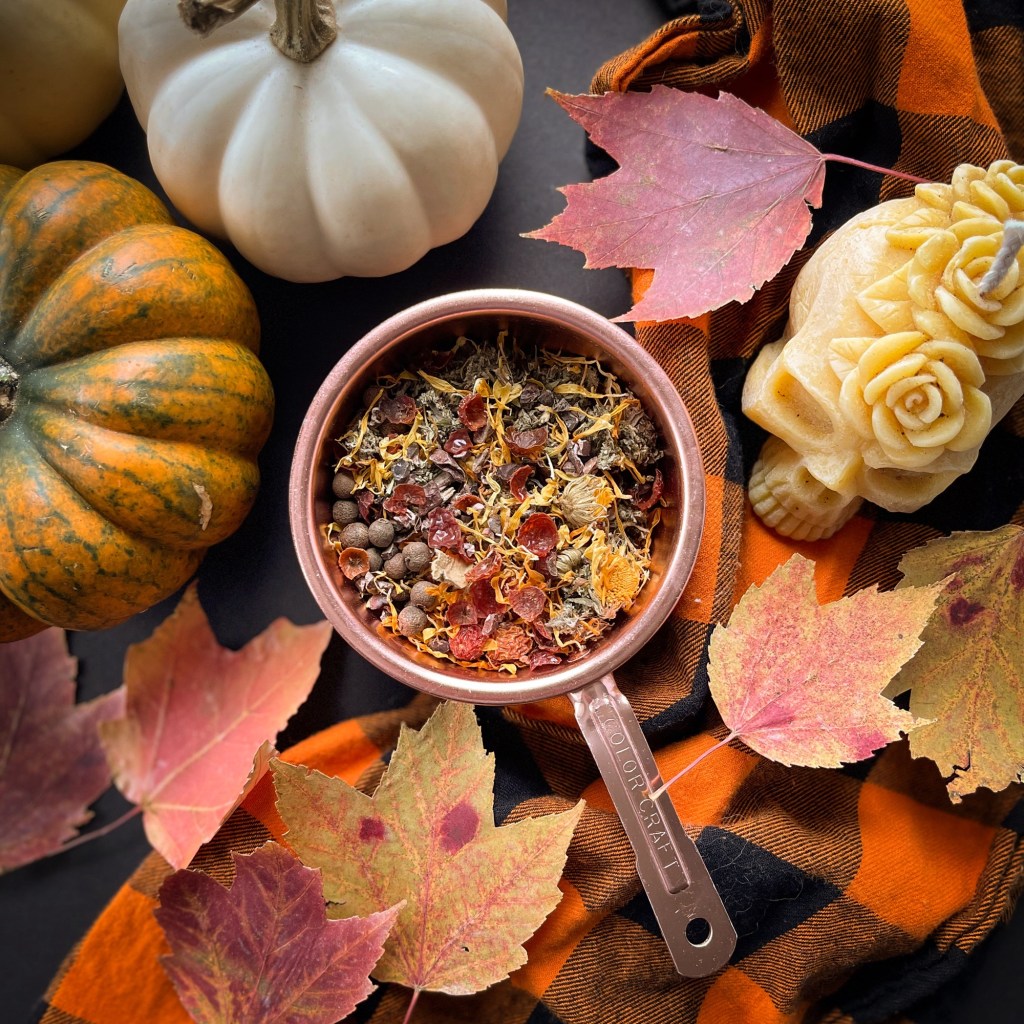
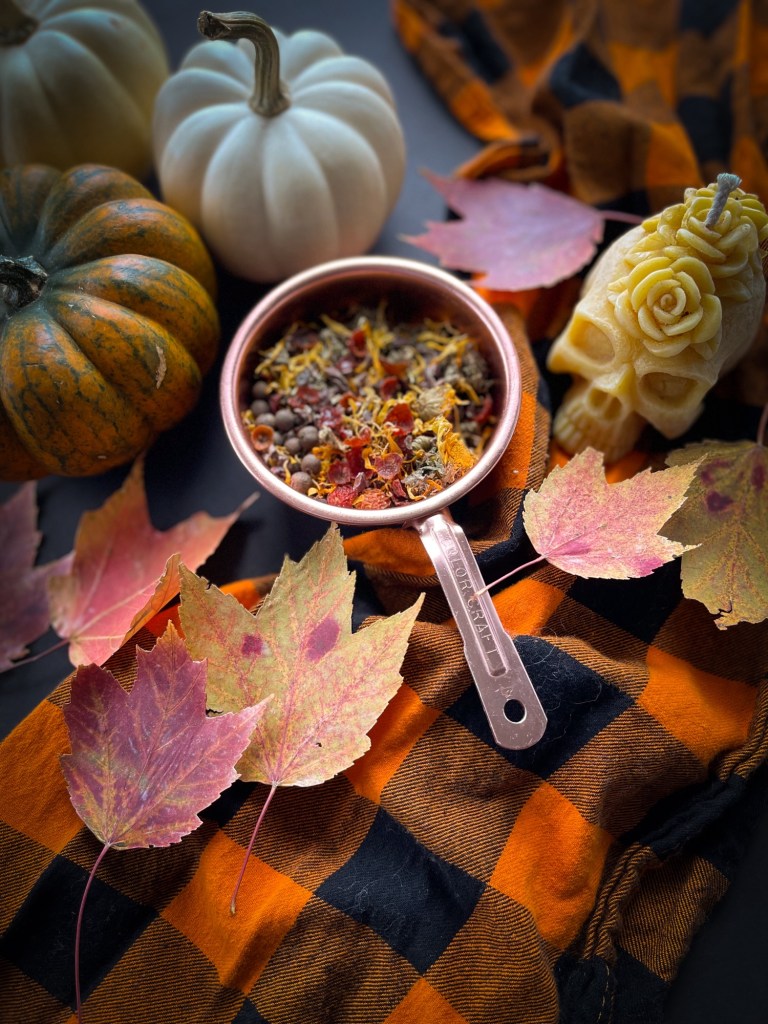
A really special way I love to celebrate Samhain is to brew up a batch of Samhain Tea to take along trick-or-treating in thermoses. It’s such a simple but special ritual! If you don’t go trick-or-treating, you could take the tea along on a spooky hike, sip while you cozy up around a fire telling scary stories, or while you spend this day / night in some other way: a warm cup of Samhain Tea can bolster your courage and help ground you.
This Samhain tea blend features seasonally appropriate and healthy rose hips, mugwort for dreams, rosemary for remembrance, calendula to honor the departed, cacao for sacredness and offering, and allspice for luck and prosperity.
To make a single cup of tea, add 1-2 tablespoons to a tea strainer, eco-friendly tea bag, or French press. Pour 1 to 1 1⁄2 cups hot water over the tea and steep for 4-5 minutes. Add honey or other sweetener, if desired.
For educational purposes only. Not intended for medical advice. Always consult your physician.
*This post contains affiliate links, which means if you choose to buy something from a link that I share, I will make a small percentage of the sale *at no extra cost to you*.
I recently had a friend dealing with recurring tension headaches ask what herbs might be helpful in a tea to offer him some relief. (He is also being treated by his doctor, but needed some additional gentle diy to help relax his frazzled nerves and throbbing head & get him some sleep!)
Oatstraw immediately came to mind. They’re a wonderfully gentle soother for frayed nerves, burnout, overwhelm, stress, tension—all things that lack of sleep and depletion from migraines and tension headaches can cause.
In addition to the oatstraw, I added damiana (a headache-easing favorite of mine), calming linden, sleepy passionflower, and cooling peppermint to the batch of tea I made for my friend. He reported back that the tea was very helpful and he got a decent night’s sleep after drinking his first cup!
To make a big batch to keep on hand, choose a larger unit of measure such as a quarter cup or half cup for your parts. For a single mug of tea, choose a small unit of measure – I’d suggest half teaspoons (it will still make a very strong cuppa, or two cups).
To make a single cup of tea, add 1-2 tablespoons to a tea strainer, eco-friendly tea bag, or French press. Pour 1 to 1 1⁄2 cups hot water over the tea and steep for 4-5 minutes. Add honey or other sweetener, if desired.
What are your favorite herbal tea ingredients to help combat headaches?
For educational purposes only. Not intended for medical advice. Always consult your physician.
*This post contains affiliate links, which means if you choose to buy something from a link that I share, I will make a small percentage of the sale *at no extra cost to you*.
Though the Falling Leaves Moon or Hunter’s Moon fell on October 17th this year and has technically passed, the full moon’s energy can still be tapped into. Read on to learn more about this month’s full moon and a corresponding tea recipe!
The Ojibwe named the full moon during what we call October the Falling Leaves Moon. We await the “peak” of the vibrant colors knowing the shedding of these leaves marks winter’s approach. As this full moon nears, we may feel Aries’ pull to dive into autumn with an energy as vibrant as the leaves. But the sun sign Libra may temper this drive with a need for balance to conserve our energies for the coming cold.
Brew this tea to mark the Falling Leaves Moon which includes gifts given from trees for both their symbolic and astro-herbalism connections. Hawthorn bolsters the heart, while juniper, cinnamon, and ginger support the Aries fire. Apple and vanilla round things out with sweetness to cool that fire off a bit and bring things back to balance.
To make a single cup of tea, add 1 tablespoon to a tea strainer, eco-friendly tea bag, or French press. Pour 1 to 1 ½ cups hot water over the tea and steep for about 5 minutes. Strain, and serve. Add sweetener of choice to taste, if desired.
If you’d like recipes to mark each month’s full moon, check out the current and upcoming issues of Botanical Anthology where I share these recipes!
For educational purposes only. Not intended for medical advice. Always consult your physician.
*This post contains affiliate links, which means if you choose to buy something from a link that I share, I will make a small percentage of the sale *at no extra cost to you*.