Categories
Botanical Anthology

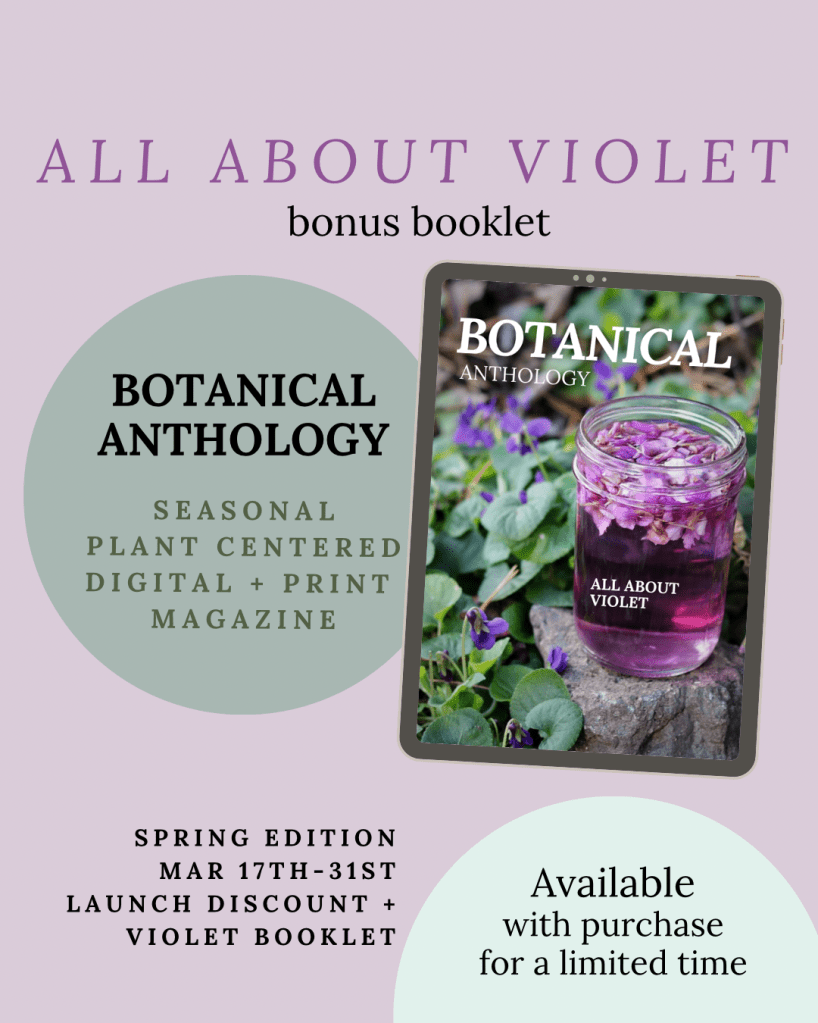
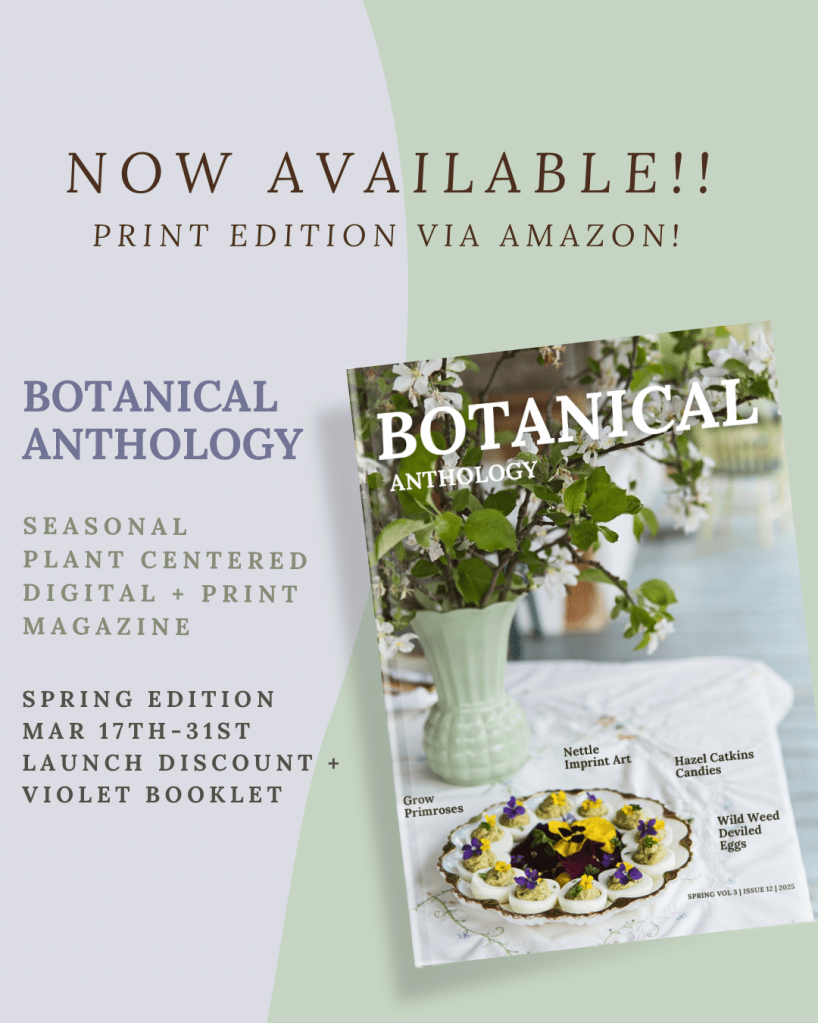
Botanical Anthology Spring 2025!

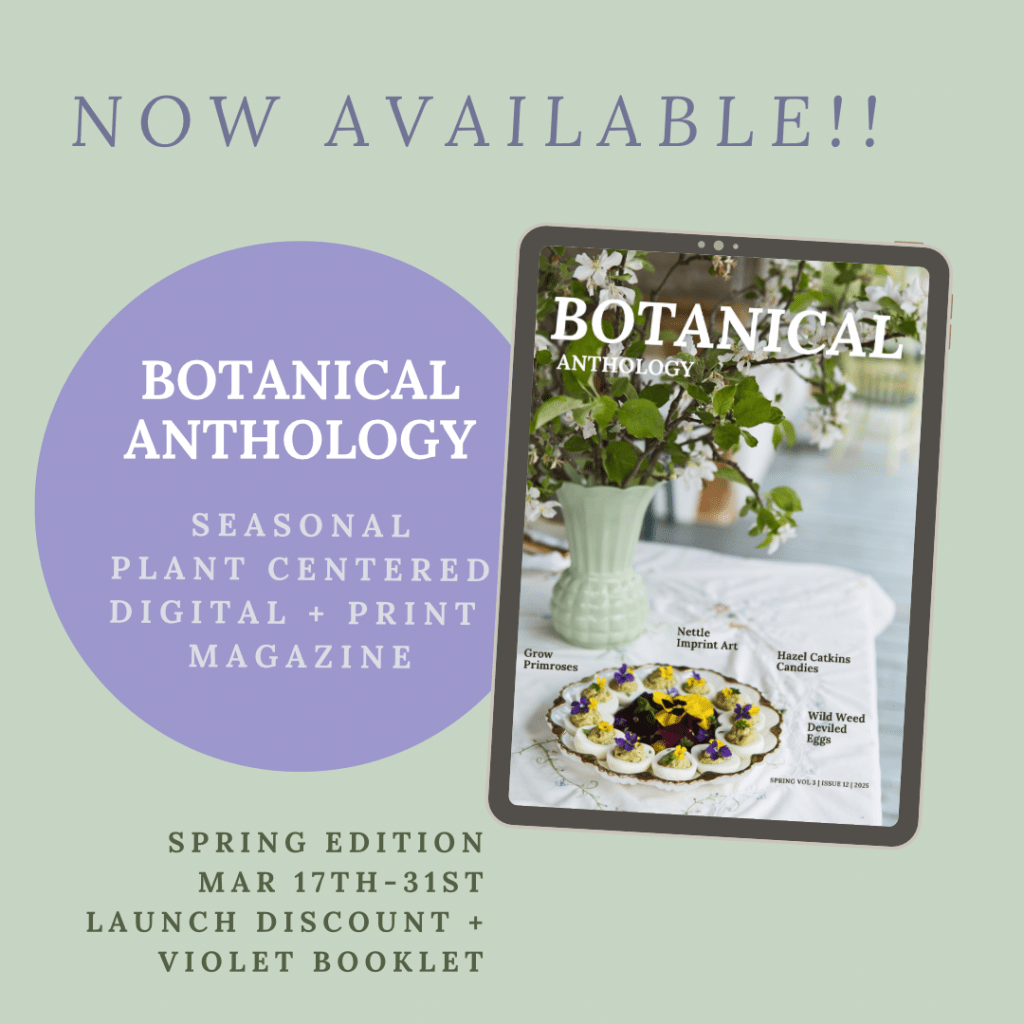
With a reverence for spring and the plants associated with it, TODAY we launch our spring edition of Botanical Anthology.  

As always, I am so proud to be a part of this lovely and inspiring publication! (I write multiple articles for it and also edit it and help a lot with its production.) Our fearless leader Harmonie, the lovely and incredibly creative contributors, and I have all worked tirelessly to bring you this magical spring issue we are so proud of. 

A plant lover’s dream, it is a seasonal, plant centered quarterly digital + print magazine bringing you 40+ articles from 40+ contributors to incorporate herbs into your apothecary, kitchen, foraging and gardening, crafts, rituals, celebrations, and more. 

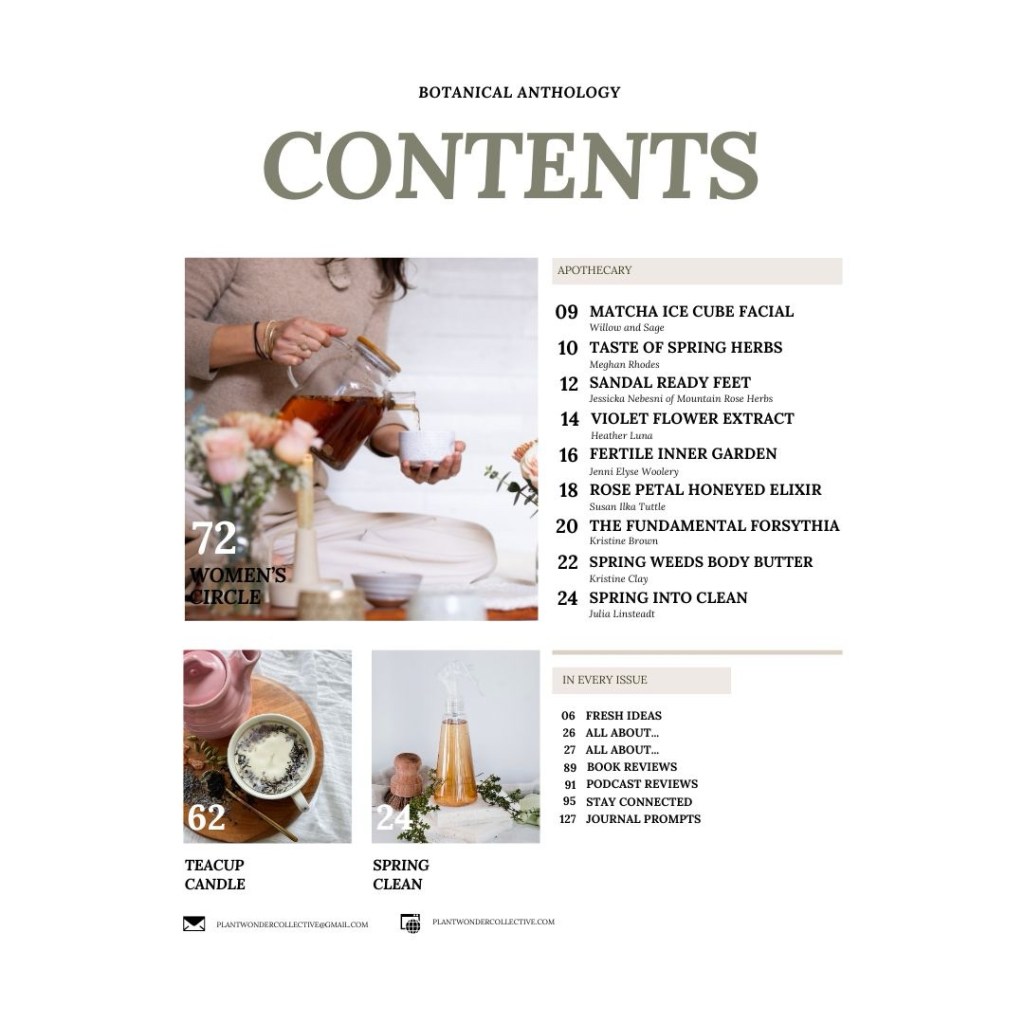
* Blend lilac sugar scrub, infuse allergy vinegar + whip spring weeds body butter 

* Bake fireweed frittata, candy hazel catkins  + steep beech leaf noyaux

* Forage mustard, grow primroses + dig spring roots

* Make nettle imprints, fashion pressed flower stickers + pour tea candles 

* Brew full moon teas, start a women’s circle + muse over tasseography

* Celebrate Spring Equinox with crystalized eggs and May Day with violet bannocks

* Meet Dr. Jacqui, Ali Falatovics, Brittany Gibson + Growing Up Rooted Apothecary 

From  March 17th –  March 31st, receive the Botanical Anthology Spring edition digital download, plus our All About Violet booklet, for just $15.  

As a thank you for being here with us, enjoy $1 off the digital version of the publication with this code: Take$1BASpring25

Or head to Amazon to order the print version for $24, then email plantwondercollective@gmail.com with proof of purchase so we know to send you the booklet! We also offer bulk pricing on print orders through our website to save you a bit of moolah.

Botanical Anthology is perfect for the budding herbalist, natural health enthusiast, (urban) homesteader, and nature lover in your life. Feel good knowing you are directly supporting a small business and each contributor of this independently published magazine.  

Come April, the booklets will no longer be included, and the price will increase.  

Let us be your guide to work with plants as you journey through the season. 

Check out the Table of Contents below to see what is inside!

Categories
Herbs and Herbalism Recipes Tea

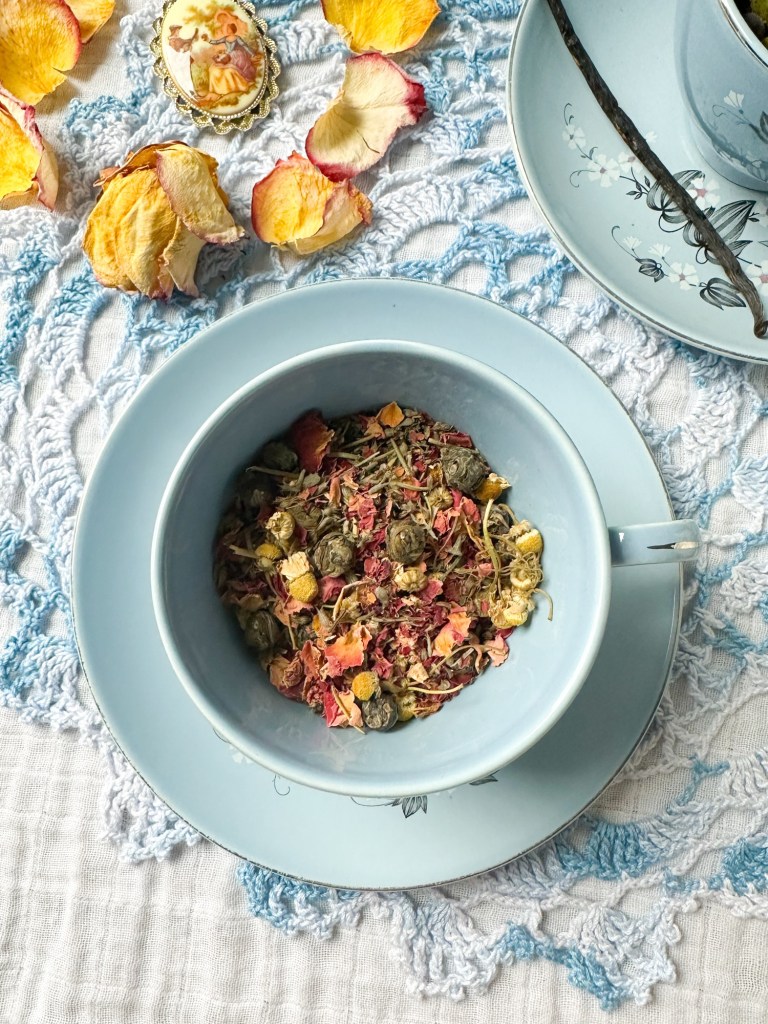
Springtime Jasmine Pearls Tea Blend

One of my most favorite forms of tea is jasmine pearls! Green tea leaves scented with delicate, luscious jasmine are rolled into little “pearls,” of which you can use 3 or 4 to a cuppa. Not only do I adore the mild floral flavor and relaxing sensation of enjoying this fancy-feeling form of tea, but it is also so lovely acting as the base of springtime tea blends!

Jasmine pearl tea tastes as delightful cold brewed or iced as it does hot. The pearls are convenient for preparing in a pitcher or mason jar, as they are quite easy to avoid when sipping (or you can scoop them out with a spoon). As for a traditional hot brew, green tea needs slightly special treatment! It needs a lighter steep so as not to turn too bitter. However, I’ve found jasmine pearls to be a little more forgiving than other types of loose leaf green tea in this regard. 

It is true that green tea contains caffeine like its other Camellia sinensis counterparts, but less so, which lends well to the calming attributes it is found to possess. The tea plant in general is thought to aid in steadying and balancing the constitution, green tea especially. Jasmine’s presence adds further peace, calming, and uplifting.

This particular jasmine pearl tea blend includes catnip, chamomile, rose, and rosemary. The combination of light, flowery tea with nervine herbs that bolster the mind and soothe the spirit is the ultimate springtime self-care sigh of contentment!

Here is the full recipe!

For one cup of tea:

3 jasmine pearls 

½ tsp catnip

½ tsp chamomile

½ tsp rose petals

¼ tsp rosemary 

As this contains green tea, be sure to use a slightly lower water temperature (don’t quite bring the water to boiling) and a shorter brew time, about 3-4 minutes.


For educational purposes only. Not intended for medical advice. Always consult your physician.

*This post contains affiliate links, which means if you choose to buy something from a link that I share, I will make a small percentage of the sale *at no extra cost to you*.

Categories
Herbs and Herbalism

Damiana + Herbs for Headache Relief

I am lucky to not have chronic headache issues, which I know so many people have! But I do still sometimes deal with clusters of headaches, especially stress-related and cycle-related ones. And I’ve recently been ill and have experienced some unpleasant headaches associated with that. (Such a bad cold and flu season this year!) When those problems arise, herbs can absolutely help.

I have several favorite herbal allies to lean on in this circumstance, usually brewing them in tea, and damiana is the star of the show. Though perhaps better known as an aphrodisiac herb, damiana is amazing to relieve tension headaches and that pressure and pounding sensation in the head. It is my headache secret weapon and always in my headache tea blends! I love its warm (but not too warm) soothing, tension-relieving, and pain modulation and easing.

Other herbs I rely on for headache teas:

Meadowsweet– cooling, astringent, eases stabbing pain, high in salicylic acid (aspirin!)

Mint– cooling, antispasmodic, nutritious, pain-relieving, uplifting and relaxing

Lavender– soothing, relaxing, gentle, pain-relieving and aromatic 

Cramp bark– gentle, pain-relieving, spasm easing, muscle tension relieving

Skullcap & Passionflower– sleep aiding, nerve & tension easing, soothing

If you use essential oils, an oil roller or balm using peppermint and lavender oils mixed with a carrier oil is a great remedy, too. Roll or rub this on your temples, the back of your neck, or wherever your headaches tend to be concentrated. (Can you tell mine is well-loved? I need to replace that oily label!)


What are your favorite natural headache remedies?


For educational purposes only. Not intended for medical advice. Always consult your physician.

*This post contains affiliate links, which means if you choose to buy something from a link that I share, I will make a small percentage of the sale *at no extra cost to you*.

Categories
Tea wheel of the year

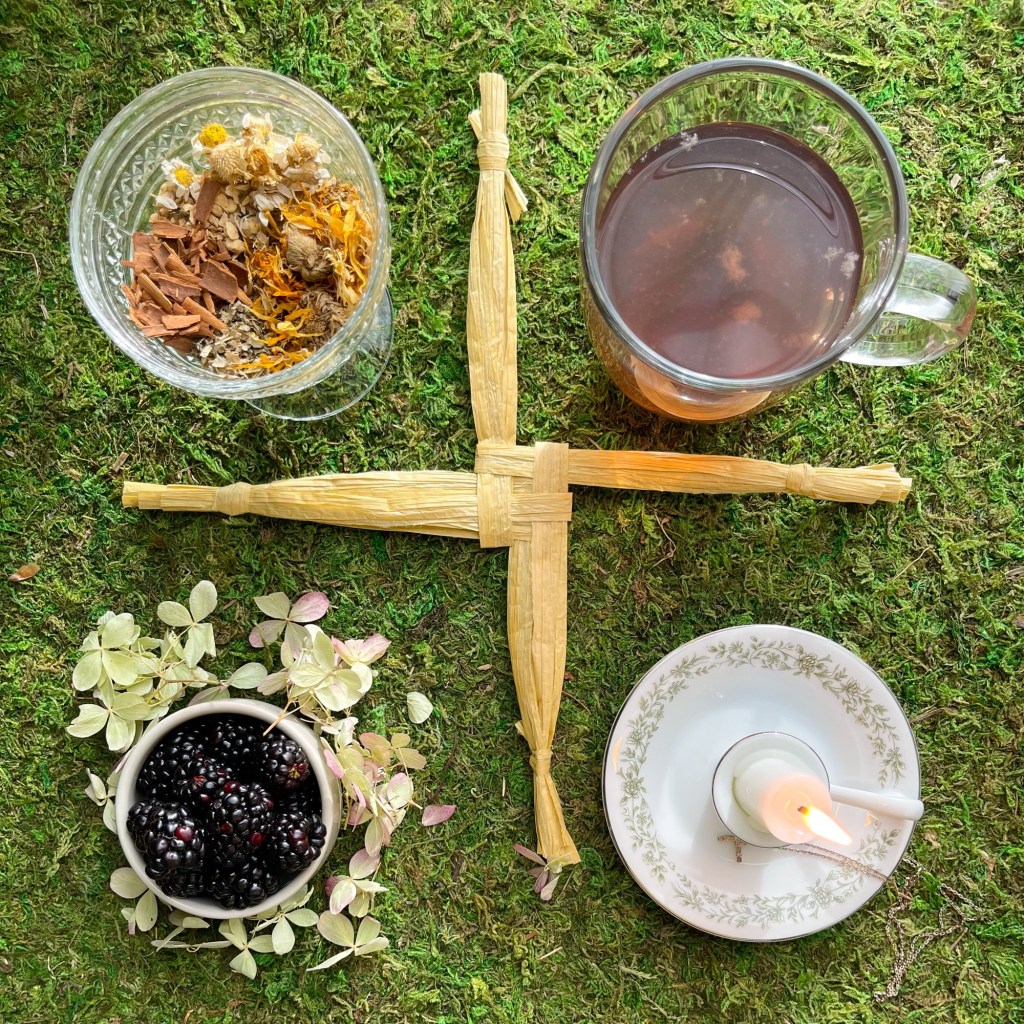
Brigid Tea for Imbolc

Blessed Imbolc! This sabbat marks the halfway point between the winter solstice and spring equinox, so it is also called midwinter. And it is Candlemas, when candles were brought to be blessed for the year. 

It’s also a time that is traditionally dedicated to St. Brigid and/or the goddess Brigid. This Celtic goddess is a fire deity who embodies the light and warmth of spring. She is sometimes represented as a triple-goddess or as presiding over three flames: the flame of inspiration and creativity, the flame of the hearth, and the flame of the forge and smithing. Brigid is also associated with healing, wisdom, poetry, livestock, and protection.

As Celtic legend tells, the Cailleach–the crone goddess of winter–and Brigid split the year between them. When the Cailleach’s fire goes out, she cedes rule to Brigid, who presides over her half of the year until Samhain when her counterpart returns.

This tea to welcome Brigid’s return contains blackberry leaf and fruit along with chamomile, which are all sacred to the goddess, in combination with calendula, ginger, and cinnamon to represent her three flames.

Brigid’s Tea

1 part blackberry leaf

2 parts dried or fresh blackberries 

1 part chamomile 

1 part calendula

½ part ginger

½ part cinnamon

Directions

If using fresh blackberries, muddle 2-3 in the bottom of a cup (you’ll strain the tea after brewing); if using dried berries, simply add them to the tea herbs. Add 1 tablespoon to a tea strainer, eco-friendly tea bag, or French press. Pour 1 to 1 ½ cups hot water over the tea and steep for 5 minutes. Strain out the muddled blackberries now if using this method. Add honey or other sweetener, if desired.


For educational purposes only. Not intended for medical advice. Always consult your physician.

*This post contains affiliate links, which means if you choose to buy something from a link that I share, I will make a small percentage of the sale *at no extra cost to you*.

Categories
Herbs and Herbalism Recipes

Orange & Herb Infused Sugar

I love making herbal sugars! They are so versatile, and can be used for so many things—like to sweeten tea and hot beverages, adorn a mocktail or cocktail glass rim, sprinkle on sugar cookies / shortbread cookies / other baked goods, add pizzazz to oatmeal, and even to make a batch of sugar scrub for botanical skincare purposes!

Orange is the star of this particular blend of herbal sugar. With its bright, tangy flavor, vitamin C punch, and complexity of bitter + sour + sweet, it adds depth and delight. 

Orange offers so many nutritional and medicinal benefits. It aids the immune system, the heart, addresses inflammation, offers antioxidant benefits, and a host of other perks!

Herbal sugars can be utilized for ritual and spiritual purposes, too, and orange shines in this role. Orange is associated with love, joy, prosperity, luck, and divination. You could certainly change up the ingredients to suit your intentions, but the following recipe would certainly boost intentions of sweetness, joy, and love!


Orange & Herb Infused Sugar

Ingredients

Method

Mix white sugar, fresh orange zest, peppermint, and one vanilla bean (split and scraped, then the whole bean tossed in) in a bowl. Then spread it out to dry awhile on a cookie sheet before transferring the mixture (including the vanilla bean) to a jar. The vanilla bean will continue to impart its sweet flavor in the sugar and it will only get better!

Let the jar sit tightly lidded for a few days to infuse with all the lovely orange oil and vanilla before using it in all the delicious and creative ways you can imagine!


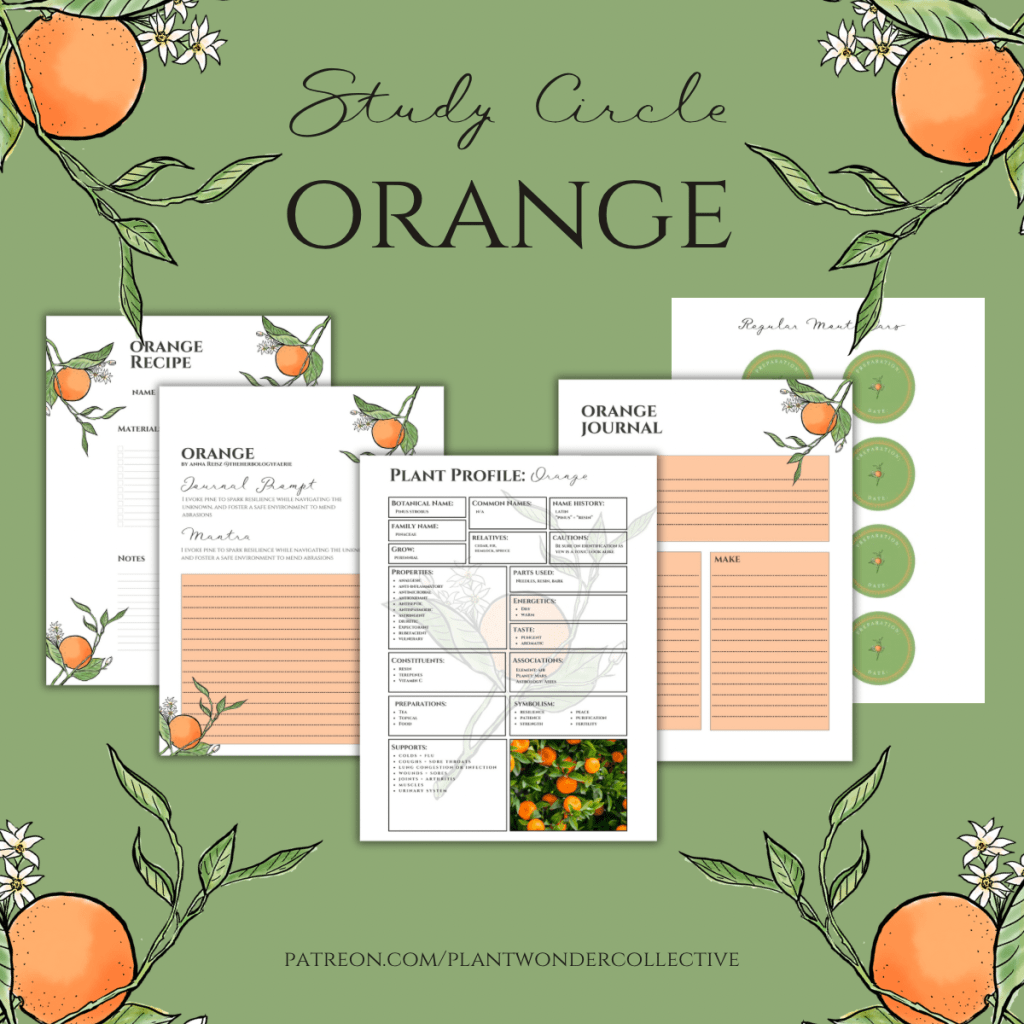
It is ORANGE month at the Plant Wonder Collective Patreon Study Circle! If you’d like to support the work of PWC, please consider joining our Study Circle for exclusive recipes, articles, digital downloads and printables for the plant of the month.


For educational purposes only. Not intended for medical advice. Always consult your physician.

*This post contains affiliate links, which means if you choose to buy something from a link that I share, I will make a small percentage of the sale *at no extra cost to you*.
Categories
Recipes Tea wheel of the year

Yule + Winter Solstice Tea Blends

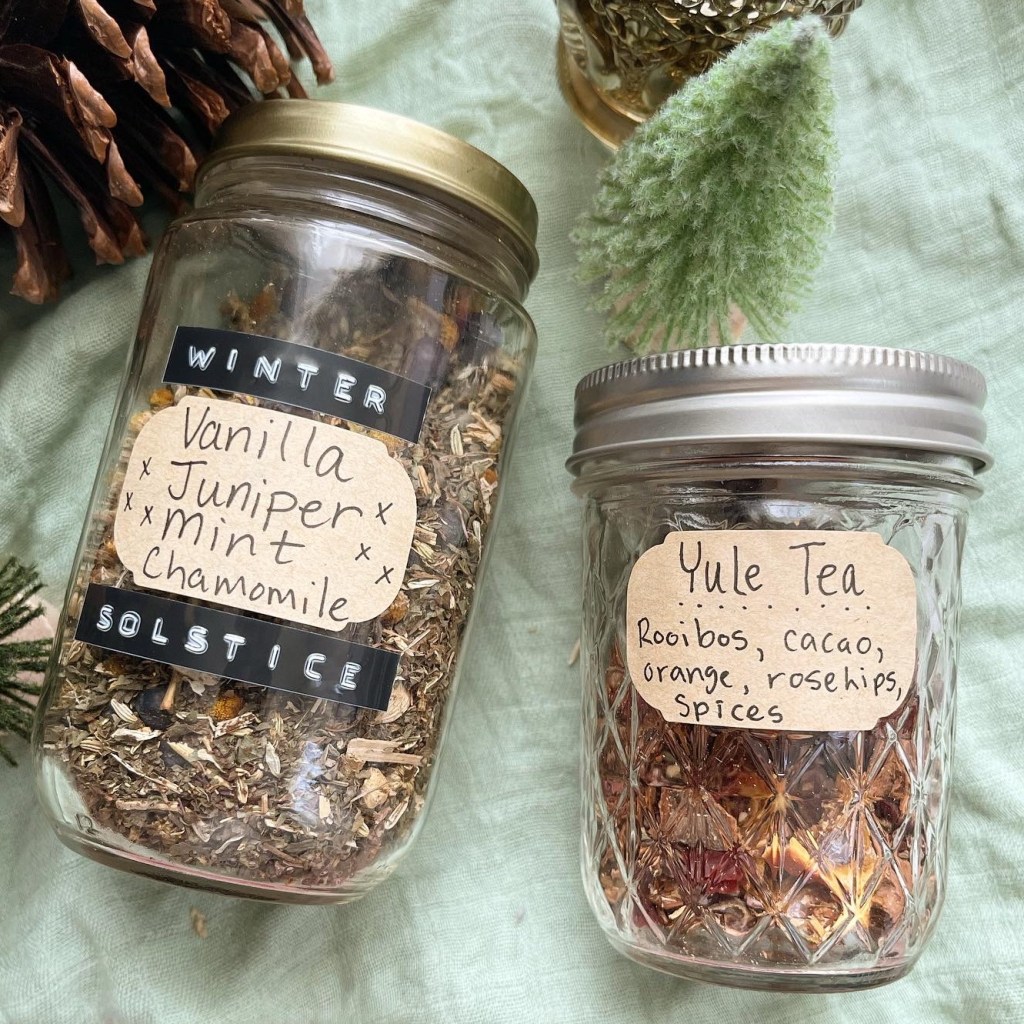
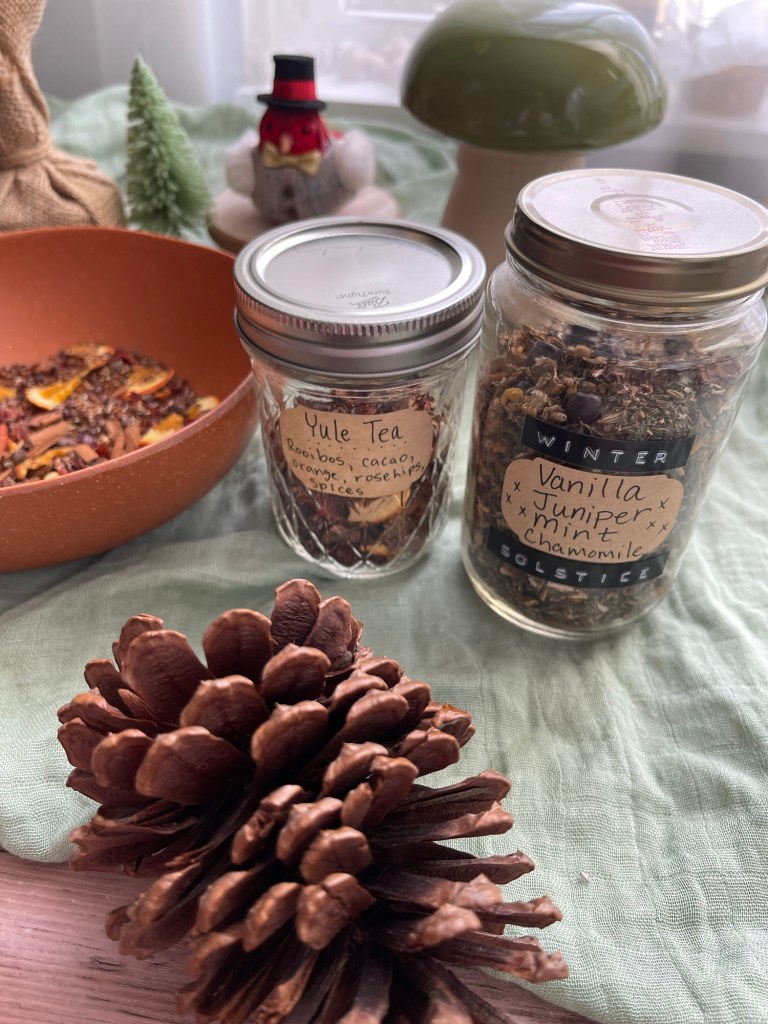
Today I’m sharing two herbal tea blends to enjoy for Yule // the Winter Solstice!

The Yule Tea blend is a sweet and festive spiced sip, full of immune-boosting ingredients that taste lovely. The combo of orange and spices is traditional for the season, in part because of those properties and in part because of associations with protection, divination, prosperity, and luck derived from them.

Yule:
1 tsp rooibos
1 tsp cacao nibs
½ tsp orange peel
½ tsp cinnamon pieces
½ tsp rose hips
¼ tsp allspice berries
¼ tsp star anise
¼ tsp nutmeg

The Winter Solstice Tea tastes decadent like a holiday cake, but without the heartburn or feeling of overindulgence! With soothing herbs that promote digestion, relieve pain, and aid in circulation, it’s like a sweet, warm hug. And chamomile represents the sun that returns brighter each day after the solstice; juniper is a powerful talisman of winter protection, cleansing, and luck; and the other botanicals have ties to healing, love, and luck, too.

Winter Solstice:
1 tsp chamomile
1 tsp mint
½ tsp meadowsweet
½ tsp cinnamon pieces
¼ tsp ginger
¼ tsp vanilla bean powder or ¼ a vanilla bean
4-5 juniper berries
2-3 cardamom pods

To brew—

To make a single cup of tea, add 1 tablespoon to a tea strainer, eco- friendly tea bag, or French press. Pour 1 to 1 ½ cups hot water over the tea and steep for 3-5 minutes. Add honey or maple syrup to taste, if desired.


For educational purposes only. Not intended for medical advice. Always consult your physician.

*This post contains affiliate links, which means if you choose to buy something from a link that I share, I will make a small percentage of the sale *at no extra cost to you*.
Categories
Craft Hygge

Pine Impression Clay Ornaments

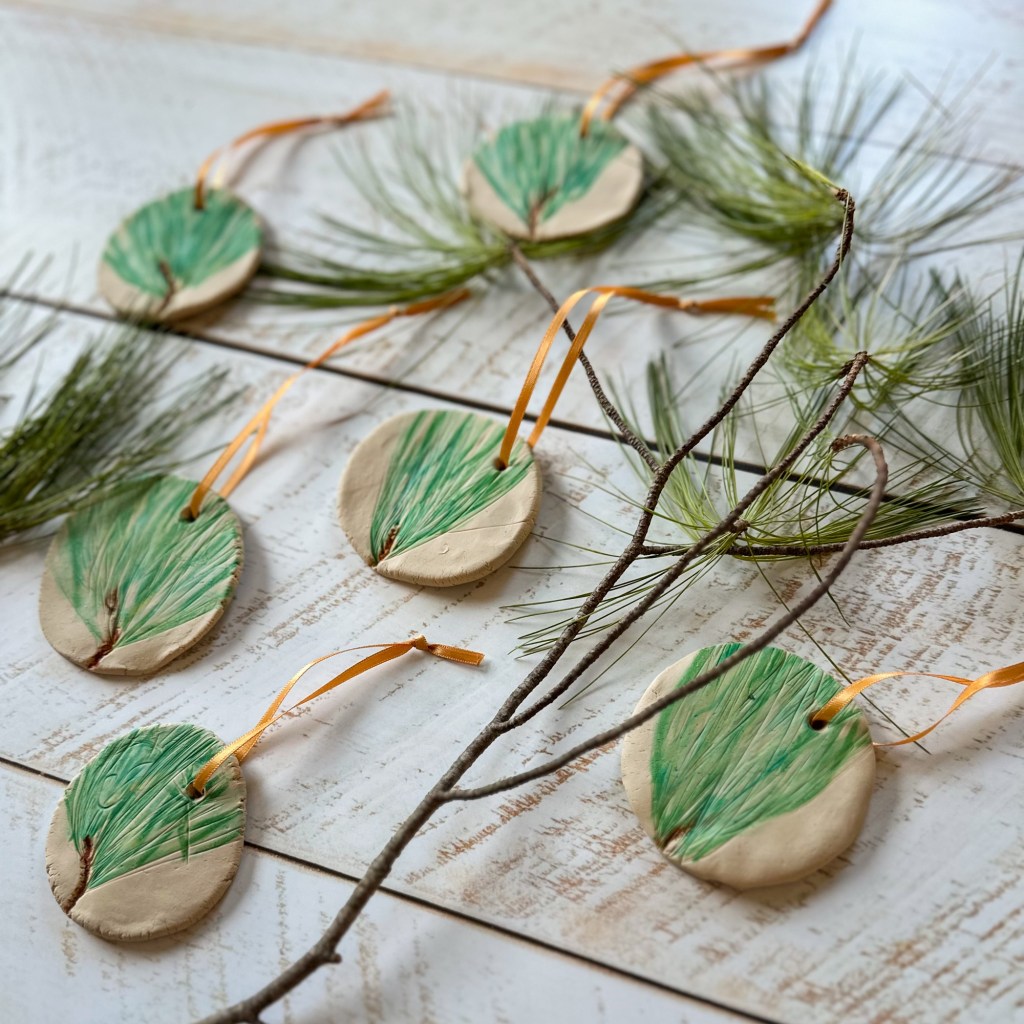
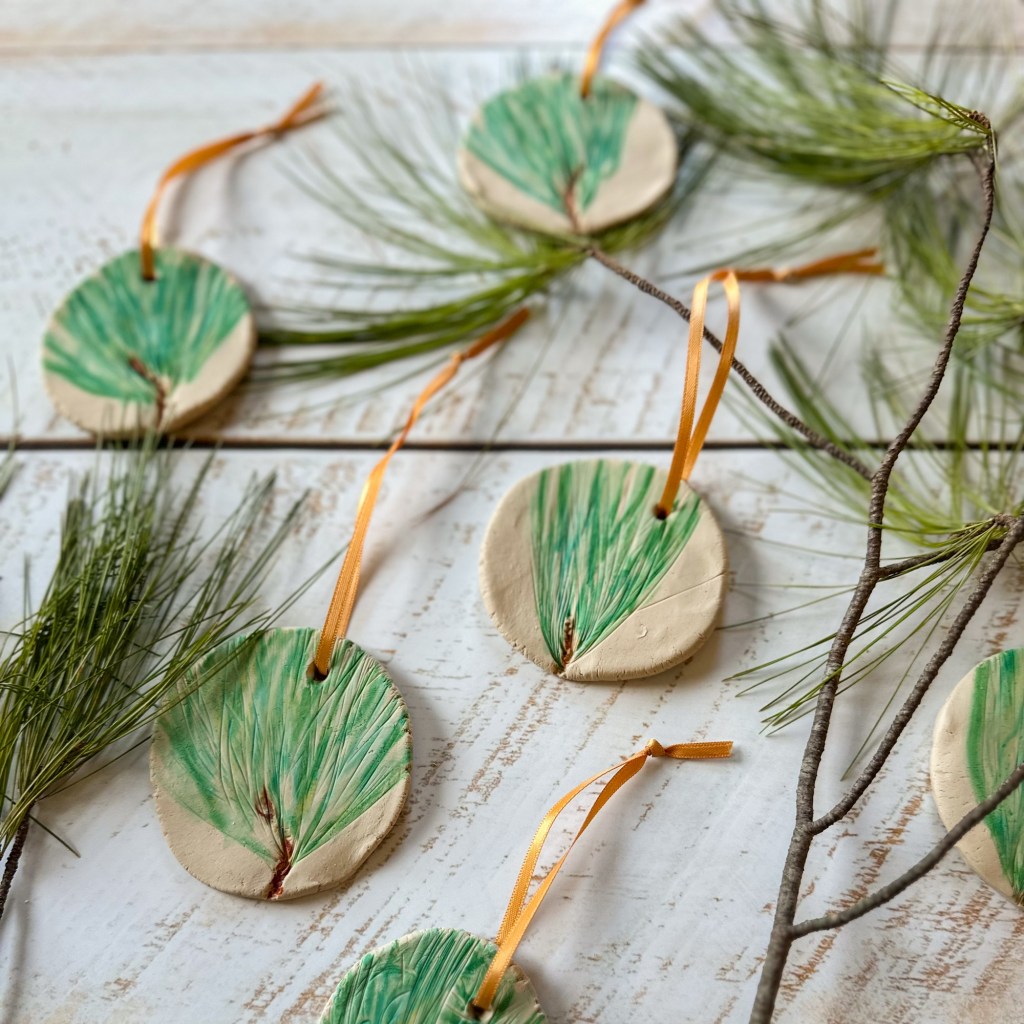
I wanted to share a fun winter craft with you today: simple, sweet pine needle impression clay ornaments!

I know these are not a new idea, but I’ve been meaning to make some for a while, and I am excited with how they turned out. They are a lovely activity for kids to make, or perhaps a gathering of friends on a wine or tea night!  

And if you live in an apartment where you can’t have a live Christmas tree, or perhaps another reason prevents you, you can forage for pine branches at a local park to take home and make this craft and then apply some drops of pine essential oil to the backs to bring fresh pine scent to your home. (Orange, clove, and cinnamon essential oils would also be fitting and traditional midwinter scents to add!) It’s an accessible way to bring the goodness of pine indoors!

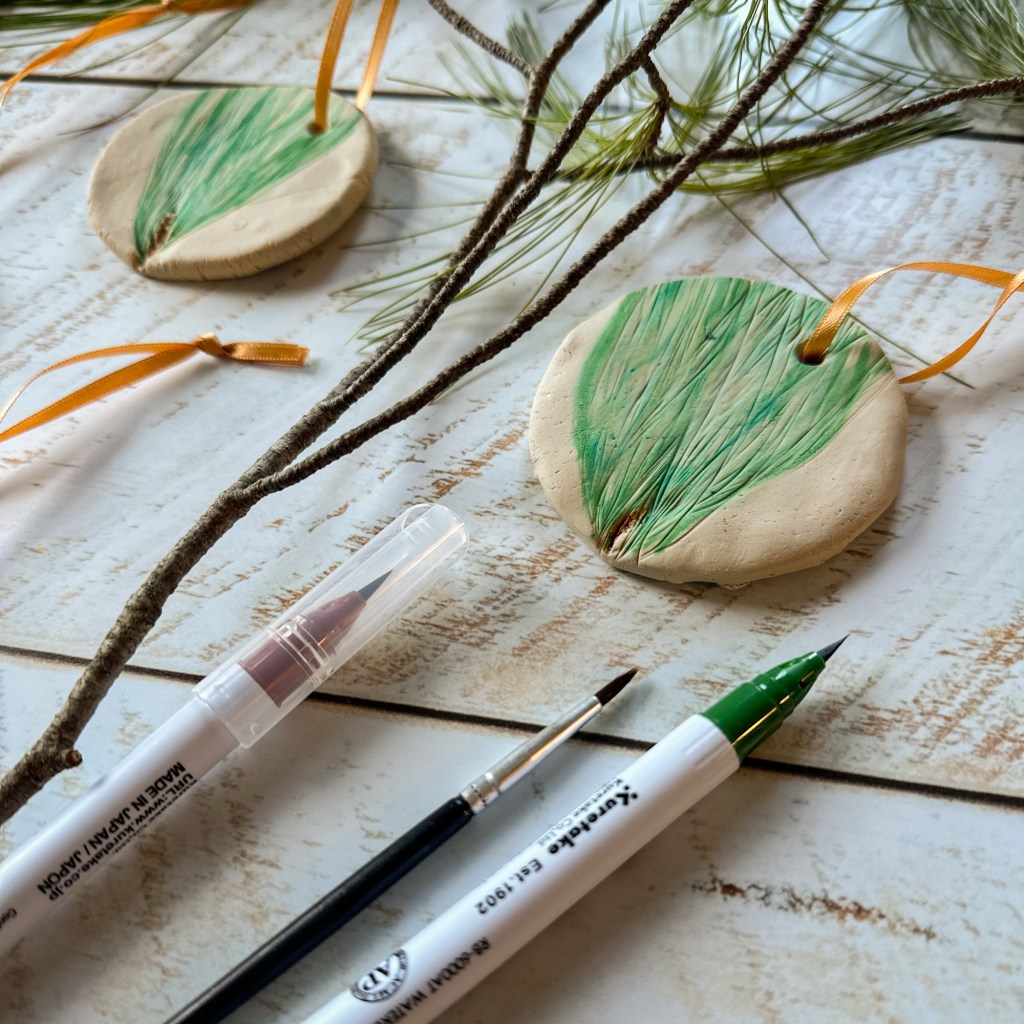
To make the ornaments, roll air-dry clay into 1-inch balls and then press flat into discs with a book or container lid. Or, if you’re fancier than me, you can roll out the clay and use cookie cutters for neater and more uniform ornaments. (Mine are “rustic,” ha!) Then press sprigs of pine needles into the clay to form an impression and poke a hole for ribbon or string. Make sure the ornaments aren’t stuck onto your work surface (waxed paper might help here). Leave them to dry overnight, then the next day paint with watercolor to emphasize the look of the pine sprigs. I used watercolor brush pens and water with a small paintbrush to thin and spread out the paint pigment. 

Once dry, string ribbon or twine through so they can be hung on a tree, drawer knobs, stocking hooks, or even used as gift tags. They can also be used as drawer or car fresheners! 

These simple little ornaments aren’t fancy, but they are cheery and fun to make, give you a chance to do some fun winter foraging with kids or friends, and bring a bit of natural pine into your holiday decorating. 


*This post contains affiliate links, which means if you choose to buy something from a link that I share, I will make a small percentage of the sale *at no extra cost to you*.
Categories
Botanical Anthology Recipes

Lemon Balm Sugar Cookies

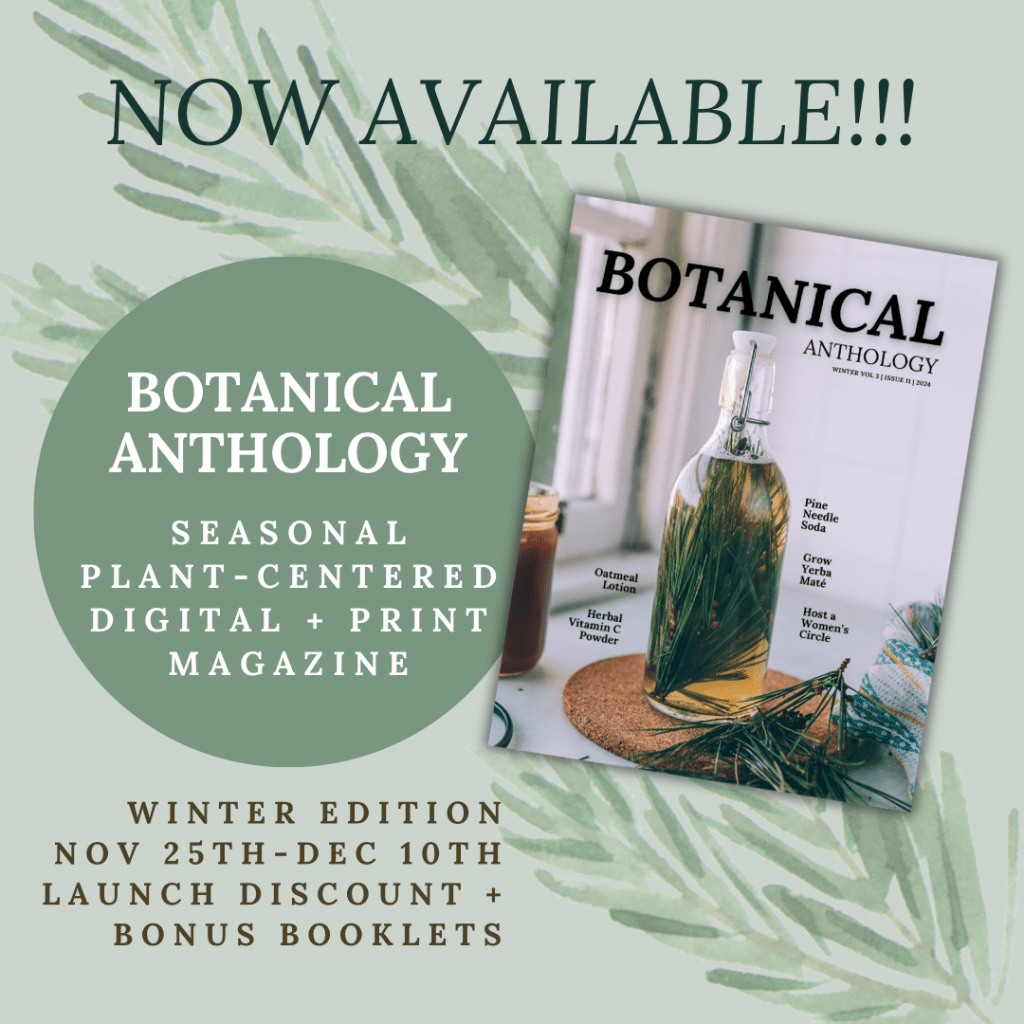
This is an excerpt from the article Lemon Balm Sugar Cookies by Kristine Brown from the Herbal Cookie Tray Vol 2 booklet featured as the bonus for the Winter Vol 3 | Issue 11 | 2024 edition of Botanical Anthology. To learn more about the ingredients and uses of this recipe, check out the entire article in the magazine! Our herbal magazine, featuring remedies, recipes and projects with plants for the winter season, can be purchased as a Digital version: HERE and as a Print version: HERE.


Lemon Balm Sugar Cookies

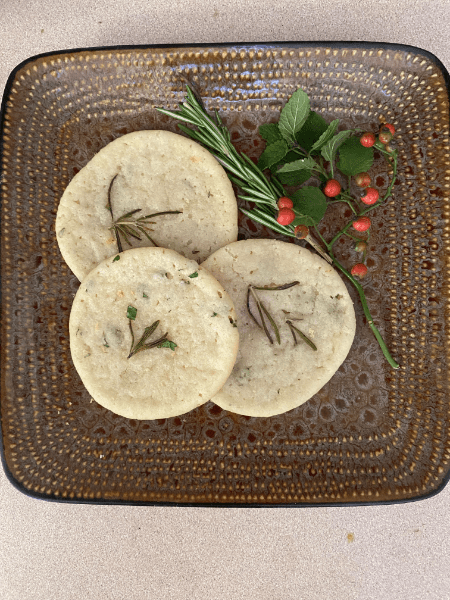
Make delightful sugar cookies that melt-in-your-mouth good! The mild lemon flavor adds a delicate blend of tang that compliments the savory rosemary flavor from the garnish perfectly. They can be prepped a day or two ahead so you can cut and bake when you’re ready.

Materials

2 tbsp lemon balm, minced
1 tsp lemon juice
1 c butter, softened
⅔ c sugar
1 egg
2 ⅓ c all-purpose flour
Sprigs of rosemary for garnish

Method

In a small bowl, combine lemon balm and lemon juice, pressing the mixture with the back of a spoon to blend. 

In a large mixing bowl with a hand mixer, cream butter and sugar until light and fluffy. Beat in the egg and the lemon mixture. Gradually beat in flour and salt. 

Cover and refrigerate 3 hours or until firm enough to roll in wax paper. 

Preheat the oven to 350°F. Place the dough on waxed paper and slice into slices about 1/8″ thick. Press bits of rosemary sprigs into each cookie to look like a pine tree. 

Bake on an ungreased cookie sheet for 8 to 10 minutes. Cookies will brown slightly around edges. 

Notes

  • Yields about 60 cookies. 
  • If you are using dried lemon balm, you will only need about 1 tablespoon.
  • This recipe can be made gluten free by substituting 1:1 gluten free flour blend for the all-purpose flour. 
  • This recipe can be made dairy free by substituting coconut oil or tallow for the butter. 

Kristine Brown, RH (AHG) is the writer and illustrator of the children’s publication Herbal Roots zine, which includes ebooks, online courses, and a membership offering, Herb Club. She is the author of Herbalism at Home, The Homesteader’s Guide to Growing Herbs, and Nature Anatomy Activities for Kids and Nature Anatomy Guided Journal for Kids. Find her online at herbalrootszine.com and on social media @herbalrootszine

Categories
plant wonder collective Recipes Tea

Headache Helper Tea

I recently had a friend dealing with recurring tension headaches ask what herbs might be helpful in a tea to offer him some relief. (He is also being treated by his doctor, but needed some additional gentle diy to help relax his frazzled nerves and throbbing head & get him some sleep!) 

Oatstraw immediately came to mind. They’re a wonderfully gentle soother for frayed nerves, burnout, overwhelm, stress, tension—all things that lack of sleep and depletion from migraines and tension headaches can cause. 

In addition to the oatstraw, I added damiana (a headache-easing favorite of mine), calming linden, sleepy passionflower, and cooling peppermint to the batch of tea I made for my friend. He reported back that the tea was very helpful and he got a decent night’s sleep after drinking his first cup!

To make a big batch to keep on hand, choose a larger unit of measure such as a quarter cup or half cup for your parts. For a single mug of tea, choose a small unit of measure – I’d suggest half teaspoons (it will still make a very strong cuppa, or two cups). 

Here is the recipe:


Ingredients

4 parts oatstraw

4 parts damiana

3 parts linden

2 parts passionflower

2 parts peppermint 

Directions

To make a single cup of tea, add 1-2 tablespoons to a tea strainer, eco-friendly tea bag, or French press. Pour 1 to 1 1⁄2 cups hot water over the tea and steep for 4-5 minutes. Add honey or other sweetener, if desired. 


What are your favorite herbal tea ingredients to help combat headaches?


For educational purposes only. Not intended for medical advice. Always consult your physician.

*This post contains affiliate links, which means if you choose to buy something from a link that I share, I will make a small percentage of the sale *at no extra cost to you*.

Categories
Recipes Tea

October: Falling Leaves Moon in Aries + Tea Recipe

Though the Falling Leaves Moon or Hunter’s Moon fell on October 17th this year and has technically passed, the full moon’s energy can still be tapped into. Read on to learn more about this month’s full moon and a corresponding tea recipe!


The Ojibwe named the full moon during what we call October the Falling Leaves Moon. We await the “peak” of the vibrant colors knowing the shedding of these leaves marks winter’s approach. As this full moon nears, we may feel Aries’ pull to dive into autumn with an energy as vibrant as the leaves. But the sun sign Libra may temper this drive with a need for balance to conserve our energies for the coming cold.

Brew this tea to mark the Falling Leaves Moon which includes gifts given from trees for both their symbolic and astro-herbalism connections. Hawthorn bolsters the heart, while juniper, cinnamon, and ginger support the Aries fire. Apple and vanilla round things out with sweetness to cool that fire off a bit and bring things back to balance.

Falling Leaves Moon in Aries Tea Materials-

1 tbsp apple pieces, dried 

1 tsp hawthorn leaf

1 tsp juniper berries

½ tsp cinnamon stick pieces

¼ tsp ginger root, dried 

¼ tsp vanilla bean powder or ¼ vanilla bean pod

Method-

To make a single cup of tea, add 1 tablespoon to a tea strainer, eco-friendly tea bag, or French press. Pour 1 to 1 ½ cups hot water over the tea and steep for about 5 minutes. Strain, and serve. Add sweetener of choice to taste, if desired.

If you’d like recipes to mark each month’s full moon, check out the current and upcoming issues of Botanical Anthology where I share these recipes!


For educational purposes only. Not intended for medical advice. Always consult your physician.

*This post contains affiliate links, which means if you choose to buy something from a link that I share, I will make a small percentage of the sale *at no extra cost to you*.