Categories
Botanical Anthology Recipes Tea

Jemima Puddleduck Tea

My love for Beatrix Potter knows no bounds. I wish so very much that I could sit down to tea with her and learn about her fascinating life! She was far more than just an author and artist: a studied naturalist, a conservationist, an entrepreneur, a generous benefactor to many causes, and an accomplished farmer and gardener.
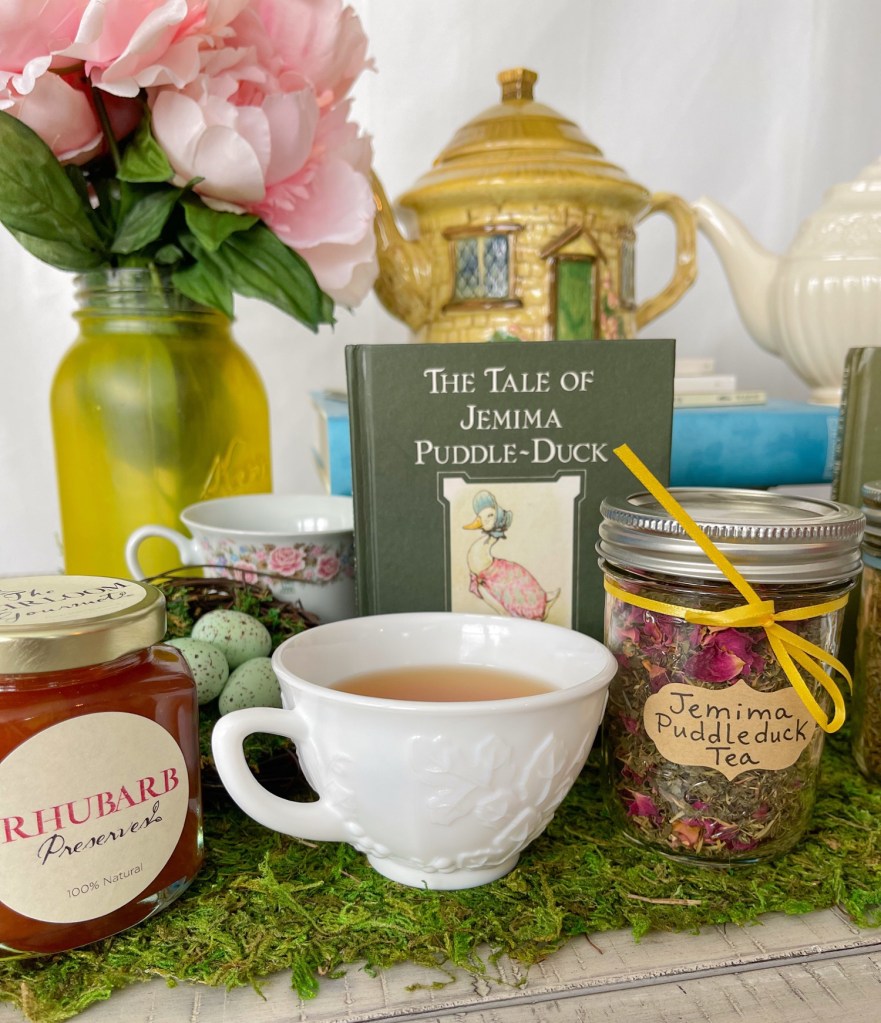
One of my favorite tales by Beatrix Potter is that of Jemima Puddleduck. Poor Jemima—she just wants to be left alone to sit on her own nest of eggs. The farmer’s wife and children always seem to find her hiding spots, such as the rhubarb bush, and retrieve her eggs for the hen to warm instead. So, Jemima searches out a secluded spot in the woods to hide her nest, only to be offered a shed by an overly-polite foxy gentleman. More unforeseen events befall Jemima, but in the end she avoids catastrophe and hatches four ducklings on her own.

I created an herbal tea blend inspired by Jemima’s story, which includes the mint and thyme the fox requested for their dinner party, roses seen in an illustration of the garden, and rhubarb from the bush she attempted to hide her eggs in. (This tart tea is made with botanicals appropriate for a Beatrix Potter-themed baby shower, children’s birthday party, or Easter brunch!)


Materials

2 parts mint

½ part thyme

1 ½ parts rose petals

Rhubarb preserves or simple syrup

Method

To make a single cup of tea, add 1 tablespoon to a tea strainer, eco-friendly tea bag, or French press. Pour 1 to 1 ½ cups hot water over the tea and steep for 3-4 minutes. Sweeten to taste with a bit of fruit preserves or simple syrup, if desired. (Strawberry can easily be substituted for rhubarb!)

———

This recipe was originally published in the spring 2023 issue of Botanical Anthology


For educational purposes only. Not intended for medical advice. Always consult your physician.

*This post contains affiliate links, which means if you choose to buy something from a link that I share, I will make a small percentage of the sale *at no extra cost to you*.
Categories
plant wonder collective Recipes

Blackberry Elderberry Lemonade

School starts very early where we live (July 31 was our first day this year!), so it can be interesting to combine autumn immune boosting herbs with cold summer treats and summer seasonal plants. 

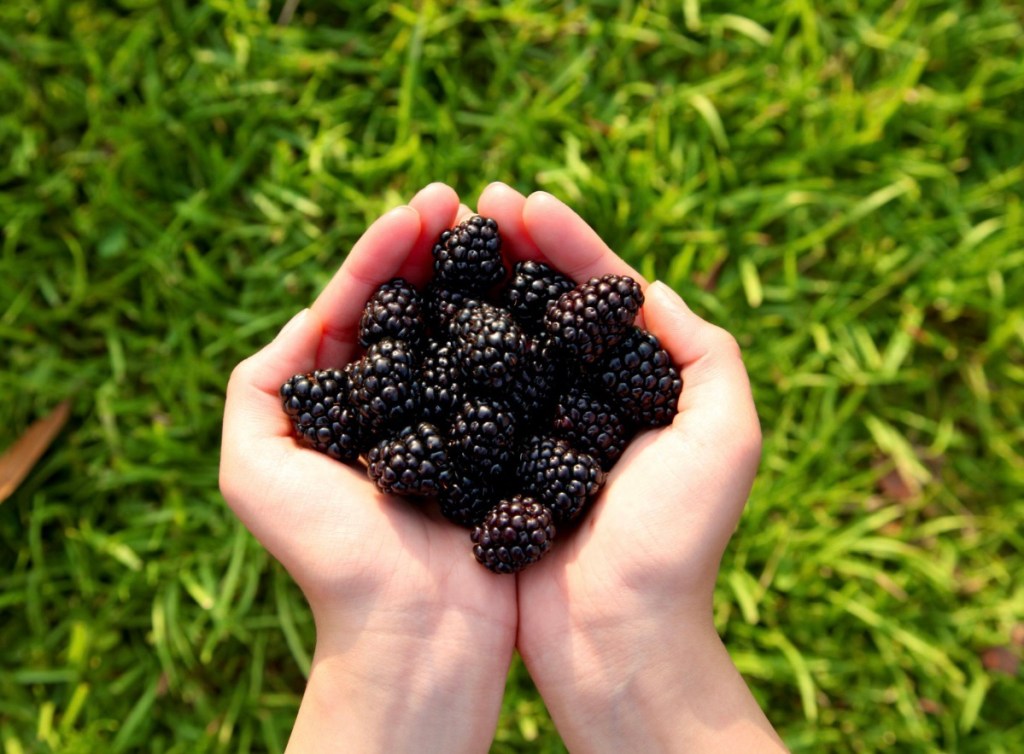
That’s where blackberry comes in! Blackberry is a nourishing, protective, antioxidant-rich ally in itself, and is in its prime this time of year. The vitamins and nutrients in blackberry can help to bolster the immune system and fight off illness. 

Add in elderberry, whose immune modulating properties are well known, along with fresh ginger for zing and an extra immune boost, and you have the start to an herbal syrup that can be used to make summer-friendly lemonade! (As an added bonus, since my kids don’t love the taste of elderberry on its own, blackberry is a perfect flavor partner to help add some sweetness and round out some of elderberry’s more mineral-y twang.)

Here’s the recipe if you’d like to try it for yourself and get a summertime immune boost!

Materials

Simple syrup:

2 c water

1 ½ c sugar (I used raw cane sugar)

1 c blackberries 

¼ c dried elderberries

3-4 slices fresh ginger 

Lemonade:

1 to 1 ½ c fresh lemon juice (5-6 lemons)

4 c ice

5 c water

Method

To make the simple syrup, add sugar and water to a saucepan and dissolve over low-medium heat. Add blackberries, elderberries, and ginger slices. Mash the contents with a potato masher. Simmer on low for 5 to 7 minutes, then remove from heat and allow to infuse for a further 10 minutes. Strain with a mesh strainer into a clean jar, cap, and refrigerate. 

To make the lemonade, juice the lemons and add to a pitcher. Add the ice, water, and 1 cup of the simple syrup. Stir well and taste; add more simple syrup if it isn’t sweet enough for your taste. Chill and serve over ice, or use frozen blackberries as ice cubes!

Notes

•Frozen or fresh blackberries can be used in this recipe interchangeably. 

•If your kids are averse to the taste of elderberry, you might choose to use less elderberries; if you’re making this for adults you might choose to add a bit more instead. 


For educational purposes only. Not intended for medical advice. Always consult your physician.

*This post contains affiliate links, which means if you choose to buy something from a link that I share, I will make a small percentage of the sale *at no extra cost to you*.

Categories
Herbs and Herbalism plant wonder collective Recipes

Medicinal Hawthorn Syrup

Hawthorn syrup is an amazing and delicious late-winter herbal medicine! Not only does it support circulation, blood pressure, overall heart health, digestion, and the immune system; it also helps dispel some of those late-winter blues with its sweet nervine powers. But it doesn’t need to be reserved for this time of year—it is a gentle tonic herb that can in most cases be safely taken frequently, year-round.

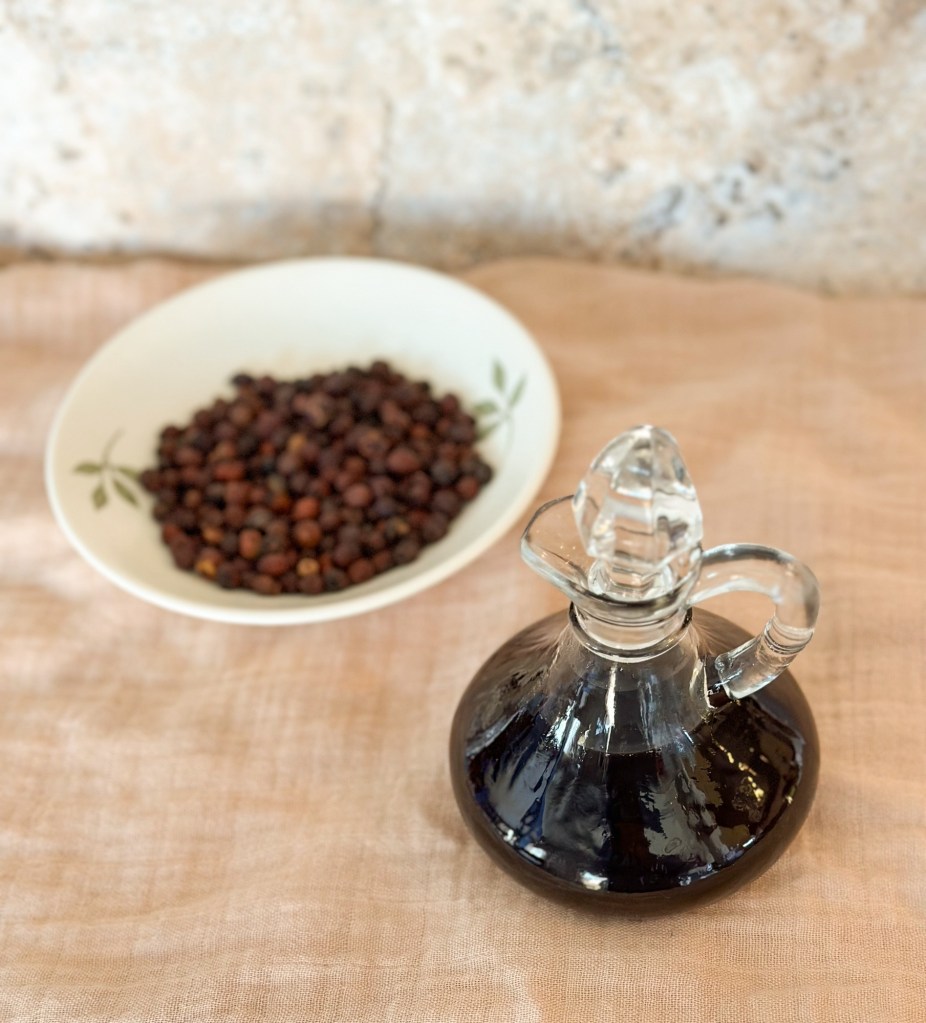
Whether you take a couple spoonfuls a day, mix it into water or tea, or use it as a mocktail or cocktail ingredient (who says medicine can’t be fun?!), hawthorn syrup will bolster your body as well as your emotional wellbeing. And the flavor is so, so nice—from dried berries it produces a tangy, slightly earthy berry flavor. Reminds me a little of fig, or port wine.

All you need is three ingredients to make this syrup. Here is the recipe!


Ingredients:

1 cup water

1 cup sugar (I used raw cane sugar)

1 cup dried hawthorn berries

Directions:

In a saucepan, heat water and sugar over low-medium heat until the sugar dissolves completely, stirring often with a wooden spoon. 

Add the hawthorn berries and allow to come to a light simmer, stirring often. Continue to simmer and stir for about 10 minutes. (We are being careful to keep this a syrup and not a caramel!)

Remove from heat and allow the hawthorn berries to steep in the syrup for another 20-30 minutes as it cools. Strain through a mesh strainer, and store in a clean jar or bottle in the fridge. Use within about 3-4 weeks.

Instead of discarding all the used syrup berries, brew a cup of tea with some of them!

A note about dried hawthorn berries: if you see a white substance on the outside of them, this is not mold and they’re not bad! It is the natural sugar in the berries that sort of collected on the surface as they dried.


Hawthorn is the Plant Wonder Collective plant of the month!

Plant Wonder Collective: Connecting you to nature through food, drink, play, garden, medicine, magic, and art.

If you’d like to support the work of PWC, please consider joining our Study Circle on Patreon for exclusive recipes, articles, digital downloads and printables for the plant of the month. We appreciate you being on this learning journey with us!


For educational purposes only. Not intended for medical advice. Always consult your physician.

*This post contains affiliate links, which means if you choose to buy something from a link that I share, I will make a small percentage of the sale *at no extra cost to you*.

Categories
Botanical Anthology Recipes

Strawberry Lavender Julep by Kristine Clay

This is an excerpt from the Summer edition of Botanical Anthology. A plant lover’s dream, it is a seasonal, plant centered quarterly publication bringing you over 45 articles from 46 contributors to incorporate herbs in your apothecary, kitchen, summer foraging and gardening, crafts, and celebrations.

This herbal magazine, featuring remedies and recipes with medicinal plants for budding herbalists, can be purchased as a digital version here and as a printed version here.


Photo by Kristine Clay

If you enjoy the classic herbal cocktail, the mint julep, then this fruity, floral rendition is sure to become a fast favorite.

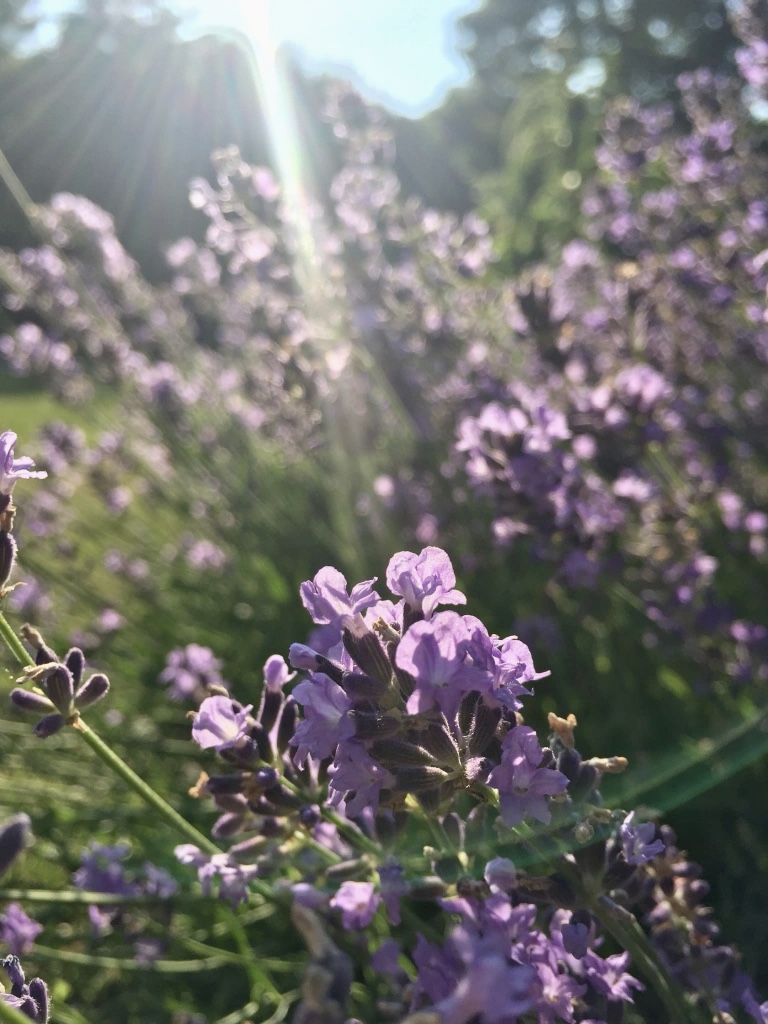
Infused whiskey lends stunning color and bursts with fresh strawberry flavor, while lavender rounds out the beverage with pleasant herbaceous notes that hint of mint. Lavender can ease stress and anxiety, helping you to unwind as you sip.

Serve this boozy beverage at your next get together or enjoy with friends on a warm summer evening. 

Strawberry Whiskey Materials

2 c strawberries, fresh, sliced 

Whiskey

16 oz jar

Strawberry Whiskey Method 

Place strawberries in a jar. 

Pour whiskey over top, filling the jar.

Cap tightly with a lid and shake well. Let the strawberries steep in whiskey for at least 1-2 weeks, shaking daily or as often as you remember. 

You can use the whiskey after about a week, but giving it a full 2 weeks to infuse will allow the flavor to really develop.

Note

If you won’t be using the whiskey right away, there’s no need to strain out the infusing strawberries after 2 weeks. Longer steep times allow the flavor to deepen, and can make for a very tasty liquor.

Photo by Kristine Clay

Lavender Simple Syrup Materials

¼ c lavender, dried

½ c sugar

¼ c lime juice

¼ c water

Lavender Simple Syrup Method

Add the ingredients to a small saucepan.

Bring the liquid to a rapid boil then reduce the heat and simmer lightly for about 10 minutes. 

Remove from heat and let the syrup cool. 

Strain out the lavender pieces and bottle the syrup. 

Store leftover syrup in the refrigerator.

Photo by Kristine Clay

Strawberry Lavender Julep Materials

1 ½ f. oz strawberry whiskey

½ fl oz lavender simple syrup

Ice cubes

Fresh lavender sprigs 

Club soda or sparkling water, optional 

Strawberry Lavender Julep Method

Pour whiskey and simple syrup into a glass and stir. 

Add ice. 

If desired, top with a splash of club soda or sparkling water. 

Garnish with a sprig or two of fresh lavender.

Note

This recipe makes one cocktail.


Article written by Kristine Clay. Kristine is a mother, herbalist, & writer who lives on an off-grid homestead in the Ecuadorian Andes. She enjoys crafting botanical concoctions, baking, and hiking with her partner in the eco-sanctuary they steward. You can read her musings about herbs, nourishing foods, & holistic mothering on her blog: mamalibelula.com and find out more about Andean plants, regenerative land management, & raising rabbits at: SierrayCielo.org.

Categories
Herbs and Herbalism plant wonder collective Recipes

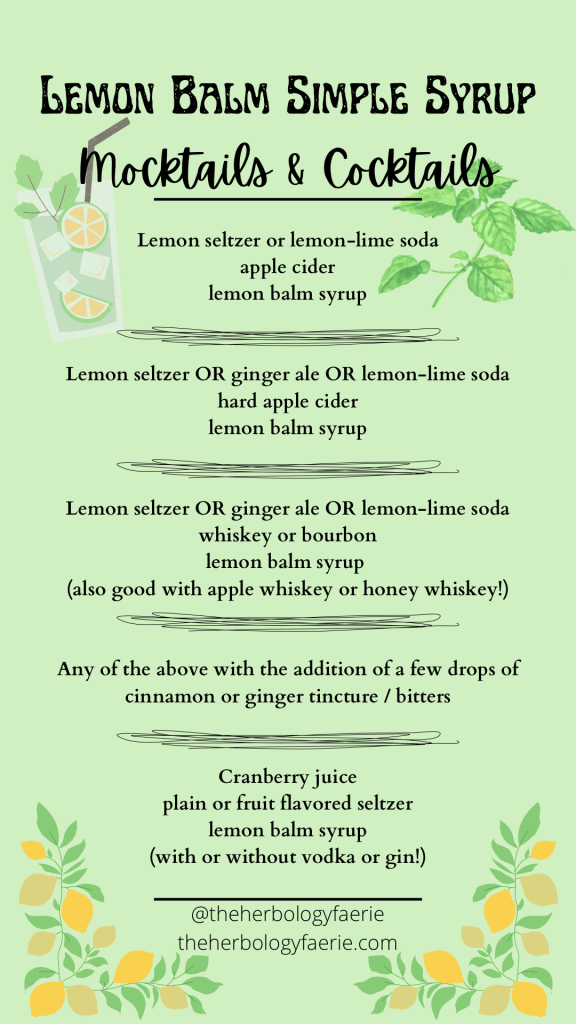
Lemon Balm Simple Syrup Mocktails & Cocktails

Happy Tuesday! Whether you’re here from my Instagram post or you found this blog post first, welcome to the lemon balm party!

Lemon balm is a subtle but sweet and tasty herb for making simple syrup. I decided to brew some up and then experiment with using it to create some tasty mocktails and cocktails.

I used fresh lemon balm to make a small batch of simple syrup with my usual recipe: dissolve ½ cup of sugar in ½ cup of water on the stovetop over medium heat, add in about 1 cup of the herb, remove from heat and steep for 30 minutes, strain, and refrigerate for up to 2 weeks. 

Then came the fun part! Of course, you can use the syrup in any kind of tea (black, green, herbal) for a bit of sweetness and the calming, soothing effects of lemon balm. But I decided to take a few diy concoctions for a spin! My favorite combination was ginger ale, a splash of apple cider (apple juice works too), and about a tablespoon of lemon balm simple syrup. If you find your lemon balm syrup’s flavor turned out too subtle, though, you can always just combine it with seltzer or ginger ale so it can be the star of the show. 

There are plenty more ways to combine lemon balm simple syrup in other mocktails and cocktails, too. Here are some of my favorite combinations!

Follow along for more Lemon Balm wonder throughout the day and join us this month through our hashtags and at @plantwondercollective on Instagram!

#plantwondercollective

#pwclemonbalm

Meet the participants!

@plantwondercollective

@florasfeastbotanicals

@wineberryadventurescouts

@herbalfae

@mamalibelula

@theherbologyfaerie

@herbal_pirate

@katwb444

Plant Wonder Collective: Connecting you to nature through food, drink, play, garden, medicine, magic and art.