Categories
Folklore Recipes Tea

JULY: THUNDER MOON IN CAPRICORN 7/10/25

July’s Thunder Moon captures the essence of summer’s balmy, heady heat. Afternoon storms during this time help balance out the strength of the sun but also pack a punch with their turbulent energy. The sun in Cancer contributes a further watery element of heightened emotion and intuition; lightning can strike in so many ways. 

Add to it the presiding Capricorn sign of the full moon this cycle, and you introduce an element of stabilization and determination. This synergy can be a powerful tool, offering a ripe energy for soul searching, brave and honest internal reflection and truth seeking. 

Nettle lends strength to this endeavor and rose softens the heart to create openness. Cinnamon provides luck, and birch offers protection. 

Thunder Moon in Capricorn Tea Materials

1 tbsp nettle

1 tbsp rose

½ tsp cinnamon bark

¼ tsp birch bark

Method

To make a single cup of tea, add 1 tablespoon to a tea strainer, eco-friendly tea bag, or French press. Pour 1 to 1 1⁄2 cups hot water over the tea and steep for about 5 minutes. Add sweetener of choice to taste, if desired.

Notes

To cold-brew, add the ingredients (1 tablespoon of tea blend per 8 ounces of water) to a glass jar or French press, steep overnight in the refrigerator (or under the moon), strain, and serve.

This excerpt is from my Zodiac Full Moon Teas recipe in the summer 2025 edition of Botanical Anthology

Categories
Botanical Anthology Recipes Tea

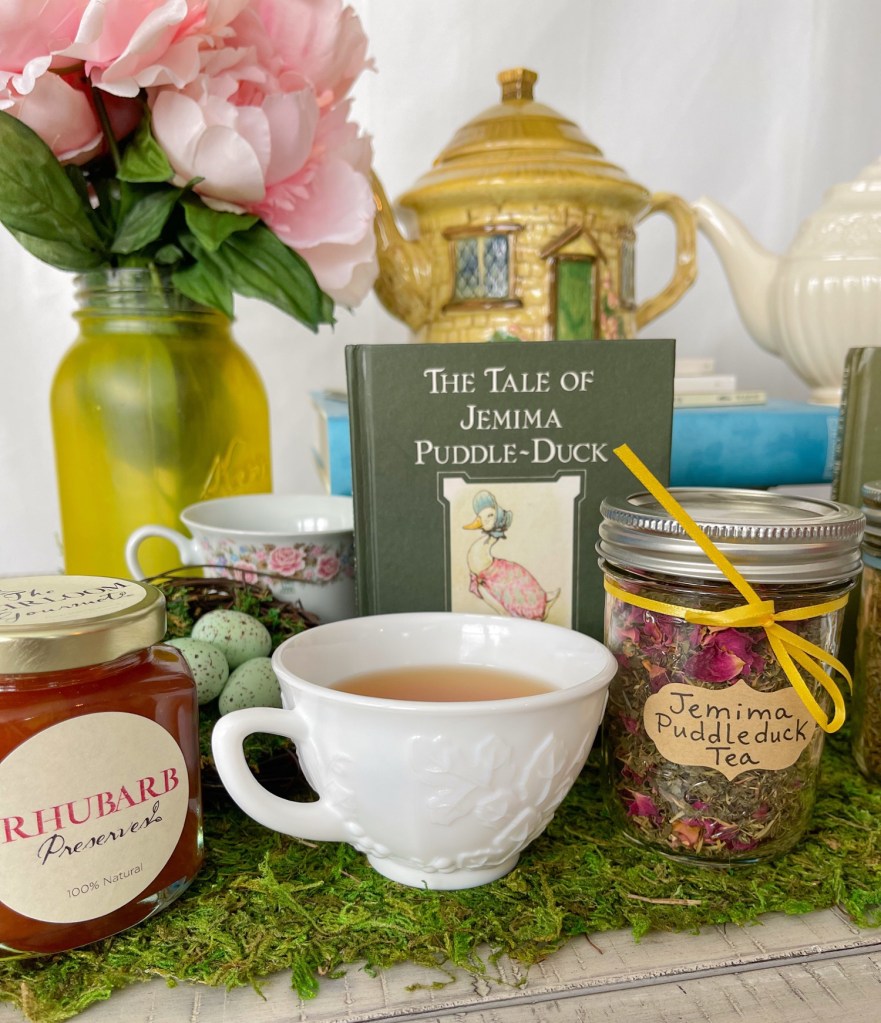
Jemima Puddleduck Tea

My love for Beatrix Potter knows no bounds. I wish so very much that I could sit down to tea with her and learn about her fascinating life! She was far more than just an author and artist: a studied naturalist, a conservationist, an entrepreneur, a generous benefactor to many causes, and an accomplished farmer and gardener.

One of my favorite tales by Beatrix Potter is that of Jemima Puddleduck. Poor Jemima—she just wants to be left alone to sit on her own nest of eggs. The farmer’s wife and children always seem to find her hiding spots, such as the rhubarb bush, and retrieve her eggs for the hen to warm instead. So, Jemima searches out a secluded spot in the woods to hide her nest, only to be offered a shed by an overly-polite foxy gentleman. More unforeseen events befall Jemima, but in the end she avoids catastrophe and hatches four ducklings on her own.

I created an herbal tea blend inspired by Jemima’s story, which includes the mint and thyme the fox requested for their dinner party, roses seen in an illustration of the garden, and rhubarb from the bush she attempted to hide her eggs in. (This tart tea is made with botanicals appropriate for a Beatrix Potter-themed baby shower, children’s birthday party, or Easter brunch!)


Materials

2 parts mint

½ part thyme

1 ½ parts rose petals

Rhubarb preserves or simple syrup

Method

To make a single cup of tea, add 1 tablespoon to a tea strainer, eco-friendly tea bag, or French press. Pour 1 to 1 ½ cups hot water over the tea and steep for 3-4 minutes. Sweeten to taste with a bit of fruit preserves or simple syrup, if desired. (Strawberry can easily be substituted for rhubarb!)

———

This recipe was originally published in the spring 2023 issue of Botanical Anthology


For educational purposes only. Not intended for medical advice. Always consult your physician.

*This post contains affiliate links, which means if you choose to buy something from a link that I share, I will make a small percentage of the sale *at no extra cost to you*.

Categories
Folklore Recipes

Aries Season Herbal Tea

We are firmly in the heart of Aries season, so I am sharing my simple tea recipe meant to help you ground into this energy! My daughter is a very fiery Aries herself so I am all too familiar with the spirit of this sign.


Aries.

March 21 – April 20.

Cardinal Fire sign. 

Ruled by Mars + the Sun.

Bold, driven, ambitious, energetic, fiery, friendly, confident, daredevil, competitive, adventurous, optimistic.

Associated with the Emperor in tarot; the root and solar plexus chakras; yang energy; red, pink, yellow, and white; and diamond, carnelian, citrine, and fire opal.


Aries Tea—

1 tsp nettle

1⁄2 tsp thyme

1 tsp rose

1⁄4 to 1⁄2 tsp cloves

To make a single cup of tea, add 1 tablespoon to a tea strainer, eco- friendly tea bag, or French press. Pour 1 to 1 1⁄2 cups hot water over the tea and steep for 3-4 minutes. Add honey or other sweetener, if desired.


———

For educational purposes only. Not intended for medical advice. Always consult your physician.

*This post contains affiliate links, which means if you choose to buy something from a link that I share, I will make a small percentage of the sale *at no extra cost to you*.

Categories
Herbs and Herbalism

Damiana + Herbs for Headache Relief

I am lucky to not have chronic headache issues, which I know so many people have! But I do still sometimes deal with clusters of headaches, especially stress-related and cycle-related ones. And I’ve recently been ill and have experienced some unpleasant headaches associated with that. (Such a bad cold and flu season this year!) When those problems arise, herbs can absolutely help.

I have several favorite herbal allies to lean on in this circumstance, usually brewing them in tea, and damiana is the star of the show. Though perhaps better known as an aphrodisiac herb, damiana is amazing to relieve tension headaches and that pressure and pounding sensation in the head. It is my headache secret weapon and always in my headache tea blends! I love its warm (but not too warm) soothing, tension-relieving, and pain modulation and easing.

Other herbs I rely on for headache teas:

Meadowsweet– cooling, astringent, eases stabbing pain, high in salicylic acid (aspirin!)

Mint– cooling, antispasmodic, nutritious, pain-relieving, uplifting and relaxing

Lavender– soothing, relaxing, gentle, pain-relieving and aromatic 

Cramp bark– gentle, pain-relieving, spasm easing, muscle tension relieving

Skullcap & Passionflower– sleep aiding, nerve & tension easing, soothing

If you use essential oils, an oil roller or balm using peppermint and lavender oils mixed with a carrier oil is a great remedy, too. Roll or rub this on your temples, the back of your neck, or wherever your headaches tend to be concentrated. (Can you tell mine is well-loved? I need to replace that oily label!)


What are your favorite natural headache remedies?


For educational purposes only. Not intended for medical advice. Always consult your physician.

*This post contains affiliate links, which means if you choose to buy something from a link that I share, I will make a small percentage of the sale *at no extra cost to you*.

Categories
Tea wheel of the year

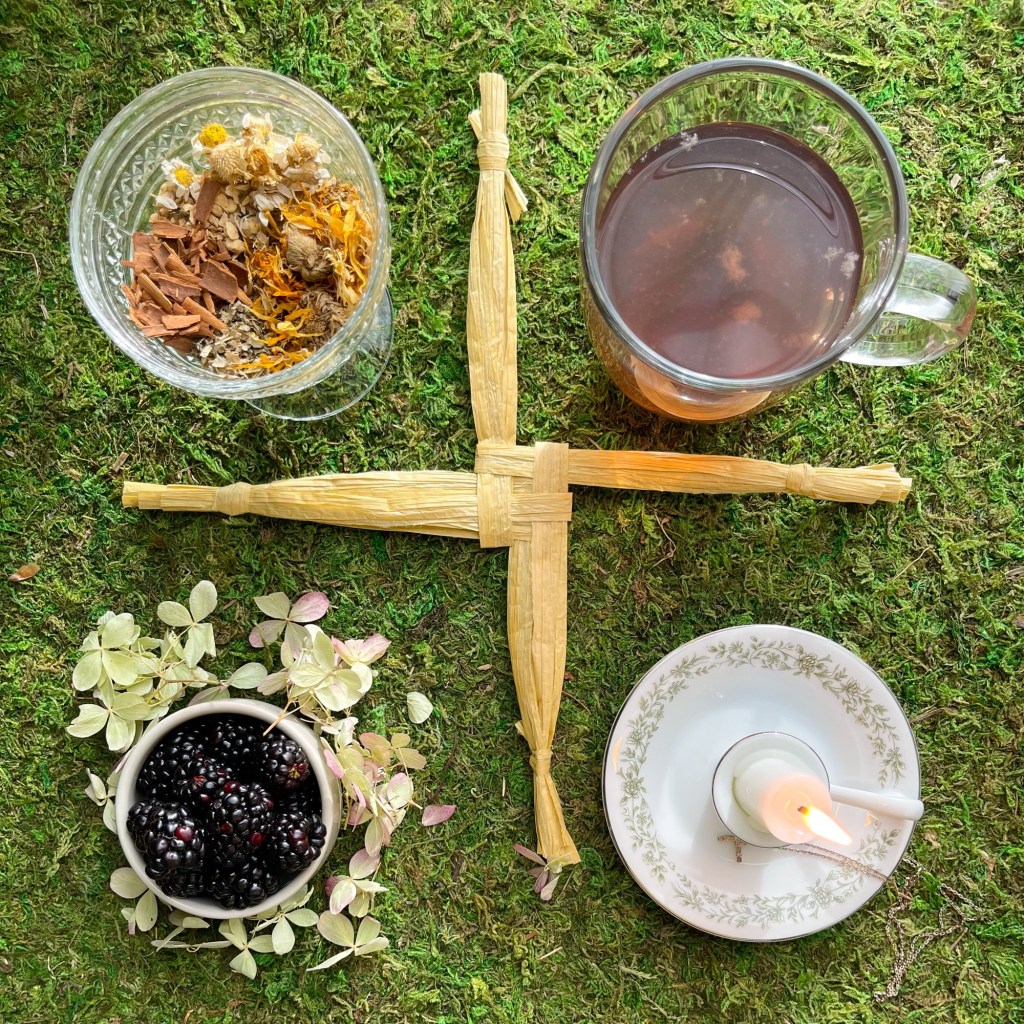
Brigid Tea for Imbolc

Blessed Imbolc! This sabbat marks the halfway point between the winter solstice and spring equinox, so it is also called midwinter. And it is Candlemas, when candles were brought to be blessed for the year. 

It’s also a time that is traditionally dedicated to St. Brigid and/or the goddess Brigid. This Celtic goddess is a fire deity who embodies the light and warmth of spring. She is sometimes represented as a triple-goddess or as presiding over three flames: the flame of inspiration and creativity, the flame of the hearth, and the flame of the forge and smithing. Brigid is also associated with healing, wisdom, poetry, livestock, and protection.

As Celtic legend tells, the Cailleach–the crone goddess of winter–and Brigid split the year between them. When the Cailleach’s fire goes out, she cedes rule to Brigid, who presides over her half of the year until Samhain when her counterpart returns.

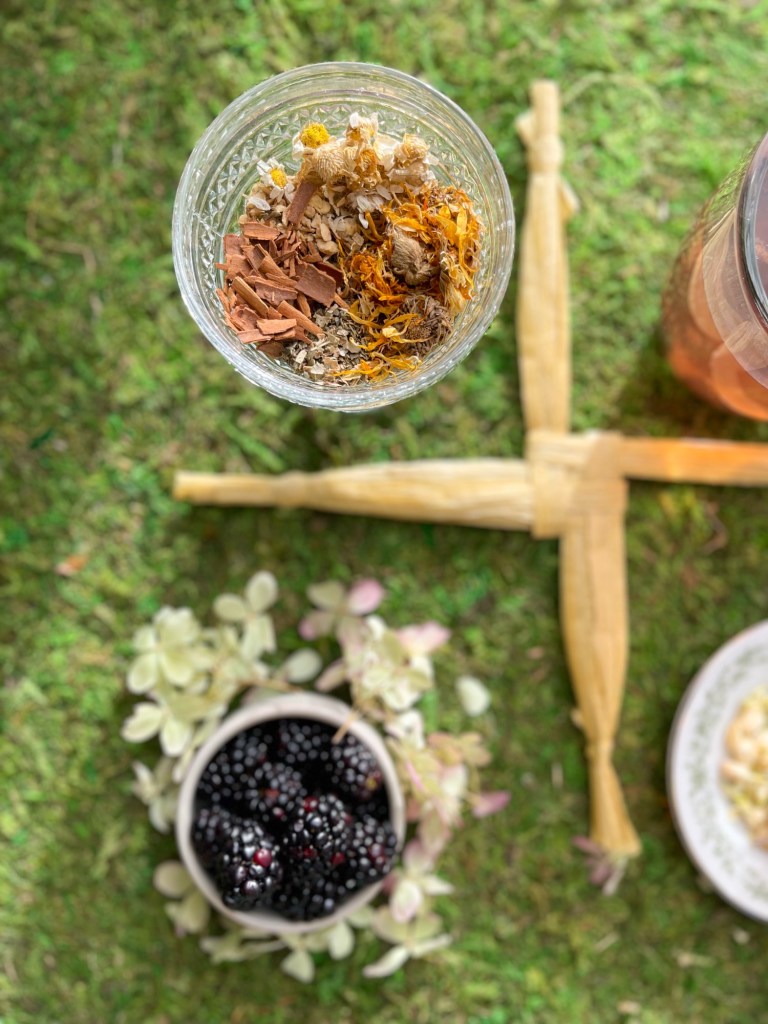
This tea to welcome Brigid’s return contains blackberry leaf and fruit along with chamomile, which are all sacred to the goddess, in combination with calendula, ginger, and cinnamon to represent her three flames.

Brigid’s Tea

1 part blackberry leaf

2 parts dried or fresh blackberries 

1 part chamomile 

1 part calendula

½ part ginger

½ part cinnamon

Directions

If using fresh blackberries, muddle 2-3 in the bottom of a cup (you’ll strain the tea after brewing); if using dried berries, simply add them to the tea herbs. Add 1 tablespoon to a tea strainer, eco-friendly tea bag, or French press. Pour 1 to 1 ½ cups hot water over the tea and steep for 5 minutes. Strain out the muddled blackberries now if using this method. Add honey or other sweetener, if desired.


For educational purposes only. Not intended for medical advice. Always consult your physician.

*This post contains affiliate links, which means if you choose to buy something from a link that I share, I will make a small percentage of the sale *at no extra cost to you*.

Categories
Recipes Tea wheel of the year

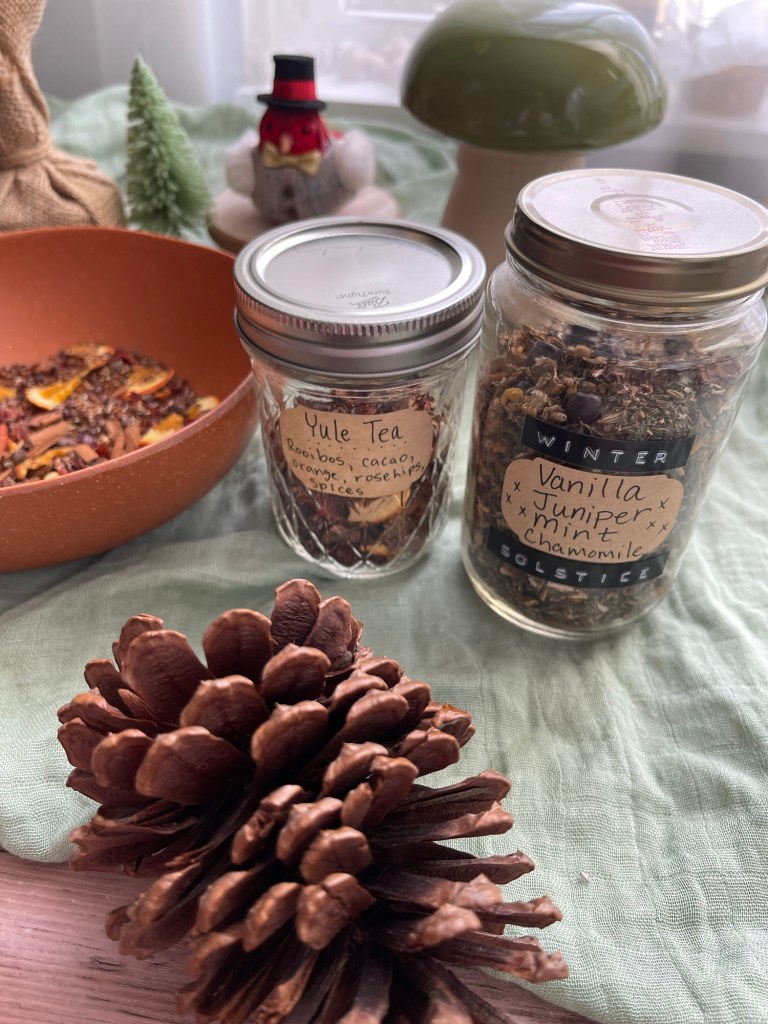
Yule + Winter Solstice Tea Blends

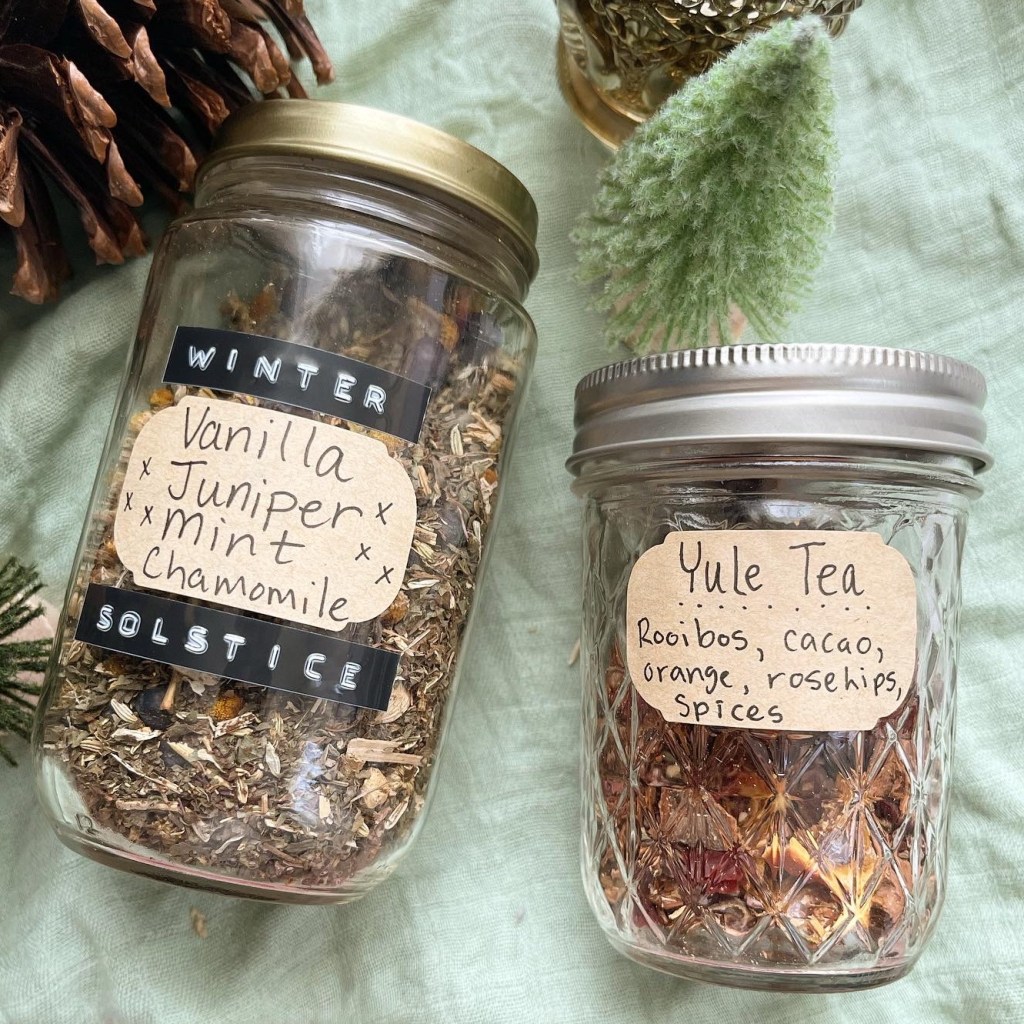
Today I’m sharing two herbal tea blends to enjoy for Yule // the Winter Solstice!

The Yule Tea blend is a sweet and festive spiced sip, full of immune-boosting ingredients that taste lovely. The combo of orange and spices is traditional for the season, in part because of those properties and in part because of associations with protection, divination, prosperity, and luck derived from them.

Yule:
1 tsp rooibos
1 tsp cacao nibs
½ tsp orange peel
½ tsp cinnamon pieces
½ tsp rose hips
¼ tsp allspice berries
¼ tsp star anise
¼ tsp nutmeg

The Winter Solstice Tea tastes decadent like a holiday cake, but without the heartburn or feeling of overindulgence! With soothing herbs that promote digestion, relieve pain, and aid in circulation, it’s like a sweet, warm hug. And chamomile represents the sun that returns brighter each day after the solstice; juniper is a powerful talisman of winter protection, cleansing, and luck; and the other botanicals have ties to healing, love, and luck, too.

Winter Solstice:
1 tsp chamomile
1 tsp mint
½ tsp meadowsweet
½ tsp cinnamon pieces
¼ tsp ginger
¼ tsp vanilla bean powder or ¼ a vanilla bean
4-5 juniper berries
2-3 cardamom pods

To brew—

To make a single cup of tea, add 1 tablespoon to a tea strainer, eco- friendly tea bag, or French press. Pour 1 to 1 ½ cups hot water over the tea and steep for 3-5 minutes. Add honey or maple syrup to taste, if desired.


For educational purposes only. Not intended for medical advice. Always consult your physician.

*This post contains affiliate links, which means if you choose to buy something from a link that I share, I will make a small percentage of the sale *at no extra cost to you*.

Categories
plant wonder collective Recipes Tea

Headache Helper Tea

I recently had a friend dealing with recurring tension headaches ask what herbs might be helpful in a tea to offer him some relief. (He is also being treated by his doctor, but needed some additional gentle diy to help relax his frazzled nerves and throbbing head & get him some sleep!) 

Oatstraw immediately came to mind. They’re a wonderfully gentle soother for frayed nerves, burnout, overwhelm, stress, tension—all things that lack of sleep and depletion from migraines and tension headaches can cause. 

In addition to the oatstraw, I added damiana (a headache-easing favorite of mine), calming linden, sleepy passionflower, and cooling peppermint to the batch of tea I made for my friend. He reported back that the tea was very helpful and he got a decent night’s sleep after drinking his first cup!

To make a big batch to keep on hand, choose a larger unit of measure such as a quarter cup or half cup for your parts. For a single mug of tea, choose a small unit of measure – I’d suggest half teaspoons (it will still make a very strong cuppa, or two cups). 

Here is the recipe:


Ingredients

4 parts oatstraw

4 parts damiana

3 parts linden

2 parts passionflower

2 parts peppermint 

Directions

To make a single cup of tea, add 1-2 tablespoons to a tea strainer, eco-friendly tea bag, or French press. Pour 1 to 1 1⁄2 cups hot water over the tea and steep for 4-5 minutes. Add honey or other sweetener, if desired. 


What are your favorite herbal tea ingredients to help combat headaches?


For educational purposes only. Not intended for medical advice. Always consult your physician.

*This post contains affiliate links, which means if you choose to buy something from a link that I share, I will make a small percentage of the sale *at no extra cost to you*.

Categories
Recipes Tea

October: Falling Leaves Moon in Aries + Tea Recipe

Though the Falling Leaves Moon or Hunter’s Moon fell on October 17th this year and has technically passed, the full moon’s energy can still be tapped into. Read on to learn more about this month’s full moon and a corresponding tea recipe!


The Ojibwe named the full moon during what we call October the Falling Leaves Moon. We await the “peak” of the vibrant colors knowing the shedding of these leaves marks winter’s approach. As this full moon nears, we may feel Aries’ pull to dive into autumn with an energy as vibrant as the leaves. But the sun sign Libra may temper this drive with a need for balance to conserve our energies for the coming cold.

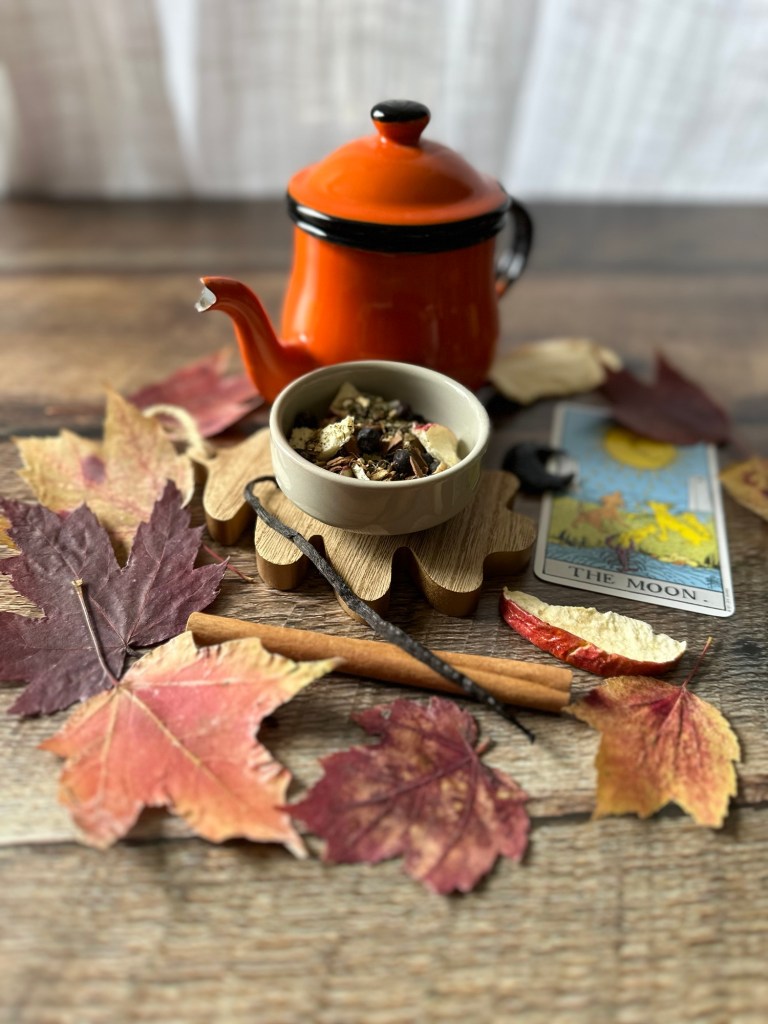
Brew this tea to mark the Falling Leaves Moon which includes gifts given from trees for both their symbolic and astro-herbalism connections. Hawthorn bolsters the heart, while juniper, cinnamon, and ginger support the Aries fire. Apple and vanilla round things out with sweetness to cool that fire off a bit and bring things back to balance.

Falling Leaves Moon in Aries Tea Materials-

1 tbsp apple pieces, dried 

1 tsp hawthorn leaf

1 tsp juniper berries

½ tsp cinnamon stick pieces

¼ tsp ginger root, dried 

¼ tsp vanilla bean powder or ¼ vanilla bean pod

Method-

To make a single cup of tea, add 1 tablespoon to a tea strainer, eco-friendly tea bag, or French press. Pour 1 to 1 ½ cups hot water over the tea and steep for about 5 minutes. Strain, and serve. Add sweetener of choice to taste, if desired.

If you’d like recipes to mark each month’s full moon, check out the current and upcoming issues of Botanical Anthology where I share these recipes!


For educational purposes only. Not intended for medical advice. Always consult your physician.

*This post contains affiliate links, which means if you choose to buy something from a link that I share, I will make a small percentage of the sale *at no extra cost to you*.

Categories
Hygge Recipes Tea

Happy Hobbit Weekend & Tea!

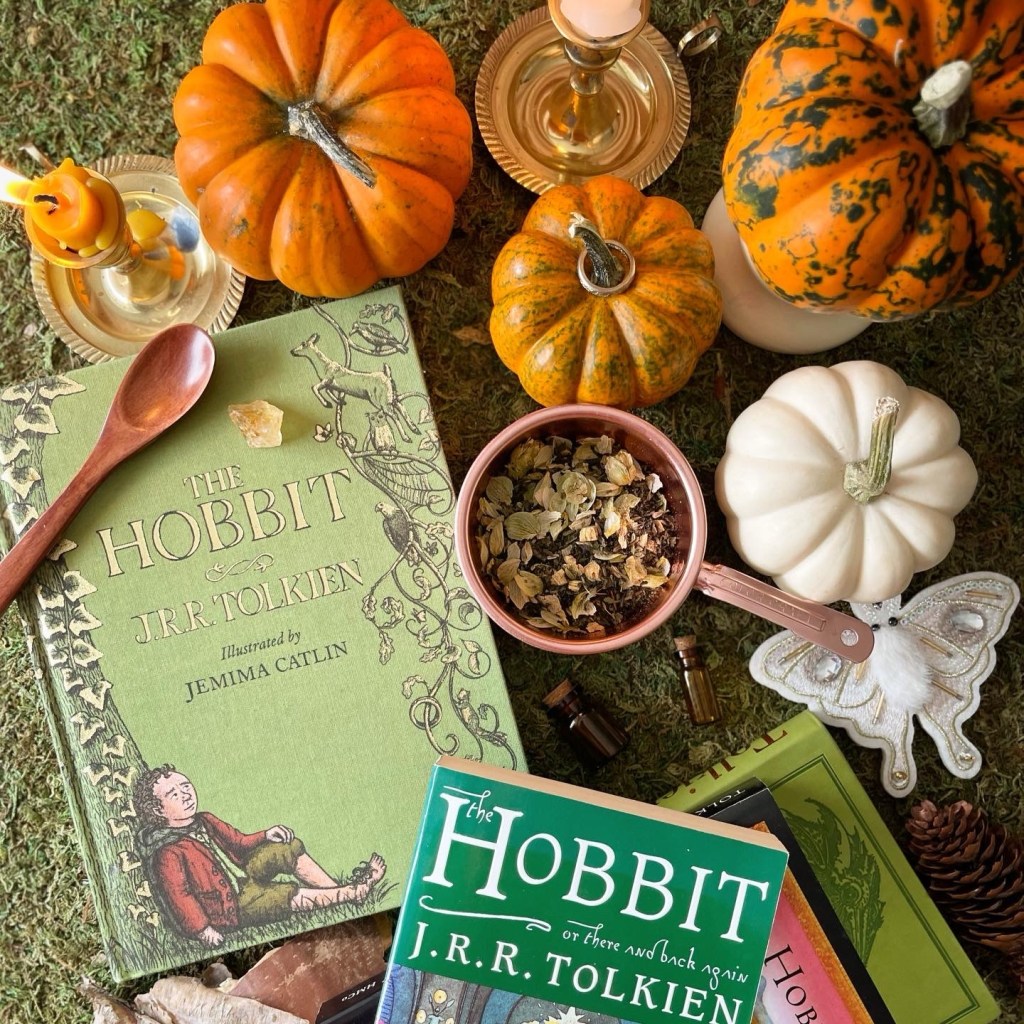
The Hobbit and The Lord of the Rings books by J.R.R. Tolkien have been my very favorite books since I first read them as a teenager, and I have always felt a very strong connection to hobbits: simple folk who prefer the comforts of home, well-stocked larders and bookshelves, and the joy of silly fun with family and friends, yet who can be prevailed upon to draw deeply from a well of courage and wit to save the world on occasion. If any fictional folk represents me, it’s the hobbit-folk. 

So the publication anniversary of The Hobbit (my birthday, 9/21) and the birthday of both Bilbo and Frodo Baggins (9/22) alongside the beginning of fall are all something I like to mark wrapped up into one special span of a couple days. I might read bits of The Hobbit to my own halflings, or we might watch the 1970s Rankin Bass animated film of The Hobbit (wonderfully nostalgic and kid friendly).

We may enjoy a hobbit-y teatime, too, with fresh baked goods and hobbit-inspired tea from the recipe I created. It combines smoky lapsang souchong tea for that famous pipe-leaf all hobbits love, hops to represent the tankards of ale they heartily imbibe, reishi mushrooms foraged right from the woods surrounding the shire, and other flavorful herbs and spices.


Ingredients:

1 part loose leaf lapsang souchong (or other black tea)

1 part mint

1⁄2 part reishi, broken into small pieces (substitute with licorice root if you are unable to find reishi)

1⁄2 part hops

1⁄4 part fennel

1⁄4 part nutmeg

1⁄4 part powdered vanilla bean or 1 vanilla bean per 4 cups of tea, split

Directions:

To make a single cup of tea, add 1 tablespoon to a tea strainer, eco- friendly tea bag, or French press. Pour 1 to 1 1⁄2 cups hot water over the tea and steep for 5 minutes. Add honey or other sweetener, if desired.


For educational purposes only. Not intended for medical advice. Always consult your physician.

*This post contains affiliate links, which means if you choose to buy something from a link that I share, I will make a small percentage of the sale *at no extra cost to you*.

Categories
Herbs and Herbalism plant wonder collective Recipes

Sumac Cider-Ade

It’s sumac month at the Plant Wonder Collective, and I am so excited because this is a new plant for me! I am loving getting acquainted with these little ruby gems. 

The taste of sumac is hard to describe; sour, tart, earthy, and in my opinion, delicious. It’s cooling and drying—very astringent and gives that tannin feeling of black tea or red wine. But the flavor is light, and both fruity yet complex and mineral-y.

From tea to spice rub, tincture to wound salve, and even a lovely pink dye, sumac has a host of applications. This plant is full of antioxidants, offers anti-inflammatory aid, is wonderfully healing inside and out, and can help with unpleasant conditions such as water retention and diarrhea. It is good for the cardiovascular system, can aid in drying out the sinuses, and can even lower blood sugar, too! Sumac is widely forageable in the U.S. and has a long history of use by indigenous peoples

(For more info on sumac, consider checking out the free mini month of content on the Plant Wonder Collective Study Circle Patreon!)

Sumac is tart and delicious as a cold beverage, much like lemonade, and so is often cold-brewed as such—I found lots of simple instructions for doing just that online. But of course I wanted to add a different spin on the typical sumac “lemon”ade, and a September-y flavor profile! 

Since I am a huge fan of tart apples and fall cider, I thought I’d try a sumac cider combining this month’s plant with apple and spices! It makes for a lip smacking, satisfyingly-sour and tasty beverage that’s easy to make and kid-friendly, too. 


Ingredients:

4 cups apple cider / juice

¼ cup sumac berries, crushed with mortar & pestle

2 tsp simple syrup

1 lemon or orange, juiced

1 cinnamon stick, broken into pieces / crushed with mortar & pestle

3-4 slices fresh ginger or 1 Tbsp dried ginger pieces

7 cardamom pods

6 cloves

1 tsp allspice berries 

1 star anise

Instructions:

Combine all ingredients in a pitcher; you might decide to use a large tea strainer or large eco-friendly paper tea bag to hold the mulling spices for ease of removal. Allow to cold brew either at room temperature or in the refrigerator for 4 hours to overnight. 

Strain the spices and sumac berries out using a fine mesh sieve (a cheesecloth or coffee filter can help, too). Chill and serve over ice!

If you’d like to make this a bit more of an adult drink, you can always add a splash of bourbon or your preferred liquor to your cup; you could also make a stronger brew of the base cider-ade and add then Prosecco or champagne for fizz. 


For educational purposes only. Not intended for medical advice. Always consult your physician.

*This post contains affiliate links, which means if you choose to buy something from a link that I share, I will make a small percentage of the sale *at no extra cost to you*.