Categories
Herbs and Herbalism Recipes

Herb Profile: Hibiscus

July is flying by! I blinked and now we are halfway through this month already; I kind of can’t even get my bearings. My twins’ fifth birthday began the month, there are other family goings-on, and it’s already back-to-school shopping time as my kids go back to school at the end of this month! (We have a different school calendar than most where we live.) Needless to say, my brain is a bit scrambled. But I’m here to talk about a favorite herb of mine for this crazy time of year—it’s not a nervine, but it pairs well with them and has an incredibly soothing effect during this hottest part of the year. It’s hibiscus!
There are actually many varieties of hibiscus, but the species most commonly referred to and used for consumption is Hibiscus sabdariffa. This hibiscus is also called roselle or sorrel. It is likely native to North or West Africa but now grows in many places throughout the world, and has been long used in Africa, Southeast Asia, Latin America, and the Caribbean.

Hibiscus is considered a sour herb with cooling and moistening properties. It is especially helpful for heart health, blood pressure regulation, inflammation modulating, summer cooling, and nutrition as it’s dense with vitamins, minerals, and antioxidants. 

Hibiscus tastes delicious—hibiscus tea is strongly reminiscent of cranberry juice! My kids love making hibiscus and berry sun tea during the summer months and then chilling it in the fridge for a sweet, cooling summer beverage. When you’re making your own blends with hibiscus, think about combining it with chamomile or mint, cinnamon, honey, and your favorite fruits.

Hibiscus doesn’t do well as an alcohol tincture, so tea or food tend to be the most common ways it’s consumed. (It used to be commonly made into jam, and in some regions is eaten pickled!) Though that summer connection with hibiscus is strong, I also love using it as an ingredient in wintertime non-alcoholic mulled “wine” tea as it has that sharp, deep berry flavor that mimics wine and tastes great with warming spices. 

But since we are still very much in the heat of summer in the U.S. where I am, I’m going to share a super simple and refreshing hibiscus drink I love to make. It’s a very flexible recipe; use whichever ingredients you like or have on-hand!

——————————

Do you enjoy hibiscus? What are your favorite types of hibiscus drinks, or even foods if you’ve tried them?

——————————————

Sources:

• Rosalee de la Foret, Herb Mentor monograph

• Apothecary At Home’s hibiscus herb-of-the-month club box

• Sarah Farr, Healing Herbal Teas

Categories
Herbs and Herbalism

Herb Profile: Mint

In the northern hemisphere, summer has just begun! In my neck of the woods, it is almost unbearably hot this time of year; that summer sunshine can be intense. So, for June’s herb profile, I thought I would talk about a favorite cooling herb of mine: mint.

I was actually also inspired by the Plant Wonder Collective on Instagram to talk about mint, too, because it’s their herb of the month. If you aren’t already following along with their monthly herb features, I highly recommend that you do! They share collective recipes, DIYs, information, and botanical love featuring a different herb each month and showcasing many varied contributors. I’ve just recently begun following along and I am so enjoying it!

Anyway, back to mint! It’s actually interesting because many people are referring specifically to peppermint when they mention mint, but there are actually many varieties of mint. Sweet mint, spearmint, wild mint, water mint, apple mint, pineapple mint, brandy mint, chocolate mint, orange mint, horse mint, foxtail mint, mojito mint, and many others grow in a variety of areas around the world. (Interestingly, the specific species of peppermint wasn’t officially recorded in the Western pharmacopoeia until the mid-1700s!)

Mint should not be written off as simply a flavoring. It can be a potent ally in so many ways! Mint varieties can vary from warming to cooling, but peppermint is cooling, and drying. The properties of mint include digestive, mood boosting, uplifting and calming, memory and focus enhancing, gently energizing, pain easing, cold relieving, anti-inflammatory, anti-nausea, antibacterial, anti-fungal properties, and more. In folk belief, mint is associated with healing, prosperity, vitality, communication, dreams, awakening, protection, purification and cleansing, love, and positivity.

A note on growing your own mint, if you are considering adding it to an herb garden: it is best in containers! Mint is easy to grow and absolutely flourishes…a little too well. It will take over any space where you plant it and overtake its neighboring herbs. So, it’s best to plant mint in its own separate containers rather than in a shared herb bed. That said, mint is incredibly beginner-friendly and a great starter herb for those just testing the gardening waters!

Though some might associate the flavor of mint with winter holidays, I love it for its cooling effects in the summer! There is nothing better than a cold infusion of fresh mint and its cousin lemon balm, kept in a jar in the fridge to be sipped throughout the day. Also, a sun tea of mint, hibiscus, and lime is super refreshing and cooling on a hot day.

Here is one more recipe, for Summer Mint Moon Tea. I like to moon-brew (overnight infusion) this combo of herbs and enjoy it before bed as a cooling, calming, soothing sip. Its combination of cooling, calming, memory-aiding, dream-inducing, and heart-soothing herbs makes for sweet summertime dreams.

Summer Mint Moon Tea:

2 parts mint (peppermint or spearmint)

1 part lavender

1 part rosemary

1 part mugwort

1/2 – 1 part rose petals

——————————

Are you a mint-lover? How many varieties of mint have you tried? Do you have any unique ways you like to work with mint?

——————————————

Sources:

• Rosalee de la Foret, Alchemy of Herbs

• Apothecary At Home’s Peppermint monograph

• Sarah Farr, Healing Herbal Teas
• Patti Wigington, Herb Magic

• Tina Sams, Herbal Medicine for Emotional Healing

Categories
Herbs and Herbalism

Recharging Your Battery With Nervine Herbs

I can’t believe it’s almost June! May has really flown by. Before mental health month is over, I thought I would jump on the blog and talk a bit about one of my favorite types of mental health support: nervine herbs!

Many nervine herbs are gentle and safe for frequent use and can be a part of your daily mental health support regimen. Nervines are known for their benefits to the nervous system, hence the name. They support, tone, nourish, and soothe, offering us calming, anti-anxiety, digestion soothing, pain relieving, and grounding benefits, among many others.

Here are a few of my favorite nervine herbs:

Chamomile

Rosemary (relaxing / stimulating)

Tulsi

Lavender

Lemon balm

Linden

Hawthorn

Elderflower

Rose

Passionflower

Skullcap

Peppermint (stimulating)

Cacao (stimulating)

Most of the preceding list of herbs are normally categorized as relaxing nervines. Relaxing nervines do just what they sound like: they help to relax your nervous system. Stimulating nervines don’t stimulate in the caffeine sense; instead, they are uplifting and stimulate digestion. And some nervines do both at the same time! Also, each different nervine has its own particular chemical constituents that aid in different ways on top of the nervine qualities. For example, hawthorn is amazing for heart health, passionflower and skullcap are helpful in aiding sleep, and chamomile is known especially for helping with pain, cramps, indigestion, and fever.

As with anything, consult your doctor as needed and don’t take huge doses of any herb over short periods of time. But do think about branching out and trying different nervines to see what works well to support your particular needs. 

And since summer is fast approaching here in the northern hemisphere, I am going to leave you with a simple, cooling and soothing infusion recipe featuring nervine herbs. This is a favorite of mine! You can make this with fresh or dried herbs (I grow all of these in my mini herb garden); drink it hot or cold (my summer preference is definitely cold); and sun brew, cold brew overnight in the fridge, or infuse with hot water (I usually prefer to cold brew or sun brew). Regardless of how you make it, the soothing properties of these nervine herbs are a refreshing way to take in a bit of calm.

Soothing Summer Tea:

•Lemon balm – 2-3 parts

•Peppermint – 1 part

•Spearmint – 1 part

•Rosemary – 1 part

•Catnip – .5 part

•Chamomile – .5-1 part

If making with fresh herbs in a large jar, go heavier on the lemon balm and mints and lighter on the other herbs. Also, if drinking this cold, it’s great with a slice or two of lime tossed in. It’s crisp, refreshing, calming, cooling, and supportive — mind and body relief!

Obviously mental health is a complex issue and each person’s medical and therapeutic needs are extremely different. Herbs won’t solve or prevent problems or fulfill all your needs, but they can be a wonderful ally as part of a daily holistic approach.

Which nervine herbs are your favorite mental health allies?

Categories
Hygge wheel of the year

Celebrate Ostara!

Spring is finally upon us, Herbologists! In the Northern Hemisphere, the vernal (spring) equinox and the sabbat of Ostara fall on March 20th (while it’s Mabon in the Southern Hemisphere). This is a time traditionally associated with rebirth, creativity, growth, renewal, planting seeds, new beginnings, and balance. Many of us feel a renewal of our creative energy (follow-through is another story in my case, though!) and we are inspired to begin gardens, clean the house, or begin new projects and routines.

Ostara / the spring equinox feels much more like the beginning of the new year than January 1st to me, and I know some traditions view it as such. As the earth begins to warm and come alive, our energy tends to rise and rhythms return to more activity and excitement. It’s certainly a busy time of year!

In honor of the changing of the season, I am going to share a few low energy Ostara / equinox activities I am planning, as well as some spring herbal tea recipes I’ve developed. Hopefully this helps spark a few cozy, simple ideas for you, too!

——————————————

Spring Simmer Pot

My kids enjoy a good seasonal simmer pot, so I am planning a spring-y one to mark the occasion. We’ll use ingredients like dried lavender, rose, eucalyptus, rosemary, and lemon to fill the house with a floral, herbal scent to welcome in spring. 

If you haven’t made a simmer pot before, it’s pretty simple: choose your ingredients (plants, flowers, fruits, spices, etc.), add to a pan on the stovetop and cover the ingredients with water, simmer as long as you like, and add more water as needed so it doesn’t dry out and burn. This will fill the house with a clean, sweet scent (in the case of these floral and spring-y herbs) and all the cozy spring vibes to put everyone in the spirit of the occasion.

Garden Planning

It is too soon where I live to begin planting this year’s garden yet, but my wildlings and I are all chomping at the bit to begin. So instead, I’m planning for us to discuss and begin planning our little container garden together. This will inevitably turn into an art project with my kiddos as they will want to illustrate their ideas! And perhaps we will start some seeds in the kitchen window sill, too. 

Spring Teas

Drinking seasonal teas is a wonderful way to literally welcome a new season in! On that note, I’m going to share a few of my favorite tea blend recipes in honor of the energies of Ostara and the spring equinox. Herbs can support us through this big transition in a big way!

——————————

The first recipe I’m sharing is one I simply call Ostara Tea. It contains herbal allies for gentle warming, grounding, immune support, and a sense of peace and calm. 

Ostara Tea

1 part Chamomile

1 part Elderflower

1/2 part Ginger

1 part Green Rooibos

Citrus (peel / slices) – optional

——————————

Next up is the Inspired Spring tea blend for calm creative energy. It combines herbs that help with stress, boost your brain function, and provide calm balance. In this season of new directions and new leaves, this can be a great ally!

Inspired Spring

1 part Tulsi

1 part Linden

1/2 part Fennel

1-2 parts Spearmint

1 part Ginkgo

——————————

Finally, we have Springtime Sleepies, to help you wind down after a busy spring day so you can rebuild your energy reserves for the next day of springtime activities.

Springtime Sleepies

1 part Passionflower

2 parts Chamomile

1 part Rose

1/2 part Lavender

1/4 part Cardamom

——————————

So, those are a few of the simple ways my family will be ushering in Ostara and spring! Do you mark the spring equinox? How do you like to celebrate this season?

Categories
Herbs and Herbalism

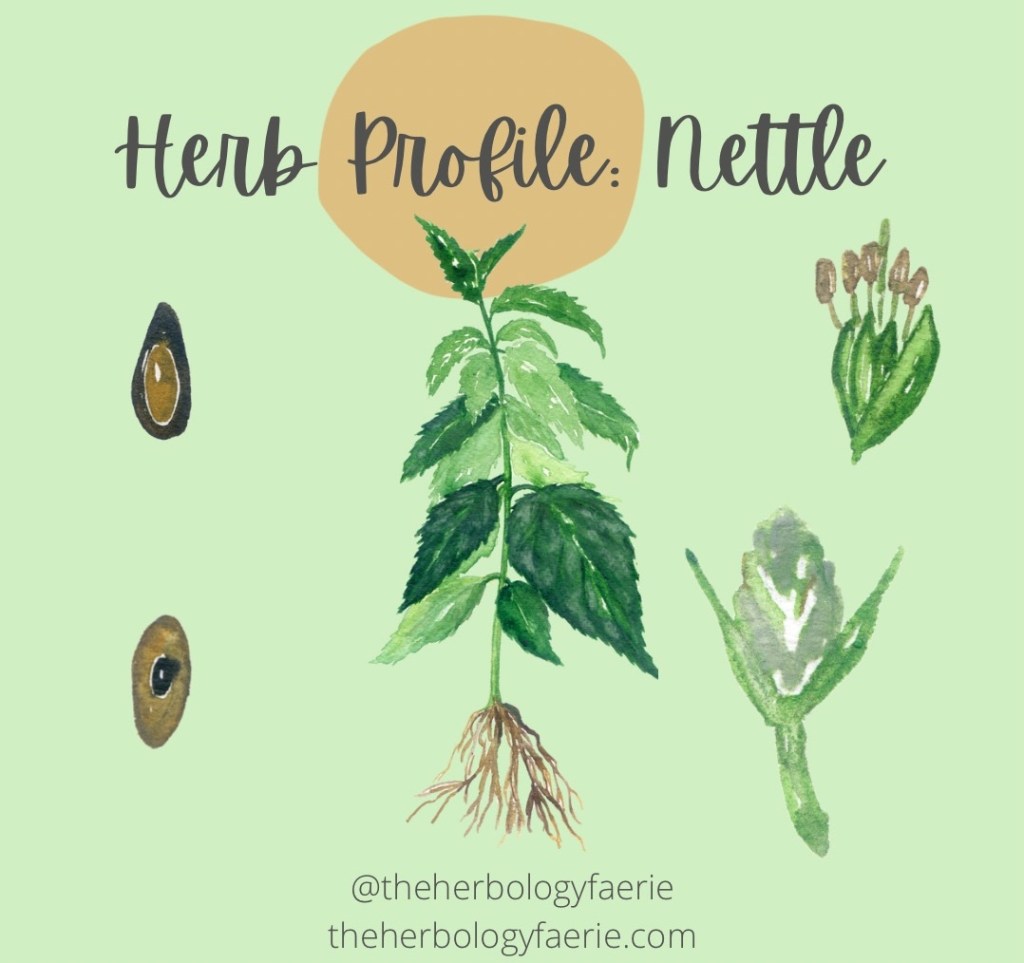
Herb Profile: Nettle

Hey there, Herbology Faeries! Since spring is almost here, I thought I’d share a new herb profile today about the herb I most associate with early spring: nettle.

Nettle, or stinging nettle, is a sign of early spring because in many places it flourishes during this time. Nettle is also a beneficial spring ally in aiding with seasonal allergies, nourishing and toning body systems after the winter, fighting inflammation, and much more. Folk traditions see nettle as a protective ally, helping with not only healing but also courage and banishing, and it’s not hard to see why when you encounter its prickles!

I know there are many who forage fresh nettles in the spring. There are many benefits to consuming local, fresh nettles. That said, not everyone has local nettles available or are not able to get out there and brave the stings to collect them fresh. That’s okay—high quality dried nettle can be purchased from small online apothecaries or Mountain Rose Herbs.

Nettle is a salty, slightly bitter, cooling and drying herb. It is nutrient dense, full of fiber, iron, calcium, and magnesium. Not only is nettle used to support allergies and to nourish the body, but it’s said to aid menstrual issues, eczema, fatigue, arthritis, and more. It’s a wonderful herb to consume daily as a holistic health aid for maintaining energy and health. The main safety considerations with nettles are the stings if you are working with fresh nettles (use gloves and blanch the leaves before consumption), and the diuretic effect the herb has—you might need to adjust your intake based on how strongly this affects you. 

I do drink nettle in tea—it goes well combined with herbs like mint and rose. I am also intrigued with the idea of using nettle as food! You see many instances of this online: nettle pesto, nettle soup, even dried nettle used in baking. I am experimenting with using nettle in homemade ramen recipes for a salty, mineral-y kick and added nutrition!

Here is a simple springtime tea recipe featuring nettle, to get you started with this wonderful ally!

Daily Nettle Boost:

• 1 part nettle

• 1 part tulsi

• 1 part peppermint

• 1/2 part rosemary

This can be hot-brewed by the cup if you prefer it in small doses. You can also hot or cold brew it in a larger batch in a glass jar. If cold brewing, the longer you let it brew, the more helpful constituents will be infused into your tea. I’ve run across some sources that say you should hot brew nettle and let it infuse for 4+ hours to reap the full benefits, but I prefer my nettle a bit weaker and more palatable than that—to keep me coming back to it! 

Have you tried nettles? How do you like to prepare them, or how do you think you would like to if you’re new to them?

———————

Sources:

• Rosalee de la Foret, Alchemy of Herbs

• Herb Mentor’s Stinging Nettle monographs 

• Sarah Farr, Healing Herbal Teas
Categories
Herbalism in Fiction Recipes Tea

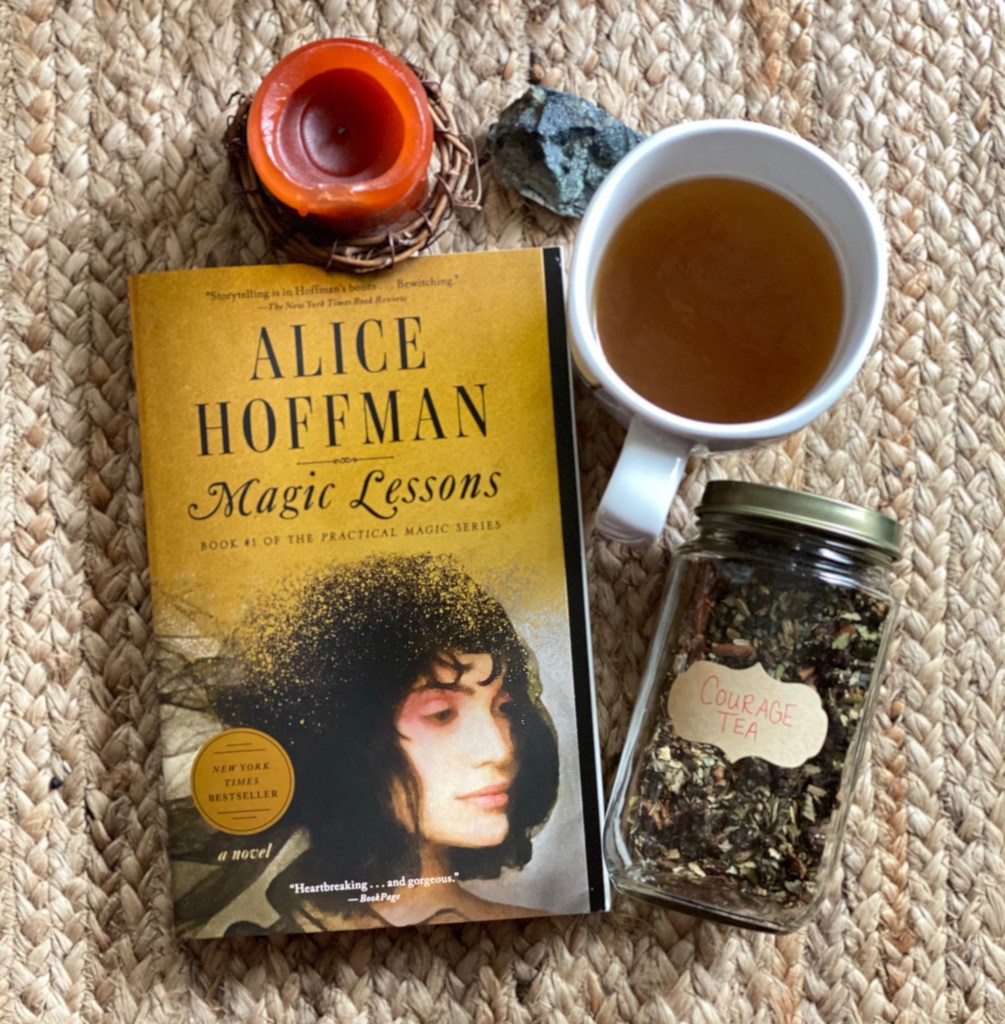
Courage Tea

I just finished reading the third and fourth books in the Practical Magic series by Alice Hoffman, Magic Lessons and The Book of Magic. I do not exaggerate when I say these books have been life altering for me. They capture so much, I can’t even put a fraction of it into words. All I can say is, go read these magical books!

Now, a thread that runs through all the stories is courage: courage to love, courage to get hurt, courage to take leaps and trust others and trust yourself. This is illustrated throughout the books by the frequent mention of Courage Tea. It’s an old family recipe that dates back to the Owens women who started it all, Hannah and Maria. The recipe has been passed down through the centuries to bolster the Owenses in the face of all the trials and demands of life, as well as those in need they minister to.

Hints of the recipe are dropped throughout the series, but the whole recipe is never explicitly stated. As explained in The Rules of Magic:

Aunt Isabelle refused to hand over the formula for Courage Tea. That, she said, was one recipe you had to discover for yourself.”

Piecing together the hints and clues of the Courage Tea recipe from the books is actually a pretty fun scavenger hunt. I’ve spent a good deal of time on this exercise, and have filled in the blanks with my own additions as Aunt Isabelle instructed. I encourage you to do the same and come up with your own version if you read the books! But until then, here is my interpretation:

Courage Tea

Instructions:

To make a single cup of tea, add 1 tablespoon to a tea strainer, eco-friendly tea bag, or French press. Pour about 1 1⁄2 cups hot water over the tea and steep for 4 to 5 minutes. Add sugar or honey to taste, if desired.


(A few notes on ingredients: I found dried currants at the grocery store but they’re also sold online in some places. I use powdered vanilla bean in tea recipes because it is more affordable than whole vanilla beans while still imparting natural vanilla flavor; you can also add a dash of vanilla extract instead. You may want to adjust the thyme to taste based on how savory you like your tea to taste, as it can be quite strong. And, if you’d prefer a decaf version, you can leave out the green tea or replace it with rooibos.)

What would you put in your version of Courage Tea?


For educational purposes only. Not intended for medical advice. Always consult your physician.

*This post contains affiliate links, which means if you choose to buy something from a link that I share, I will make a small percentage of the sale *at no extra cost to you*.

Categories
Herbs and Herbalism

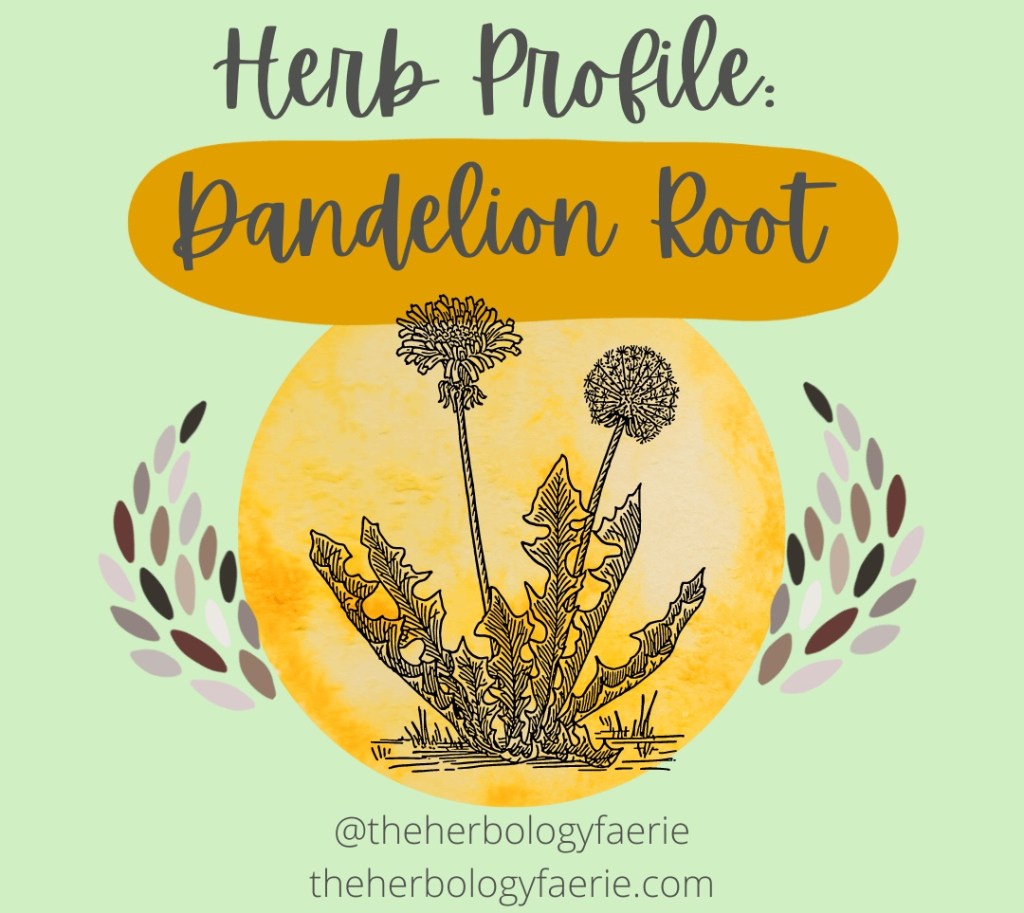
Herb Profile: Dandelion Root

I’m back with another herb profile about one of my very favorite herbs, this time being dandelion root! Dandelions may evoke visions of sunny spring days for many, but I’ve come to associate dandelion root with cozy, grounding autumn and winter brews. It’s such a simple and beneficial herb to use, and it’s definitely one of my main staples.

(Dandelion leaves are used as well as the root—in teas, as salad greens, in pesto, and more. The flowers are even used in making wine. But the root is my favorite part to work with, so that’s my focus for this post.)

The bitter and yet somewhat sweet dandelion root is usually harvested in the autumn. (If harvesting your own, make sure it is from an area free of weed sprays!) It can be used in a myriad of ways, but for teas and tinctures it is usually used dried and sometimes roasted. The roots tend to be cooling and drying, and offer benefits such as liver function aid, digestion aid, inflammation modulation, nutrition, and overall balancing and grounding.

Many herbalists prefer dandelion root in tinctures, but my favorite ways to work with it involve teas. Dandelion makes an excellent addition to or replacement for coffee! Roasted dandelion root and chicory, with or without additions like cacao nibs and cinnamon, make an excellent and healthy coffee alternative. I also love pairing dandelion root with herbal chai mixes—it adds an earthy grounding element and all kinds of healthy benefits.

One of my favorite dandelion root tea blends is one shared by The Herbal Academy, called Grounding Gratitude Tea. The mix of dandy root and tulsi, which offers a mildly stimulating, calm energy, along with warming ginger, is one of my go-to teas to make me feel at home in my own body.

So, are you a dandelion root fan? What is your favorite way to work with this lovely plant ally?

Categories
wheel of the year

Celebrate Samhain!

It’s only a few days until one of my favorite sabbats: Samhain, aka Halloween! I have been very connected to this special day since I was a child, and I now love sharing Halloween with my own little wildlings. It’s that time we invite the spooks and specters in. We celebrate the connection we all feel to the shadows in a way that is steeped in tradition, which makes it feel cozy and safe. It’s our metaphorical way of preparing for the approaching sleep and death in nature that winter brings.

All that said, I have a few simple and cozy ways I’m planning to celebrate the approach of Samhain this week, which I’m sharing here today!

Family Halloween

My family and I plan to celebrate Halloween together in kid-friendly fashion this weekend. We will watch some not-so-spooky Halloween movies, paint and carve pumpkins, and (safely and with precautions) trick-or-treat. I also plan to brew up some spiced apple cider on the stovetop for us to share, infused with those autumn spices we love and enjoy!

Barmbrack

I learned about the Irish tradition of baking barmbrack for Samhain this year, and I am planning to bake some for my family! I want to see if it’s a tradition we’d like to incorporate in the years to come, as I have a strong connection to my Irish heritage.

Barmbrack is a sort of cross between bread and a cake, baked with dried fruits and grounding autumn spices and eaten with butter. It’s a harvest season favorite and is traditionally baked with a little surprise hidden inside—a coin or a ring wrapped in parchment paper as a good luck charm for the person who finds it in their slice! You can find various recipes online, but HERE is the one I’m planning to try.

Cleaning & Clearing

The approach of Samhain has me feeling the need for a bit of a cleaning and clearing, for both practical and psychological reasons. As winter and the holiday season approach, it’s a good time for me to tidy up and de-clutter. I also notice that I’m needing to sort of reset my perspective, or clear out some stale and stagnant energy, as autumn deepens toward winter.

The physical act of tidying up the house is straightforward enough. It’s not my favorite job, but I’ve come to enjoy it well enough when accompanied by audiobooks or podcasts. But each day this week while I work on the cleaning, I plan to choose a candle, incense, or simmer pot with intention and use it to sort of sweep away the proverbial cobwebs, paired with open windows when it’s not raining.

Samhain Teas

I am excited to brew a few tea blends this week with Samhain in mind. Traditions across many cultures relate this time to remembrance of ancestors passed and introspection or even divination. I plan to spend some quiet time with some steaming pots of tea brewed to those ends. My grandma passed away a year ago on October 27th, so she will be very much on my mind this week (and during this week for the years to come), which ties right in.

Here is a tea recipe from Apothecary At Home’s October Rituals & Romance box, which pairs nicely with moments of quiet introspection:

Third Eye Tea-

1 tsp chamomile

2 tsp black tea

1 tsp mugwort

What are your plans for Halloween or Samhain this year? I’d love to hear what you have planned!

Categories
Herbs and Herbalism Recipes

Herbal Spiced “Wine” Tea

Aside from chai, another beverage that I associate with autumn and winter is spiced or mulled wine. The warm, soothing-yet-spirited drink is rich with digestive, warming, and immune-supporting spices. Not to mention how festive and rooted it feels to share this deep, tart ruby liquid with others at a gathering in the colder months.

But! I very rarely imbibe actual spiced wine. Instead, I mix up a similar potion replacing the wine element with extremely beneficial harvest berries and botanicals. They add the same vibrant garnet color, along with nutritional and healing properties, without the alcohol content. An herbal substitute for mulled wine is also quicker and more convenient when you want this type of pick-me-up (any time of day!) and it can be shared with anyone.

You can make your own preferred version of spiced “wine” tea with various ingredients and methods! I’ll share my recipe with you here so you can either use it yourself, or use it as a starting point to concoct your own recipe.

Spiced “Wine” Tea

Rosehips: These tasty red jewels are ready for harvest in October in many locations. You can use fresh or dried (I always have dried rosehips on hand). They add a tart cherry type of flavor, vitamin C, and minerals that aid in heart health, circulation, pain relief, cholesterol and blood pressure health, and even pain.

Elderberries: Dried elderberries impart a deep berry flavor and amazing immune-boosting benefits. Aside from their antiviral properties, elderberries also have anti-inflammatory benefits. I am always conscious to be moderate with the amount of elderberries included, in case of possible digestive discomfort. (I’ve never experienced this side effect myself, but I’ve read that it can happen so I use caution.)

Hawthorn berries: Hawthorn berries add nearly magical benefits of not only boosting heart health in a physical sense, but also soothing and strengthening the emotional heart and aiding with anxiety.

Hibiscus: This is a go-to base ingredient in fruity, berry-flavored teas for me. Hibiscus is an excellent heart ally and gives the tea a full-bodied, cranberry-ish, and even wine-ish taste.

Orange peel, dried or fresh: Obviously vitamin C is a big part of spiced wine. But so is rich, strong flavor! Orange in some form is almost essential to this type of brew.

Spices – cloves, cinnamon, allspice, ginger: You can’t have spiced wine without your warming, grounding, immune-boosting spices! These add taste, physical and mental health benefits, warming cozy comfort, and synergy between ingredients. Of course, you can get creative and use your own favorite combination of mulling spices!

Optional – rooibos: Rooibos is an herbal ally I adore and use often to fill out and add body to teas while providing wonderful benefits. (See my rooibos profile post for more on this herb!)

You can play around with your favorite berries (even adding fresh or dried blackberries or cherries!), spices, flavorings, and even splash in apple cider for a fruity kick or ginger ale for a fizzy twist. It’s up to you how you concoct your festive, warming brew. Then enjoy it all autumn and winter on quiet afternoons or cozy family gatherings! Or take a thermos of it on your outdoor autumn adventures!

What additional or different ingredients are you going to try in your spiced “wine” tea? I’d love to hear so I can try them, too!

Categories
Herbs and Herbalism Tea

Autumn Chai for Health & Grounding

Since tea is my preferred vehicle for herbalism and ritual, I thought today I’d touch on my favorite type of tea during autumn: CHAI. It is full of benefits befitting the season: digestive, circulation-stimulating, warming, anti-inflammatory, immunity-boosting, and so many more. And chai is extremely grounding, protective, and COZY.

So I’m going to touch on a few of my favorite chai botanicals, digging in with a bit of research and preparation ideas.

Origins

I of course have to begin with the origins of chai. Even if what we think of as the “traditional fall spices” that are included in chai go way back, neither the spices nor chai have Western origins. Masala chai hails from India, a centuries-old traditional and health tonic drink. While recipes can vary widely, the main basis includes black tea and warming spices (the words masala chai literally mean “spiced tea”). The Western world recognized the benefits and amazing taste of chai spices long ago and has adopted and adapted them in many ways (which connects to a long and complicated history of colonialism we won’t get into here today). But regardless, chai and its related spices come to us thanks to their ancient origins in India.

There are so many non-traditional and revised spins on chai out there, either to incorporate different flavor profiles or to address varying health concerns. Milk and black pepper are common and traditional ingredients which helps to make the nutrients more bioavailable, but I sometimes enjoy chai without milk or with plant milk. Some versions include berries, fruits, or different herb or tea bases. My favorite base ingredient isn’t even tea—it’s rooibos! But in general, the essential components combine to aid digestion, immunity, and more, making chai a boon to holistic health.

Components

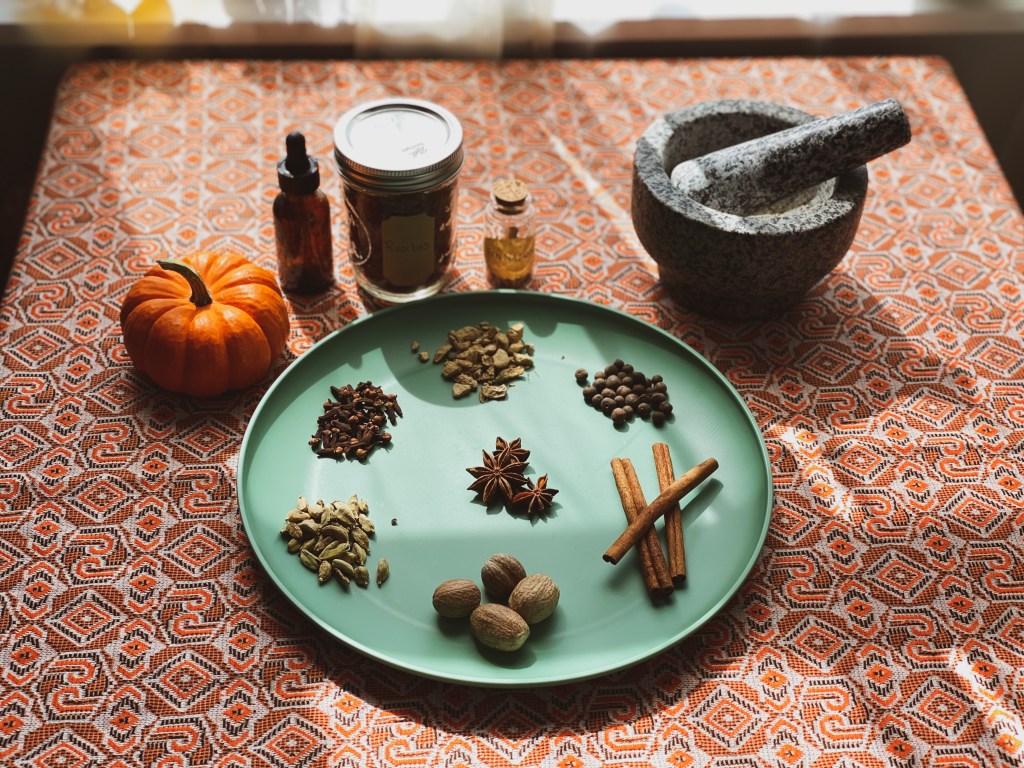
I’ve recently done some research on the specific benefits of some of my favorite chai spices! Read on for a brief run-through of each:

Cinnamon – This warming, drying, pungent bark has anti-microbial, analgesic, antioxidant, and many other qualities and helps with digestion, cramping, regulating blood sugar, soothing sore throats and colds, and more. Folk tradition also holds to other benefits including protection, purification, energizing, healing, love, and prosperity.

Ginger – Another warming, drying botanical. Ginger is a healing powerhouse! It aids in everything from circulation, inflammation, digestion, pain, cramps, cold and flu, sore throats, nausea, heart health, energy, and many more. It is an energizing and synergy-boosting herb, in both health and folk tradition aspects.

Nutmeg – I had no idea of this until recently, but nutmeg is great for stress, anxiety, and insomnia. This pungent, warming, drying spice is also antispasmodic and anti-microbial, along with many other properties. It is also believed to aid in happiness, love, overall health, and psychic abilities, if that’s your thing.

Cloves – Cloves are great for your teeth and breath! They’re also known to be antiviral, antibacterial, anti-fungal, anti-inflammatory, antispasmodic, analgesic, anesthetic, and expectorant. Whew! These fragrant little powerhouses aid digestion, colds and flu, arthritis, pain, headaches, and spasms. Cloves are thought to offer protection, purification, general healing, and mental aid.

Other common chai ingredients include cardamom, allspice, anise, fennel, black tea, and peppercorns. Flavor or health variations can include turmeric, rose, mint, fruit like apple or orange, astragalus, echinacea, reishi…it goes on and on. Don’t be afraid to put your own spin on your chai recipes!

Preparation

Due to the hardy nature of the seeds, roots, barks, and such that make up chai, it’s often suggested to make a decoction with the herbs before combining with the tea component, rather than an infusion. A decoction is simple, though: just boil the ingredients on the stovetop for an extended period (it depends on how concentrated you’re going for, but it can be as little as 15-20 minutes), strain, and add to your brewed black or rooibos tea (if you’re not making a strictly herbal chai). Then top with plant or dairy milk if you like! A decoction tends to turn out more concentrated than a simple tea infusion, so that’s why you often add additional liquid to the mix after decocting. How much liquid you add depends on how long you simmer your decoction.

All that said, though, I often don’t have time to make a decoction and need a quicker cuppa! When this is the case, I grind the spices well with my mortar and pestle (you can use a coffee grinder, too) and steep for longer than I normally would with a simple tea infusion—as much as 10 or 12 minutes.

I could go on and on about chai—I feel like I already have in this post—but I think I’ll stop here for now! Are you a fan of chai? What ingredients do you like to incorporate? Which of the basic chai components is your favorite?