Categories
herbal skincare Recipes

Orange, Coffee and Rose Oil Aromatherapy & Eye Serum Roller

We’re in the thick of winter, and it is a time to cozy up with both bright, invigorating aromas to bring a spark of sunshine, and rich, earthy scents for grounding and comfort. Orange and coffee both certainly fit those descriptions!

Orange’s sweetness and tartness give a vibrant boost during the dreary winter. Not only is it a potent reminder of the sun, boosting our mood just like the sun’s rays, but it provides antioxidant and antibacterial benefits that can aid skin. This makes it ideal in both skin and aromatherapy treatments.

Coffee is a botanical that energizes from the inside out. The caffeine in coffee can be invigorating and rejuvenating in skincare, especially tired and delicate under-eye skin. Use an under eye serum with coffee to brighten, awaken, and de-puff. 

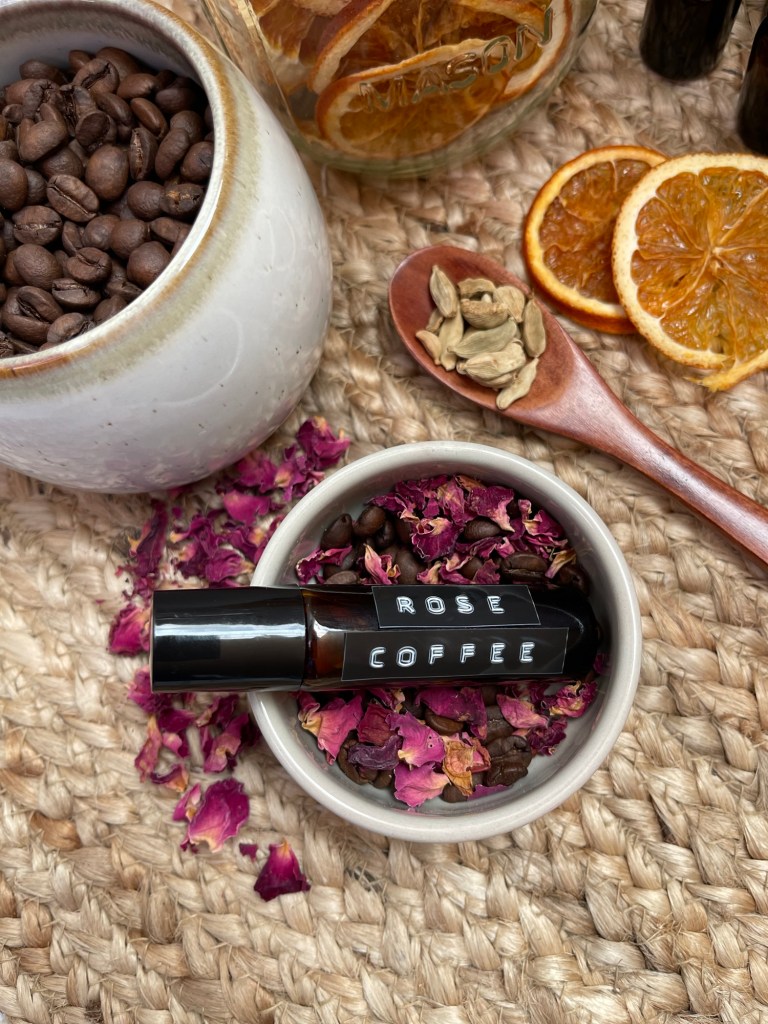
The scents and properties of orange and coffee pair excellently with rose, cardamom, and jojoba oil. So excellently, in fact, that this botanical-infused oil roller can also double as an aromatherapy perfume oil. Jojoba is nourishing and moisturizing, as is rose. While the scent of sweet orange essential oil enhances the uplifting and awakening scent of coffee, cardamom adds a spiciness that imparts earthy complexity. You’ll feel a calming and joyous energy every time you inhale this lovely and luxurious oil. (It would also make a sweet gift or treat to yourself for Valentine’s Day!)

Materials

Directions

To make the rose-infused oil, fill a pint jar about three-quarters full with dried rose petals. Pour jojoba oil to cover petals, leaving about 1 inch of headspace in the jar. Use a chopstick or the handle of a wooden spoon to push the petals into the oil so they are fully submerged. Cover with a coffee filter or cheesecloth and secure with a rubber band. Allow to infuse for four to six weeks, then strain out the rose petals and put the remaining oil in a clean jar. Add 1 teaspoon of vitamin E oil to extend the shelf life of this oil. 

To make an aromatherapy / eye serum roller, fill a 10 ml roller bottle about halfway with rose-infused jojoba oil. Add 5 drops of coffee essential oil, 5 drops of sweet orange essential oil, and 3 drops of cardamom essential oil. (If you have sensitive skin and plan to use this as an eye serum, you can adjust and use less of the essential oils. If you want a stronger scent for aromatherapy, you can add about 3 more drops of each oil.) Fill the remaining space in the bottle with more of the rose-jojoba oil, leaving a little headspace for the roller. Insert the roller and screw on the cap, giving the bottle a swirl to mix the oils in. 

Store any unused portion of the rose-jojoba oil in a cool, dark space. 


For educational purposes only. Not intended for medical advice. Always consult your physician.

*This post contains affiliate links, which means if you choose to buy something from a link that I share, I will make a small percentage of the sale *at no extra cost to you*.

Categories
Recipes Tea wheel of the year

Yule + Winter Solstice Tea Blends

Today I’m sharing two herbal tea blends to enjoy for Yule // the Winter Solstice!

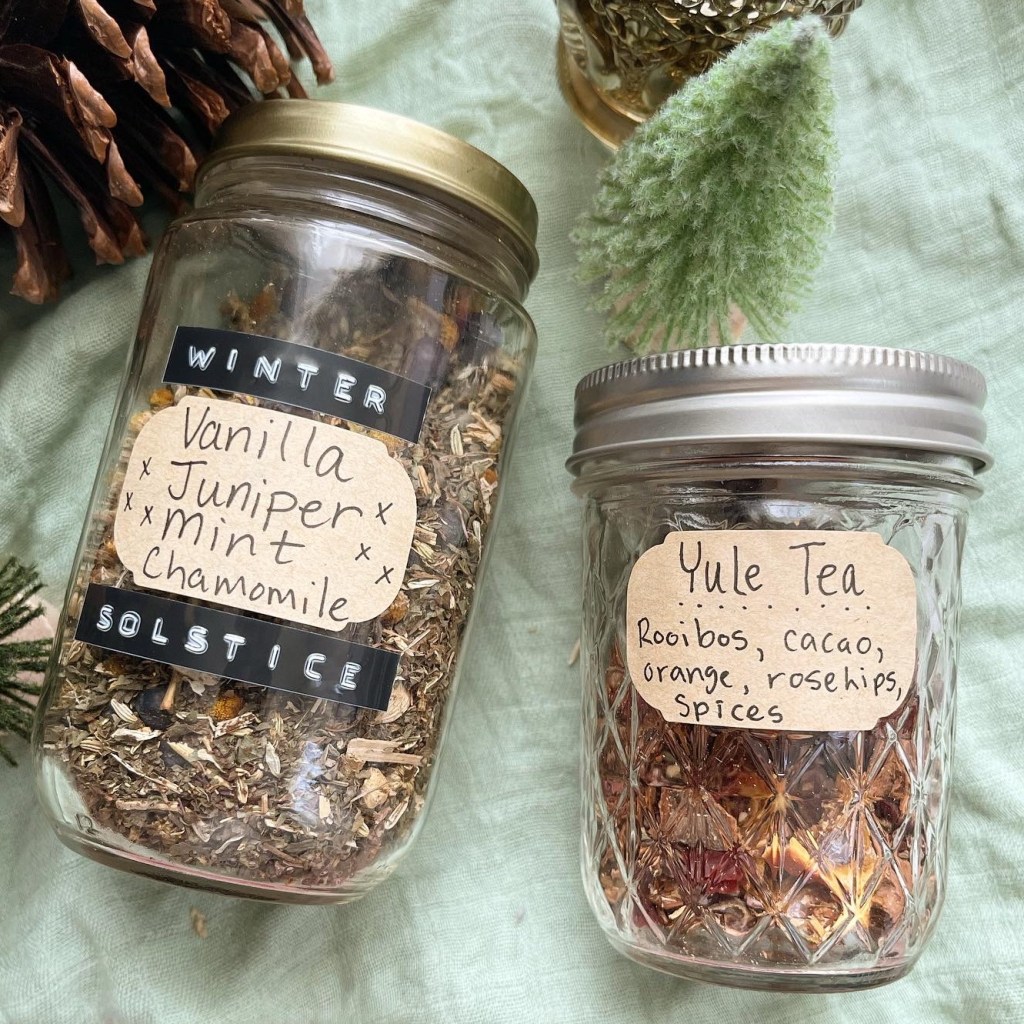
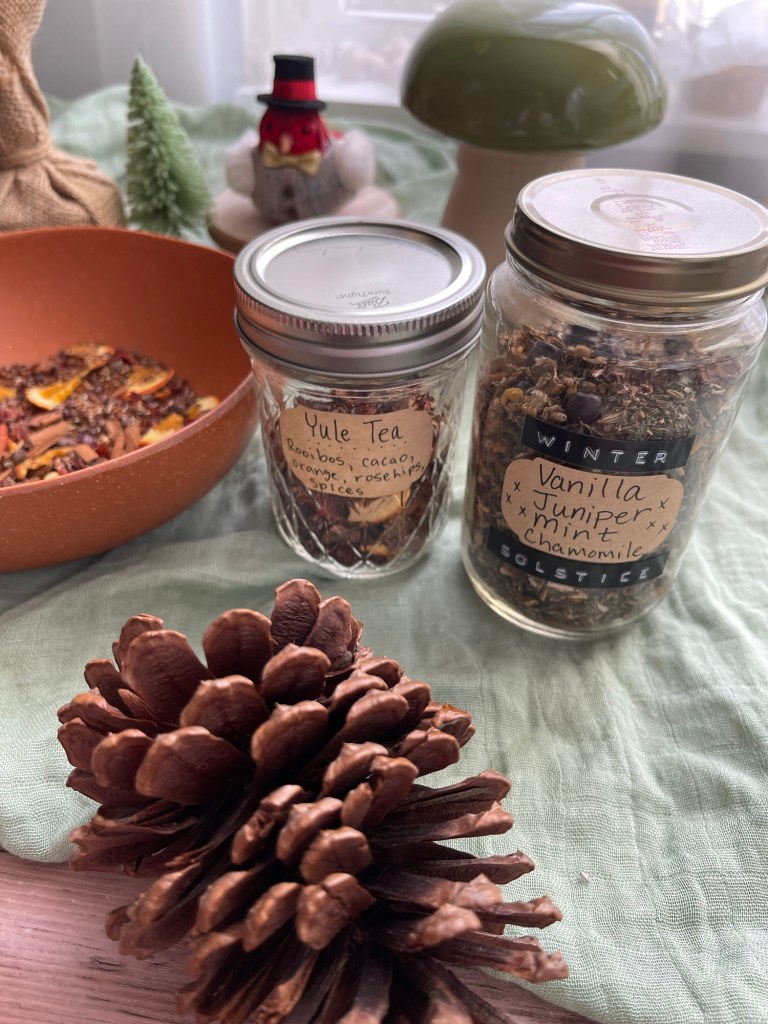
The Yule Tea blend is a sweet and festive spiced sip, full of immune-boosting ingredients that taste lovely. The combo of orange and spices is traditional for the season, in part because of those properties and in part because of associations with protection, divination, prosperity, and luck derived from them.

Yule:
1 tsp rooibos
1 tsp cacao nibs
½ tsp orange peel
½ tsp cinnamon pieces
½ tsp rose hips
¼ tsp allspice berries
¼ tsp star anise
¼ tsp nutmeg

The Winter Solstice Tea tastes decadent like a holiday cake, but without the heartburn or feeling of overindulgence! With soothing herbs that promote digestion, relieve pain, and aid in circulation, it’s like a sweet, warm hug. And chamomile represents the sun that returns brighter each day after the solstice; juniper is a powerful talisman of winter protection, cleansing, and luck; and the other botanicals have ties to healing, love, and luck, too.

Winter Solstice:
1 tsp chamomile
1 tsp mint
½ tsp meadowsweet
½ tsp cinnamon pieces
¼ tsp ginger
¼ tsp vanilla bean powder or ¼ a vanilla bean
4-5 juniper berries
2-3 cardamom pods

To brew—

To make a single cup of tea, add 1 tablespoon to a tea strainer, eco- friendly tea bag, or French press. Pour 1 to 1 ½ cups hot water over the tea and steep for 3-5 minutes. Add honey or maple syrup to taste, if desired.


For educational purposes only. Not intended for medical advice. Always consult your physician.

*This post contains affiliate links, which means if you choose to buy something from a link that I share, I will make a small percentage of the sale *at no extra cost to you*.

Categories
Craft Hygge

Pine Impression Clay Ornaments

I wanted to share a fun winter craft with you today: simple, sweet pine needle impression clay ornaments!

I know these are not a new idea, but I’ve been meaning to make some for a while, and I am excited with how they turned out. They are a lovely activity for kids to make, or perhaps a gathering of friends on a wine or tea night!  

And if you live in an apartment where you can’t have a live Christmas tree, or perhaps another reason prevents you, you can forage for pine branches at a local park to take home and make this craft and then apply some drops of pine essential oil to the backs to bring fresh pine scent to your home. (Orange, clove, and cinnamon essential oils would also be fitting and traditional midwinter scents to add!) It’s an accessible way to bring the goodness of pine indoors!

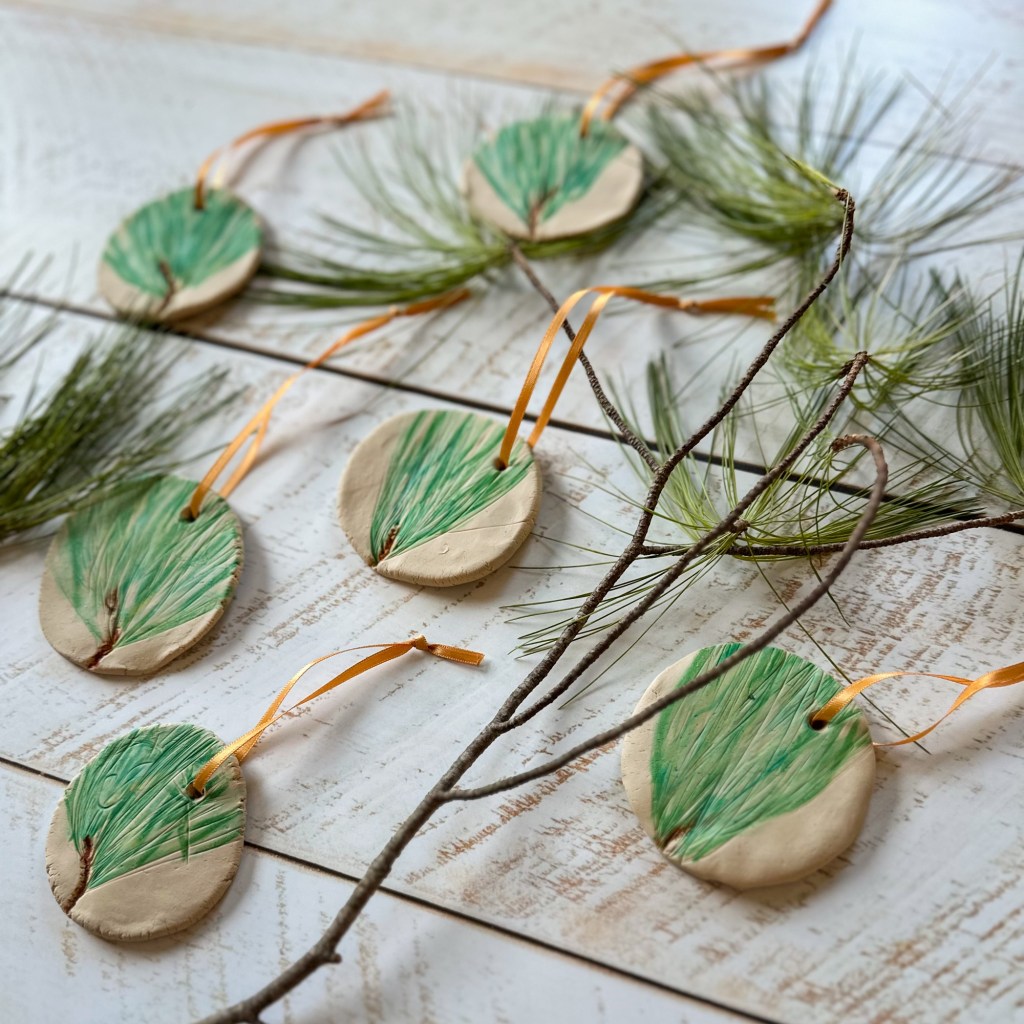
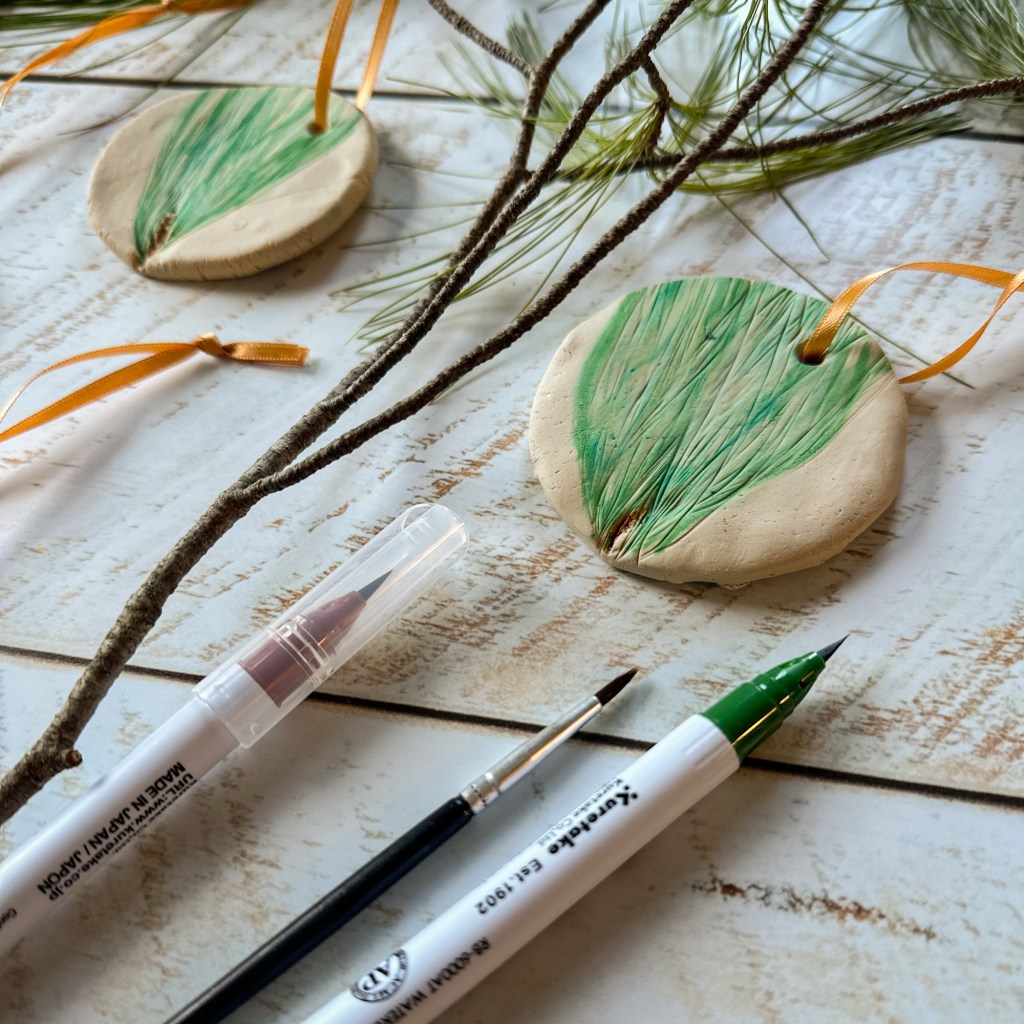
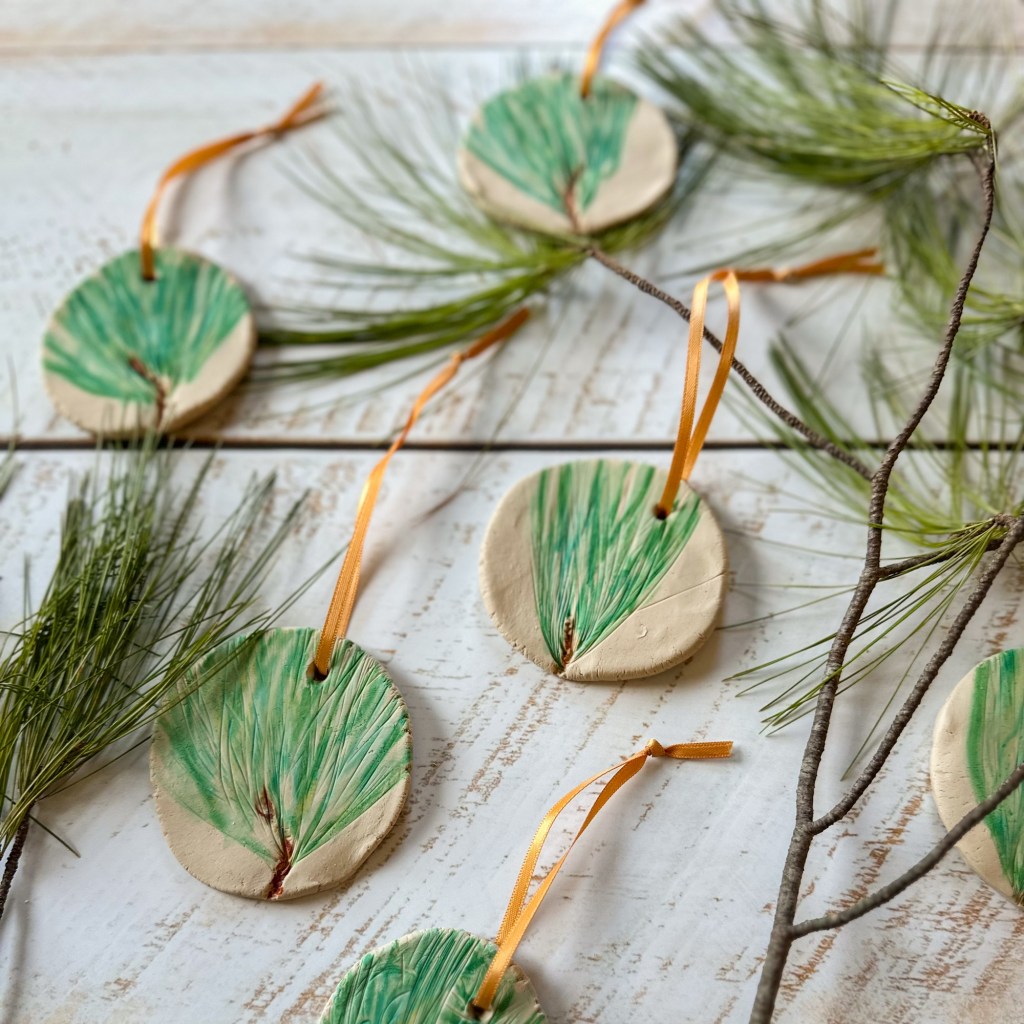
To make the ornaments, roll air-dry clay into 1-inch balls and then press flat into discs with a book or container lid. Or, if you’re fancier than me, you can roll out the clay and use cookie cutters for neater and more uniform ornaments. (Mine are “rustic,” ha!) Then press sprigs of pine needles into the clay to form an impression and poke a hole for ribbon or string. Make sure the ornaments aren’t stuck onto your work surface (waxed paper might help here). Leave them to dry overnight, then the next day paint with watercolor to emphasize the look of the pine sprigs. I used watercolor brush pens and water with a small paintbrush to thin and spread out the paint pigment. 

Once dry, string ribbon or twine through so they can be hung on a tree, drawer knobs, stocking hooks, or even used as gift tags. They can also be used as drawer or car fresheners! 

These simple little ornaments aren’t fancy, but they are cheery and fun to make, give you a chance to do some fun winter foraging with kids or friends, and bring a bit of natural pine into your holiday decorating. 


*This post contains affiliate links, which means if you choose to buy something from a link that I share, I will make a small percentage of the sale *at no extra cost to you*.

Categories
Botanical Anthology

Botanical Anthology Winter 2024!

With a reverence for winter and the plants associated with it, TODAY we launch our third Winter edition of Botanical Anthology.  

Digital Edition: HERE

Print Edition: HERE

A plant lover’s dream, it is a seasonal, plant centered quarterly digital + print magazine bringing you 50+ articles from 45+ contributors to incorporate herbs into your winter apothecary, kitchen, foraging and gardening, crafts, rituals, celebrations, and more. 

* Blend vitamin C powder, steep cough elixirs + whip up oatmeal lotion

* Roast hyssop chicken, bake friendship bread + ferment pine needle soda

* Forage juniper, care for houseplants + consider windfall herbs

* Make gingerbread candle holders, fashion rosemary wreaths + carve block print stamps

* Brew full moon teas, start a women’s circle + muse over poisonous gifts

* Celebrate the Winter Solstice with gløgg, Midwinter with scrying, + discover Mother’s Night + Hen Galen

* Meet Connie Byers, Kathleen Perillo + Rebecca Fils-Aime

From November 25th –  December 10th, receive the Botanical Anthology Winter edition digital download, plus our All About Turmeric + Herbal Cookie Tray Volume 2 + Herbal Advent Calendars booklets, for just $16.  

As a thank you for being here with us, enjoy $1 off the publication with this code:

Take$1BAWinter24

Or head to Amazon to order the print version for $26 then email plantwondercollective@gmail.com with proof of purchase so we know to send you the booklets! We also offer bulk pricing on print orders through our website to save you a bit of moolah.

Give the gift of plants this holiday season. Botanical Anthology is perfect for the budding herbalist, natural health enthusiast, (urban) homesteader, and nature lover in your life. Feel good knowing you are directly supporting a small business and each contributor of this independently published magazine.  

Come mid December, the booklets will no longer be included, and the price will increase.  

Let us be your guide to work with plants as you journey through the winter season!

Categories
Herbs and Herbalism plant wonder collective Recipes

Medicinal Hawthorn Syrup

Hawthorn syrup is an amazing and delicious late-winter herbal medicine! Not only does it support circulation, blood pressure, overall heart health, digestion, and the immune system; it also helps dispel some of those late-winter blues with its sweet nervine powers. But it doesn’t need to be reserved for this time of year—it is a gentle tonic herb that can in most cases be safely taken frequently, year-round.

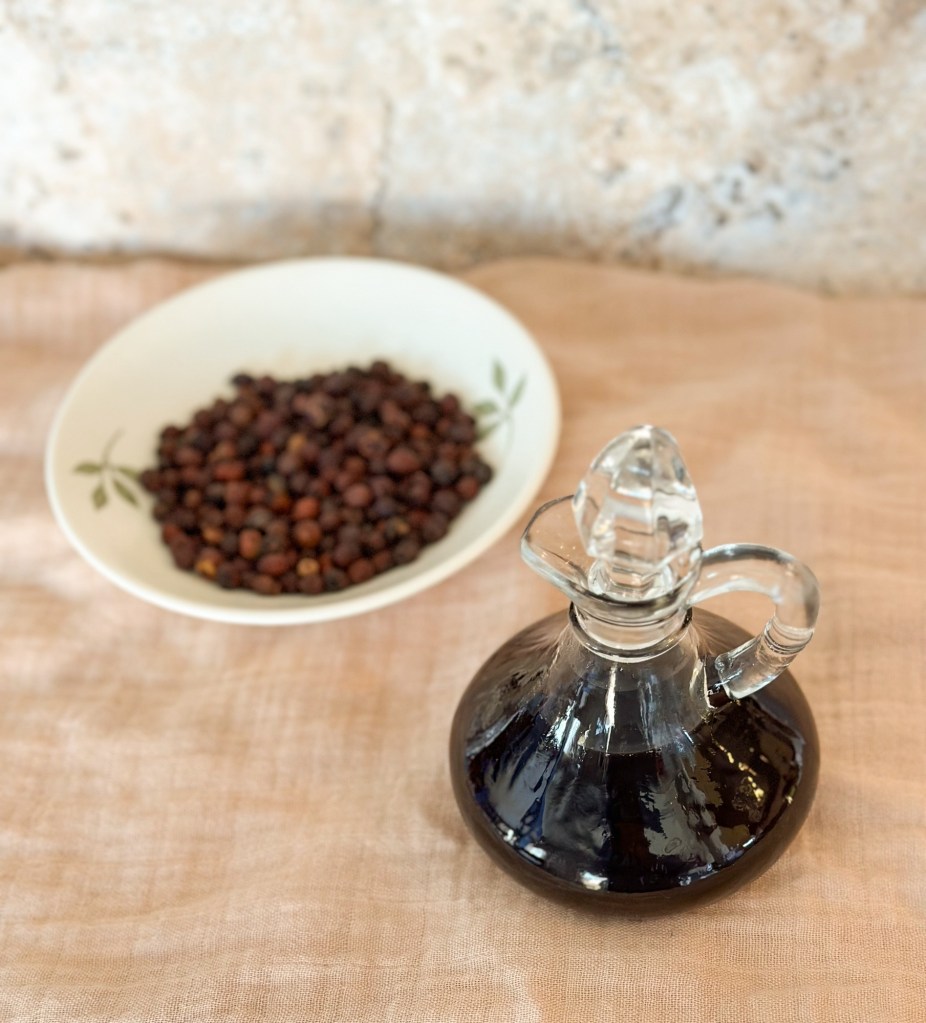
Whether you take a couple spoonfuls a day, mix it into water or tea, or use it as a mocktail or cocktail ingredient (who says medicine can’t be fun?!), hawthorn syrup will bolster your body as well as your emotional wellbeing. And the flavor is so, so nice—from dried berries it produces a tangy, slightly earthy berry flavor. Reminds me a little of fig, or port wine.

All you need is three ingredients to make this syrup. Here is the recipe!


Ingredients:

1 cup water

1 cup sugar (I used raw cane sugar)

1 cup dried hawthorn berries

Directions:

In a saucepan, heat water and sugar over low-medium heat until the sugar dissolves completely, stirring often with a wooden spoon. 

Add the hawthorn berries and allow to come to a light simmer, stirring often. Continue to simmer and stir for about 10 minutes. (We are being careful to keep this a syrup and not a caramel!)

Remove from heat and allow the hawthorn berries to steep in the syrup for another 20-30 minutes as it cools. Strain through a mesh strainer, and store in a clean jar or bottle in the fridge. Use within about 3-4 weeks.

Instead of discarding all the used syrup berries, brew a cup of tea with some of them!

A note about dried hawthorn berries: if you see a white substance on the outside of them, this is not mold and they’re not bad! It is the natural sugar in the berries that sort of collected on the surface as they dried.


Hawthorn is the Plant Wonder Collective plant of the month!

Plant Wonder Collective: Connecting you to nature through food, drink, play, garden, medicine, magic, and art.

If you’d like to support the work of PWC, please consider joining our Study Circle on Patreon for exclusive recipes, articles, digital downloads and printables for the plant of the month. We appreciate you being on this learning journey with us!


For educational purposes only. Not intended for medical advice. Always consult your physician.

*This post contains affiliate links, which means if you choose to buy something from a link that I share, I will make a small percentage of the sale *at no extra cost to you*.

Categories
Herbs and Herbalism Hygge wheel of the year

Yule: Candles, Tea, and Books

Happy Yuletide! I can’t say that I am the most knowledgeable regarding the background and traditions of winter solstice celebrations and rituals, but I am learning more as I go and loving what I learn. I wanted to pop in today to share a few of my favorite cozy Yule traditions with you.

Whether you celebrate Christmas, Yule, a combination, or simply mark the winter solstice, the astronomical beginning of winter and the shortest day and longest night are at the center of this occasion. It is a time of merriment as a way to bring light and cheer into the darkness, and to remind ourselves that the sun and its life-giving warmth will return. This is very much based in the agrarian lifestyle of our ancestors and the greater danger winter posed to their survival. Today we feel the hold-over of these traditions in more metaphorical ways but they’re still deeply ingrained. Other pagan and Christian elements and traditions of this holiday came in later, but all still revolve around the natural occurrence of the winter solstice.

Despite the jolly festivities, as I get older I feel the need more and more to snuggle in at home, slow down, eat cozy treats, and enjoy quiet times with my family just playing games and reading books. I think my connection to the natural world slowing down and going to its winter rest deepens the older I get! So I don’t feel the need for more gifts and parties, but rather candles, tea, and good books.

Candles

I absolutely love making my own candles this time of year. With a few simple, natural ingredients, candles that are healthier and more special than the store bought variety can easily be whipped up in your kitchen. Candles add a warming glow to Yuletide evenings and events, can be given as very special gifts, and you can add your own intention both when you’re stirring the wax to make them and when you take the time to light them each night.

Check out the recipe for these Yule Forest Candles I shared last year, these cozy Pumpkin Spice Coffee Candles from when I was just beginning to learn candlemaking, or purchase the Winter Candlemaking Guide from my Etsy shop to learn how to make candles at home.

Tea

Hot tea is a wonderful way to spend a winter evening during the Yuletide season! There is nothing better than brewing a big pot of tea tailored to the energies of the season, your health, or simply your mood. 

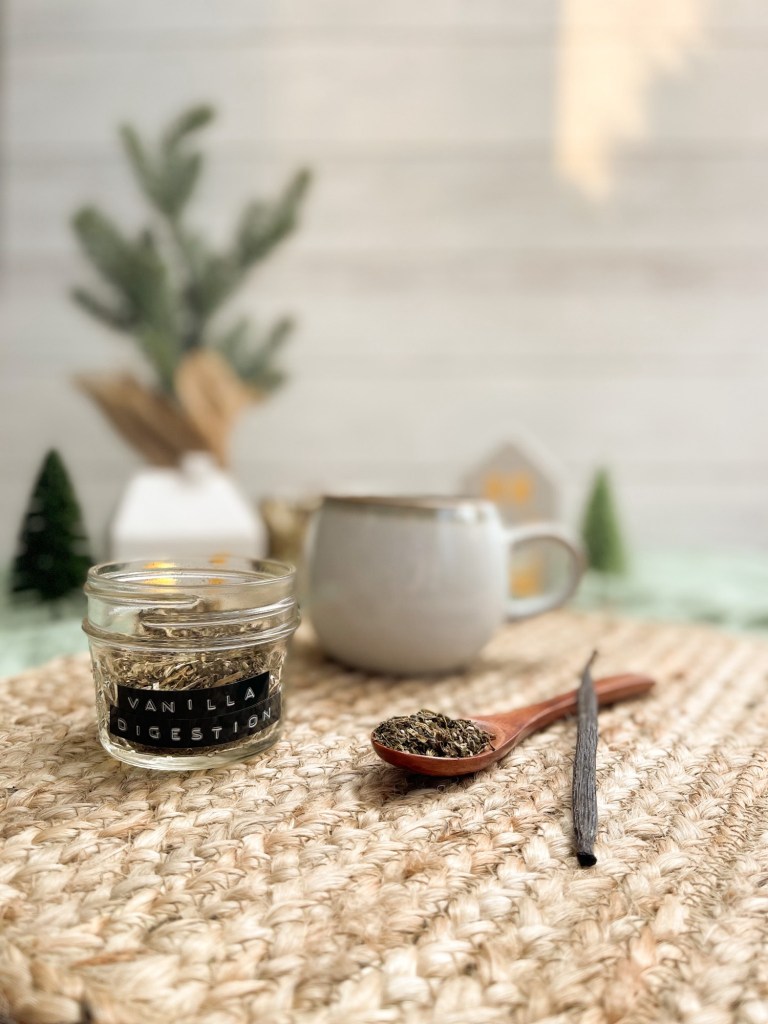
During this season of eating sweets and overindulging, a digestive-boosting tea like the Vanilla Digestion Tea I shared last year can be both helpful and tasty. An Immune Boosting Tea Blend can’t go amiss this time of year, either. Mushroom Coffee makes for a hearty and energizing, yet grounding, brew. Or check out the many other winter tea recipes in my Winter Tea Booklet in my Etsy shop.

Books

I am never at a loss for good books to read! Here I will keep the explanation short and simply share some links to books that are perfect for this season. 

Children’s books about Yule / the Winter Solstice / Wintertime (that are wonderful for adults, too):

The Shortest Day (Susan Cooper)

The Winter Solstice

Goodbye Autumn, Hello Winter

The Tomten

Flower Fairies of the Winter

The Shortest Day (Wendy Pfeffer)

The Nutcracker Ballet

Adult fiction and nonfiction – my recent cozy or cozy-adjacent favorites

Emily Wilde’s Encyclopedia of Faeries

Legends and Lattes

A Spell in the Wild

The Wake-Up Call

The Tale of Hilltop Farm (the Cottage Tales of Beatrix Potter)

The Hobbit

Kitchen Witch

A Morbid Taste for Bones (the Brother Cadfael mysteries)

Little Women

Slavic Kitchen Alchemy

Healing Herbal Teas

What cozy ways are you enjoying the Yuletide season?


For educational purposes only. Not intended for medical advice. Always consult your physician.

*This post contains affiliate links, which means if you choose to buy something from a link that I share, I will make a small percentage of the sale *at no extra cost to you*.

Categories
Herbs and Herbalism Recipes

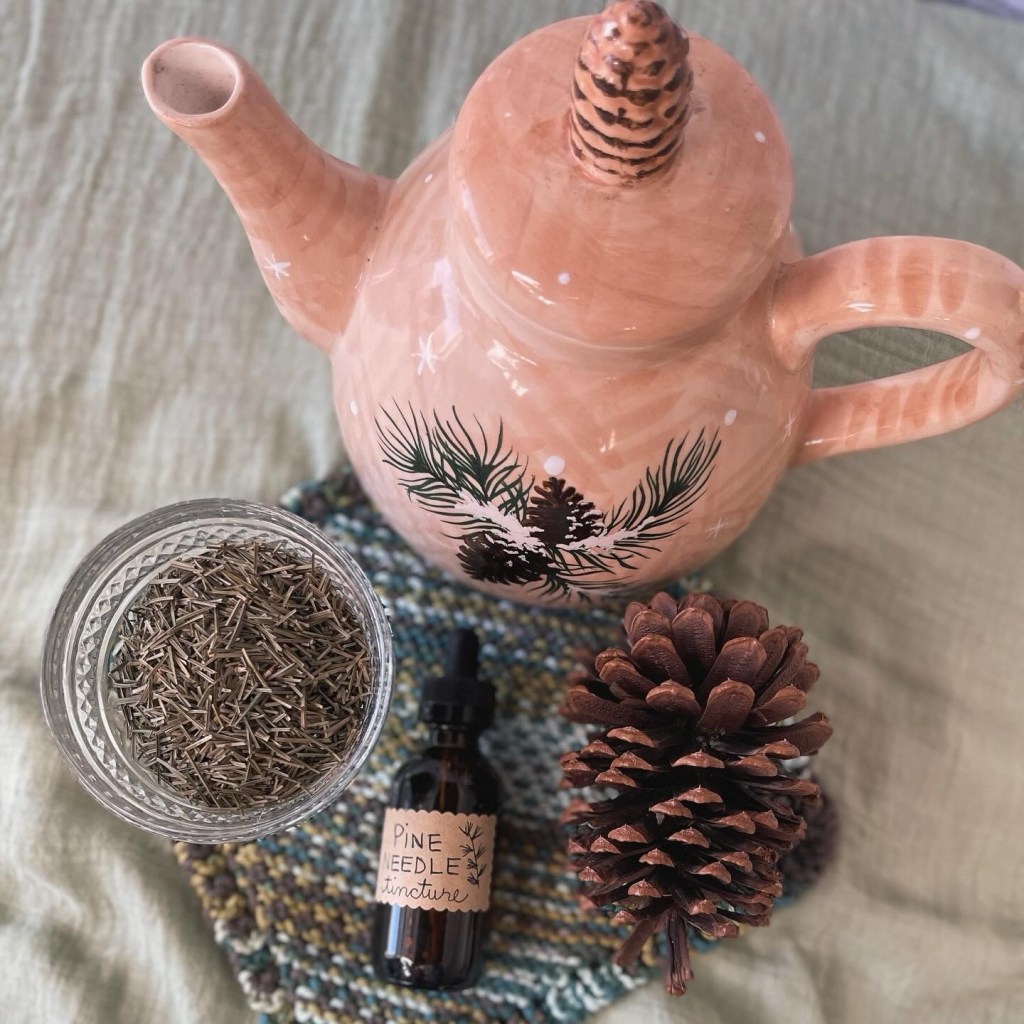
Pine Needle Tincture

A tincture is a simple and powerful way to experience an herb’s benefits and energies. I’ve brewed up a batch of pine needle tincture to enjoy the taste and effects this winter season!

Pine has so many benefits to body and mind. Medicinally, it can help aid the immune system with its high vitamin C content and antimicrobial qualities, it can help with pain and inflammation, and it can offer relief to colds and coughs. Energetically, pine is said to encourage peace, harmony, wisdom, intuition, grounding, and courage.


Here is the simple recipe for making your own pine tincture!

Materials

To make a pine tincture, fill a clean glass jar about ¾ full with dried pine needles (make sure you’ve sourced from a safe-to-consume species!) and top with high-proof alcohol such as vodka, filling to about an inch over the plant material. Stir with a wooden spoon or chopstick, and cap tightly with a bpa-free plastic lid. Store in a cool, dark place and shake daily for about 4-6 weeks. Strain and rebottle in a clean jar / dropper jars.


This can be taken medicinally by drops or dropperful in water or under the tongue…but it can also be enjoyed by the dropperful as an addition to tea or juice—or even used as fancy bitters in cocktails and mocktails! (I am envisioning it as a very cool wintry addition to an Irish whisky with gin & lime!) You can also mix a bit with a carrier oil and use it externally for minor pains and inflammation.


For educational purposes only. Not intended for medical advice. Always consult your physician.

*This post contains affiliate links, which means if you choose to buy something from a link that I share, I will make a small percentage of the sale *at no extra cost to you*.

Categories
Uncategorized

November Updates

Hello, friends! I apologize that it has been so long since I’ve shared any recipes, projects or herbal info with you here. November has been a very busy and unusual month! So I thought I would pop in and tell you a few things that have been going on lately, including some exciting publications coming out soon.

Not to start on a sad note, but my grandmother died at the beginning of November. We were not close, but I have still felt the effects of losing a family member, and have also spent some time helping my parents with a few things regarding her home and belongings. So, that has thrown off my usual autumn recipe writing and making.

My grandma

On a happier note, I have been hard at work helping to edit the upcoming winter edition of the Botanical Anthology magazine! With an almost month-early release date and lots of extra side projects tied in, this endeavor has kept me on my toes. I can’t wait to share more with you about this cozy plant-centered publication and the articles I’ve written for it.

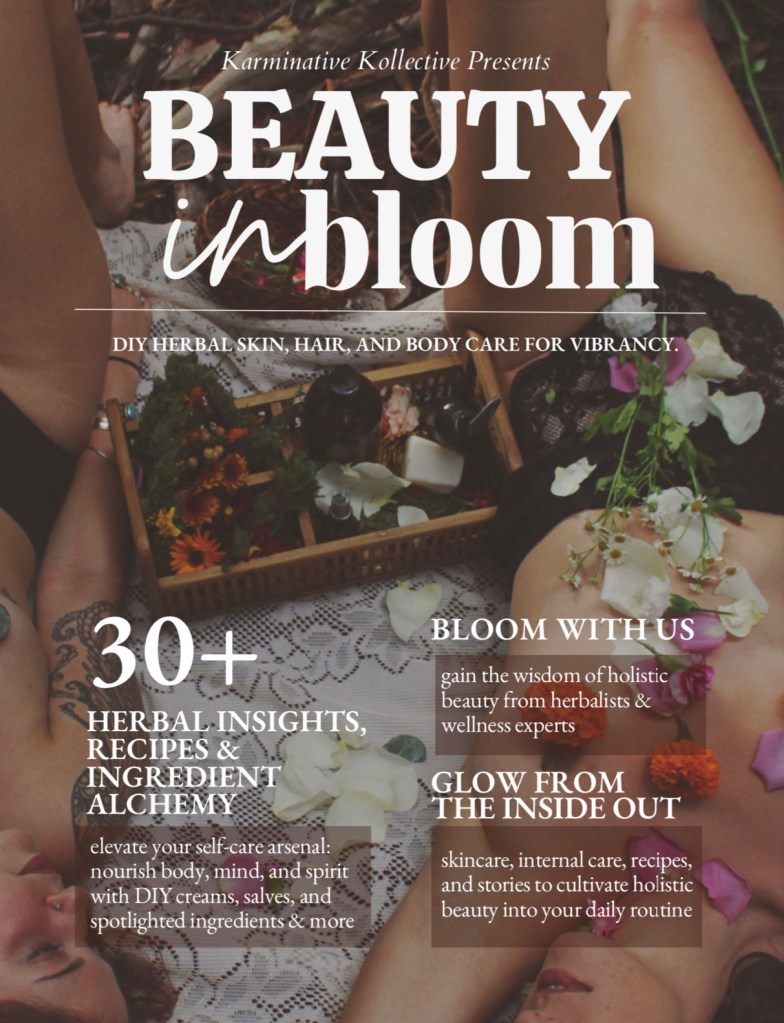
I have also written articles for other publications! The winter edition of Willow & Sage came out this month and includes a Lavender Pine Lip Balm recipe by me. And soon, a new publication called Beauty in Bloom will release with two articles by me inside!

I’ve been hard at work finishing my Winter Tea Booklet, the recipe ebook (already available!) in my Etsy shop. Rosemary Faerie tier Patreon patrons will receive this as one of their December gifts!

As ever, I’ve been creating other posts and printables for those lovely Patreon patrons, too. This month they’ve received a tea recipe coloring page, an herb monograph all about cardamom, a mini guide to crafting winter candles (also in my Etsy shop), and more!

If you’re missing the recipes I normally post here, you might be interested to hop over and check out a few from my Instagram feed this month. I’ve shared a grief tea, my November Cozy tea, Cardamom Hearth incense, herbal cooking salt, and a festive Sparkling Cranberry-Apple Spiced Sangria Mocktail. Cheers!

I will be back soon to share more about the Botanical Anthology and Beauty in Bloom, as well as more recipes again! Thank you for sticking with me here, my faerie friends!

Categories
Botanical Anthology Herbs and Herbalism Recipes

Immune Boosting Herbs + Tea

This article appears in the Winter 2022 edition of Botanical Anthology. You can purchase a digital copy HERE or a print copy HERE.

Along with the joys winter brings, it unfortunately also carries increased risk of illness in its wake. Between extra time spent indoors during colder weather and the season’s gatherings and festivities, exposure to many types of illnesses sees a dramatic uptick. To that end, immune support becomes a constant refrain.

Herbal allies can be indispensable when it comes to this winter barrage of germs. But what does “herbal immune boosting” mean? It is a many-pronged approach to keeping your body functioning optimally so that you might avoid some illnesses altogether, or at least lessen their severity. Different types of herbs work together synergistically to aid with this never-ending task.


Adaptogens
Fatigue, burnout, and chronic stress are common problems that weaken the immune system and its ability to fend off illness. Adaptogenic herbs help restore balance and protect the body’s systems and processes to counter these effects, the immune system being an important beneficiary. Tulsi, astragalus, reishi and chaga mushrooms and licorice root are just a few examples of adaptogens.

Nervines
Stress and insomnia deplete the body and create the perfect breeding ground for germs. Luckily, nervine herbs help combat both of these issues, and many are gentle and safe for everyday use for most individuals. As an added bonus, some nervines have antimicrobial properties, too. Gentle nervine herbs include chamomile, lavender, lemon balm, tulsi, rosemary, linden, hawthorn, and passionflower.

Diaphoretics
Diaphoretic herbs are warming and promote circulation. Once sick, these herbs go on to help sweat out a fever and offer respiratory relief. These include yarrow, elderflower and berry, chamomile, ginger, catnip, cayenne, garlic, and linden.

Aromatics
Aromatic herbs don’t just taste great—they provide important immune boosting actions, too. Most aid digestion, while also offering strong antimicrobial support. These germ-killers include ginger, cardamom, cinnamon, cloves, anise, allspice, rosemary, and fennel.

Antioxidants
Antioxidants like vitamin C aid immunity by supporting and stimulating antimicrobial actions on a cellular level as well as protecting body tissues from damage. Antioxidant herbs that provide much-needed immune boosting include rooibos, rose hips, hibiscus, elderberry, orange peel, and raspberry leaves.

Alteratives
Alterative herbs aid in detoxifying your body by supporting the organs and systems that handle this important task. You need your liver, kidneys, and lymphatic system in tip-top shape to fight off illness! This category of herbs includes echinacea, calendula, dandelion root, burdock root, and nettles.


There are countless combinations one can work with to create an immune-boosting herbal recipe. To make things a little less daunting, here is a simple tea as a starting point. It features elderberry, a tried-and- true immunity aid, but also rooibos, an oft-overlooked antioxidant powerhouse. There is a bit here from each of the above categories, and plenty to tempt the taste buds, as well.

Blend this combination of herbs as the recipe states, or use it as a jumping-off point to inspire your own immune supporting formulation!


Materials
3 tbsp elderberry, dried 2 tbsp rooibos
2 tbsp tulsi
1 tbsp calendula
1 tbsp lemon balm
1⁄2 tbsp yarrow
1⁄2 tbsp ginger
1⁄2 tbsp cinnamon
Fresh orange zest or slice, if desired
Honey, if desired

Method
Mix all ingredients except orange in a bowl. Transfer to an airtight container.

To make a single cup of tea, add 1 tablespoon to a tea strainer, eco-friendly tea bag, or French press. Pour about 1 1⁄2 cups hot water over the tea and steep for 5 to 10 minutes. Add fresh orange zest or orange slice and honey to taste, if desired.

Notes This recipe yields approximately 10 servings of tea.
If making a small batch, measure the parts in teaspoons—it should yield about 2 servings of tea.


For educational purposes only. Not intended for medical advice. Always consult your physician.

*This post contains affiliate links, which means if you choose to buy something from a link that I share, I will make a small percentage of the sale *at no extra cost to you*.

Categories
Botanical Anthology Folklore Hygge Recipes

Juniper Folklore

“The odor of burning juniper is the sweetest fragrance on the face of the earth, in my honest judgment; I doubt if all the smoking censers of Dante’s paradise could equal it.”

—Edward Abbey


Happy (belated) New Year!

Today, my wildlings are back at school, and I am celebrating the beginning of the new year with a simmer pot containing dried juniper berries, pine needles, orange slices, cinnamon, rosemary, and cloves. (You can read more about it on my Instagram post HERE.)

Did you know I wrote an article all about juniper folklore for the recent Winter Botanical Anthology? I’m case you missed it, and because juniper is such a lovely botanical for this time of year, I thought I’d share that article with you here today!


Though it’s perhaps not the first evergreen one thinks of in connection to winter, juniper has a long and storied history that often ties it to the colder parts of the year. 

Juniper represents hope and warmth, thriving in overwrought soil where other trees can’t. It is symbolically, elementally, and astrologically associated with fire, ruled by the Sun and closely tied to Mars. Juniper also symbolizes eternal life.

The juniper tree’s berry-like cones and twigs provide food for animals, often the only available winter sustenance. They offer culinary and medicinal uses for humans, and there are many ritualistic applications for juniper’s wood and berries, as well. It is quite interesting how juniper’s folk associations mirror its medicinal uses.

The age-old use of juniper medicinally for healing, relieving stagnation, and protection from diseases probably stems in large part from the berries’ diuretic and anti-inflammatory properties. One of the most pleasant ways to administer these medicinal benefits came in the form of gin, the juniper berry liquor that dates back as far as the 11th century, as well as medicinal juniper twig beer. 

In accord with these historical medical practices, juniper was—and still is—used in folk practice for protection. For disease, poison, plague, spirits, demons, and especially thievery, juniper has been a potent ward. 

Often, smoke and charms are the vehicle by which juniper performs this protective service. Many cultures, including ancient Greeks and Egyptians, used juniper incense in this manner. Various types of protective amulets and charms were made from juniper berries, as well. The trees have even been long used in some places as Yule or Christmas trees or greenery for some added protection.

The Scottish have a long-standing winter tradition. The day after Hogmanay, the celebration of New Year’s eve, women would perform a saining, a smoke cleansing of the entire house with smoldering juniper branches. The aromatic smoke was carried and dispersed throughout the house for blessings, purification, and protection for the coming year; the same was performed through barns and to purify livestock. 

Several species of juniper are also native to the Americas, as reflected by juniper’s presence in many indigenous Americans’ traditions and tales. Among those, the Hopi, Navajo, Blackfoot, and Seneca tell legends surrounding the tree or its berries. A Seneca tale involves junipers and other evergreens standing up to old man winter so spring may return. 

While winter persists, perhaps juniper is a plant to explore a deeper relationship with. Whether it’s branches in greenery that decorates the home, fragrant incense, or even a sip of gin, inviting juniper in is a way to connect to this plant’s long history.