Categories
herbal skincare Herbs and Herbalism Hygge Recipes

Autumn Spice Botanical Hand Soap

DIY botanical hand soap is incredibly simple to make and can bring lovely, refreshing scent, moisturizing properties, and natural ingredients to the sinks in your home. It also makes a nice house-warming or holiday gift!

It is something extra special to concoct your own personalized soap from some of your favorite natural ingredients. You can capture the season, cozy vibes, and your favorite scents all in something you use many times a day! And the process of very easy and fun! My eight-year-old daughter especially enjoys creating this hand soap with me.

Simply combine castile soap, water, herb-infused oil (such as coconut, jojoba, sweet almond, or olive oil), and essential oils (these are optional but help add a stronger scent). You can also add ingredients like vegetable glycerine and/or aloe vera for extra moisturization, and vitamin E oil to extend the shelf life.

For this particular batch of hand soap, I invoked an autumnal energy by including rose-infused jojoba oil, orange essential oil, frankincense essential oil, cinnamon sticks, star anise, dried orange, and a few cloves. The dried botanicals and spices are added for accent and visual appeal, and they are hard enough so they won’t break down too much in the soap mixture to interfere with the soap. If you’d like, envision a warming and cozy intention while adding these to this soap your family and friends will use in your home.

Here is the recipe!


Autumn Spice Hand Soap

Materials:

Instructions:

Starting with a clean jar, add 1 cup water. Add 1/2 cup castille soap and all other ingredients. Replace lid and carefully swirl vigorously to mix. If the jar looks too empty, top up with a bit more water and castille soap.

The mixture will be a bit foamy at the top, and will be thin but luxuriously moisturizing for the skin.

Note: you may need to give it a swirl once in a while as the ingredients can separate while it sits and settles. Also, if very young children or anyone with skin sensitivities will be using the soap, you can omit the essential oils.


Would you make DIY hand soap? Which ingredients or scents would you use in yours?


For educational purposes only. Not intended for medical advice. Always consult your physician.

*This post contains affiliate links, which means if you choose to buy something from a link that I share, I will make a small percentage of the sale *at no extra cost to you*.

Categories
Folklore Herbs and Herbalism Recipes

Protection Carpet & Sweeping Powder

This time of year, the quest for protection from illness lines right up nicely with the folk idea of protection from negative energy, unfriendly spirits, and the like. Whether you are seeking one, the other, or both forms of protection, there is a simple and cozy way to invoke that sentiment, freshen your house, and refresh the energies of your home: herbal carpet powder!

Did you know that strewing herbs on the floor goes way, way back? From the ancient Romans to the Middle Ages, and even up to about the 18th century herbs were strewn over the floor with rushes and straw to release a pleasant aroma and repel unwanted pests. Some households swept them up each day and replaced them with fresh herbs, while others left them for a longer interval. Rosemary, lavender, chamomile, hyssop, sage, and marjoram were among the many herbs commonly used for this purpose. Modern carpet / vacuum powders aren’t left on the floor for very long—you let them sit for 15-30 minutes before vacuuming back up—but they certainly hearken back to this practice.

While you can easily buy ready-made carpet powders at the grocery store, it is incredibly easy and fun to make your own and stir a bit of intention and personalization into the mix. If you have pets and small children, it would be best to leave out any essential oils or only use the gentlest ones you’re already used to using around your small people and creatures. Otherwise, you can experiment and create your own blend that combines the scents and intentions you prefer!

For this recipe, I’ve used rosemary for protection and remembrance (for the upcoming sabbat of Samhain); allspice and cinnamon for prosperity, luck, and healing; and orange for lovely, cozy, and uplifting vibes. And all these ingredients have antibacterial and antimicrobial properties!


Ingredients:

3 cups baking soda

3 tsp rosemary powder

1 tsp allspice powder

1 tsp cinnamon powder

20 drops sweet orange essential oil

OR 1-2 tsp orange zest

Method:

Mix ingredients well in a bowl and transfer to a glass jar. I used an empty Himalayan pink salt shaker jar because of the convenient shaker lid! Sprinkle on your carpet (and even wood or tile floors if you like), allow to sit for 15-30 minutes, and then vacuum up thoroughly. You can also sprinkle a bit of this powder around doorways and windowsills to repel insects (and maybe more? 👻).


For educational purposes only. Not intended for medical advice. Always consult your physician.

*This post contains affiliate links, which means if you choose to buy something from a link that I share, I will make a small percentage of the sale *at no extra cost to you*.

Categories
Herbs and Herbalism

Autumn Harvest: Hickory Nuts

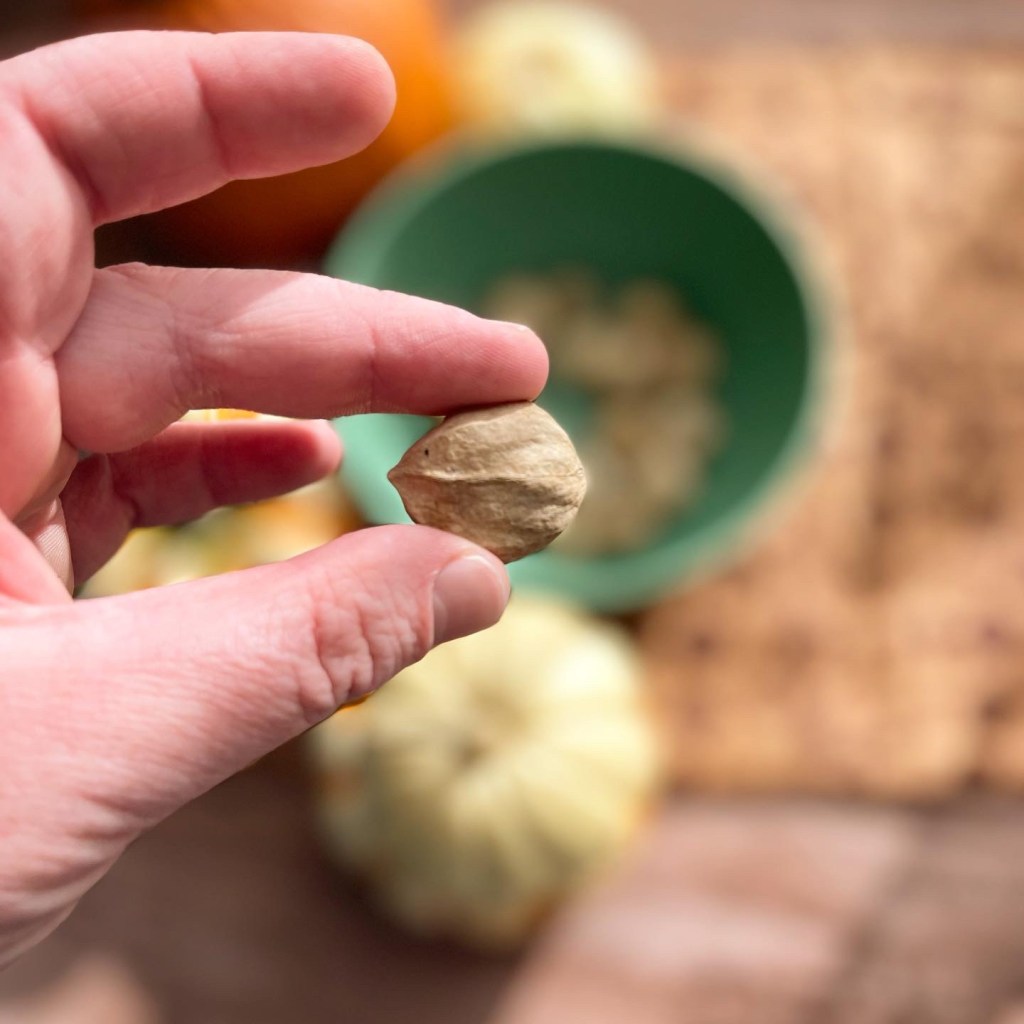
Last October I had the opportunity to collect some hickory nuts, and I’m hoping I get to when I revisit the same location again this year! Yesterday at a state park we encountered some shagbark hickory trees that were quite picked over by the squirrels already. But the place we collected them last year was so busy with people (an apple orchard) that the squirrels had steered clear and left them for the lucky humans to find.

Hickory nuts are incredibly nutritionally dense. They’re quite tricky and time consuming to crack and extract from the shells, so it’s a good thing they pack a punch! They are incredibly high in protein and those heart-protecting, cholesterol-lowering good fats you find in olive oil and avocados. They provide lots of folate and other important nutrients, as well. Hickory nuts are important to many native peoples whose diets have long included them. Numerous wildlife species also rely on them for vital nutrition.

And they taste amazing! If you have the patience to dig through these tricky shells, you’re rewarded with nuts that are wonderful raw and taste somewhat like a cross between walnuts and pecans but with a sweeter, maple syrup-like hint of flavor.

Hickory nuts have folk associations as well. In many Seneca tales, hickory nuts are associated with the dead and even bringing the dead back to life. (Very fitting as we approach Samhain!) Hickory nuts also represent nourishment, grounding, strength, and patience. (Not in small part because it takes 30-40 years of growth before the tree starts to bear nuts!)

With last year’s small harvest (I was mindful not to take more than my share) I allowed them to dry out in the sun before savoring a couple, while saving most of them for special occasions since I only have a few. I considered making a little strength talisman out of the smallest one, but I haven’t done so yet. I hope I get to add a few more to my little, precious collection!

Have you ever tried a hickory nut? What would you do with them if you had a few?

Categories
Herbs and Herbalism plant wonder collective Recipes

Mushroom Coffee

I am so excited that September is mushroom month at the Plant Wonder Collective! I love all things mushroom for culinary, medicinal, craft, and folklore purposes. I can’t wait to share the mushroom love this month!

The medicinal and therapeutic qualities of mushrooms have become much more widely known and embraced in the mainstream, and that has led to lots of commercially available mushroom coffee blends and coffee alternatives. Which is great! But they can be quite costly. So today I am sharing a simple and cost-effective diy option if you’d like to try making your own mushroom coffee at home.

((I will note, if your aim is primarily to get the medicinal benefits, you might not get the most out of your woody mushrooms by brewing them in a simple infusion or decoction. (In the summer Botanical Anthology, Susan Ilka Tuttle shared a great article on how to make a reishi double decoction to extract all the beneficial constituents.) But there are definitely water-soluble constituents you can benefit from if coffee is the most accessible & preferable method for you.))

This coffee-alternative blend uses reishi mushrooms, coral tooth mushrooms, roasted dandelion root, roasted chicory root, and cinnamon chips. You could easily modify the recipe with your own favorite hearty spices like cloves and allspice. Or combine it with actual coffee! (This is my preference usually.)

The idea of mushroom coffee sounds quite odd and even off-putting to some, but it tastes nothing like the mushrooms on your pizza! It tastes bitter, earthy, and pungent, but in a way that is reminiscent of traditional coffee—especially when combined with coffee itself or roasted roots that are often used in place of coffee.


Before we get into the recipe, let’s take a quick look at the benefits of the two mushrooms we’re using—

Reishi

Reishi mushroom has long been associated with longevity. It can aid the liver, help with blood pressure and cholesterol, boost the immune system, reduce inflammation, help you relax, and much more. Reishi has been pretty well-studied and the results are so promising!

Coral Tooth

Coral tooth is very closely related to lion’s mane mushroom, and is used interchangeably with it. It may help boost the immune system, modulate inflammation, relieve allergies and eczema, reduce anxiety symptoms, and more.


Mushroom Herbal Coffee Blend

Ingredients per about two cups

  • 1 tsp dried mushrooms of choice (reishi and coral tooth in this case), broken into small pieces or crushed with mortar and pestle
  • 1 tsp roasted dandelion root
  • 1 tsp roasted chicory root
  • 1 tsp cinnamon stick chips
  • 1/2 tsp cloves

Method

Add ingredients plus about three cups water (adjust according to your coffee strength preferences) to a saucepan and simmer over low-medium heat for anywhere from 20 to 40 minutes, strain, and serve how you take your coffee.

Or—

You can also grind the blend in a coffee grinder to a rough grind and brew in a French press or drip coffee maker. Not as many medicinal constituents will extract from the mushrooms, but you’ll still get some benefits and enjoy the earthy taste.

Alternatively, you can mix this blend to your preferred ratio with traditional ground coffee and brew as usual.

One more note:

Take care when foraging or purchasing medicinal mushrooms and make sure you are absolutely certain of the species before consuming! Also be sure to forage ethically or purchase mushrooms that were sourced ethically. My reishi and coral tooth were ethically foraged by my brother and his partner and gifted to me!


Have you ever tried mushroom coffee? Are you interested or curious to try it?

Categories
Herbs and Herbalism Tea

Herbal Coffee Alternatives

Someone recently brought up in conversation that she is trying to wean herself off coffee, and it made me think about coffee alternatives. I don’t think it is necessarily as simple as swapping out any tea or herbal tea for your morning joe. Especially since some want to cut caffeine completely, some just want to reduce their intake, and some have non-caffeine related issues with coffee instead like stomach problems.

I am personally still a coffee drinker, even though I am a home herbalist and spend so much time blending and drinking herbal and “true” tea blends! I definitely don’t overdo coffee and tend to only drink it in the mornings, and I love experimenting with herb/spice/botanical additions to my mug.

I am very much NOT caffeine sensitive, so my one or two cups a day don’t have much impact on me, and though I might feel a bit grumpy if I miss my morning java ritual, I honestly don’t feel any detrimental physical impact if I skip a day. I know I am very lucky in this, however! Coffee can affect people so differently, and some just need ways to cut back or cut it out completely.

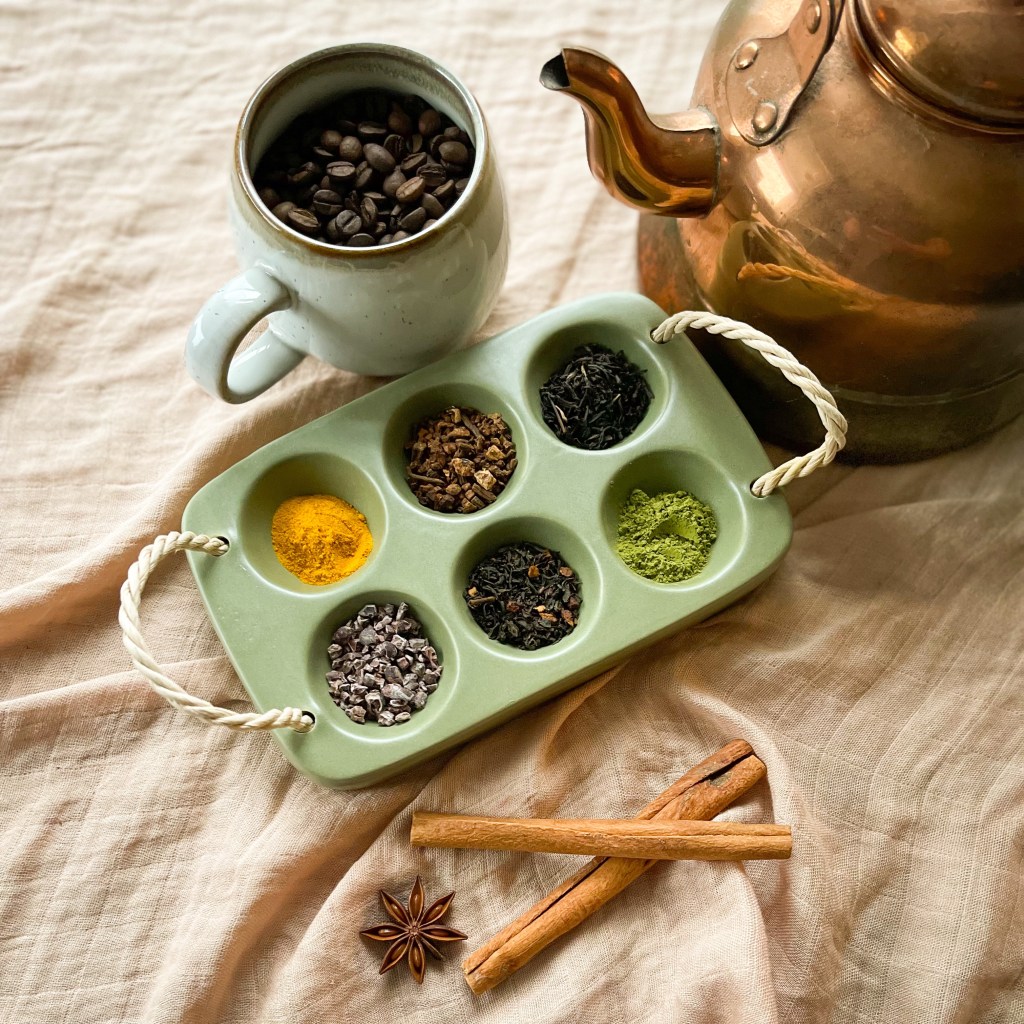
There are many different herbal / botanical coffee alternatives that can suit different needs. I thought I would share a few of my favorites, which can help fill a specific void that coffee leaves behind:


Golden Milk (turmeric, sweet spices, black pepper, sugar / honey / etc., and milk) for a warming, very healthy, comforting, aromatic, immune-boosting & inflammation-modulating decaf sip (although to be honest—I personally still drink coffee myself, but often add about ¼ tsp of this to my mug and stir it in to enjoy the benefits & taste of both)

Roasted dandelion root for a cozy, earthy, hearty, grounding, detoxifying caffeine-free brew (my evening go-to; I often mix this with cacao nibs and cinnamon stick chips. You can also cut your ground coffee with dandelion root to reduce the caffeine and add health benefits!)

Lapsang souchong for some caffeine (but not as much as coffee) and a dark, bitter, smoky, complex, satisfying cuppa (an acquired taste, but I adore it)

Cacao nibs for a wee bit of caffeine, tons of antioxidants & beneficial minerals, mood-boosting endorphins, and rich & decadent taste

Chai or other spiced black tea for a bit of caffeine in a satisfying, aromatic, grounding, flavorful, cozy, warming brew (pictured here is a favorite of mine—hot apple spice)

Matcha for a complex, earthy, herbaceous, fresh, soothing cuppa with moderate caffeine that is offset by amazing health benefits (I’ll admit, I am not a huge matcha person when it’s by itself, but I do sometimes incorporate it into recipes and blends—but some people swear by it!)


Have you transitioned away from coffee with any of these, or perhaps a different alternative? Let us know in the comments — I have a feeling there are others who could benefit from some ideas to try!

Categories
herbal skincare Herbs and Herbalism Recipes

Easy Oat & Chamomile Face Mask

I’ve recently realized how easy it is to make soothing herbal face masks, and now I’m hooked! They’re versatile, ingredients are interchangeable, and you can definitely make them without a formal recipe. I am just getting started, but I can’t wait to experiment with all kinds of combinations (and share my favorites with you here)!

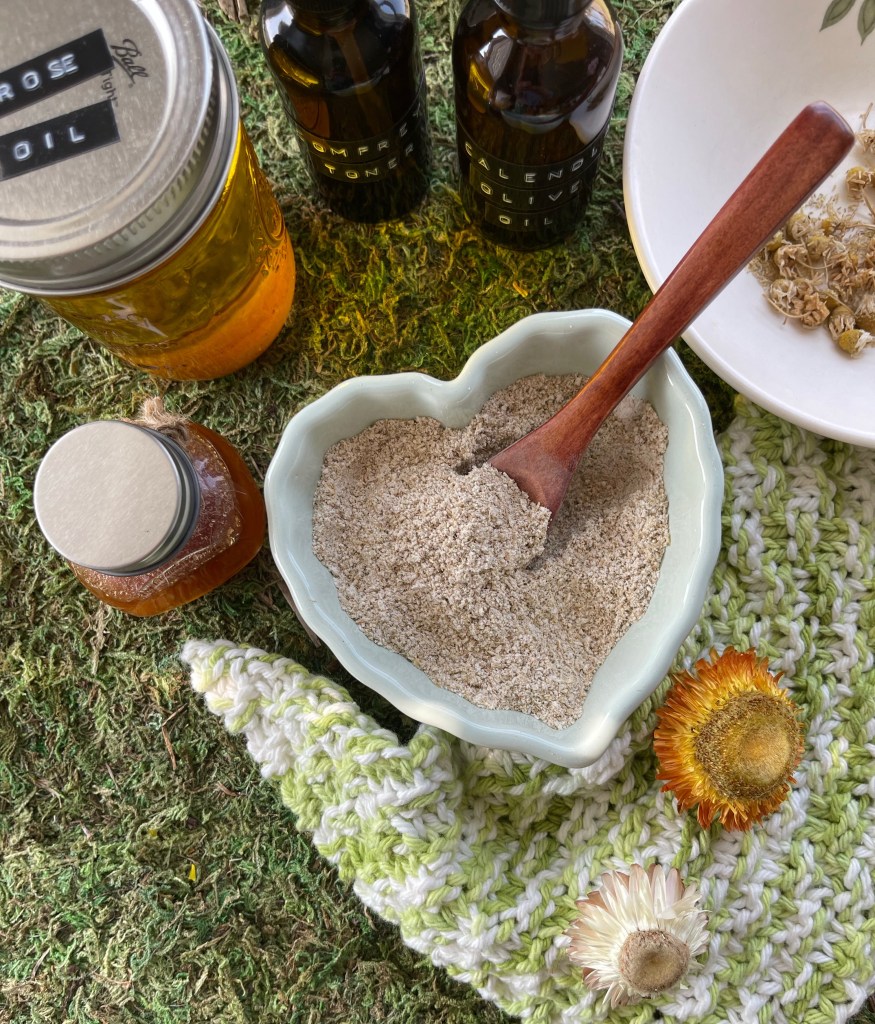
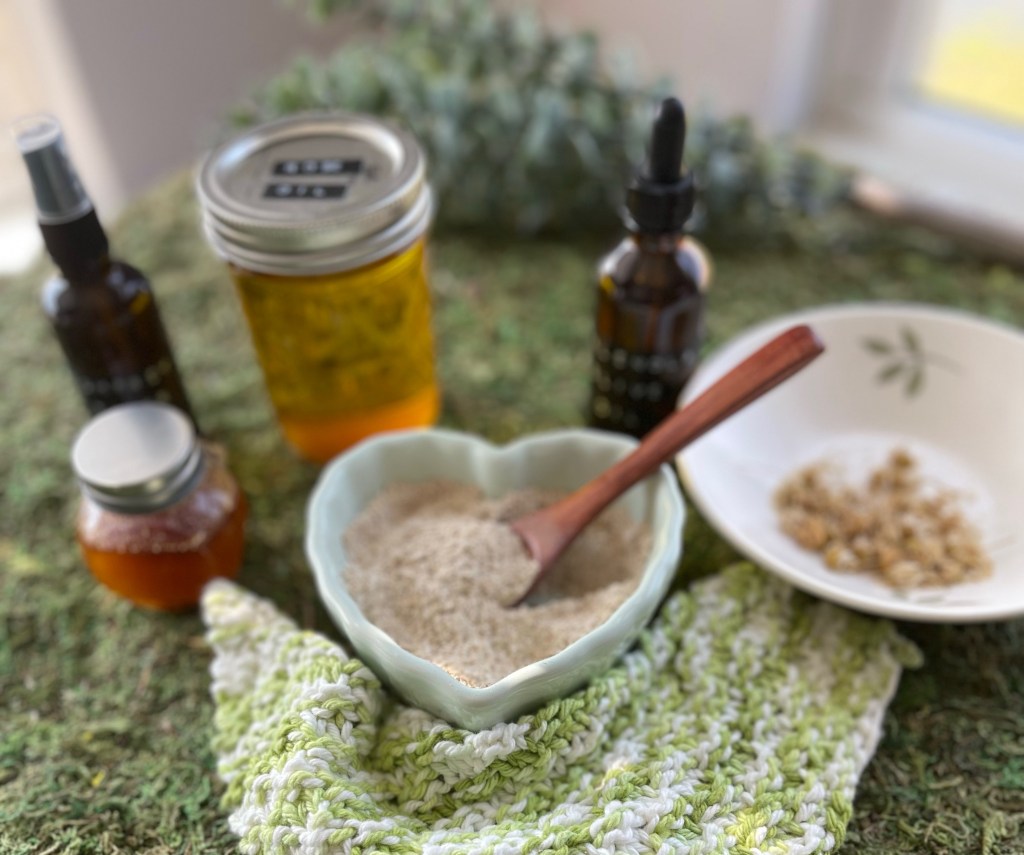
Today’s face mask is a very gentle, soothing one that is great for sensitive skin. Even your kiddos can try this one out! It combines powdered oats, chamomile, and cardamom for the dry ingredients—which you can store in a jar with a long shelf life, and simply combine a bit with the wet ingredients that your skin needs each time you use it.

Oats are extremely nourishing and soothing to skin, adding moisture and calming redness. Chamomile does much the same and is often included in skincare products for that reason! Cardamom has antibacterial properties and can help clear your complexion.

As far as wet ingredients to moisten the face mask, you can choose between many options based on your skin’s needs! Here are a few ideas; you can play with amounts to mix in for the sake of the mask’s consistency on your face.


  • Honey: antibacterial, helps with scars, mildly exfoliating (you’ll definitely need a thin liquid too to make the mask less sticky if you use honey)
  • Herbal toner: a witch hazel and herb infusion (like the comfrey one pictured) adds acne fighting and pore toning benefits
  • Rose water or other herbal hydrosol: gentle, nourishing, moisturizing, soothing, and smells amazing
  • Black or green tea: tightens pores, tones, purifies
  • Herb-infused oils: moisturizes and conditions dry and/or aging skin, feels super luxurious, and helps the mask have a lovely consistency
  • Aloe Vera: healing for acne scars and skin rashes, soothing, and tightening

Don’t be afraid to experiment with amounts! In the pictured dry mask base, I used 1/4 cup oats, 2 tablespoons chamomile, and 1/2 teaspoon cardamom. But experiment with amounts to get a consistency you love! Then apply to clean skin with a makeup brush, leave on for 10-15 minutes, and rinse off with lukewarm water.

What are your favorite face mask ingredients?

Categories
Herbs and Herbalism plant wonder collective Recipes

Dill Potato Soup

For dill month with the Plant Wonder Collective, I decided to make potato soup! Dill pairs so nicely with potatoes, and gives the soup a fresher flavor for springtime rather than a heavier, wintry taste.

You could make your own favorite potato soup recipe and simply add dill in wherever herbs are called for, or you can try out this easy slow cooker recipe I used!

Slow Cooker Dill Potato Soup

Ingredients

  • 6 slices bacon, diced
  • 2-3 pounds petite red/gold potatoes, chopped (no need to peel)
  • 3-4 cups chicken stock
  • 1 yellow onion, chopped
  • 3-4 cloves garlic, minced
  • 2-3 sprigs fresh dill
  • 2 sprigs fresh thyme or 1 tsp dried thyme
  • 1 tablespoon butter
  • 1 cup shredded cheddar cheese, plus more to top
  • 1 pint (16 oz) heavy cream
  • Salt and pepper, to taste

Directions

  • Cook bacon according to your preferred method.
  • Add potatoes, bacon, 3 cups of the chicken stock, onion, garlic, dill, thyme, and butter into 4-quart slow cooker and stir to combine.
  • Cover and cook, on low heat for about 7-8 hours or high heat for about 3-4 hours, until potatoes are tender.
  • Use a potato masher to mash the potatoes to your desired consistency. Add in cheese and heavy cream, stirring until smooth. Salt and pepper to taste.
  • Replace cover and cook on low heat until warmed through, stirring occasionally, for about 15-20 minutes. If the mixture is too thick, add more chicken stock as needed.
  • Top with more shredded cheese to serve.

Recipe adapted from this one by Damn Delicious.

Categories
Herbs and Herbalism Recipes

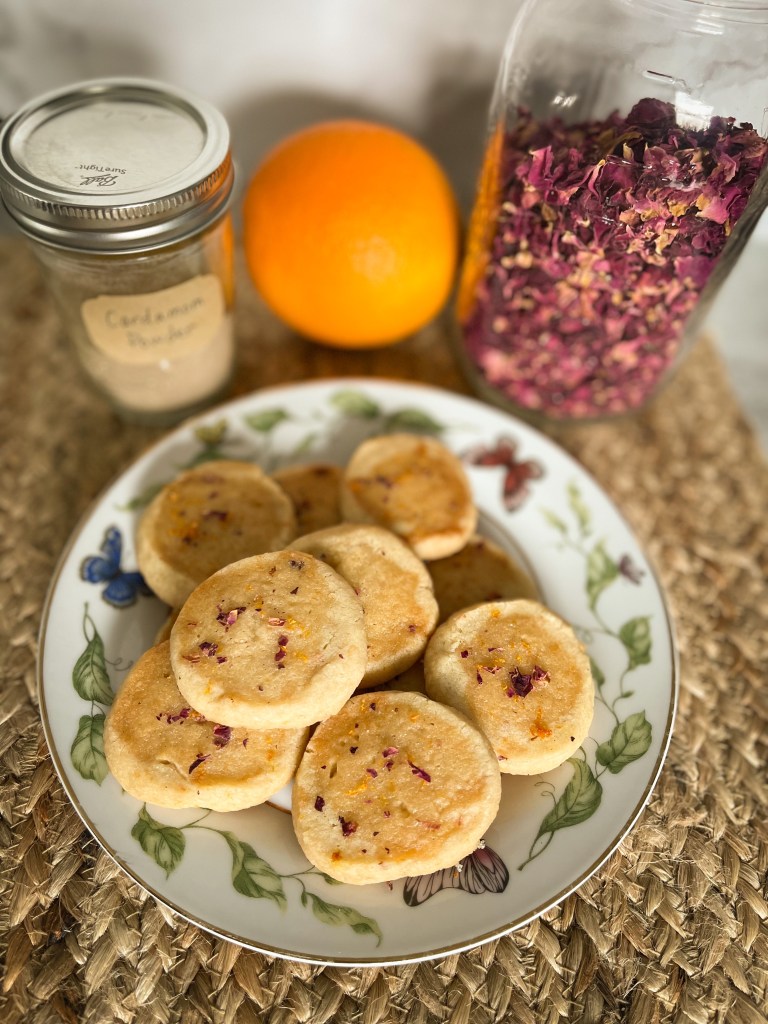
Orange Rose Shortbread Cookies

I’ll admit—this recipe was inspired entirely by rewatching old episodes of the Great British Bake Off. I keep seeing shortbread cookies, and hearing them talk of how their “biscuits” have a satisfying snap. My midwestern American palate is much more accustomed to gooey, soft cookies which are delicious but a bit simpler. So I thought I’d try my hand at some springy shortbread cookies—which, of course, had to incorporate herbs.

In addition to a classically sweet and crisp shortbread recipe, I’ve combined the flavors of rose, orange, cardamom, vanilla, and honey. These lend a distinctly layered complexity to the mild taste of the biscuits and help them pair even better with a lovely black tea. (Springtime tea party recipe, perhaps?) Also, all these botanicals are uplifting, bright, and fresh. It’s the perfect light sweet after a winter of heavy sweets and spices.

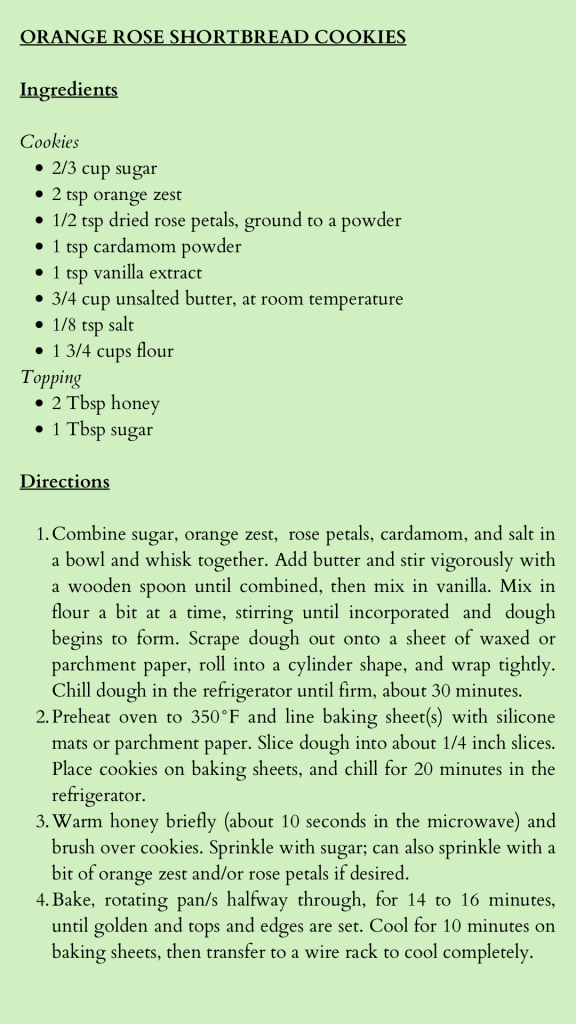
Here is the recipe if you’d like to try them!

Categories
Herbs and Herbalism plant wonder collective Recipes

Dill & Cheese Beer Bread

March is dill month at the Plant Wonder Collective! I was searching for inspiration and recipes online, and realized that dill bread is a bit of an old-fashioned, simple, cozy favorite. Perfect!

We may think of dill as being mostly reserved for culinary uses (dill pickles and dill havarti—yum!) but there is some historical precedent for other applications. Dill is great for digestion and is often found in infant gripe water. It is nutrient-dense and high in flavonoids, which make it a great cardio-tonic herbal ally. Dill can help with inflammation and pain, and has been historically used for soothing in many contexts (it’s name comes from an Old Norse word meaning “to soothe”).

Interestingly, in the Middle Ages dill was used for protection and as a ward against witchcraft! It also represented luck and wealth, and might be found hanging in a home or worn as charms.

Whatever its other benefits, dill tastes really green and fresh! I used it to flavor a loaf of beer bread I made, and it tasted great paired with the mozzarella cheese I added. (Would be great with cheddar, too!) Here is the recipe if you’d like to try it!

Dill & Cheese Beer Bread

Ingredients

  • 3 cups all-purpose flour
  • 1/2 tsp salt
  • 2 tsp dried or 4 tsp fresh dill
  • 1 12-oz can or bottle of beer
  • 1 Tbsp baking powder
  • 1 cup shredded cheese of your choice (mozzarella, cheddar, or havarti)
  • 2 Tbsp butter, melted

Instructions

  1. Preheat oven to 350° F.
  2. Grease a 9 x 5 bread pan or line with parchment paper.
  3. In a bowl, combine all ingredients except the beer and butter. Mix well.
  4. Add the beer gradually and stir well to incorporate.
  5. Transfer dough into the loaf pan.
  6. Pour the melted butter over the top. You can also sprinkle a little more dill and shredded cheese over the top if you wish.
  7. Bake for 40 – 50 minutes. Check with a toothpick—if it comes out clean, the bread is ready to come out.
  8. Let cool slightly, then turn out onto a cooling rack. Slice and enjoy!

Recipe inspired by this one from TheSaltyPot.com.

Categories
herbal skincare Herbs and Herbalism Recipes

Flower Garden Tea Party: Perfume Oil

Are you as ready as I am for spring? Late February seems to always be like that for me, with sneaky early warm days making me itch for the real thing. And the fact that the first crocuses are beginning to pop up doesn’t help!

Between that and reading books about Beatrix Potter lately, I am in a distinctly flowery-tea-party mood. Not the fancy or stuffy kind, however; the unfussy, cozy, enjoying the bounty of nature and the comforts of home with friends kind. The sort with lavender Earl Grey in mismatched cups and a fresh-picked garden bouquet in a jam jar on the table. The type of flowery tea party I think Miss Potter herself would have enjoyed.

Imagining this scenario brings me to the simple little perfume oil I recently made to capture that feeling. I combined lavender-infused almond oil that I made recently with a few essential oils: geranium, bergamot, cardamom, and benzoin. This combination of scents is dreamy and floral, with a hint of sweet vanilla and warm spice. It’s nourishing to the skin and has a lovely calming effect.

The particular botanicals I chose also relate to this tea party I dreamed up. Geranium figured prominently into Beatrix Potter’s gardens and especially window boxes, with their cheery flowers and lovely rose-like scent. Bergamot, of course, is the key ingredient in Earl Grey tea, which was a bit of a special-occasion luxury to those in the Lake District at Beatrix’s time. Cardamom is more of a personal addition, but it’s my favorite and is the spice that I think ties florals, fruits, and musky scents together just right. And benzoin resin oil is an affordable alternative to vanilla with a distinctly vanilla creaminess; it also is traditionally used in incense to lift the spirits.


If you are also interested in folk and spiritual associations of botanicals, here are a few of the many associations I found for these:

Lavender: love, protection, calm, peace, insight

Geranium: uplifting and protection, balance, joy, beauty

Bergamot: happiness, harmony, love, courage

Cardamom: creativity, strength, focus, healing

Benzoin: purification, prosperity


If you’d like to join me at this imaginary tea party, here is the recipe!

Materials

One 10 ml essential oil roller bottle

Lavender-infused almond oil, or your carrier oil of choice

3 drops geranium essential oil

2 drops bergamot essential oil

2 drops cardamom essential oil

1-2 drops benzoin resin essential oil

Method

Add lavender almond oil to the roller bottle until it is half full. Add the drops of essential oils. Top with more lavender almond oil, leaving about 1/4 inch head space. Securely place the roller top and lid on the bottle, then shake to mix. I like to let a perfume oil sit and infuse for a few days before using so the scents develop fully, but you wouldn’t have to.

Wear this perfume oil where you’d normally place perfume, and dream about springtime tea parties on sunny days! Just don’t forget to send me an invitation and let me know when teatime begins!