Categories
wheel of the year

Spring Equinox Diffuser + Botanical Scents

One of the simple and practical ways I like to mark the turning of the Wheel of the Year with intention is aroma. Botanical simmer pots, handmade herbal candles, or special essential oil blends diffused in my home help refresh stagnant energy and set renewed intentions going into the next season. 

This Ostara / Spring Equinox, I was struck with the idea to craft a cute little passive diffuser for essential oils that is simple, fun to make (with kids or at a friends tea party or craft night!), and captures a bit of the essence of spring in more ways than one. 

First, find a sweet little saucer or dessert plate at your local thrift shop—I have collected many as they are endlessly useful. You’ll also need a hot glue gun, dried moss, wooden craft mushrooms (or get more creative than me and make your own from natural clay), and crystals to adorn if you’d like. Decide how you’d like to lay out the arrangement, and glue on the mushrooms first, pressing as the glue cools to adhere it well. Then add glue to the plate and tuck moss around to give it a springtime forest floor look. Finally, tuck any crystals where you’d like them. You can always get creative and put your own spin on it, adding items like dried flowers, acorns, etc!
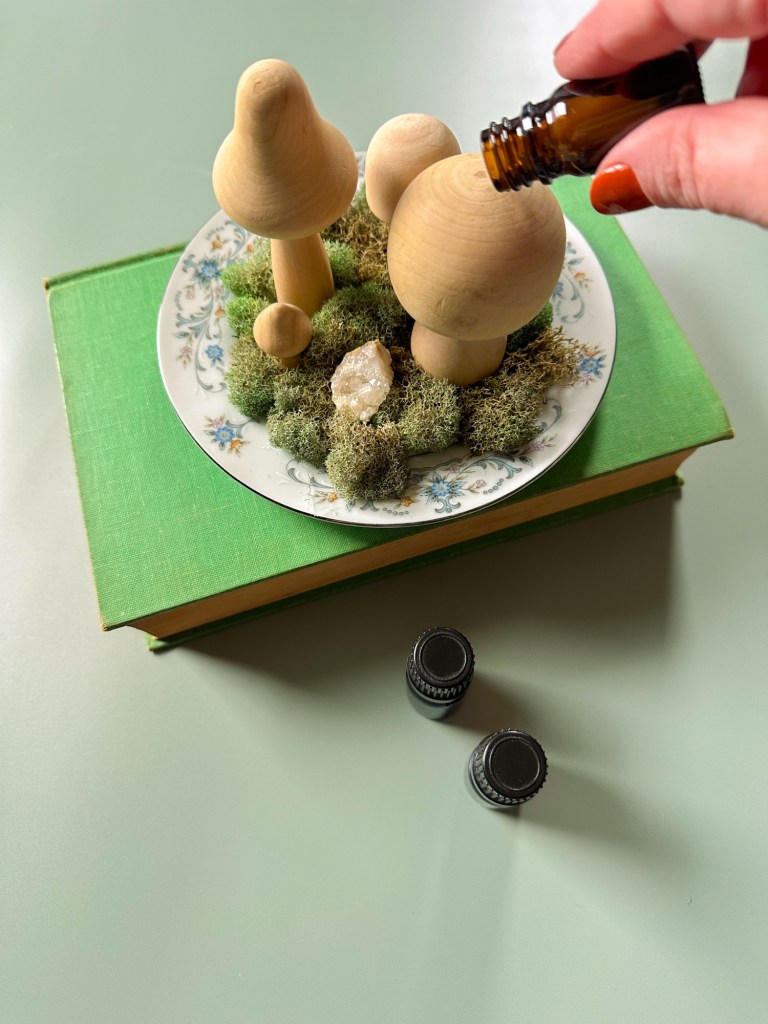
Then you are all set to add drops of essential oils to diffuse in your home, to set the mood and your intentions for spring! Here are some springtime favorites of mine:

Ylang-ylang: for sweetness and peace

Geranium: for beauty and grace

Benzoin resin: for comfort and joy

Lavender: for calm and protection

Rose: for love and magic

Bergamot: for health and energy

Mint: for refreshing and clearing

What are your favorite botanical oils for spring? What intentions do you connect them with?

———

For educational purposes only. Not intended for medical advice. Always consult your physician.

*This post contains affiliate links, which means if you choose to buy something from a link that I share, I will make a small percentage of the sale *at no extra cost to you*.
Categories
Tea wheel of the year

Brigid Tea for Imbolc

Blessed Imbolc! This sabbat marks the halfway point between the winter solstice and spring equinox, so it is also called midwinter. And it is Candlemas, when candles were brought to be blessed for the year. 

It’s also a time that is traditionally dedicated to St. Brigid and/or the goddess Brigid. This Celtic goddess is a fire deity who embodies the light and warmth of spring. She is sometimes represented as a triple-goddess or as presiding over three flames: the flame of inspiration and creativity, the flame of the hearth, and the flame of the forge and smithing. Brigid is also associated with healing, wisdom, poetry, livestock, and protection.

As Celtic legend tells, the Cailleach–the crone goddess of winter–and Brigid split the year between them. When the Cailleach’s fire goes out, she cedes rule to Brigid, who presides over her half of the year until Samhain when her counterpart returns.

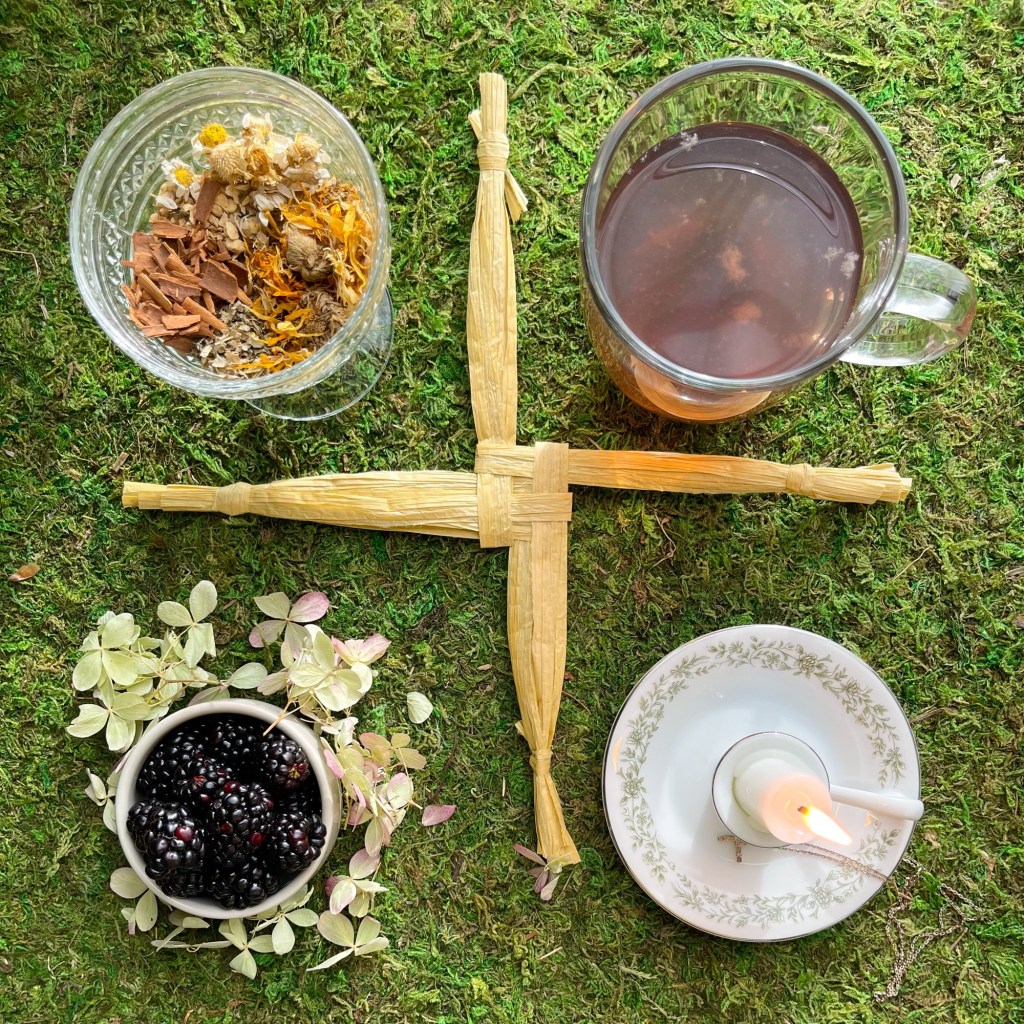
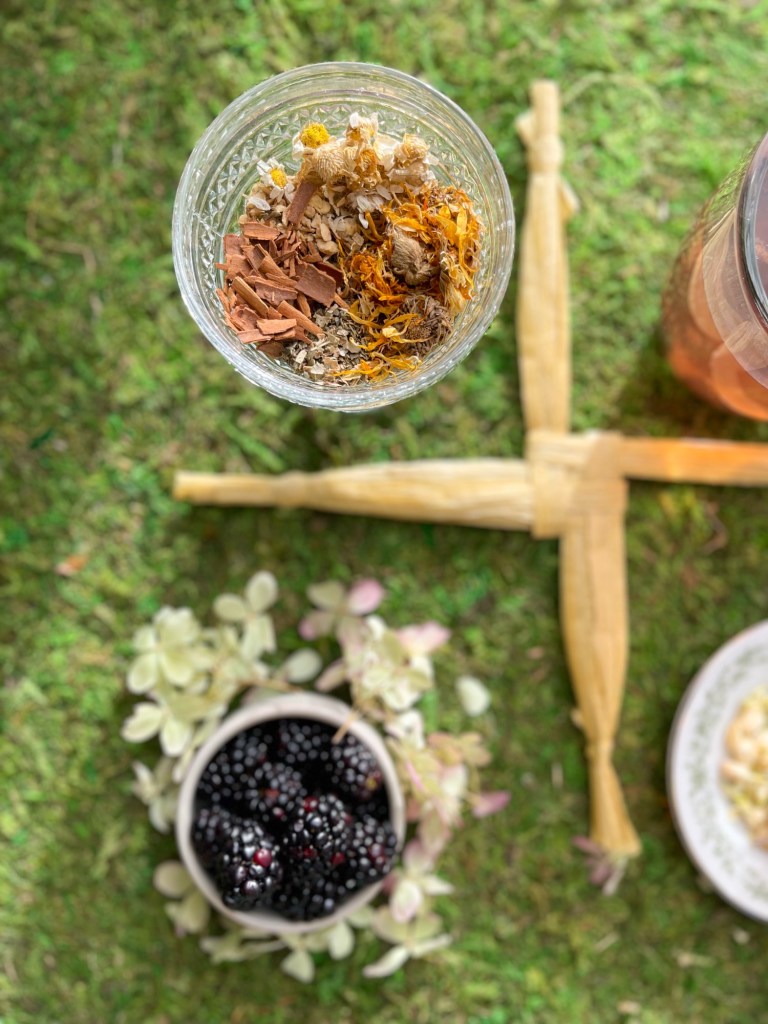
This tea to welcome Brigid’s return contains blackberry leaf and fruit along with chamomile, which are all sacred to the goddess, in combination with calendula, ginger, and cinnamon to represent her three flames.

Brigid’s Tea

1 part blackberry leaf

2 parts dried or fresh blackberries 

1 part chamomile 

1 part calendula

½ part ginger

½ part cinnamon

Directions

If using fresh blackberries, muddle 2-3 in the bottom of a cup (you’ll strain the tea after brewing); if using dried berries, simply add them to the tea herbs. Add 1 tablespoon to a tea strainer, eco-friendly tea bag, or French press. Pour 1 to 1 ½ cups hot water over the tea and steep for 5 minutes. Strain out the muddled blackberries now if using this method. Add honey or other sweetener, if desired.


For educational purposes only. Not intended for medical advice. Always consult your physician.

*This post contains affiliate links, which means if you choose to buy something from a link that I share, I will make a small percentage of the sale *at no extra cost to you*.

Categories
Recipes Tea wheel of the year

Yule + Winter Solstice Tea Blends

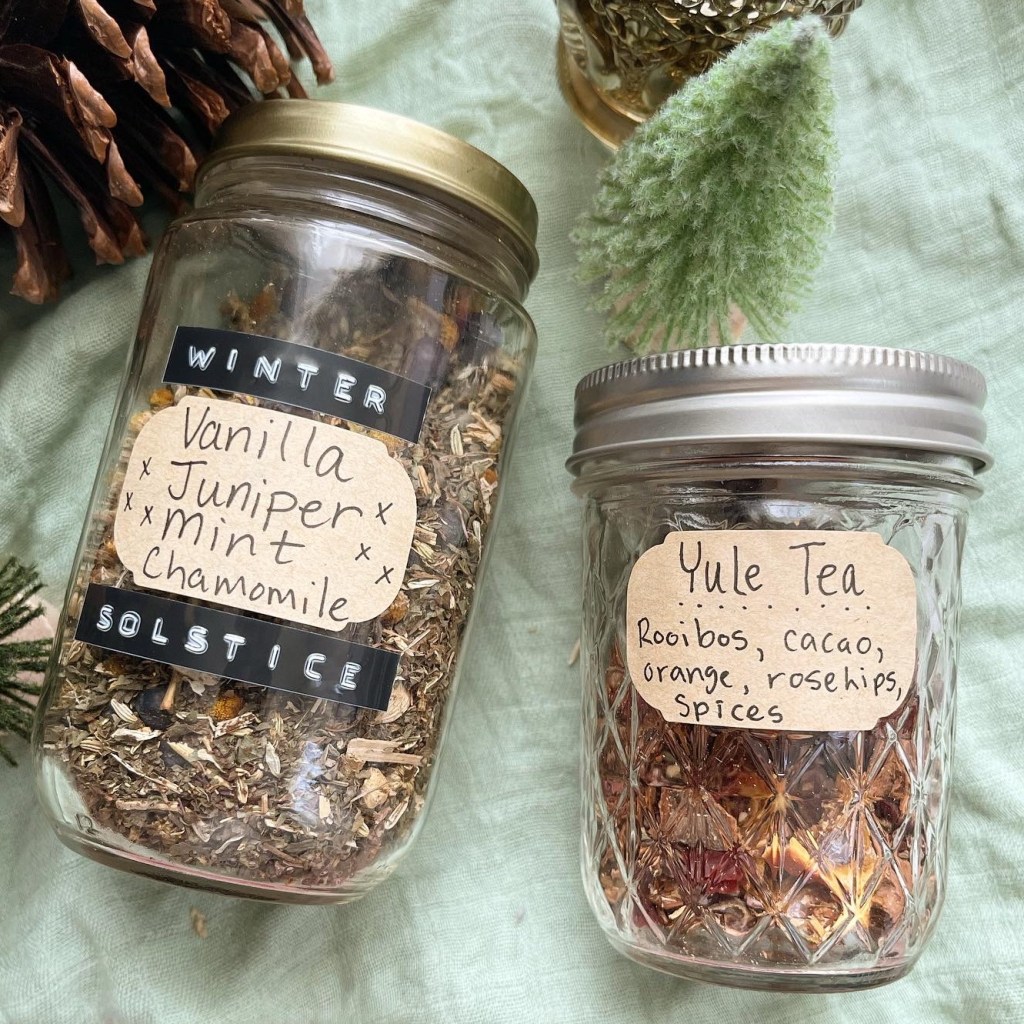
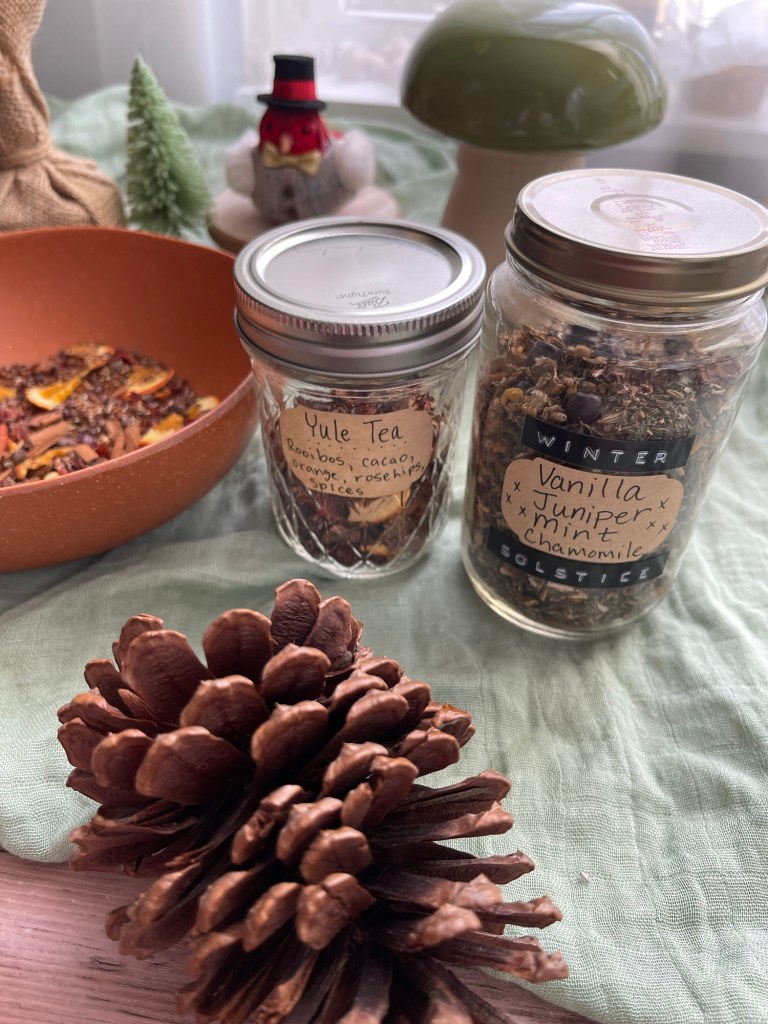
Today I’m sharing two herbal tea blends to enjoy for Yule // the Winter Solstice!

The Yule Tea blend is a sweet and festive spiced sip, full of immune-boosting ingredients that taste lovely. The combo of orange and spices is traditional for the season, in part because of those properties and in part because of associations with protection, divination, prosperity, and luck derived from them.

Yule:
1 tsp rooibos
1 tsp cacao nibs
½ tsp orange peel
½ tsp cinnamon pieces
½ tsp rose hips
¼ tsp allspice berries
¼ tsp star anise
¼ tsp nutmeg

The Winter Solstice Tea tastes decadent like a holiday cake, but without the heartburn or feeling of overindulgence! With soothing herbs that promote digestion, relieve pain, and aid in circulation, it’s like a sweet, warm hug. And chamomile represents the sun that returns brighter each day after the solstice; juniper is a powerful talisman of winter protection, cleansing, and luck; and the other botanicals have ties to healing, love, and luck, too.

Winter Solstice:
1 tsp chamomile
1 tsp mint
½ tsp meadowsweet
½ tsp cinnamon pieces
¼ tsp ginger
¼ tsp vanilla bean powder or ¼ a vanilla bean
4-5 juniper berries
2-3 cardamom pods

To brew—

To make a single cup of tea, add 1 tablespoon to a tea strainer, eco- friendly tea bag, or French press. Pour 1 to 1 ½ cups hot water over the tea and steep for 3-5 minutes. Add honey or maple syrup to taste, if desired.


For educational purposes only. Not intended for medical advice. Always consult your physician.

*This post contains affiliate links, which means if you choose to buy something from a link that I share, I will make a small percentage of the sale *at no extra cost to you*.
Categories
Recipes wheel of the year

Samhain Tea

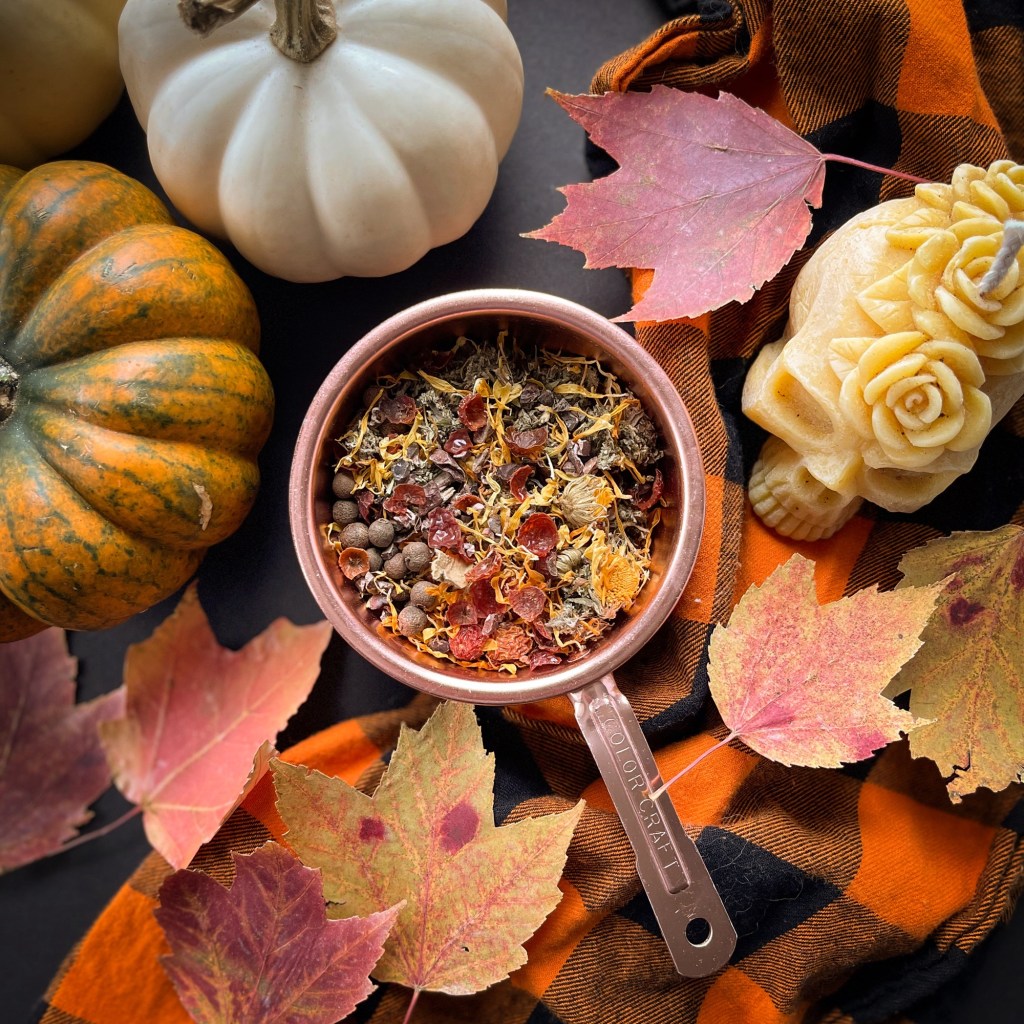
Samhain is one of the most widely-known sabbats, as it is so closely tied up in Halloween. However, the roots of this celebration run a bit deeper. The last harvest festival, Samhain marks a time when the veil between worlds thins and spirits are closer at hand, so death and remembrance are at the forefront. The death of the earth as winter approaches is also represented with this day. Shadow work, ancestor remembrance and communion, and protection are all important at this time.

A really special way I love to celebrate Samhain is to brew up a batch of Samhain Tea to take along trick-or-treating in thermoses. It’s such a simple but special ritual! If you don’t go trick-or-treating, you could take the tea along on a spooky hike, sip while you cozy up around a fire telling scary stories, or while you spend this day / night in some other way: a warm cup of Samhain Tea can bolster your courage and help ground you. 

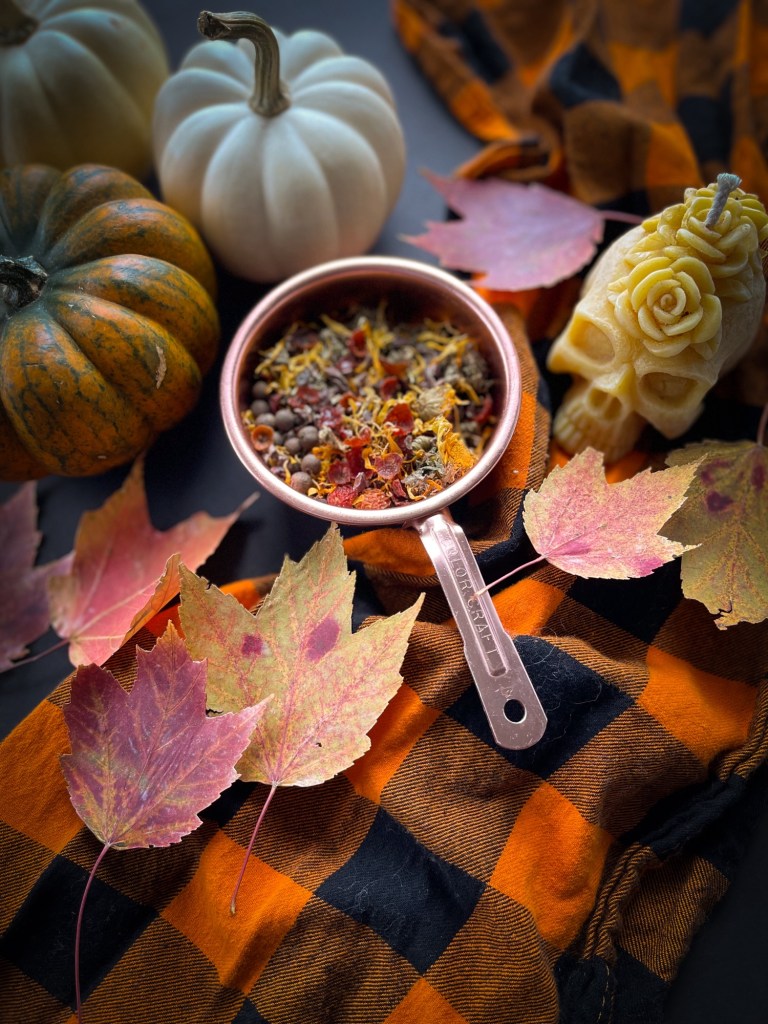
This Samhain tea blend features seasonally appropriate and healthy rose hips, mugwort for dreams, rosemary for remembrance, calendula to honor the departed, cacao for sacredness and offering, and allspice for luck and prosperity. 

Here’s what you need—


Ingredients

1 part cacao nibs 

1 part rose hips

1 part calendula 

1⁄2 part mugwort 

1⁄2 part allspice

1⁄2 part rosemary

Directions

To make a single cup of tea, add 1-2 tablespoons to a tea strainer, eco-friendly tea bag, or French press. Pour 1 to 1 1⁄2 cups hot water over the tea and steep for 4-5 minutes. Add honey or other sweetener, if desired. 


For educational purposes only. Not intended for medical advice. Always consult your physician.

*This post contains affiliate links, which means if you choose to buy something from a link that I share, I will make a small percentage of the sale *at no extra cost to you*.
Categories
Herbs and Herbalism Tea wheel of the year

Lammas, Calendula, & a Tea Meditation

Lammas / Lughnasadh / the First Harvest festival is almost here, coming up on August 1!

In years past, I was very much NOT a fan of the month of August. Where I live it tends to be incredibly hot, buggy, and like a dragging obstacle between me and my favorite season: autumn.

But recently, I came to see August in a new light. I’ve learned about the sabbat of Lughnasadh / Lammas (they tend to be used interchangeably) on the wheel of the year. Lammas marks the first harvest festival—the first of three, including Mabon and Samhain. The connections with Lammas tend to be the late summer veg and herb harvests, grain, bread making, beer, wine, fruits and vegetables, abundance, and gratitude. This opens the doorway for our descent toward autumn. Nights begin to gradually get cooler, and sunflowers bloom at the flower farm near my home. I can get behind this imagery, this spirit of anticipating autumn and gratitude for the end of summer’s abundance!

Lammas and Calendula

When I first learned about Lammas, I immediately, intuitively connected it with calendula. This may not resonate for you—you may have another plant you feel called to at this time. But for me, it’s all about this gorgeous, sunny orange flower.

Medicinally, calendula offers immune boosting, gut healing, inflammation modulating, stagnation clearing, and liver supporting properties when used internally. Externally, it supports skin healing and treats bug bites, rashes, burns, wound healing, and overall skin health support.

Spiritually, calendula is connected to the sun, Leo and Cancer—giving fiery yet nurturing qualities, warmth, comfort, healing, protection, happiness, peace, abundance, hard work, and responsibility. I find that ingesting, and even just seeing this plant on my home altar spaces, helps bolster and nourish me during this industrious time! I tend to add calendula into most of my teas and baked goods during the Lammas season.

Lammas Tea Meditation Download

To celebrate this occasion, I am sharing with you a special Lammas Tea Meditation journaling page that you can download, print, and perhaps pair with a mug of calendula tea. Quiet your mind, breathe deeply, and allow your impressions of the herb to wash over you and impart its gifts.

Download, print, and use this mediation journal page along with any other Lammas / Lughnasadh / First Harvest celebrations and reflections!

Categories
Recipes Tea wheel of the year

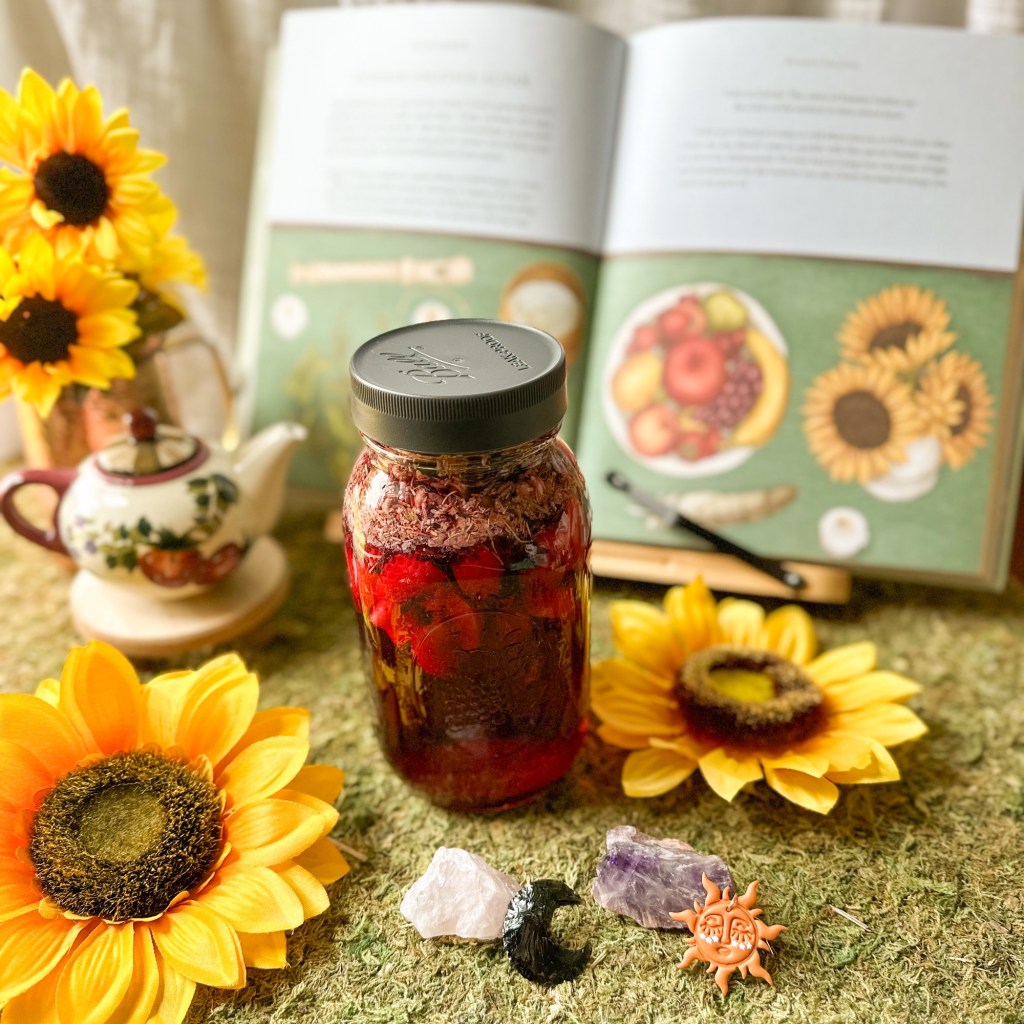
Summer Solstice Sun & Strawberry Moon Tea

I am so excited that June’s full moon (the Strawberry Moon) and Litha (the summer solstice) fall together this year. It is a convergence that doesn’t happen often—in fact, the last time it did was 1985! All that bright energy of both the longest day and the full moon combined—so magical! 

For me, I think the order of the day is celebration, gratitude, and soaking up every bit of that energy I can. I feel like too often, we see these astrological occasions as calls to act in grandiose ways, to manifest changes and new directions, to enact grand gestures. But this pressure is not necessary, and most likely you have many plates spinning already at this busy cusp of summer! Instead, it is perfectly okay to give yourself permission to rest, recharge from the added light, lean into the sensation of lightness, and simply enjoy and give thanks. Mindfulness can be your act of devotion.

To this end, I am going to brew a Sun and Moon Tea!

I am calling the tea such because I’ve chosen a blend of herbs and botanicals that includes affinities for both the sun and the moon to reflect the meaning of the occasion. There are also botanicals chosen for their ties to Litha, fire, water, and Venus, all of which I am feeling strong influences of during this time. 

Here are the ingredients, and a few of their astrological ties:

•Linden (sun, Litha)

•Chamomile (sun, Litha)

•Jasmine (moon, water)

•Rosemary (sun, moon, fire)

•Strawberry (strawberry moon, Venus, water)

•Hibiscus (fire, water, Venus)

•Lavender (Litha)

And here is the recipe! It’s simple, so you can concentrate on enjoying your mindful moments under the solstice sun and Strawberry Moon. 


Ingredients

32 oz mason jar

1 cup sliced strawberries

2 Tbsp hibiscus

1 Tbsp rosemary

1 Tbsp linden

1 Tbsp chamomile

1 Tbsp jasmine

½ Tbsp lavender

Honey to taste, optional

Directions

Add ingredients to mason jar and fill with cold, fresh water. (If using dried herbs, you might choose to place them in a large eco-friendly tea bag or linen reusable tea bag.) 

Cap tightly and place in a sunny location (free of disturbance by kids or pets!) for 2-3 hours. 

If not using a tea bag or strainer, strain tea into a fresh jar or a pitcher over ice if drinking immediately. You can stir in honey while it is still warm if you’d like! Refrigerate and drink cold. 

Note—

You can substitute fresh herbs for dried ones if you have access to them! You don’t necessarily have to go by the measurements in that case—just add sprigs of each. 


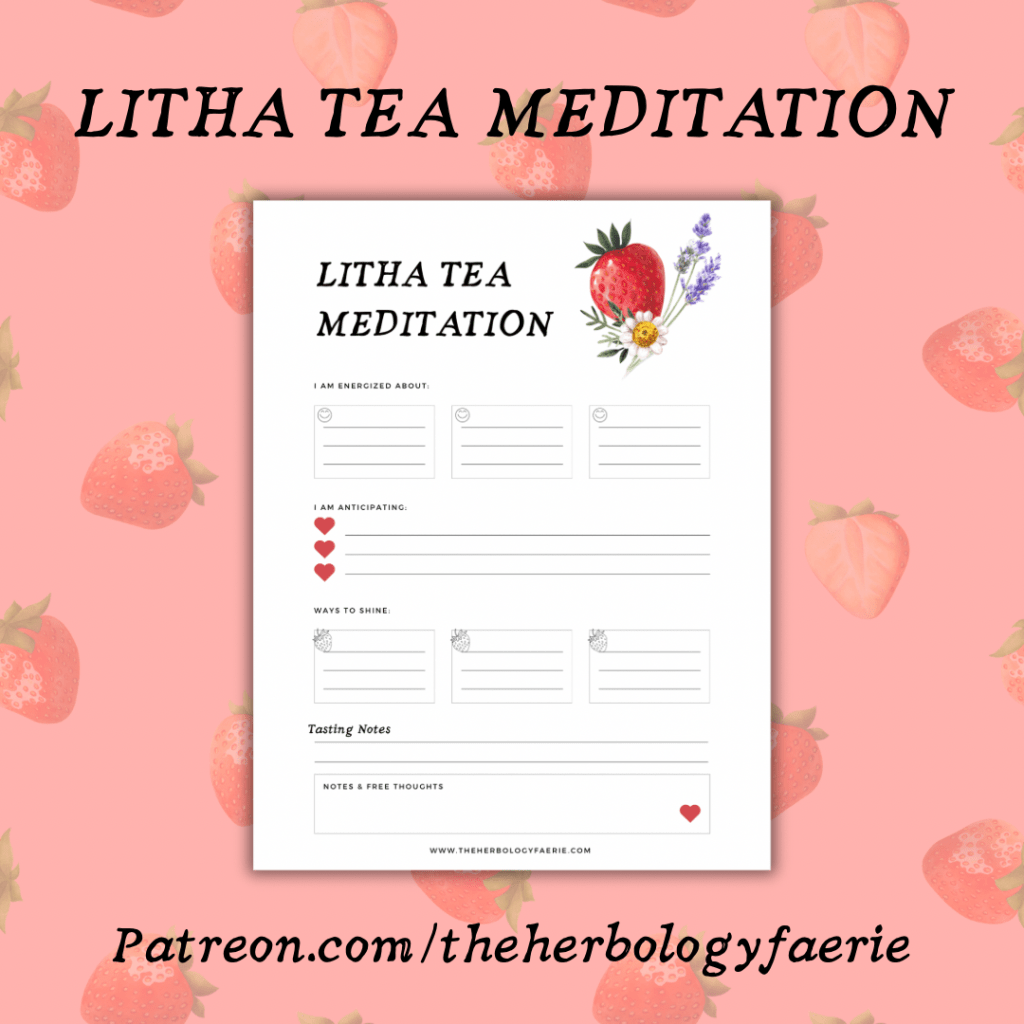
For a printable Litha Tea Meditation journaling page and a printable version of this recipe, join my Patreon at Patreon.com/theherbologyfaerie!

Categories
Herbs and Herbalism Tea wheel of the year

Beltane Lilac Tea Meditation

Beltane, also called May Day, marks the cross-quarter between Ostara (the spring equinox) and Litha (the summer solstice). Beltane is a time of heightened romance, carefree joy, ripening fruits, and faerie magic. Take care where you wander on Beltane night as the bonfires burn, lest you stumble into the land of Faerie!

Lilac is, in many parts of the northern hemisphere, ubiquitous with Beltane as its prime blooming period. To celebrate Beltane, harvest some fresh lilac if it is in bloom near you and enjoy a lilac tea meditation ritual. 

((You can also substitute a different fresh food safe flower that is in season near you, such as dandelion, for this meditation, or even dried flowers like jasmine or lavender if fresh flowers aren’t accessible to you!))

Choose a handful of blossoms that look fresh, not wilted. Leave blossoms attached to the stems, but remove most of the twigs.

Dunk in cold water to rinse off any debris and critters. Pour heated water from your tea kettle over the blossoms in a mug to cover the flowers and allow to steep for about 3 minutes before you begin to sip. No need to remove the flowers if they’re attached to the stems—they shouldn’t float loose.

Grab a journal and pen, and seat yourself in an outdoor spot if possible, or next to an open window if not. Sip the tea and feel the sun/moon/breeze on your face, closing your eyes. 

Notice the flavor of the lilac tea. It should be fragrant, floral, a tad sweet and a bit bitter all at once. Very tannic, it should pucker your tongue a bit and leave a dry mouthfeel. Savor the flavor and aroma as you drink, and think of it as nature’s champagne! Rare, beautiful, elegant, joyful, celebratory. Let the taste uplift you and permeate throughout you. Envision a sweet purple light enveloping you, bringing happiness and beauty from the outside-in, if you like. 

Grab your journal. Write down three things you are happy about, three things you are anticipating, and three ways you’d like to grow. Meditate on these ideas as you finish your tea. Then, compost the spent lilac blossoms. 


As an alternative to using a journal, I’ve made a journal page especially for this meditation that you can print and use! Just click on the file below, print, and use alongside your Beltane Lilac Tea Meditation!

Categories
Hygge Recipes wheel of the year

Ostara: Orange Vanilla Soda Bread

There is, in my opinion, no better way to celebrate the turning of the season (or just anything!) than with warm, freshly baked bread. You just can’t help but be mindful for a moment as you stop and appreciate the ingredients that went into the bread, the hands that made it, and the warming and grounding experience of enjoying it. That is some simple but powerful alchemy, right there. 

This year for Ostara (the spring equinox) I decided to make an easy, rustic loaf of soda bread with some cheery, sweet, springy flavors. I incorporated orange zest and juice and vanilla, because the two together just put me in mind of sunshine and the sweet scent of early spring flowers. 

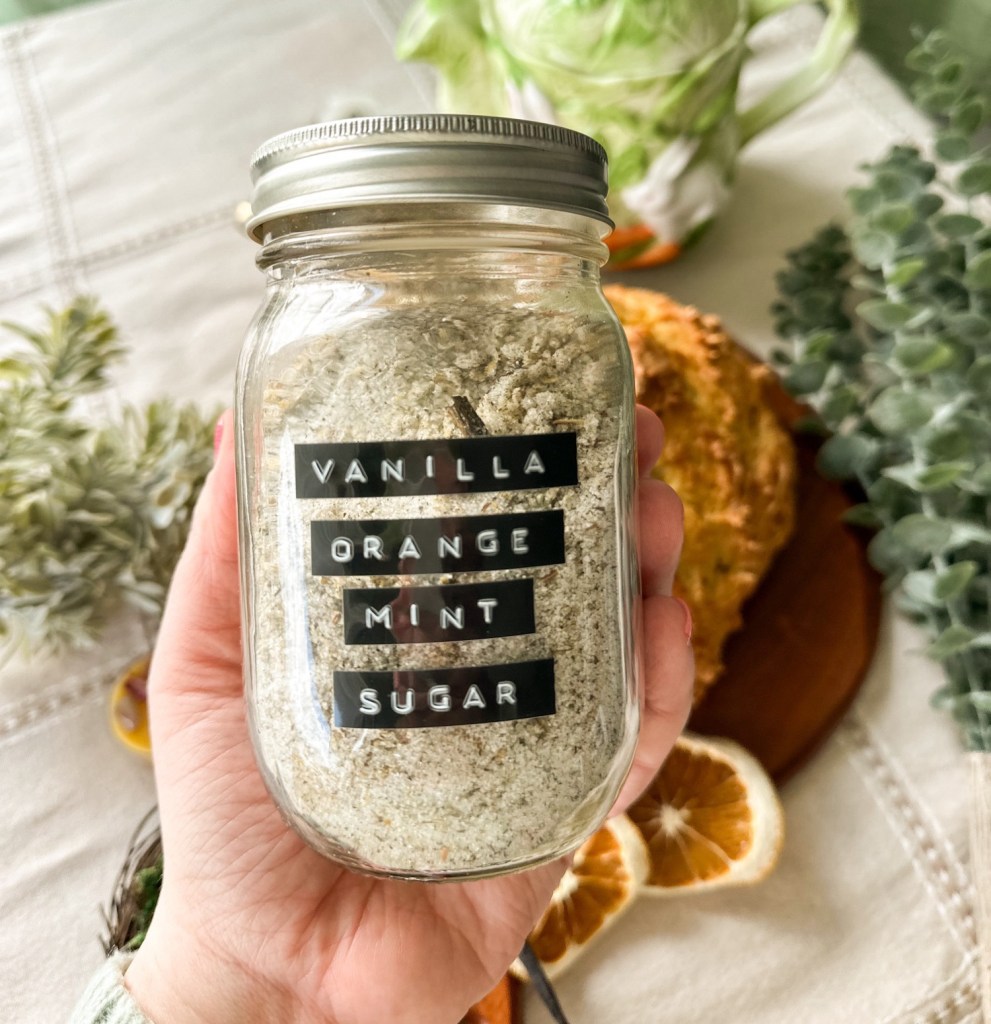
I also sweetened up this traditionally sugarless recipe with a generous helping of the vanilla-orange-mint infused sugar I made awhile back. You could easily use plain sugar, of course, but I had this on hand and it further drives that flavor home and adds a little something extra. 

My family loves snacking on this bread, and it is really nice at breakfast time, too. I like to think it’s a very hobbit-ish sort of treat to celebrate spring with!


The recipe for Orange Vanilla Soda Bread:

Ingredients

4 cups flour (all white flour, part whole wheat, or you could also try your preferred GF flour)

1 ½ tsp baking soda

1 ½ tsp salt

3 Tbsp sugar (vanilla orange mint sugar)

2 tsp vanilla extract

Zest of one orange

1-2 Tbsp orange juice

1 ½ to 1 ¾ cups buttermilk

Method

Preheat oven to 400°F.

In a deep mixing bowl, mix together flour, baking soda, salt, and sugar with a whisk. Whisk in orange zest.

Make a well in the dry ingredients and add the wet ingredients to it. Mix together with a wooden spoon, folding and turning the bowl until a sticky dough forms. If the dough seems too dry, you can add additional buttermilk a spoonful at a time.

Scoop ball of dough out onto a large floured cutting board. Knead a few times lightly. It will still be quite sticky, but you can flour your hands and add a pinch or two of flour if it seems too wet. 

Form into a large round loaf. Place in a greased / oiled Dutch oven or on parchment paper on a baking sheet. Cut an X into the top with a sharp knife. Top with a small pat of butter on each of the four quadrants if you’d like. 

Cover with the Dutch oven’s lid or tent with foil and bake for 30 minutes. Remove cover and bake for an additional 15 minutes. Bread is done when a toothpick comes out clean and/or the X in the center appears done (my X disappeared 😅 but that’s ok). It should also sound hollow if you tap it!

Allow to cool for 10-15 minutes before eating. Then, enjoy!


I love making infused sugars! Here is the recipe for Orange Mint Vanilla Sugar:

Ingredients

1.5 cups of white sugar

Zest of one orange

1 Tbsp ground dried peppermint leaf

1 vanilla bean

Method

Mix the white sugar, the fresh zest of one orange, ground dried peppermint (pulsed to a powder in a coffee grinder reserved for herbs), and one vanilla bean (split and scraped, then the whole bean tossed in) in a bowl. Then spread it out to dry a while on a cookie sheet before transferring the mixture (including the vanilla bean) to a jar. The vanilla bean will continue to impart its sweet flavor in the sugar and it will only get better!

Let the jar sit tightly lidded for a few days to infuse with all the lovely orange oil and vanilla. Then you can use the sugar in teas, coffee (have you ever tried the combo of orange and coffee?), baked goods (imagine rolling sugar cookies in this!), fancy cocktail / mocktail rims, and more!


How do you plan on celebrating the start of spring, in your own way, big or small?


For educational purposes only. Not intended for medical advice. Always consult your physician.

*This post contains affiliate links, which means if you choose to buy something from a link that I share, I will make a small percentage of the sale *at no extra cost to you*.
Categories
Herbs and Herbalism Hygge wheel of the year

Yule: Candles, Tea, and Books

Happy Yuletide! I can’t say that I am the most knowledgeable regarding the background and traditions of winter solstice celebrations and rituals, but I am learning more as I go and loving what I learn. I wanted to pop in today to share a few of my favorite cozy Yule traditions with you.

Whether you celebrate Christmas, Yule, a combination, or simply mark the winter solstice, the astronomical beginning of winter and the shortest day and longest night are at the center of this occasion. It is a time of merriment as a way to bring light and cheer into the darkness, and to remind ourselves that the sun and its life-giving warmth will return. This is very much based in the agrarian lifestyle of our ancestors and the greater danger winter posed to their survival. Today we feel the hold-over of these traditions in more metaphorical ways but they’re still deeply ingrained. Other pagan and Christian elements and traditions of this holiday came in later, but all still revolve around the natural occurrence of the winter solstice.

Despite the jolly festivities, as I get older I feel the need more and more to snuggle in at home, slow down, eat cozy treats, and enjoy quiet times with my family just playing games and reading books. I think my connection to the natural world slowing down and going to its winter rest deepens the older I get! So I don’t feel the need for more gifts and parties, but rather candles, tea, and good books.

Candles

I absolutely love making my own candles this time of year. With a few simple, natural ingredients, candles that are healthier and more special than the store bought variety can easily be whipped up in your kitchen. Candles add a warming glow to Yuletide evenings and events, can be given as very special gifts, and you can add your own intention both when you’re stirring the wax to make them and when you take the time to light them each night.

Check out the recipe for these Yule Forest Candles I shared last year, these cozy Pumpkin Spice Coffee Candles from when I was just beginning to learn candlemaking, or purchase the Winter Candlemaking Guide from my Etsy shop to learn how to make candles at home.

Tea

Hot tea is a wonderful way to spend a winter evening during the Yuletide season! There is nothing better than brewing a big pot of tea tailored to the energies of the season, your health, or simply your mood. 

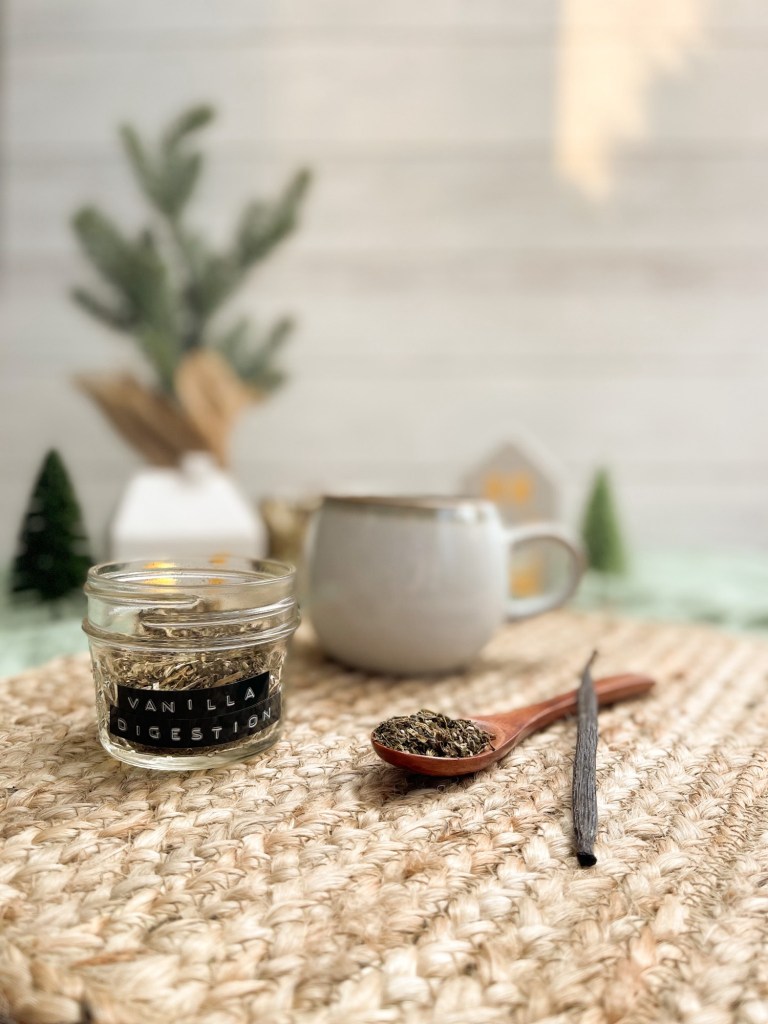
During this season of eating sweets and overindulging, a digestive-boosting tea like the Vanilla Digestion Tea I shared last year can be both helpful and tasty. An Immune Boosting Tea Blend can’t go amiss this time of year, either. Mushroom Coffee makes for a hearty and energizing, yet grounding, brew. Or check out the many other winter tea recipes in my Winter Tea Booklet in my Etsy shop.

Books

I am never at a loss for good books to read! Here I will keep the explanation short and simply share some links to books that are perfect for this season. 

Children’s books about Yule / the Winter Solstice / Wintertime (that are wonderful for adults, too):

The Shortest Day (Susan Cooper)

The Winter Solstice

Goodbye Autumn, Hello Winter

The Tomten

Flower Fairies of the Winter

The Shortest Day (Wendy Pfeffer)

The Nutcracker Ballet

Adult fiction and nonfiction – my recent cozy or cozy-adjacent favorites

Emily Wilde’s Encyclopedia of Faeries

Legends and Lattes

A Spell in the Wild

The Wake-Up Call

The Tale of Hilltop Farm (the Cottage Tales of Beatrix Potter)

The Hobbit

Kitchen Witch

A Morbid Taste for Bones (the Brother Cadfael mysteries)

Little Women

Slavic Kitchen Alchemy

Healing Herbal Teas

What cozy ways are you enjoying the Yuletide season?


For educational purposes only. Not intended for medical advice. Always consult your physician.

*This post contains affiliate links, which means if you choose to buy something from a link that I share, I will make a small percentage of the sale *at no extra cost to you*.
Categories
Recipes wheel of the year

Mabon Spiced Apple Cider

Mabon is almost here! Otherwise known as the Autumn Equinox, this sabbat marks the official beginning of fall, the second harvest festival, one of the two points in the year when day and night are equal, the height of preparations for the dark part of the year, and a day of thanksgiving and gratitude.

Depending on the year, my birthday falls right before or sometimes on Mabon (9/21), so it always feels *extra* special to me. I can always be counted on to make a bit of a fuss to celebrate the equinox! I suppose I may love fall so much because I’m a Mabon baby, but I think this most cozy, crisp, and magical time of the year would be my favorite regardless of my birthday.

My favorite flavor of autumn is…no, not pumpkin spice…but apple! And spiced apple, which is nearly the same as pumpkin spice, but with a different vehicle. I love pumpkin, don’t get me wrong—but apple will always be the flavor of September to me. So I am brewing up a simple and delicious batch of spiced apple cider for my family to enjoy this Mabon weekend.

In this recipe, apples are combined with vitamin C rich oranges and beneficial, warming, digestion-promoting, immune-boosting spices. This drink offers a cozy, warming, festive sip with many benefits!

Here is the recipe:


Materials—

½ to 1 gallon of fresh apple cider

2-3 apples, sliced

1-2 oranges, sliced

1 small to medium knob of fresh ginger, sliced, or 2 tsp dried ginger

2-3 cinnamon sticks

1-2 tsp whole cloves

1 tsp whole allspice

1-2 tsp freshly grated nutmeg

2-3 star anise

Method

To make a hot spiced cider, fill a large stock pot or slow cooker with the fresh apple cider, sliced apples and oranges, sliced ginger if using fresh, and cinnamon sticks. Place the rest of the spices in a cheesecloth bag or large eco friendly paper tea bag and add to the pot. Heat over low heat, stirring occasionally, and serve warm. 

If the autumn equinox is still quite warm where you live, you can make this as a cold drink instead! Place all the ingredients in a pitcher in the refrigerator overnight. Try mixing it with sparkling apple cider, ginger beer, ginger ale, or Prosecco for a fizzy twist!

What are you doing to mark Mabon / the autumn solstice this year?


For educational purposes only. Not intended for medical advice. Always consult your physician.

*This post contains affiliate links, which means if you choose to buy something from a link that I share, I will make a small percentage of the sale *at no extra cost to you*.