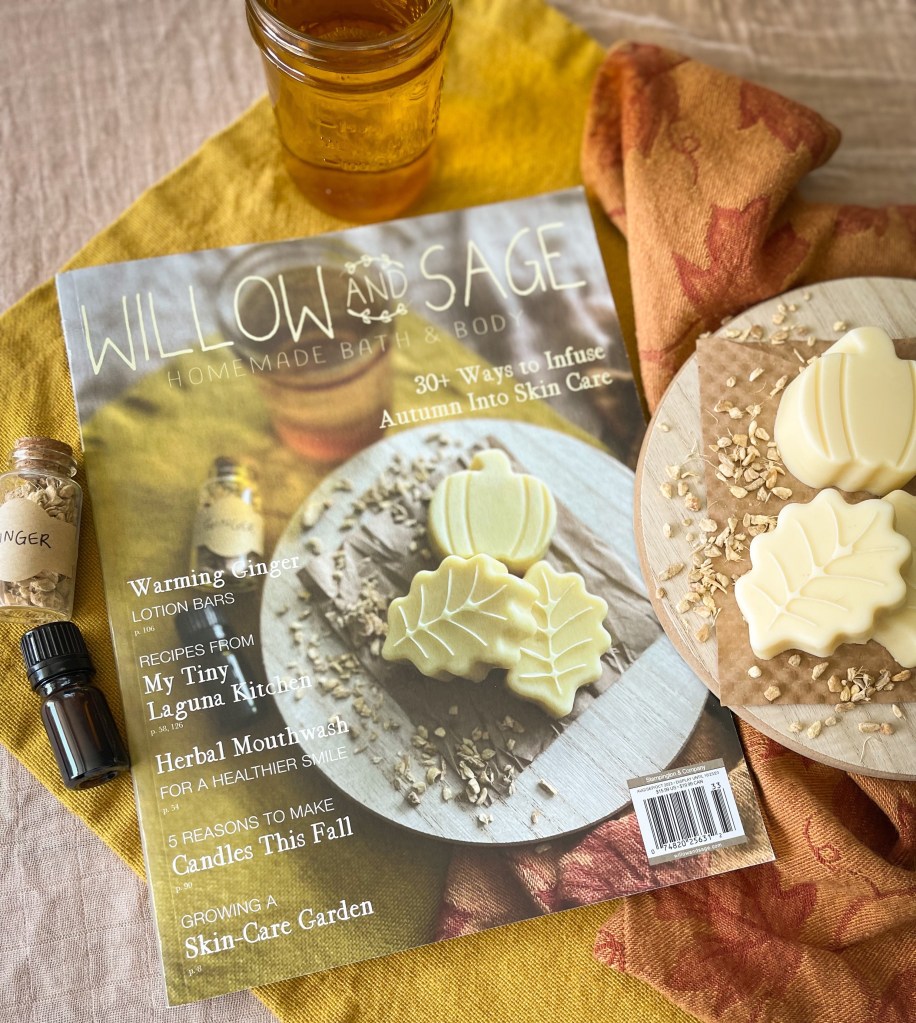
Have you ever read Willow & Sage magazine? It’s a lovely publication that shares recipes, crafts, gardening, uses, and packaging ideas for handmade botanical bath, body, and natural home products. Many creatives contribute these recipes, articles, and photos which make up this unique magazine.
I am so excited to share that a photo I took is on the cover of Willow & Sage magazine’s latest issue, and two articles I wrote are inside! You can find this issue at, among other retailers, Barnes & Noble and Joann, both of which I did on August 1 to see it out in the wild with my own eyes. I am very excited and proud to be a part of this publication!
I wrote the cover article with the recipe for warming ginger lotion bars, as well as an article and recipe for coffee and rose aromatherapy oil. I loved crafting these cozy and creative botanical projects, and I can’t wait to follow the other recipes in this issue to make some amazing creations by all the other contributors.
Thank you to Willow & Sage for this opportunity! I am so thankful for this chance to flex my creative muscles and brew up recipes such as these.
Thank you so much to everyone who purchases a copy or subscription of Willow & Sage, too! I am so grateful for all the ways you support my work.
I am so, so very excited to share with you about this labor of love, the Summer edition of Botanical Anthology, which is launching tomorrow, June 12!
I am personally more involved than ever in the production of this publication—aside from writing articles for it, I am now its copyeditor. I’ve worked closely with the magazine’s founder/editor, my friend Harmonie, on the design and content of this edition as well as editing all the articles. I can tell you that all 46 contributors are bringing amazing articles, recipes, and other content centering around summer and how to incorporate herbs in your apothecary, kitchen, spring foraging and gardening, crafts, and summer celebrations.
Here is a sampling of what’s inside:
* Whip up an itch soothing salve, steep a California poppy tincture + infuse an evening primrose oil
* Whisk a milky oats honey mustard, make watermint chocolate chip ice cream + bake a starflower cucumber cake
* Grow amaranth, make fertilizer with comfrey + learn why you should add herbs to your garden
* Create clay mushrooms, eco print with coreopsis + make sidewalk chalk
* Form summer rituals, build a Lion’s Gate altar + discover rose family folklore
* Celebrate Summer Solstice + Lammas with simple observances
* Meet Rebecca Desnos, Susan Leopold + Tiffany Jones
From June 12th – 21st, receive the Botanical Anthology Summer edition digital download, plus our lavender bonus booklet download, for just $18. Come next week, the lavender booklet will no longer be included, and the price will increase.
And now you can purchase a printed option via Amazon!! Plus we have gift card and digital subscription options on our website!
As a thank you for being here with me as a BLOG FOLLOWER, enjoy $3 off the publication with the code: BASummer23Take$3
Thank you so much for taking the time to read this message as I share my excitement about this magazine I am so lucky to be a part of. If you’d like to learn more about the publication and what’s inside, and consider buying your own copy, follow this link:
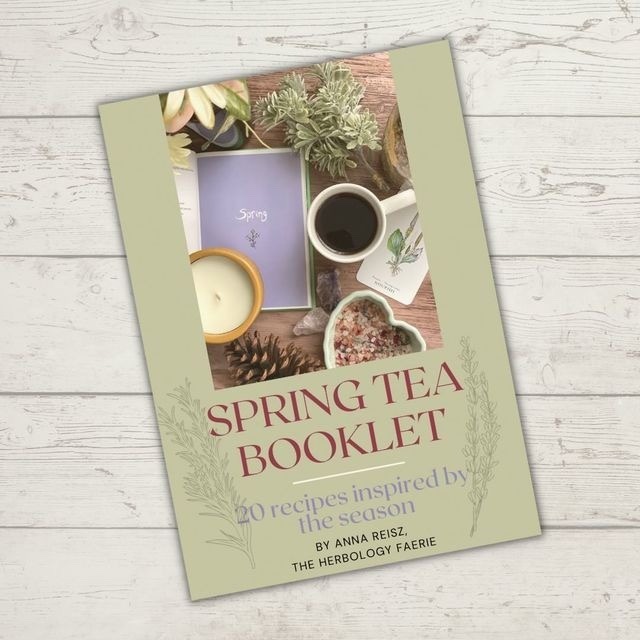
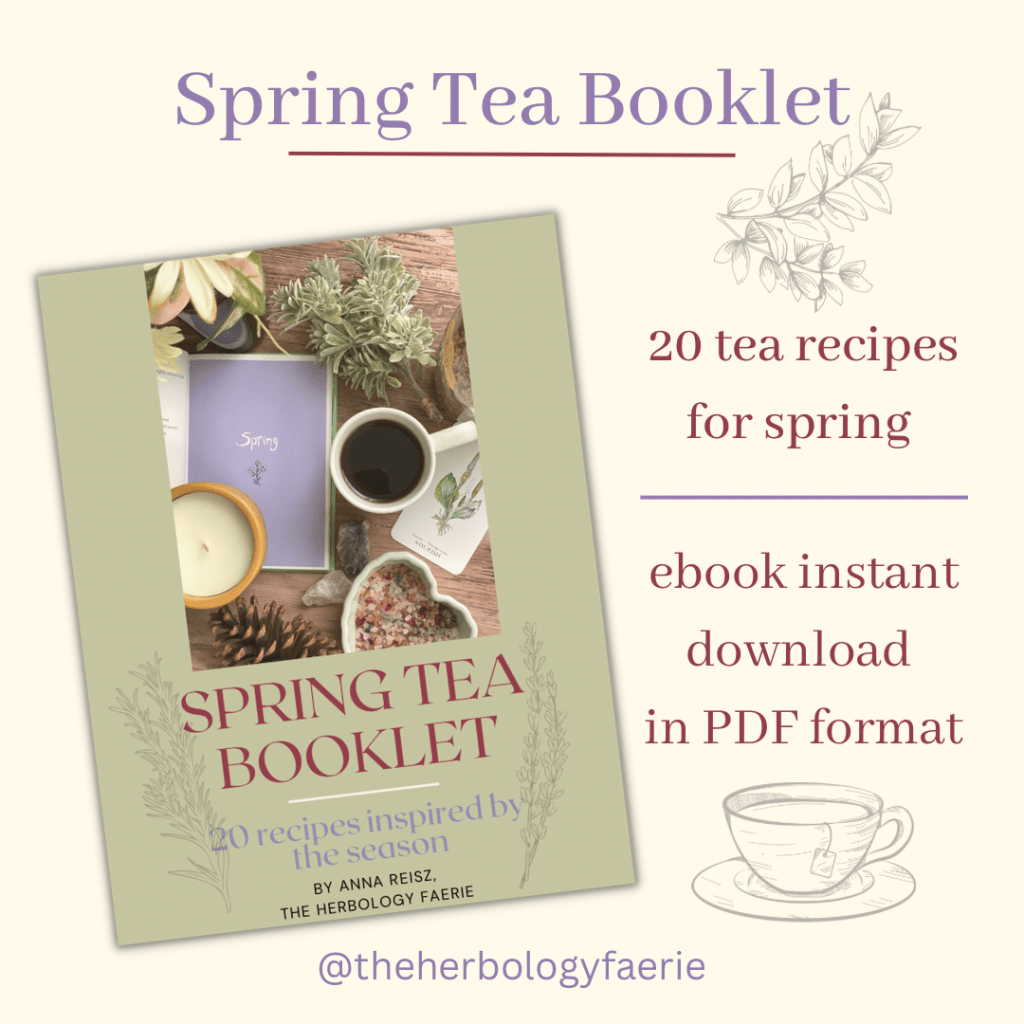
I am so proud to say that I’ve written a recipe ebook! It is available for purchase now in my Etsy shop, HERE.
The Spring Tea Booklet contains 20 tea recipes based on the season, nature, nature-based festivities, folklore, art, cozy aesthetics, and more! It also includes tips on tea-making and sourcing herbs and ingredients.
Lovingly created, written, photographed, and designed by folk herbalist Anna Reisz (me!!), this tea recipe booklet is a cozy and magical way to ground into the season. These recipes are approachable and perfect for anyone, from beginners to experienced tea blenders. Draw on the inspiration in these pages to create teas for self care, parties and special occasions, gifts, and more.
Recipes include:
Spring Full Moons (3 recipes) Persephone Ace of Wands Robin Cottagecore Anne Shirley Element: Air Spring Equinox Light Academia Spring Forest Intention: Creativity Spring Zodiac Signs (3 recipes) Beltane Brigid Beatrix Potter Spring Dreams
I am grateful to anyone who considers taking a peek at this creation that I am proud of and considers purchasing a copy. This cozy herb thing is something I do because I love it, and I am so happy when others think it is pretty cool, too. Your support helps me continue to be able to do this—learning, creating, and sharing.
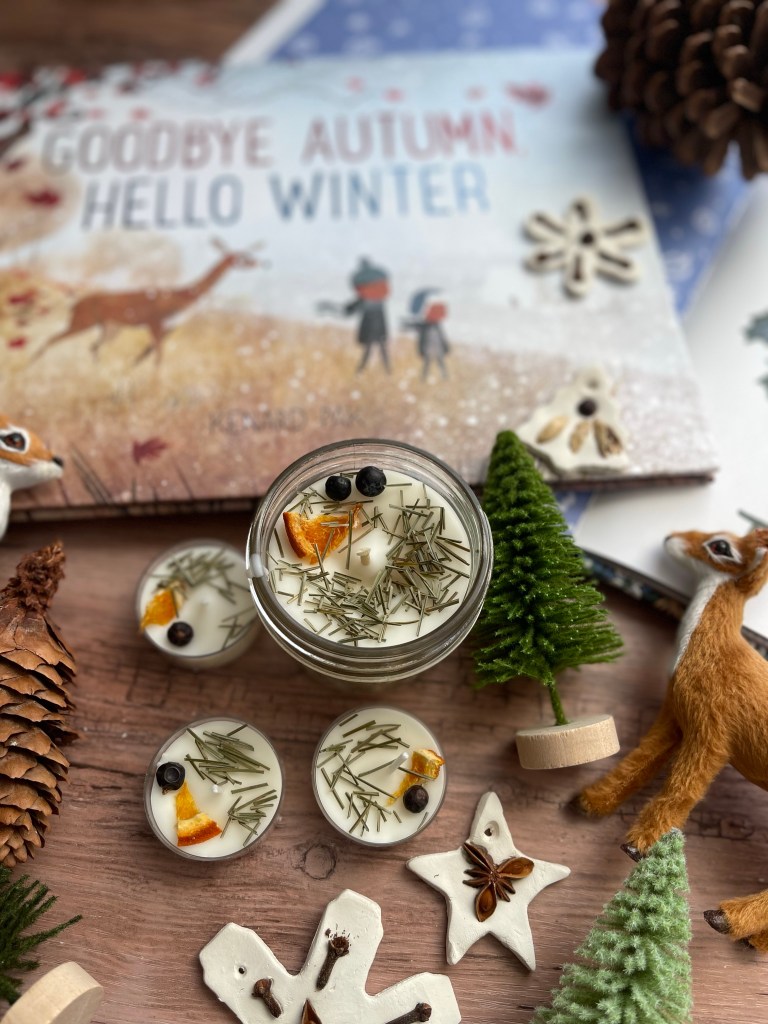
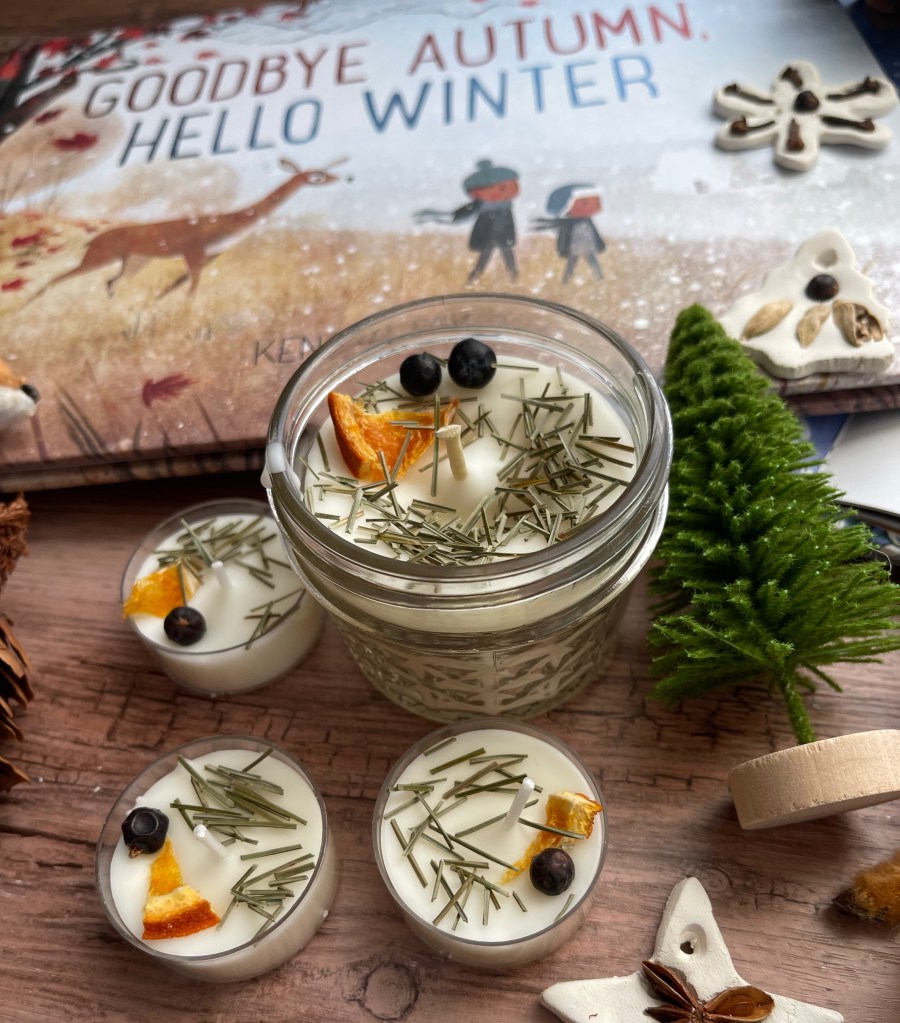
To celebrate the winter solstice and Yule, I have made some special candles to help mark the occasion as my family and I make (and eat!) cookies and read books about the solstice. Although it is the official beginning of winter, it is also the darkest night—and the light of our candles reminds us that the warmth of the sun shines through and will strengthen with each coming day. It is how people have long gathered their courage to face the winter’s cold: the returning of the light offers hope.
For my Yule Forest candles, I combined beeswax, a bit of coconut oil, and essential oils for a natural scent option. (Make sure you do your due diligence in choosing ethical essential oil companies to buy from 💚). Here are the scents I chose, along with their symbolic attributes:
Here are the directions for making the candles if you’d like to make some, too!
Making 6 candles:
We will enjoy the gentle light and wintry woods scent of one of these candles (I made 6 so I could gift the others to loved ones) while munching on chai snickerdoodles and reading. The pictured books (Goodbye Autumn, Hello Winter and the winter story from Little Witch Hazel) are a couple of our favorites to welcome the solstice.
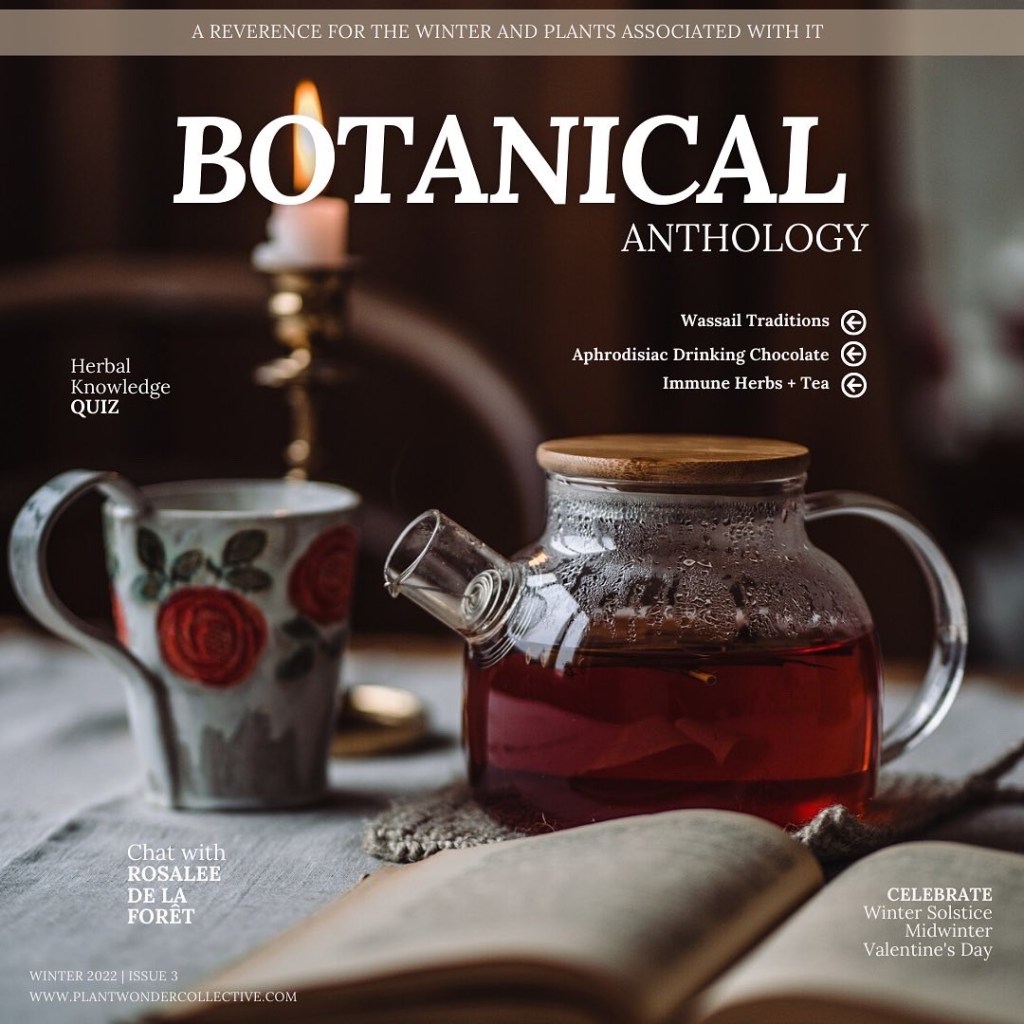
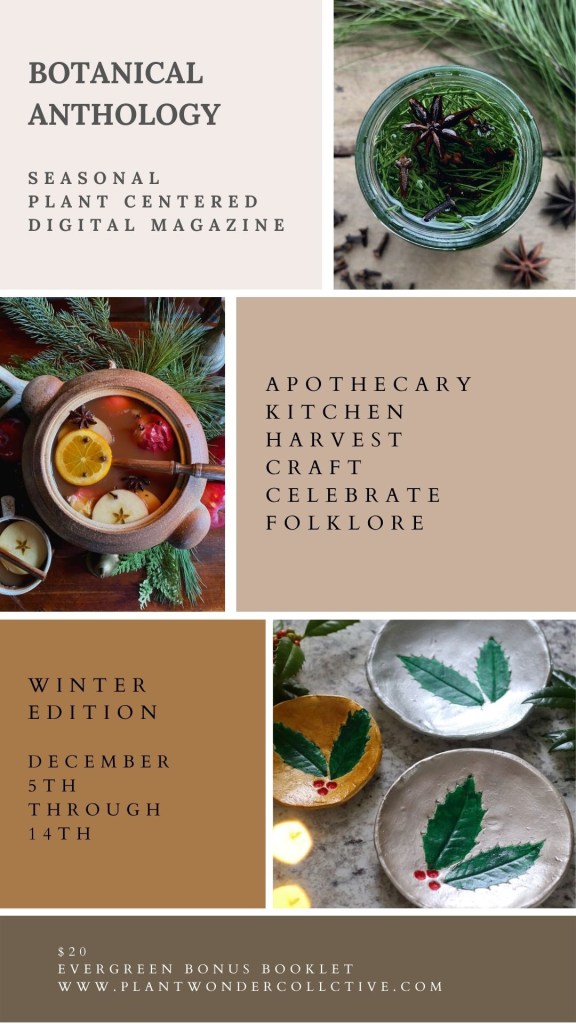
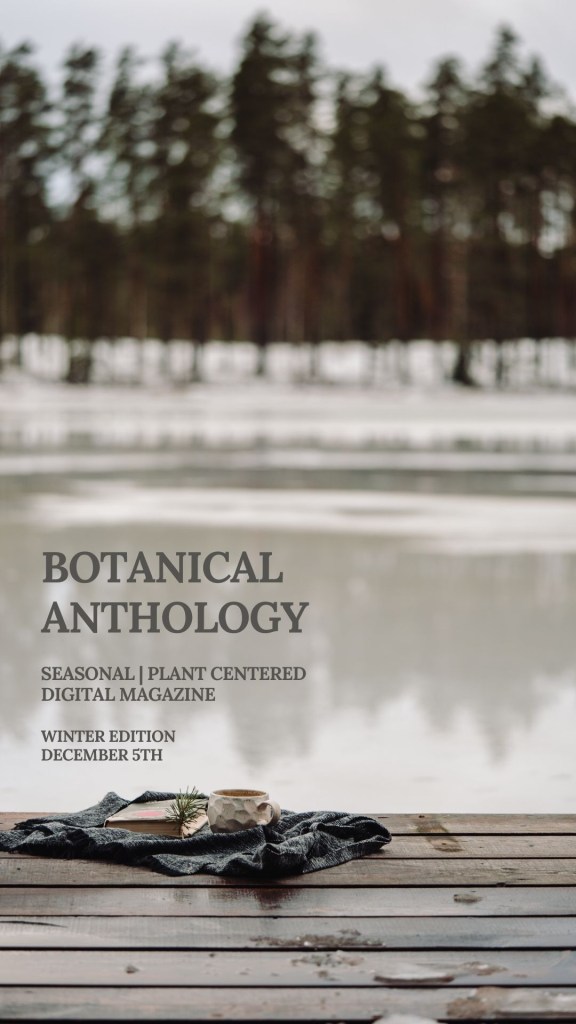
I am proud to say that the winter edition of Botanical Anthology, a plant-centered, seasonal digital publication with over 45 articles from 30 contributors, is available for purchase!
I am so excited for this beautiful publication to be out in the world, and so proud to be a part of it along with so many creative contributors. This issue is gorgeous and bursting at the seams with lovely, cozy, healing, creative, and meaningful ways to tap into the spirit of the winter season. I personally can’t wait to dive into all the inspiring lore, wisdom, recipes, rituals, crafts, and more.
In the winter edition, you’ll find articles, recipes, and ideas to help you:
*Sip on immune tea, miso broth, wassail + gingerbread golden milk
*Learn how to make ghee, gluten free sourdough and activated nuts
*Whip up hand sanitizer, a warming foot bath and body butter
*Forage wintergreen, raspberry stems and chaga
*Develop rituals + routines for the season ahead while listening to a winter playlist
*Weave wreaths, make trinket dishes + draw narcissus
*Celebrate Winter Solstice, Midwinter + Valentine’s Day with simple observances
And so much more!
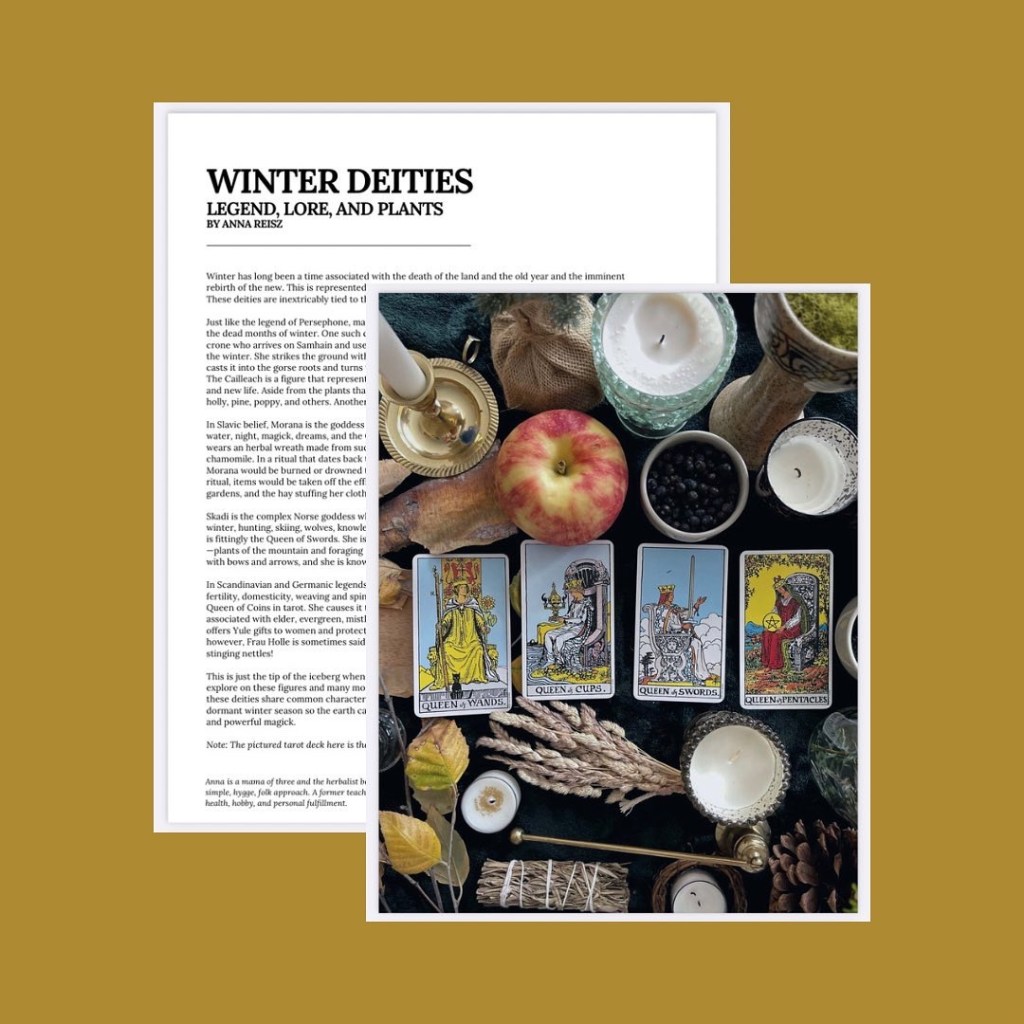
I contributed five pieces to this edition, including an article about immune-boosting herbs with a tea recipe, a piece about the folklore surrounding juniper, a deep-dive into a few winter deities and their plant associations, and a review of one of my favorite books about tea. I so enjoyed writing these articles, and I hope you get a chance to read them!
The Botanical Anthology is a seasonal digital magazine for plant and nature lovers with articles to help you incorporate herbs into your home apothecary, kitchen, foraging, crafts, and wintertime celebrations. It was founded by the Plant Wonder Collective, a group of like-minded plant lovers from a variety of backgrounds and walks of life who each have unique perspectives and approaches to share. Nurture your mind, body, and spirit through the winter season with the words and ideas from our hearts to yours!
Until 12/15, grab your copy for $20 and receive the bonus evergreen booklet. Download instantly and dive right into the 150+ pages of plant magic!
I can’t believe October is already more than halfway through! Life has certainly been busy over here in the Herbology Faerie’s apothecary. My children have been home for their two week fall break, my husband took a trip for work, there have been visitors and visits, sickness, and it’s just been a bit of chaos around here. But I have still been connecting with the plant world, so I am here to share a bit about that!
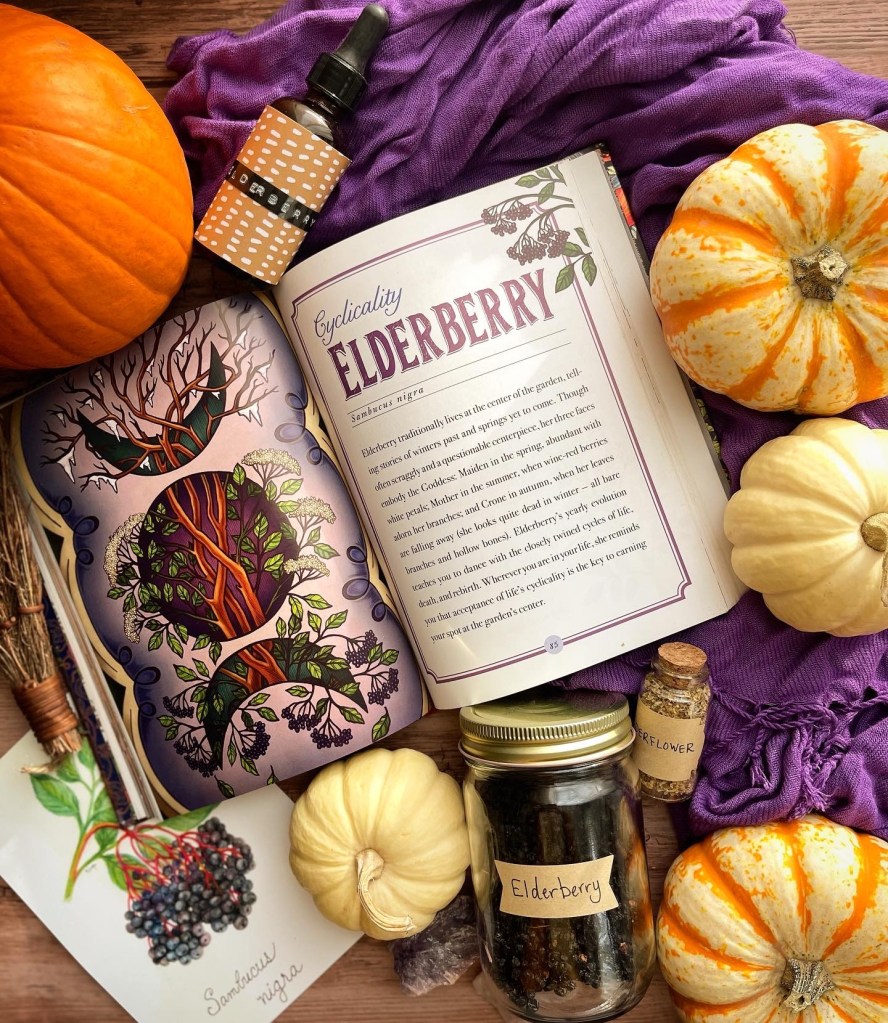
This month has been elderberry month at the Plant Wonder Collective! I have so enjoyed working with lovely elderberry this October. I have not yet had the time to write up a monograph post for elderberry this month, but I will try to do that before October is done. Meanwhile, here is a link to the Plant Wonder Collective’selderberry monograph post!
I have concocted a couple of fun elderberry potions this month which I have shared on Instagram. I’ll share them here, too, to make them easier to find. First up: an elderberry hot toddy!
Next, I shared the beginnings of my elderberry infused gin this week. It is still infusing, but I will be straining it soon and sharing a cocktail or two made with this lovely liquor. Here is the initial post about its creation!
I hope October is treating you well, friends! Perhaps you’ll find some inspiration here to connect with elderberry in your own ways this month, or in the months to come!
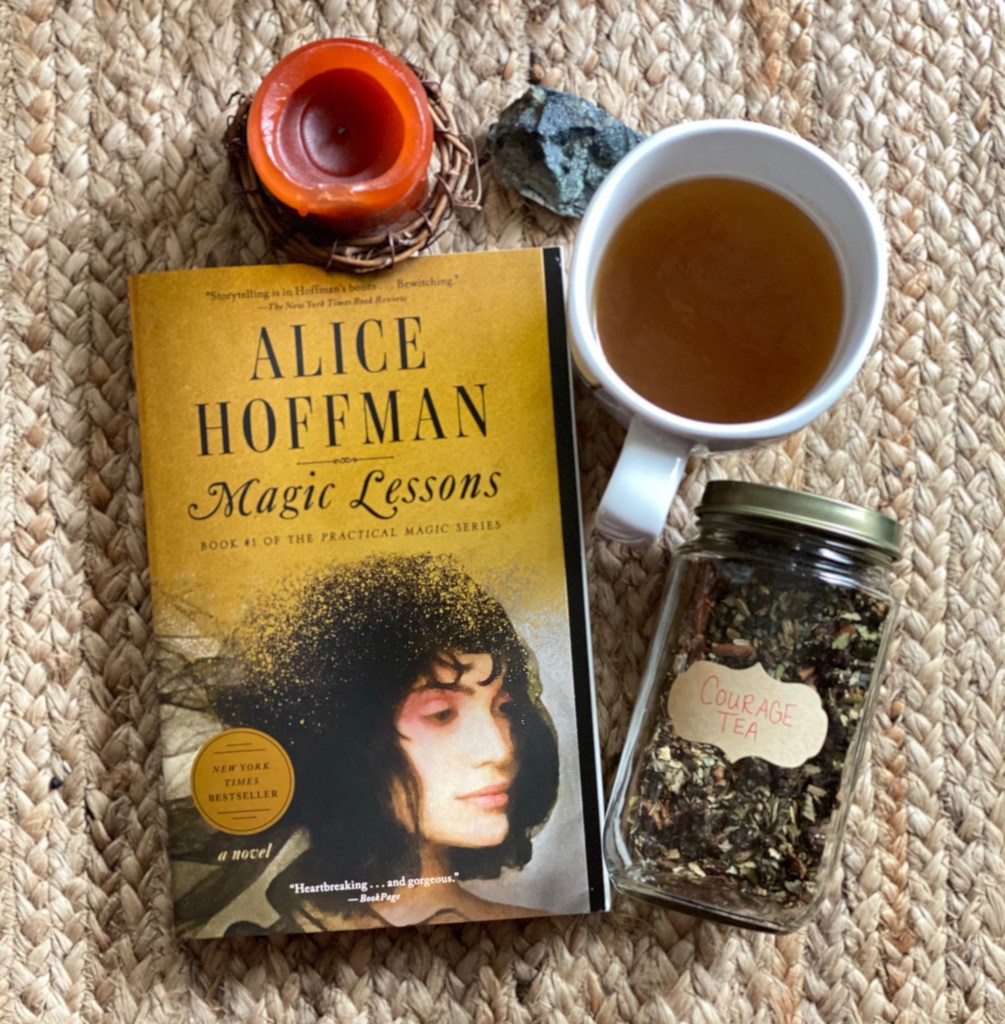
I just finished reading the third and fourth books in the Practical Magic series by Alice Hoffman, Magic Lessons and The Book of Magic. I do not exaggerate when I say these books have been life altering for me. They capture so much, I can’t even put a fraction of it into words. All I can say is, go read these magical books!
Now, a thread that runs through all the stories is courage: courage to love, courage to get hurt, courage to take leaps and trust others and trust yourself. This is illustrated throughout the books by the frequent mention of Courage Tea. It’s an old family recipe that dates back to the Owens women who started it all, Hannah and Maria. The recipe has been passed down through the centuries to bolster the Owenses in the face of all the trials and demands of life, as well as those in need they minister to.
Hints of the recipe are dropped throughout the series, but the whole recipe is never explicitly stated. As explained in The Rules of Magic:
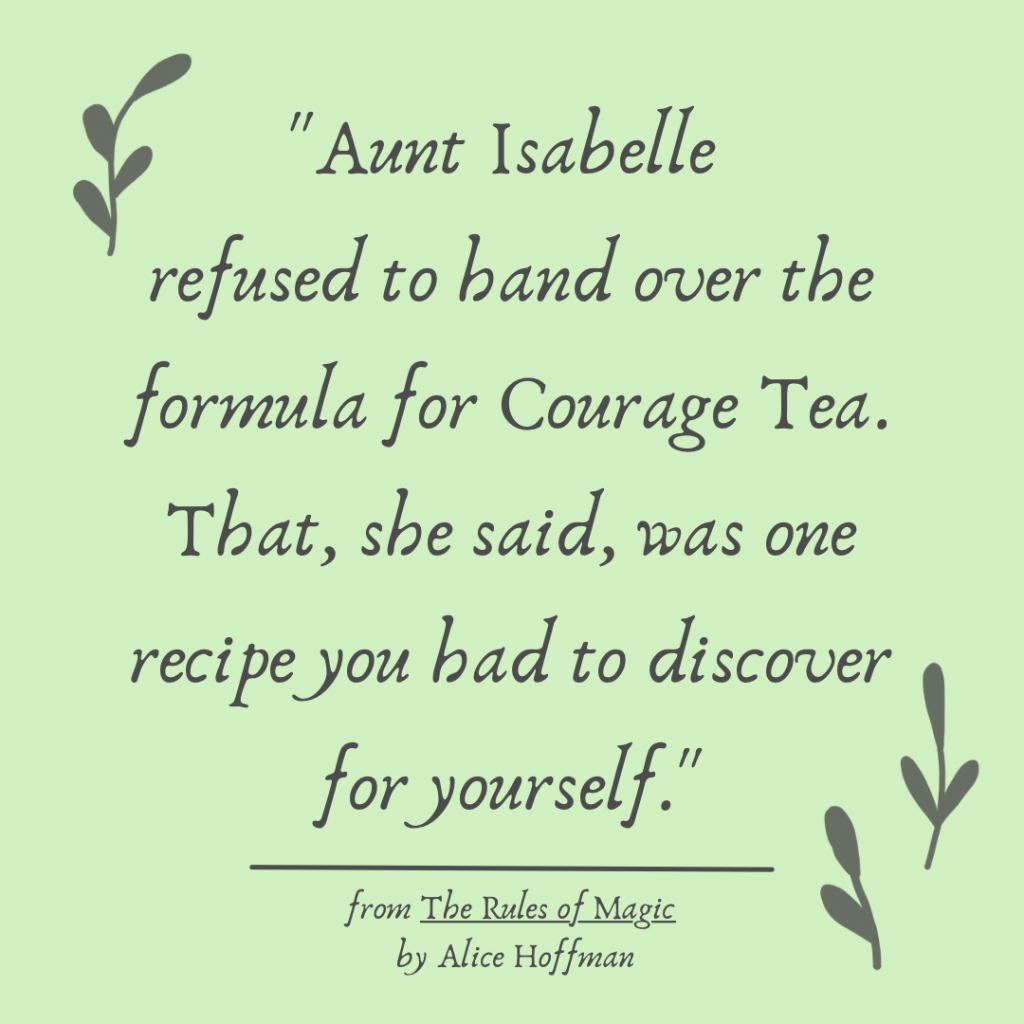
“Aunt Isabelle refused to hand over the formula for Courage Tea. That, she said, was one recipe you had to discover for yourself.”
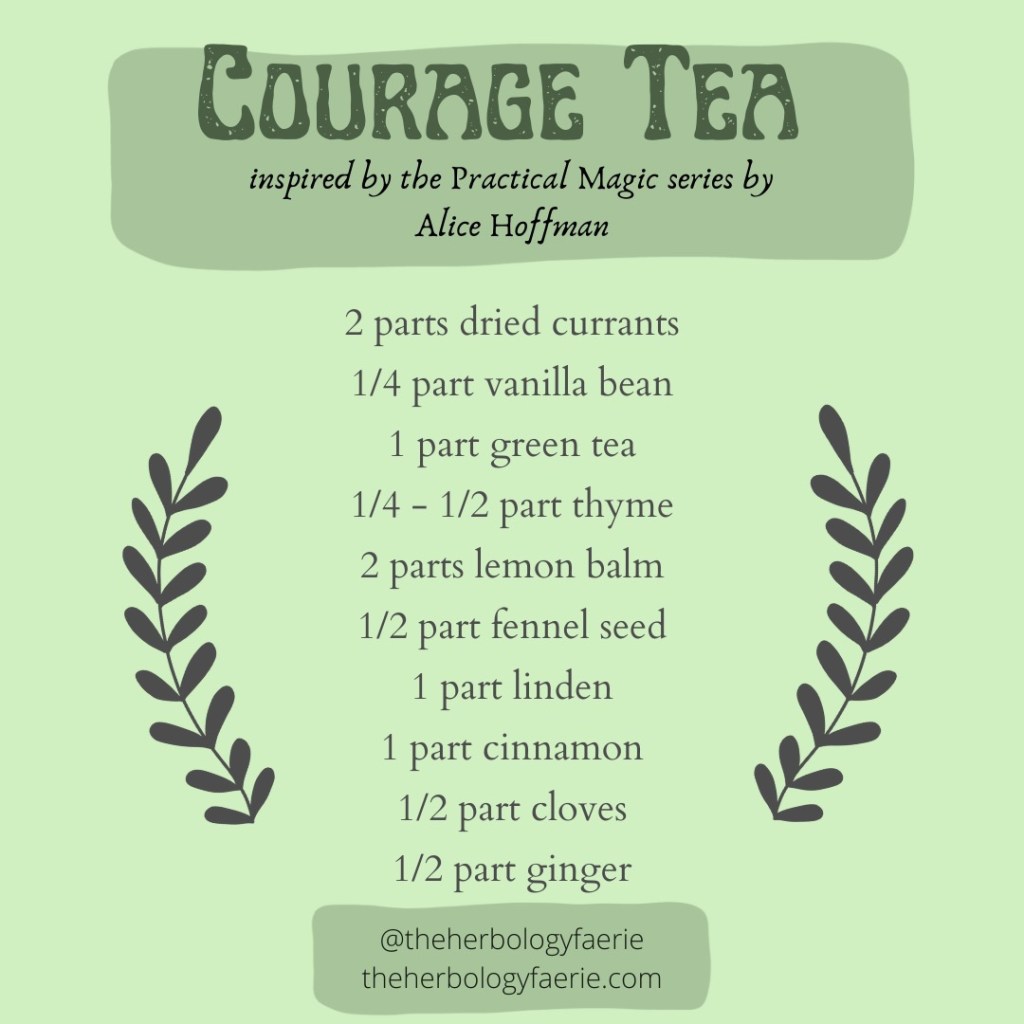
Piecing together the hints and clues of the Courage Tea recipe from the books is actually a pretty fun scavenger hunt. I’ve spent a good deal of time on this exercise, and have filled in the blanks with my own additions as Aunt Isabelle instructed. I encourage you to do the same and come up with your own version if you read the books! But until then, here is my interpretation:
To make a single cup of tea, add 1 tablespoon to a tea strainer, eco-friendly tea bag, or French press. Pour about 1 1⁄2 cups hot water over the tea and steep for 4 to 5 minutes. Add sugar or honey to taste, if desired.
(A few notes on ingredients: I found dried currants at the grocery store but they’re also sold online in some places. I use powdered vanilla bean in tea recipes because it is more affordable than whole vanilla beans while still imparting natural vanilla flavor; you can also add a dash of vanilla extract instead. You may want to adjust the thyme to taste based on how savory you like your tea to taste, as it can be quite strong. And, if you’d prefer a decaf version, you can leave out the green tea or replace it with rooibos.)
What would you put in your version of Courage Tea?
For educational purposes only. Not intended for medical advice. Always consult your physician.
*This post contains affiliate links, which means if you choose to buy something from a link that I share, I will make a small percentage of the sale *at no extra cost to you*.
(Note: This is NOT a sponsored post. All opinions are my own and I am not paid by any of the below mentioned herbalresources.)
I am a fledgling herbalist on a strict budget. I also want to make sure I am diversifying my educational sources. And, as someone whose goal is to practice home / folk herbalism on a personal level, I don’t need any specific certificate to legitimize my studies. (If you’re someone who does need those things and has funds to invest in your studies, I think that’s awesome! My point is just that it’s only one of many possible herbalist paths.)
Rather than spend what for me is a prohibitive amount of money on in-depth herbalist courses, I’ve taken a different approach. I have put together my own low-cost, piecemeal system for studying herbalism that moves at my chosen pace, prioritizes my values, and feels right to me. If this type of approach speaks to you, I encourage you to do the same! I am going to share a bit about my own journey here to perhaps give you a spark of inspiration and some possible starting points. But, I encourage you to try different methods and resources based on your own situation!
Books
Books are kind of an obvious resource, but it can be overwhelming to know where to start! That can obviously be very personal and dependent on your goals, too. To that end, here is a brief list of a few of my favorite herbalism books—
• Alchemy of Herbs by Rosalee de la Forêt
• Wild Remedies by Rosalee de la Forêt
• Healing Herbal Teas by Sarah Farr
• anything by Rosemary Gladstar
• The Illustrated Herbiary by Maia Toll
• DK Encyclopedia of Herbal Medicine
Patreon
I have recently begun following a couple herbalists on Patreon who share a wealth of monthly resources at reasonable prices (with varying tiers based on your needs and ability to give). There are many herbalists doing this on Patreon, and I think it is an amazing approach! I so appreciate these herbalists’ work and how they make herbalism affordable and approachable. Definitely do your own searching and find the herbalists on Patreon whose offerings are right for you. I have chosen to give my patronage to BIPOC herbalists—here are the ones I follow, in case you’d like to check them out—
• Medicine Mija, who is local to me, which is an added bonus in my case! You can also find her on Instagram at @medicinemija and she has a shop you can buy herbal goods, too.
• Folk Herbalism for Everyone, who goes by @thehillbillyafrican on Instagram. I love that she includes videos and podcasts, too!
Instagram
Building on that, Instagram is another great resource. There are too many herbalist accounts for me to even begin listing them here, but believe me when I say you can learn so much from them on insta. I’d recommend beginning by searching for the authors of your favorite herbalism books.
Actually…I can’t not share one particular Instagram account. Alexis Nikole, who goes by the handle blackforager, is a joy to watch. Her passion for educating others about foraging for wild and often overlooked foods is fascinating! Do yourself a favor and go follow and learn from her.
Apothecary At Home
I’ve blogged about it before, and I will continue to do so because it is such a great herbalism learning resource! Apothecary At Home is a monthly subscription study box that brings you herbs, supplies, educational materials, and more to help you further your studies at whatever your preferred pace is. It meets you where you are. And you have the option to select individual months based on your desired topics, if you need to be a bit choosy due to funds. The cost is fully worth it considering all the supplies and herbs you get for building your apothecary while you’re building your knowledge, though!
Herb Mentor
There are really good herbal schools that conduct online courses, but the cost can be a bit much for some (like me). However, I’ve found a unique and affordable resource in the platform Herb Mentor from LearningHerbs.com. It brings together a host of articles, monographs, videos, podcasts, herb walks, recipes, video courses, and more for herbalists of all levels and walks. The cost is really reasonable, the scope of information is useful, and the interface is easy to navigate. This is my go-to place to look things up and I love working through the courses at my own speed. ——
Whew! That was a lot. And it’s only the tip of the iceberg. If you are looking to further your herbal studies, there are so many paths to take, and not all of them have to cost a lot. What are some of your favorite ways to study herbalism?
If you read my previous Herbalism in Fictionpost, you know I have very specific taste in favorite books, namely varying types of fiction featuring herbalism and absorbing, immersive imagery and description. The next book I’m going to touch on is a new favorite of mine, but by no means new: Practical Magic by Alice Hoffman.
To preface: I’ve heard excellent things about the film; though I haven’t seen it yet, and am very excited to, I’ve heard the overall tone of the film and book diverge a bit. I have a feeling it’s one of those cases where they are separate pieces of fiction that stand up in their own ways.
The book is a complex and magical tapestry woven with strands of sisterhood, womanhood, family ties and legacies, love and loss, the magical and the mundane, uniqueness and self-acceptance. The story begins with two little orphaned sisters, Sally and Gillian Owens, who go to live with their elderly witch aunts in the family’s curious, mysterious old home in Massachusetts. As the girls grow up and go their separate ways, forging paths for themselves in life, they find themselves ultimately needing that family magic in their lives despite their efforts to grow away from it.
Practical Magic is a mixture of literary fiction and magical realism, with heartwarming notes, dark and spooky threads, cozy and immersive imagery, painful beauty, and just the right bits of levity thrown in the mix. It is really a unique work of literature that will really pull at your heartstrings and ignite your imagination if you’ll let it!
As far as this book’s herbalism connection, it is an inextricable part of the dense palette of the story. Lush, vivid descriptions of the aunts’ herb garden, frequent recurrences of lavender and rosemary, mention of concoctions and poisons, and THAT lilac bush (when you read it, you’ll know!) put this book squarely on my list. And the aunts’ house with its dark corners, chandeliers, big window seat, mysterious portrait, and self-dusting woodwork (yes, please!) add just the hygge element I’m always searching for in books, too.
I am so glad I finally read this book! Not only does it tick all my boxes, but the story itself is both deep and thought-provoking while also lovely and sweet, ultimately. And there are a few other books about the renowned Owens women in publication or to come, which promises more books for this list!
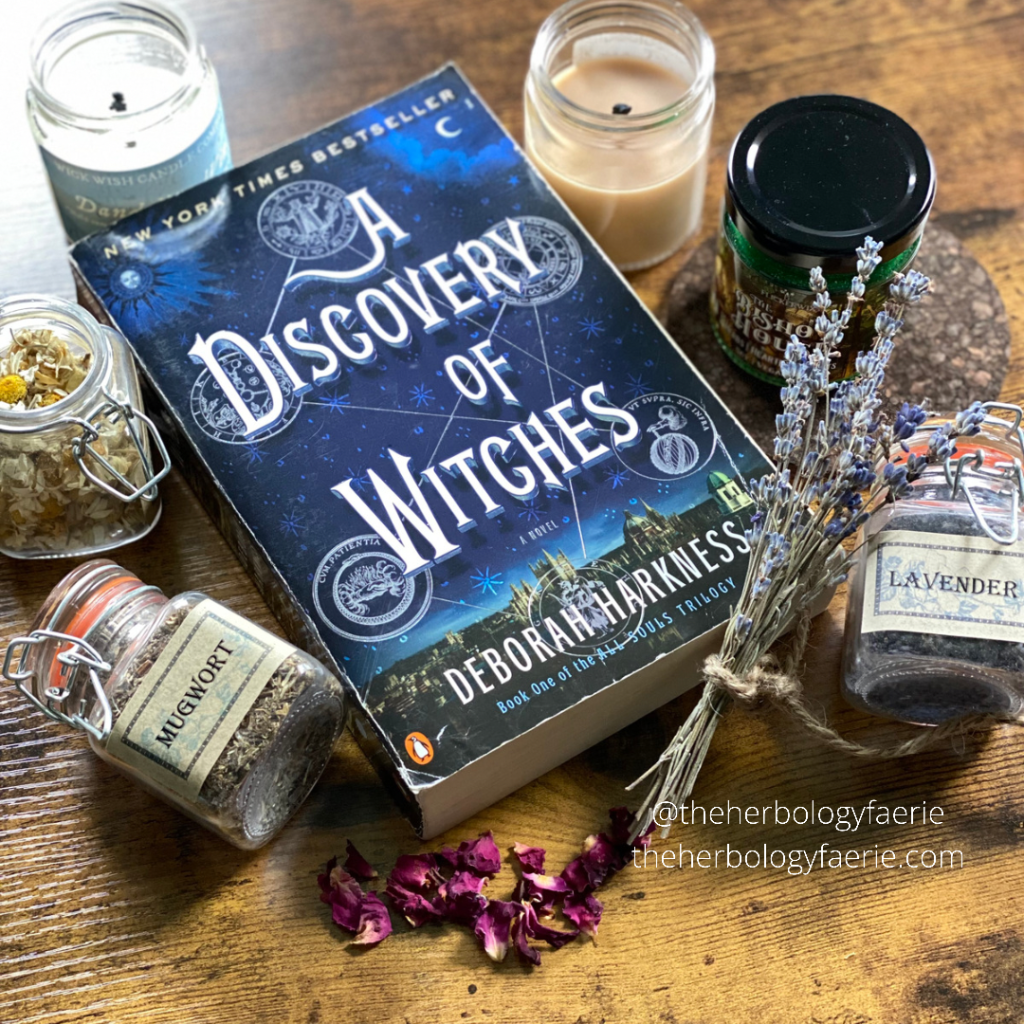
I have the most oddly specific favorite sub-genre of books: fiction (be it fantasy, mystery, historical, or otherwise) that includes heavy doses of herbalism and lush, immersive description. So, in case there are others who adore this type of novel, I am going to begin sharing my favorite books that meet those criteria here on the blog. The first book I’m featuring is A Discovery of Witches by Deborah Harkness (and the whole All Souls series).
The series follows Diana Bishop, a historian and witch who gets caught up in dangers and deceptions after discovering a lost magical book in the Bodleian Library. Having once shunned her powers, Diana must finally come to terms with them to find out what the book means and what it has to do with her. The story also centers around the two other types of creatures, vampires and daemons, and the dynamics and traditions between these three groups of otherworldly beings. Add in romance, ghosts, time travel, real historical figures, science, mysteries, intrigue, dark secrets, and also lovable characters and inviting settings, and you’ve got this thoroughly gripping series in as good a nutshell as I can manage to stuff it into. These books contain magical multitudes.
But I’m specifically here to heap praise on this series for its hygge herbology connections. There is so much to love in these books in that regard! I adore the very lovingly-detailed descriptions of the teas Diana loves and how she takes them, the scenes involving the harvesting and blending of a particular type of herbal tisane at a castle in France (I can’t elaborate because, spoilers), and the unique descriptions of each character’s particular botanical scent. There are viscerally-appealing, incredibly immersive descriptions of locations like dark, antiquarian libraries and cozy Oxford haunts that really stick with you. And don’t even get me started on the depth of detail in the installment that primarily takes place in Elizabethan England.
But far and away, my favorite parts of these books take place in Diana’s witch aunts’ colonial family home in upstate New York. You can hear every creak of the floorboards, smell the mixed scents of wood smoke and coffee and herbs, and feel the weighty presence of the family ghosts in every word. The aunts’ witch’s garden brims with herbs, and there just aren’t enough scenes spent in Sarah’s dark still room with dried aromatic plants and her old coffee-maker-turned-cauldron. The sense of safety and family Diana feels here, even if she tries to deny it at times, is utterly palpable to the reader.
So, all that wordiness to say, if you like this stuff, then read these books! They are my literal favorite books of all time and I will not disclose how many times I have read them. Until you get on the train and come back to tell me how right I was!











 The Herbology Faerie