Categories
Herbs and Herbalism seasons

Herbs to Love in June

June is here! For my family that means trips to nearby and faraway lakes, balmy-breezy backyard days, jar after jar of fresh herbal sun tea, and strawberries galore. Summer is here in spirit, even before the solstice has occurred, and we feel it on our sun-warmed shoulders. 

To that end, here are some of my favorite June plants!
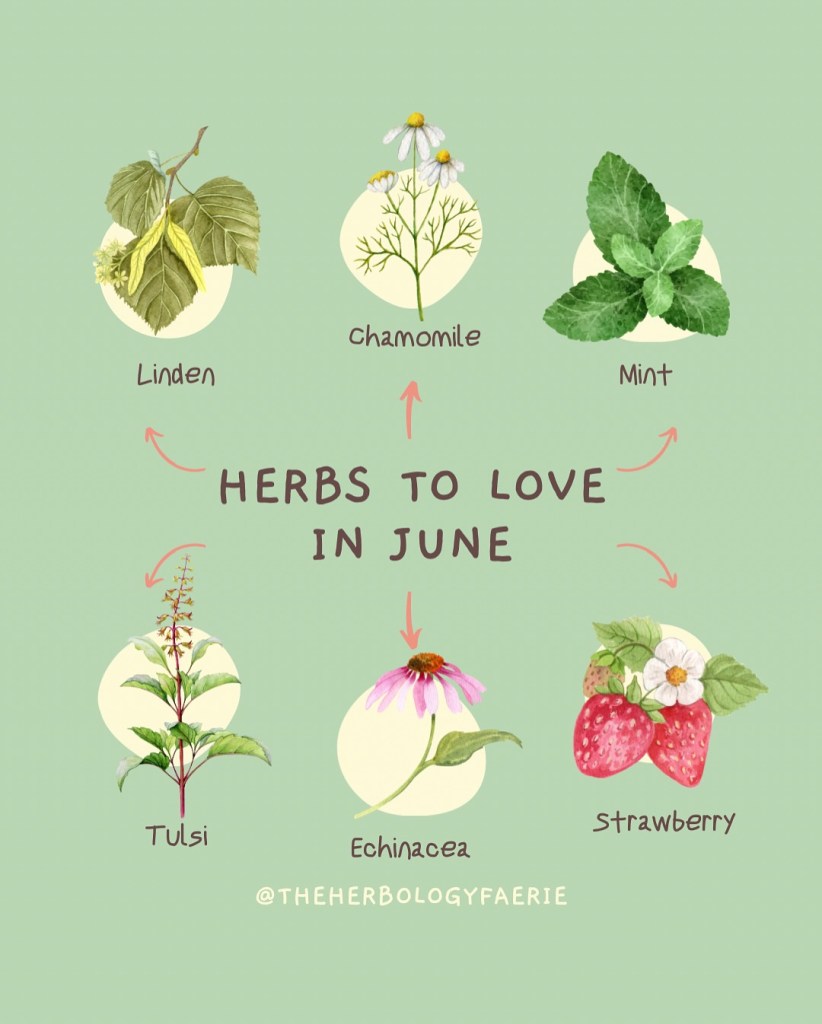
Linden: the herb of the month with the Plant Wonder Collective this June, my local linden trees aren’t in bloom yet but I have some lovely, high quality dried linden leaf and blossom to work with. This gentle, soothing herb is perfect for refreshing and calming with its moist, cooling action, making it perfect for summer. I plan to make the most of working more closely with this herb in tension-taming recipes, inside and out! Whether applied to sunburn, added to cooking baths, or dipped in chilled herbal concoctions, I have a feeling linden will become a summertime staple for me and my rambunctious kiddos. Stay tuned to see how I work with it throughout the month!

Chamomile: these joyful, sunny blooms begin to really take off in my garden in June! I love sipping soothing chamomile on summer evenings to wind down, pairing it with strawberries in fresh and baked treats, and even just burying my nose in their little delicate blooms as I harvest them. I always make sure to dry at least one jar’s worth despite feeling greedy to enjoy it all fresh—because there is nothing like the honey-sweet scent of freshly dried chamomile when you open the jar and stick your nose in. It is true garden magic!

Mint: mint is so easy to grow, it thrives in June, and my kiddos love tending their own pots of it. I love making skin-soothing fresh hydrosols on my stovetop with mint! It’s easy to do and when stored in the fridge in a little mister bottle, it is the best thing ever to spritz onto sunburned skin or even just your overheated face after toiling away in the garden under the summer sun. I also adore adding mint to every cold drink I make in the summer, be it tea, lemonade, mocktail, or cocktail. 

Tulsi: it is my first year to grow tulsi in my garden, and I couldn’t be more thrilled! This amazing herb is beloved by plant nerds, and for good reason. Also called holy basil, and sacred in Ayurveda, it is the queen of herbs and a boon to mind, heart, body, and spirit. Though energetically it is gently warming and drying, it is still lovely in the summertime (perhaps I’m a good candidate as I can feel so soggy and wrung out in the hot weather). I plan to brew many jars of fresh tulsi chai to enjoy on ice this summer—here’s to that extra tulsi pep in my step!

Echinacea: I have recently fallen in love with this native species which begins to fan out its showy blooms in June where I live. It is more than just a cold remedy! Echinacea attracts pollinators to the garden, and planting it is a small act of giving back to the earth as the species has suffered from over-harvesting. Echinacea represents inner strength, healing, and prosperity. 

Strawberry: ripe for the picking, sweet strawberries are a June staple! So much so, that June’s full moon is often called the Strawberry Moon. These berries’ sweetness is the perfect pairing with many other herbs: with chamomile in shortbread, popsicles, or cakes; with lavender in delicious cocktails; with lemon balm and lemons for a super relaxing lemonade drink; with thyme, in a surprising savory-and-sweet combo; and the list goes on. 

Which herbs do you love in June? 
Categories
Botanical Anthology Recipes Tea

Jemima Puddleduck Tea

My love for Beatrix Potter knows no bounds. I wish so very much that I could sit down to tea with her and learn about her fascinating life! She was far more than just an author and artist: a studied naturalist, a conservationist, an entrepreneur, a generous benefactor to many causes, and an accomplished farmer and gardener.

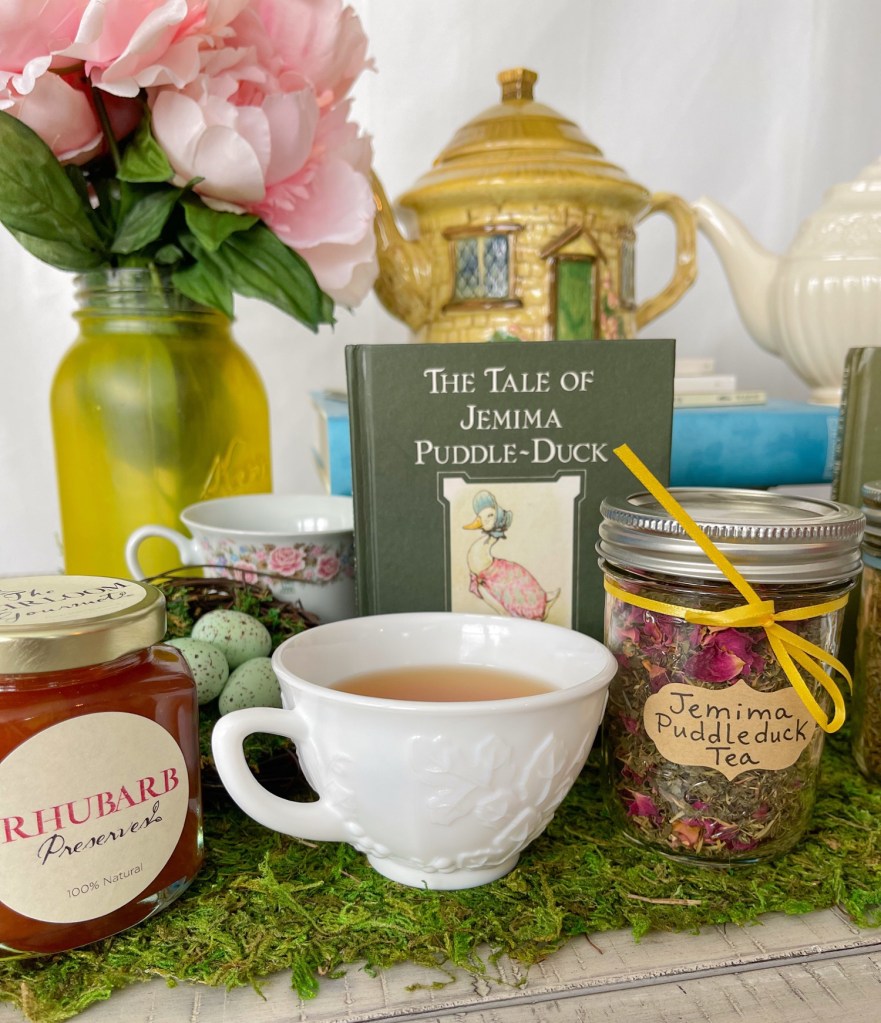
One of my favorite tales by Beatrix Potter is that of Jemima Puddleduck. Poor Jemima—she just wants to be left alone to sit on her own nest of eggs. The farmer’s wife and children always seem to find her hiding spots, such as the rhubarb bush, and retrieve her eggs for the hen to warm instead. So, Jemima searches out a secluded spot in the woods to hide her nest, only to be offered a shed by an overly-polite foxy gentleman. More unforeseen events befall Jemima, but in the end she avoids catastrophe and hatches four ducklings on her own.

I created an herbal tea blend inspired by Jemima’s story, which includes the mint and thyme the fox requested for their dinner party, roses seen in an illustration of the garden, and rhubarb from the bush she attempted to hide her eggs in. (This tart tea is made with botanicals appropriate for a Beatrix Potter-themed baby shower, children’s birthday party, or Easter brunch!)


Materials

2 parts mint

½ part thyme

1 ½ parts rose petals

Rhubarb preserves or simple syrup

Method

To make a single cup of tea, add 1 tablespoon to a tea strainer, eco-friendly tea bag, or French press. Pour 1 to 1 ½ cups hot water over the tea and steep for 3-4 minutes. Sweeten to taste with a bit of fruit preserves or simple syrup, if desired. (Strawberry can easily be substituted for rhubarb!)

———

This recipe was originally published in the spring 2023 issue of Botanical Anthology


For educational purposes only. Not intended for medical advice. Always consult your physician.

*This post contains affiliate links, which means if you choose to buy something from a link that I share, I will make a small percentage of the sale *at no extra cost to you*.

Categories
Herbs and Herbalism Recipes

Orange & Herb Infused Sugar

I love making herbal sugars! They are so versatile, and can be used for so many things—like to sweeten tea and hot beverages, adorn a mocktail or cocktail glass rim, sprinkle on sugar cookies / shortbread cookies / other baked goods, add pizzazz to oatmeal, and even to make a batch of sugar scrub for botanical skincare purposes!

Orange is the star of this particular blend of herbal sugar. With its bright, tangy flavor, vitamin C punch, and complexity of bitter + sour + sweet, it adds depth and delight. 

Orange offers so many nutritional and medicinal benefits. It aids the immune system, the heart, addresses inflammation, offers antioxidant benefits, and a host of other perks!

Herbal sugars can be utilized for ritual and spiritual purposes, too, and orange shines in this role. Orange is associated with love, joy, prosperity, luck, and divination. You could certainly change up the ingredients to suit your intentions, but the following recipe would certainly boost intentions of sweetness, joy, and love!


Orange & Herb Infused Sugar

Ingredients

Method

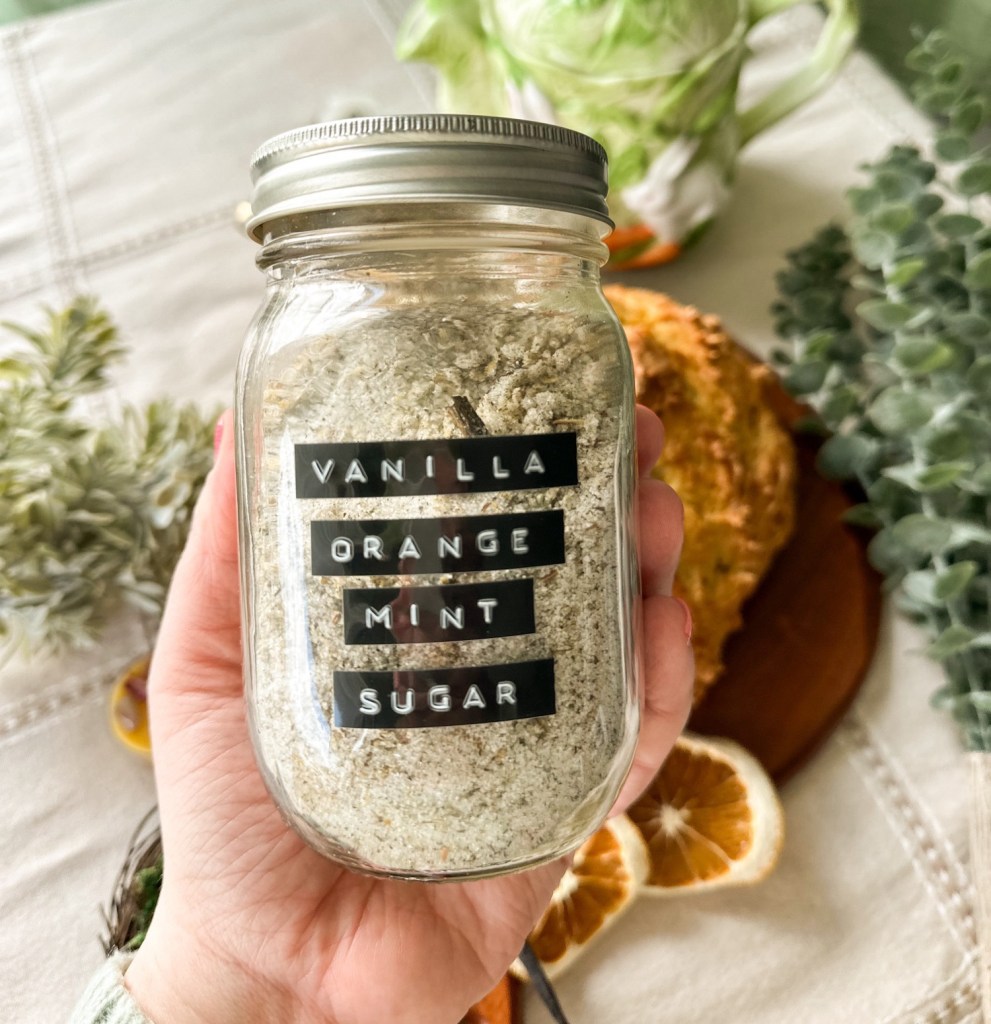
Mix white sugar, fresh orange zest, peppermint, and one vanilla bean (split and scraped, then the whole bean tossed in) in a bowl. Then spread it out to dry awhile on a cookie sheet before transferring the mixture (including the vanilla bean) to a jar. The vanilla bean will continue to impart its sweet flavor in the sugar and it will only get better!

Let the jar sit tightly lidded for a few days to infuse with all the lovely orange oil and vanilla before using it in all the delicious and creative ways you can imagine!


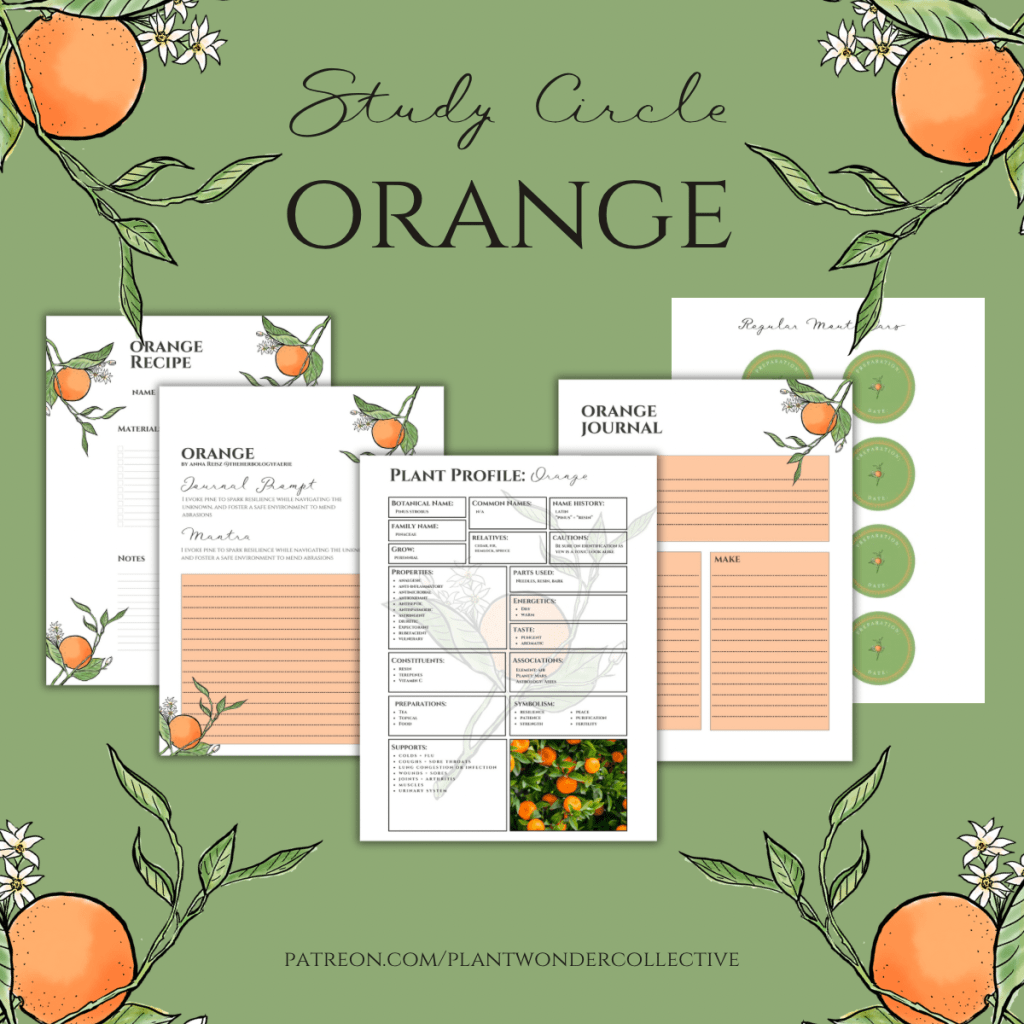
It is ORANGE month at the Plant Wonder Collective Patreon Study Circle! If you’d like to support the work of PWC, please consider joining our Study Circle for exclusive recipes, articles, digital downloads and printables for the plant of the month.


For educational purposes only. Not intended for medical advice. Always consult your physician.

*This post contains affiliate links, which means if you choose to buy something from a link that I share, I will make a small percentage of the sale *at no extra cost to you*.

Categories
Recipes Tea wheel of the year

Yule + Winter Solstice Tea Blends

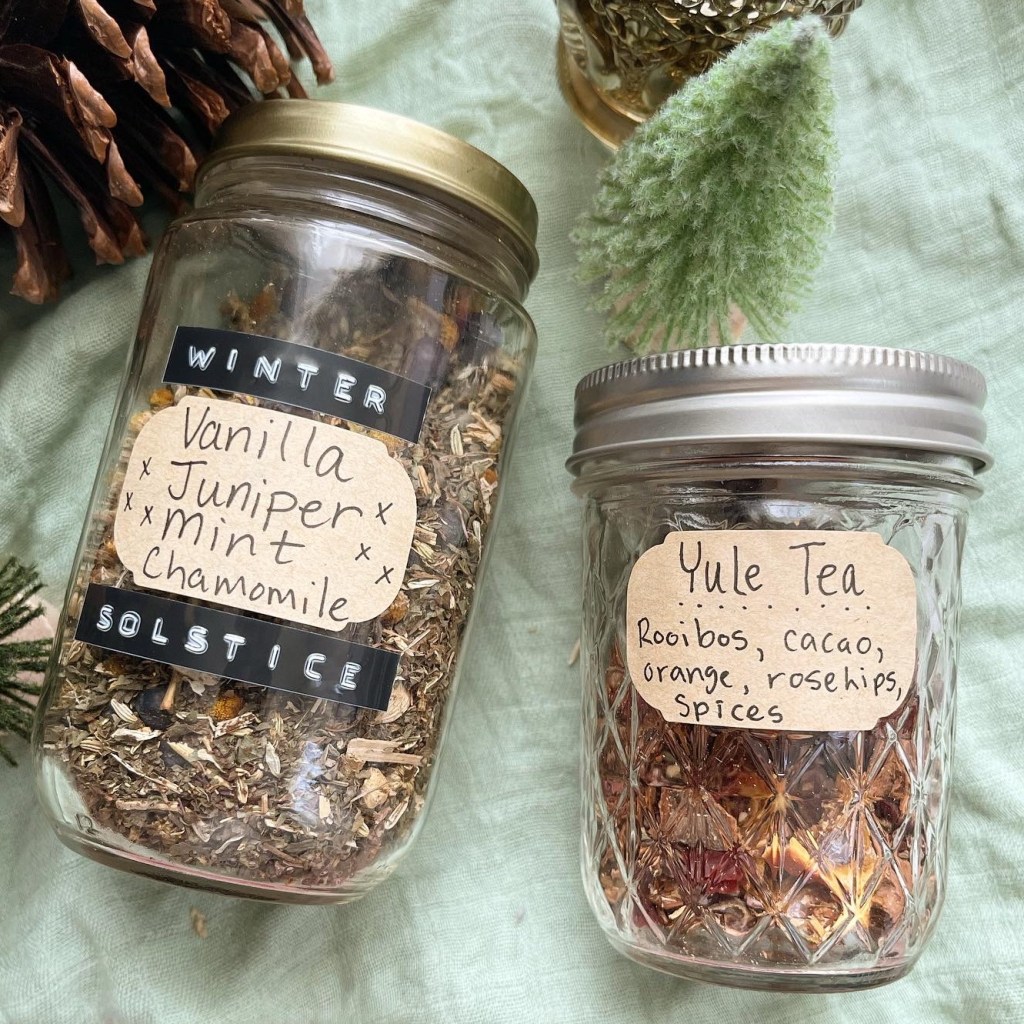
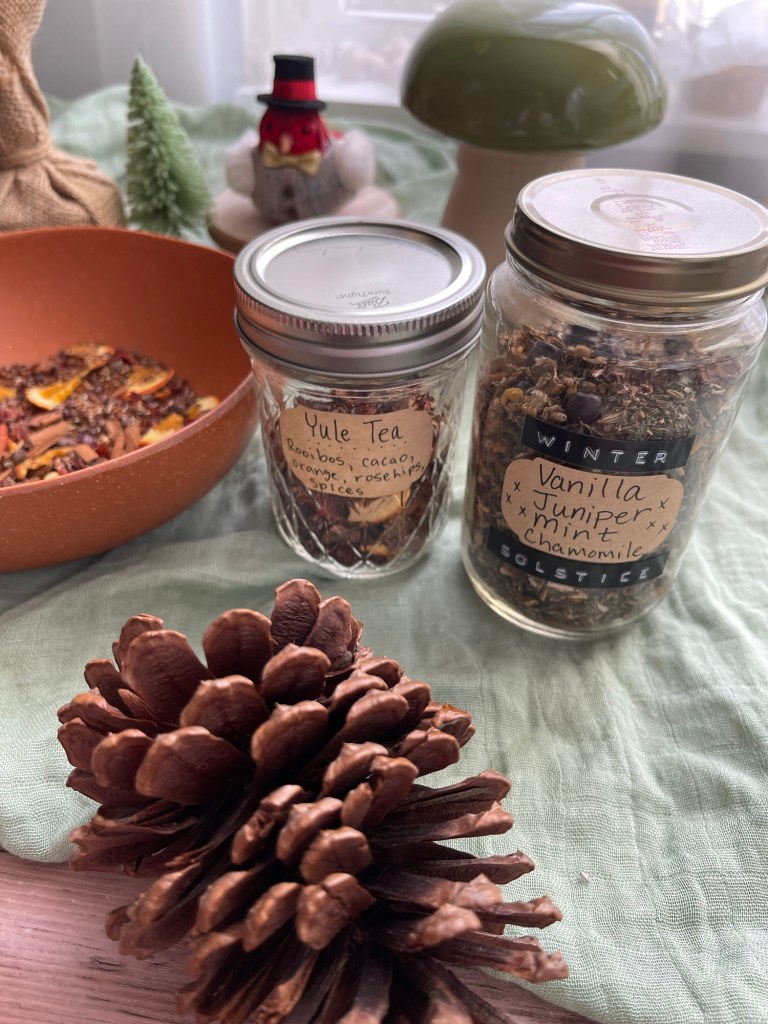
Today I’m sharing two herbal tea blends to enjoy for Yule // the Winter Solstice!

The Yule Tea blend is a sweet and festive spiced sip, full of immune-boosting ingredients that taste lovely. The combo of orange and spices is traditional for the season, in part because of those properties and in part because of associations with protection, divination, prosperity, and luck derived from them.

Yule:
1 tsp rooibos
1 tsp cacao nibs
½ tsp orange peel
½ tsp cinnamon pieces
½ tsp rose hips
¼ tsp allspice berries
¼ tsp star anise
¼ tsp nutmeg

The Winter Solstice Tea tastes decadent like a holiday cake, but without the heartburn or feeling of overindulgence! With soothing herbs that promote digestion, relieve pain, and aid in circulation, it’s like a sweet, warm hug. And chamomile represents the sun that returns brighter each day after the solstice; juniper is a powerful talisman of winter protection, cleansing, and luck; and the other botanicals have ties to healing, love, and luck, too.

Winter Solstice:
1 tsp chamomile
1 tsp mint
½ tsp meadowsweet
½ tsp cinnamon pieces
¼ tsp ginger
¼ tsp vanilla bean powder or ¼ a vanilla bean
4-5 juniper berries
2-3 cardamom pods

To brew—

To make a single cup of tea, add 1 tablespoon to a tea strainer, eco- friendly tea bag, or French press. Pour 1 to 1 ½ cups hot water over the tea and steep for 3-5 minutes. Add honey or maple syrup to taste, if desired.


For educational purposes only. Not intended for medical advice. Always consult your physician.

*This post contains affiliate links, which means if you choose to buy something from a link that I share, I will make a small percentage of the sale *at no extra cost to you*.

Categories
plant wonder collective Recipes Tea

Headache Helper Tea

I recently had a friend dealing with recurring tension headaches ask what herbs might be helpful in a tea to offer him some relief. (He is also being treated by his doctor, but needed some additional gentle diy to help relax his frazzled nerves and throbbing head & get him some sleep!) 

Oatstraw immediately came to mind. They’re a wonderfully gentle soother for frayed nerves, burnout, overwhelm, stress, tension—all things that lack of sleep and depletion from migraines and tension headaches can cause. 

In addition to the oatstraw, I added damiana (a headache-easing favorite of mine), calming linden, sleepy passionflower, and cooling peppermint to the batch of tea I made for my friend. He reported back that the tea was very helpful and he got a decent night’s sleep after drinking his first cup!

To make a big batch to keep on hand, choose a larger unit of measure such as a quarter cup or half cup for your parts. For a single mug of tea, choose a small unit of measure – I’d suggest half teaspoons (it will still make a very strong cuppa, or two cups). 

Here is the recipe:


Ingredients

4 parts oatstraw

4 parts damiana

3 parts linden

2 parts passionflower

2 parts peppermint 

Directions

To make a single cup of tea, add 1-2 tablespoons to a tea strainer, eco-friendly tea bag, or French press. Pour 1 to 1 1⁄2 cups hot water over the tea and steep for 4-5 minutes. Add honey or other sweetener, if desired. 


What are your favorite herbal tea ingredients to help combat headaches?


For educational purposes only. Not intended for medical advice. Always consult your physician.

*This post contains affiliate links, which means if you choose to buy something from a link that I share, I will make a small percentage of the sale *at no extra cost to you*.

Categories
Hygge Recipes Tea

Happy Hobbit Weekend & Tea!

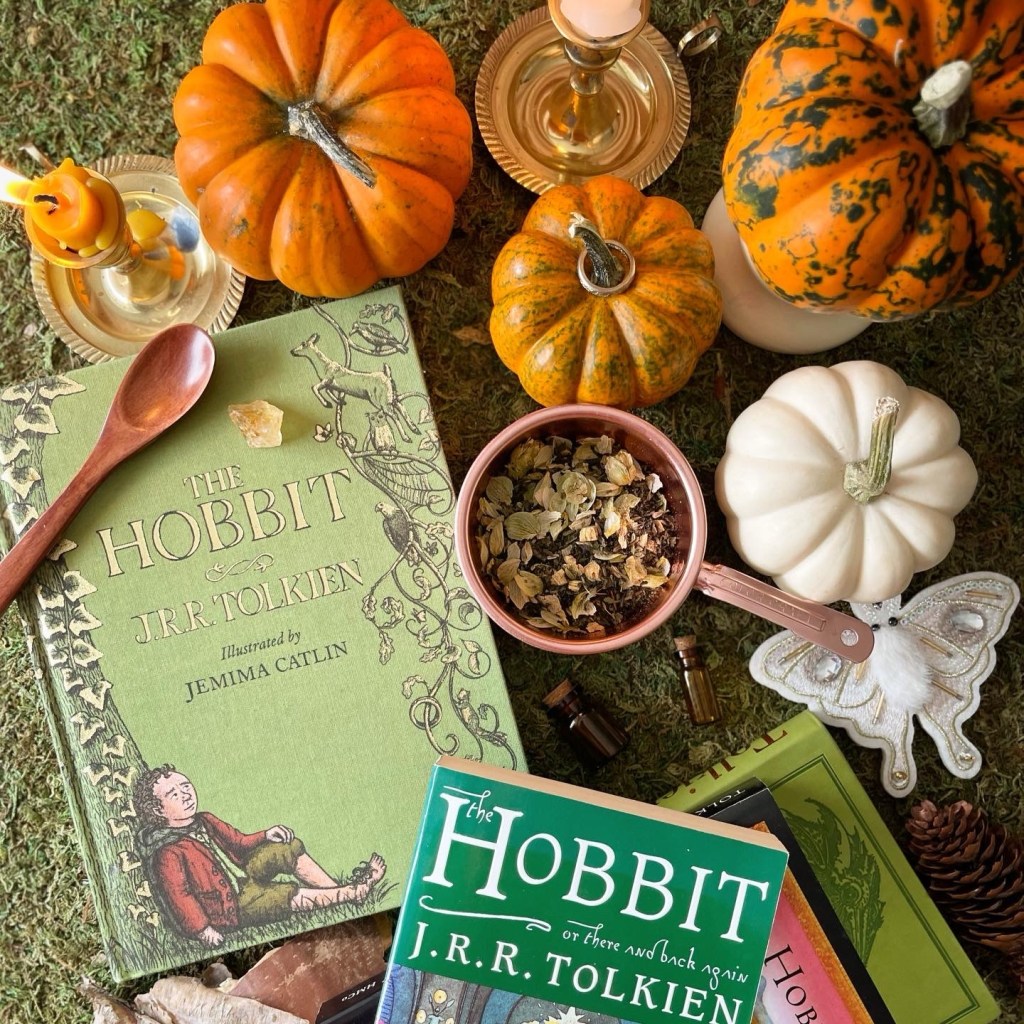
The Hobbit and The Lord of the Rings books by J.R.R. Tolkien have been my very favorite books since I first read them as a teenager, and I have always felt a very strong connection to hobbits: simple folk who prefer the comforts of home, well-stocked larders and bookshelves, and the joy of silly fun with family and friends, yet who can be prevailed upon to draw deeply from a well of courage and wit to save the world on occasion. If any fictional folk represents me, it’s the hobbit-folk. 

So the publication anniversary of The Hobbit (my birthday, 9/21) and the birthday of both Bilbo and Frodo Baggins (9/22) alongside the beginning of fall are all something I like to mark wrapped up into one special span of a couple days. I might read bits of The Hobbit to my own halflings, or we might watch the 1970s Rankin Bass animated film of The Hobbit (wonderfully nostalgic and kid friendly).

We may enjoy a hobbit-y teatime, too, with fresh baked goods and hobbit-inspired tea from the recipe I created. It combines smoky lapsang souchong tea for that famous pipe-leaf all hobbits love, hops to represent the tankards of ale they heartily imbibe, reishi mushrooms foraged right from the woods surrounding the shire, and other flavorful herbs and spices.


Ingredients:

1 part loose leaf lapsang souchong (or other black tea)

1 part mint

1⁄2 part reishi, broken into small pieces (substitute with licorice root if you are unable to find reishi)

1⁄2 part hops

1⁄4 part fennel

1⁄4 part nutmeg

1⁄4 part powdered vanilla bean or 1 vanilla bean per 4 cups of tea, split

Directions:

To make a single cup of tea, add 1 tablespoon to a tea strainer, eco- friendly tea bag, or French press. Pour 1 to 1 1⁄2 cups hot water over the tea and steep for 5 minutes. Add honey or other sweetener, if desired.


For educational purposes only. Not intended for medical advice. Always consult your physician.

*This post contains affiliate links, which means if you choose to buy something from a link that I share, I will make a small percentage of the sale *at no extra cost to you*.

Categories
Hygge Recipes wheel of the year

Ostara: Orange Vanilla Soda Bread

There is, in my opinion, no better way to celebrate the turning of the season (or just anything!) than with warm, freshly baked bread. You just can’t help but be mindful for a moment as you stop and appreciate the ingredients that went into the bread, the hands that made it, and the warming and grounding experience of enjoying it. That is some simple but powerful alchemy, right there. 

This year for Ostara (the spring equinox) I decided to make an easy, rustic loaf of soda bread with some cheery, sweet, springy flavors. I incorporated orange zest and juice and vanilla, because the two together just put me in mind of sunshine and the sweet scent of early spring flowers. 

I also sweetened up this traditionally sugarless recipe with a generous helping of the vanilla-orange-mint infused sugar I made awhile back. You could easily use plain sugar, of course, but I had this on hand and it further drives that flavor home and adds a little something extra. 

My family loves snacking on this bread, and it is really nice at breakfast time, too. I like to think it’s a very hobbit-ish sort of treat to celebrate spring with!


The recipe for Orange Vanilla Soda Bread:

Ingredients

4 cups flour (all white flour, part whole wheat, or you could also try your preferred GF flour)

1 ½ tsp baking soda

1 ½ tsp salt

3 Tbsp sugar (vanilla orange mint sugar)

2 tsp vanilla extract

Zest of one orange

1-2 Tbsp orange juice

1 ½ to 1 ¾ cups buttermilk

Method

Preheat oven to 400°F.

In a deep mixing bowl, mix together flour, baking soda, salt, and sugar with a whisk. Whisk in orange zest.

Make a well in the dry ingredients and add the wet ingredients to it. Mix together with a wooden spoon, folding and turning the bowl until a sticky dough forms. If the dough seems too dry, you can add additional buttermilk a spoonful at a time.

Scoop ball of dough out onto a large floured cutting board. Knead a few times lightly. It will still be quite sticky, but you can flour your hands and add a pinch or two of flour if it seems too wet. 

Form into a large round loaf. Place in a greased / oiled Dutch oven or on parchment paper on a baking sheet. Cut an X into the top with a sharp knife. Top with a small pat of butter on each of the four quadrants if you’d like. 

Cover with the Dutch oven’s lid or tent with foil and bake for 30 minutes. Remove cover and bake for an additional 15 minutes. Bread is done when a toothpick comes out clean and/or the X in the center appears done (my X disappeared 😅 but that’s ok). It should also sound hollow if you tap it!

Allow to cool for 10-15 minutes before eating. Then, enjoy!


I love making infused sugars! Here is the recipe for Orange Mint Vanilla Sugar:

Ingredients

1.5 cups of white sugar

Zest of one orange

1 Tbsp ground dried peppermint leaf

1 vanilla bean

Method

Mix the white sugar, the fresh zest of one orange, ground dried peppermint (pulsed to a powder in a coffee grinder reserved for herbs), and one vanilla bean (split and scraped, then the whole bean tossed in) in a bowl. Then spread it out to dry a while on a cookie sheet before transferring the mixture (including the vanilla bean) to a jar. The vanilla bean will continue to impart its sweet flavor in the sugar and it will only get better!

Let the jar sit tightly lidded for a few days to infuse with all the lovely orange oil and vanilla. Then you can use the sugar in teas, coffee (have you ever tried the combo of orange and coffee?), baked goods (imagine rolling sugar cookies in this!), fancy cocktail / mocktail rims, and more!


How do you plan on celebrating the start of spring, in your own way, big or small?


For educational purposes only. Not intended for medical advice. Always consult your physician.

*This post contains affiliate links, which means if you choose to buy something from a link that I share, I will make a small percentage of the sale *at no extra cost to you*.

Categories
herbal skincare plant wonder collective Recipes

Raspberry Leaf Face Refreshing Mist

In these dog days of summer, your skin can easily become overheated and stressed out! That’s where raspberry leaf comes in. Raspberry leaf is well known for its tissue tightening and toning properties, and in a gentle face mist, this action can help to prevent moisture loss and provide soothing.

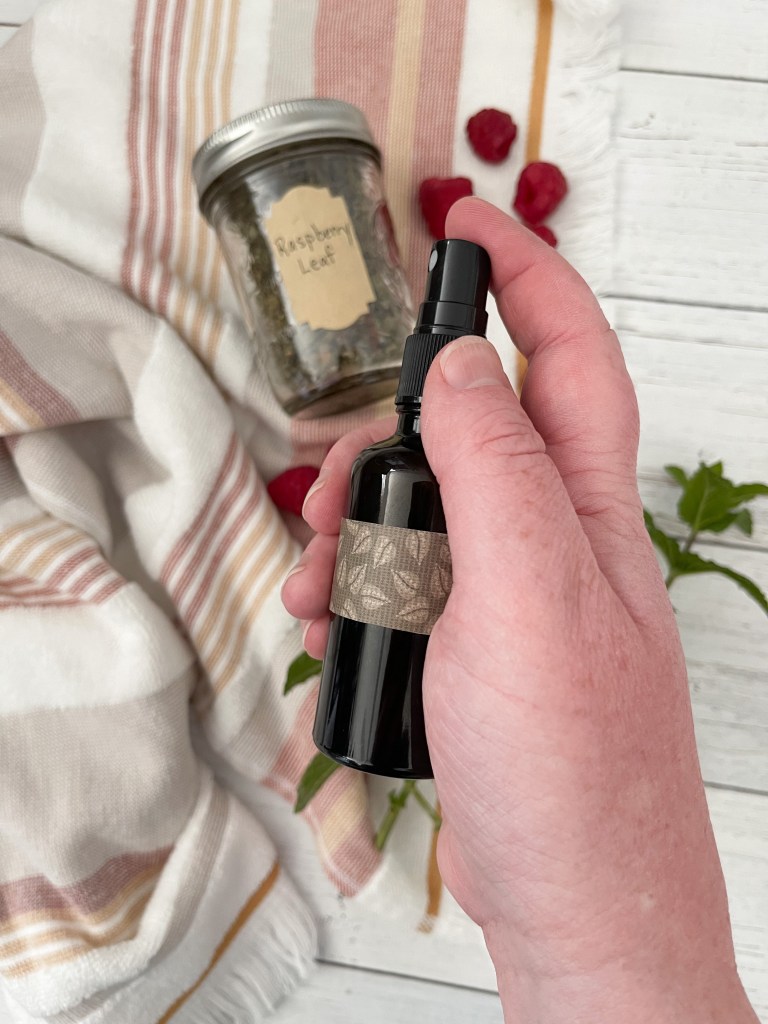
This recipe isn’t for a witch hazel or alcohol based toner—I didn’t want it to be that strongly astringent. So, instead, I’ve made a strong tea with the raspberry leaf and combined that with a cooling mint hydrosol—which you can easily make on your stovetop with some fresh mint, or you can purchase ready-made mint (or rose, lavender, or chamomile) hydrosol if you prefer.

Because this is an entirely water-based recipe, it has a shorter shelf life so you’ll want to make it in small batches and store it in the fridge. But it’s totally worth it for a very gentle, refreshing, soothing summer face mist that even the kids can use after a sweaty day of playing out in the hot sun! (It makes a great after-sun spray, too!)

This recipe comes in two parts: the mint hydrosol recipe and the raspberry tea / face mist recipe. Let’s start with the mint hydrosol!

Mint Hydrosol

Materials:
Large stock pot with lid
Small heat-safe bowl (ceramic or glass)
Heat-safe glass measuring cup
Distilled water
Fresh mint leaves
Ice

Method:
Place the heat-safe bowl upside down in the stock pot and fill the bottom of the pot with enough water that it covers the bowl. Place the glass measuring cup right-side up on top of the bowl. Place a good amount of mint leaves in the water around the bowl—a couple big handfuls of plant material. Place the pot lid upside-down on the pot and place ice cubes on top. Simmer on medium heat until a sufficient amount of steam has condensed and dripped into the measuring cup—that’s your hydrosol! Store this in the fridge.

Raspberry Leaf Facial Mist

Materials:
3 tablespoons dried raspberry leaf
Large tea mug
Plate to cover the mug with
Distilled water
Tea kettle
Strainer
Glass bowl or measuring cup
Small misting bottle (4-8 oz)

Method:
Place raspberry leaf in the tea mug and cover with water freshly boiled in a tea kettle; cover with plate and allow to steep for 10-15 minutes. Strain into a glass bowl or measuring cup and allow to cool or refrigerate.

Fill the misting bottle half full with mint hydrosol and half with raspberry leaf tea. Cap tightly and shake well to mix. Store in the fridge to prolong its shelf life and so it’s nice and cool when you’re ready to mist your face!

Categories
herbal skincare Recipes

Lavender Peppermint Lip Balm

I don’t know about you, but for me, lavender is a scent that makes me think of spring. (I’m not sure why, because it’s not in-season where I live until the summer!) Since I am dreaming so, so much about spring, and since I had just strained some lavender-infused almond oil and mint-infused coconut oil recently, I decided to make some relaxing lip balm with a springy scent to carry me away in my daydreams of warmth and sunshine.

Lavender is such a relaxing scent, and it pairs really well with uplifting peppermint. Also, both herbs have antimicrobial and skin soothing and replenishing properties. Most people find both to be gentle for use on the skin, but if you’re sensitive (or making this recipe for young children), you might want to eliminate one or both essential oils in the recipe, or use less of both.

Lip balm is not too tricky if you’re new to making body care products. Here’s the recipe, if you want to give it a try!


Lavender Peppermint Lip Balm

(Makes 7 0.5-oz containers of lip balm)

Materials:

7 lip balm tins, 0.5 oz

Double boiler (optional)

28 g shea butter

20 g beeswax pellets

16 g almond oil infused with lavender flowers

8 g coconut oil infused with peppermint leaf

4 drops lavender essential oil 

3 drops peppermint essential oil (or leave out if you have sensitive skin)

Method:

Prepare your supplies and area; you might want to put down a layer of parchment or waxed paper in case of dribbles. I place mine on a baking sheet.

Melt the beeswax pellets, shea butter, and infused oils slowly over low heat in the double boiler. If you don’t have a double boiler, set a large glass mixing bowl over a small saucepan containing about 1 inch of water, put your ingredients in the mixing bowl, and it works the same way. 

Once the ingredients are melted, remove from heat and carefully add and stir in essential oil if you’re using it. 

Carefully pour the hot liquid into your lip balm tins. Allow to cool completely for a good long while before using—I like to have my tins on a baking sheet and transfer that to the fridge for quicker setting, but that’s optional.

Once the lip balms are finished setting up, they’re ready to use!

Categories
Herbs and Herbalism Hygge wheel of the year

The Winter Solstice: Yule Forest Candle

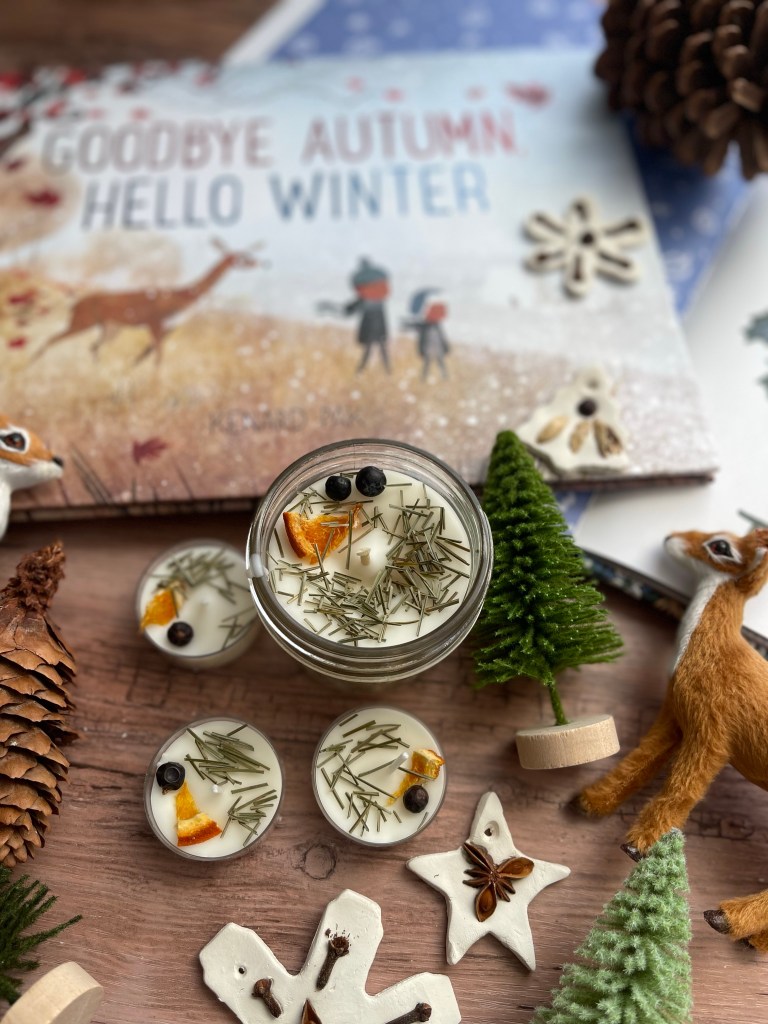
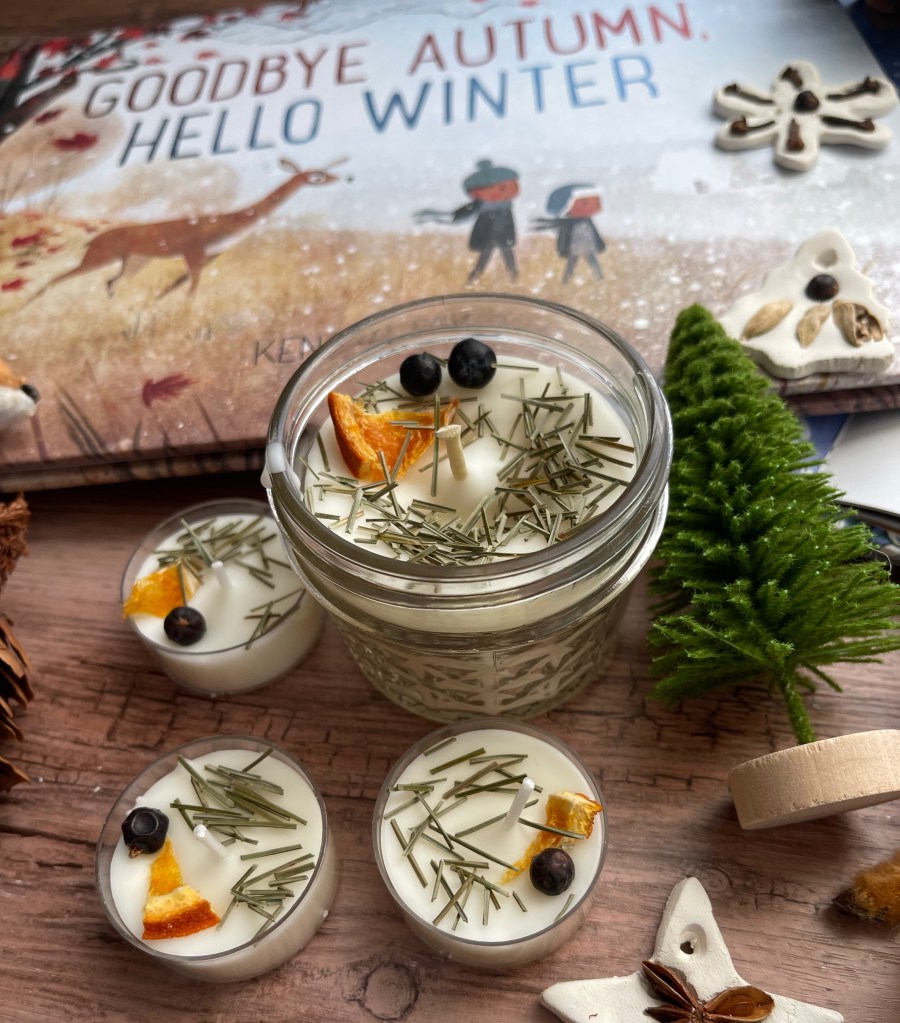
To celebrate the winter solstice and Yule, I have made some special candles to help mark the occasion as my family and I make (and eat!) cookies and read books about the solstice. Although it is the official beginning of winter, it is also the darkest night—and the light of our candles reminds us that the warmth of the sun shines through and will strengthen with each coming day. It is how people have long gathered their courage to face the winter’s cold: the returning of the light offers hope.

For my Yule Forest candles, I combined beeswax, a bit of coconut oil, and essential oils for a natural scent option. (Make sure you do your due diligence in choosing ethical essential oil companies to buy from 💚). Here are the scents I chose, along with their symbolic attributes:


Here are the directions for making the candles if you’d like to make some, too!

Making 6 candles:


We will enjoy the gentle light and wintry woods scent of one of these candles (I made 6 so I could gift the others to loved ones) while munching on chai snickerdoodles and reading. The pictured books (Goodbye Autumn, Hello Winter and the winter story from Little Witch Hazel) are a couple of our favorites to welcome the solstice.

How will you mark the winter solstice / Yule?