Categories
herbal skincare willow & sage

Spring Floral Perfume Oil

There are few better ways to celebrate the delicate blooms of springtime than with a lovely tea party. A tea party in a flower garden? Even better. Or perhaps you can conjure up the feeling of such an occasion with a natural perfume oil incorporating the scents of spring blossoms. 

This recipe combines lavender-infused almond oil with some lovely essential oils: geranium, lemon, ylang ylang, and ho wood. This combination of scents is dreamy and floral, with hints of tart citrus and sweet earthiness. It’s nourishing to the skin and has a lovely calming effect. 

These mini perfume oil rollers would make sweet gifts at a flower garden tea party of your own. 

You Will Need:

To Make:

To make the lavender-infused oil, fill a pint jar about three-quarters full with dried lavender buds. Pour sweet almond oil to cover flowers, leaving about 1 inch of headspace in the jar. Use a chopstick or the handle of a wooden spoon to push the plant material into the oil so it is fully submerged. Cover with a coffee filter or cheesecloth and secure with a rubber band. Allow to infuse for four to six weeks, then strain out the lavender buds and put the remaining oil in a clean jar. Add 1 teaspoon of vitamin E oil to extend the shelf life of this oil. 

To make a perfume roller, fill a 5 ml roller bottle about halfway with lavender-infused almond oil. Add a pinch of dried lavender buds if you’d like. Add 3 drops of geranium essential oil, 2 drops of lemon essential oil, 1 drop of ylang ylang essential oil, and 1 drop of ho wood essential oil. (If you have sensitive skin, you can adjust and use less of the essential oils. If you want a stronger scent for aromatherapy, you can add 1-2 more drops of each oil.) Fill the remaining space in the bottle with more of the lavender-almond oil, leaving a little headspace for the roller. Insert the roller and screw on the cap, giving the bottle a swirl to mix the oils in. 

Store any unused portion of the lavender-almond oil in a cool dark space. 

———

This recipe can be found in the spring 2024 issue of Willow & Sage magazine!

———

For educational purposes only. Not intended for medical advice. Always consult your physician.

*This post contains affiliate links, which means if you choose to buy something from a link that I share, I will make a small percentage of the sale *at no extra cost to you*.

Categories
Herbs and Herbalism

Damiana + Herbs for Headache Relief

I am lucky to not have chronic headache issues, which I know so many people have! But I do still sometimes deal with clusters of headaches, especially stress-related and cycle-related ones. And I’ve recently been ill and have experienced some unpleasant headaches associated with that. (Such a bad cold and flu season this year!) When those problems arise, herbs can absolutely help.

I have several favorite herbal allies to lean on in this circumstance, usually brewing them in tea, and damiana is the star of the show. Though perhaps better known as an aphrodisiac herb, damiana is amazing to relieve tension headaches and that pressure and pounding sensation in the head. It is my headache secret weapon and always in my headache tea blends! I love its warm (but not too warm) soothing, tension-relieving, and pain modulation and easing.

Other herbs I rely on for headache teas:

Meadowsweet– cooling, astringent, eases stabbing pain, high in salicylic acid (aspirin!)

Mint– cooling, antispasmodic, nutritious, pain-relieving, uplifting and relaxing

Lavender– soothing, relaxing, gentle, pain-relieving and aromatic 

Cramp bark– gentle, pain-relieving, spasm easing, muscle tension relieving

Skullcap & Passionflower– sleep aiding, nerve & tension easing, soothing

If you use essential oils, an oil roller or balm using peppermint and lavender oils mixed with a carrier oil is a great remedy, too. Roll or rub this on your temples, the back of your neck, or wherever your headaches tend to be concentrated. (Can you tell mine is well-loved? I need to replace that oily label!)


What are your favorite natural headache remedies?


For educational purposes only. Not intended for medical advice. Always consult your physician.

*This post contains affiliate links, which means if you choose to buy something from a link that I share, I will make a small percentage of the sale *at no extra cost to you*.

Categories
Tea wheel of the year

Brigid Tea for Imbolc

Blessed Imbolc! This sabbat marks the halfway point between the winter solstice and spring equinox, so it is also called midwinter. And it is Candlemas, when candles were brought to be blessed for the year. 

It’s also a time that is traditionally dedicated to St. Brigid and/or the goddess Brigid. This Celtic goddess is a fire deity who embodies the light and warmth of spring. She is sometimes represented as a triple-goddess or as presiding over three flames: the flame of inspiration and creativity, the flame of the hearth, and the flame of the forge and smithing. Brigid is also associated with healing, wisdom, poetry, livestock, and protection.

As Celtic legend tells, the Cailleach–the crone goddess of winter–and Brigid split the year between them. When the Cailleach’s fire goes out, she cedes rule to Brigid, who presides over her half of the year until Samhain when her counterpart returns.

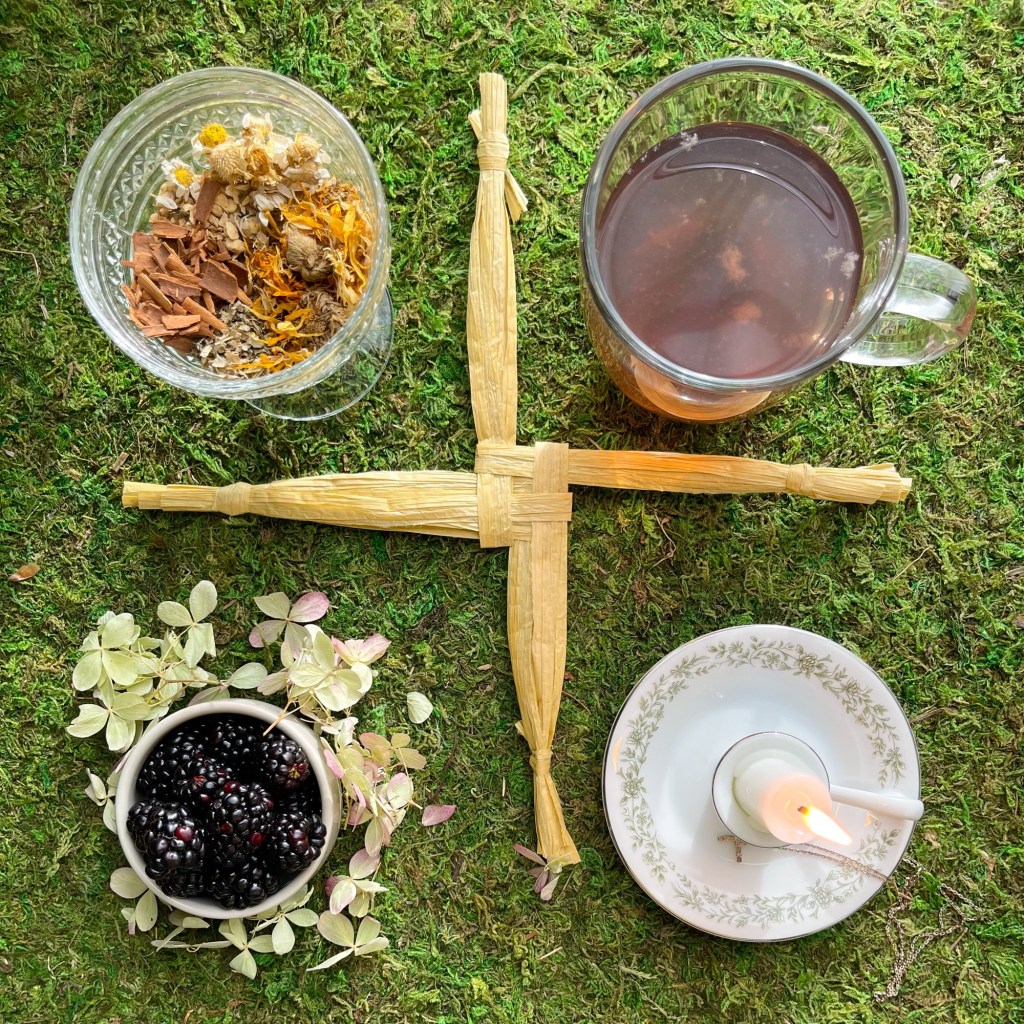
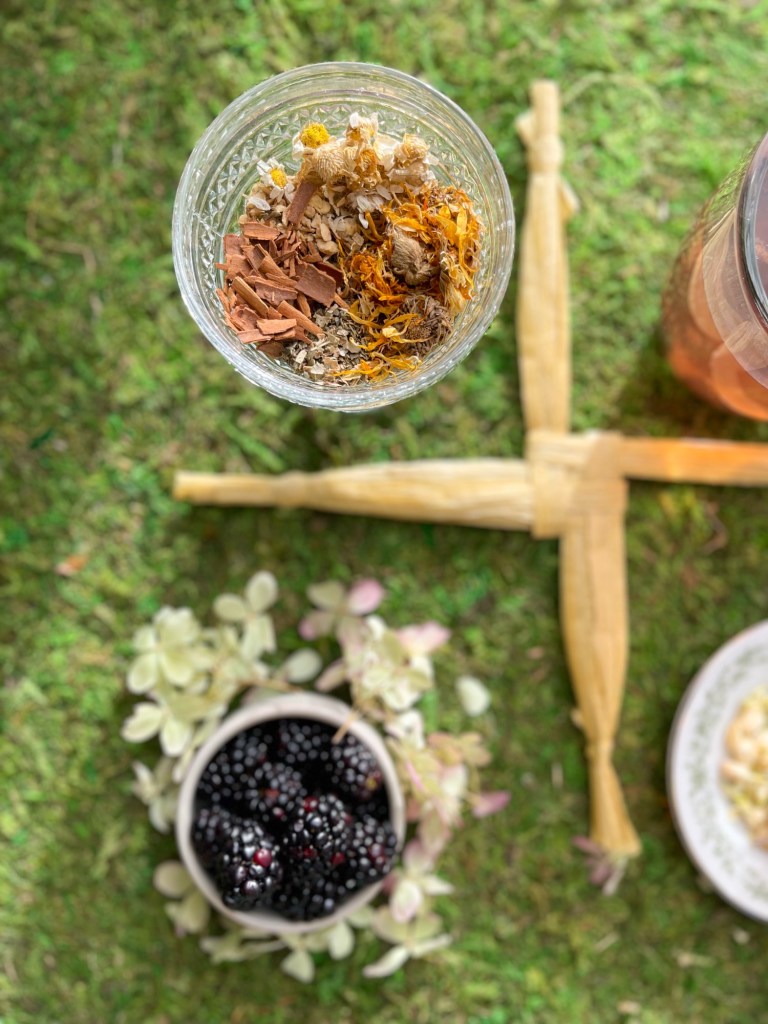
This tea to welcome Brigid’s return contains blackberry leaf and fruit along with chamomile, which are all sacred to the goddess, in combination with calendula, ginger, and cinnamon to represent her three flames.

Brigid’s Tea

1 part blackberry leaf

2 parts dried or fresh blackberries 

1 part chamomile 

1 part calendula

½ part ginger

½ part cinnamon

Directions

If using fresh blackberries, muddle 2-3 in the bottom of a cup (you’ll strain the tea after brewing); if using dried berries, simply add them to the tea herbs. Add 1 tablespoon to a tea strainer, eco-friendly tea bag, or French press. Pour 1 to 1 ½ cups hot water over the tea and steep for 5 minutes. Strain out the muddled blackberries now if using this method. Add honey or other sweetener, if desired.


For educational purposes only. Not intended for medical advice. Always consult your physician.

*This post contains affiliate links, which means if you choose to buy something from a link that I share, I will make a small percentage of the sale *at no extra cost to you*.

Categories
herbal skincare Recipes

Orange, Coffee and Rose Oil Aromatherapy & Eye Serum Roller

We’re in the thick of winter, and it is a time to cozy up with both bright, invigorating aromas to bring a spark of sunshine, and rich, earthy scents for grounding and comfort. Orange and coffee both certainly fit those descriptions!

Orange’s sweetness and tartness give a vibrant boost during the dreary winter. Not only is it a potent reminder of the sun, boosting our mood just like the sun’s rays, but it provides antioxidant and antibacterial benefits that can aid skin. This makes it ideal in both skin and aromatherapy treatments.

Coffee is a botanical that energizes from the inside out. The caffeine in coffee can be invigorating and rejuvenating in skincare, especially tired and delicate under-eye skin. Use an under eye serum with coffee to brighten, awaken, and de-puff. 

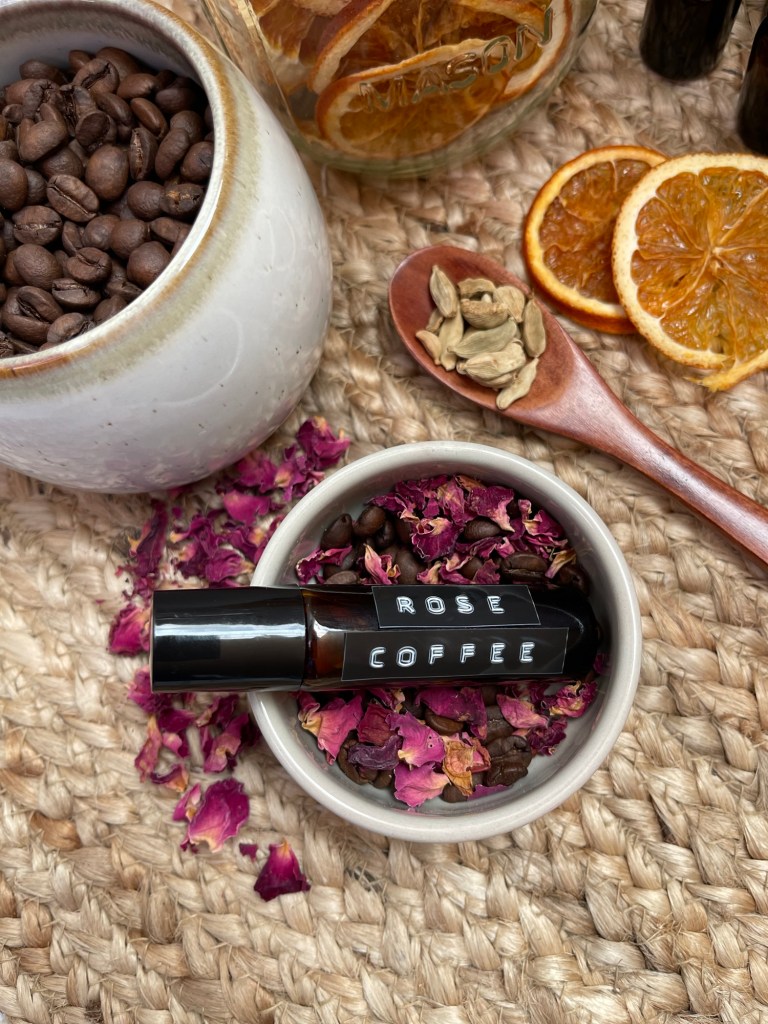
The scents and properties of orange and coffee pair excellently with rose, cardamom, and jojoba oil. So excellently, in fact, that this botanical-infused oil roller can also double as an aromatherapy perfume oil. Jojoba is nourishing and moisturizing, as is rose. While the scent of sweet orange essential oil enhances the uplifting and awakening scent of coffee, cardamom adds a spiciness that imparts earthy complexity. You’ll feel a calming and joyous energy every time you inhale this lovely and luxurious oil. (It would also make a sweet gift or treat to yourself for Valentine’s Day!)

Materials

Directions

To make the rose-infused oil, fill a pint jar about three-quarters full with dried rose petals. Pour jojoba oil to cover petals, leaving about 1 inch of headspace in the jar. Use a chopstick or the handle of a wooden spoon to push the petals into the oil so they are fully submerged. Cover with a coffee filter or cheesecloth and secure with a rubber band. Allow to infuse for four to six weeks, then strain out the rose petals and put the remaining oil in a clean jar. Add 1 teaspoon of vitamin E oil to extend the shelf life of this oil. 

To make an aromatherapy / eye serum roller, fill a 10 ml roller bottle about halfway with rose-infused jojoba oil. Add 5 drops of coffee essential oil, 5 drops of sweet orange essential oil, and 3 drops of cardamom essential oil. (If you have sensitive skin and plan to use this as an eye serum, you can adjust and use less of the essential oils. If you want a stronger scent for aromatherapy, you can add about 3 more drops of each oil.) Fill the remaining space in the bottle with more of the rose-jojoba oil, leaving a little headspace for the roller. Insert the roller and screw on the cap, giving the bottle a swirl to mix the oils in. 

Store any unused portion of the rose-jojoba oil in a cool, dark space. 


For educational purposes only. Not intended for medical advice. Always consult your physician.

*This post contains affiliate links, which means if you choose to buy something from a link that I share, I will make a small percentage of the sale *at no extra cost to you*.
Categories
Herbs and Herbalism Recipes

Orange & Herb Infused Sugar

I love making herbal sugars! They are so versatile, and can be used for so many things—like to sweeten tea and hot beverages, adorn a mocktail or cocktail glass rim, sprinkle on sugar cookies / shortbread cookies / other baked goods, add pizzazz to oatmeal, and even to make a batch of sugar scrub for botanical skincare purposes!

Orange is the star of this particular blend of herbal sugar. With its bright, tangy flavor, vitamin C punch, and complexity of bitter + sour + sweet, it adds depth and delight. 

Orange offers so many nutritional and medicinal benefits. It aids the immune system, the heart, addresses inflammation, offers antioxidant benefits, and a host of other perks!

Herbal sugars can be utilized for ritual and spiritual purposes, too, and orange shines in this role. Orange is associated with love, joy, prosperity, luck, and divination. You could certainly change up the ingredients to suit your intentions, but the following recipe would certainly boost intentions of sweetness, joy, and love!


Orange & Herb Infused Sugar

Ingredients

Method

Mix white sugar, fresh orange zest, peppermint, and one vanilla bean (split and scraped, then the whole bean tossed in) in a bowl. Then spread it out to dry awhile on a cookie sheet before transferring the mixture (including the vanilla bean) to a jar. The vanilla bean will continue to impart its sweet flavor in the sugar and it will only get better!

Let the jar sit tightly lidded for a few days to infuse with all the lovely orange oil and vanilla before using it in all the delicious and creative ways you can imagine!


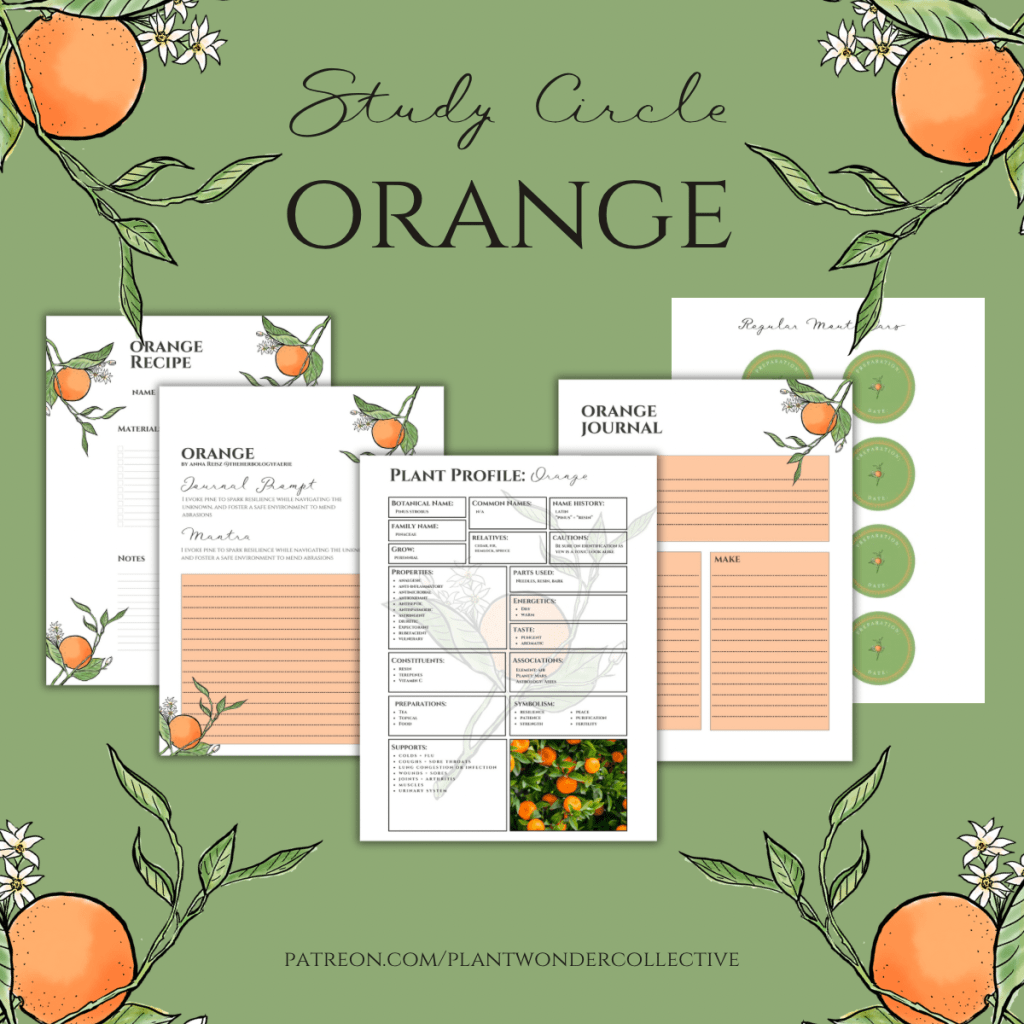
It is ORANGE month at the Plant Wonder Collective Patreon Study Circle! If you’d like to support the work of PWC, please consider joining our Study Circle for exclusive recipes, articles, digital downloads and printables for the plant of the month.


For educational purposes only. Not intended for medical advice. Always consult your physician.

*This post contains affiliate links, which means if you choose to buy something from a link that I share, I will make a small percentage of the sale *at no extra cost to you*.
Categories
Recipes Tea wheel of the year

Yule + Winter Solstice Tea Blends

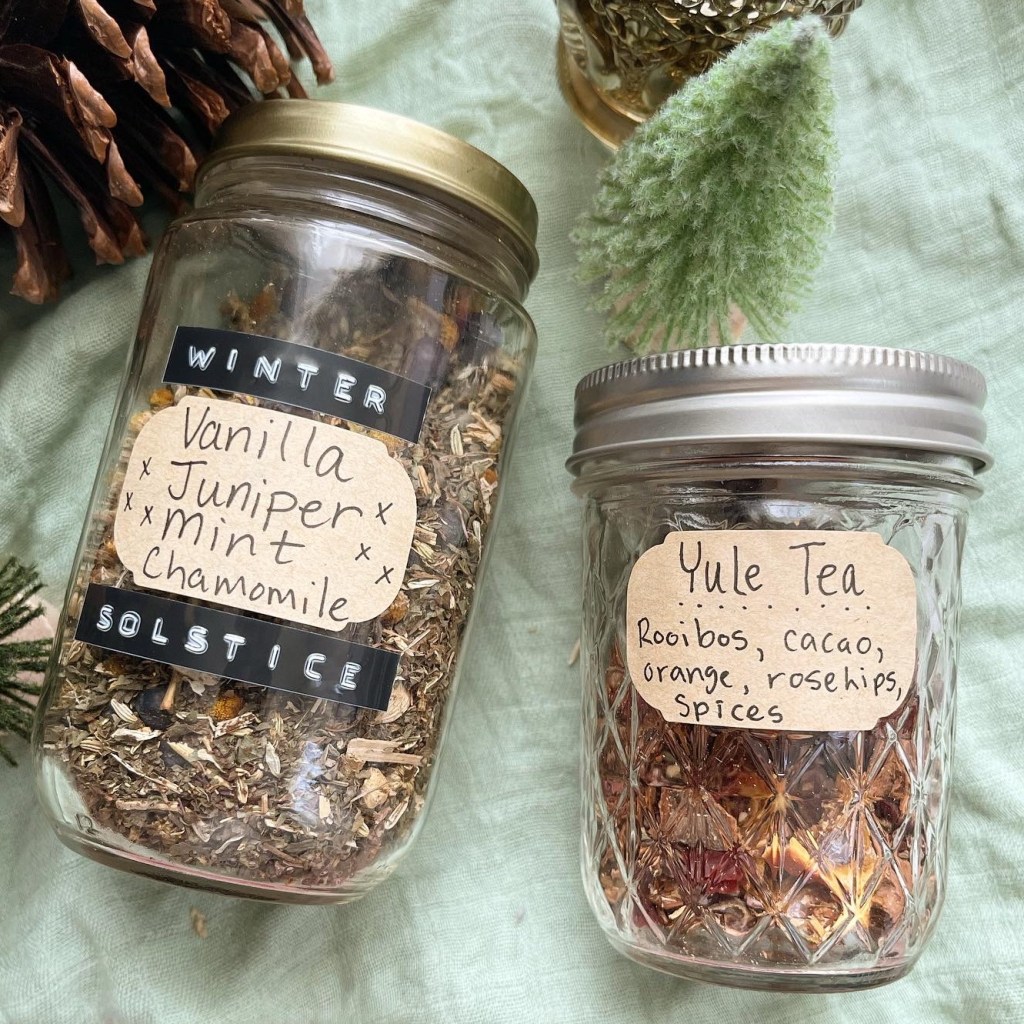
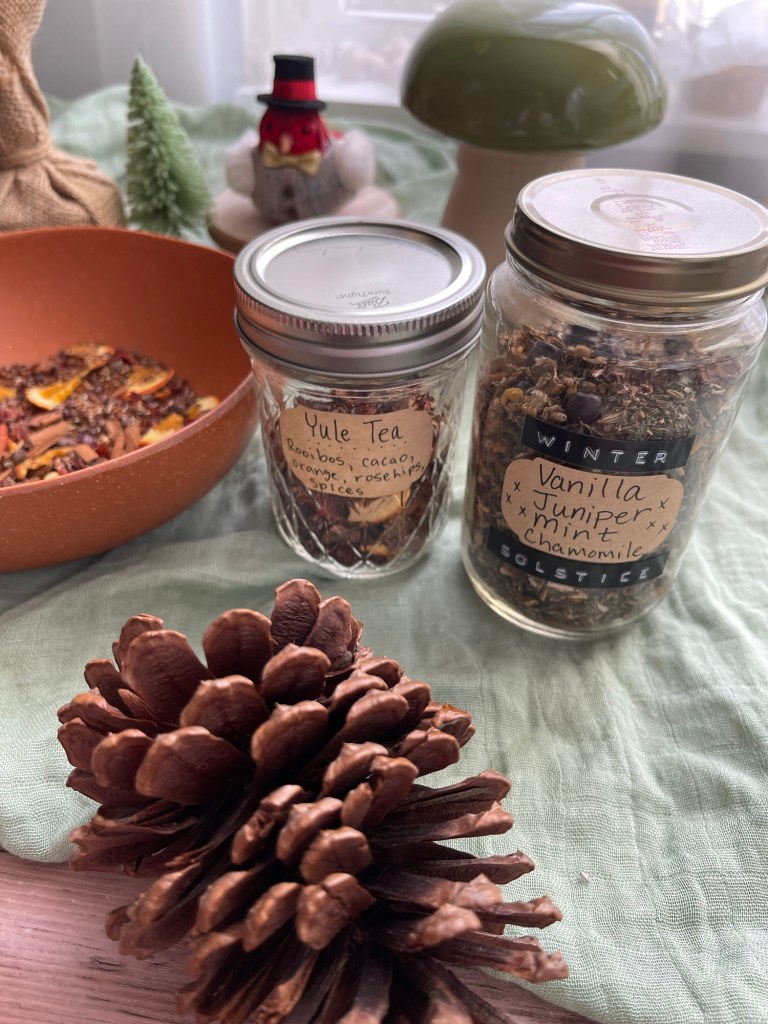
Today I’m sharing two herbal tea blends to enjoy for Yule // the Winter Solstice!

The Yule Tea blend is a sweet and festive spiced sip, full of immune-boosting ingredients that taste lovely. The combo of orange and spices is traditional for the season, in part because of those properties and in part because of associations with protection, divination, prosperity, and luck derived from them.

Yule:
1 tsp rooibos
1 tsp cacao nibs
½ tsp orange peel
½ tsp cinnamon pieces
½ tsp rose hips
¼ tsp allspice berries
¼ tsp star anise
¼ tsp nutmeg

The Winter Solstice Tea tastes decadent like a holiday cake, but without the heartburn or feeling of overindulgence! With soothing herbs that promote digestion, relieve pain, and aid in circulation, it’s like a sweet, warm hug. And chamomile represents the sun that returns brighter each day after the solstice; juniper is a powerful talisman of winter protection, cleansing, and luck; and the other botanicals have ties to healing, love, and luck, too.

Winter Solstice:
1 tsp chamomile
1 tsp mint
½ tsp meadowsweet
½ tsp cinnamon pieces
¼ tsp ginger
¼ tsp vanilla bean powder or ¼ a vanilla bean
4-5 juniper berries
2-3 cardamom pods

To brew—

To make a single cup of tea, add 1 tablespoon to a tea strainer, eco- friendly tea bag, or French press. Pour 1 to 1 ½ cups hot water over the tea and steep for 3-5 minutes. Add honey or maple syrup to taste, if desired.


For educational purposes only. Not intended for medical advice. Always consult your physician.

*This post contains affiliate links, which means if you choose to buy something from a link that I share, I will make a small percentage of the sale *at no extra cost to you*.
Categories
Botanical Anthology Recipes

Lemon Balm Sugar Cookies

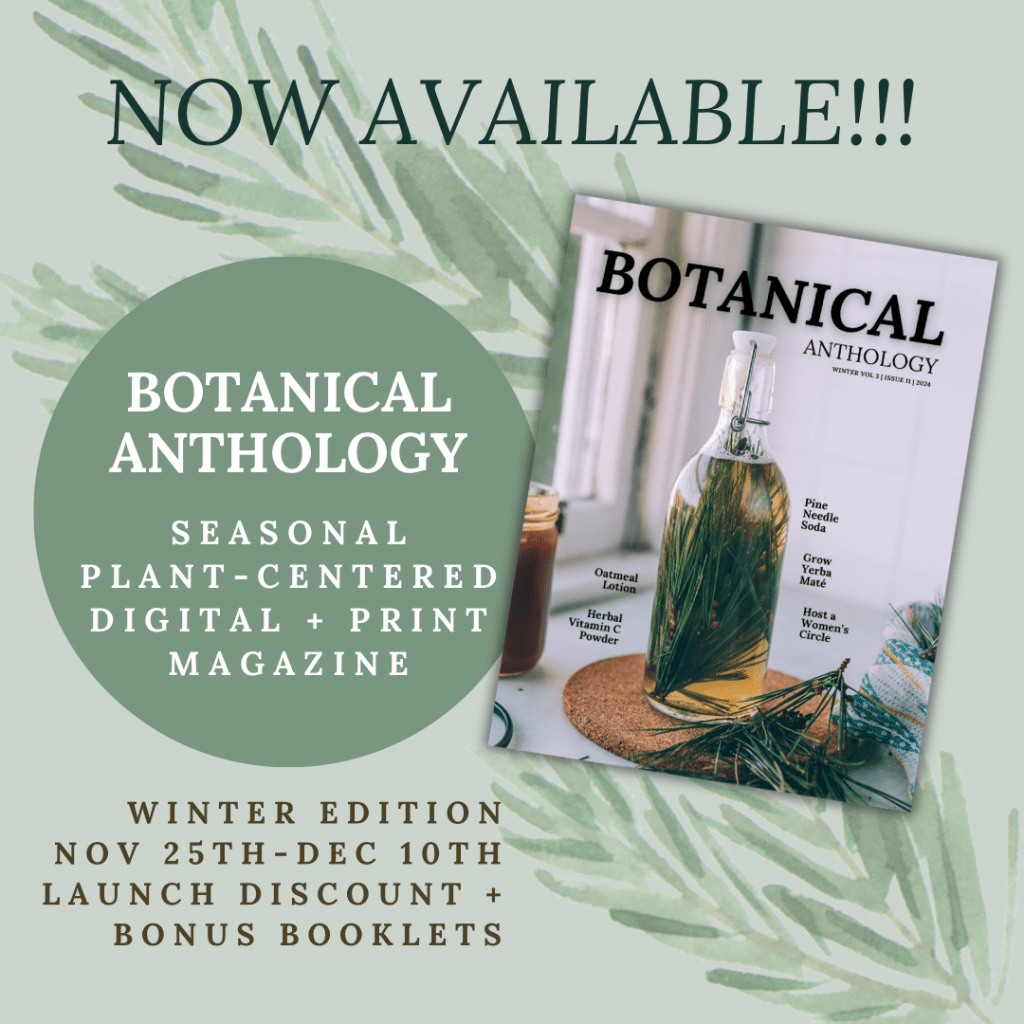
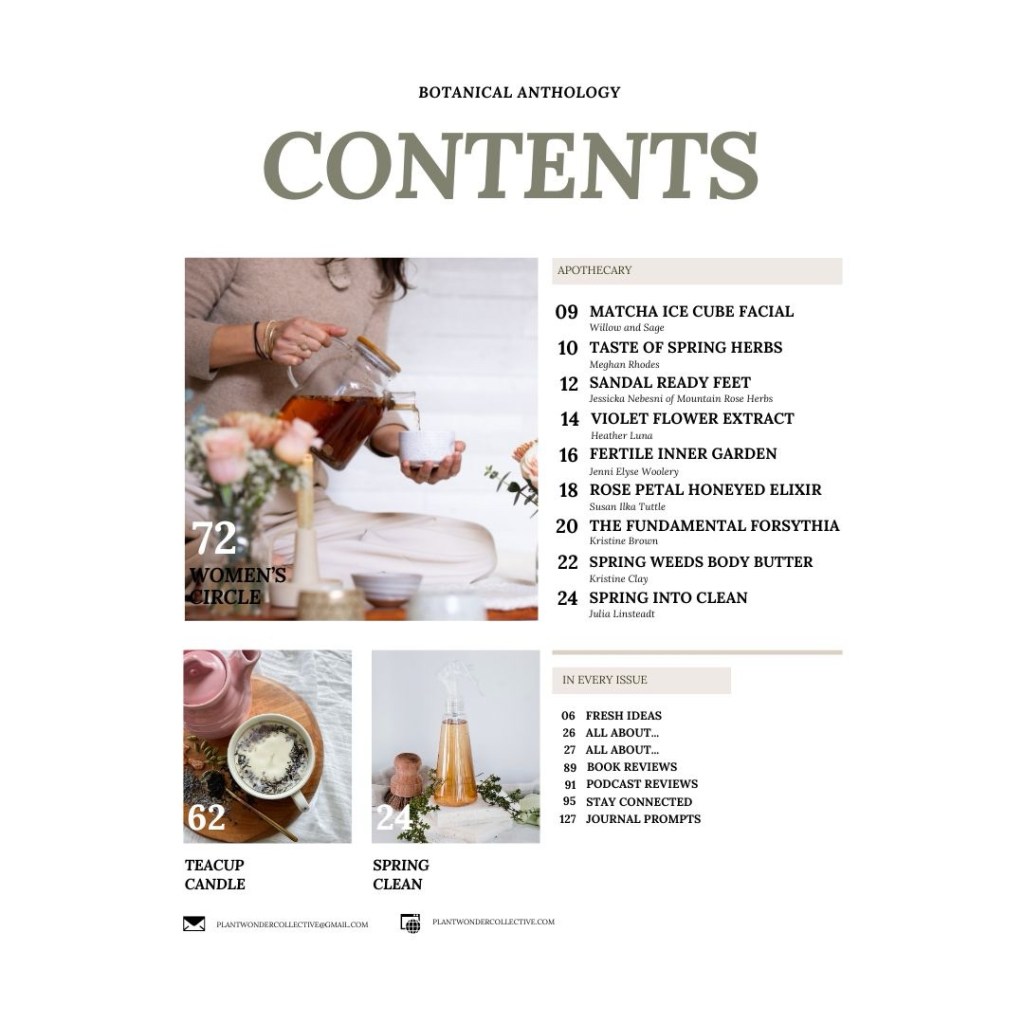
This is an excerpt from the article Lemon Balm Sugar Cookies by Kristine Brown from the Herbal Cookie Tray Vol 2 booklet featured as the bonus for the Winter Vol 3 | Issue 11 | 2024 edition of Botanical Anthology. To learn more about the ingredients and uses of this recipe, check out the entire article in the magazine! Our herbal magazine, featuring remedies, recipes and projects with plants for the winter season, can be purchased as a Digital version: HERE and as a Print version: HERE.


Lemon Balm Sugar Cookies

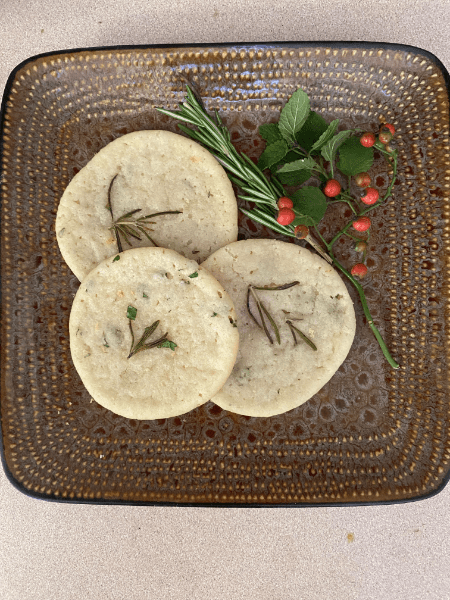
Make delightful sugar cookies that melt-in-your-mouth good! The mild lemon flavor adds a delicate blend of tang that compliments the savory rosemary flavor from the garnish perfectly. They can be prepped a day or two ahead so you can cut and bake when you’re ready.

Materials

2 tbsp lemon balm, minced
1 tsp lemon juice
1 c butter, softened
⅔ c sugar
1 egg
2 ⅓ c all-purpose flour
Sprigs of rosemary for garnish

Method

In a small bowl, combine lemon balm and lemon juice, pressing the mixture with the back of a spoon to blend. 

In a large mixing bowl with a hand mixer, cream butter and sugar until light and fluffy. Beat in the egg and the lemon mixture. Gradually beat in flour and salt. 

Cover and refrigerate 3 hours or until firm enough to roll in wax paper. 

Preheat the oven to 350°F. Place the dough on waxed paper and slice into slices about 1/8″ thick. Press bits of rosemary sprigs into each cookie to look like a pine tree. 

Bake on an ungreased cookie sheet for 8 to 10 minutes. Cookies will brown slightly around edges. 

Notes

  • Yields about 60 cookies. 
  • If you are using dried lemon balm, you will only need about 1 tablespoon.
  • This recipe can be made gluten free by substituting 1:1 gluten free flour blend for the all-purpose flour. 
  • This recipe can be made dairy free by substituting coconut oil or tallow for the butter. 

Kristine Brown, RH (AHG) is the writer and illustrator of the children’s publication Herbal Roots zine, which includes ebooks, online courses, and a membership offering, Herb Club. She is the author of Herbalism at Home, The Homesteader’s Guide to Growing Herbs, and Nature Anatomy Activities for Kids and Nature Anatomy Guided Journal for Kids. Find her online at herbalrootszine.com and on social media @herbalrootszine

Categories
plant wonder collective Recipes Tea

Headache Helper Tea

I recently had a friend dealing with recurring tension headaches ask what herbs might be helpful in a tea to offer him some relief. (He is also being treated by his doctor, but needed some additional gentle diy to help relax his frazzled nerves and throbbing head & get him some sleep!) 

Oatstraw immediately came to mind. They’re a wonderfully gentle soother for frayed nerves, burnout, overwhelm, stress, tension—all things that lack of sleep and depletion from migraines and tension headaches can cause. 

In addition to the oatstraw, I added damiana (a headache-easing favorite of mine), calming linden, sleepy passionflower, and cooling peppermint to the batch of tea I made for my friend. He reported back that the tea was very helpful and he got a decent night’s sleep after drinking his first cup!

To make a big batch to keep on hand, choose a larger unit of measure such as a quarter cup or half cup for your parts. For a single mug of tea, choose a small unit of measure – I’d suggest half teaspoons (it will still make a very strong cuppa, or two cups). 

Here is the recipe:


Ingredients

4 parts oatstraw

4 parts damiana

3 parts linden

2 parts passionflower

2 parts peppermint 

Directions

To make a single cup of tea, add 1-2 tablespoons to a tea strainer, eco-friendly tea bag, or French press. Pour 1 to 1 1⁄2 cups hot water over the tea and steep for 4-5 minutes. Add honey or other sweetener, if desired. 


What are your favorite herbal tea ingredients to help combat headaches?


For educational purposes only. Not intended for medical advice. Always consult your physician.

*This post contains affiliate links, which means if you choose to buy something from a link that I share, I will make a small percentage of the sale *at no extra cost to you*.

Categories
Recipes Tea

October: Falling Leaves Moon in Aries + Tea Recipe

Though the Falling Leaves Moon or Hunter’s Moon fell on October 17th this year and has technically passed, the full moon’s energy can still be tapped into. Read on to learn more about this month’s full moon and a corresponding tea recipe!


The Ojibwe named the full moon during what we call October the Falling Leaves Moon. We await the “peak” of the vibrant colors knowing the shedding of these leaves marks winter’s approach. As this full moon nears, we may feel Aries’ pull to dive into autumn with an energy as vibrant as the leaves. But the sun sign Libra may temper this drive with a need for balance to conserve our energies for the coming cold.

Brew this tea to mark the Falling Leaves Moon which includes gifts given from trees for both their symbolic and astro-herbalism connections. Hawthorn bolsters the heart, while juniper, cinnamon, and ginger support the Aries fire. Apple and vanilla round things out with sweetness to cool that fire off a bit and bring things back to balance.

Falling Leaves Moon in Aries Tea Materials-

1 tbsp apple pieces, dried 

1 tsp hawthorn leaf

1 tsp juniper berries

½ tsp cinnamon stick pieces

¼ tsp ginger root, dried 

¼ tsp vanilla bean powder or ¼ vanilla bean pod

Method-

To make a single cup of tea, add 1 tablespoon to a tea strainer, eco-friendly tea bag, or French press. Pour 1 to 1 ½ cups hot water over the tea and steep for about 5 minutes. Strain, and serve. Add sweetener of choice to taste, if desired.

If you’d like recipes to mark each month’s full moon, check out the current and upcoming issues of Botanical Anthology where I share these recipes!


For educational purposes only. Not intended for medical advice. Always consult your physician.

*This post contains affiliate links, which means if you choose to buy something from a link that I share, I will make a small percentage of the sale *at no extra cost to you*.

Categories
Hygge Recipes Tea

Happy Hobbit Weekend & Tea!

The Hobbit and The Lord of the Rings books by J.R.R. Tolkien have been my very favorite books since I first read them as a teenager, and I have always felt a very strong connection to hobbits: simple folk who prefer the comforts of home, well-stocked larders and bookshelves, and the joy of silly fun with family and friends, yet who can be prevailed upon to draw deeply from a well of courage and wit to save the world on occasion. If any fictional folk represents me, it’s the hobbit-folk. 

So the publication anniversary of The Hobbit (my birthday, 9/21) and the birthday of both Bilbo and Frodo Baggins (9/22) alongside the beginning of fall are all something I like to mark wrapped up into one special span of a couple days. I might read bits of The Hobbit to my own halflings, or we might watch the 1970s Rankin Bass animated film of The Hobbit (wonderfully nostalgic and kid friendly).

We may enjoy a hobbit-y teatime, too, with fresh baked goods and hobbit-inspired tea from the recipe I created. It combines smoky lapsang souchong tea for that famous pipe-leaf all hobbits love, hops to represent the tankards of ale they heartily imbibe, reishi mushrooms foraged right from the woods surrounding the shire, and other flavorful herbs and spices.


Ingredients:

1 part loose leaf lapsang souchong (or other black tea)

1 part mint

1⁄2 part reishi, broken into small pieces (substitute with licorice root if you are unable to find reishi)

1⁄2 part hops

1⁄4 part fennel

1⁄4 part nutmeg

1⁄4 part powdered vanilla bean or 1 vanilla bean per 4 cups of tea, split

Directions:

To make a single cup of tea, add 1 tablespoon to a tea strainer, eco- friendly tea bag, or French press. Pour 1 to 1 1⁄2 cups hot water over the tea and steep for 5 minutes. Add honey or other sweetener, if desired.


For educational purposes only. Not intended for medical advice. Always consult your physician.

*This post contains affiliate links, which means if you choose to buy something from a link that I share, I will make a small percentage of the sale *at no extra cost to you*.