Categories
Botanical Anthology Recipes Tea

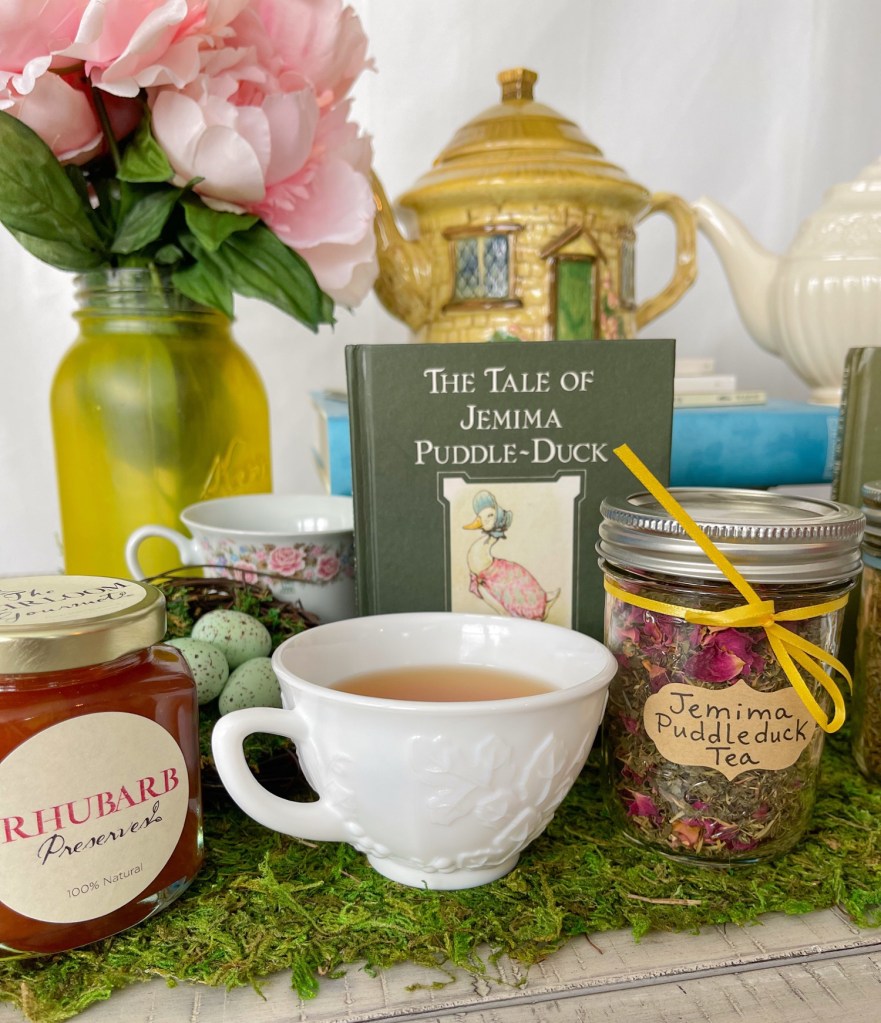
Jemima Puddleduck Tea

My love for Beatrix Potter knows no bounds. I wish so very much that I could sit down to tea with her and learn about her fascinating life! She was far more than just an author and artist: a studied naturalist, a conservationist, an entrepreneur, a generous benefactor to many causes, and an accomplished farmer and gardener.

One of my favorite tales by Beatrix Potter is that of Jemima Puddleduck. Poor Jemima—she just wants to be left alone to sit on her own nest of eggs. The farmer’s wife and children always seem to find her hiding spots, such as the rhubarb bush, and retrieve her eggs for the hen to warm instead. So, Jemima searches out a secluded spot in the woods to hide her nest, only to be offered a shed by an overly-polite foxy gentleman. More unforeseen events befall Jemima, but in the end she avoids catastrophe and hatches four ducklings on her own.

I created an herbal tea blend inspired by Jemima’s story, which includes the mint and thyme the fox requested for their dinner party, roses seen in an illustration of the garden, and rhubarb from the bush she attempted to hide her eggs in. (This tart tea is made with botanicals appropriate for a Beatrix Potter-themed baby shower, children’s birthday party, or Easter brunch!)


Materials

2 parts mint

½ part thyme

1 ½ parts rose petals

Rhubarb preserves or simple syrup

Method

To make a single cup of tea, add 1 tablespoon to a tea strainer, eco-friendly tea bag, or French press. Pour 1 to 1 ½ cups hot water over the tea and steep for 3-4 minutes. Sweeten to taste with a bit of fruit preserves or simple syrup, if desired. (Strawberry can easily be substituted for rhubarb!)

———

This recipe was originally published in the spring 2023 issue of Botanical Anthology


For educational purposes only. Not intended for medical advice. Always consult your physician.

*This post contains affiliate links, which means if you choose to buy something from a link that I share, I will make a small percentage of the sale *at no extra cost to you*.

Categories
Folklore Recipes

Aries Season Herbal Tea

We are firmly in the heart of Aries season, so I am sharing my simple tea recipe meant to help you ground into this energy! My daughter is a very fiery Aries herself so I am all too familiar with the spirit of this sign.


Aries.

March 21 – April 20.

Cardinal Fire sign. 

Ruled by Mars + the Sun.

Bold, driven, ambitious, energetic, fiery, friendly, confident, daredevil, competitive, adventurous, optimistic.

Associated with the Emperor in tarot; the root and solar plexus chakras; yang energy; red, pink, yellow, and white; and diamond, carnelian, citrine, and fire opal.


Aries Tea—

1 tsp nettle

1⁄2 tsp thyme

1 tsp rose

1⁄4 to 1⁄2 tsp cloves

To make a single cup of tea, add 1 tablespoon to a tea strainer, eco- friendly tea bag, or French press. Pour 1 to 1 1⁄2 cups hot water over the tea and steep for 3-4 minutes. Add honey or other sweetener, if desired.


———

For educational purposes only. Not intended for medical advice. Always consult your physician.

*This post contains affiliate links, which means if you choose to buy something from a link that I share, I will make a small percentage of the sale *at no extra cost to you*.

Categories
Herbs and Herbalism Recipes Tea

Springtime Jasmine Pearls Tea Blend

One of my most favorite forms of tea is jasmine pearls! Green tea leaves scented with delicate, luscious jasmine are rolled into little “pearls,” of which you can use 3 or 4 to a cuppa. Not only do I adore the mild floral flavor and relaxing sensation of enjoying this fancy-feeling form of tea, but it is also so lovely acting as the base of springtime tea blends!

Jasmine pearl tea tastes as delightful cold brewed or iced as it does hot. The pearls are convenient for preparing in a pitcher or mason jar, as they are quite easy to avoid when sipping (or you can scoop them out with a spoon). As for a traditional hot brew, green tea needs slightly special treatment! It needs a lighter steep so as not to turn too bitter. However, I’ve found jasmine pearls to be a little more forgiving than other types of loose leaf green tea in this regard. 

It is true that green tea contains caffeine like its other Camellia sinensis counterparts, but less so, which lends well to the calming attributes it is found to possess. The tea plant in general is thought to aid in steadying and balancing the constitution, green tea especially. Jasmine’s presence adds further peace, calming, and uplifting.

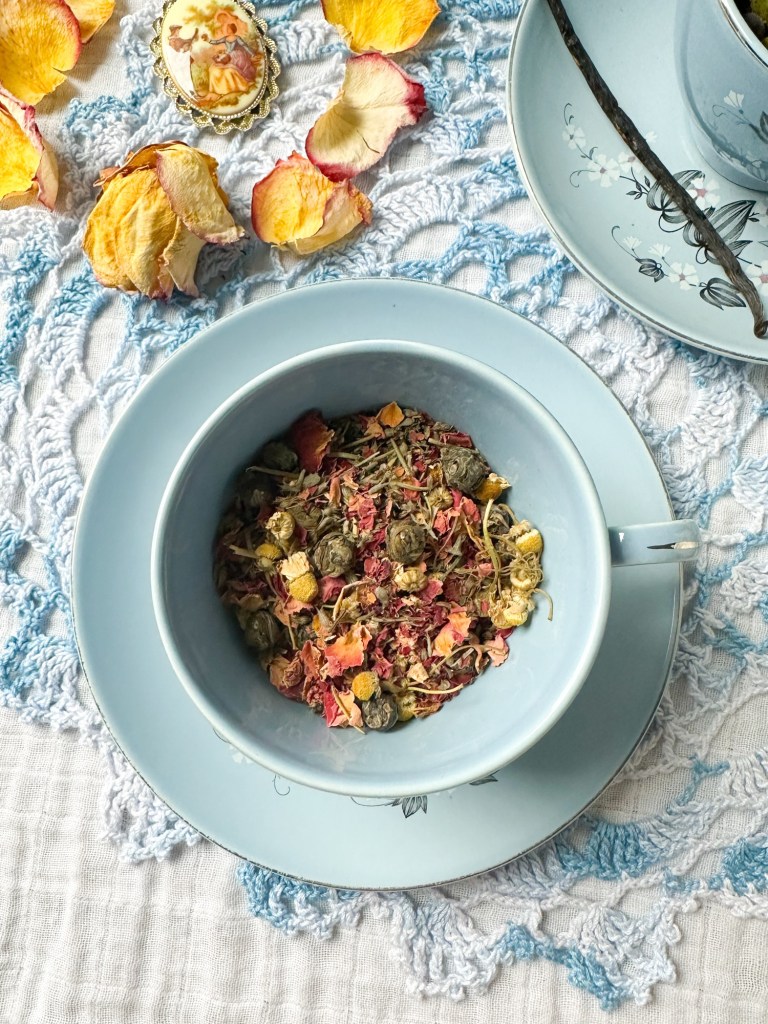
This particular jasmine pearl tea blend includes catnip, chamomile, rose, and rosemary. The combination of light, flowery tea with nervine herbs that bolster the mind and soothe the spirit is the ultimate springtime self-care sigh of contentment!

Here is the full recipe!

For one cup of tea:

3 jasmine pearls 

½ tsp catnip

½ tsp chamomile

½ tsp rose petals

¼ tsp rosemary 

As this contains green tea, be sure to use a slightly lower water temperature (don’t quite bring the water to boiling) and a shorter brew time, about 3-4 minutes.


For educational purposes only. Not intended for medical advice. Always consult your physician.

*This post contains affiliate links, which means if you choose to buy something from a link that I share, I will make a small percentage of the sale *at no extra cost to you*.

Categories
herbal skincare Recipes

Orange, Coffee and Rose Oil Aromatherapy & Eye Serum Roller

We’re in the thick of winter, and it is a time to cozy up with both bright, invigorating aromas to bring a spark of sunshine, and rich, earthy scents for grounding and comfort. Orange and coffee both certainly fit those descriptions!

Orange’s sweetness and tartness give a vibrant boost during the dreary winter. Not only is it a potent reminder of the sun, boosting our mood just like the sun’s rays, but it provides antioxidant and antibacterial benefits that can aid skin. This makes it ideal in both skin and aromatherapy treatments.

Coffee is a botanical that energizes from the inside out. The caffeine in coffee can be invigorating and rejuvenating in skincare, especially tired and delicate under-eye skin. Use an under eye serum with coffee to brighten, awaken, and de-puff. 

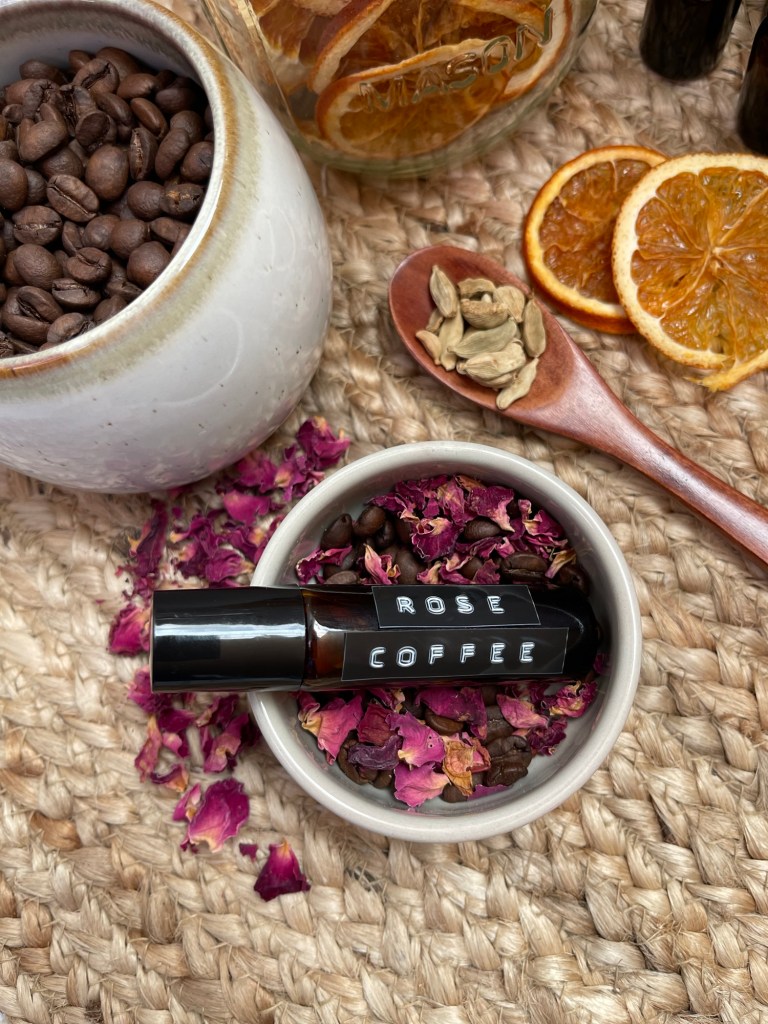
The scents and properties of orange and coffee pair excellently with rose, cardamom, and jojoba oil. So excellently, in fact, that this botanical-infused oil roller can also double as an aromatherapy perfume oil. Jojoba is nourishing and moisturizing, as is rose. While the scent of sweet orange essential oil enhances the uplifting and awakening scent of coffee, cardamom adds a spiciness that imparts earthy complexity. You’ll feel a calming and joyous energy every time you inhale this lovely and luxurious oil. (It would also make a sweet gift or treat to yourself for Valentine’s Day!)

Materials

Directions

To make the rose-infused oil, fill a pint jar about three-quarters full with dried rose petals. Pour jojoba oil to cover petals, leaving about 1 inch of headspace in the jar. Use a chopstick or the handle of a wooden spoon to push the petals into the oil so they are fully submerged. Cover with a coffee filter or cheesecloth and secure with a rubber band. Allow to infuse for four to six weeks, then strain out the rose petals and put the remaining oil in a clean jar. Add 1 teaspoon of vitamin E oil to extend the shelf life of this oil. 

To make an aromatherapy / eye serum roller, fill a 10 ml roller bottle about halfway with rose-infused jojoba oil. Add 5 drops of coffee essential oil, 5 drops of sweet orange essential oil, and 3 drops of cardamom essential oil. (If you have sensitive skin and plan to use this as an eye serum, you can adjust and use less of the essential oils. If you want a stronger scent for aromatherapy, you can add about 3 more drops of each oil.) Fill the remaining space in the bottle with more of the rose-jojoba oil, leaving a little headspace for the roller. Insert the roller and screw on the cap, giving the bottle a swirl to mix the oils in. 

Store any unused portion of the rose-jojoba oil in a cool, dark space. 


For educational purposes only. Not intended for medical advice. Always consult your physician.

*This post contains affiliate links, which means if you choose to buy something from a link that I share, I will make a small percentage of the sale *at no extra cost to you*.

Categories
herbal skincare Herbs and Herbalism Hygge Recipes

Autumn Spice Botanical Hand Soap

DIY botanical hand soap is incredibly simple to make and can bring lovely, refreshing scent, moisturizing properties, and natural ingredients to the sinks in your home. It also makes a nice house-warming or holiday gift!

It is something extra special to concoct your own personalized soap from some of your favorite natural ingredients. You can capture the season, cozy vibes, and your favorite scents all in something you use many times a day! And the process of very easy and fun! My eight-year-old daughter especially enjoys creating this hand soap with me.

Simply combine castile soap, water, herb-infused oil (such as coconut, jojoba, sweet almond, or olive oil), and essential oils (these are optional but help add a stronger scent). You can also add ingredients like vegetable glycerine and/or aloe vera for extra moisturization, and vitamin E oil to extend the shelf life.

For this particular batch of hand soap, I invoked an autumnal energy by including rose-infused jojoba oil, orange essential oil, frankincense essential oil, cinnamon sticks, star anise, dried orange, and a few cloves. The dried botanicals and spices are added for accent and visual appeal, and they are hard enough so they won’t break down too much in the soap mixture to interfere with the soap. If you’d like, envision a warming and cozy intention while adding these to this soap your family and friends will use in your home.

Here is the recipe!


Autumn Spice Hand Soap

Materials:

Instructions:

Starting with a clean jar, add 1 cup water. Add 1/2 cup castille soap and all other ingredients. Replace lid and carefully swirl vigorously to mix. If the jar looks too empty, top up with a bit more water and castille soap.

The mixture will be a bit foamy at the top, and will be thin but luxuriously moisturizing for the skin.

Note: you may need to give it a swirl once in a while as the ingredients can separate while it sits and settles. Also, if very young children or anyone with skin sensitivities will be using the soap, you can omit the essential oils.


Would you make DIY hand soap? Which ingredients or scents would you use in yours?


For educational purposes only. Not intended for medical advice. Always consult your physician.

*This post contains affiliate links, which means if you choose to buy something from a link that I share, I will make a small percentage of the sale *at no extra cost to you*.

Categories
herbal skincare willow & sage

Willow & Sage Autumn 2023

Have you ever read Willow & Sage magazine? It’s a lovely publication that shares recipes, crafts, gardening, uses, and packaging ideas for handmade botanical bath, body, and natural home products. Many creatives contribute these recipes, articles, and photos which make up this unique magazine.

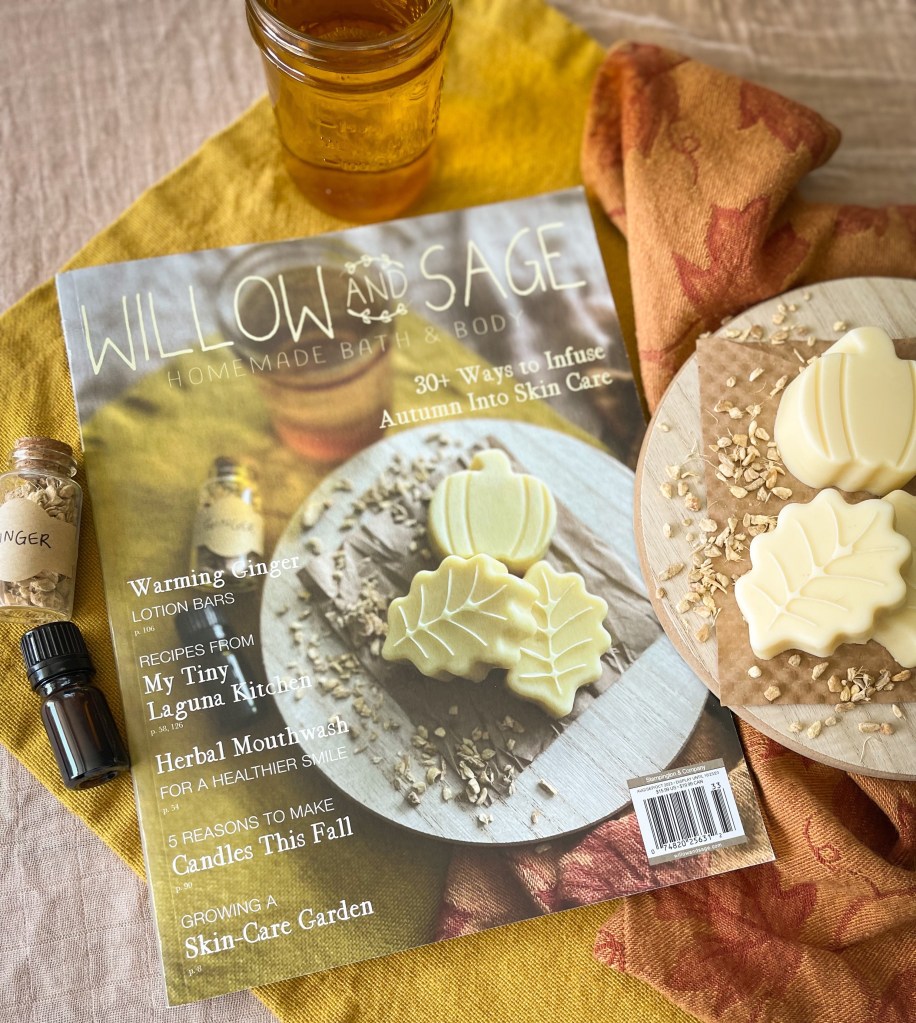
I am so excited to share that a photo I took is on the cover of Willow & Sage magazine’s latest issue, and two articles I wrote are inside! You can find this issue at, among other retailers, Barnes & Noble and Joann, both of which I did on August 1 to see it out in the wild with my own eyes. I am very excited and proud to be a part of this publication!

I wrote the cover article with the recipe for warming ginger lotion bars, as well as an article and recipe for coffee and rose aromatherapy oil. I loved crafting these cozy and creative botanical projects, and I can’t wait to follow the other recipes in this issue to make some amazing creations by all the other contributors.

Thank you to Willow & Sage for this opportunity! I am so thankful for this chance to flex my creative muscles and brew up recipes such as these.

Thank you so much to everyone who purchases a copy or subscription of Willow & Sage, too! I am so grateful for all the ways you support my work.

Categories
Herbs and Herbalism Recipes

Orange Rose Shortbread Cookies

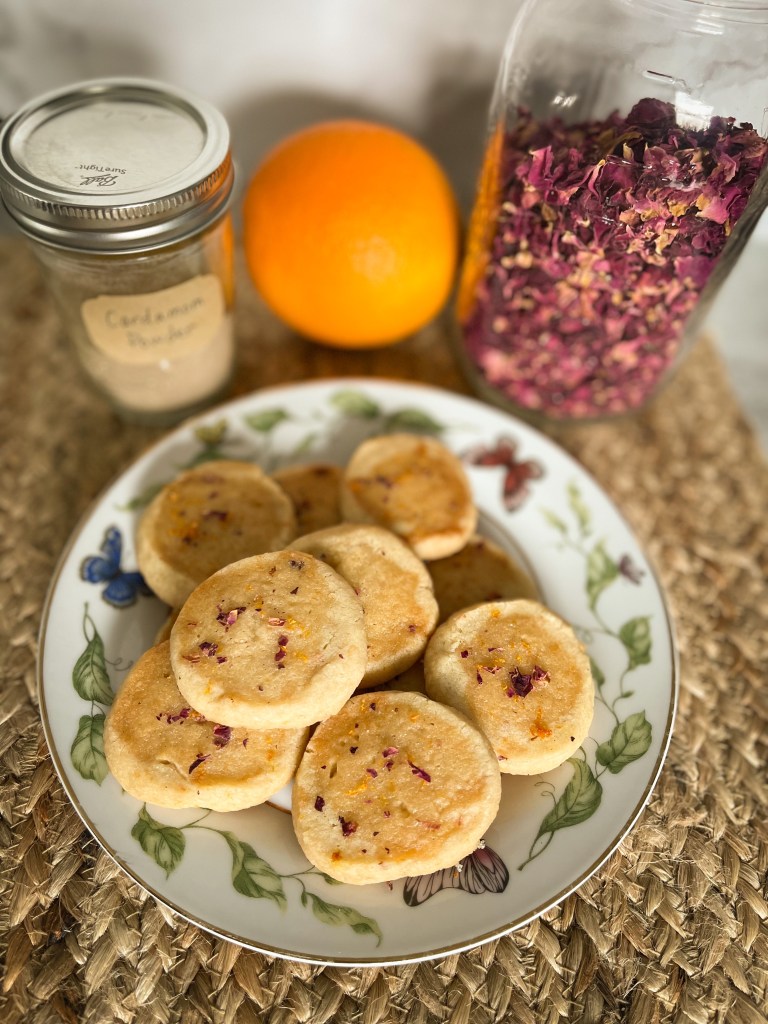
I’ll admit—this recipe was inspired entirely by rewatching old episodes of the Great British Bake Off. I keep seeing shortbread cookies, and hearing them talk of how their “biscuits” have a satisfying snap. My midwestern American palate is much more accustomed to gooey, soft cookies which are delicious but a bit simpler. So I thought I’d try my hand at some springy shortbread cookies—which, of course, had to incorporate herbs.

In addition to a classically sweet and crisp shortbread recipe, I’ve combined the flavors of rose, orange, cardamom, vanilla, and honey. These lend a distinctly layered complexity to the mild taste of the biscuits and help them pair even better with a lovely black tea. (Springtime tea party recipe, perhaps?) Also, all these botanicals are uplifting, bright, and fresh. It’s the perfect light sweet after a winter of heavy sweets and spices.

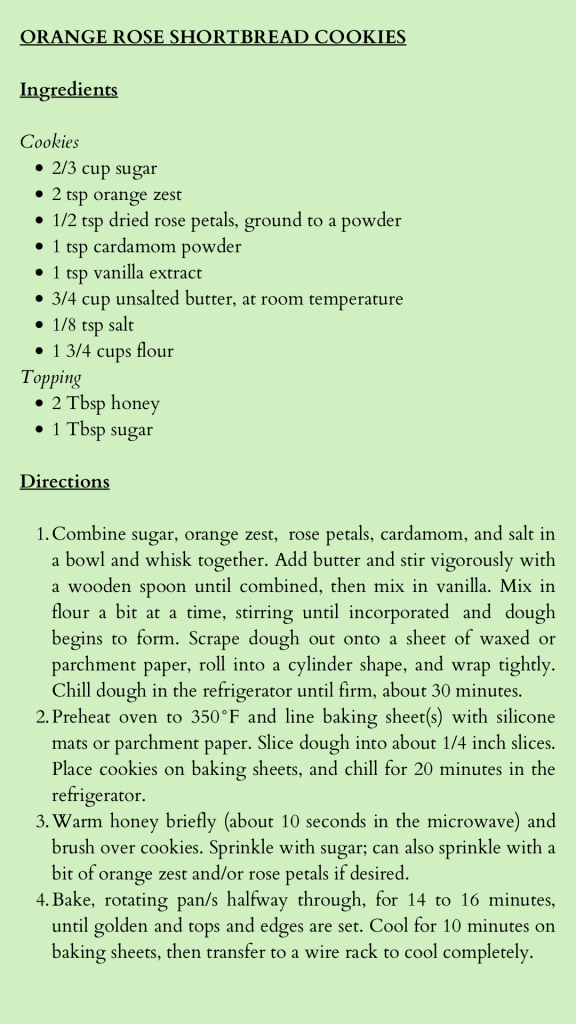
Here is the recipe if you’d like to try them!

Categories
Herbs and Herbalism Recipes

Oregano Face Steam

It’s that time of year: colds, coughs, congestion, sinus headaches, the works. I don’t know about you, but I have a constant runny nose, and often a bit of a cough, once my wildlings start bringing fall germs home from school. This also wreaks havoc on my skin! I get dry, sore skin around my nose and sinuses, and my face just feels dry and tight. 

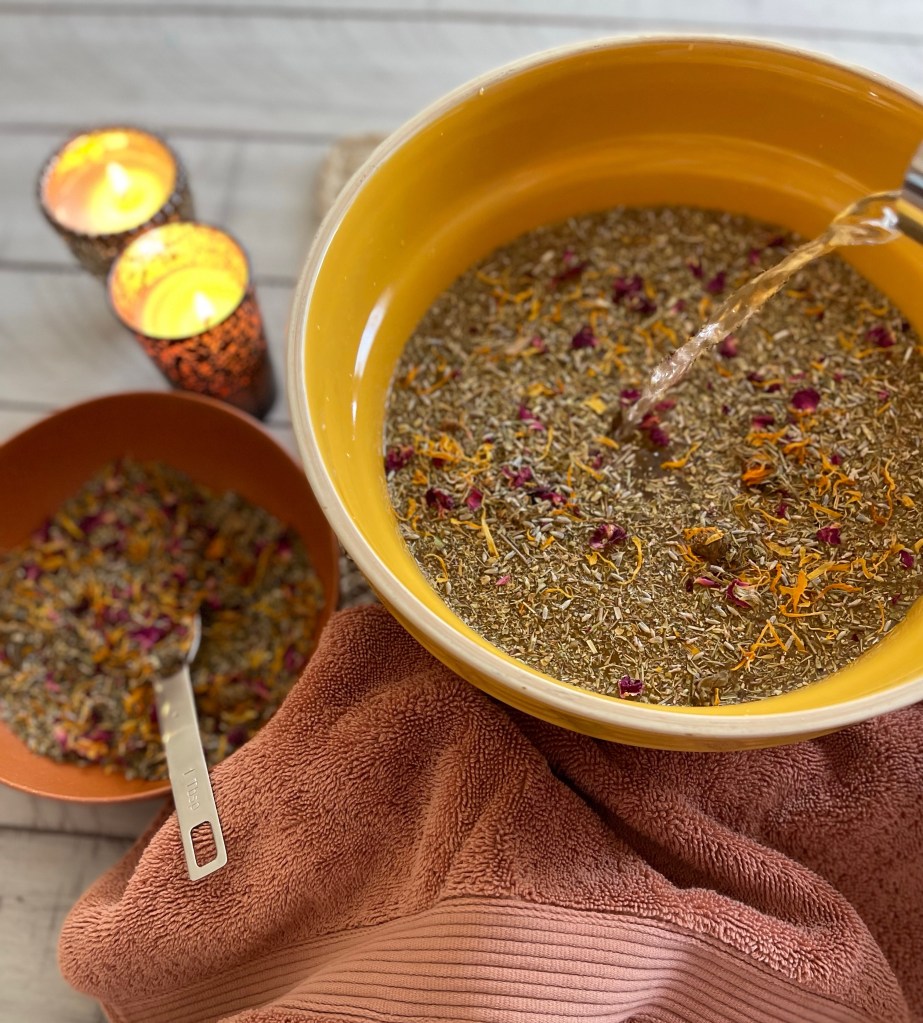
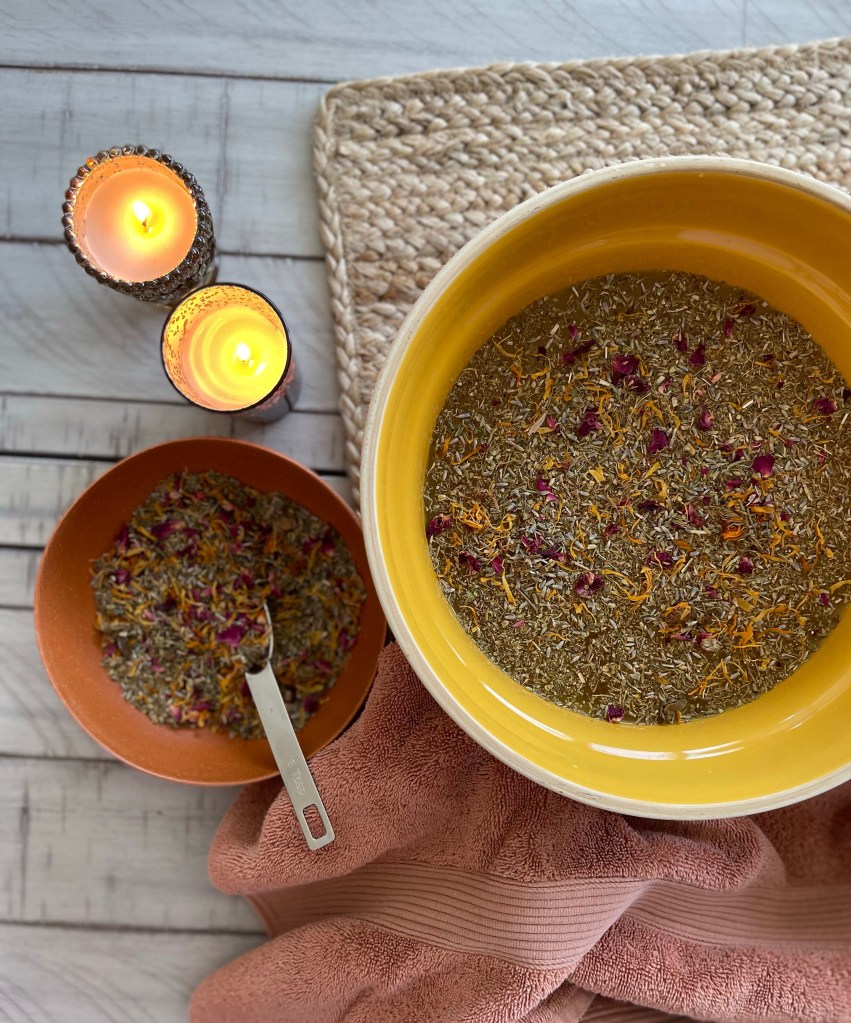
So I decided to try something that would be great for both my sinuses and my skin: a facial steam. It’s really quite easy! Just add your herbs to a big bowl, pour in hot water from your tea kettle, drape a towel over your head, lean over the bowl—trapping in the lovely aromatic steam—and let the botanicals do their magic!

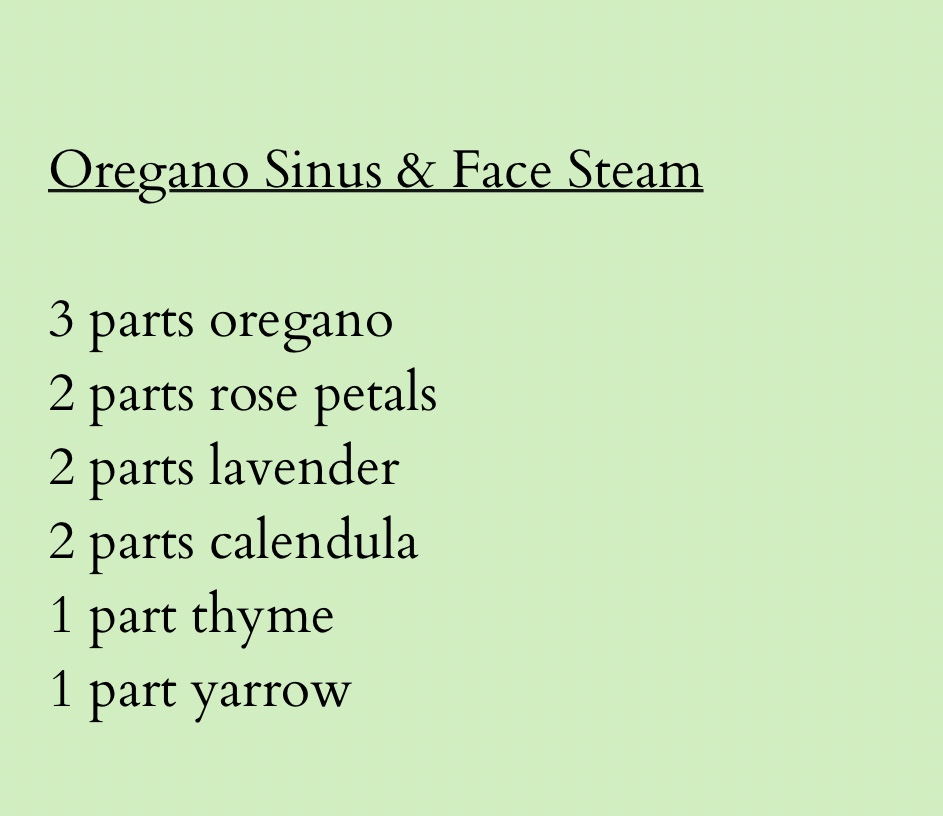
Oregano is the star of the show today. With its antimicrobial and lung-soothing properties, as well as its warming and stimulating effects, oregano is a lovely ally. With it I combined rose petals, lavender, and calendula for my skin issues and yarrow and thyme to boost the sinus clearing and germ-fighting properties. 

Let me tell you, this was a relaxing and divine way to get some relief! I think I’ll be doing this quite often now.

Here is the recipe, so you can try this lovely steam, too! I used dried herbs to make this recipe, which makes it super simple for wintertime use! For the “parts” size, I used tablespoons, then tripled the recipe; this made more than enough of the mixture to put some in a jar and do it again a few more times.

Mix the dried herbs well in a bowl. In a separate bowl, add your desired amount—I’d recommend 2-3 tablespoons. Then add steaming (not boiling) water heated in a tea kettle. Put a towel over your shoulders and head and lean over the bowl, carefully draping the towel to enclose the hot steam with your face. Close your eyes, relax, and enjoy inhaling the fragrant steam for several minutes!


Have you ever tried a facial steam? If so, which are your favorite herbs to include?

Categories
Herbs and Herbalism

Recharging Your Battery With Nervine Herbs

I can’t believe it’s almost June! May has really flown by. Before mental health month is over, I thought I would jump on the blog and talk a bit about one of my favorite types of mental health support: nervine herbs!

Many nervine herbs are gentle and safe for frequent use and can be a part of your daily mental health support regimen. Nervines are known for their benefits to the nervous system, hence the name. They support, tone, nourish, and soothe, offering us calming, anti-anxiety, digestion soothing, pain relieving, and grounding benefits, among many others.

Here are a few of my favorite nervine herbs:

Chamomile

Rosemary (relaxing / stimulating)

Tulsi

Lavender

Lemon balm

Linden

Hawthorn

Elderflower

Rose

Passionflower

Skullcap

Peppermint (stimulating)

Cacao (stimulating)

Most of the preceding list of herbs are normally categorized as relaxing nervines. Relaxing nervines do just what they sound like: they help to relax your nervous system. Stimulating nervines don’t stimulate in the caffeine sense; instead, they are uplifting and stimulate digestion. And some nervines do both at the same time! Also, each different nervine has its own particular chemical constituents that aid in different ways on top of the nervine qualities. For example, hawthorn is amazing for heart health, passionflower and skullcap are helpful in aiding sleep, and chamomile is known especially for helping with pain, cramps, indigestion, and fever.

As with anything, consult your doctor as needed and don’t take huge doses of any herb over short periods of time. But do think about branching out and trying different nervines to see what works well to support your particular needs. 

And since summer is fast approaching here in the northern hemisphere, I am going to leave you with a simple, cooling and soothing infusion recipe featuring nervine herbs. This is a favorite of mine! You can make this with fresh or dried herbs (I grow all of these in my mini herb garden); drink it hot or cold (my summer preference is definitely cold); and sun brew, cold brew overnight in the fridge, or infuse with hot water (I usually prefer to cold brew or sun brew). Regardless of how you make it, the soothing properties of these nervine herbs are a refreshing way to take in a bit of calm.

Soothing Summer Tea:

•Lemon balm – 2-3 parts

•Peppermint – 1 part

•Spearmint – 1 part

•Rosemary – 1 part

•Catnip – .5 part

•Chamomile – .5-1 part

If making with fresh herbs in a large jar, go heavier on the lemon balm and mints and lighter on the other herbs. Also, if drinking this cold, it’s great with a slice or two of lime tossed in. It’s crisp, refreshing, calming, cooling, and supportive — mind and body relief!

Obviously mental health is a complex issue and each person’s medical and therapeutic needs are extremely different. Herbs won’t solve or prevent problems or fulfill all your needs, but they can be a wonderful ally as part of a daily holistic approach.

Which nervine herbs are your favorite mental health allies?