Categories
Herbs and Herbalism Hygge wheel of the year

Yule: Candles, Tea, and Books

Happy Yuletide! I can’t say that I am the most knowledgeable regarding the background and traditions of winter solstice celebrations and rituals, but I am learning more as I go and loving what I learn. I wanted to pop in today to share a few of my favorite cozy Yule traditions with you.

Whether you celebrate Christmas, Yule, a combination, or simply mark the winter solstice, the astronomical beginning of winter and the shortest day and longest night are at the center of this occasion. It is a time of merriment as a way to bring light and cheer into the darkness, and to remind ourselves that the sun and its life-giving warmth will return. This is very much based in the agrarian lifestyle of our ancestors and the greater danger winter posed to their survival. Today we feel the hold-over of these traditions in more metaphorical ways but they’re still deeply ingrained. Other pagan and Christian elements and traditions of this holiday came in later, but all still revolve around the natural occurrence of the winter solstice.

Despite the jolly festivities, as I get older I feel the need more and more to snuggle in at home, slow down, eat cozy treats, and enjoy quiet times with my family just playing games and reading books. I think my connection to the natural world slowing down and going to its winter rest deepens the older I get! So I don’t feel the need for more gifts and parties, but rather candles, tea, and good books.

Candles

I absolutely love making my own candles this time of year. With a few simple, natural ingredients, candles that are healthier and more special than the store bought variety can easily be whipped up in your kitchen. Candles add a warming glow to Yuletide evenings and events, can be given as very special gifts, and you can add your own intention both when you’re stirring the wax to make them and when you take the time to light them each night.

Check out the recipe for these Yule Forest Candles I shared last year, these cozy Pumpkin Spice Coffee Candles from when I was just beginning to learn candlemaking, or purchase the Winter Candlemaking Guide from my Etsy shop to learn how to make candles at home.

Tea

Hot tea is a wonderful way to spend a winter evening during the Yuletide season! There is nothing better than brewing a big pot of tea tailored to the energies of the season, your health, or simply your mood. 

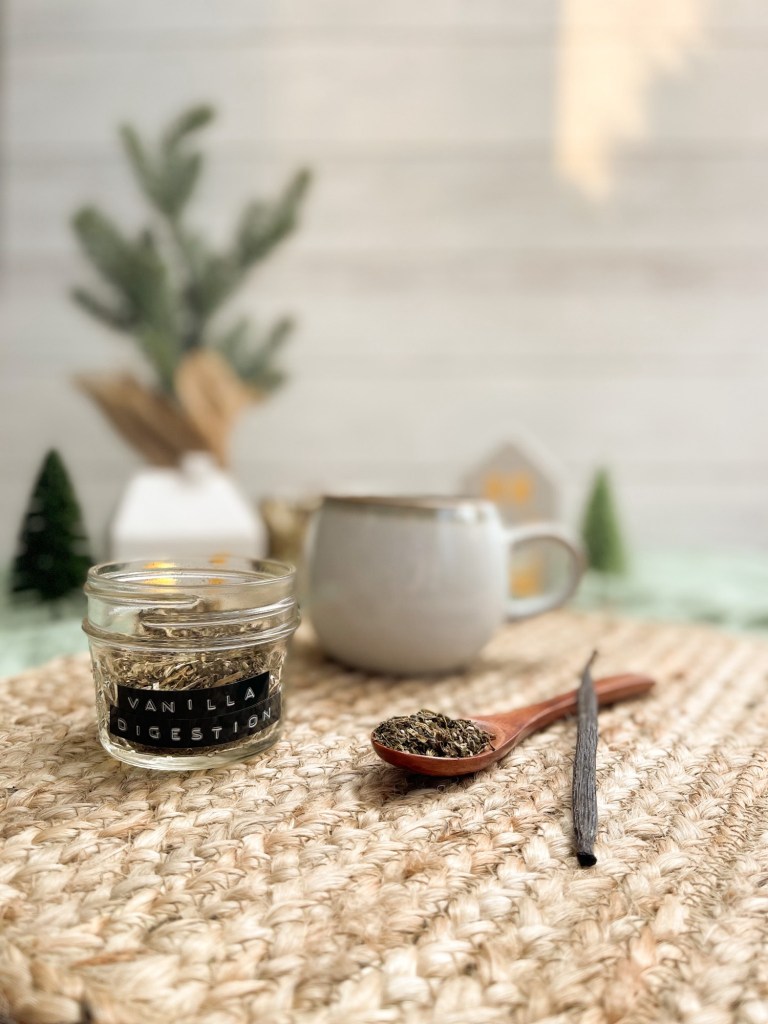
During this season of eating sweets and overindulging, a digestive-boosting tea like the Vanilla Digestion Tea I shared last year can be both helpful and tasty. An Immune Boosting Tea Blend can’t go amiss this time of year, either. Mushroom Coffee makes for a hearty and energizing, yet grounding, brew. Or check out the many other winter tea recipes in my Winter Tea Booklet in my Etsy shop.

Books

I am never at a loss for good books to read! Here I will keep the explanation short and simply share some links to books that are perfect for this season. 

Children’s books about Yule / the Winter Solstice / Wintertime (that are wonderful for adults, too):

The Shortest Day (Susan Cooper)

The Winter Solstice

Goodbye Autumn, Hello Winter

The Tomten

Flower Fairies of the Winter

The Shortest Day (Wendy Pfeffer)

The Nutcracker Ballet

Adult fiction and nonfiction – my recent cozy or cozy-adjacent favorites

Emily Wilde’s Encyclopedia of Faeries

Legends and Lattes

A Spell in the Wild

The Wake-Up Call

The Tale of Hilltop Farm (the Cottage Tales of Beatrix Potter)

The Hobbit

Kitchen Witch

A Morbid Taste for Bones (the Brother Cadfael mysteries)

Little Women

Slavic Kitchen Alchemy

Healing Herbal Teas

What cozy ways are you enjoying the Yuletide season?


For educational purposes only. Not intended for medical advice. Always consult your physician.

*This post contains affiliate links, which means if you choose to buy something from a link that I share, I will make a small percentage of the sale *at no extra cost to you*.

Categories
Folklore Herbs and Herbalism Recipes

Protection Carpet & Sweeping Powder

This time of year, the quest for protection from illness lines right up nicely with the folk idea of protection from negative energy, unfriendly spirits, and the like. Whether you are seeking one, the other, or both forms of protection, there is a simple and cozy way to invoke that sentiment, freshen your house, and refresh the energies of your home: herbal carpet powder!

Did you know that strewing herbs on the floor goes way, way back? From the ancient Romans to the Middle Ages, and even up to about the 18th century herbs were strewn over the floor with rushes and straw to release a pleasant aroma and repel unwanted pests. Some households swept them up each day and replaced them with fresh herbs, while others left them for a longer interval. Rosemary, lavender, chamomile, hyssop, sage, and marjoram were among the many herbs commonly used for this purpose. Modern carpet / vacuum powders aren’t left on the floor for very long—you let them sit for 15-30 minutes before vacuuming back up—but they certainly hearken back to this practice.

While you can easily buy ready-made carpet powders at the grocery store, it is incredibly easy and fun to make your own and stir a bit of intention and personalization into the mix. If you have pets and small children, it would be best to leave out any essential oils or only use the gentlest ones you’re already used to using around your small people and creatures. Otherwise, you can experiment and create your own blend that combines the scents and intentions you prefer!

For this recipe, I’ve used rosemary for protection and remembrance (for the upcoming sabbat of Samhain); allspice and cinnamon for prosperity, luck, and healing; and orange for lovely, cozy, and uplifting vibes. And all these ingredients have antibacterial and antimicrobial properties!


Ingredients:

3 cups baking soda

3 tsp rosemary powder

1 tsp allspice powder

1 tsp cinnamon powder

20 drops sweet orange essential oil

OR 1-2 tsp orange zest

Method:

Mix ingredients well in a bowl and transfer to a glass jar. I used an empty Himalayan pink salt shaker jar because of the convenient shaker lid! Sprinkle on your carpet (and even wood or tile floors if you like), allow to sit for 15-30 minutes, and then vacuum up thoroughly. You can also sprinkle a bit of this powder around doorways and windowsills to repel insects (and maybe more? 👻).


For educational purposes only. Not intended for medical advice. Always consult your physician.

*This post contains affiliate links, which means if you choose to buy something from a link that I share, I will make a small percentage of the sale *at no extra cost to you*.

Categories
Hygge Recipes

Autumn Rain Candles

It has been so very dry where I live lately…but today, we finally got some much-needed autumn rain! It was the perfect time to pull out this Autumn Rain candle and light it to add to the cozy vibes of the day.

For these candles, I combined beeswax, a bit of coconut oil, and essential oils for a natural scent option. (Make sure you do your due diligence in choosing ethical essential oil companies to buy from).

The essential oils I used to emulate the scent of autumn rain (after some experimentation) are ylang ylang, juniper, cypress, grapefruit, and frankincense. To me, this combination evokes the sweet, earthy, and green scent of rain on autumn leaves. That fragrance is a very special sort of magic, isn’t it?!

Here is how I made the candles, if you want to try making your own!


Making 6 4-oz candles—

Materials:

Double boiler (optional)

6 four-ounce jars

6 candle wicks

Wick positioners or popsicle sticks

3 cups beeswax pellets

¾ cup coconut oil

Essential oils:

Ylang Ylang – 40 drops

Cypress – 40 drops

Juniper berry – 25 drops

Grapefruit – 15 drops

Frankincense – 20 drops

(I recommend combining your essential oils beforehand in a glass eo jar to let the scents mix and do their thing before making the candles!)

Method:

Prepare your area; wax will be dribbled! Protect your work surface if you prefer.

Melt the beeswax pellets and coconut oil in the double boiler (can also be microwaved). While they melt, prepare candle jars with wicks, using positioners or popsicle sticks.

Once the wax is melted, remove from heat and carefully add and stir in essential oils. They will not mix or dissolve completely, but will disperse well enough with mixing.

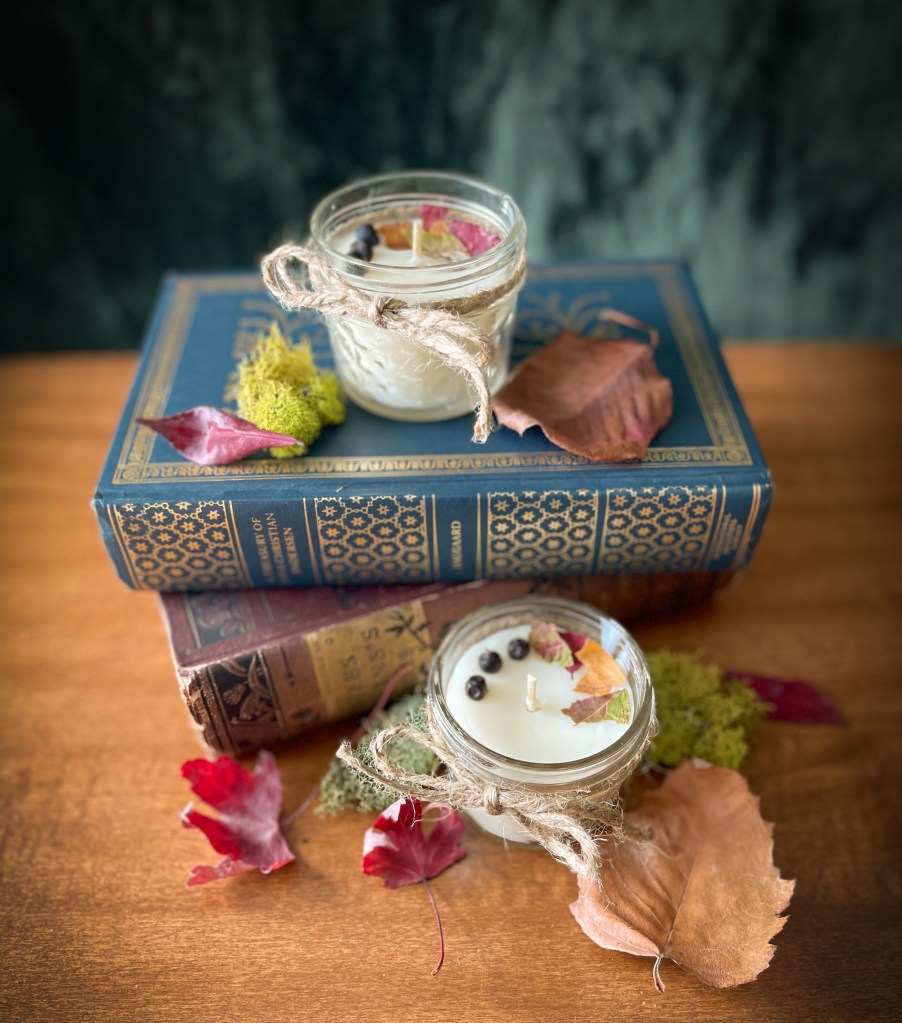
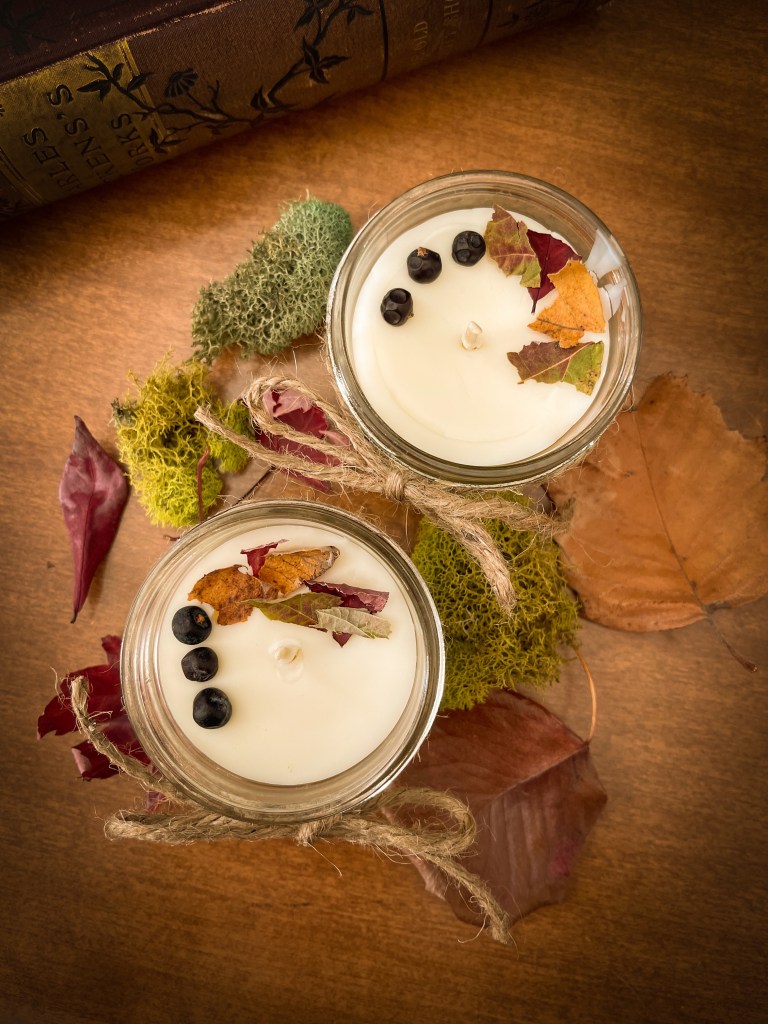
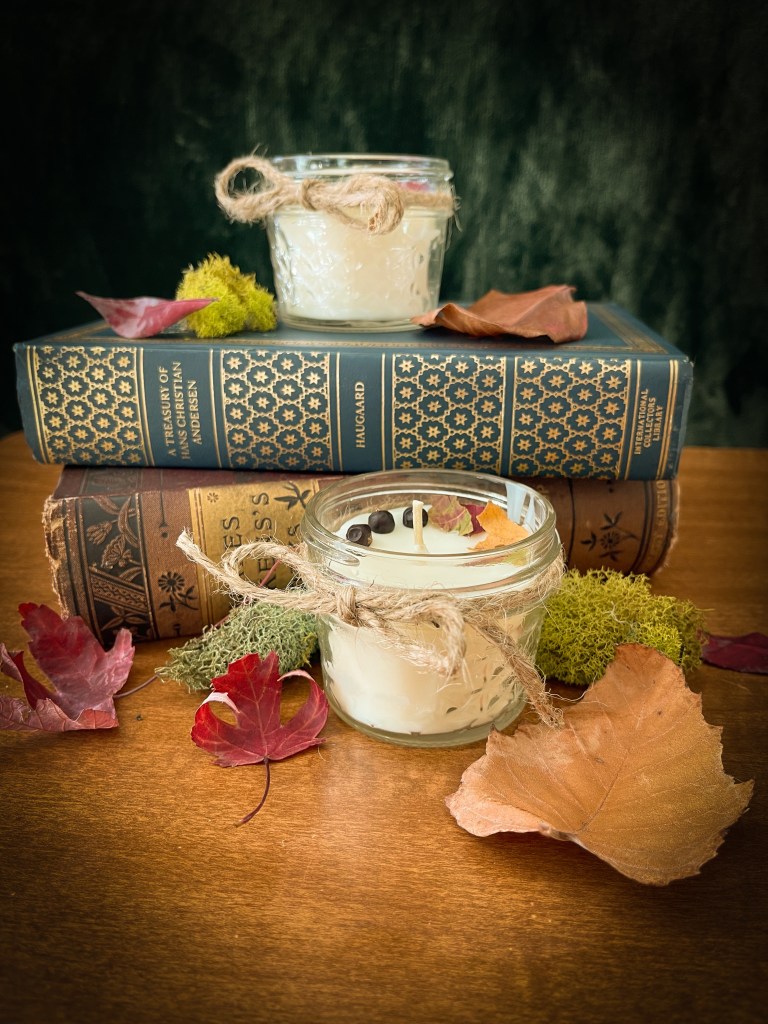
Carefully pour hot wax into jars. Allow wax to cool and set nearly completely before topping with optional adornments. (I used juniper berries and autumn leaves!)

((A trick to avoid wick tunneling: pour the candle wax about half to three-quarters full and allow to cool a bit (you might put them in the fridge to speed up the process). Using a toothpick, poke three or four deep holes into the mostly-set wax and then pour the rest of the hot wax on top. This helps the wax to settle flat and not tunnel around the wick, for some reason!))

Trim wicks and allow candles to cure for a minimum of 24-48 hours before burning. (Longer is better!)


For educational purposes only. Not intended for medical advice. Always consult your physician.

*This post contains affiliate links, which means if you choose to buy something from a link that I share, I will make a small percentage of the sale *at no extra cost to you*.

Categories
Botanical Anthology

Summer Botanical Anthology!

I am so, so very excited to share with you about this labor of love, the Summer edition of Botanical Anthology, which is launching tomorrow, June 12!

I am personally more involved than ever in the production of this publication—aside from writing articles for it, I am now its copyeditor. I’ve worked closely with the magazine’s founder/editor, my friend Harmonie, on the design and content of this edition as well as editing all the articles. I can tell you that all 46 contributors are bringing amazing articles, recipes, and other content centering around summer and how to incorporate herbs in your apothecary, kitchen, spring foraging and gardening, crafts, and summer celebrations.

Here is a sampling of what’s inside:

* Whip up an itch soothing salve, steep a California poppy tincture + infuse an evening primrose oil

* Whisk a milky oats honey mustard, make watermint chocolate chip ice cream + bake a starflower cucumber cake

* Grow amaranth, make fertilizer with comfrey + learn why you should add herbs to your garden

* Create clay mushrooms, eco print with coreopsis + make sidewalk chalk

* Form summer rituals, build a Lion’s Gate altar + discover rose family folklore

* Celebrate Summer Solstice + Lammas with simple observances

* Meet Rebecca Desnos, Susan Leopold + Tiffany Jones


From June 12th – 21st, receive the Botanical Anthology Summer edition digital download, plus our lavender bonus booklet download, for just $18. Come next week, the lavender booklet will no longer be included, and the price will increase.

And now you can purchase a printed option via Amazon!!  Plus we have gift card and digital subscription options on our website!

As a thank you for being here with me as a BLOG FOLLOWER, enjoy $3 off the publication with the code: BASummer23Take$3

Thank you so much for taking the time to read this message as I share my excitement about this magazine I am so lucky to be a part of. If you’d like to learn more about the publication and what’s inside, and consider buying your own copy, follow this link:

Botanical Anthology Summer

Categories
herbal skincare Herbs and Herbalism Recipes

Easy Oat & Chamomile Face Mask

I’ve recently realized how easy it is to make soothing herbal face masks, and now I’m hooked! They’re versatile, ingredients are interchangeable, and you can definitely make them without a formal recipe. I am just getting started, but I can’t wait to experiment with all kinds of combinations (and share my favorites with you here)!

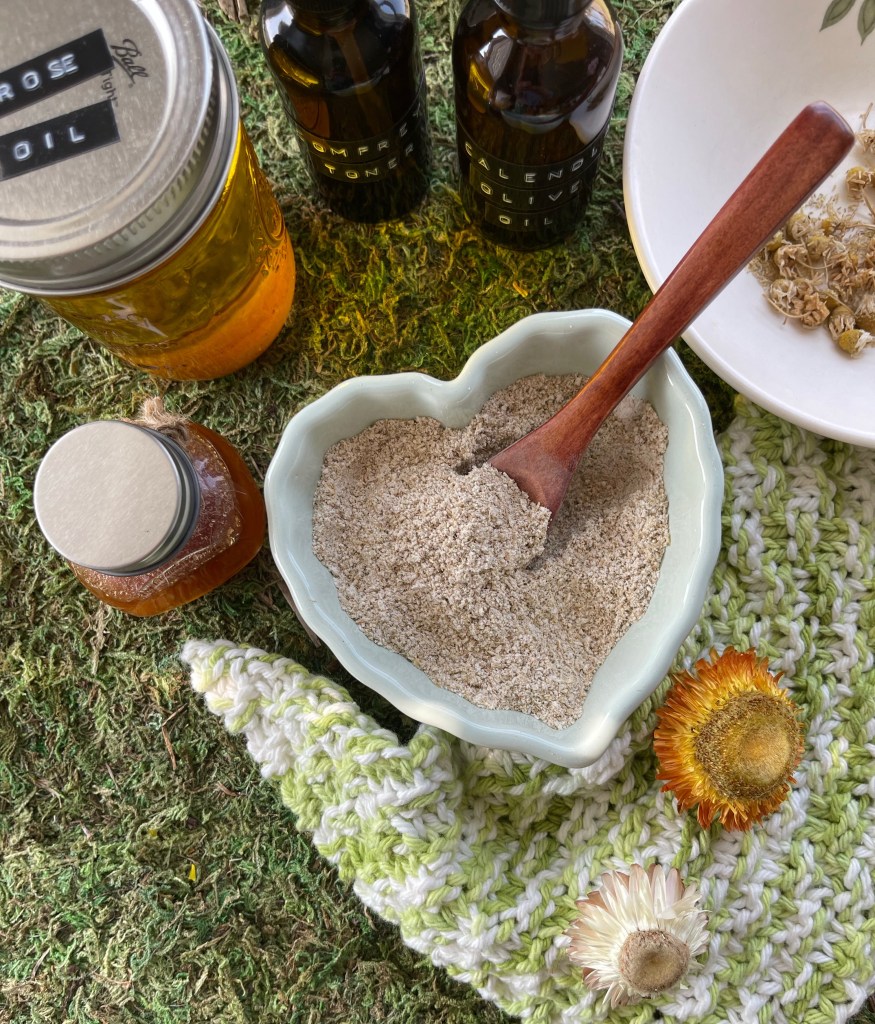
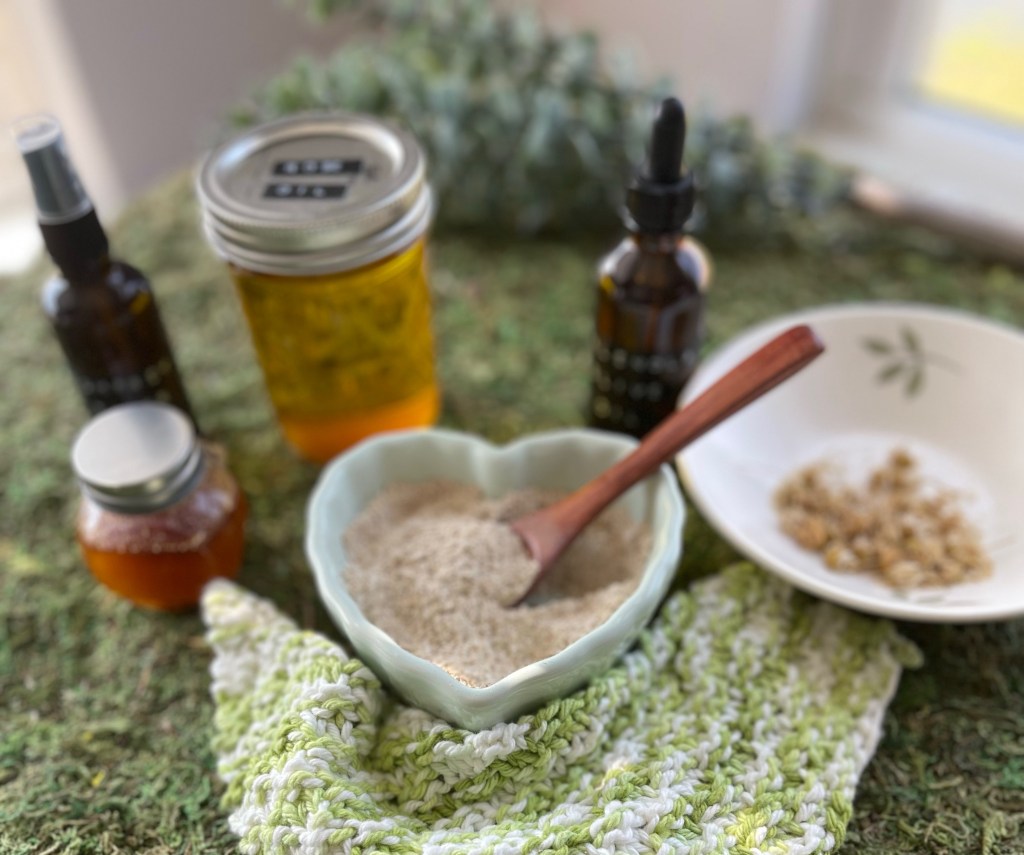
Today’s face mask is a very gentle, soothing one that is great for sensitive skin. Even your kiddos can try this one out! It combines powdered oats, chamomile, and cardamom for the dry ingredients—which you can store in a jar with a long shelf life, and simply combine a bit with the wet ingredients that your skin needs each time you use it.

Oats are extremely nourishing and soothing to skin, adding moisture and calming redness. Chamomile does much the same and is often included in skincare products for that reason! Cardamom has antibacterial properties and can help clear your complexion.

As far as wet ingredients to moisten the face mask, you can choose between many options based on your skin’s needs! Here are a few ideas; you can play with amounts to mix in for the sake of the mask’s consistency on your face.


  • Honey: antibacterial, helps with scars, mildly exfoliating (you’ll definitely need a thin liquid too to make the mask less sticky if you use honey)
  • Herbal toner: a witch hazel and herb infusion (like the comfrey one pictured) adds acne fighting and pore toning benefits
  • Rose water or other herbal hydrosol: gentle, nourishing, moisturizing, soothing, and smells amazing
  • Black or green tea: tightens pores, tones, purifies
  • Herb-infused oils: moisturizes and conditions dry and/or aging skin, feels super luxurious, and helps the mask have a lovely consistency
  • Aloe Vera: healing for acne scars and skin rashes, soothing, and tightening

Don’t be afraid to experiment with amounts! In the pictured dry mask base, I used 1/4 cup oats, 2 tablespoons chamomile, and 1/2 teaspoon cardamom. But experiment with amounts to get a consistency you love! Then apply to clean skin with a makeup brush, leave on for 10-15 minutes, and rinse off with lukewarm water.

What are your favorite face mask ingredients?

Categories
Herbs and Herbalism plant wonder collective Recipes

Dill Potato Soup

For dill month with the Plant Wonder Collective, I decided to make potato soup! Dill pairs so nicely with potatoes, and gives the soup a fresher flavor for springtime rather than a heavier, wintry taste.

You could make your own favorite potato soup recipe and simply add dill in wherever herbs are called for, or you can try out this easy slow cooker recipe I used!

Slow Cooker Dill Potato Soup

Ingredients

  • 6 slices bacon, diced
  • 2-3 pounds petite red/gold potatoes, chopped (no need to peel)
  • 3-4 cups chicken stock
  • 1 yellow onion, chopped
  • 3-4 cloves garlic, minced
  • 2-3 sprigs fresh dill
  • 2 sprigs fresh thyme or 1 tsp dried thyme
  • 1 tablespoon butter
  • 1 cup shredded cheddar cheese, plus more to top
  • 1 pint (16 oz) heavy cream
  • Salt and pepper, to taste

Directions

  • Cook bacon according to your preferred method.
  • Add potatoes, bacon, 3 cups of the chicken stock, onion, garlic, dill, thyme, and butter into 4-quart slow cooker and stir to combine.
  • Cover and cook, on low heat for about 7-8 hours or high heat for about 3-4 hours, until potatoes are tender.
  • Use a potato masher to mash the potatoes to your desired consistency. Add in cheese and heavy cream, stirring until smooth. Salt and pepper to taste.
  • Replace cover and cook on low heat until warmed through, stirring occasionally, for about 15-20 minutes. If the mixture is too thick, add more chicken stock as needed.
  • Top with more shredded cheese to serve.

Recipe adapted from this one by Damn Delicious.

Categories
Herbs and Herbalism Recipes

Orange Rose Shortbread Cookies

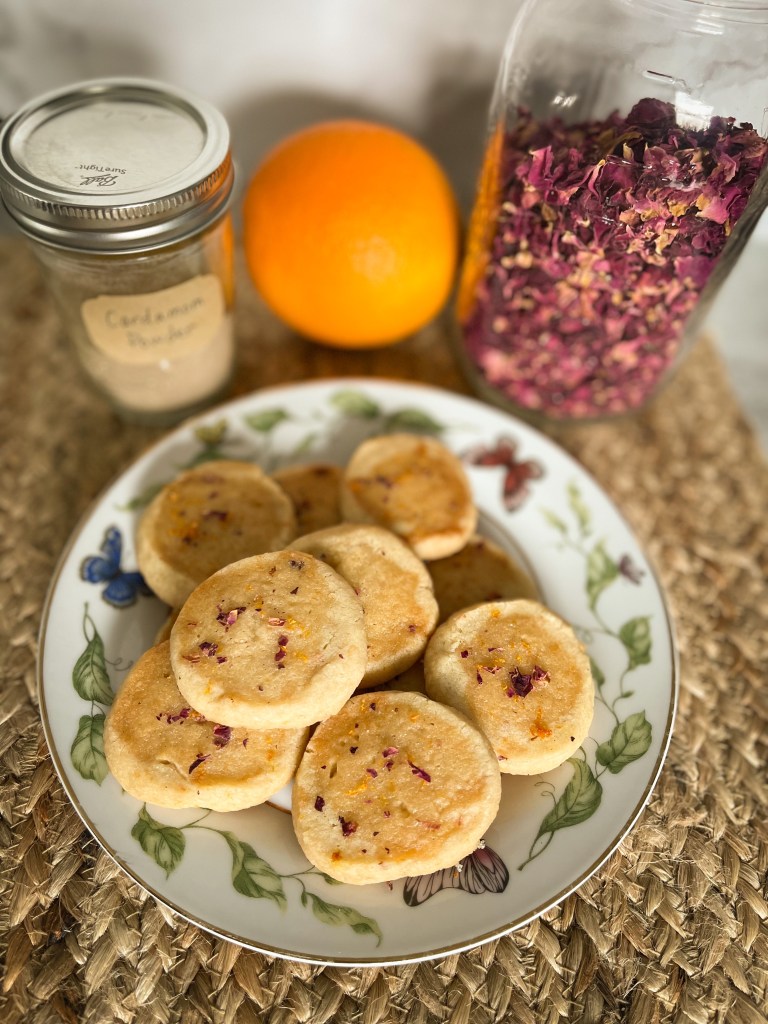
I’ll admit—this recipe was inspired entirely by rewatching old episodes of the Great British Bake Off. I keep seeing shortbread cookies, and hearing them talk of how their “biscuits” have a satisfying snap. My midwestern American palate is much more accustomed to gooey, soft cookies which are delicious but a bit simpler. So I thought I’d try my hand at some springy shortbread cookies—which, of course, had to incorporate herbs.

In addition to a classically sweet and crisp shortbread recipe, I’ve combined the flavors of rose, orange, cardamom, vanilla, and honey. These lend a distinctly layered complexity to the mild taste of the biscuits and help them pair even better with a lovely black tea. (Springtime tea party recipe, perhaps?) Also, all these botanicals are uplifting, bright, and fresh. It’s the perfect light sweet after a winter of heavy sweets and spices.

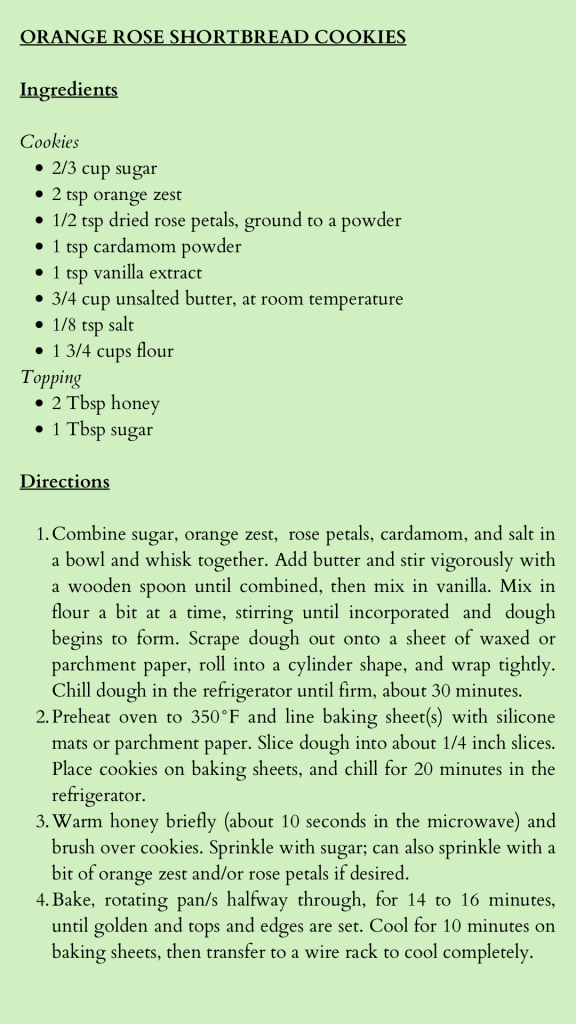
Here is the recipe if you’d like to try them!

Categories
Tea wheel of the year

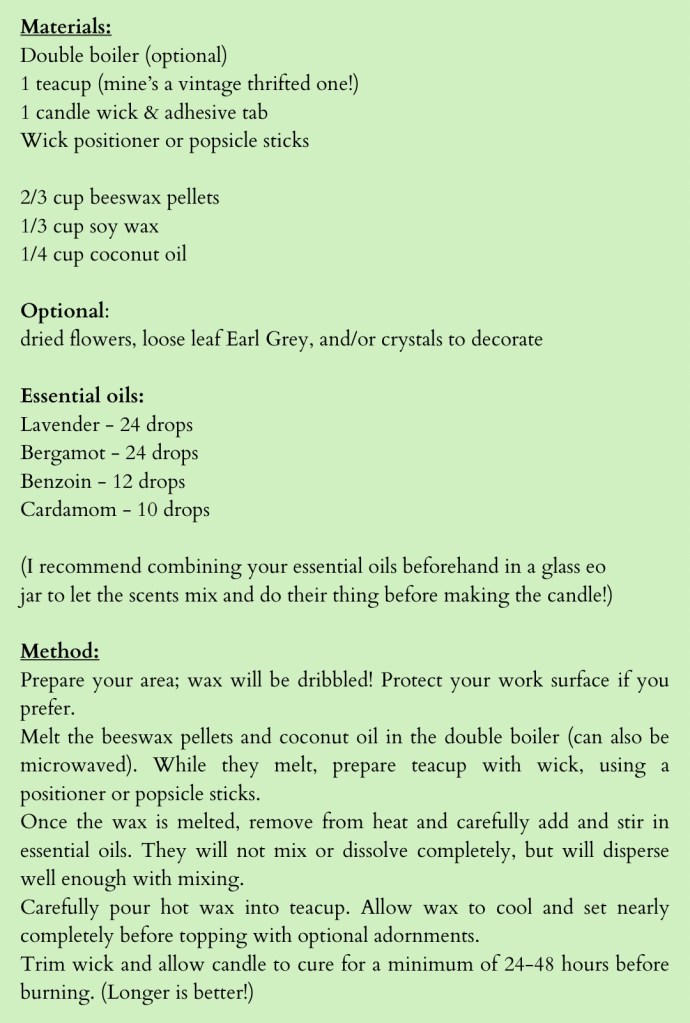
Lavender Earl Grey Ostara Candle

I don’t know why exactly, but spring makes me think of Earl Grey tea. Maybe it’s the citrusy bergamot, or the fact that I’m just more in the mood in spring than any other season to drink black tea…it’s more stimulating than caffeine-free herbs, but lighter than coffee. Maybe flowers and tea parties just make me think of spring? I don’t know, but let’s go with it!

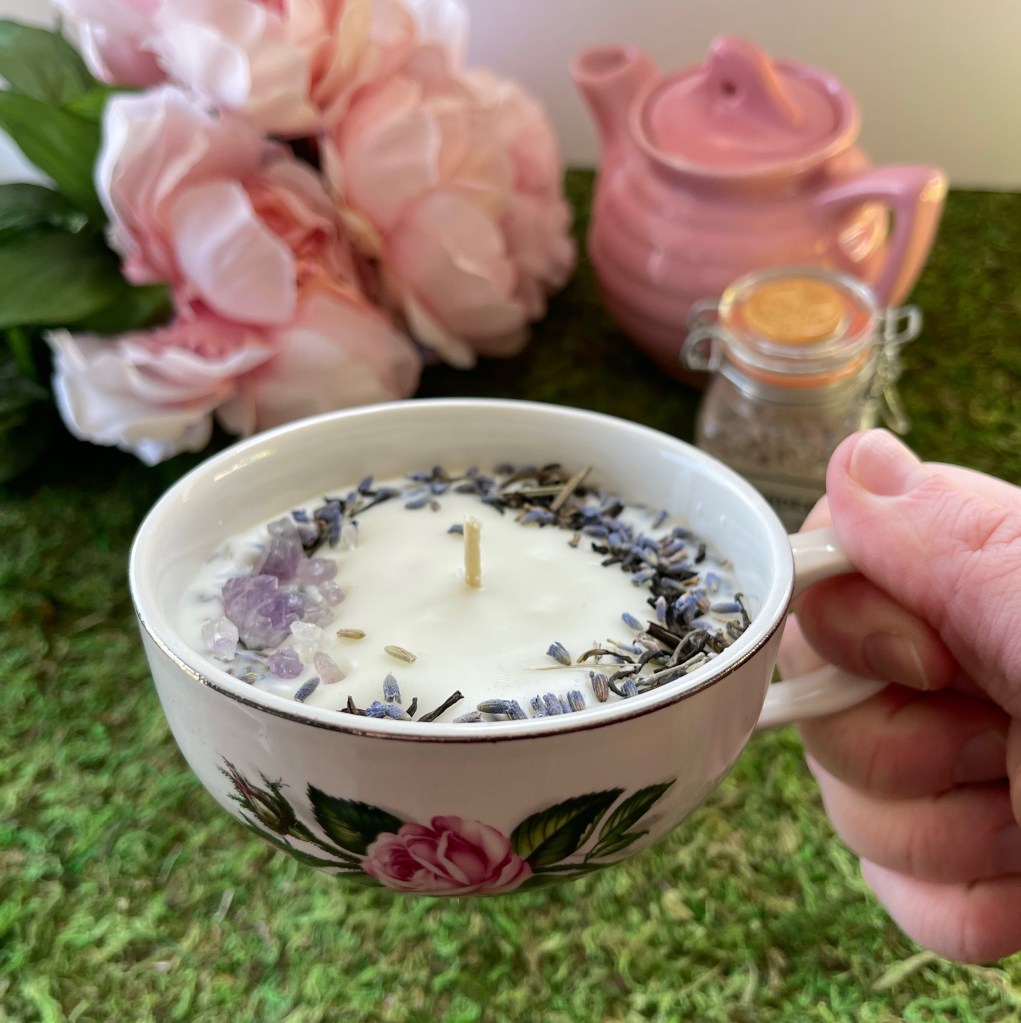
In that spirit…I decided to make a lavender Earl Grey teacup candle to welcome Ostara. To me, Ostara, or the Spring Equinox, is the true start of the new year: the awakening. What better way to brighten the sweet first morning of spring than lighting this candle to add to the warmth of the sun, and enjoying a mug of Earl Grey tea?


The essential oils I chose to scent the candle with do have associations that fit quite well with the spirit of the occasion:

Lavender- love, protection, calm, peace, insight

Bergamot- happiness, harmony, love, courage

Benzoin- purification, prosperity

Cardamom- creativity, strength, focus, healing


Benzoin oil imparts a warm, creamy vanilla-like scent which reminds me of adding milk to tea, and cardamom adds a tea-like quality. I also topped the candle with amethyst, quartz, lavender buds, and a bit of actual lavender Earl Grey tea.

Here are the instructions, in case you’d like to make one of these sweet candles yourself!

This Ostara season I’m planning to enjoy this little candle with tea and shortbread cookies with the two of my three children that actually like tea. (Two out of three isn’t bad, and he will still eat the cookies!) —cookie recipe soon to come.

How will you mark the Spring Equinox / Ostara?

Categories
Recipes Tea

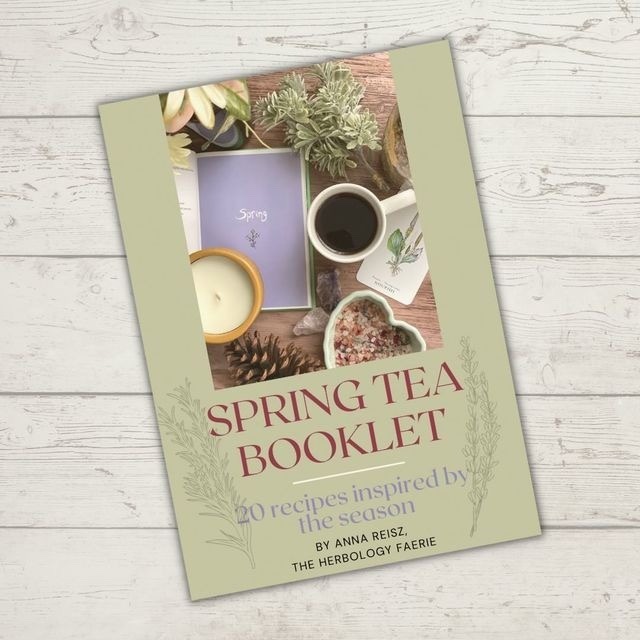
Spring Tea Recipe Ebook!

I am so proud to say that I’ve written a recipe ebook! It is available for purchase now in my Etsy shop, HERE.

The Spring Tea Booklet contains 20 tea recipes based on the season, nature, nature-based festivities, folklore, art, cozy aesthetics, and more! It also includes tips on tea-making and sourcing herbs and ingredients.

Lovingly created, written, photographed, and designed by folk herbalist Anna Reisz (me!!), this tea recipe booklet is a cozy and magical way to ground into the season. These recipes are approachable and perfect for anyone, from beginners to experienced tea blenders. Draw on the inspiration in these pages to create teas for self care, parties and special occasions, gifts, and more.

Recipes include:

Spring Full Moons (3 recipes)
Persephone
Ace of Wands
Robin
Cottagecore
Anne Shirley
Element: Air
Spring Equinox
Light Academia
Spring Forest
Intention: Creativity
Spring Zodiac Signs (3 recipes)
Beltane
Brigid
Beatrix Potter
Spring Dreams

I am grateful to anyone who considers taking a peek at this creation that I am proud of and considers purchasing a copy. This cozy herb thing is something I do because I love it, and I am so happy when others think it is pretty cool, too. Your support helps me continue to be able to do this—learning, creating, and sharing.

Categories
Botanical Anthology Folklore Hygge Recipes

Juniper Folklore

“The odor of burning juniper is the sweetest fragrance on the face of the earth, in my honest judgment; I doubt if all the smoking censers of Dante’s paradise could equal it.”

—Edward Abbey


Happy (belated) New Year!

Today, my wildlings are back at school, and I am celebrating the beginning of the new year with a simmer pot containing dried juniper berries, pine needles, orange slices, cinnamon, rosemary, and cloves. (You can read more about it on my Instagram post HERE.)

Did you know I wrote an article all about juniper folklore for the recent Winter Botanical Anthology? I’m case you missed it, and because juniper is such a lovely botanical for this time of year, I thought I’d share that article with you here today!


Though it’s perhaps not the first evergreen one thinks of in connection to winter, juniper has a long and storied history that often ties it to the colder parts of the year. 

Juniper represents hope and warmth, thriving in overwrought soil where other trees can’t. It is symbolically, elementally, and astrologically associated with fire, ruled by the Sun and closely tied to Mars. Juniper also symbolizes eternal life.

The juniper tree’s berry-like cones and twigs provide food for animals, often the only available winter sustenance. They offer culinary and medicinal uses for humans, and there are many ritualistic applications for juniper’s wood and berries, as well. It is quite interesting how juniper’s folk associations mirror its medicinal uses.

The age-old use of juniper medicinally for healing, relieving stagnation, and protection from diseases probably stems in large part from the berries’ diuretic and anti-inflammatory properties. One of the most pleasant ways to administer these medicinal benefits came in the form of gin, the juniper berry liquor that dates back as far as the 11th century, as well as medicinal juniper twig beer. 

In accord with these historical medical practices, juniper was—and still is—used in folk practice for protection. For disease, poison, plague, spirits, demons, and especially thievery, juniper has been a potent ward. 

Often, smoke and charms are the vehicle by which juniper performs this protective service. Many cultures, including ancient Greeks and Egyptians, used juniper incense in this manner. Various types of protective amulets and charms were made from juniper berries, as well. The trees have even been long used in some places as Yule or Christmas trees or greenery for some added protection.

The Scottish have a long-standing winter tradition. The day after Hogmanay, the celebration of New Year’s eve, women would perform a saining, a smoke cleansing of the entire house with smoldering juniper branches. The aromatic smoke was carried and dispersed throughout the house for blessings, purification, and protection for the coming year; the same was performed through barns and to purify livestock. 

Several species of juniper are also native to the Americas, as reflected by juniper’s presence in many indigenous Americans’ traditions and tales. Among those, the Hopi, Navajo, Blackfoot, and Seneca tell legends surrounding the tree or its berries. A Seneca tale involves junipers and other evergreens standing up to old man winter so spring may return. 

While winter persists, perhaps juniper is a plant to explore a deeper relationship with. Whether it’s branches in greenery that decorates the home, fragrant incense, or even a sip of gin, inviting juniper in is a way to connect to this plant’s long history.