Categories
Herbs and Herbalism Recipes

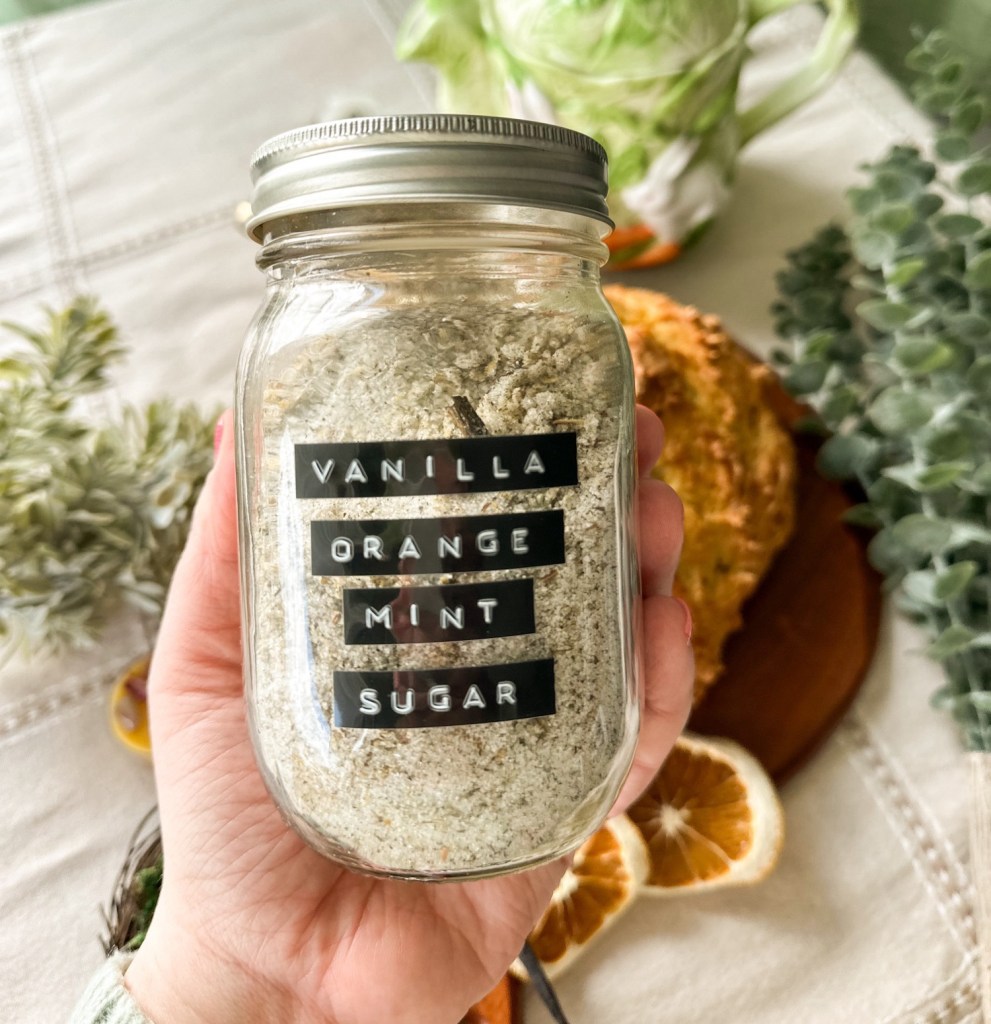
Orange & Herb Infused Sugar

I love making herbal sugars! They are so versatile, and can be used for so many things—like to sweeten tea and hot beverages, adorn a mocktail or cocktail glass rim, sprinkle on sugar cookies / shortbread cookies / other baked goods, add pizzazz to oatmeal, and even to make a batch of sugar scrub for botanical skincare purposes!

Orange is the star of this particular blend of herbal sugar. With its bright, tangy flavor, vitamin C punch, and complexity of bitter + sour + sweet, it adds depth and delight. 

Orange offers so many nutritional and medicinal benefits. It aids the immune system, the heart, addresses inflammation, offers antioxidant benefits, and a host of other perks!

Herbal sugars can be utilized for ritual and spiritual purposes, too, and orange shines in this role. Orange is associated with love, joy, prosperity, luck, and divination. You could certainly change up the ingredients to suit your intentions, but the following recipe would certainly boost intentions of sweetness, joy, and love!


Orange & Herb Infused Sugar

Ingredients

Method

Mix white sugar, fresh orange zest, peppermint, and one vanilla bean (split and scraped, then the whole bean tossed in) in a bowl. Then spread it out to dry awhile on a cookie sheet before transferring the mixture (including the vanilla bean) to a jar. The vanilla bean will continue to impart its sweet flavor in the sugar and it will only get better!

Let the jar sit tightly lidded for a few days to infuse with all the lovely orange oil and vanilla before using it in all the delicious and creative ways you can imagine!
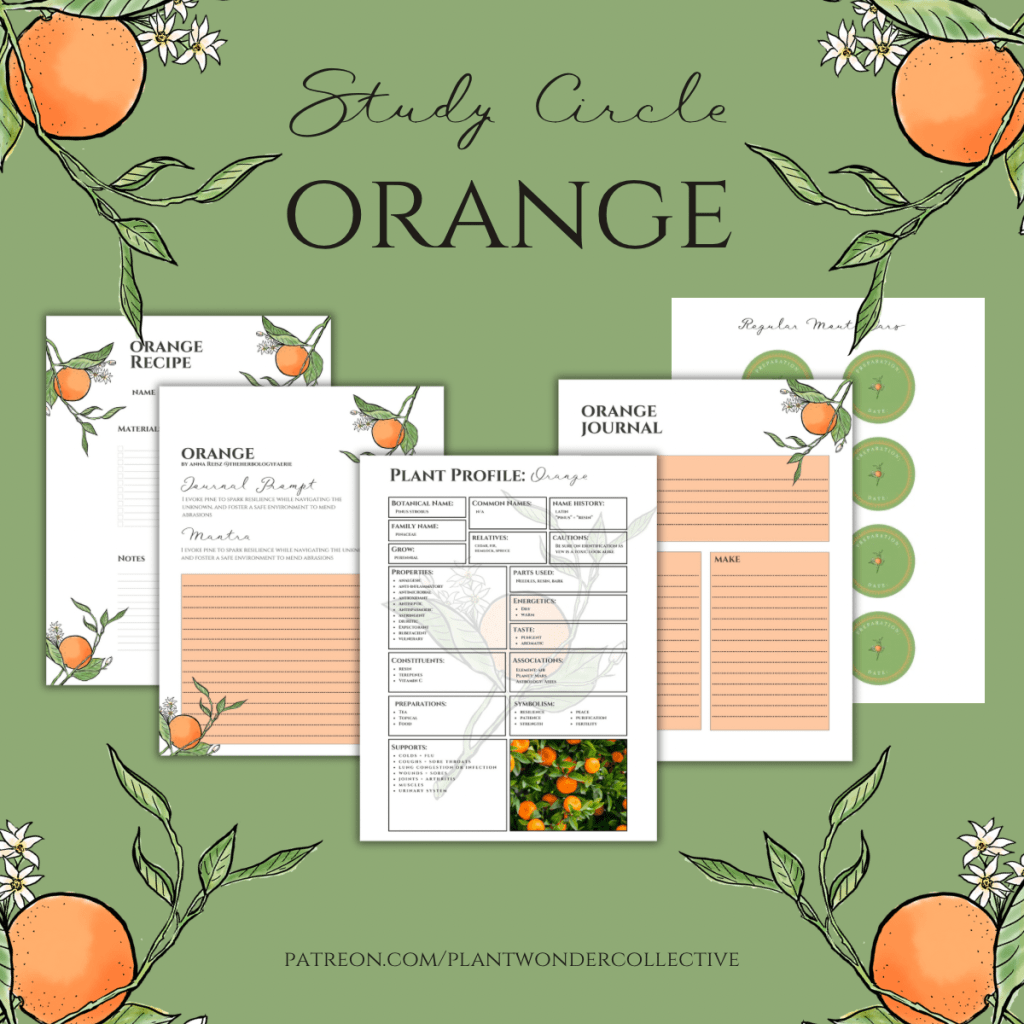

It is ORANGE month at the Plant Wonder Collective Patreon Study Circle! If you’d like to support the work of PWC, please consider joining our Study Circle for exclusive recipes, articles, digital downloads and printables for the plant of the month.


For educational purposes only. Not intended for medical advice. Always consult your physician.

*This post contains affiliate links, which means if you choose to buy something from a link that I share, I will make a small percentage of the sale *at no extra cost to you*.
Categories
Recipes Tea wheel of the year

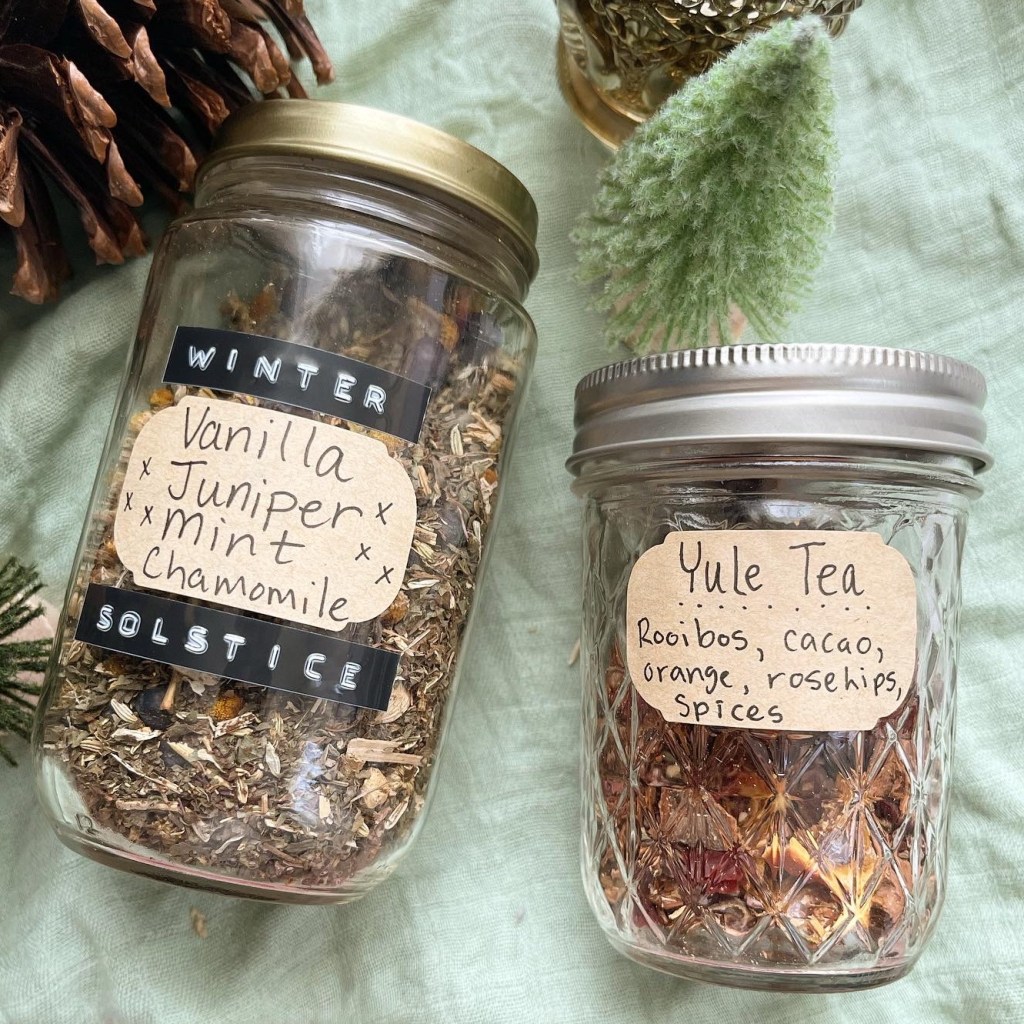
Yule + Winter Solstice Tea Blends

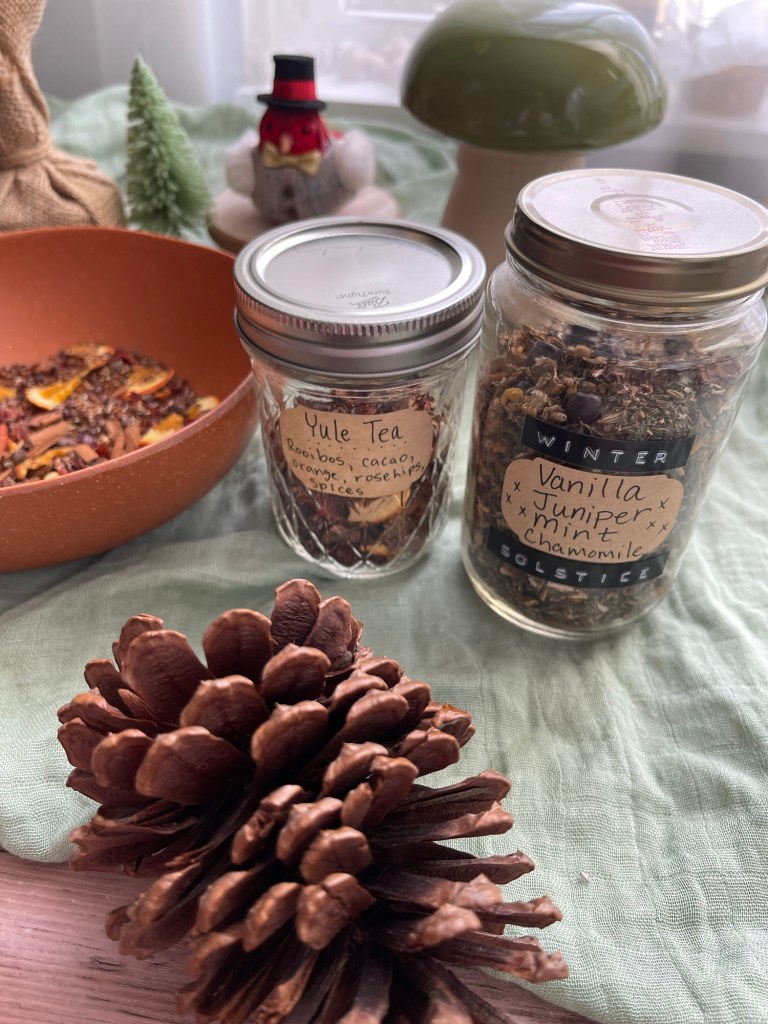
Today I’m sharing two herbal tea blends to enjoy for Yule // the Winter Solstice!

The Yule Tea blend is a sweet and festive spiced sip, full of immune-boosting ingredients that taste lovely. The combo of orange and spices is traditional for the season, in part because of those properties and in part because of associations with protection, divination, prosperity, and luck derived from them.

Yule:
1 tsp rooibos
1 tsp cacao nibs
½ tsp orange peel
½ tsp cinnamon pieces
½ tsp rose hips
¼ tsp allspice berries
¼ tsp star anise
¼ tsp nutmeg

The Winter Solstice Tea tastes decadent like a holiday cake, but without the heartburn or feeling of overindulgence! With soothing herbs that promote digestion, relieve pain, and aid in circulation, it’s like a sweet, warm hug. And chamomile represents the sun that returns brighter each day after the solstice; juniper is a powerful talisman of winter protection, cleansing, and luck; and the other botanicals have ties to healing, love, and luck, too.

Winter Solstice:
1 tsp chamomile
1 tsp mint
½ tsp meadowsweet
½ tsp cinnamon pieces
¼ tsp ginger
¼ tsp vanilla bean powder or ¼ a vanilla bean
4-5 juniper berries
2-3 cardamom pods

To brew—

To make a single cup of tea, add 1 tablespoon to a tea strainer, eco- friendly tea bag, or French press. Pour 1 to 1 ½ cups hot water over the tea and steep for 3-5 minutes. Add honey or maple syrup to taste, if desired.


For educational purposes only. Not intended for medical advice. Always consult your physician.

*This post contains affiliate links, which means if you choose to buy something from a link that I share, I will make a small percentage of the sale *at no extra cost to you*.
Categories
Recipes Tea

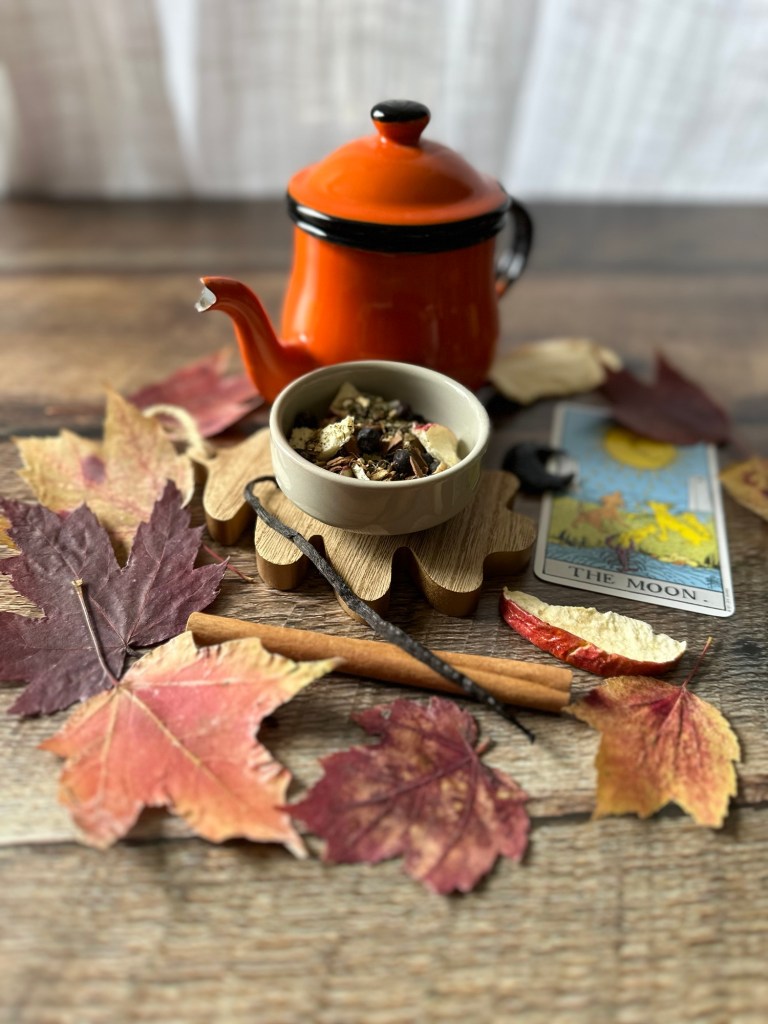
October: Falling Leaves Moon in Aries + Tea Recipe

Though the Falling Leaves Moon or Hunter’s Moon fell on October 17th this year and has technically passed, the full moon’s energy can still be tapped into. Read on to learn more about this month’s full moon and a corresponding tea recipe!


The Ojibwe named the full moon during what we call October the Falling Leaves Moon. We await the “peak” of the vibrant colors knowing the shedding of these leaves marks winter’s approach. As this full moon nears, we may feel Aries’ pull to dive into autumn with an energy as vibrant as the leaves. But the sun sign Libra may temper this drive with a need for balance to conserve our energies for the coming cold.

Brew this tea to mark the Falling Leaves Moon which includes gifts given from trees for both their symbolic and astro-herbalism connections. Hawthorn bolsters the heart, while juniper, cinnamon, and ginger support the Aries fire. Apple and vanilla round things out with sweetness to cool that fire off a bit and bring things back to balance.

Falling Leaves Moon in Aries Tea Materials-

1 tbsp apple pieces, dried 

1 tsp hawthorn leaf

1 tsp juniper berries

½ tsp cinnamon stick pieces

¼ tsp ginger root, dried 

¼ tsp vanilla bean powder or ¼ vanilla bean pod

Method-

To make a single cup of tea, add 1 tablespoon to a tea strainer, eco-friendly tea bag, or French press. Pour 1 to 1 ½ cups hot water over the tea and steep for about 5 minutes. Strain, and serve. Add sweetener of choice to taste, if desired.

If you’d like recipes to mark each month’s full moon, check out the current and upcoming issues of Botanical Anthology where I share these recipes!


For educational purposes only. Not intended for medical advice. Always consult your physician.

*This post contains affiliate links, which means if you choose to buy something from a link that I share, I will make a small percentage of the sale *at no extra cost to you*.

Categories
Hygge Recipes Tea

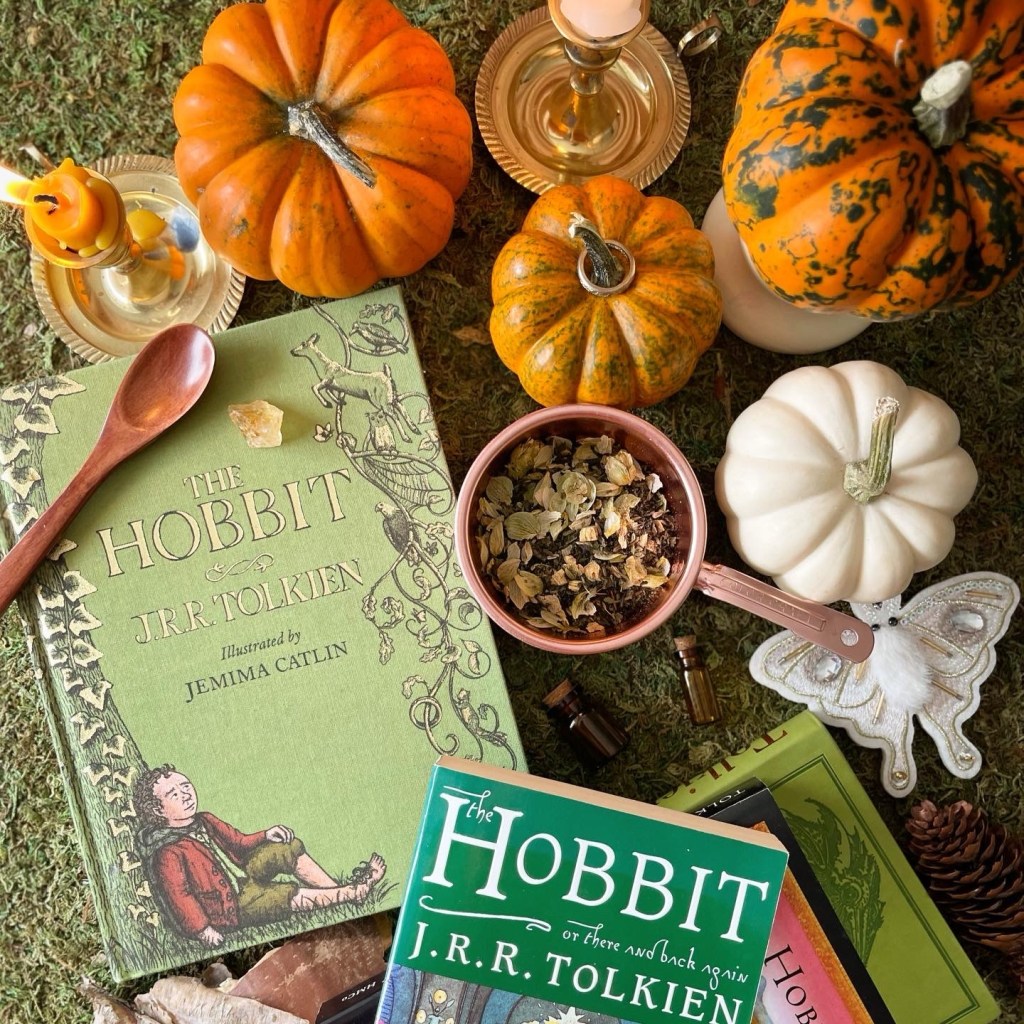
Happy Hobbit Weekend & Tea!

The Hobbit and The Lord of the Rings books by J.R.R. Tolkien have been my very favorite books since I first read them as a teenager, and I have always felt a very strong connection to hobbits: simple folk who prefer the comforts of home, well-stocked larders and bookshelves, and the joy of silly fun with family and friends, yet who can be prevailed upon to draw deeply from a well of courage and wit to save the world on occasion. If any fictional folk represents me, it’s the hobbit-folk. 

So the publication anniversary of The Hobbit (my birthday, 9/21) and the birthday of both Bilbo and Frodo Baggins (9/22) alongside the beginning of fall are all something I like to mark wrapped up into one special span of a couple days. I might read bits of The Hobbit to my own halflings, or we might watch the 1970s Rankin Bass animated film of The Hobbit (wonderfully nostalgic and kid friendly).

We may enjoy a hobbit-y teatime, too, with fresh baked goods and hobbit-inspired tea from the recipe I created. It combines smoky lapsang souchong tea for that famous pipe-leaf all hobbits love, hops to represent the tankards of ale they heartily imbibe, reishi mushrooms foraged right from the woods surrounding the shire, and other flavorful herbs and spices.


Ingredients:

1 part loose leaf lapsang souchong (or other black tea)

1 part mint

1⁄2 part reishi, broken into small pieces (substitute with licorice root if you are unable to find reishi)

1⁄2 part hops

1⁄4 part fennel

1⁄4 part nutmeg

1⁄4 part powdered vanilla bean or 1 vanilla bean per 4 cups of tea, split

Directions:

To make a single cup of tea, add 1 tablespoon to a tea strainer, eco- friendly tea bag, or French press. Pour 1 to 1 1⁄2 cups hot water over the tea and steep for 5 minutes. Add honey or other sweetener, if desired.


For educational purposes only. Not intended for medical advice. Always consult your physician.

*This post contains affiliate links, which means if you choose to buy something from a link that I share, I will make a small percentage of the sale *at no extra cost to you*.
Categories
Hygge Recipes wheel of the year

Ostara: Orange Vanilla Soda Bread

There is, in my opinion, no better way to celebrate the turning of the season (or just anything!) than with warm, freshly baked bread. You just can’t help but be mindful for a moment as you stop and appreciate the ingredients that went into the bread, the hands that made it, and the warming and grounding experience of enjoying it. That is some simple but powerful alchemy, right there. 

This year for Ostara (the spring equinox) I decided to make an easy, rustic loaf of soda bread with some cheery, sweet, springy flavors. I incorporated orange zest and juice and vanilla, because the two together just put me in mind of sunshine and the sweet scent of early spring flowers. 

I also sweetened up this traditionally sugarless recipe with a generous helping of the vanilla-orange-mint infused sugar I made awhile back. You could easily use plain sugar, of course, but I had this on hand and it further drives that flavor home and adds a little something extra. 

My family loves snacking on this bread, and it is really nice at breakfast time, too. I like to think it’s a very hobbit-ish sort of treat to celebrate spring with!


The recipe for Orange Vanilla Soda Bread:

Ingredients

4 cups flour (all white flour, part whole wheat, or you could also try your preferred GF flour)

1 ½ tsp baking soda

1 ½ tsp salt

3 Tbsp sugar (vanilla orange mint sugar)

2 tsp vanilla extract

Zest of one orange

1-2 Tbsp orange juice

1 ½ to 1 ¾ cups buttermilk

Method

Preheat oven to 400°F.

In a deep mixing bowl, mix together flour, baking soda, salt, and sugar with a whisk. Whisk in orange zest.

Make a well in the dry ingredients and add the wet ingredients to it. Mix together with a wooden spoon, folding and turning the bowl until a sticky dough forms. If the dough seems too dry, you can add additional buttermilk a spoonful at a time.

Scoop ball of dough out onto a large floured cutting board. Knead a few times lightly. It will still be quite sticky, but you can flour your hands and add a pinch or two of flour if it seems too wet. 

Form into a large round loaf. Place in a greased / oiled Dutch oven or on parchment paper on a baking sheet. Cut an X into the top with a sharp knife. Top with a small pat of butter on each of the four quadrants if you’d like. 

Cover with the Dutch oven’s lid or tent with foil and bake for 30 minutes. Remove cover and bake for an additional 15 minutes. Bread is done when a toothpick comes out clean and/or the X in the center appears done (my X disappeared 😅 but that’s ok). It should also sound hollow if you tap it!

Allow to cool for 10-15 minutes before eating. Then, enjoy!


I love making infused sugars! Here is the recipe for Orange Mint Vanilla Sugar:

Ingredients

1.5 cups of white sugar

Zest of one orange

1 Tbsp ground dried peppermint leaf

1 vanilla bean

Method

Mix the white sugar, the fresh zest of one orange, ground dried peppermint (pulsed to a powder in a coffee grinder reserved for herbs), and one vanilla bean (split and scraped, then the whole bean tossed in) in a bowl. Then spread it out to dry a while on a cookie sheet before transferring the mixture (including the vanilla bean) to a jar. The vanilla bean will continue to impart its sweet flavor in the sugar and it will only get better!

Let the jar sit tightly lidded for a few days to infuse with all the lovely orange oil and vanilla. Then you can use the sugar in teas, coffee (have you ever tried the combo of orange and coffee?), baked goods (imagine rolling sugar cookies in this!), fancy cocktail / mocktail rims, and more!


How do you plan on celebrating the start of spring, in your own way, big or small?


For educational purposes only. Not intended for medical advice. Always consult your physician.

*This post contains affiliate links, which means if you choose to buy something from a link that I share, I will make a small percentage of the sale *at no extra cost to you*.

Categories
Herbs and Herbalism Hygge wheel of the year

Yule: Candles, Tea, and Books

Happy Yuletide! I can’t say that I am the most knowledgeable regarding the background and traditions of winter solstice celebrations and rituals, but I am learning more as I go and loving what I learn. I wanted to pop in today to share a few of my favorite cozy Yule traditions with you.

Whether you celebrate Christmas, Yule, a combination, or simply mark the winter solstice, the astronomical beginning of winter and the shortest day and longest night are at the center of this occasion. It is a time of merriment as a way to bring light and cheer into the darkness, and to remind ourselves that the sun and its life-giving warmth will return. This is very much based in the agrarian lifestyle of our ancestors and the greater danger winter posed to their survival. Today we feel the hold-over of these traditions in more metaphorical ways but they’re still deeply ingrained. Other pagan and Christian elements and traditions of this holiday came in later, but all still revolve around the natural occurrence of the winter solstice.

Despite the jolly festivities, as I get older I feel the need more and more to snuggle in at home, slow down, eat cozy treats, and enjoy quiet times with my family just playing games and reading books. I think my connection to the natural world slowing down and going to its winter rest deepens the older I get! So I don’t feel the need for more gifts and parties, but rather candles, tea, and good books.

Candles

I absolutely love making my own candles this time of year. With a few simple, natural ingredients, candles that are healthier and more special than the store bought variety can easily be whipped up in your kitchen. Candles add a warming glow to Yuletide evenings and events, can be given as very special gifts, and you can add your own intention both when you’re stirring the wax to make them and when you take the time to light them each night.

Check out the recipe for these Yule Forest Candles I shared last year, these cozy Pumpkin Spice Coffee Candles from when I was just beginning to learn candlemaking, or purchase the Winter Candlemaking Guide from my Etsy shop to learn how to make candles at home.

Tea

Hot tea is a wonderful way to spend a winter evening during the Yuletide season! There is nothing better than brewing a big pot of tea tailored to the energies of the season, your health, or simply your mood. 

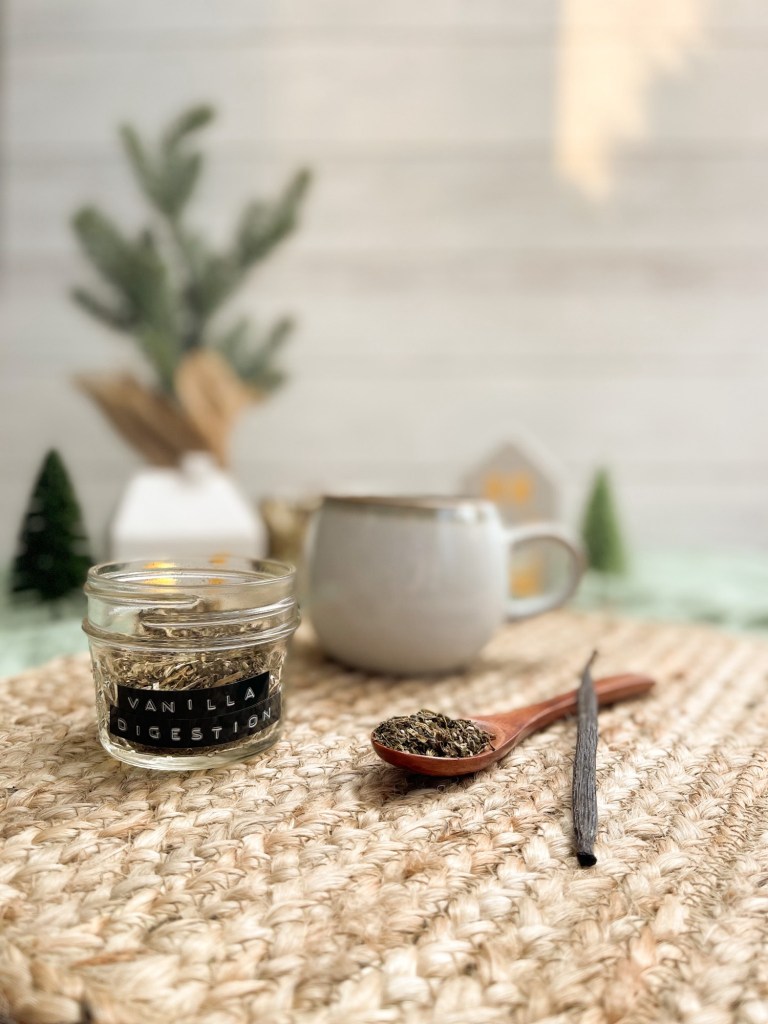
During this season of eating sweets and overindulging, a digestive-boosting tea like the Vanilla Digestion Tea I shared last year can be both helpful and tasty. An Immune Boosting Tea Blend can’t go amiss this time of year, either. Mushroom Coffee makes for a hearty and energizing, yet grounding, brew. Or check out the many other winter tea recipes in my Winter Tea Booklet in my Etsy shop.

Books

I am never at a loss for good books to read! Here I will keep the explanation short and simply share some links to books that are perfect for this season. 

Children’s books about Yule / the Winter Solstice / Wintertime (that are wonderful for adults, too):

The Shortest Day (Susan Cooper)

The Winter Solstice

Goodbye Autumn, Hello Winter

The Tomten

Flower Fairies of the Winter

The Shortest Day (Wendy Pfeffer)

The Nutcracker Ballet

Adult fiction and nonfiction – my recent cozy or cozy-adjacent favorites

Emily Wilde’s Encyclopedia of Faeries

Legends and Lattes

A Spell in the Wild

The Wake-Up Call

The Tale of Hilltop Farm (the Cottage Tales of Beatrix Potter)

The Hobbit

Kitchen Witch

A Morbid Taste for Bones (the Brother Cadfael mysteries)

Little Women

Slavic Kitchen Alchemy

Healing Herbal Teas

What cozy ways are you enjoying the Yuletide season?


For educational purposes only. Not intended for medical advice. Always consult your physician.

*This post contains affiliate links, which means if you choose to buy something from a link that I share, I will make a small percentage of the sale *at no extra cost to you*.

Categories
Hygge Recipes

Gluten Free Chai Apple Crisp

It may not be pumpkin spice time yet (Says who? It’s always pumpkin spice time to me!) but apples are ripening and it’s a great time to whip up some apple crisp. I am gathering with friends this evening, so I made a chai apple crisp that is gluten-free for one of my friends’ dietary needs.

You can’t fault me for rushing Autumn if I’m using chai spices! And anyway, there are so many benefits to chai spices. Medicinally they’re immunity boosting, digestion aiding, circulation stimulating, and so much more—check out THIS blog post for more on that. Chai spices also help soothe, relax, and even help with sleep. And symbolically / spiritually, many of these warming spices are said to bring prosperity, protection, joy, and divinatory insight. Plus, they’re just cozy and tasty! Perfect for a gathering with friends paired with tart Granny Smith apples.

Here is the recipe!


Gluten-Free Chai Apple Crisp—

Ingredients

For the filling—

  • 8-10 Granny Smith apples, peeled, cored, and sliced or chopped
  • 2 Tbsp gluten-free flour blend
  • 2 Tbsp sugar
  • 1 tsp pumpkin spice mix (cinnamon, nutmeg, ginger, and cloves) or ¼ tsp of each 
  • 1/4 – 1/2 tsp allspice
  • 1/2 tsp cardamom powder
  • 1 tsp vanilla extract

For the crumble—

  • 1 cup gluten-free old-fashioned oats
  • 1/2 cup gluten-free flour blend
  • 1/8 tsp salt
  • 1 cup dark brown sugar
  • 1/2 tsp pumpkin spice
  • 1/8 tsp allspice
  • 1/4 tsp cardamom
  • 1 stick of butter of choice, cold, cubed

Method

Preheat oven to 375° F. Grease a 9 x 13 glass baking dish and set aside.

Prepare apples and put in a large mixing bowl. Sprinkle with sugar, flour, and spices and stir to coat; add vanilla extract and stir again. Scoop this mixture into your greased baking dish.

In the same mixing bowl if you’d like, mix the oats, flour, spices, and salt well. (If you’d like to ease back on the spices, omit them from the crumble.) Add the brown sugar and butter and cut in with a pastry blender or fork until pebbly consistency is reached. Sprinkle over the apple filling evenly.

Bake 30 to 35 minutes; cool before serving.


Notes

Serves 6-8

Substitute in your favorite chai spices and play around with the amounts to your preference!

Would also be amazing with walnuts in the crumble topping.

This recipe could easily be adapted to be non gluten free with conventional flour.


Are you a big fan of apple crisp? And do you think August is too soon for it? Let me know in the comments!

Categories
Herbs and Herbalism Recipes

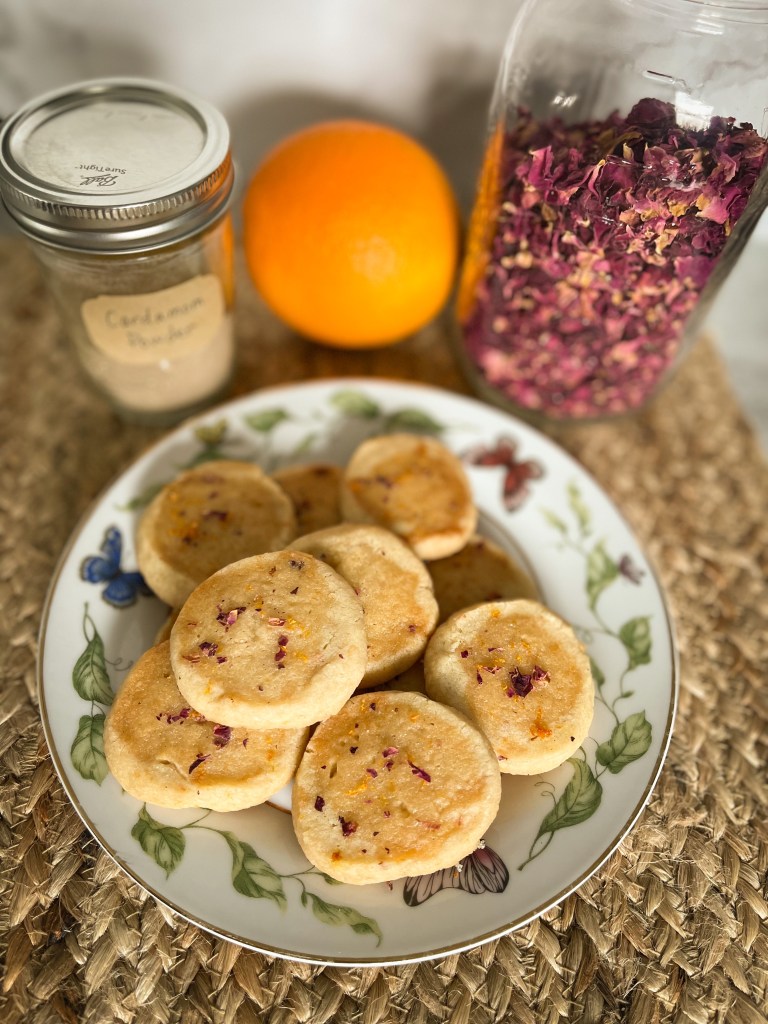
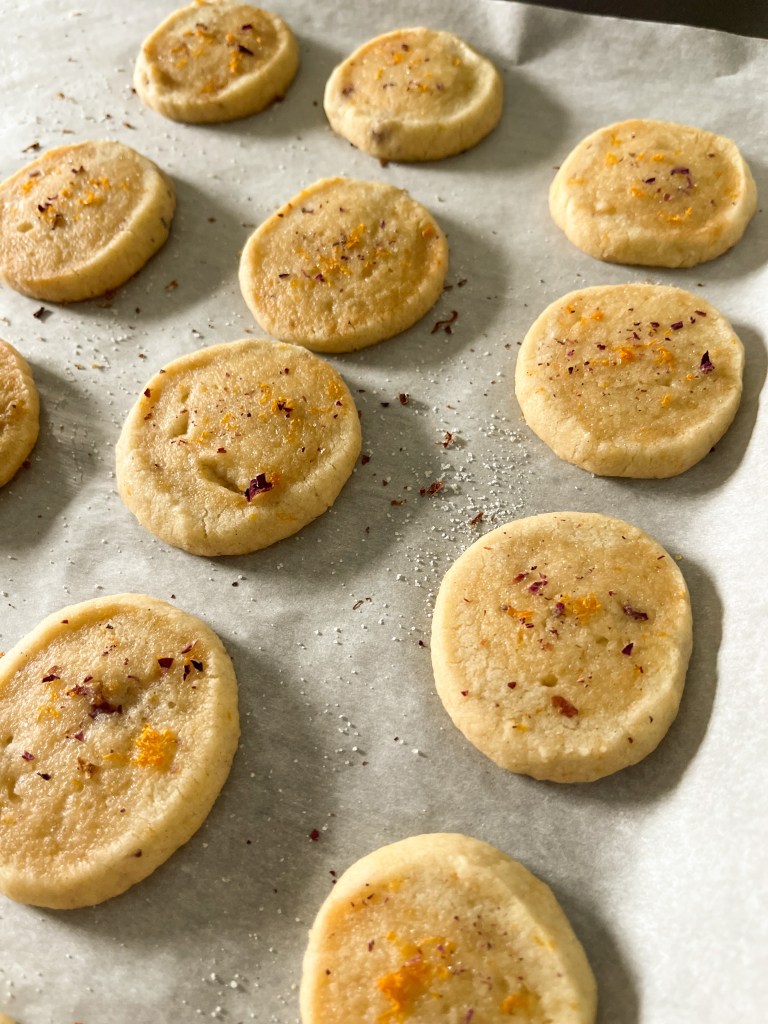
Orange Rose Shortbread Cookies

I’ll admit—this recipe was inspired entirely by rewatching old episodes of the Great British Bake Off. I keep seeing shortbread cookies, and hearing them talk of how their “biscuits” have a satisfying snap. My midwestern American palate is much more accustomed to gooey, soft cookies which are delicious but a bit simpler. So I thought I’d try my hand at some springy shortbread cookies—which, of course, had to incorporate herbs.

In addition to a classically sweet and crisp shortbread recipe, I’ve combined the flavors of rose, orange, cardamom, vanilla, and honey. These lend a distinctly layered complexity to the mild taste of the biscuits and help them pair even better with a lovely black tea. (Springtime tea party recipe, perhaps?) Also, all these botanicals are uplifting, bright, and fresh. It’s the perfect light sweet after a winter of heavy sweets and spices.

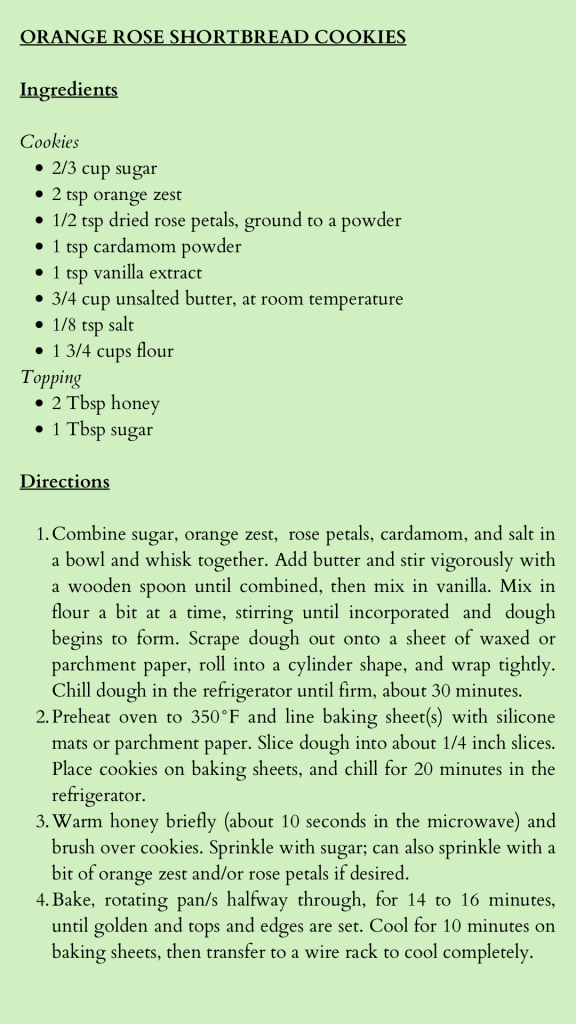
Here is the recipe if you’d like to try them!

Categories
Herbs and Herbalism plant wonder collective Recipes Tea

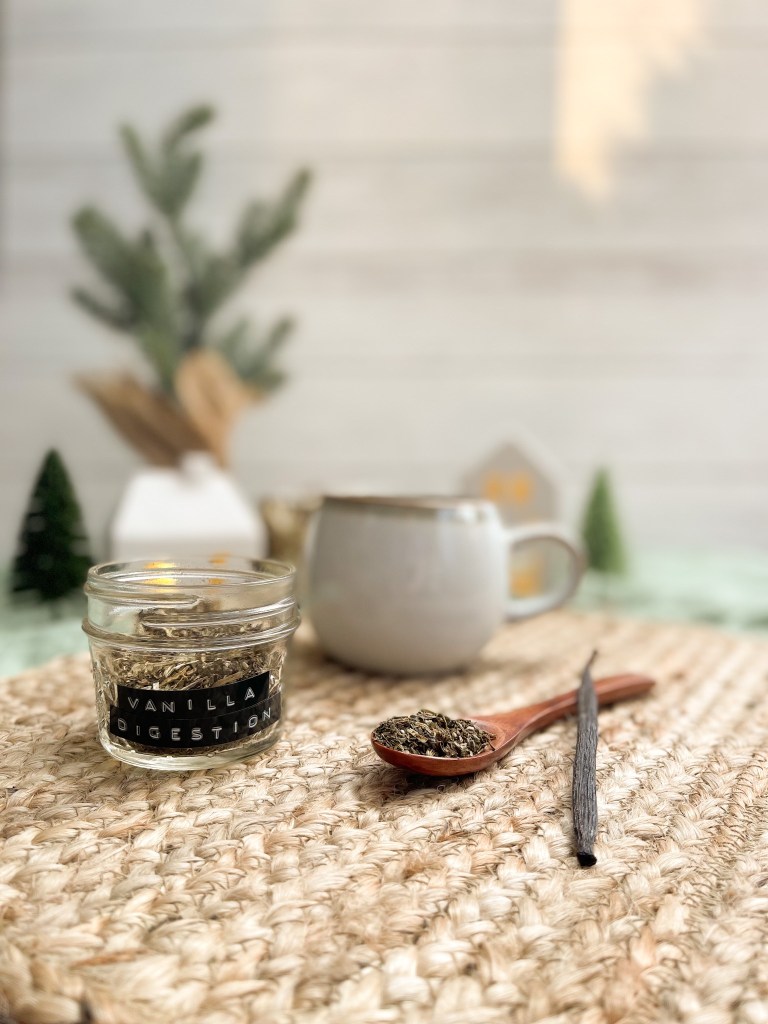
Vanilla Digestion Tea

It’s the time of year when digestion is key! Heavy, rich foods abound due to the holidays and the approach of winter, and many of us need some extra relief.

Often, digestion teas rely heavily on ginger, but I find it too spicy and irritating sometimes. I often need more of a cooling approach to indigestion instead. That’s where this tasty vanilla digestion tea comes in!

Vanilla is an aromatic stimulant and carminative botanical, with anti-inflammatory, digestive-soothing, calming, and fever easing benefits. These properties make it a great ingredient in a digestion tea!

In the interest of a more cooling approach to digestion, I’ve combined the vanilla with meadowsweet, mint, and fennel seed. If you add honey or your sweetener of choice, it’s a light and tasty dessert all on its own with a taste reminiscent of candy canes!

A bit of a breakdown of the other herbal ingredients I’ve combined with the vanilla here—

Mint can be both warming and cooling, depending on your constitution, but I find it affects me in a soothing and cooling manner. It is a mildly stimulating herb, so it aids in moving things along in the digestion process.

Meadowsweet is a top tier digestion reliever. Its cooling, drying, astringent, inflammation modulating, and even pain modulating properties make it an indispensable ally. However, if you’re sensitive to aspirin, you should avoid meadowsweet because it contains naturally-occurring salicylic acid. (If this is you, substitute chamomile or elderflower.)

Fennel is one of my very favorite herbs for digestion. It’s a pungent aromatic herb with antispasmodic and carminative properties, making it ideal for a digestion tea. Interestingly, I found a hand-written note in my great grandmother’s herbalism books suggesting to use fennel for calming. Though it isn’t technically considered a nervine or adaptogen, there is an inextricable link between gut health and mental health, so it does check out!

Here is the simple and sweet recipe for cooling vanilla digestion tea:

1 part vanilla (use chopped vanilla beans or powdered vanilla bean—my choice for economical purposes)

2 parts meadowsweet

2 parts mint

1 part fennel seed

——

Brew for about 5 minutes; longer can cause a bitter taste from the meadowsweet.

Do you suffer from digestive issues this time of year? Let me know if you try this tea! You might find that soothed digestion leads to a calmer state of mind this time of year!