Categories
Herbs and Herbalism seasons

Herbs to Love in May

May is such a special month where I live. The “merry merry month of May” lyric comes to mind. It is generally a time of unabashed sunshine, warming breezes, flourishing blossoms, and frenetic energy. The joy of May is infectious and refreshing! Spring is fully awake, and we are energized and full of her spark. 

While the weather from one year to the next varies, and so, too, does the timing of May’s blooms, there are certainly favorite plant allies that I always find myself drawn to during this month. These are a few of them!

Yarrow: white, pinkish, or more yellow—these blossoms that flourish in mid-spring are magical no matter the color. A harmonizing herb that can both cool and warm, staunch and aid flow, it can be used medicinally for a wide variety of things including styptic powder, teas, salves, steams, incense, and more. In folklore, yarrow has quite the long tradition of use in love spells, protective charms, sachets, cleansing and divination preparations, among other uses. Yarrow is on my planting list this year. Plant some near your home for a bit of beauty and protection, and harvest some for a host of beneficial applications!

Lilac: fleeting May magic! Lilac blooms where I live for a short time in early May, so I have to enjoy it quickly! That’s all part of the fun. Lilac sugar, tea, honey, syrup or jelly, skin recipes, and baked-good adornments are some favorite ways to harness its powerful sweetness. I love the longstanding tradition of planting this shrubby plant near doorways—then when it is in bloom, you can access it easily and quickly. Lilac is also said to be a protector of the home. 

Hawthorn: ubiquitous with May, whether they’re blooming on Beltane where you live or not. Hawthorn guards the gates to faerie realms, protects, gladdens the heart, and calms the nerves. I adore a strong cup of hawthorn leaf & flower tea! Just be sure to show the hawthorn tree her due respect: Mother Hawthorn expects to be approached with care, asked permission before you harvest from her branches, and left with an offering near her roots. Also, it is said that you shouldn’t bring hawthorn branches indoors, as it is bad luck. 

Red Clover: this springtime beauty is equal parts medicinal and magical. Wonderfully nutritive, beneficial to the skin and female system, for balance and movement, and more…and also so lovely in salads, honey, sweets, fritters, teas, lemonade, and other special treats. It is also a wonderful ally in soothing skin applications including bath teas, salves, and more! Red clover tends to grow wild and free in many areas, especially meadows, fields, and pastures—so much plenty for the taking! Just be careful to ensure that the place you’re harvesting from is safe—not too near roads or where chemicals are sprayed. 

Honeysuckle: yes, I know it is an invasive non-native species here in the U.S. But it is so very prolific where I live, and it’s not honeysuckle’s fault it was brought here! It has always been a special plant to me, since I was a kid when we had a magical honeysuckle that grew entwined with a blackberry bush at my childhood home. The great thing about honeysuckle is you don’t have to feel bad about foraging it, and don’t have to worry about taking too much! It smells so nice tucked into vases, twisted and twined into wreaths, or enjoyed in teas, cordials, and jellies. 

Catnip: I adore catnip, and it seems to adore me! It reseeds itself in more of my herb pots each year and springs up in late April and May. This rampant herb in my little container garden is not just for cats. A member of the mint family, it is wonderful for calming frazzled nerves and stress in humans and is gentle enough for children. I like to think of catnip as bringing both a dash of calm and a dose of courage, all in one go. It imparts a strong yet gentle resilience. When my plants are ready to begin harvesting, I plan to incorporate catnip into sun teas, lemonade, and popsicles to share with my kiddos!

Which herbs do you find that you favor in May?

Categories
Folklore Recipes

Aries Season Herbal Tea

We are firmly in the heart of Aries season, so I am sharing my simple tea recipe meant to help you ground into this energy! My daughter is a very fiery Aries herself so I am all too familiar with the spirit of this sign.


Aries.

March 21 – April 20.

Cardinal Fire sign. 

Ruled by Mars + the Sun.

Bold, driven, ambitious, energetic, fiery, friendly, confident, daredevil, competitive, adventurous, optimistic.

Associated with the Emperor in tarot; the root and solar plexus chakras; yang energy; red, pink, yellow, and white; and diamond, carnelian, citrine, and fire opal.


Aries Tea—

1 tsp nettle

1⁄2 tsp thyme

1 tsp rose

1⁄4 to 1⁄2 tsp cloves

To make a single cup of tea, add 1 tablespoon to a tea strainer, eco- friendly tea bag, or French press. Pour 1 to 1 1⁄2 cups hot water over the tea and steep for 3-4 minutes. Add honey or other sweetener, if desired.


———

For educational purposes only. Not intended for medical advice. Always consult your physician.

*This post contains affiliate links, which means if you choose to buy something from a link that I share, I will make a small percentage of the sale *at no extra cost to you*.

Categories
Tea wheel of the year

Brigid Tea for Imbolc

Blessed Imbolc! This sabbat marks the halfway point between the winter solstice and spring equinox, so it is also called midwinter. And it is Candlemas, when candles were brought to be blessed for the year. 

It’s also a time that is traditionally dedicated to St. Brigid and/or the goddess Brigid. This Celtic goddess is a fire deity who embodies the light and warmth of spring. She is sometimes represented as a triple-goddess or as presiding over three flames: the flame of inspiration and creativity, the flame of the hearth, and the flame of the forge and smithing. Brigid is also associated with healing, wisdom, poetry, livestock, and protection.

As Celtic legend tells, the Cailleach–the crone goddess of winter–and Brigid split the year between them. When the Cailleach’s fire goes out, she cedes rule to Brigid, who presides over her half of the year until Samhain when her counterpart returns.

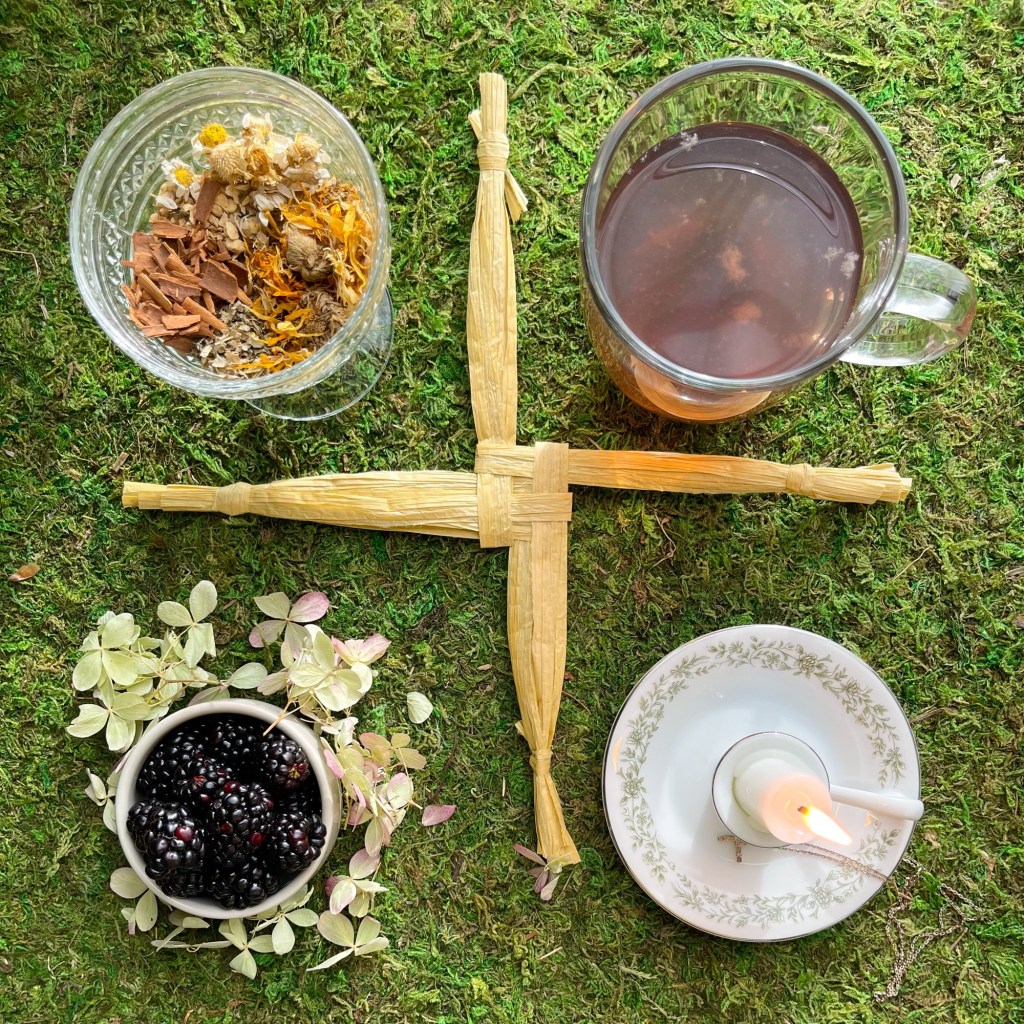
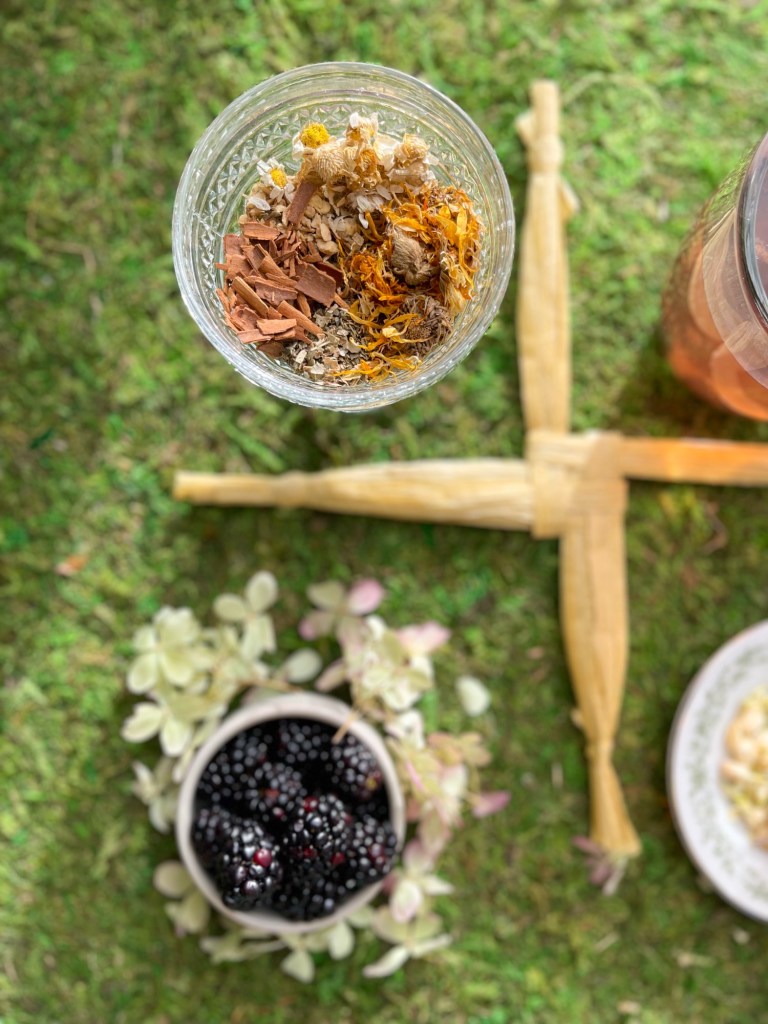
This tea to welcome Brigid’s return contains blackberry leaf and fruit along with chamomile, which are all sacred to the goddess, in combination with calendula, ginger, and cinnamon to represent her three flames.

Brigid’s Tea

1 part blackberry leaf

2 parts dried or fresh blackberries 

1 part chamomile 

1 part calendula

½ part ginger

½ part cinnamon

Directions

If using fresh blackberries, muddle 2-3 in the bottom of a cup (you’ll strain the tea after brewing); if using dried berries, simply add them to the tea herbs. Add 1 tablespoon to a tea strainer, eco-friendly tea bag, or French press. Pour 1 to 1 ½ cups hot water over the tea and steep for 5 minutes. Strain out the muddled blackberries now if using this method. Add honey or other sweetener, if desired.


For educational purposes only. Not intended for medical advice. Always consult your physician.

*This post contains affiliate links, which means if you choose to buy something from a link that I share, I will make a small percentage of the sale *at no extra cost to you*.

Categories
Recipes Tea

October: Falling Leaves Moon in Aries + Tea Recipe

Though the Falling Leaves Moon or Hunter’s Moon fell on October 17th this year and has technically passed, the full moon’s energy can still be tapped into. Read on to learn more about this month’s full moon and a corresponding tea recipe!


The Ojibwe named the full moon during what we call October the Falling Leaves Moon. We await the “peak” of the vibrant colors knowing the shedding of these leaves marks winter’s approach. As this full moon nears, we may feel Aries’ pull to dive into autumn with an energy as vibrant as the leaves. But the sun sign Libra may temper this drive with a need for balance to conserve our energies for the coming cold.

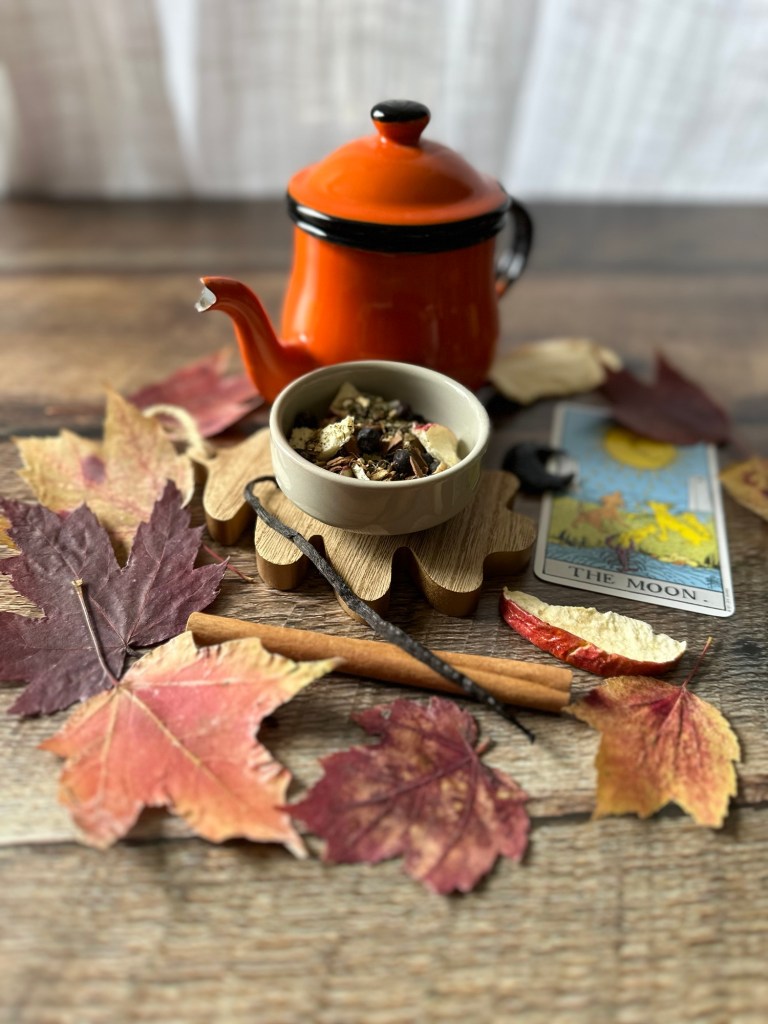
Brew this tea to mark the Falling Leaves Moon which includes gifts given from trees for both their symbolic and astro-herbalism connections. Hawthorn bolsters the heart, while juniper, cinnamon, and ginger support the Aries fire. Apple and vanilla round things out with sweetness to cool that fire off a bit and bring things back to balance.

Falling Leaves Moon in Aries Tea Materials-

1 tbsp apple pieces, dried 

1 tsp hawthorn leaf

1 tsp juniper berries

½ tsp cinnamon stick pieces

¼ tsp ginger root, dried 

¼ tsp vanilla bean powder or ¼ vanilla bean pod

Method-

To make a single cup of tea, add 1 tablespoon to a tea strainer, eco-friendly tea bag, or French press. Pour 1 to 1 ½ cups hot water over the tea and steep for about 5 minutes. Strain, and serve. Add sweetener of choice to taste, if desired.

If you’d like recipes to mark each month’s full moon, check out the current and upcoming issues of Botanical Anthology where I share these recipes!


For educational purposes only. Not intended for medical advice. Always consult your physician.

*This post contains affiliate links, which means if you choose to buy something from a link that I share, I will make a small percentage of the sale *at no extra cost to you*.

Categories
Herbs and Herbalism Tea wheel of the year

Beltane Lilac Tea Meditation

Beltane, also called May Day, marks the cross-quarter between Ostara (the spring equinox) and Litha (the summer solstice). Beltane is a time of heightened romance, carefree joy, ripening fruits, and faerie magic. Take care where you wander on Beltane night as the bonfires burn, lest you stumble into the land of Faerie!

Lilac is, in many parts of the northern hemisphere, ubiquitous with Beltane as its prime blooming period. To celebrate Beltane, harvest some fresh lilac if it is in bloom near you and enjoy a lilac tea meditation ritual. 

((You can also substitute a different fresh food safe flower that is in season near you, such as dandelion, for this meditation, or even dried flowers like jasmine or lavender if fresh flowers aren’t accessible to you!))

Choose a handful of blossoms that look fresh, not wilted. Leave blossoms attached to the stems, but remove most of the twigs.

Dunk in cold water to rinse off any debris and critters. Pour heated water from your tea kettle over the blossoms in a mug to cover the flowers and allow to steep for about 3 minutes before you begin to sip. No need to remove the flowers if they’re attached to the stems—they shouldn’t float loose.

Grab a journal and pen, and seat yourself in an outdoor spot if possible, or next to an open window if not. Sip the tea and feel the sun/moon/breeze on your face, closing your eyes. 

Notice the flavor of the lilac tea. It should be fragrant, floral, a tad sweet and a bit bitter all at once. Very tannic, it should pucker your tongue a bit and leave a dry mouthfeel. Savor the flavor and aroma as you drink, and think of it as nature’s champagne! Rare, beautiful, elegant, joyful, celebratory. Let the taste uplift you and permeate throughout you. Envision a sweet purple light enveloping you, bringing happiness and beauty from the outside-in, if you like. 

Grab your journal. Write down three things you are happy about, three things you are anticipating, and three ways you’d like to grow. Meditate on these ideas as you finish your tea. Then, compost the spent lilac blossoms. 


As an alternative to using a journal, I’ve made a journal page especially for this meditation that you can print and use! Just click on the file below, print, and use alongside your Beltane Lilac Tea Meditation!

Categories
Folklore Herbs and Herbalism plant wonder collective Recipes Tea

Butterfly Pea Faerie Tea

Butterfly Pea Flower is just so very magical! It is astounding how brilliantly blue the flowers can so easily turn the water in a cup of tea. It feels like a bit of faerie magic, for sure!

When I was doing some research for the faerie + plant folklore book I am writing (!!), I came across a type of Eastern European faerie called Er Tütra, which means Morning Mist: the name for a type of weather spirit/faerie. These Morning Mist folk are only visible to human eyes in the form of their namesake natural phenomenon, but they are hard at work to promote the health and growth of crops—an invaluable service to the fauna and humans of the land. 

I made the connection between butterfly pea flower and these Morning Mist faeries because of the folklore surrounding this lovely plant. There are strong ties between butterfly pea flower in Southeast Asian cultures and motherhood and divine feminine symbolism, with a distinct focus on protection and mothering. The Er Tütra certainly perform this caretaking role for the land and crops. What’s more, there are very interesting studies on the use of butterfly pea flower in natural insecticides for crops! Yet another cool connection. 

Here is the recipe for the Butterfly Pea Faerie tea! Embody the springtime Morning Mist with this tea blend and perhaps offer some to the Er Tütra for their aid in your spring garden.


Ingredients

1 part green tea or green rooibos 

1 part meadowsweet

1 part passionflower

1/2 part mint

1/2 part yarrow

1/2 part butterfly pea flower

Directions

To make a single cup of tea, add 1 tablespoon to a tea strainer, eco- friendly tea bag, or French press. Pour 1 to 1 1⁄2 cups hot water over the tea and steep for 3-4 minutes. Add honey or your preferred sweetener to taste, if desired.

To cold-brew this tea blend, add the ingredients to a glass jar or French press, steep overnight in the refrigerator, strain, and serve.


This recipe was shared as a part of Butterfly Pea Flower month at the Plant Wonder Collective! If you’d like to support the work of PWC, please consider joining our Study Circle on Patreon for exclusive recipes, articles, digital downloads and printables for the plant of the month, including this graphic available for print as an apothecary jar sticker. We appreciate you being on this learning journey with us!


For educational purposes only. Not intended for medical advice. Always consult your physician.

*This post contains affiliate links, which means if you choose to buy something from a link that I share, I will make a small percentage of the sale *at no extra cost to you*.

Categories
Folklore Herbs and Herbalism Recipes

Protection Carpet & Sweeping Powder

This time of year, the quest for protection from illness lines right up nicely with the folk idea of protection from negative energy, unfriendly spirits, and the like. Whether you are seeking one, the other, or both forms of protection, there is a simple and cozy way to invoke that sentiment, freshen your house, and refresh the energies of your home: herbal carpet powder!

Did you know that strewing herbs on the floor goes way, way back? From the ancient Romans to the Middle Ages, and even up to about the 18th century herbs were strewn over the floor with rushes and straw to release a pleasant aroma and repel unwanted pests. Some households swept them up each day and replaced them with fresh herbs, while others left them for a longer interval. Rosemary, lavender, chamomile, hyssop, sage, and marjoram were among the many herbs commonly used for this purpose. Modern carpet / vacuum powders aren’t left on the floor for very long—you let them sit for 15-30 minutes before vacuuming back up—but they certainly hearken back to this practice.

While you can easily buy ready-made carpet powders at the grocery store, it is incredibly easy and fun to make your own and stir a bit of intention and personalization into the mix. If you have pets and small children, it would be best to leave out any essential oils or only use the gentlest ones you’re already used to using around your small people and creatures. Otherwise, you can experiment and create your own blend that combines the scents and intentions you prefer!

For this recipe, I’ve used rosemary for protection and remembrance (for the upcoming sabbat of Samhain); allspice and cinnamon for prosperity, luck, and healing; and orange for lovely, cozy, and uplifting vibes. And all these ingredients have antibacterial and antimicrobial properties!


Ingredients:

3 cups baking soda

3 tsp rosemary powder

1 tsp allspice powder

1 tsp cinnamon powder

20 drops sweet orange essential oil

OR 1-2 tsp orange zest

Method:

Mix ingredients well in a bowl and transfer to a glass jar. I used an empty Himalayan pink salt shaker jar because of the convenient shaker lid! Sprinkle on your carpet (and even wood or tile floors if you like), allow to sit for 15-30 minutes, and then vacuum up thoroughly. You can also sprinkle a bit of this powder around doorways and windowsills to repel insects (and maybe more? 👻).


For educational purposes only. Not intended for medical advice. Always consult your physician.

*This post contains affiliate links, which means if you choose to buy something from a link that I share, I will make a small percentage of the sale *at no extra cost to you*.

Categories
Folklore plant wonder collective Tea

Mugwort Diana Tea

Long time, no write! I have been away from this space because life has been very busy lately…including editing a novel and a magazine, writing articles and taking photos for various publications, and some unexpected life bits mixed in along the way. So, I am more than ready to return today with a calming tea featuring the Plant Wonder Collective’s herb of the month for June: mugwort!

Mugwort is sacred to the goddess Artemis (Greek) / Diana (Roman): the goddess of the hunt, the moon, fertility, wild places, maidens, and magic. (In fact, the Latin name of this plant is Artemisia vulgaris.) I decided it would be very fitting to create a tea blend in Artemis / Diana’s honor that focuses on mugwort but also includes other herbs specifically associated with her. Here are the ingredients–


Mugwort: dream work, clairvoyance, magic, visions; used medicinally for anxiety, menstruation & uterine health, digestion, pain relief

(California) Poppy: dream work, moon magic, love, visions, luck; used medicinally for sleep, anxiety, menstrual cramps, headaches, pain relief

Lemon Balm: clarity, comfort, emotional healing, love, focus, memory; used medicinally for anxiety, colds, fever, sleep, depression

Pine: fertility, grounding, spirituality, strength, wisdom, peace; used medicinally for nutrients, inflammation, cold and flu, skin applications

Nutmeg: awareness, clairvoyance, divination, dream work, memory, the mind; used medicinally for stress, sleep, digestion


Mugwort and these other accompanying herbs make an excellent tea for sleep, and perhaps dream work. Here is the simple recipe for brewing a cup!

1 part mugwort

½ part California poppy

1 part lemon balm

½ part pine needles

¼ part freshly grated nutmeg

Brew with hot water for 4-5 minutes, and sweeten with honey or maple syrup if you’d like.


Have you worked with mugwort before? What is your favorite way to work with mugwort?

Categories
Recipes Tea

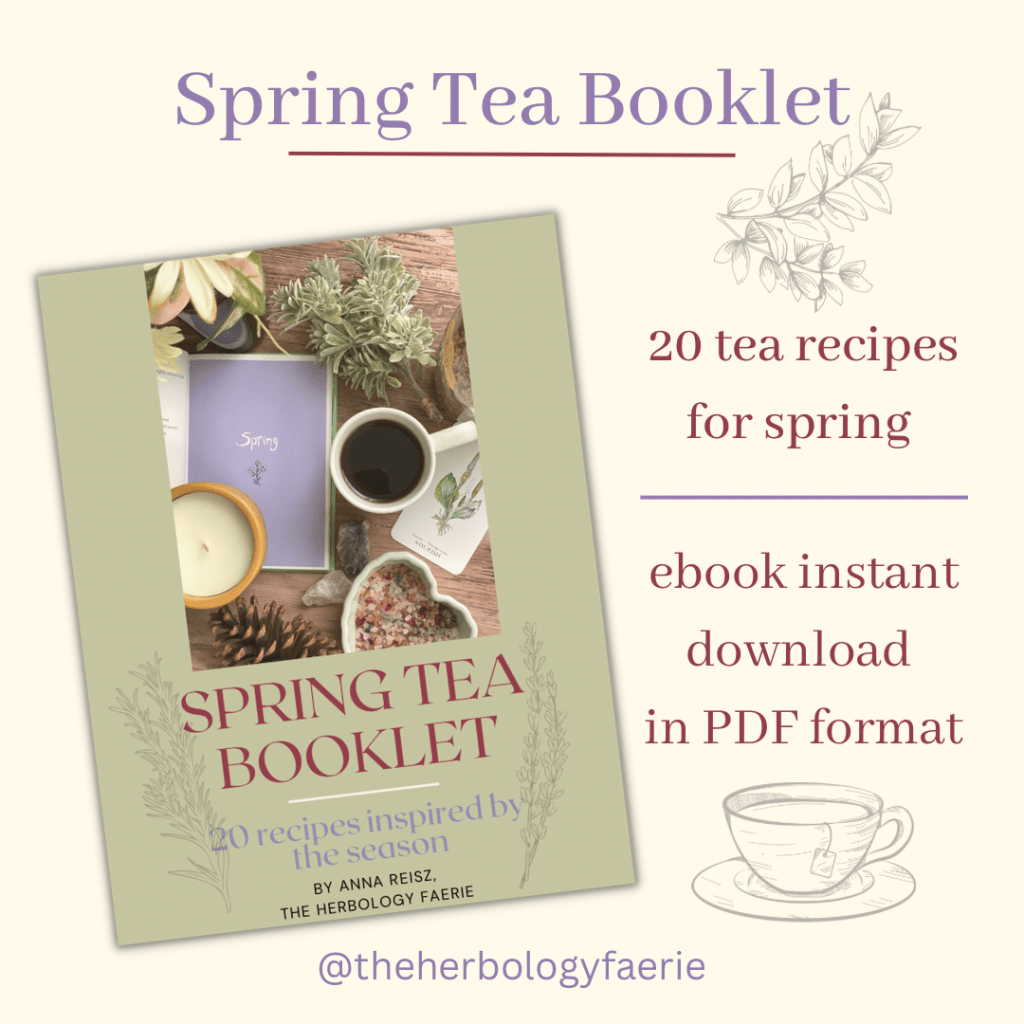
Spring Tea Recipe Ebook!

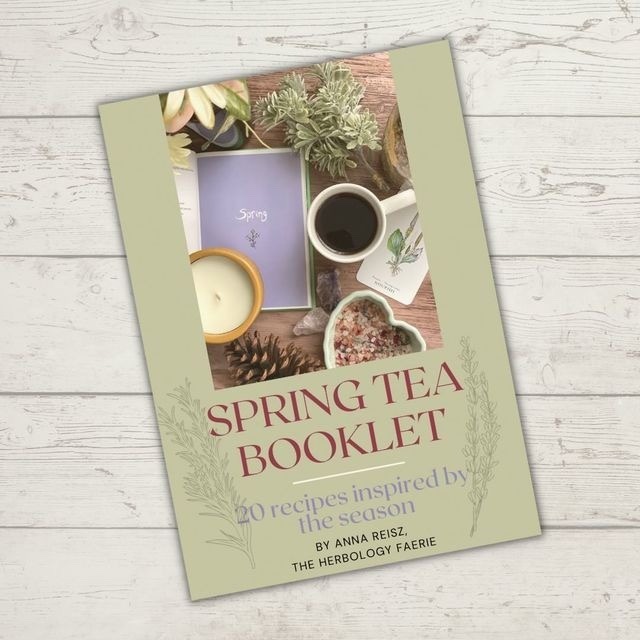
I am so proud to say that I’ve written a recipe ebook! It is available for purchase now in my Etsy shop, HERE.

The Spring Tea Booklet contains 20 tea recipes based on the season, nature, nature-based festivities, folklore, art, cozy aesthetics, and more! It also includes tips on tea-making and sourcing herbs and ingredients.

Lovingly created, written, photographed, and designed by folk herbalist Anna Reisz (me!!), this tea recipe booklet is a cozy and magical way to ground into the season. These recipes are approachable and perfect for anyone, from beginners to experienced tea blenders. Draw on the inspiration in these pages to create teas for self care, parties and special occasions, gifts, and more.

Recipes include:

Spring Full Moons (3 recipes)
Persephone
Ace of Wands
Robin
Cottagecore
Anne Shirley
Element: Air
Spring Equinox
Light Academia
Spring Forest
Intention: Creativity
Spring Zodiac Signs (3 recipes)
Beltane
Brigid
Beatrix Potter
Spring Dreams

I am grateful to anyone who considers taking a peek at this creation that I am proud of and considers purchasing a copy. This cozy herb thing is something I do because I love it, and I am so happy when others think it is pretty cool, too. Your support helps me continue to be able to do this—learning, creating, and sharing.

Categories
Recipes wheel of the year

Imbolc: Blackberry Lemon Poppyseed Muffins

Imbolc is upon us!

Also known as Candlemas or Midwinter, the first of February has long been a traditional time to celebrate the hope of winter’s end. The days are getting longer, the sun is beginning to return, and it’s time to start thinking about the seeds to be planted in spring (both literal and metaphorical). Traditionally, Imbolc was a feasting occasion and marked the lambing time, too. Nearing winter’s end the vegetable stores were dwindling, so foods involving milk, butter, and baking staples are customary.

It’s also a time to honor Brigid, who holds dual status as a pagan deity and as a Christian saint. She opens the way for spring’s return and is a fire and hearth goddess, among her many other associations. Brigid is also linked to fertility, inspiration, and poetry—all befitting the eager looking forward toward spring.

I decided to follow the Imbolc tradition of making a sweet celebratory baked good full of the dairy goodness traditionally associated with the occasion. I chose to make blackberry lemon poppyseed muffins specifically due to the ties between seeds and Imbolc, lemons and the sun as a symbol of the day, and blackberries and Brigid, to whom they are sacred. I also added cardamom as another seed connection (and because I adore it and add it to baked goods every chance I get).

I based my recipe off this wonderful one by Sally’s Baking Addiction—full credit to Sally for her tasty recipe!

This batch is delicious but turned out a bit…well, “rustic-looking!” Still, I think that is well within the spirit of the occasion. A couple changes I’d make the next time I make a batch of these include: use fewer blackberries (the recipe below is adjusted for that) and cut them up, bake a little longer, don’t do the 5 minutes at a higher temp at the beginning that the original recipe called for, and maybe consider larger muffin tins. (I’m far from an expert baker—so you get a realistic picture of the process here!)

Here is the original recipe I based mine off of, and below is my tweaked version. I used the recipe page template from the Materia Medica in my Etsy shop to make you a pretty recipe to save!

Let me know if you try this recipe! I’d love to hear how it turned out and if you enjoyed these Imbolc muffins!