Categories
herbal skincare Herbs and Herbalism Recipes

Easy Oat & Chamomile Face Mask

I’ve recently realized how easy it is to make soothing herbal face masks, and now I’m hooked! They’re versatile, ingredients are interchangeable, and you can definitely make them without a formal recipe. I am just getting started, but I can’t wait to experiment with all kinds of combinations (and share my favorites with you here)!

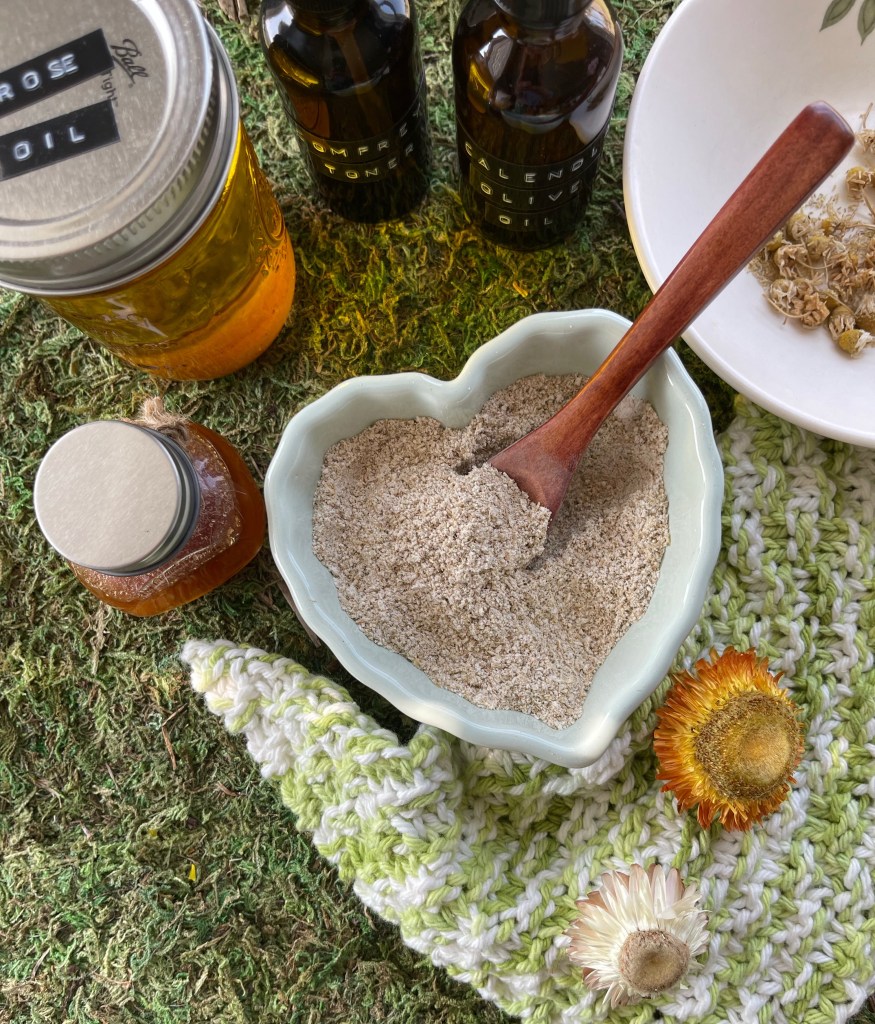
Today’s face mask is a very gentle, soothing one that is great for sensitive skin. Even your kiddos can try this one out! It combines powdered oats, chamomile, and cardamom for the dry ingredients—which you can store in a jar with a long shelf life, and simply combine a bit with the wet ingredients that your skin needs each time you use it.

Oats are extremely nourishing and soothing to skin, adding moisture and calming redness. Chamomile does much the same and is often included in skincare products for that reason! Cardamom has antibacterial properties and can help clear your complexion.

As far as wet ingredients to moisten the face mask, you can choose between many options based on your skin’s needs! Here are a few ideas; you can play with amounts to mix in for the sake of the mask’s consistency on your face.


  • Honey: antibacterial, helps with scars, mildly exfoliating (you’ll definitely need a thin liquid too to make the mask less sticky if you use honey)
  • Herbal toner: a witch hazel and herb infusion (like the comfrey one pictured) adds acne fighting and pore toning benefits
  • Rose water or other herbal hydrosol: gentle, nourishing, moisturizing, soothing, and smells amazing
  • Black or green tea: tightens pores, tones, purifies
  • Herb-infused oils: moisturizes and conditions dry and/or aging skin, feels super luxurious, and helps the mask have a lovely consistency
  • Aloe Vera: healing for acne scars and skin rashes, soothing, and tightening

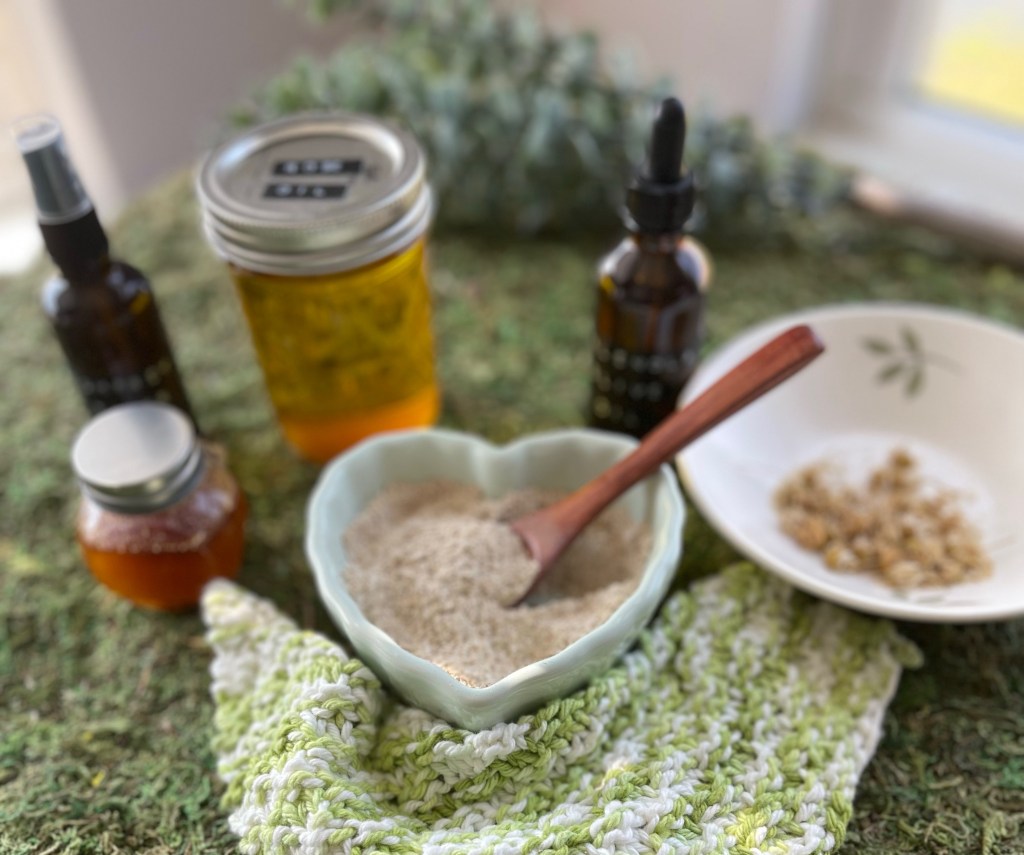
Don’t be afraid to experiment with amounts! In the pictured dry mask base, I used 1/4 cup oats, 2 tablespoons chamomile, and 1/2 teaspoon cardamom. But experiment with amounts to get a consistency you love! Then apply to clean skin with a makeup brush, leave on for 10-15 minutes, and rinse off with lukewarm water.

What are your favorite face mask ingredients?

Categories
Folklore plant wonder collective Tea

Mugwort Diana Tea

Long time, no write! I have been away from this space because life has been very busy lately…including editing a novel and a magazine, writing articles and taking photos for various publications, and some unexpected life bits mixed in along the way. So, I am more than ready to return today with a calming tea featuring the Plant Wonder Collective’s herb of the month for June: mugwort!

Mugwort is sacred to the goddess Artemis (Greek) / Diana (Roman): the goddess of the hunt, the moon, fertility, wild places, maidens, and magic. (In fact, the Latin name of this plant is Artemisia vulgaris.) I decided it would be very fitting to create a tea blend in Artemis / Diana’s honor that focuses on mugwort but also includes other herbs specifically associated with her. Here are the ingredients–


Mugwort: dream work, clairvoyance, magic, visions; used medicinally for anxiety, menstruation & uterine health, digestion, pain relief

(California) Poppy: dream work, moon magic, love, visions, luck; used medicinally for sleep, anxiety, menstrual cramps, headaches, pain relief

Lemon Balm: clarity, comfort, emotional healing, love, focus, memory; used medicinally for anxiety, colds, fever, sleep, depression

Pine: fertility, grounding, spirituality, strength, wisdom, peace; used medicinally for nutrients, inflammation, cold and flu, skin applications

Nutmeg: awareness, clairvoyance, divination, dream work, memory, the mind; used medicinally for stress, sleep, digestion


Mugwort and these other accompanying herbs make an excellent tea for sleep, and perhaps dream work. Here is the simple recipe for brewing a cup!

1 part mugwort

½ part California poppy

1 part lemon balm

½ part pine needles

¼ part freshly grated nutmeg

Brew with hot water for 4-5 minutes, and sweeten with honey or maple syrup if you’d like.


Have you worked with mugwort before? What is your favorite way to work with mugwort?

Categories
Botanical Anthology

Beltane Floral Incense

This blog post is a little something different: an excerpt from the spring edition of Botanical Anthology!

This plant centered digital publication is packed with seasonal crafts, recipes, foraging tips, articles, & more. Click here to learn more about the digital edition, or click here to check out the print edition.


Carrie Tuttle is an environmental educator, mom, and poet. She has been weaving magic into her home via kitchen and garden witchery for 30 years. She lives in Wyoming with her family, pets, and gardens.

Fires of Beltane Loose Floral Incense

By Carrie Tuttle

Beltane is a glorious celebration of fire. Translated roughly as bright fire, the day falls at the halfway point between the Spring Equinox and the Summer Solstice. Here we find a day associated with bonfires, feasting, and the fertility of the land beneath our feet. Beltane, or Mayday, is awash with flowers. In Gaelic lands, and in modern Paganism, it is celebrated with a flower wreathed Maypole, floral wreaths for the May Queen and celebrants, as well as decorating homes and sacred places and spaces with spring florals.

For many this is a time of year when spring begins its raucous state of growth; a riot of flowers, lengthening days, and getting our gardens underway. One practice to honor this day, and its connection to fire and growth, is through the crafting of ritual incense. The use of incense is common in ritual and dates back thousands of years to ancient Mesopotamia, where the burning of herbs and resins facilitated sacred communication with the gods. In addition, it is believed that the healing elements of herbs can be transferred through their burning as well, leading many to blend their own healing incense. 

Using a loose incense allows the crafter to use dried flowers and herbs in their whole form, without having to pulverize, mix and add a binder; required in the blending of stick and cone incense. It is a simple and quick way to craft incense, and involves only the herbs and a source of heat, such as a charcoal disc or electric incense burner.

The Beltane incense below was crafted with following herbs for their corresponding symbolism: 

Lavender: love, luck, grace, and connection to ones higher self

Apple or crabapple twigs: beauty, health, fertility, and harmony

Rose: romance, passion, rebirth, renewal

Jasmine : sensuality, positivity, connection to the divine

Mugwort: dreams, protection, self-love, magic

You may also add other herbs from your local environment, or from your gardens, as it enhances your connection to the land, and to your personal practice. Just be sure to look into their properties, as you don’t want to burn anything that could be toxic.

Blending these dried herbs together to burn is its own wild alchemy, because as you blend you put your intentions for this fiery holiday into work. You may imagine the correspondences as you blend each herb, or add your own magical intent. 

Materials

3 tbsp jasmine flower

2 tbsp lavender

2 tbsp mugwort

1 tbsp  roses 

1 tbsp  apple twigs, cut into ½ inch bits

Method

Mix well, place in a jar and label. 

Burn over a charcoal disk or in your outdoor Beltane fire of choice. 

Notes

The batch makes approximately ½ cup  of the incense blend.

Increase the batch size to use in a bonfire or to give as gifts.

Categories
Herbs and Herbalism plant wonder collective Recipes

Dill Potato Soup

For dill month with the Plant Wonder Collective, I decided to make potato soup! Dill pairs so nicely with potatoes, and gives the soup a fresher flavor for springtime rather than a heavier, wintry taste.

You could make your own favorite potato soup recipe and simply add dill in wherever herbs are called for, or you can try out this easy slow cooker recipe I used!

Slow Cooker Dill Potato Soup

Ingredients

  • 6 slices bacon, diced
  • 2-3 pounds petite red/gold potatoes, chopped (no need to peel)
  • 3-4 cups chicken stock
  • 1 yellow onion, chopped
  • 3-4 cloves garlic, minced
  • 2-3 sprigs fresh dill
  • 2 sprigs fresh thyme or 1 tsp dried thyme
  • 1 tablespoon butter
  • 1 cup shredded cheddar cheese, plus more to top
  • 1 pint (16 oz) heavy cream
  • Salt and pepper, to taste

Directions

  • Cook bacon according to your preferred method.
  • Add potatoes, bacon, 3 cups of the chicken stock, onion, garlic, dill, thyme, and butter into 4-quart slow cooker and stir to combine.
  • Cover and cook, on low heat for about 7-8 hours or high heat for about 3-4 hours, until potatoes are tender.
  • Use a potato masher to mash the potatoes to your desired consistency. Add in cheese and heavy cream, stirring until smooth. Salt and pepper to taste.
  • Replace cover and cook on low heat until warmed through, stirring occasionally, for about 15-20 minutes. If the mixture is too thick, add more chicken stock as needed.
  • Top with more shredded cheese to serve.

Recipe adapted from this one by Damn Delicious.

Categories
Herbs and Herbalism Recipes

Orange Rose Shortbread Cookies

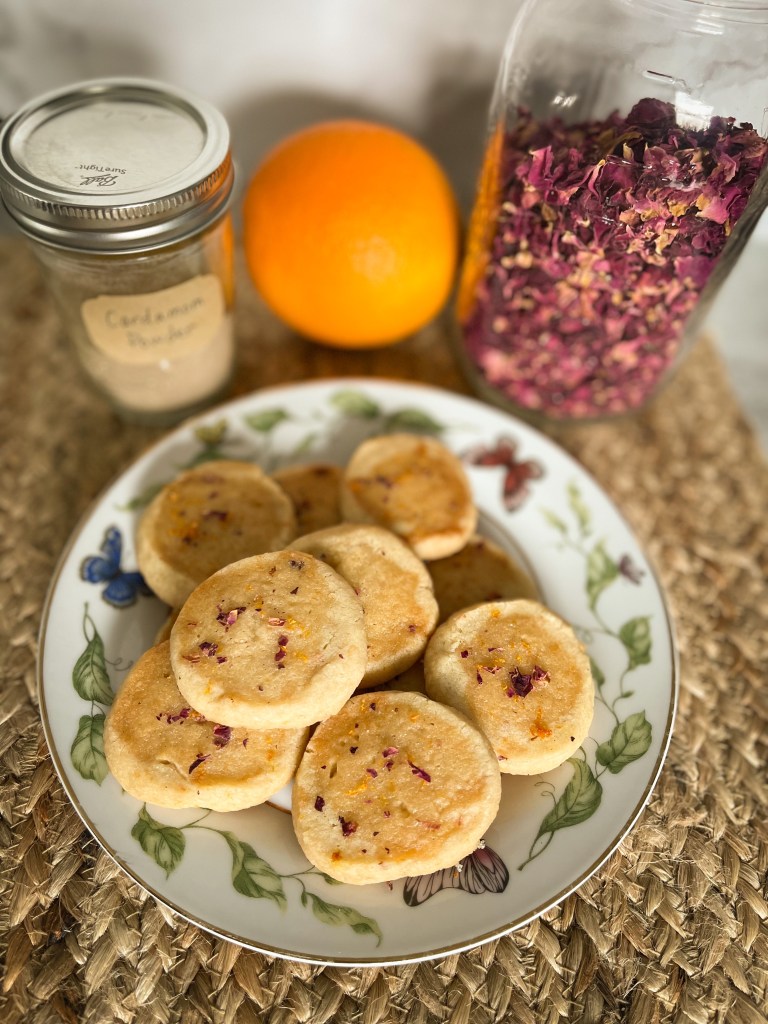
I’ll admit—this recipe was inspired entirely by rewatching old episodes of the Great British Bake Off. I keep seeing shortbread cookies, and hearing them talk of how their “biscuits” have a satisfying snap. My midwestern American palate is much more accustomed to gooey, soft cookies which are delicious but a bit simpler. So I thought I’d try my hand at some springy shortbread cookies—which, of course, had to incorporate herbs.

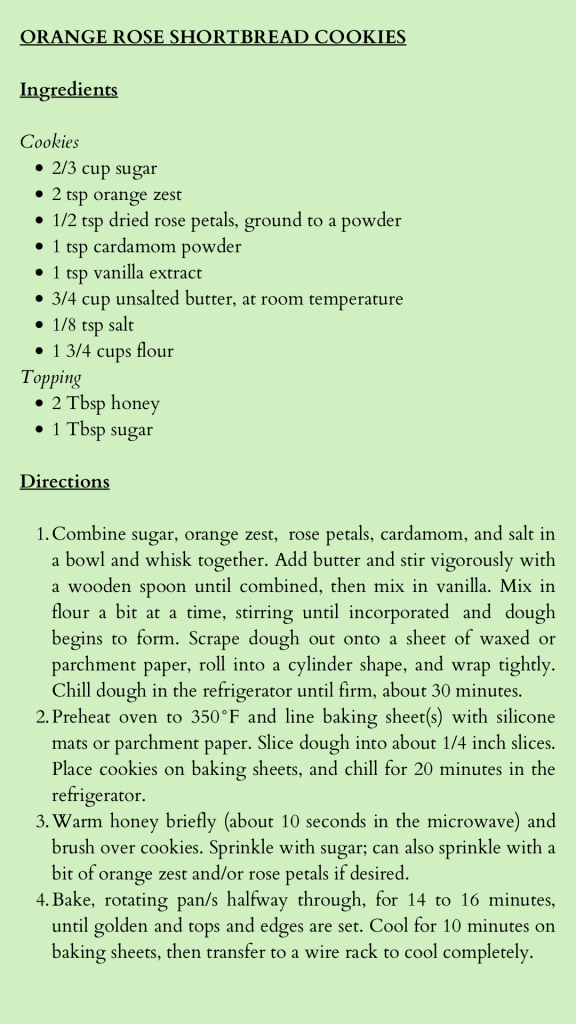
In addition to a classically sweet and crisp shortbread recipe, I’ve combined the flavors of rose, orange, cardamom, vanilla, and honey. These lend a distinctly layered complexity to the mild taste of the biscuits and help them pair even better with a lovely black tea. (Springtime tea party recipe, perhaps?) Also, all these botanicals are uplifting, bright, and fresh. It’s the perfect light sweet after a winter of heavy sweets and spices.

Here is the recipe if you’d like to try them!

Categories
Tea wheel of the year

Lavender Earl Grey Ostara Candle

I don’t know why exactly, but spring makes me think of Earl Grey tea. Maybe it’s the citrusy bergamot, or the fact that I’m just more in the mood in spring than any other season to drink black tea…it’s more stimulating than caffeine-free herbs, but lighter than coffee. Maybe flowers and tea parties just make me think of spring? I don’t know, but let’s go with it!

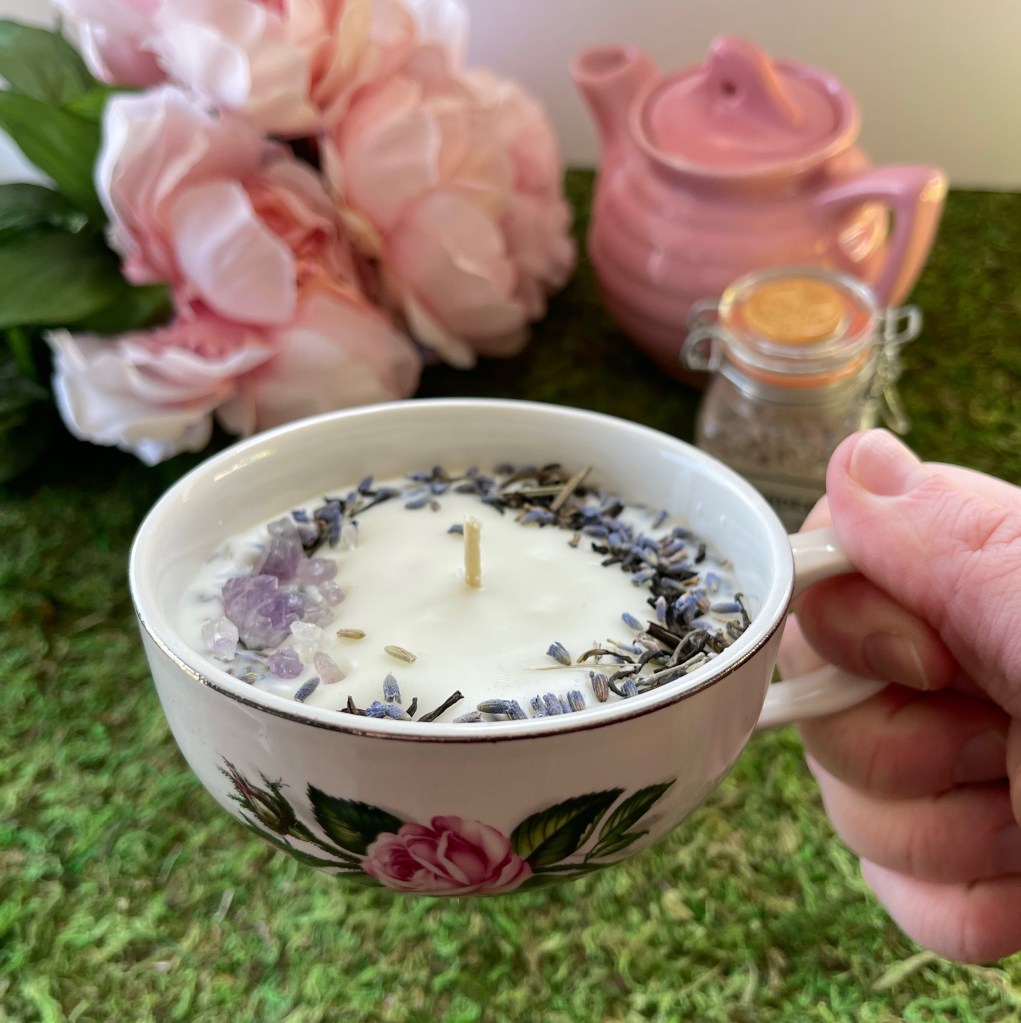
In that spirit…I decided to make a lavender Earl Grey teacup candle to welcome Ostara. To me, Ostara, or the Spring Equinox, is the true start of the new year: the awakening. What better way to brighten the sweet first morning of spring than lighting this candle to add to the warmth of the sun, and enjoying a mug of Earl Grey tea?


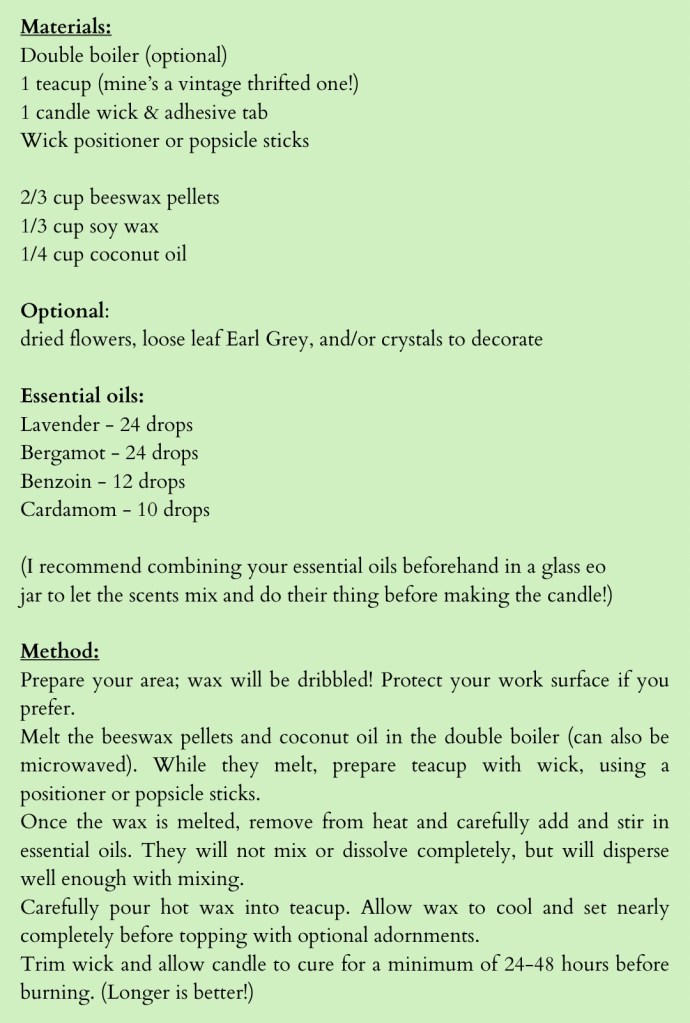
The essential oils I chose to scent the candle with do have associations that fit quite well with the spirit of the occasion:

Lavender- love, protection, calm, peace, insight

Bergamot- happiness, harmony, love, courage

Benzoin- purification, prosperity

Cardamom- creativity, strength, focus, healing


Benzoin oil imparts a warm, creamy vanilla-like scent which reminds me of adding milk to tea, and cardamom adds a tea-like quality. I also topped the candle with amethyst, quartz, lavender buds, and a bit of actual lavender Earl Grey tea.

Here are the instructions, in case you’d like to make one of these sweet candles yourself!

This Ostara season I’m planning to enjoy this little candle with tea and shortbread cookies with the two of my three children that actually like tea. (Two out of three isn’t bad, and he will still eat the cookies!) —cookie recipe soon to come.

How will you mark the Spring Equinox / Ostara?

Categories
Recipes Tea

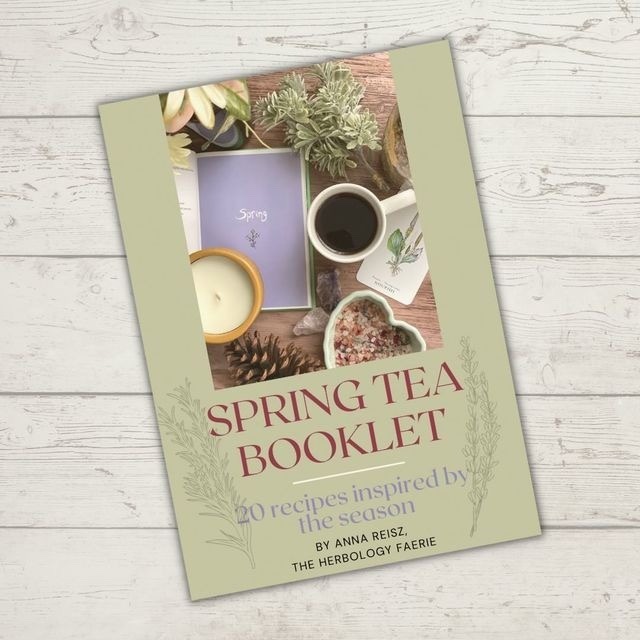
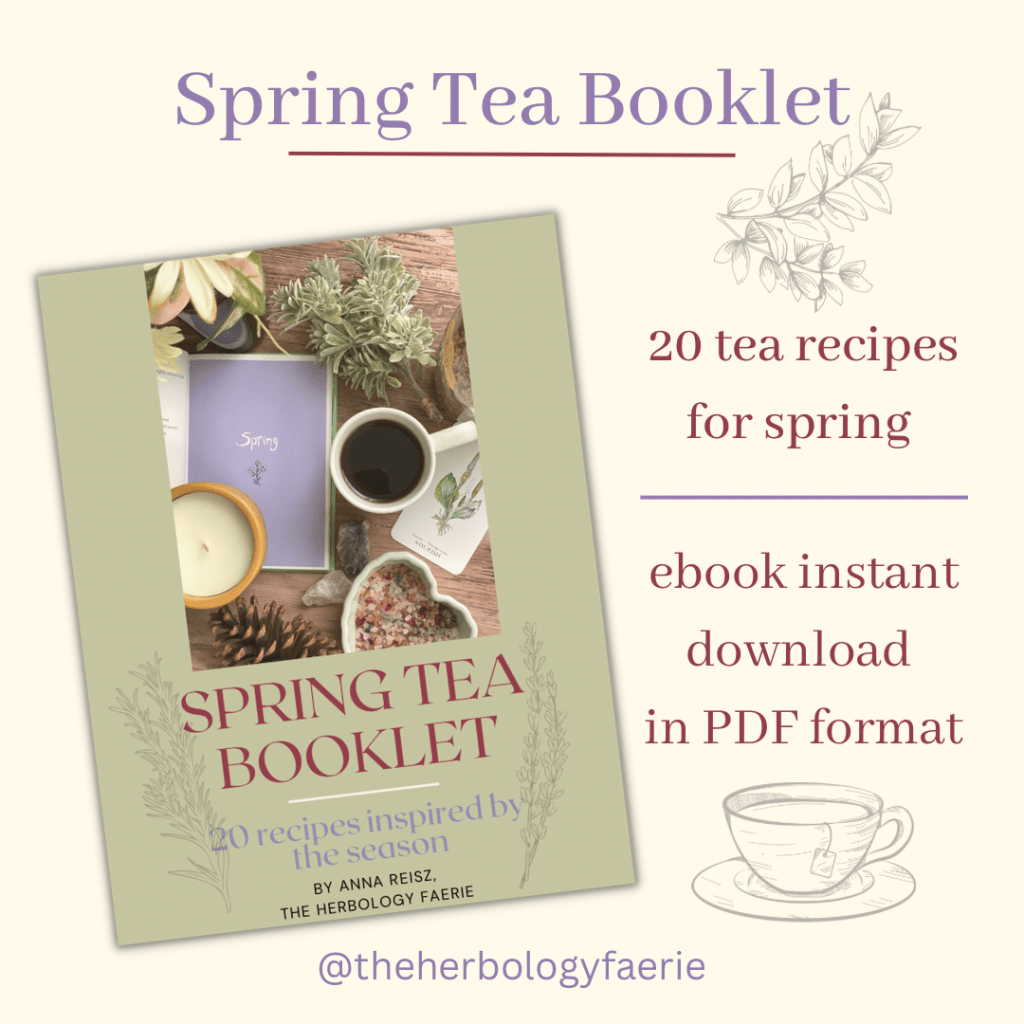
Spring Tea Recipe Ebook!

I am so proud to say that I’ve written a recipe ebook! It is available for purchase now in my Etsy shop, HERE.

The Spring Tea Booklet contains 20 tea recipes based on the season, nature, nature-based festivities, folklore, art, cozy aesthetics, and more! It also includes tips on tea-making and sourcing herbs and ingredients.

Lovingly created, written, photographed, and designed by folk herbalist Anna Reisz (me!!), this tea recipe booklet is a cozy and magical way to ground into the season. These recipes are approachable and perfect for anyone, from beginners to experienced tea blenders. Draw on the inspiration in these pages to create teas for self care, parties and special occasions, gifts, and more.

Recipes include:

Spring Full Moons (3 recipes)
Persephone
Ace of Wands
Robin
Cottagecore
Anne Shirley
Element: Air
Spring Equinox
Light Academia
Spring Forest
Intention: Creativity
Spring Zodiac Signs (3 recipes)
Beltane
Brigid
Beatrix Potter
Spring Dreams

I am grateful to anyone who considers taking a peek at this creation that I am proud of and considers purchasing a copy. This cozy herb thing is something I do because I love it, and I am so happy when others think it is pretty cool, too. Your support helps me continue to be able to do this—learning, creating, and sharing.

Categories
Herbs and Herbalism plant wonder collective Recipes

Dill & Cheese Beer Bread

March is dill month at the Plant Wonder Collective! I was searching for inspiration and recipes online, and realized that dill bread is a bit of an old-fashioned, simple, cozy favorite. Perfect!

We may think of dill as being mostly reserved for culinary uses (dill pickles and dill havarti—yum!) but there is some historical precedent for other applications. Dill is great for digestion and is often found in infant gripe water. It is nutrient-dense and high in flavonoids, which make it a great cardio-tonic herbal ally. Dill can help with inflammation and pain, and has been historically used for soothing in many contexts (it’s name comes from an Old Norse word meaning “to soothe”).

Interestingly, in the Middle Ages dill was used for protection and as a ward against witchcraft! It also represented luck and wealth, and might be found hanging in a home or worn as charms.

Whatever its other benefits, dill tastes really green and fresh! I used it to flavor a loaf of beer bread I made, and it tasted great paired with the mozzarella cheese I added. (Would be great with cheddar, too!) Here is the recipe if you’d like to try it!

Dill & Cheese Beer Bread

Ingredients

  • 3 cups all-purpose flour
  • 1/2 tsp salt
  • 2 tsp dried or 4 tsp fresh dill
  • 1 12-oz can or bottle of beer
  • 1 Tbsp baking powder
  • 1 cup shredded cheese of your choice (mozzarella, cheddar, or havarti)
  • 2 Tbsp butter, melted

Instructions

  1. Preheat oven to 350° F.
  2. Grease a 9 x 5 bread pan or line with parchment paper.
  3. In a bowl, combine all ingredients except the beer and butter. Mix well.
  4. Add the beer gradually and stir well to incorporate.
  5. Transfer dough into the loaf pan.
  6. Pour the melted butter over the top. You can also sprinkle a little more dill and shredded cheese over the top if you wish.
  7. Bake for 40 – 50 minutes. Check with a toothpick—if it comes out clean, the bread is ready to come out.
  8. Let cool slightly, then turn out onto a cooling rack. Slice and enjoy!

Recipe inspired by this one from TheSaltyPot.com.

Categories
herbal skincare Herbs and Herbalism Recipes

Flower Garden Tea Party: Perfume Oil

Are you as ready as I am for spring? Late February seems to always be like that for me, with sneaky early warm days making me itch for the real thing. And the fact that the first crocuses are beginning to pop up doesn’t help!

Between that and reading books about Beatrix Potter lately, I am in a distinctly flowery-tea-party mood. Not the fancy or stuffy kind, however; the unfussy, cozy, enjoying the bounty of nature and the comforts of home with friends kind. The sort with lavender Earl Grey in mismatched cups and a fresh-picked garden bouquet in a jam jar on the table. The type of flowery tea party I think Miss Potter herself would have enjoyed.

Imagining this scenario brings me to the simple little perfume oil I recently made to capture that feeling. I combined lavender-infused almond oil that I made recently with a few essential oils: geranium, bergamot, cardamom, and benzoin. This combination of scents is dreamy and floral, with a hint of sweet vanilla and warm spice. It’s nourishing to the skin and has a lovely calming effect.

The particular botanicals I chose also relate to this tea party I dreamed up. Geranium figured prominently into Beatrix Potter’s gardens and especially window boxes, with their cheery flowers and lovely rose-like scent. Bergamot, of course, is the key ingredient in Earl Grey tea, which was a bit of a special-occasion luxury to those in the Lake District at Beatrix’s time. Cardamom is more of a personal addition, but it’s my favorite and is the spice that I think ties florals, fruits, and musky scents together just right. And benzoin resin oil is an affordable alternative to vanilla with a distinctly vanilla creaminess; it also is traditionally used in incense to lift the spirits.


If you are also interested in folk and spiritual associations of botanicals, here are a few of the many associations I found for these:

Lavender: love, protection, calm, peace, insight

Geranium: uplifting and protection, balance, joy, beauty

Bergamot: happiness, harmony, love, courage

Cardamom: creativity, strength, focus, healing

Benzoin: purification, prosperity


If you’d like to join me at this imaginary tea party, here is the recipe!

Materials

One 10 ml essential oil roller bottle

Lavender-infused almond oil, or your carrier oil of choice

3 drops geranium essential oil

2 drops bergamot essential oil

2 drops cardamom essential oil

1-2 drops benzoin resin essential oil

Method

Add lavender almond oil to the roller bottle until it is half full. Add the drops of essential oils. Top with more lavender almond oil, leaving about 1/4 inch head space. Securely place the roller top and lid on the bottle, then shake to mix. I like to let a perfume oil sit and infuse for a few days before using so the scents develop fully, but you wouldn’t have to.

Wear this perfume oil where you’d normally place perfume, and dream about springtime tea parties on sunny days! Just don’t forget to send me an invitation and let me know when teatime begins!

Categories
herbal skincare Recipes

Lavender Peppermint Lip Balm

I don’t know about you, but for me, lavender is a scent that makes me think of spring. (I’m not sure why, because it’s not in-season where I live until the summer!) Since I am dreaming so, so much about spring, and since I had just strained some lavender-infused almond oil and mint-infused coconut oil recently, I decided to make some relaxing lip balm with a springy scent to carry me away in my daydreams of warmth and sunshine.

Lavender is such a relaxing scent, and it pairs really well with uplifting peppermint. Also, both herbs have antimicrobial and skin soothing and replenishing properties. Most people find both to be gentle for use on the skin, but if you’re sensitive (or making this recipe for young children), you might want to eliminate one or both essential oils in the recipe, or use less of both.

Lip balm is not too tricky if you’re new to making body care products. Here’s the recipe, if you want to give it a try!


Lavender Peppermint Lip Balm

(Makes 7 0.5-oz containers of lip balm)

Materials:

7 lip balm tins, 0.5 oz

Double boiler (optional)

28 g shea butter

20 g beeswax pellets

16 g almond oil infused with lavender flowers

8 g coconut oil infused with peppermint leaf

4 drops lavender essential oil 

3 drops peppermint essential oil (or leave out if you have sensitive skin)

Method:

Prepare your supplies and area; you might want to put down a layer of parchment or waxed paper in case of dribbles. I place mine on a baking sheet.

Melt the beeswax pellets, shea butter, and infused oils slowly over low heat in the double boiler. If you don’t have a double boiler, set a large glass mixing bowl over a small saucepan containing about 1 inch of water, put your ingredients in the mixing bowl, and it works the same way. 

Once the ingredients are melted, remove from heat and carefully add and stir in essential oil if you’re using it. 

Carefully pour the hot liquid into your lip balm tins. Allow to cool completely for a good long while before using—I like to have my tins on a baking sheet and transfer that to the fridge for quicker setting, but that’s optional.

Once the lip balms are finished setting up, they’re ready to use!